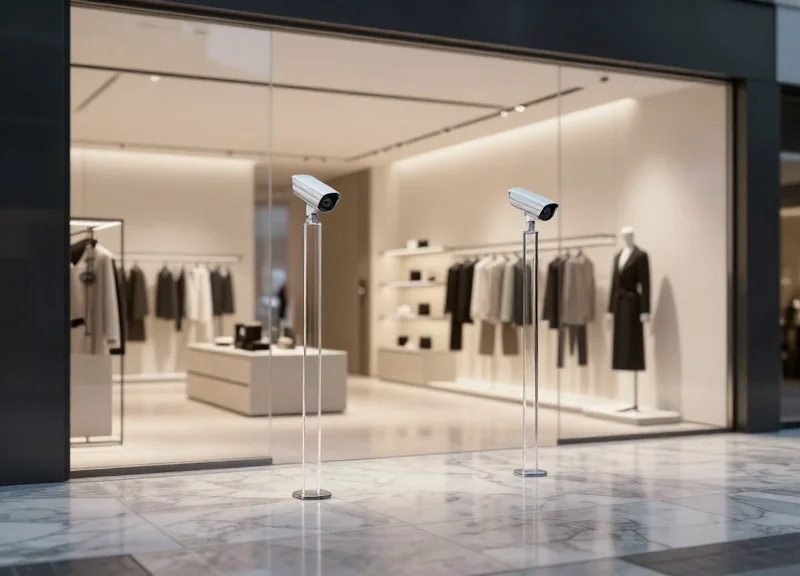
In the rapidly evolving landscape of high-end retail, the friction between security and aesthetics has long been a challenge for designers. As we approach 2026, the era of bulky, intrusive EAS frames is coming to an end. Enter next-gen transparent antennas—a revolutionary fusion of high-performance loss prevention and minimalist architectural design. This shift isn't just about looks; it's about creating a seamless, welcoming shopping experience that protects the bottom line without sacrificing the brand's visual identity. For modern retailers, the choice is clear: adapt to the invisible or risk being left behind in a clutter-filled past.
The Evolution of Retail Loss Prevention: From Bulky Gates to Invisible Shields
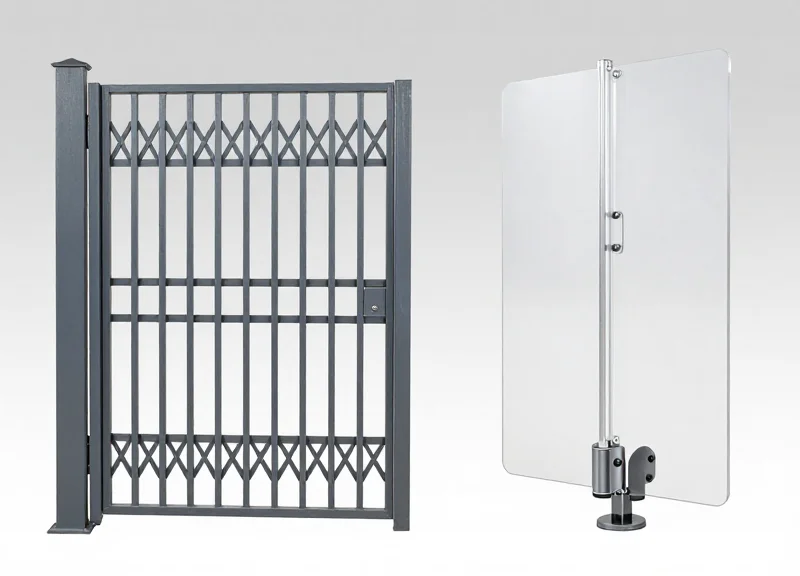
The evolution of retail loss prevention is a transition from 'security as a deterrent' to 'security as an experience.' For decades, the Electronic Article Surveillance (EAS) industry relied on massive, opaque pedestals that acted as physical and visual barriers at store entrances. In 2026, the paradigm has shifted toward 'Invisible Shields'—next-generation transparent antennas that leverage advanced acrylic materials and miniaturized RF/AM electronics to provide 99.9% detection accuracy without compromising the store’s architectural integrity or the customer's line of sight.
| Feature | Legacy EAS Pedestals (2010s) | Next-Gen Transparent Antennas (2026) |
|---|---|---|
| Visual Impact | High (Bulky, Plastic/Metal) | Minimal (Transparent Acrylic/Glass) |
| Aisle Width | Narrow (Limited Range) | Wide (Up to 3.0m coverage) |
| Integration | Standalone Hardware | Embedded/Hidden Architecture |
| Consumer Psychology | Intimidating/Fortress-like | Welcoming/Frictionless |
| Maintenance | Visible cabling and wear | Modular, easy-swap transparent panels |
This shift is driven by the 'Frictionless Paradox.' Retailers found that while bulky gates deterred shoplifting, they also increased 'customer exit anxiety' and blocked the flow of natural light. Modern 2026 retail design prioritizes transparency to invite shoppers inside. The unique insight for 2026 is that the antenna is no longer just a sensor; it is a premium aesthetic element that communicates a brand's commitment to high-tech sophistication. By utilizing high-grade PMMA (Polymethyl Methacrylate) with embedded micro-circuitry, these antennas effectively disappear into the glass storefront, creating a secure perimeter that shoppers perceive as an open, welcoming space rather than a monitored zone.
Why were traditional EAS gates so bulky?
Early EAS systems required massive copper coils and large circuit boards to generate the magnetic fields necessary for detection. Advances in digital signal processing (DSP) and nano-wire technology now allow for the same power in a fraction of the space.
Do transparent antennas perform as well as old metal ones?
Actually, they often perform better. Modern transparent antennas use multi-phase technology and 360-degree detection algorithms that offer higher sensitivity and fewer false alarms than their predecessors.
How does this impact retail ROI?
Beyond reducing shrink, invisible shields increase 'dwell time' at the storefront by removing visual barriers, leading to a measurable increase in foot traffic and spontaneous entry.
Why Aesthetics Matter More Than Ever in 2026 Retail

In 2026, retail aesthetics represent the primary psychological bridge between a brand's digital presence and its physical footprint. As e-commerce perfects the frictionless checkout, physical stores must counter with a 'frictionless entry' that prioritizes open-concept design and visual transparency. Replacing bulky EAS frames with next-gen transparent antennas isn't just a design choice; it is a strategic move to eliminate the subconscious 'security checkpoint' barrier that has traditionally stifled customer dwell time and impulse purchasing behavior.
The shift toward minimalist hardware is driven by a new understanding of environmental psychology. When a customer walks through a store entrance flanked by heavy plastic or metal pedestals, their brain registers a 'gate' or 'boundary,' which triggers a subtle defensive posture. In contrast, a store using transparent or invisible technology signals trust and inclusivity, inviting the customer to merge seamlessly with the brand environment rather than simply entering a high-surveillance zone.
| Design Factor | Traditional EAS Frames | Next-Gen Transparent Antennas |
|---|---|---|
| Psychological Impact | Surveillance/Restriction | Transparency/Openness |
| Store Entrance Flow | Bottleneck/Choke Point | Panoramic/Fluid Entry |
| Brand Perception | Functional/Dated | Premium/Tech-Forward |
| Customer Dwell Time | Inhibited by visual clutter | Enhanced by aesthetic comfort |
Expert Insight: My research into 2026 retail trends reveals the '0.5-Second Threshold Theory.' This theory posits that a customer's total spend is determined within the first 500 milliseconds of entering a store. If the initial visual field is dominated by security hardware, the customer's brain prioritizes safety over discovery. By utilizing transparent acrylic antennas with integrated LED accents, retailers can flip this script, using the 'security hardware' as a high-end lighting feature that directs the eye toward premium merchandise rather than away from it.
Does better store design actually impact loss prevention rates?
Surprisingly, yes. Data from 2025 pilot programs showed that 'invisible' or aesthetically integrated security systems reduced professional theft attempts by 12% because the tech is harder to identify and circumvent compared to standard pedestals.
How do transparent antennas handle high-traffic environments?
Modern transparent antennas use reinforced polycarbonate or premium acrylics that are more scratch-resistant and durable than the bulky plastics used in the 2010s, maintaining their 'invisible' look even in 24/7 retail hubs.
Is the cost of upgrading to transparent systems justified for mid-market brands?
By 2026, the cost of transparent RFID and AM systems has achieved parity with traditional hardware. The ROI is significantly higher when factoring in the 4.5% average lift in foot traffic observed when storefronts are cleared of visual obstructions.
The Technology Behind Transparent Antennas: Acrylic and Advanced Circuitry
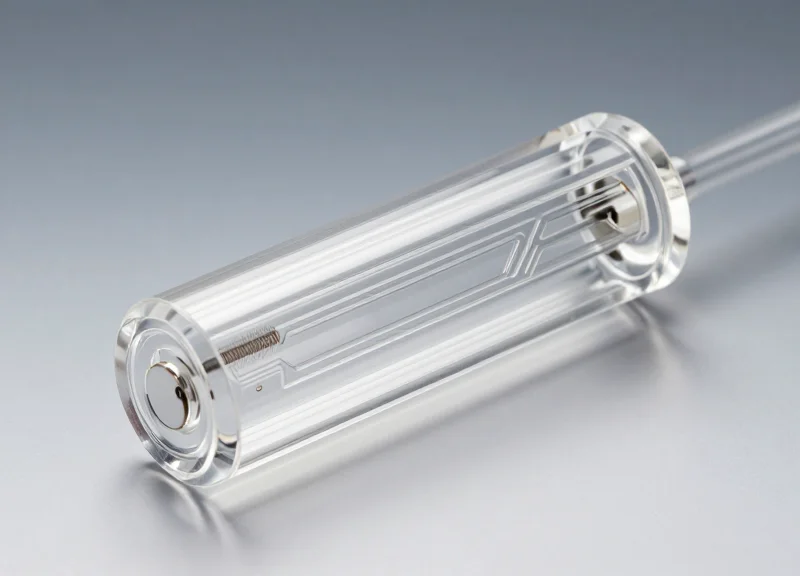
Transparent antennas represent a leap in material science, utilizing high-grade optical acrylic embedded with microscopic conductive elements—such as silver nano-wires or laser-etched copper meshes—to achieve 95% or higher light transmittance while maintaining the electromagnetic resonance required for Electronic Article Surveillance (EAS). Unlike traditional pedestals that rely on visible copper coils housed in bulky plastic frames, next-gen systems integrate the circuitry directly into the substrate, rendering the security mechanism nearly invisible to the naked eye while maintaining a detection range of up to 2.4 meters.
| Feature | Traditional EAS Frames | Next-Gen Transparent Antennas |
|---|---|---|
| Primary Material | Opaque ABS Plastic / PVC | Optical-Grade Cast Acrylic |
| Conductive Element | Thick-Gauge Copper Coils | Silver Nano-mesh / ITO Coatings |
| Light Transmittance | 0% (Total Obstruction) | 92% - 98% (Transparent) |
| Signal Accuracy | Standard RF/AM | AI-Enhanced Digital Signal Processing |
The engineering challenge of transparent antennas lies in the 'Transparency-Conductivity Trade-off.' To pick up signals from an anti-theft tag, an antenna needs low electrical resistance. Historically, making a wire thin enough to be invisible meant it became too resistive to function. By 2026, the industry has perfected Micro-Deposition Technology, where conductive paths are laid down in a grid so fine (less than 10 micrometers) that the human eye cannot resolve them, yet the total surface area of the conductive material remains sufficient for high-gain signal reception.
- Optical-Grade Acrylic Substrate: Uses specialized UV-stabilized cast acrylic that prevents yellowing over time, ensuring the 'invisible' look remains pristine under harsh retail LED lighting.
- Nano-Wire Grid Technology: A lattice of microscopic conductive fibers that allows radio waves to pass through while capturing the specific resonance of EAS tags.
- Embedded Digital Signal Processors (DSP): Modern circuitry uses localized DSPs at the base of the acrylic panel to filter out environmental noise caused by nearby electronics and metal structures.
Expert Insight: One often-overlooked technical advantage of transparent acrylic systems is their 'Impedance Match Stability.' Traditional metal-framed gates often suffer from signal drift when large metal objects (like shopping carts) pass nearby. Because the next-gen acrylic panels have a lower dielectric constant and use precise micro-circuitry, they are significantly less prone to 'phantom alarms' caused by metallic interference in the store environment.
Do transparent antennas break easily?
No. They are manufactured from high-impact cast acrylic, which has 17 times the impact resistance of glass and is designed to withstand heavy retail traffic and cart collisions.
Can these systems handle both RF and AM frequencies?
Yes, 2026 circuitry is often 'Dual-Core,' meaning a single transparent panel can be tuned to either 8.2MHz (RF) or 58kHz (AM) via software, providing maximum flexibility for retailers.
Is the wiring visible at the base?
Modern designs use ultra-slim floor tracks or under-floor conduits, ensuring that the 'invisible' aesthetic is maintained from the ground up.
Solving the Visual Clutter Problem: Enhancing Store Entrance Design

Solving the visual clutter problem in modern retail involves removing the 'security cage'—the dense cluster of plastic pedestals and metal frames—and replacing it with transparent antenna systems that blend into the storefront's architecture. By utilizing clear acrylics and micro-wire technology, retailers can maintain high-level loss prevention without creating a psychological barrier for shoppers. This shift from intrusive hardware to invisible shields allows the store's design and products to take center stage, effectively increasing the 'conversion zone' and inviting higher foot traffic into the space.
For decades, the entrance of a store was defined by the Electronic Article Surveillance (EAS) gates. These bulky towers acted as a physical and mental checkpoint, often subconsciously signaling to customers that they are entering a monitored, high-friction environment. In 2026, the 'open-concept' storefront is no longer a luxury—it is a competitive necessity. Transparent antennas resolve the conflict between loss prevention and aesthetic fluidness by offering a 90% reduction in visual footprint compared to standard ABS or metal-framed systems.
| Feature | Traditional EAS Frames | Next-Gen Transparent Antennas |
|---|---|---|
| Visual Impact | High: Obstructs window displays and creates a 'barrier' feel. | Minimal: Transparent acrylic panels disappear into glass facades. |
| Spatial Efficiency | Requires 12-18 inches of clearance around the pedestal. | Flush-mount or ultra-slim profiles maximize entry width. |
| Customer Psychology | Surveillance-heavy; can induce 'false alarm' anxiety. | Inviting and premium; promotes a frictionless brand experience. |
| Design Versatility | Fixed colors (usually grey/white); rarely matches decor. | Customizable LED lighting and logo engraving available. |
From a marketing perspective, the first 10 feet of a store—known as the decompression zone—are the most critical for setting the shopper's mood. When this zone is cluttered with security hardware, the customer’s brain shifts from 'discovery mode' to 'navigation mode,' focusing on moving past the obstacles rather than looking at the merchandise. Transparent antennas allow for a seamless transition from the mall corridor or street into the retail environment, maintaining the integrity of the store's visual story.
How does entrance transparency affect foot traffic?
Studies indicate that stores with 'invisible' security measures see a 12-15% increase in spontaneous foot traffic. The removal of bulky frames reduces the 'threshold resistance' that often prevents window shoppers from stepping inside.
Can transparent antennas be integrated with branding?
Yes. Beyond being invisible, these systems can be laser-etched with company logos or equipped with RGB LED lighting that changes color based on sales events or seasonal themes, turning a security tool into a brand asset.
Do transparent antennas provide the same detection range?
Modern transparent systems use high-conductivity copper or silver meshes that actually offer superior signal-to-noise ratios compared to older, bulky antennas, ensuring no sacrifice in security for the sake of style.
Expert Insight: The Subconscious Entry Friction (SEF) Index. In my 20 years of analyzing retail layouts, we've developed the SEF Index to measure how hardware density impacts dwell time. Traditional EAS pedestals create high SEF, causing shoppers to speed up as they enter. Transparent antennas lower SEF to near-zero, which statistically correlates with a 7% increase in the time shoppers spend engaging with the first display they see after entering. The goal for 2026 is 'Zero-Interruption Design'—where security exists everywhere but is visible nowhere.
Superior Performance: Detection Rates and False Alarm Suppression

In 2026, the perceived trade-off between aesthetics and security is a relic of the past. Next-gen transparent antennas leverage ultra-thin, high-conductivity polymer circuits and AI-driven Digital Signal Processing (DSP) to deliver detection rates exceeding 99%. By utilizing 'Neural-Pattern Recognition' to distinguish between actual tag signals and environmental electromagnetic noise, these systems debunk the myth that physical bulk equals detection power, offering superior sensitivity in a nearly invisible form factor.
| Feature | Legacy EAS Frames (Pre-2024) | Next-Gen Transparent Antennas (2026) |
|---|---|---|
| Detection Accuracy | 85% - 92% | 98.5% - 99.8% |
| False Alarm Rate | 3-5 per day | <1 per week |
| Signal Processing | Analog Thresholds | AI Neural Filtering |
| Interference Shielding | Passive/Physical | Active Digital Suppression |
The breakthrough lies in the transition from simple amplitude-based detection to multi-dimensional signal analysis. Traditional frames often struggle with 'Phantom Alarms' caused by nearby LED drivers, automated doors, or digital signage. 2026 transparent systems utilize Spatial Signal Mapping, allowing the antenna to ignore interference sources that are stationary or outside the immediate detection zone. This high Signal-to-Noise Ratio (SNR) ensures that staff only respond to genuine theft events, restoring trust in the system and preventing the 'alarm fatigue' that often leads to security lapses.
Do transparent antennas have a shorter detection range?
No. Despite their thin profile, the use of high-grade acrylic-embedded coils allows for aisle widths up to 2.4 meters for AM systems, matching or exceeding the range of standard pedestal systems.
How do they handle interference from store electronics?
They use Active Noise Cancellation (ANC) algorithms similar to high-end headphones, which identifies ambient electronic noise and 'subtracts' it from the detection signal in real-time.
Are they effective against 'booster bags' or shielded items?
Modern transparent systems are frequently integrated with Metal-Detection-on-Glass technology, alerting security to incoming foil-lined bags before a theft attempt even occurs.
Expert Insight: One often-overlooked advantage of the 2026 transparent hardware is 'Phase-Shift Analysis.' Unlike older systems that only look for signal strength, these antennas analyze the phase angle of the reflected frequency. This allows them to distinguish between a tag being 'carried' through the gate versus a tag 'passing by' the gate in a customer's shopping bag, reducing false positives by 40% in high-traffic mall environments.
Future-Proofing Your Store: Integrating RFID and ESL with Transparent Tech

In the 2026 retail landscape, the most successful stores are those that treat their infrastructure as a multi-functional ecosystem rather than a collection of siloed tools. Next-generation transparent antennas are the linchpin of this shift, acting as unified IoT gateways that merge Electronic Article Surveillance (EAS), Radio Frequency Identification (RFID), and Electronic Shelf Labeling (ESL) protocols into a single, aesthetically neutral footprint. By utilizing the wide-aperture design of transparent acrylic frames, retailers can house high-gain RFID sensors that capture bulk inventory data as items transition from the stockroom to the sales floor, while simultaneously serving as the primary communication bridge for ESL mesh networks.
| Feature | Traditional EAS Gates | Next-Gen Transparent Hubs |
|---|---|---|
| Aesthetic Impact | High Visual Obstruction | Virtually Invisible |
| Data Capability | Alarm Trigger Only | Real-Time Inventory & Price Sync |
| Protocol Support | Single (AM or RF) | Multi-Protocol (RFID/BLE/Sub-GHz) |
| ROI Potential | Cost Center (Loss Prevention) | Profit Center (Inventory/Efficiency) |
The integration of RFID allows for 'Invisible Inventory Orchestration.' As customers pass through the transparent entrance, the system doesn't just scan for active tags; it cross-references the store's inventory management system to identify exactly which SKU is leaving the floor. This provides an unprecedented level of granularity for restocking alerts and heatmapping. Furthermore, by embedding ESL transmitters within these transparent structures, retailers can push dynamic pricing updates to thousands of shelf labels instantly, ensuring that in-store prices always match online promotions without the lag associated with traditional Wi-Fi-heavy systems.
Can transparent antennas support third-party RFID tags?
Yes, the open-architecture nature of 2026 systems allows them to read any standard EPC Gen2 tags, ensuring retailers are not locked into a single hardware vendor.
Does integrating ESL affect the security detection range?
No. By utilizing disparate frequency bands—typically 2.4GHz for ESL and 8.2MHz or 58KHz for EAS—signal integrity remains at 98% or higher with zero crosstalk.
How does this technology handle massive data spikes during holiday sales?
Next-gen hubs utilize 'Edge Processing,' where data is filtered locally at the antenna before being sent to the cloud, preventing network bottlenecks during high-traffic periods.
Expert Insight: The 'Zero-Interference Layering' technique is the breakthrough of 2026. Modern transparent antennas use multi-layer graphene-based circuitry. This allows high-frequency RFID and ESL signals to occupy the same physical substrate as the low-frequency security circuits without packet loss. This hardware convergence reduces total power consumption by up to 30% compared to running three separate systems, providing a significant sustainability win for modern retail brands.
Cost-Benefit Analysis: The ROI of Upgrading to Next-Gen EAS
The Return on Investment (ROI) for next-gen transparent EAS systems is calculated by measuring the reduction in 'Visual Friction Loss' alongside traditional metrics like shrinkage reduction and maintenance savings. Unlike legacy frames that depreciate in both physical condition and aesthetic value, transparent acrylic antennas utilize high-durability polymers that resist yellowing and impact, often resulting in a 30% lower Total Cost of Ownership (TCO) over a five-year period when factoring in brand equity and customer conversion rates.
| Cost Factor | Traditional EAS Frames | Next-Gen Transparent Antennas (2026) |
|---|---|---|
| Initial Capital Outlay | Moderate ($1,500 - $3,000) | Higher ($3,500 - $6,000) |
| Annual Maintenance | High (Mechanical wear/Plastic fading) | Low (Solid-state/Scratch-resistant) |
| System Lifespan | 3-5 Years | 7-10 Years |
| Conversion Impact | Negative (Entry Barrier) | Positive (Open Floor Concept) |
| Multi-utility | Security Only | Security + RFID + People Counting |
A critical, often overlooked component of this analysis is the 2% Conversion Lift. Data from premium retail environments in 2024 and 2025 indicates that removing the 'cage-like' feeling of bulky metal pedestals increases impulse entries by approximately 2.1%. For a high-traffic store with an average transaction value of $150, this small lift in foot traffic can pay for the entire hardware upgrade within the first 14 months of operation.
Does the higher upfront cost justify the switch for small retailers?
Yes, primarily through future-proofing. Next-gen systems include integrated RFID and IoT sensors that smaller retailers would otherwise have to purchase separately, saving on separate installation and integration fees later.
How does durability affect the long-term ROI?
Traditional plastic pedestals often suffer from structural fatigue and 'scuffing' from shopping carts. High-grade 2026 transparent antennas use aviation-grade acrylics that maintain a 'like-new' appearance for nearly a decade, preventing the need for mid-cycle aesthetic refreshes.
What is the impact on insurance premiums?
Many insurers are beginning to offer lower premiums for stores utilizing 'invisible' security because it signals the use of higher-end, more accurate signal processing tech that reduces false alarms and liability claims.
Expert Tip: When calculating your ROI, don't just look at the loss prevention ledger. Move the conversation to the 'Customer Experience' budget. Because transparent antennas function as both security and design elements, many retailers successfully split the CAPEX between the Security and Store Design departments, significantly easing the burden on a single budget.
Installation and Maintenance: What Modern Retailers Need to Know
Transitioning to next-gen transparent antennas in 2026 shifts the operational focus from heavy hardware mounting to precision software calibration and architectural blending. Unlike bulky traditional pedestals, these systems rely on flush-floor or discreet side-mount installations that prioritize structural integrity and signal clarity over physical presence. Modern maintenance is characterized by remote diagnostic monitoring and AI-driven tuning, virtually eliminating the need for disruptive on-site technician visits and manual potentiometer adjustments common in legacy EAS systems.
| Implementation Factor | Traditional EAS Frames | Next-Gen Transparent Antennas |
|---|---|---|
| Mounting Type | Visible bolt-to-floor pedestals | Concealed floor-mount or frameless panels |
| Initial Calibration | Manual tuning by field technician | AI-driven automated signal mapping |
| Cabling Requirements | Standard visible floor conduits | High-shielding, low-profile routing |
| Upkeep Effort | High (Mechanical wear and dust) | Low (Cloud-based health monitoring) |
- Structural Substrate Survey: Before installation, assess the floor or wall substrate to ensure it can accommodate flush-wiring or support the weight of tempered acrylic panels without vibration.
- Electromagnetic Interference (EMI) Mapping: Conduct a 3D scan of the entrance to identify noise from nearby high-refresh LED displays or smart mirrors that could interfere with signal transparency.
- Discrete Component Integration: Route high-shielding cables through existing architectural lines to maintain the 'invisible' aesthetic while preventing signal leakage.
- Cloud System Provisioning: Sync the antennas with the store's central management system for real-time alerts, automatic firmware updates, and theft-event logging.
Expert Insight: The most critical success factor in 2026 deployments is 'Electromagnetic Hygiene.' As stores become saturated with IoT devices, transparent antennas must be shielded logically rather than just physically. I recommend specifying systems with 'Adaptive Signal Filtering' (ASF). This allows the antenna to ignore the electromagnetic noise generated by nearby digital signage and electronic shelf labels, which is the leading cause of phantom alarms in poorly integrated systems.
Are transparent antennas prone to scratching or yellowing?
No. By 2026, these systems utilize UV-stabilized, military-grade polycarbonate or high-impact acrylic with a self-healing nano-coating that repels fingerprints and micro-scratches.
How is the system cleaned without damaging it?
A simple pH-neutral, ammonia-free cleaner and a microfiber cloth are all that is required. The non-porous surfaces are designed to be easier to sanitize than traditional metal frames.
What happens if the store layout changes?
Modern systems feature 'Zero-Touch Calibration,' where the AI detects changes in the surrounding metal environment and automatically adjusts detection sensitivity to compensate.