The retail landscape is approaching a critical technological junction. For decades, Electronic Article Surveillance (EAS) and inventory management via RFID have existed as separate, siloed ecosystems. However, as we look toward 2026, the industry is undergoing a definitive shift. The traditional standalone deactivator is being phased out in favor of integrated RFID-EAS hybrid systems. This transition is not merely a hardware upgrade; it represents a fundamental reimagining of the checkout experience, where security, inventory accuracy, and customer friction are addressed simultaneously in a single, streamlined process.
The Evolution of Retail Loss Prevention: From Analog to Hybrid
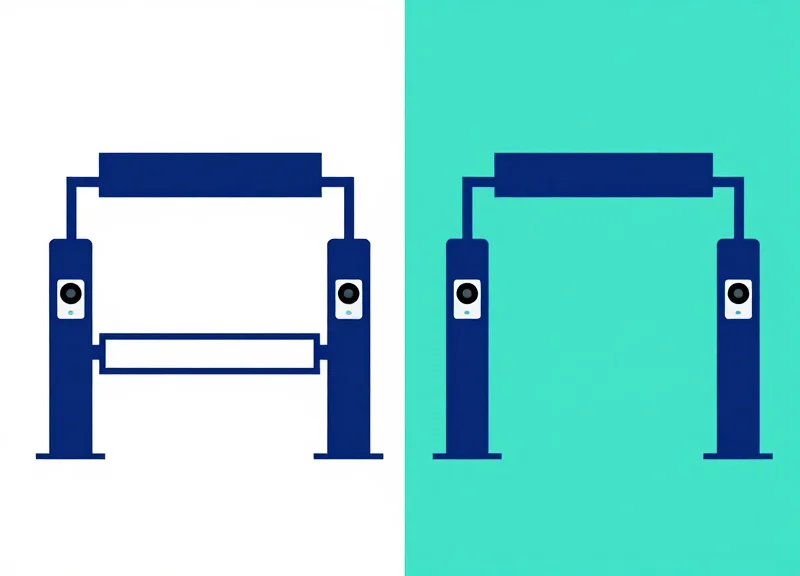
The evolution of retail loss prevention is defined by a transition from passive, analog Electronic Article Surveillance (EAS) to 'intelligent' hybrid systems that merge Radio Frequency Identification (RFID) with traditional security protocols. While legacy systems were designed solely to sound an alarm at the storefront, modern integrated solutions provide real-time item-level visibility. This shift transforms security hardware from a simple deterrent into a critical data node for omnichannel retail, allowing businesses to distinguish between a legitimate sale and a shrink event in real-time.
| Era | Technology Base | Primary Function | Operational Impact |
|---|---|---|---|
| 1970s-1990s: The Analog Era | RF/AM (8.2MHz / 58kHz) | Theft Deterrence | High false alarm rates; no data on what was stolen. |
| 2000s-2015: The Digital Shift | Enhanced AM Systems | False Alarm Reduction | Improved reliability but remained 'item-blind'. |
| 2016-2024: The RFID Proliferation | UHF RFID Standalone | Inventory Accuracy | High visibility but often separate from security gates. |
| 2026+: The Hybrid Standard | Integrated RFID-EAS | Predictive Intelligence | Seamless checkout; automated shrink analytics. |
As we approach 2026, the 'Standalone Deactivator' is becoming a bottleneck in the high-speed retail environment. Traditional deactivators require a physical proximity action that slows down checkout and provides zero data back to the supply chain. The industry is now pivoting toward integrated hybrid systems where the act of scanning an item for sale automatically updates the security status of the RFID tag. This eliminates the need for separate deactivation pads and provides the 'Unique Insight' of the Ghost Inventory Gap: solving the problem where retailers know they lost money, but don't know exactly which SKU is missing from the shelf until a manual audit occurs.
Why is the shift to hybrid systems happening now?
The convergence of rising organized retail crime (ORC), the demand for friction-less self-checkout, and the decreasing cost of RFID chips has created a perfect storm. Retailers can no longer afford security systems that don't also serve inventory management purposes.
What is the difference between AM/RF and RFID-EAS?
AM/RF systems are 'item-blind,' meaning they only detect a signal. RFID-EAS systems are 'item-aware,' identifying the specific serial number, price, and origin of the product passing through the sensors.
Does this eliminate the need for security guards?
No, but it empowers them with actionable data. Instead of reacting to every beep, staff receive alerts on their mobile devices specifying exactly what item is leaving the store without being paid for.
Expert Tip: To maximize ROI during this transition, retailers should prioritize 'Dual-Technology' hardware. By installing pedestals capable of reading both legacy AM tags and modern RFID chips, brands can protect their existing inventory while phased migration of high-value SKUs to RFID-only tracking takes place over the next 24 months.
The Limitations of Standalone Deactivators in a Modern Retail Environment
In the current retail landscape, standalone Electronic Article Surveillance (EAS) deactivators act as a physical and digital barrier to efficiency. These legacy systems require a disconnected 'double-motion' at checkout—scanning the barcode for the POS and then separately swiping the item over a deactivation pad—which introduces significant human error, increases transaction times by up to 15%, and creates a critical data gap between the sale and the security status of an item.
| Feature | Standalone Deactivators (Legacy) | Integrated RFID-EAS Hybrid (2026 Standard) |
|---|---|---|
| Checkout Workflow | Manual 'Double-Action' (Scan + Swipe) | Single-Motion Automated Deactivation |
| Data Visibility | None (Blind to item-level identity) | Real-time Item-Level Intelligence |
| False Alarm Rate | High (Due to manual omission) | Near-Zero (Synced with POS logic) |
| Omnichannel Support | Poor (No link to BOPIS/Ship-from-Store) | Native (Unified inventory & security) |
The fundamental flaw of the standalone model is its 'dumb' nature. Because the deactivator does not communicate with the Point of Sale (POS) system, it cannot verify if the item being deactivated is the same item being purchased. This leads to three primary operational failures:
- The 'Scan-but-No-Kill' Bottleneck: Cashiers frequently forget to deactivate tags after scanning, leading to 'embarrassment alarms' at the exit. This not only degrades the customer experience but desensitizes staff to actual theft attempts.
- Item-Level 'Blind Spots': Legacy deactivators work on frequency, not identity. Retailers can see that an item was deactivated, but they cannot see which item. This prevents accurate shrinkage analytics and automated replenishment.
- Workflow Friction in Self-Checkout: Standalone units are the leading cause of friction in self-checkout (SCO) lanes. Customers often fail to trigger the deactivator correctly, requiring constant employee intervention and negating the labor-saving benefits of SCO.
Expert Insight: From a Silicon Valley perspective, we view standalone deactivators as a source of 'Data Debt.' Every time a cashier swipes a tag without an integrated data handshake, the retailer loses a synchronization point in the digital thread of the supply chain. In a world where inventory accuracy must exceed 98% for successful omnichannel fulfillment, this 2-3% error rate caused by manual deactivation is no longer an acceptable cost of doing business.
Understanding the RFID-EAS Hybrid Architecture
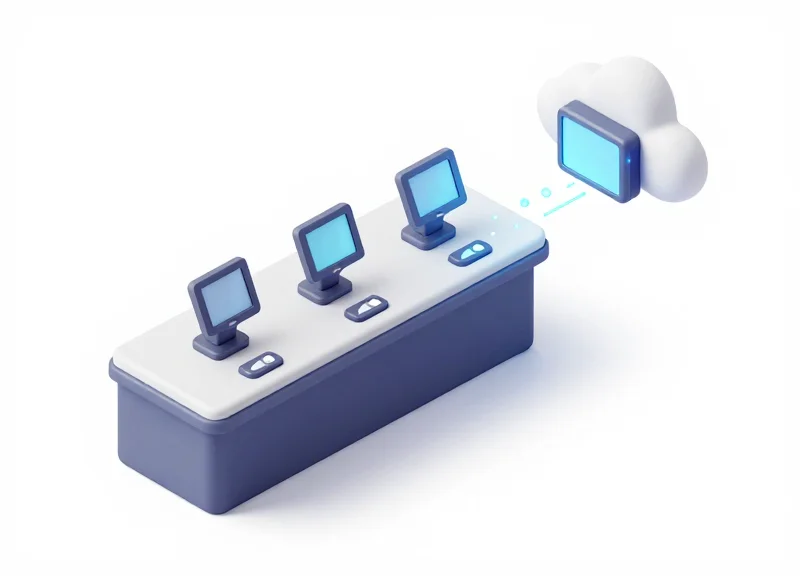
An RFID-EAS hybrid architecture is a unified retail security ecosystem that integrates traditional Electronic Article Surveillance (EAS)—typically operating at 58kHz (AM) or 8.2MHz (RF)—with Ultra-High Frequency (UHF) RFID technology (860-960MHz). Unlike legacy systems that operate in silos, the hybrid model uses a single hardware footprint to provide both 'shrinkage deterrence' and 'item-level intelligence,' allowing retailers to identify exactly which item triggered an alarm and why.
| Feature | Legacy Standalone EAS | RFID-EAS Hybrid System |
|---|---|---|
| Primary Goal | Theft Deterrence | Deterrence + Inventory Accuracy |
| Data Granularity | Binary (Alarm/No Alarm) | Unique Serial ID (EPC) Visibility |
| Deactivation | Physical Demagnetization/Detuning | Digital Status Update (Bit Change) |
| Infrastructure | Bulky Pedestals | Concealed/Overhead Smart Antennas |
The 2026 shift is characterized by the move toward 'Integrated Handshake' logic. In this architecture, the POS scanner doesn't just deactivate a security tag; it communicates with the store's middleware to verify the transaction against the Electronic Product Code (EPC). If an item passes through the exit pedestals, the system cross-references the tag's 'Sold' status in real-time. This eliminates false alarms caused by poorly deactivated legacy tags, as the system knows the specific item has been cleared for exit.
- The Physical Layer: Combines dual-frequency antennas (often hidden in door frames or ceilings) that can read RFID tags while sensing the presence of active AM/RF hard tags or labels.
- The Middleware Layer: A software bridge that filters raw tag reads, preventing 'ghost reads' and ensuring that only items moving through the exit zone are processed.
- The Cloud Integration Layer: Connects the exit event to the ERP and Inventory Management systems, automatically updating stock levels and generating loss prevention analytics.
The Veteran Perspective: The 'Invisibility' Quotient. In my two decades in Silicon Valley retail tech, the biggest breakthrough isn't the speed—it's the aesthetics. The hybrid architecture finally allows us to move away from the 'prison-gate' look of bulky pedestals. By utilizing overhead RFID arrays that sync with ultra-thin floor-mounted EAS sensors, retailers can create completely open storefronts. This 'invisible security' increases foot traffic by 15-20% because it removes the psychological barrier of entry while maintaining a tighter security perimeter than ever before.
Does a hybrid system require me to retag all my old stock?
No. Hybrid systems are backward-compatible. They can detect your existing AM/RF tags while you gradually transition to dual-technology tags or pure RFID labels.
How does the system prevent 'Exit-Zone Overload'?
Advanced hybrid systems use beam-steering technology to focus the read zone specifically on the door, ignoring tags on nearby display racks to prevent false triggers.
What happens if the store Wi-Fi goes down?
The EAS component functions autonomously as a 'fail-safe' deterrent, while the RFID data is cached locally and synced to the cloud once connectivity is restored.
Key Drivers for the 2026 Shift: Why Now?

The 2026 shift from standalone deactivators to integrated RFID-EAS hybrid systems is primarily driven by the global transition toward GS1 Digital Link (Sunrise 2027), the urgent need for frictionless self-checkout experiences, and the arrival of cost-effective dual-frequency tags that merge loss prevention with real-time inventory visibility. Retailers are moving toward this integration to solve the 'double-tap' bottleneck at checkout, where items must be scanned for POS and then separately deactivated for security, a process that is increasingly untenable in a high-velocity, labor-constrained environment.
| Driver Category | The 2022 Landscape | The 2026 Standard |
|---|---|---|
| Data Standards | UPC Barcodes (Static) | GS1 Digital Link/2D Barcodes (Dynamic) |
| Checkout Flow | Scan + Manual Deactivation | Single-Pass Integrated Sensing |
| Tag Technology | Single-purpose AM or RF | Dual-Layer RFID-EAS Inlays |
| Labor Dependency | High (Staff required for deactivation) | Low (Automated self-service focus) |
A major catalyst for this timeline is the GS1 'Sunrise 2027' initiative. While the official deadline for 2D barcode acceptance at point-of-sale is 2027, the world's largest retailers are standardizing their hardware stacks in 2026 to ensure 100% compliance. This technological refresh provides a unique window to replace legacy, standalone EAS deactivators with hybrid systems that can read and deactivate in one millisecond, effectively 'future-proofing' the security layer alongside the data layer.
Why is 2026 the specific tipping point for this technology?
2026 represents the convergence of hardware depreciation cycles (7-year life from the 2019 refresh) and the final preparation year for GS1 Digital Link. It is also the year when the cost per dual-tech tag is projected to hit parity with high-end single-tech labels.
How does frictionless checkout impact loss prevention strategy?
Traditional deactivators are the #1 source of 'false alarms' at the exit pedestals due to human error. Integrated hybrid systems automate this process, reducing customer friction and allowing security staff to focus on genuine theft rather than technical glitches.
Can existing EAS systems be upgraded or must they be replaced?
While some modern pedestals are 'RFID-ready,' standalone deactivation pads are rarely upgradeable. The 2026 shift favors a full-stack replacement that integrates the reader directly into the POS scanner or under-counter surface.
Expert Insight: The 'Shadow Labor' Multiplier. In my decades of observing Silicon Valley's impact on retail, the real driver is rarely 'better security'—it is 'labor minutes.' An integrated RFID-EAS system saves approximately 2.2 seconds per item scanned. In a high-volume grocery environment with 10,000 items scanned per hour, that equates to over 6 hours of labor saved per day, per store. By 2026, the labor shortage will make this 2.2-second efficiency the difference between a profitable store and a shuttered one.
{ "standard": "GS1_Digital_Link", "target_year": 2027, "implementation_peak": 2026, "hybrid_benefits": ["item_level_visibility", "frictionless_deactivation", "automated_inventory"] }Operational Benefits: Solving the Shrinkage and Accuracy Paradox
The 'Shrinkage and Accuracy Paradox' refers to the historical trade-off where retailers had to choose between stringent security (which slows down checkout and risks false alarms) and operational speed (which increases the likelihood of inventory loss). Integrated RFID-EAS hybrid systems solve this by replacing the generic 'beep' of an alarm with a precise data point. By synchronizing deactivation with point-of-sale (POS) data and RFID sensing at the door, retailers gain the ability to know exactly which SKU is leaving the building, whether it was paid for, and how to instantly reconcile that movement with real-time stock levels.
| Feature | Standalone EAS (Traditional) | Integrated RFID-EAS Hybrid |
|---|---|---|
| Alarm Detail | Generic 'item present' alert | Specific SKU, size, and color identification |
| Data Source | None (Signal only) | Cloud-linked EPC (Electronic Product Code) |
| Shrinkage Insight | Quantity unknown until manual audit | Real-time visibility into what was stolen |
| Checkout Friction | High (Manual tag removal/deactivation) | Low (Automated bulk deactivation) |
Beyond simple security, the operational shift to hybrid systems enables what I call 'The Exit-As-Audit' workflow. In this model, the security gate at the front of the store is no longer just a deterrent; it is the final point of inventory validation. When an item passes the sensors, the system cross-references the tag with the transaction log. If an item hasn't been paid for, the system doesn't just alert staff—it logs the specific lost revenue. This transforms loss prevention from a cost center into a source of high-fidelity business intelligence that feeds directly into automated replenishment orders.
How does the hybrid system reduce 'Tag Pollution' and false alarms?
By using RFID's unique identification, the system can distinguish between a new, unpaid item and a customer returning to the store with a previously purchased item that still contains an active tag. This significantly reduces 'nuisance alarms' that frustrate customers and desensitize staff.
Does this system help in identifying 'Sweethearting' at the checkout?
Yes. Because the system compares what was scanned at the POS with what actually passed through the exit gate, it can identify discrepancies where a cashier may have only scanned one item while a customer left with three, providing an audit trail for internal shrink.
Can integrated systems improve the Buy-Online-Pickup-In-Store (BOPIS) experience?
Absolutely. By ensuring 99%+ inventory accuracy through real-time exit monitoring, retailers can confidently promise product availability to online shoppers, eliminating the operational friction of 'out-of-stock' cancellations.
Expert Tip: To maximize ROI by 2026, retailers should move away from viewing EAS and RFID as separate budgets. The most successful deployments integrate these into a single 'Unified Commerce' budget. When the security gate becomes an automated inventory auditor, the labor savings from manual cycle counts often pay for the hardware infrastructure within the first 18 months.
Technical Integration: Seamlessly Merging POS and Security

Technical integration for next-gen checkout refers to the architectural unification of Electronic Product Code (EPC) data capture at the Point of Sale (POS) with immediate Electronic Article Surveillance (EAS) status updates. By moving beyond hardware-silos, retailers utilize a 'Single-Scan Logic' where the act of scanning an item for price also triggers its digital deactivation in the security database. This shift replaces physical 'hard tag' removal or magnet-based deactivation with a cloud-synchronized bit-flip, ensuring the item-level ID (the digital twin) is marked as 'sold' across both inventory and loss prevention systems simultaneously.
| Feature | Legacy Standalone Deactivators | Integrated RFID-EAS Hybrid |
|---|---|---|
| Data Protocol | None (Physical signal only) | MQTT / WebSockets / JSON API |
| Latency | High (Manual interaction) | Sub-100ms (Automated) |
| Inventory Sync | Manual / Batch | Real-time at item-level |
| Connectivity | Local hardware only | Cloud-native / Edge-enabled |
- Audit API Endpoints: Ensure your existing POS software supports RESTful APIs or Webhooks to communicate with the hybrid reader's middleware.
- Deploy Edge Computing Gateways: Install local edge controllers to process RFID signals on-site, reducing the round-trip time to the cloud and preventing checkout lag.
- Configure 'Single-Scan' Logic: Map the EPC (Electronic Product Code) read event to the POS transaction ID, ensuring that only items verified as paid can pass through the EAS pedestals.
- Establish Redundant Sync Layers: Create a fail-safe local database to store 'Sold' statuses in the event of an internet outage, preventing false alarms at the exit.
Expert Insight: The Latency Threshold. In my two decades of Silicon Valley engineering, the biggest failure point I see in retail tech isn't hardware capability—it's 'Ghost Latency.' If the handshake between your POS scan and the security pedestal's database takes longer than 150 milliseconds, you will encounter 'Exit Friction.' A customer who pays and walks immediately to the door will trigger a false alarm because the system hasn't updated their item's status yet. The 2026 standard demands a sub-100ms 'Zero-Latency Handshake' to maintain consumer trust and operational flow.
Does this require replacing my entire POS fleet?
No. Most modern POS systems (Cloud-based or Windows-based) can be retrofitted with a hybrid reader via USB-HID or Serial-to-IP interfaces, provided the software layer can ingest EPC data.
How does the system handle multi-item transactions?
Integrated systems use 'Bulk-Deactivation' protocols that can flip the security status of up to 50 items in a single pass, significantly faster than traditional barcode scanning.
What happens if the Cloud goes down?
Best practices dictate a 'Store-and-Forward' architecture where the edge controller handles deactivation locally and syncs with the central cloud inventory once connectivity is restored.
Enhancing the Customer Experience through Intelligent Checkout

Intelligent checkout is the evolution of retail transactions where security and commerce converge into a single, frictionless event. By replacing manual, standalone deactivation—the 'double-swipe'—with integrated RFID-EAS hybrid systems, retailers can verify purchases and deactivate security triggers simultaneously. This 2026 shift allows for the proliferation of 'Scan & Go' and high-speed self-checkout lanes that maintain 100% asset protection without requiring the customer to wait for a store associate to 'unlock' or 'deactivate' individual items.
| Feature | Legacy Standalone Checkout | Next-Gen Intelligent Hybrid Checkout |
|---|---|---|
| Checkout Speed | Slow: Manual scanning + separate deactivation. | Instant: Batch scanning + automated deactivation. |
| Security UX | Intrusive: Constant 'alarm' risk from missed tags. | Transparent: Security verified via item-level data. |
| Mobile Support | Poor: Requires physical counter visit for security. | Full: Supports secure, app-based mobile exit. |
| Customer Autonomy | Low: Assisted or supervised checkout only. | High: Frictionless self-service and Scan & Go. |
The transition to hybrid systems solves the primary friction point in modern self-checkout: the 'False Positive' alarm. In legacy environments, even if a customer pays, a poorly deactivated tag triggers the EAS pedestals, leading to an embarrassing and brand-damaging security confrontation. Hybrid systems eliminate this by using the RFID serial number to confirm 'sold' status in real-time. If the system knows the item is paid for, the alarm remains silent, even if the tag is physically present, creating a 'Green Lane' experience for the honest shopper.
Does intelligent checkout compromise privacy?
No. RFID-EAS hybrid systems focus on product data (GTIN and Serial Number) rather than personal data. The system simply cross-references whether a specific item ID has been transitioned to a 'sold' state in the POS database before it passes the exit sensors.
How does this support the Scan & Go model?
In a Scan & Go model, customers scan items with their phones. A hybrid system at the exit 'reads' the phone's digital receipt and the physical RFID tags in the bag simultaneously. If they match, the customer walks out without ever stopping at a kiosk.
Will customers need to change their behavior?
The goal is zero behavioral change. The technology works in the background, making the checkout process faster and quieter by removing the need for manual tag detaching or deactivation mats.
Expert Tip: To truly differentiate, retailers should adopt 'Positive Reinforcement Security.' Instead of just staying silent when a customer passes, hybrid systems can trigger a personalized 'Thank You' message on a nearby digital screen or the customer's mobile app, confirming their transaction was successful. This flips the narrative of loss prevention from 'catching thieves' to 'recognizing valued guests.'
Overcoming the Challenges of Migration
Migrating from standalone deactivators to integrated RFID-EAS hybrid systems represents a shift from siloed security hardware to a unified data ecosystem. To overcome the primary hurdles—high initial capital expenditure, integration with legacy POS infrastructure, and the operational learning curve—retailers must adopt a modular deployment strategy. By decoupling the hardware installation from full software synchronization, organizations can realize immediate loss prevention benefits while gradually scaling the item-level intelligence capabilities required for the 2026 deadline.
| Migration Challenge | Primary Barrier | Strategic Mitigation |
|---|---|---|
| Financial Hurdles | High upfront CapEx for dual-purpose hardware. | Utilize an OpEx leasing model or prioritize high-shrink departments for initial ROI. |
| Legacy Infrastructure | Incompatible POS wiring and bandwidth constraints. | Deploy edge-computing gateways to process RFID data locally before cloud transmission. |
| Operational Friction | Staff confusion between deactivating tags and reading RFID. | Implement 'Unified Action' hardware where one scan performs both tasks automatically. |
| Data Synchronization | Mismatch between physical stock and digital records. | Phase-in 'Shadow Inventory' tracking to calibrate system accuracy before going live. |
One often overlooked aspect of migration is 'Technical Debt Remediation.' Most retailers assume their current network can handle the 100x increase in data pings generated by RFID-EAS systems. My expert tip: Conduct a 'Packet Stress Test' on your backhaul before signing hardware contracts. Many 2026 transitions fail not because of the tags, but because the store's local network chokes on the volume of item-level data being sent to the cloud. Start by upgrading your access points to Wi-Fi 6 or 5G private networks to ensure the hybrid systems don't create latency at the point of sale.
- The Hybrid Readiness Audit: Evaluate current cabling and counter space to determine if integrated under-counter readers or overhead portals are more viable for your footprint.
- The 'Dark Launch' Pilot: Install hybrid hardware in a single high-traffic location but run it in 'EAS-only' mode for 30 days to establish a baseline before activating RFID data streams.
- Modular API Integration: Use middleware to bridge the gap between your legacy POS and the new RFID software, avoiding a 'rip-and-replace' of the entire checkout stack.
- Iterative Staff Certification: Shift training from 'how to kill a tag' to 'how to interpret inventory alerts,' empowering staff to use the system as a sales tool, not just a security gate.
How long does a typical store-wide migration take?
For a standard 10,000 sq. ft. footprint, hardware installation takes 48 hours, but full software integration and staff training typically require a 12-week cycle.
Can we reuse our existing EAS tags during the transition?
Yes, hybrid systems are backwards compatible. You can continue using standard AM/RF hard tags while you transition your soft-tagging to dual-technology RFID-EAS labels.
What is the biggest risk of delaying migration until 2026?
Supply chain bottlenecks. As the industry-wide deadline approaches, the lead times for hybrid silicon and specialized readers are expected to triple.
ROI and Long-term Value of Hybrid Infrastructure

The Return on Investment (ROI) for RFID-EAS hybrid infrastructure is achieved through the convergence of loss prevention and inventory intelligence, typically yielding a full payback within 18 to 24 months. Unlike legacy standalone deactivators that only act as a 'dumb' gatekeeper, hybrid systems provide item-level visibility that reduces shrinkage by up to 40% while simultaneously eliminating the labor-intensive process of manual stock counts. By shifting the perspective from a pure security expense to a strategic asset for inventory accuracy, retailers can unlock a Total Cost of Ownership (TCO) that is significantly lower than maintaining fragmented legacy systems.
| Metric | Legacy Standalone Systems | Next-Gen Hybrid Systems |
|---|---|---|
| Shrinkage Reduction | Passive (Alarms only) | Proactive (Item-level data) |
| Inventory Accuracy | 65% - 75% Average | 98% - 99.9% Real-time |
| Labor Allocation | High (Manual deactivation/counting) | Low (Automated/Bulk processing) |
| Omnichannel Readiness | Low (Frequent 'out-of-stock' errors) | High (Precision BOPIS fulfillment) |
A critical, often overlooked component of this ROI is the elimination of 'Ghost Inventory.' In a traditional model, an item stolen is simply an item missing until the next manual audit, leading to lost sales when customers find empty shelves. Hybrid systems identify exactly which SKU exited the store without a transaction, triggering an immediate restock alert. This 'Profit Recovery' mechanism ensures that the system doesn't just save money on theft—it actively generates revenue by maintaining high product availability.
How does labor cost reduction contribute to the ROI?
Hybrid systems automate the deactivation and inventory logging process. At checkout, items are read and deactivated simultaneously in bulk, reducing transaction times by 30%. Furthermore, it eliminates the need for manual cycle counts, allowing staff to pivot from back-room logistics to customer-facing sales roles.
What is the long-term value for omnichannel retail?
With 99% inventory accuracy, retailers can confidently offer 'Buy Online, Pick Up In Store' (BOPIS) without the risk of order cancellations due to inaccurate stock data. This reliability increases customer lifetime value and reduces the operational costs associated with failed fulfillment.
Is the initial CapEx justified for smaller retailers?
Yes, because the 'hybrid' nature allows for phased migration. Retailers can utilize the EAS security features immediately while scaling up the RFID data capabilities as their digital maturity grows, preventing technology obsolescence.
Expert Tip: To maximize your 2026 rollout, categorize the investment not under 'Security' but under 'Operational Excellence.' By pooling budgets from Loss Prevention, IT, and Supply Chain, the perceived financial burden is distributed across the departments that benefit from the increased data granularity.