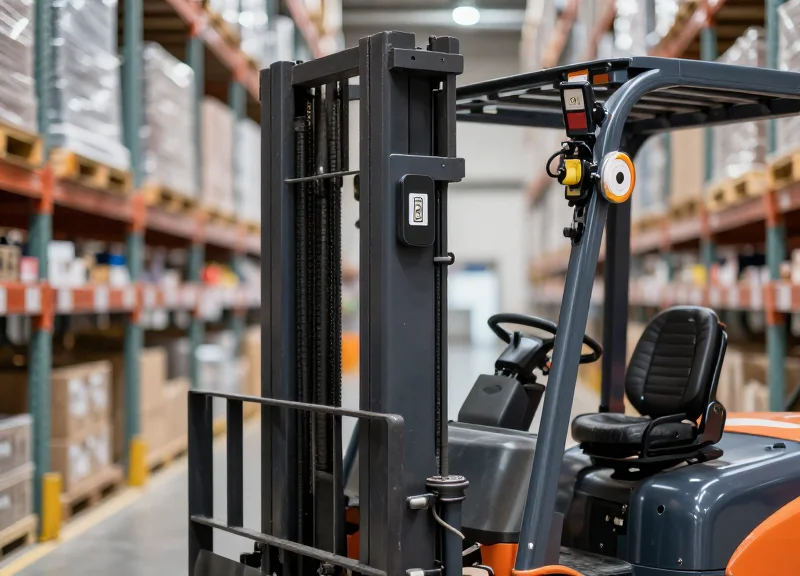
In the fast-paced world of modern logistics, manual inventory tracking is no longer sustainable. Errors in location association can lead to massive overhead costs and shipment delays. The implementation of RFID-equipped forklifts has emerged as a game-changer, promising seamless data capture. However, achieving the gold standard of 99.9% accuracy requires more than just buying a reader; it demands a strategic selection of hardware tailored to your specific environment. This guide explores how to identify and integrate the best RFID forklift readers to transform your warehouse into a high-precision operation.
The Strategic Importance of 99.9% Accuracy in Warehouse Logistics

In modern high-velocity logistics, 99.9% accuracy in RFID-based location association represents the 'Golden Threshold' where the physical warehouse and the digital inventory system achieve perfect synchronicity. When a forklift reader automatically identifies both the asset and its precise storage coordinates without operator intervention, it eliminates the single largest point of failure in supply chain management: human data entry. This level of precision transforms the forklift from a simple transport vehicle into a real-time data node, providing the high-fidelity visibility required for automated replenishment, dynamic slotting, and error-free fulfillment.
| Metric | Manual/Legacy Scanning | 99.9% RFID Automation |
|---|---|---|
| Data Latency | Delayed (Minutes/Hours) | Real-Time (Milliseconds) |
| Error Rate | 3% - 5% Average | Less than 0.1% |
| Labor Efficiency | High (Stop-and-Scan) | Optimal (Continuous Flow) |
| Inventory Visibility | Periodic Snapshots | Persistent Digital Twin |
The 'Accuracy Gap' is the primary driver of 'Invisible Loss' in the warehouse. In a facility moving 10,000 pallets per day, a 95% accuracy rate—which many consider 'good'—results in 500 misplaced or misidentified items every 24 hours. The cascading labor costs involved in search-and-rescue missions for these lost assets, combined with missed shipping windows, can erode profit margins by as much as 15%. Moving the needle to 99.9% isn't just an incremental improvement; it is a strategic shift that removes the 'friction' from the facility.
Why is 99.9% accuracy the 'Oxygen of AI' in logistics?
Modern Warehouse Management Systems (WMS) increasingly use AI for path optimization. If the input data regarding pallet location is only 95% accurate, the AI is effectively 'hallucinating' based on false data, leading to inefficient routing and wasted labor.
How does high-precision location association impact cross-docking?
In cross-docking environments, every second counts. Automated 99.9% accuracy ensures that goods move from the receiving dock to the outbound trailer with zero verification stops, maximizing throughput during peak hours.
What is the 'Expert Tip' for maintaining this accuracy level?
Avoid the 'Signal Overkill' trap. More power doesn't mean more accuracy. Achieving 99.9% requires specialized RFID antennas with controlled radiation patterns that ignore 'stray' tags in adjacent aisles, ensuring the forklift only records the item it is currently carrying.
Ultimately, the shift to 99.9% accuracy is about operational resilience. By automating the association between the forklift, the pallet, and the shelf location, organizations build a self-correcting infrastructure. If a pallet is placed in the wrong bin, the system alerts the driver immediately (Zone-Level Validation), preventing the error from becoming a 'lost' item that requires a manual cycle count to find later.
Understanding RFID Forklift Reader Architecture
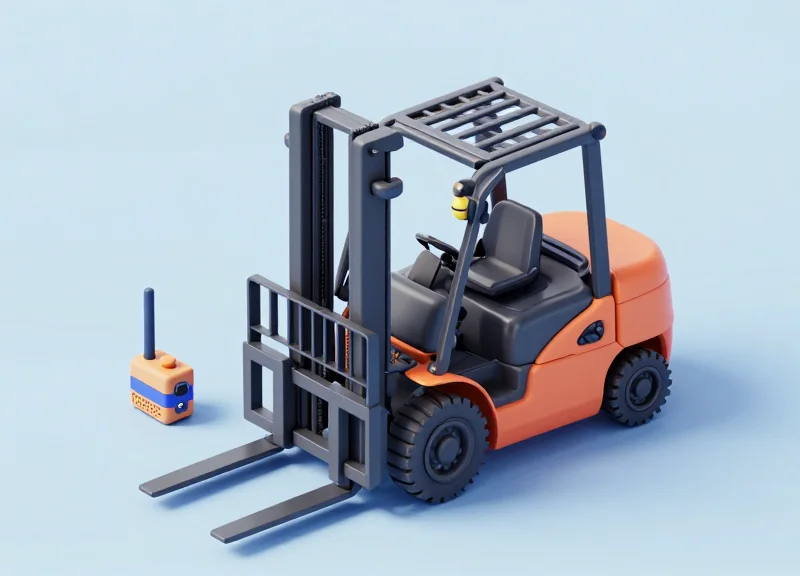
RFID forklift reader architecture is a multi-layered system that integrates ruggedized UHF (Ultra-High Frequency) hardware, spatial RF engineering, and edge-computing middleware to automate inventory tracking. Unlike fixed portal readers, forklift-mounted systems must solve for high-vibration environments and 'stray reads' from adjacent aisles. Achieving 99.9% accuracy requires a synchronized stack where hardware triggers (like load sensors) communicate with the reader via GPIO to ensure the system only records data when a pallet is physically engaged.
| Component Layer | Primary Function | Critical Specification for 99.9% Accuracy |
|---|---|---|
| Ruggedized Reader | Processes RF signals into digital data | High sensitivity (-80dBm+) and IP67/69K rating |
| Specialized Antennas | Radiates RF energy to activate tags | Circularly polarized to read tags at any orientation |
| Edge Middleware | Filters data and manages business logic | Real-time RSSI (signal strength) filtering |
| Sensor Integration | Determines fork height and load status | GPIO-linked optical or pressure sensors |
The Expert Insight: The 'Mute' Logic. The secret to 99.9% accuracy isn't a more powerful reader; it is 'Selective Activation.' In Silicon Valley's top-tier deployments, we use 'Spatial Logic Filtering.' This means the RFID reader is 'muted' until a load sensor confirms a pallet is on the forks and an ultrasonic sensor confirms the forklift is within a rack's proximity. This prevents the system from accidentally 'associating' the forklift with a pallet it just drove past in the next aisle.
- Signal Acquisition: The reader sends energy to the antennas (usually mounted on the carriage or backrest), which wake up the passive UHF tags on the pallet.
- GPIO Triggering: A pressure or infrared sensor detects the pallet's presence, signaling the reader to lock the current tag ID to the forklift's unique ID.
- Location Mapping: The system cross-references the tag read with a floor-embedded RFID tag or a Wi-Fi-based RTLS to determine the exact bay location.
- WMS Synchronization: The filtered, validated data is pushed via MQTT or HTTP to the Warehouse Management System, updating inventory levels in milliseconds.
Why is an external edge controller better than using the reader's internal memory?
External controllers (Edge Gateways) handle complex filtering and buffer data during Wi-Fi 'dead zones' common in massive warehouses, ensuring no data loss.
Do I need two or four antennas for a standard forklift?
For 99.9% accuracy, a two-antenna array is standard: one focused on the load and one focused on the floor/rack markers to provide dual-point verification.
How does architecture handle vibration and shock?
Military-grade M12 connectors and vibration-dampening mounts are required to prevent 'antenna drift' and hardware failure during 24/7 operations.
Key Technical Specs: Sensitivity, Power, and Read Rates
To ensure 99.9% accuracy in automatic location association, RFID readers mounted on forklifts must master the 'Golden Triangle' of hardware performance: Sensitivity, Power, and Read Rates. Unlike fixed portal readers, forklift-mounted units operate in a dynamic, high-vibration environment where the distance to the tag and the angle of approach are constantly shifting. High sensitivity (measured in dBm) allows the reader to 'hear' weak backscatter signals from passive tags, while high read rates ensure that even a split-second window of visibility—such as passing a floor marker at 10 mph—is sufficient for a confirmed data capture.
| Technical Specification | Threshold for 99.9% Accuracy | Why It Matters for Forklifts |
|---|---|---|
| Receiver Sensitivity | -82 dBm to -95 dBm | Crucial for reading tags obscured by shrink wrap or positioned at non-ideal angles. |
| Transmit Power (PoE+) | Up to 31.5 dBm (adjustable) | Provides the 'punch' to energize tags in dense environments without draining battery too fast. |
| Tag Read Rate | 700+ tags per second | Prevents data loss during high-speed travel or when multiple pallets are in the field of view. |
| IP Rating | IP67 or higher | Protects internal components from the vibration and dust typical of forklift operations. |
The most common mistake in RFID deployment is over-prioritizing raw power. While a 31.5 dBm output allows for long-range detection, it often leads to 'phantom reads'—capturing tags from adjacent aisles or racks, which destroys location accuracy. True precision comes from high receiver sensitivity paired with narrow-beam antennas and a 'sensitivity floor' setting. This allows the reader to ignore low-level noise and focus exclusively on the strongest, most relevant signal, which is typically the tag directly in front of the forks.
- Expert Insight: The RSSI Filtering Strategy: Silicon Valley veterans use Received Signal Strength Indicator (RSSI) filtering to achieve 99.9% accuracy. By setting the reader to only accept signals above a specific dBm threshold, you create a virtual 'electronic fence' around the forklift, ensuring that only the pallet currently being moved is registered, effectively eliminating bleed-over from neighboring storage bins.
How does sensitivity affect read reliability in metal-heavy racks?
Metal reflects RF signals, creating multipath interference. A high-sensitivity reader (-90 dBm or better) can better distinguish the intended tag signal from these reflections, ensuring the reader doesn't 'miss' a tag due to destructive interference.
Why is a high read rate necessary for location association?
As a forklift moves, it may only be in the 'sweet spot' of a floor tag or rack marker for 100 milliseconds. A reader with a high read rate (750+ tags/sec) can perform dozens of redundant reads in that window, confirming the location with high statistical confidence.
Is more power always better for RFID readers?
No. Excessive power increases 'stray reads' from nearby zones. The best readers offer granular power control (0.1 dB increments) so you can tune the read zone to the exact dimensions of your forklift's reach.
Overcoming the 'Metal Problem': RFID Interference on Forklifts
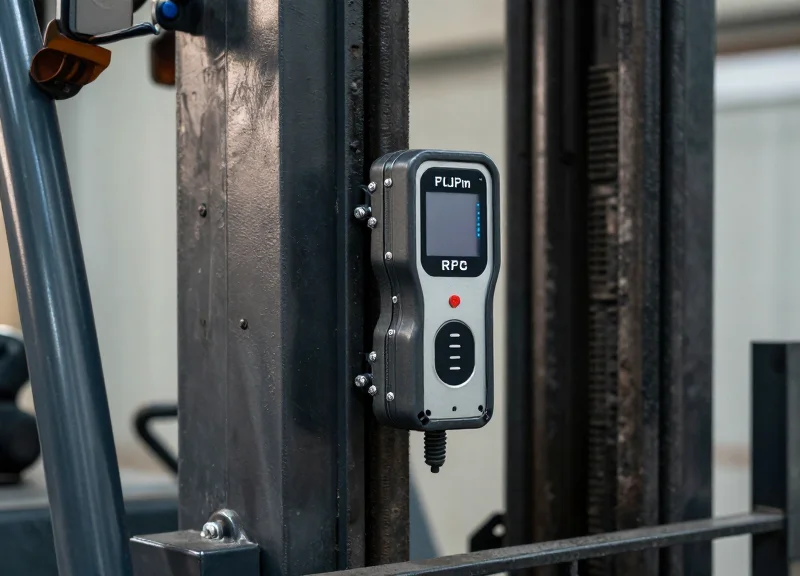
The 'Metal Problem' in RFID logistics refers to the dual challenge of signal reflection and electromagnetic shielding caused by conductive surfaces. Because forklifts are primarily steel and operate amidst dense metal racking, RF waves bounce erratically (multipath interference) or are absorbed, leading to 'null zones' where tags become invisible. Achieving 99.9% accuracy requires hardware that doesn't just push more power, but intelligently manages these reflections to maintain a consistent read zone regardless of the forklift's orientation.
| Interference Type | Impact on Accuracy | Technical Solution |
|---|---|---|
| Multipath Reflection | Causes 'ghost reads' or signal cancellation. | Circular Polarized Antennas & RSSI Filtering |
| RF Shielding | Metal frames block signals from reaching the tag. | Antenna Stand-offs (The 1-Inch Air Gap Rule) |
| Detuning | Metal surfaces shift the tag's resonant frequency. | High-Dielectric On-Metal Tags |
A common mistake in forklift deployments is mounting antennas flush against the steel mast. This causes the metal to act as a parasite to the antenna's radiation pattern, distorting the beam. Expert Tip: The 1-Inch Air Gap. Always use non-conductive spacers (like high-density polyethylene) to create at least a one-inch gap between the antenna and the forklift frame. This simple physical offset prevents the metal from 'detuning' the antenna, often increasing read reliability by up to 15% without changing any software settings.
- Select Circular Polarized Antennas: Unlike linear antennas which require strict tag orientation, circular antennas create a corkscrew signal pattern that is far more resilient to the chaotic reflections found in metal-heavy environments.
- Implement RSSI Thresholding: Configure your reader middleware to ignore Low Received Signal Strength Indicator (RSSI) values. This ensures the system only 'associates' locations when the forklift is directly over the floor tag, ignoring distant reflections.
- Deploy On-Metal (Mount-on-Metal) Tags: Standard RFID tags fail when applied to metal racks or forklift bins. Use tags with a built-in spacer or specialized ceramic backing that leverages the metal surface as a ground plane to actually boost signal range.
Will increasing reader power overcome metal interference?
Not necessarily. While it might increase range, it also increases the severity of multipath reflections, often leading to more 'false positives' and decreased location accuracy.
Is 'Faraday Shielding' a concern for forklifts?
Yes. If a tag is placed inside a deep metal container or behind a thick forklift mast, the RF signal cannot reach it. Strategic antenna placement (usually dual-antenna setups) is required to ensure a clear Line of Sight (LoS).
The Role of Directional Antennas in Location Association
In the context of RFID-enabled forklifts, directional antennas serve as the 'optical focus' for the reader, creating a highly controlled read zone that isolates specific location tags from surrounding environmental noise. Unlike omnidirectional antennas that broadcast in a 360-degree radius, directional antennas concentrate RF energy into a specific beamwidth (typically 30 to 70 degrees). This spatial selectivity is the fundamental requirement for achieving 99.9% accuracy, as it ensures the system only 'sees' the tag directly in front of the forks or the overhead rack, effectively eliminating the risk of 'stray reads' from adjacent aisles or higher shelf levels.
| Antenna Type | Beamwidth Pattern | Typical Use Case | Location Accuracy Impact |
|---|---|---|---|
| Omnidirectional | 360° Circular | General asset tracking in open areas | Low: Causes frequent 'ghost' reads from nearby racks. |
| High-Gain Patch | 30° - 60° Directional | Precision aisle and rack identification | High: Limits read zone to a single shelf or bin. |
| Linear Polarized | Narrow/Focused | High-speed portal or fixed-path reading | Medium: Excellent range but sensitive to tag orientation. |
| Circular Polarized | Wide/Consistent | General forklift mounting (standard) | High: Balances range with reliable tag orientation. |
To prevent 'stray reads'—where a reader captures a tag from a neighboring rack and incorrectly updates the WMS—engineers must manage the 'Front-to-Back Ratio' of the antenna. This specification dictates how much signal leaks out of the back of the antenna. For forklifts, a high front-to-back ratio is essential so that the metal carriage of the forklift doesn't reflect stray signals toward tags behind the vehicle. By narrowing the horizontal and vertical beamwidths, we create a 'curtain' of RF energy that only triggers when the forklift is within 12-24 inches of the target location marker.
How do directional antennas prevent 'cross-talk' between adjacent forklift aisles?
By utilizing a narrow H-Plane (horizontal) beamwidth, the RF energy is confined to the specific rack the forklift is facing. This prevents the signal from reaching the tags on the opposite side of the aisle, even if they are within the reader's nominal range.
Does higher antenna gain always mean better location accuracy?
No. While higher gain increases read distance, it often narrows the beamwidth too much for close-range bin association. The goal is 'Beam Shaping' rather than raw power; the antenna should be tuned to the specific distance between the forklift mast and the rack tags.
What is the 'Side Lobe' effect in RFID antennas?
Side lobes are small 'pockets' of RF energy that escape the main beam. For 99.9% accuracy, selecting antennas with 'Side Lobe Suppression' is critical to ensure that a tag 5 feet to the left isn't accidentally read by a secondary energy peak.
Expert Insight: The 'Shielding by Design' Strategy. A common mistake in RFID deployment is relying solely on software to filter out wrong reads. For the highest level of accuracy, leverage the forklift's own physical structure. By mounting directional antennas low on the carriage and angled slightly downward, the metal forks and the ground act as a natural RF shield. This 'Geometric Isolation' creates a physical null zone, ensuring that the reader can physically never reach a tag unless the forklift is properly positioned at the pick-face.
Durability and Industrial Rating: Beyond the Spec Sheet
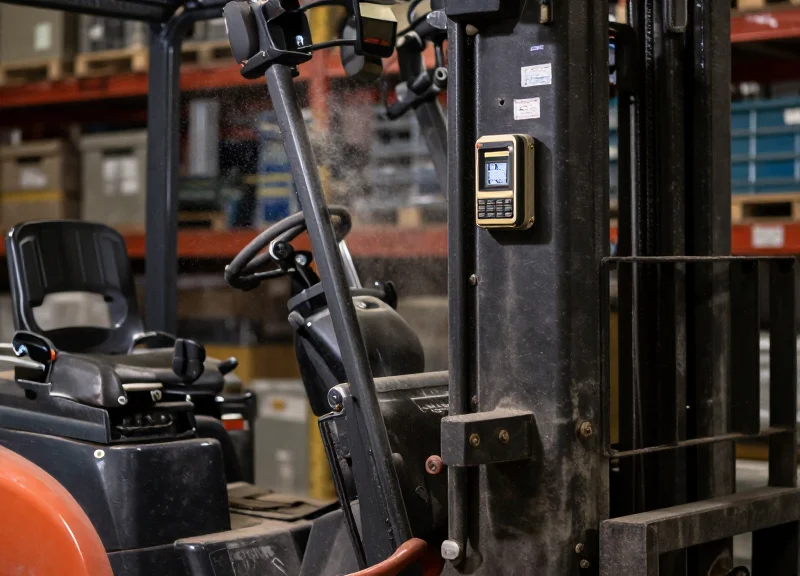
For RFID forklift systems, durability is the silent architect of accuracy; a reader that loses calibration or connectivity due to vibration cannot maintain 99.9% location association. Beyond simple ingress protection, true industrial-grade hardware must withstand the constant mechanical resonance of a 5,000-lb vehicle, extreme temperature fluctuations in cold storage, and the erratic electrical surges of an on-board power supply. If the hardware fails under physical stress, the digital twin of your inventory immediately diverges from reality.
| Environmental Factor | Minimum Requirement | The 'Gold Standard' | Impact on Accuracy |
|---|---|---|---|
| Ingress Protection | IP65 (Dust/Water) | IP67 or IP69K | Prevents internal corrosion that causes signal drift. |
| Shock/Vibration | Standard Industrial | MIL-STD-810G | Ensures antenna remains aligned and cables stay seated. |
| Operating Temp | 0°C to 40°C | -30°C to +60°C | Essential for cold chain and non-climate warehouses. |
| Electrical Isolation | Basic Surge Prot. | Optical Isolation | Prevents 'phantom reads' from forklift motor noise. |
The Veteran's Insight: The 'Cable-First' Failure Point. In twenty years of deployments, I have seen that 70% of 'reader failures' are actually connector and cable failures. Standard SMA connectors are not designed for the constant shudder of a forklift on uneven concrete. When selecting hardware, look for M12 connectors or proprietary locking mechanisms and use high-flex, double-shielded LMR-series cables. If your connector can be unscrewed by hand, it will eventually vibrate loose, leading to intermittent signal loss and a total breakdown of your automatic location association.
Why is MIL-STD-810G more important than an IP rating for forklifts?
IP ratings only measure resistance to particles and liquids. MIL-STD-810G tests for shock, vibration, and mechanical stress. Since forklifts have no suspension and travel over dock plates and expansion joints, the constant G-force impact is more likely to kill a reader than a splash of water.
Does cold storage require special RFID hardware?
Yes. Beyond just temperature ratings, look for 'heated' enclosures or internally regulated components. Transitioning a forklift from a cold freezer to a warm loading dock causes condensation; without proper sealing and thermal management, moisture will form inside the reader housing, shorting the board.
How does vibration affect 99.9% accuracy?
High-frequency vibration can cause 'oscillator drift' in the reader's radio module. This shifts the frequency slightly, reducing sensitivity and causing the reader to miss the location tags it is supposed to associate with, dropping your accuracy below the required threshold.
Integration Capabilities: Connectivity and Protocol Support
In the world of automated logistics, an RFID reader is only as valuable as its ability to communicate with the rest of your tech stack. Integration capabilities refer to the bridge between the raw data captured at the forklift bumper and the actionable information processed by your Warehouse Management System (WMS) or Enterprise Resource Planning (ERP) software. To ensure 99.9% location accuracy, the reader must support low-latency protocols like LLRP (Low Level Reader Protocol) and provide resilient wireless connectivity that can handle the fast-paced, interference-heavy environment of a modern distribution center.
| Connection Type | Best Use Case | Key Advantage |
|---|---|---|
| Wi-Fi 6 (802.11ax) | High-density warehouses | Superior capacity and lower latency in congested spectrums. |
| PoE (Power over Ethernet) | Charging stations/Fixed gates | Delivers power and data via one cable; ideal for fixed checkpoints. |
| Bluetooth / BLE | Peripheral syncing | Connects to rugged tablets or handheld scanners for manual overrides. |
| 4G/5G Cellular | Outdoor yards and ports | Maintains connectivity where Wi-Fi infrastructure is absent. |
Why is LLRP the industry standard for forklift integration?
LLRP provides a vendor-neutral interface that gives the WMS granular control over the reader's air protocol parameters. This is essential for fine-tuning antenna power and read cycles to ensure 99.9% accuracy.
Can RFID readers support modern IoT protocols?
Yes, high-end readers now support MQTT and HTTP/REST APIs. These protocols are ideal for lightweight data transmission directly to cloud platforms or internal microservices without needing heavy middleware.
Is on-device GPIO support necessary?
Absolutely. General Purpose Input/Output (GPIO) ports allow the reader to trigger external hardware, such as signal lights for the driver or audible alarms when an incorrect location is detected.
Expert Insight: The Roaming Handover Factor. A common pitfall in forklift RFID deployments isn't the reader's power, but its network 'stickiness.' Standard Wi-Fi chips often cling to a weak Access Point signal as the forklift moves, causing data lag and location errors. For 99.9% accuracy, select readers with 'Aggressive Roaming' configurations or sub-100ms handover times. This ensures the reader switches to the nearest AP instantly, preventing the data packets that associate a pallet with a location tag from being dropped during transit.
Calculating Total Cost of Ownership (TCO) vs. ROI
Calculating the Total Cost of Ownership (TCO) for RFID forklift readers involves more than just comparing the sticker price of the hardware; it requires a holistic view of CAPEX (initial purchase and installation) and OPEX (maintenance, software updates, and labor costs associated with system errors). While economy readers may lower the barrier to entry, premium industrial-grade readers typically deliver a significantly higher Return on Investment (ROI) by minimizing the 'Exception Management' labor that occurs when location data is inaccurate.
| Financial Metric | Economy-Grade RFID System | Premium Industrial-Grade (99.9% Target) |
|---|---|---|
| Hardware Lifespan | 12–24 Months (Consumer components) | 5–7 Years (Mil-spec/Industrial) |
| Installation Complexity | High (Requires manual shielding/tuning) | Low (Auto-tuning and GPIO logic) |
| Accuracy-Related Labor | High (Manual overrides for missed reads) | Near-Zero (Hands-free automation) |
| System Downtime | Frequent (Vibration/shock failures) | Minimal (Ruggedized housing/connectors) |
Expert Insight: The 0.1% Labor Multiplier. In a high-throughput facility, the difference between 99% and 99.9% accuracy isn't just 0.9%; it is a nonlinear labor spike. A single missed location association can trigger a 20-minute 'search and find' mission by a supervisor. If a fleet of 20 forklifts misses just five reads a day each, you lose over 30 labor hours per week. Premium hardware pays for its own price delta in labor savings alone within the first quarter of operation.
- Step 1: Quantify the 'Cost of a Ghost': Calculate the average time spent by warehouse staff locating misplaced pallets due to 'ghost' or missed reads. Multiply this by the hourly loaded labor rate to find your baseline operational loss.
- Step 2: Factor in Hardware Replacement Cycles: Standard RFID readers not built for vibration environments often fail within 18 months. Amortize the cost of the reader plus the labor for a technician to re-mount and re-calibrate the unit over a 5-year period.
- Step 3: Evaluate Middleware and Integration: Cheaper readers often lack robust LLRP support or edge processing. Factor in the cost of custom software development required to filter 'stray reads' that higher-end readers handle natively.
How long is the typical payback period for industrial RFID readers?
Most enterprises see full ROI within 6 to 14 months, primarily driven by a 20-30% increase in forklift driver efficiency and the elimination of manual data entry errors.
Does PoE (Power over Ethernet) reduce TCO?
Yes. Readers that support PoE+ reduce wiring complexity on the forklift, lowering installation costs by approximately 15% compared to DC-converter setups.
What is the biggest hidden cost in RFID deployments?
Inadequate mounting. Using non-dampened brackets leads to internal component fatigue, causing intermittent read failures that are difficult and expensive to diagnose.
Deployment Best Practices for Maximum Performance
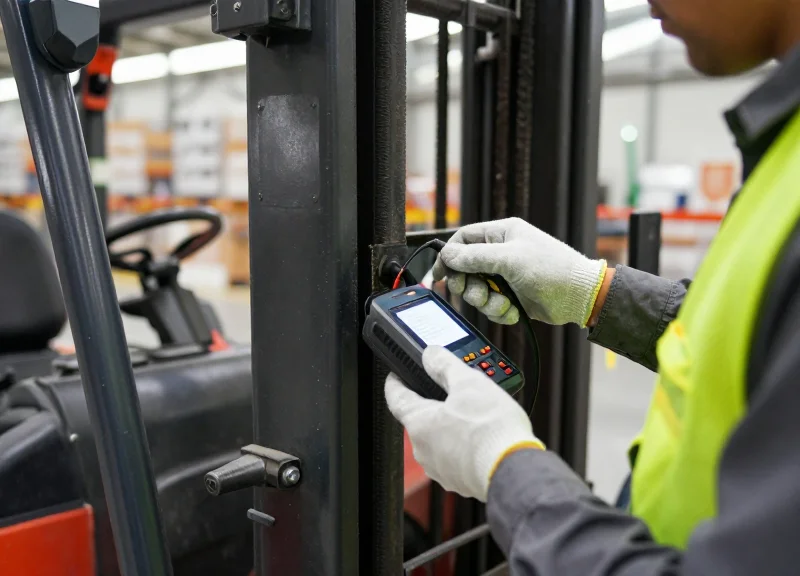
Achieving near-perfect accuracy in automatic location association is less about the reader's raw power and more about controlled RF isolation. To hit the 99.9% target, engineers must treat the forklift as a mobile RF laboratory, ensuring that antennas are shielded from stray reads behind the vehicle while maintaining a high-gain 'sweet spot' for floor or rack tags. Success depends on a combination of rigid mechanical mounting to withstand 5G vibration shocks and software-level RSSI (Received Signal Strength Indicator) filtering that distinguishes between a tag 'passed by' and a tag 'arrived at'.
| Mounting Location | Primary Benefit | Key Challenge | Accuracy Impact |
|---|---|---|---|
| Fork Carriage | Closest proximity to pallet tags. | High risk of mechanical impact/cable shear. | High for pallet ID; Low for location. |
| Lower Mast | Ideal for floor-mounted location tags. | Metal mast interference (Multipath). | Highest for 99.9% floor-tag association. |
| Overhead Guard | Wide field of view for high-rack tags. | Potential for 'stray reads' from adjacent aisles. | High for z-axis/vertical location. |
- The 'Null Zone' Calibration: Position the antenna so the forklift’s own steel frame acts as a natural RF shield, blocking signals from tags in the opposite aisle. This 'Faraday Shadowing' is the most effective way to eliminate false positives.
- Angle Optimization (The 15-Degree Rule): Tilt antennas roughly 15 degrees toward the direction of travel. This compensates for the vehicle's velocity, ensuring the reader has enough 'dwell time' on a tag to confirm a valid read before the forklift moves out of range.
- RSSI Thresholding for Proximity Locking: Configure your software to ignore any tag with a signal strength below a specific dBm threshold. This ensures the system only associates with the location tag directly beneath or beside the forklift, rather than a stronger tag 10 feet away.
Expert Insight: The 'Kinematic Validation' Edge. A common mistake is treating RFID reads as static events. In high-performance deployments, we implement 'Kinematic Validation'—a logic gate that cross-references the RFID read with the forklift's motion sensors (IMU). If the RFID reader detects a location change while the wheels haven't moved, the system flags a 'ghost read' and maintains the current location. This integration is the secret sauce for reaching that elusive 99.9% accuracy in high-density warehouses.
How often should antenna alignment be checked?
In high-intensity shifts, physical alignment should be inspected monthly. Even a 5-degree shift due to vibration can increase stray read rates by 15%.
Can I use standard zip ties for mounting cables?
No. Always use industrial-grade, UV-resistant stainless steel cable ties or conduit. Plastic ties embrittle and snap under the constant vibration and temperature fluctuations of a warehouse.
What is the best way to test the 99.9% accuracy target?
Perform a 'Soak Test' consisting of 1,000 automated pick-and-place cycles across various speeds and lighting conditions. This provides a statistically significant sample to prove your error rate is below 0.1%.
Future-Proofing Your System: RFID, ESL, and IoT Synergy
Future-proofing an RFID-enabled warehouse means moving beyond simple data collection to an integrated ecosystem where RFID forklift readers serve as mobile edge gateways. A future-ready system doesn't just read tags; it harmonizes data from Electronic Shelf Labels (ESL), environmental sensors, and location beacons to maintain a 'Digital Twin' of the facility. To achieve 99.9% accuracy over the next decade, your hardware must support open standards (like MQTT and gRPC) and possess enough onboard processing power to handle sensor fusion—the combining of RFID data with optical or inertial data—at the edge.
| Feature | Legacy RFID Readers | Future-Ready IoT Readers |
|---|---|---|
| Data Processing | Raw data stream to central server | Edge computing (filtering & logic on-device) |
| Connectivity | Single-channel (WiFi or Ethernet) | Multi-protocol (WiFi 6, 5G, BLE, LoRaWAN) |
| Integration | Proprietary middleware required | Native Cloud/API support (AWS, Azure, REST) |
| ESL Interaction | None (Separate infrastructure) | Unified control via BLE or Sub-GHz protocols |
Why should RFID readers integrate with Electronic Shelf Labels (ESL)?
Integrating ESL with RFID forklift systems allows for 'Closed-Loop Verification.' When a forklift places a pallet, the RFID reader confirms the location while simultaneously triggering the ESL to update its display and status, ensuring the physical shelf and digital record are perfectly synced without manual intervention.
How does IoT synergy improve location accuracy?
By combining RFID with other IoT sensors like UWB (Ultra-Wideband) or LiDAR on the forklift, the system can cross-reference signal strength with physical distance, eliminating 'stray reads' from adjacent aisles and maintaining 99.9% precision.
What role does Over-the-Air (OTA) management play?
As communication protocols and security standards evolve, the ability to push firmware updates and new decoding algorithms to a fleet of forklift readers remotely is essential to prevent hardware obsolescence.
Expert Insight: The 'Containerization' Requirement. When selecting your next reader, ask the vendor if the device supports containerized applications (like Docker). The most advanced Silicon Valley logistics hubs are now deploying custom logic directly onto the reader to handle 'Conflict Resolution' locally. For example, if a reader detects two different location tags, a local script can analyze the RSSI (Received Signal Strength Indicator) trends in real-time to decide which tag is the true location, only sending the 'truth' to your WMS. This reduces network congestion and dramatically increases system responsiveness.