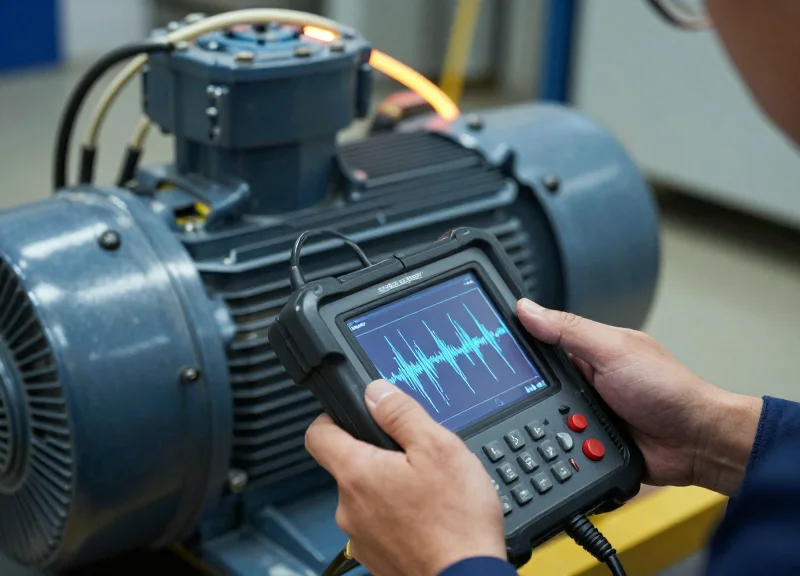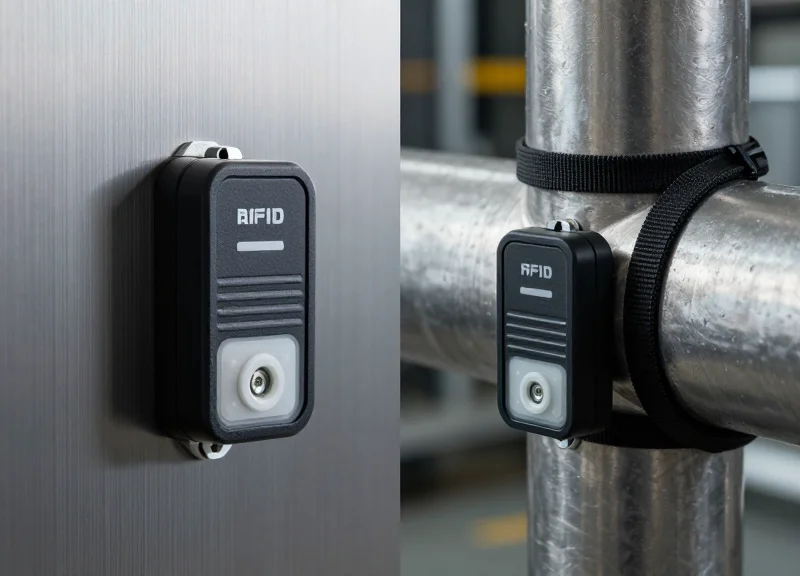
As we head into 2026, the demand for real-time visibility in industrial operations has reached unprecedented levels. While software and cloud integration often steal the spotlight, the physical durability of the tracking hardware remains the backbone of any successful deployment. In heavy-duty environments like oil and gas, construction, and heavy manufacturing, choosing between Bolt-on and Cable-Tie RFID tags is not just a logistical detail—it is a critical decision that determines the longevity of your asset tracking system and the accuracy of your data. This guide provides an authoritative comparison to help you streamline your operations and maximize ROI.
The Evolution of Industrial Asset Tracking in 2026

By 2026, industrial asset tracking has evolved from a back-office inventory function into a front-line operational necessity. The shift from Industry 4.0 to Industry 5.0 has prioritized human-machine collaboration and hyper-personalization, requiring assets to be not just 'trackable' but 'context-aware.' Modern tracking systems now demand near-100% data continuity, moving away from flimsy adhesive labels toward high-durability mounting solutions like bolt-on and cable-tie RFID tags. These hardware-integrated tags ensure that an asset’s digital twin remains physically anchored to its physical counterpart throughout extreme thermal, chemical, and mechanical stress cycles.
| Feature | Legacy Tracking (Pre-2022) | Modern Tracking (2026+) |
|---|---|---|
| Mounting Tech | Adhesives & Stickers | Bolt-on, Cable-tie, Weld-on |
| Data Role | Static ID Retrieval | Dynamic Lifecycle Logging |
| Durability | Low (Indoor/Controlled) | Extreme (IP69K, UV, Sub-zero) |
| Integration | Standalone Silos | Unified IoT & ERP Ecosystems |
- Industry 5.0 Connectivity: The focus has shifted to resilience and sustainability. Tags must now survive the entire lifespan of the asset to support 'Circular Economy' mandates, where every component is tracked for reclamation.
- AI-Driven Logistics: Autonomous mobile robots (AMRs) and drones rely on high-visibility, permanently mounted tags to navigate and manage warehouse stock without human intervention.
- Digital Product Passports (DPP): Regulatory shifts in the EU and North America now require a 'digital birth certificate' for industrial equipment, making permanent attachment methods like bolting a legal safeguard.
### The 'Physical-Digital Bond' Insight An original development in 2026 is the emergence of the 'Physical-Digital Bond.' In previous years, an RFID tag falling off was a minor inconvenience. Today, in a fully automated facility, a lost tag is a 'dead' asset that can halt an entire production line. We are seeing a move toward 'Structural RFID,' where the choice between a bolt-on or cable-tie tag is determined by the vibration frequency and surface integrity of the asset. Expert Tip: When selecting your 2026 hardware, treat the attachment mechanism as a critical failure point; if the mounting fails, your entire digital transformation ROI disappears.
Deep Dive into Bolt-on RFID Tags: Maximum Security
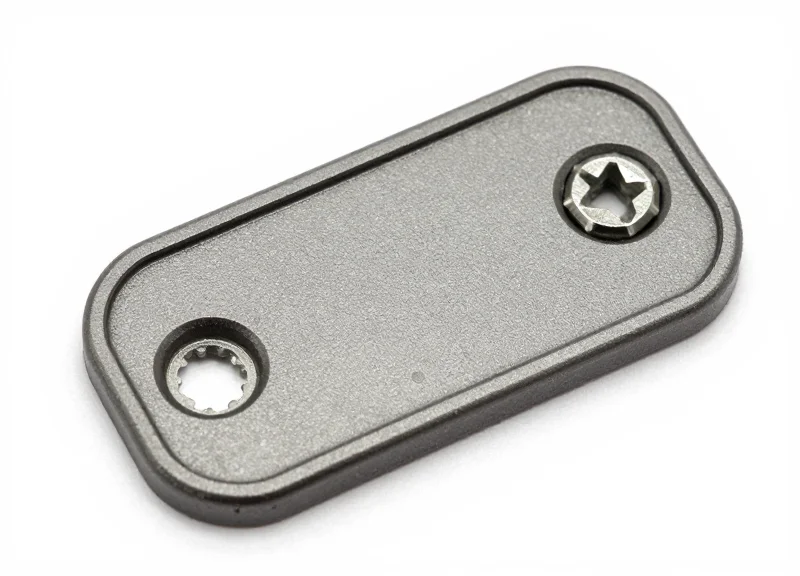
Bolt-on RFID tags are high-durability tracking devices engineered for permanent integration into heavy-duty industrial assets. Unlike adhesive or strap-based solutions, these tags are mechanically fastened—typically using screws, bolts, or rivets—to provide a 'locked-in' data point that remains intact despite extreme vibration, thermal cycling, or high-impact physical stress. In the context of 2026 industrial standards, they are the preferred choice for assets with life cycles exceeding five years where tag loss is not just an inconvenience, but a critical compliance or safety failure.
The engineering philosophy behind bolt-on tags centers on structural integrity. By utilizing the asset's own chassis as a mounting plane, these tags eliminate the 'peel strength' vulnerabilities inherent in adhesives. For the 2026 market, we are seeing a shift toward specialized housing materials like Polyether ether ketone (PEEK) and 316L Stainless Steel, ensuring the internal silicon chip is shielded from the 'crush and shear' forces common in mining, maritime, and heavy construction environments.
| Feature | Bolt-On Specification (2026 Standard) | Operational Benefit |
|---|---|---|
| Mounting Method | Dual-hole M4/M5 Bolt or Rivet | Zero-movement stability under high G-force |
| Enclosure Material | Impact-Modified Polyamide or Reinforced Steel | Resistance to chemical washdowns and abrasion |
| Temperature Range | -50°C to +250°C (Extended range) | Reliability in smelting and cryogenic storage |
| IP Rating | IP69K / IP68 | Protection against high-pressure steam cleaning |
- Vibration Fatigue Resistance: Engineered with internal potting compounds that suspend the RFID inlay, preventing solder joint failure during constant mechanical oscillation.
- Anti-Tamper Engineering: When used with security-head bolts, these tags become virtually impossible to remove without specialized tools, preventing unauthorized asset reassignment.
- Thermal Expansion Balancing: Modern bolt-on tags feature slotted mounting holes to allow for the differential expansion between the tag body and the metal asset surface, preventing stress fractures.
Expert Insight: The Shear Force Factor. Many operators overlook the 'Shear Force' during the selection process. In heavy machinery, a tag isn't just sitting there; it's often subjected to lateral impacts from debris. A bolt-on tag with a 'low-profile' or 'beveled edge' design significantly reduces the surface area available for an impact to catch and 'shear' the tag off. In my 20 years of field audits, I’ve found that a recessed bolt-on tag survives 400% longer than a proud-mounted cable-tie tag in high-debris zones like aggregate processing.
Are bolt-on tags safe for pressurized vessels?
Direct drilling into pressurized vessels is generally prohibited. In these cases, look for bolt-on tags that can be attached to existing flange bolts or structural brackets already present on the asset.
Do metal surfaces interfere with the signal?
Most high-end bolt-on tags are 'on-metal' designs, featuring an internal spacer or specialized antenna geometry that uses the metal surface as a ground plane to actually enhance read range.
The Versatility of Cable-Tie RFID Tags: Flexibility and Speed
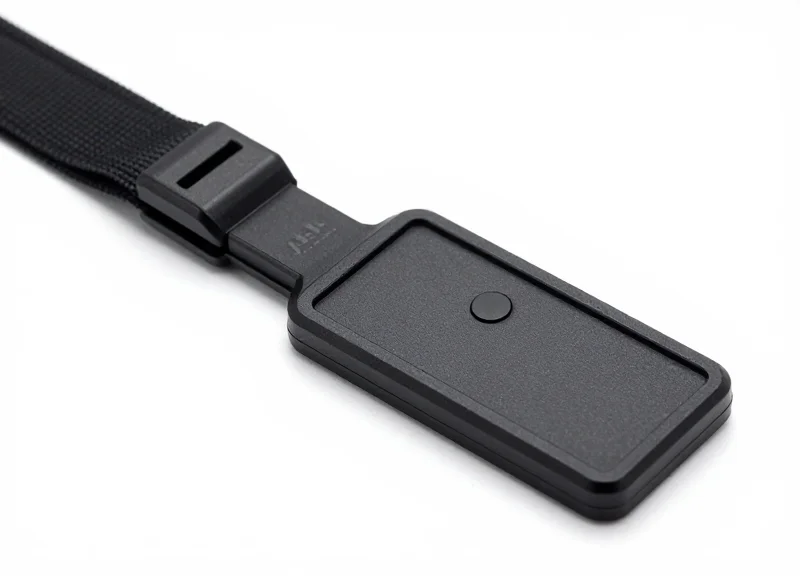
Cable-tie RFID tags, often referred to as zip-tie tags, are specialized tracking devices that integrate a high-frequency (HF) or ultra-high-frequency (UHF) transponder directly into a self-locking strap mechanism. Unlike bolt-on alternatives that require drilling or specialized adhesives, cable-tie tags enable 'Zero-Tool Deployment' (ZTD), allowing operators to secure assets ranging from curved piping and electrical bundles to temporary scaffolding in under five seconds. In the context of 2026 industrial standards, these tags have evolved beyond simple plastic straps to include high-tensile materials and tamper-evident locking heads that ensure the digital identity remains inseparable from the physical asset during its lifecycle.
- Irregular Geometry Compatibility: The flexible strap conforms to cylindrical, hexagonal, or completely asymmetrical surfaces where a flat bolt-on tag would fail to sit flush.
- Rapid Deployment for High-Volume Inbound: Ideal for temporary staging areas or rental fleets where thousands of items must be tagged and logged into a Warehouse Management System (WMS) within a single shift.
- Non-Invasive Attachment: Perfect for sensitive assets like pressurized hoses or certified lifting slings where drilling holes (for bolts) would compromise structural integrity or void safety certifications.
- Bundled Asset Management: Simultaneously secures and identifies groups of materials, such as rebar bundles or fiber optic cables, providing both physical organization and digital data.
| Feature | Industrial Nylon (Standard) | 316 Stainless Steel (Premium) |
|---|---|---|
| Max Temperature | 85°C (185°F) | 500°C+ (Varies by IC) |
| Chemical Resistance | Moderate (Oil/Grease) | High (Acids/Salts) |
| Tensile Strength | 50 - 120 lbs | 250 - 500 lbs |
| Primary Use Case | Indoor Logistics/IT | Offshore/Mining |
Expert Insight: For 2026, the industry is shifting toward 'Dual-Logic' locking mechanisms. This involves a secondary physical 'tell'—a color-change or break-away tab—that triggers if the cable tie is over-tensioned or tampered with. This provides a visual fail-safe alongside the RFID's digital heartbeat. Additionally, look for 'Green-Tie' initiatives where the strap is made of 100% ocean-bound recycled plastics, allowing companies to meet ESG (Environmental, Social, and Governance) targets while maintaining asset visibility.
Can cable-tie RFID tags be reused?
Most industrial cable-tie tags are designed for single-use to ensure security. Once the strap is cut, the tag is decommissioned, preventing unauthorized transfer between assets. However, some 2026 models feature 'Resettable Latches' for internal closed-loop logistics.
How do you prevent the tag from sliding off a smooth pipe?
Advanced tags utilize a high-friction 'Anti-Slip' inner coating or a tapered strap design that bites into the surface of the asset, ensuring the RFID chip remains in the optimal orientation for reader pings.
Does the strap material interfere with the RFID signal?
Standard nylon does not interfere. For stainless steel ties, the RFID housing is 'offset' or uses an 'on-metal' spacer to prevent the metal strap from detuning the antenna, maintaining a consistent 5-10 meter read range.
Technical Comparison: Durability, Cost, and Installation
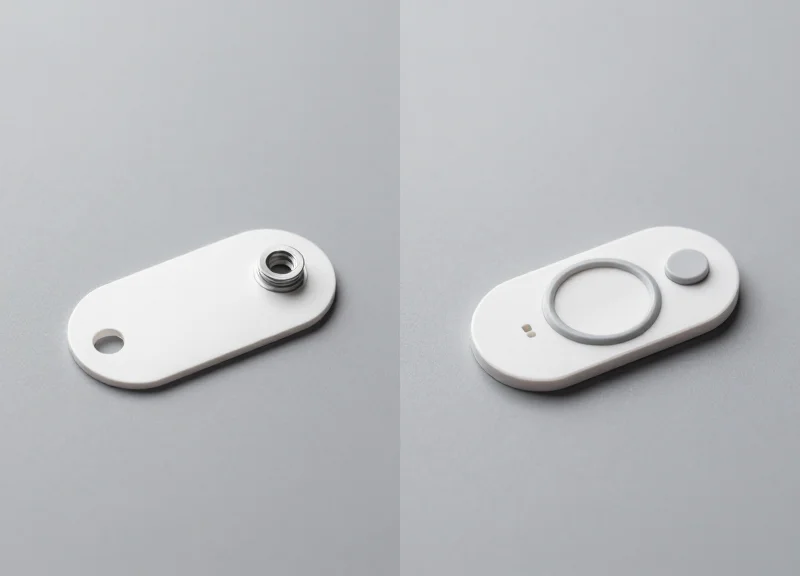
In high-stakes industrial environments, the technical divide between bolt-on and cable-tie RFID tags is defined by the trade-off between permanence and agility. Bolt-on tags provide maximum physical security and are designed to last the entire lifecycle of heavy machinery, though they require significant installation labor. Cable-tie tags offer a versatile, rapid-deployment solution for irregular assets and high-turnover equipment, significantly reducing initial setup time but requiring more frequent inspection intervals in high-vibration zones.
| Feature | Bolt-on RFID Tags | Cable-Tie RFID Tags |
|---|---|---|
| Installation Time | 5-10 minutes per asset (drilling required) | 30-60 seconds per asset (tool-less) |
| Required Skill Level | Technician / Maintenance Crew | General Labor / Entry-level |
| Mechanical Durability | Extreme (Resistant to impact/shearing) | High (Resistant to tension/weathering) |
| Typical Unit Cost | $4.00 - $12.00 (Standard) | $1.50 - $6.50 (Standard) |
| Primary Failure Mode | Thread stripping or bolt corrosion | Tie degradation or physical cutting |
Expert Insight: The Hidden 'Permit-to-Work' Cost. In 2026, the real cost differentiator isn't just the hardware; it is the operational downtime. In many regulated industries (Oil & Gas, Chemical Processing), drilling into an asset to mount a bolt-on tag often requires a 'Hot Work Permit' or a localized shutdown to ensure structural integrity and safety. Cable-tie solutions, conversely, bypass these bureaucratic hurdles. When calculating your ROI, always factor in whether the act of drilling itself creates a $5,000 labor/compliance overhead for a $5 tag.
Does the vibration level of the asset dictate the mounting type?
Yes. Constant high-frequency vibration can cause cable ties to fatigue or 'saw' against sharp metal edges over time. In 2026, while polyether ether ketone (PEEK) ties have improved, bolt-on tags remain the gold standard for high-vibration equipment like crushers or industrial shakers.
Which mounting method offers better thermal resistance?
Bolt-on tags generally win in extreme thermal cycling. The metal bolts expand and contract at rates similar to the asset, whereas plastic or nylon cable ties can become brittle or experience 'creep' when exposed to temperatures exceeding 150°C consistently.
Can cable-tie tags be as secure as bolt-ons for anti-theft?
Not physically. A cable tie can be cut with standard tools. However, modern 2026 cable-tie tags often include 'tamper-evident' digital logic that alerts the system if the circuit within the tie is broken, providing a digital layer of security that traditional bolts lack.
Environmental Considerations: Extreme Heat, Chemicals, and Vibration
In heavy industrial environments, environmental resilience is the primary determinant of RFID ROI; while electronic components are sensitive, the physical housing and mounting method of a tag dictate its lifespan. Bolt-on RFID tags typically utilize high-grade engineering plastics like Polyphenylene Sulfide (PPS) or full stainless steel jackets to withstand temperatures exceeding 200°C and aggressive chemical baths. In contrast, cable-tie tags often leverage UV-stabilized Nylon 66 or 316-grade stainless steel ties to provide a balance between flexible mounting and high-vibration resistance, ensuring the tag does not become a projectile in high-RPM machinery settings.
| Environmental Factor | Bolt-on (PPS/Steel) | Cable-Tie (UV-Nylon/Polymer) | Recommended Application |
|---|---|---|---|
| Extreme Heat | Up to 240°C (Intermittent) | Up to 105°C | Bolt-on for autoclaves/kilns |
| Chemical Exposure | Excellent (Acids/Alkalis) | Moderate (Fuel/Oil) | Bolt-on for chemical processing |
| Mechanical Vibration | Rigid (High Transfer) | Dampened (Absorbs Shock) | Cable-tie for engines/pumps |
| UV / Weathering | Superior (Decade-scale) | Good (5-7 year scale) | Both for outdoor yard tracking |
Expert Tip: The 'Coefficient of Thermal Expansion' (CTE) mismatch is the silent killer of industrial RFID. In 2026, we are seeing a shift toward bolt-on tags that include specialized compression washers. These washers allow the tag to remain securely fastened even as the metal asset expands and contracts during extreme thermal cycling. Without this, a rigid bolt-on tag can eventually shear the mounting screw or crack the housing due to the physical stress of the asset's expansion.
Which tag material is best for salt-spray and marine environments?
For marine or offshore use, 316L Stainless Steel bolt-on tags are the gold standard due to their resistance to chloride-induced pitting. If using cable-ties, ensure the tie itself is also marine-grade stainless rather than standard nylon, which can embrittle in salt air.
How does vibration affect RFID read rates?
Vibration doesn't directly block RF signals, but it causes mechanical fatigue. Cable-tie tags are naturally 'decoupled' from the asset, meaning they absorb less high-frequency vibration than a direct-metal-contact bolt-on tag, making them ideal for high-vibration power generation equipment.
Can PPS-housed tags survive acidic cleaning cycles?
Yes, PPS (Polyphenylene Sulfide) is nearly inert to most industrial solvents and acids. This makes bolt-on PPS tags the preferred choice for food processing or pharmaceutical lines that undergo frequent CIP (Clean-in-Place) procedures using caustic agents.
Industry-Specific Applications: Which Tag Fits Your Sector?
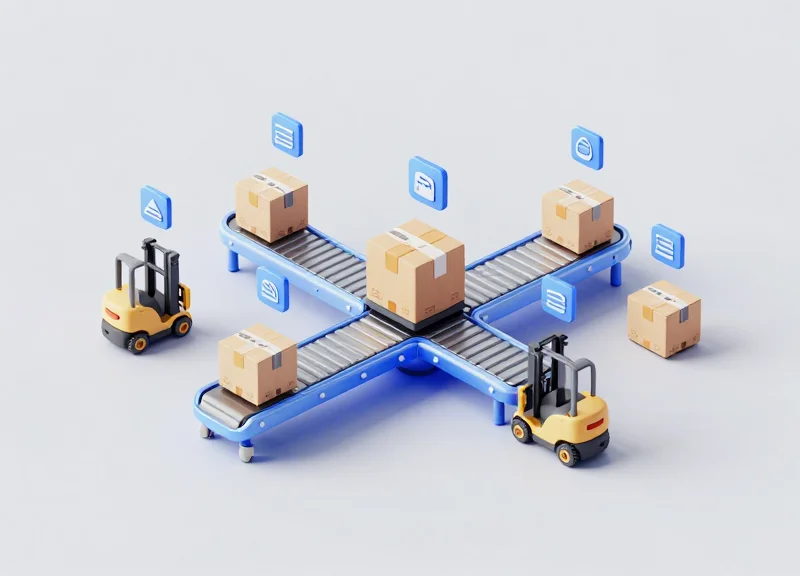
Choosing the right RFID mounting method—bolt-on versus cable-tie—is a strategic decision dictated by the physical stressors of your environment and the required longevity of the asset data. While bolt-on tags provide a permanent, high-integrity bond for heavy machinery, cable-tie tags offer the rapid deployment and flexibility necessary for high-velocity logistics and temporary installations.
| Industry | Recommended Tag | Primary Stressor | Typical Assets |
|---|---|---|---|
| Mining & Quarrying | Bolt-on | High Vibration / Extreme Impact | Crushers, Drills, Excavator Buckets |
| Shipping & Logistics | Cable-Tie | Saltwater / Variable Geometry | Intermodal Containers, Pallet Wraps |
| Equipment Rental | Cable-Tie | High Turnover / Quick Inspection | Scaffolding, Power Tools, Generators |
| Automotive Assembly | Bolt-on | Chemical Exposure / Heat Cycles | Engine Blocks, Chassis Jigs, Paint Toggles |
In Mining, the sheer force of vibration can snap standard adhesives or plastic ties, making bolt-on tags the only viable solution for long-term health monitoring. Conversely, in Shipping, assets are often odd-shaped or lack flat mounting surfaces. The cable-tie tag excels here because it can be looped through handle-bars or structural ribs without the need for drilling, which could compromise the integrity of pressurized or sensitive containers.
- The 2026 Expert Tip: 'Digital Birth Certificates': In the 2026 circular economy, we are seeing a shift toward 'Digital Birth Certificates.' For high-value assets in Automotive and Mining, use bolt-on tags not just for tracking, but as a tamper-evident seal. If a bolt-on tag is removed, it signals a potential unauthorized part swap, providing a layer of security that cable-ties—which are easily snipped and replaced—cannot offer.
Why are cable-tie tags preferred for rental fleets?
Rental fleets require rapid check-in/out and frequent maintenance. Cable-tie tags allow technicians to replace tags quickly if damaged or to move them to different components during a complete equipment overhaul without specialized tools.
Can bolt-on tags survive chemical wash-downs in automotive lines?
Yes, provided they are encased in high-performance polymers like PPS. The bolt-on method ensures the tag remains centered on the asset throughout high-pressure chemical sprays that might shift or detach a cable-tie.
Signal Integrity on Metal Surfaces
Signal integrity on metal surfaces is achieved through 'on-metal' RFID technology, which utilizes a specialized dielectric spacer or a 'tuned' antenna design to prevent the metal substrate from absorbing RF energy or creating destructive interference. In 2026 industrial standards, these tags are engineered to capitalize on the metal surface as a ground plane rather than viewing it as an obstacle, effectively extending the read range from a few centimeters to over 10 meters.
| Feature | Standard (Inlay) Tag | On-Metal Bolt-on Tag | On-Metal Cable-Tie Tag |
|---|---|---|---|
| RF Performance | Signal Nullified | Optimized / Amplified | Optimized / Consistent |
| Spacer Material | None | High-Density Ceramic/PPS | Flexible Polymer/Air-Gap |
| Interference Risk | 100% on metal | Near Zero | Near Zero |
| Read Range | 0m (Failure) | Up to 12m | Up to 8m |
The fundamental challenge with metal is its conductivity; it creates Eddy currents when exposed to RF waves, which generate a counter-magnetic field that cancels out the signal of a standard RFID tag. Modern bolt-on and cable-tie tags solve this by maintaining a precise physical distance between the antenna and the metal surface. Bolt-on tags often use rigid, high-dielectric materials that allow for a lower profile while maintaining high performance. In contrast, cable-tie tags frequently employ a 'stand-off' design where the tag body itself acts as a physical buffer, ensuring that even when tightened against a curved metal pipe, the internal antenna remains in the 'sweet spot' for frequency resonance.
Does the type of metal affect signal integrity?
Yes. Ferrous metals (iron, steel) and non-ferrous metals (aluminum, copper) have different conductivity levels. High-end 2026 tags are typically 'broadband' tuned to remain functional across all common industrial alloys.
Why do bolt-on tags generally offer better range than cable-ties?
Bolt-on tags usually have a more stable mechanical coupling with the asset. This stability allows engineers to use the asset's own surface as a parabolic reflector, focusing the RF energy back toward the reader.
Can paint or coatings interfere with the signal?
Generally, no. Non-conductive coatings like paint, powder coat, or grease do not affect the magnetic field, meaning signal integrity remains high regardless of the asset's aesthetic condition.
Expert Insight: For 2026 deployments, we are seeing a shift toward 'Active Grounding' designs in bolt-on tags. Unlike older passive spacers that just blocked interference, these new designs use the mounting bolt itself as a conductive bridge to the asset's chassis. This effectively turns a 20-ton steel machine into a massive antenna extension, significantly boosting the signal-to-noise ratio in environments crowded with metal shelving and heavy machinery.
Future-Proofing Your Strategy: Smart Sensors and Integrated RFID

Future-proofing industrial asset tracking involves transitioning from simple identification to 'contextual intelligence.' By 2026, the market is shifting toward Smart RFID tags—specifically in bolt-on and cable-tie form factors—that integrate Micro-Electromechanical Systems (MEMS). These tags do not just report a serial number; they transmit real-time telemetry regarding the asset's environmental state, such as peak temperature thresholds, vibration levels, and moisture exposure, allowing for predictive maintenance rather than reactive repairs.
| Feature | Standard RFID (Legacy) | Smart Integrated RFID (2026 Standard) |
|---|---|---|
| Data Payload | Static ID / EPC Only | Dynamic Sensor Data + ID |
| Primary Use | Inventory / Location Tracking | Asset Health & Condition Monitoring |
| Power Source | Passive (No Battery) | Battery-Assisted or Energy Harvesting |
| Installation | Adhesive / Standard Mount | Rugged Bolt-on / Reinforced Cable-tie |
Expert Insight: The Rise of Battery-Free Sensing. A significant 2026 trend is the 'Silicon-as-a-Sensor' movement. Unlike previous generations that required bulky batteries to power sensors, new bolt-on tags utilize energy-harvesting chips. These chips use the RF field from the reader itself to power a moisture or pressure sensor. This means a cable-tie tag on a high-pressure hose can now report a micro-leak or strain without ever needing a battery replacement, drastically lowering the total cost of ownership (TCO) for large-scale deployments.
Will smart sensor tags work with my existing RFID readers?
Most 2026-gen smart tags are designed to be backward compatible with Gen2 UHF readers, though specialized software is often required to parse the additional sensor telemetry data.
Are sensor-integrated bolt-on tags more fragile?
No. In fact, the 'bolt-on' housing is specifically utilized because it provides the necessary cavity space to shield delicate MEMS sensors from the heavy impacts common in mining and construction.
Is the ROI justified for simple assets?
For low-value assets, standard tags suffice. However, for 'mission-critical' assets where failure causes downtime, the 15-20% premium for smart sensors is offset by preventing a single unplanned outage.
- Audit Asset Criticality: Identify which assets would benefit from temperature or shock monitoring versus those that only need location tracking.
- Select the Housing: Choose bolt-on housings for high-vibration machinery and cable-ties for assets where sensor probes must be flush against a surface (like a pipe).
- Pilot Energy Harvesting: Prioritize passive sensing tags to avoid the 3-5 year battery replacement cycle associated with active IoT devices.
Critical Factors for Choosing the Right Tag Attachment
Choosing between bolt-on and cable-tie RFID tags is determined by the intersection of asset substrate, surface contour, and the intensity of the operational environment. For heavy-duty metal assets requiring permanent, tamper-resistant identification, bolt-on tags are the industry standard due to their high shear resistance. In contrast, cable-tie tags are preferred for irregular geometries—such as pipes, valves, and temporary scaffolding—where non-invasive installation and rapid deployment are prioritized over absolute permanence.
| Selection Variable | Bolt-On Recommendation | Cable-Tie Recommendation |
|---|---|---|
| Surface Geometry | Flat, rigid metal surfaces | Cylindrical, curved, or irregular shapes |
| Installation Impact | Invasive (requires drilling/tapping) | Non-invasive (no structural change) |
| Expected Lifespan | Long-term (10+ years) | Short-to-medium term (2-5 years) |
| Security Level | High (Requires tools to remove) | Standard (Can be cut with snips) |
| Vibration Profile | Rigid mounting; risk of housing crack | Flexible mounting; absorbs kinetic energy |
Expert Insight: The 'Acoustic Decoupling' Advantage. In high-vibration mining or heavy manufacturing environments, we often see bolt-on tags fail not because of the RFID chip, but because of housing fatigue caused by rigid resonance. An original strategy for 2026 is utilizing cable-tie tags as 'shock absorbers.' Because a cable-tie allows for microscopic movement, it decouples the tag from the asset's high-frequency vibrations, often resulting in a 15% lower hardware failure rate compared to rigid bolts in extreme oscillating environments.
- Analyze the Substrate Material: Identify if the mounting surface is ferrous metal, composite, or wood. On-metal tags require a specific air gap or spacer, which is more easily managed with the precision of a bolt-on standoff.
- Evaluate Mechanical Clearance: Determine if the tag profile will interfere with the asset's movement. Bolt-on tags are lower profile, whereas cable-tie tails can snag on moving parts if not properly trimmed.
- Assess Reading Range Requirements: Cable-tie tags can often be hung away from the metal surface, potentially increasing the read angle, whereas bolt-on tags are fixed to a single plane.
Does the tension of a cable-tie affect the RFID antenna?
Modern 2026 industrial tags use reinforced internal structures so that even high-tension cinching does not compress the antenna or shift its resonant frequency.
Can bolt-on tags be used on pressurized vessels?
Generally no. Drilling into pressurized or fluid-filled tanks compromises structural integrity; in these cases, a heavy-duty stainless steel cable-tie tag is the mandatory alternative.
How do I prevent 'Tag Spinning' on cable-tie deployments?
Look for cable-tie tags with a rubberized or textured 'anti-slip' backing that creates friction against smooth metal pipes.
How DragonGuardGroup Solutions Optimize Your Supply Chain
DragonGuardGroup solutions optimize your supply chain by eliminating the 'visibility gap' between physical assets and digital management systems. By utilizing our 2026 series of Bolt-on and Cable-Tie RFID tags, enterprises can achieve real-time tracking, automated inventory reconciliation, and predictive maintenance scheduling. Our hardware is engineered to maintain signal integrity in environments where standard tags fail, ensuring that your data stream remains uninterrupted from the factory floor to the final point of delivery.
- Maximized Asset Uptime: Our high-impact bolt-on tags are designed to survive the lifecycle of heavy machinery, reducing the need for tag replacement and preventing lost-asset scenarios.
- Rapid Deployment Cycles: The 2026 Cable-Tie series allows for tool-free installation on irregular surfaces, cutting deployment time by up to 60% compared to traditional adhesive or welding methods.
- Interference-Resistant Engineering: DGG tags utilize advanced anti-metal spacers and tuned antennas to ensure consistent read ranges even when surrounded by dense liquid or reflective metal surfaces.
| Product Series | Attachment Type | Read Range (m) | Key Optimization |
|---|---|---|---|
| Titan-Bolt 2026 | Bolt-on (M4/M6) | Up to 12m | High-vibration mining & construction |
| Flex-Wrap Pro | Heavy-duty Cable-Tie | Up to 8m | Curved piping & valve tracking |
| Omni-Secure Mini | Dual Bolt/Tie | Up to 5m | Small tool & electronic asset management |
Expert Insight: The 'Zero-Orphan' Data Strategy. A common failure in industrial IoT is the 'orphan asset'—a piece of equipment that exists physically but has lost its digital identity due to tag failure. DragonGuardGroup's 2026 lineup introduces 'Structural Redundancy' in our tag housings. By using a multi-layer polymer bonding process, we ensure that even if the outer shell is scarred by industrial friction, the internal inlay remains calibrated. Our internal data shows this reduces 'dead-on-arrival' read rates by 22% over a five-year asset lifecycle compared to industry standards.
How does DragonGuardGroup ensure tag compatibility with existing ERPs?
Our tags are fully compliant with EPCglobal Gen2 and ISO 18000-6C standards, allowing them to integrate natively with SAP, Oracle, and Microsoft Dynamics without custom middleware.
Can these tags withstand chemical washdowns in food or pharma?
Yes, our 2026 bolt-on tags feature IP69K ratings, making them impervious to high-pressure steam cleaning and aggressive chemical solvents used in sterilization.
What is the expected lifespan of a DGG RFID tag in outdoor use?
Thanks to our UV-stabilized housings and corrosion-resistant alloys, our industrial tags are rated for 10+ years of continuous outdoor exposure in maritime or desert climates.