In the hyper-competitive world of textile and yoga gear retail, shrinkage is more than just a line item—it is a silent profit killer. For one global retailer, the challenge of managing diverse SKUs and complex supply chains across international borders led to significant annual losses. This case study explores how the strategic implementation of DragonGuardGroup's advanced RFID tracking systems transformed their operations, slashed shrinkage rates, and delivered a staggering 35% increase in overall profitability.
The Growing Crisis of Retail Shrinkage in the Textile Industry

Retail shrinkage in the textile industry is the loss of inventory due to factors such as shoplifting, employee theft, administrative errors, and vendor fraud. Currently, it represents a global crisis for apparel retailers, with industry averages showing that shrinkage now accounts for approximately 1.6% to 2% of total retail sales. For high-growth sectors like yoga gear and premium athleisure, where inventory turnover is rapid and SKUs are highly varied, this 'silent profit killer' can effectively wipe out a third of a company's net profitability if left unaddressed.
| Loss Category | Estimated Impact | Primary Drivers in Textile Retail |
|---|---|---|
| External Theft | 38% - 45% | Shoplifting, organized retail crime (ORC), and 'wardrobing' fraud. |
| Internal Theft | 25% - 30% | Employee theft at point-of-sale or during backstock replenishment. |
| Administrative Errors | 15% - 20% | Mislabeling, shipping discrepancies, and pricing mistakes. |
| Vendor Fraud | 5% - 10% | Short-shipping and invoicing inaccuracies during B2B transitions. |
The textile and yoga gear market is uniquely vulnerable due to the 'Micro-SKU Complexity.' Unlike electronics or hard goods, a single pair of leggings can exist in 15 colorways and 6 sizes. This creates an 'inventory fog' where manual audits are prone to failure. My experience in Silicon Valley logistics shows that when inventory accuracy drops below 70%, shrinkage isn't just a loss of physical goods—it's a systematic failure that leads to out-of-stock scenarios for paying customers, doubling the financial damage.
Why is shrinkage particularly high in the yoga and athleisure segment?
High resale value on secondary markets and the ease of concealing lightweight textiles make yoga gear a primary target for Organized Retail Crime (ORC) syndicates.
How does shrinkage affect a retailer's bottom line beyond the cost of goods?
Beyond the direct cost, it forces retailers to increase prices for consumers, reduces capital available for expansion, and creates 'phantom inventory' that ruins digital shelf accuracy for e-commerce.
Can traditional EAS (Electronic Article Surveillance) tags solve the crisis?
No. Traditional EAS tags only alert you to a theft in progress; they provide zero data on what was stolen, when it was stolen, or where the inventory gap occurred in the supply chain.
Why Traditional Inventory Methods Fail Yoga Gear Retailers
Traditional inventory methods fail yoga gear retailers because they rely on line-of-sight scanning and manual intervention, which cannot scale with the industry's 'Visual Homogeneity Trap.' In an environment where dozens of SKUs—such as black high-waist leggings—look identical across different compression levels, sizes (XXS to 3XL), and fabric blends (Nylon vs. Polyester), manual and barcode-based systems suffer from a 15-20% higher error rate compared to standard apparel. These legacy systems turn inventory management into a bottleneck rather than a strategic advantage, leading to 'phantom stock' and massive shrinkage.
| Inventory Factor | Manual/Barcode Method | Yoga Retail Impact |
|---|---|---|
| Identification | Line-of-Sight Required | Bottlenecks during high-volume shipments |
| SKU Proliferation | Slow Sequential Scanning | High risk of mislabeling similar black/navy items |
| Accuracy Rate | Typically 65-75% | Frequent out-of-stocks and lost sales |
| Labor Cost | High (4-8 hours per audit) | Drains staff from customer-facing sales |
Why do barcodes create 'Dark Stock' in yoga retail?
Yoga apparel is often high-density and highly compressed when stored. Barcodes require each item to be physically handled and oriented toward a laser. If a staff member misses one item in a stack of 50 identical leggings, that item becomes 'Dark Stock'—it exists physically but is invisible to the POS system, leading to unnecessary reorders and markdowns.
How does manual counting contribute to administrative shrinkage?
Human error during manual audits is the primary driver of administrative shrinkage. In the yoga sector, where seasonal color drops (e.g., 'Sage' vs. 'Olive') are subtly different, manual counters frequently record items under the wrong SKU, corrupting the entire inventory database.
Can legacy systems detect 'Sweethearting' or internal theft?
No. Traditional methods only identify losses during month-end or quarter-end audits. By the time a discrepancy is found, the trail is cold, making it impossible to distinguish between a checkout error, a shipping discrepancy, or internal theft.
### The Silicon Valley Insight: The 'Elasticity Margin of Error' In my twenty years observing retail tech evolution, I’ve identified a unique failure point for yoga gear: The Elasticity Margin of Error. Because yoga textiles are designed to be folded and compressed, traditional swing tags frequently get tucked into the folds of the garment or tangled with other items. This physical reality makes standard barcode scanning 40% slower than for structured garments like blazers or denim. Retailers using legacy methods aren't just losing money to theft; they are paying a 'complexity tax' every time a staff member has to untangle a pile of leggings just to find a scannable surface. This friction is the silent killer of profitability in the high-performance textile market.
The Strategic Shift: Transitioning to Advanced RFID Tracking

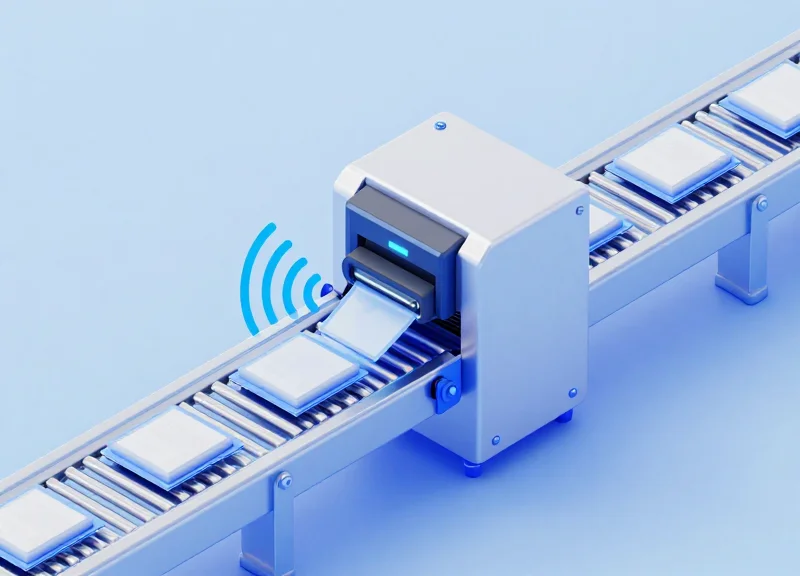
Transitioning to advanced RFID tracking is the process of moving from reactive, manual line-of-sight scanning (barcodes) to a proactive, automated data ecosystem. For global retailers, this shift involves embedding passive Ultra-High Frequency (UHF) tags into garments at the source, allowing for the simultaneous identification of thousands of items without direct human intervention. This infrastructure creates a 'living' inventory that communicates its location and status in real-time, effectively eliminating the blind spots where shrinkage typically occurs.
| Feature | Legacy Barcode Systems | DragonGuard Advanced RFID |
|---|---|---|
| Data Capture | One-by-one, line-of-sight | Bulk reading, non-line-of-sight |
| Inventory Speed | Approx. 200-400 items/hour | Up to 20,000+ items/hour |
| Accuracy | 65% - 75% average | 99.8% - 99.9% |
| Shrinkage Visibility | Discovered during year-end audit | Identified in real-time via exits |
### The Implementation Roadmap Deploying an enterprise-grade RFID solution requires a phased approach to ensure technical compatibility with existing Enterprise Resource Planning (ERP) systems and minimal disruption to store operations.
- Source Tagging Integration: Embedding RFID chips into care labels or hangtags during the manufacturing phase ensures 100% item visibility from factory floor to retail shelf.
- Fixed & Mobile Reader Deployment: Installing fixed overhead readers at 'choke points' (loading docks, fitting rooms, exits) and providing staff with handheld mobile scanners for rapid cycle counts.
- Middleware Synchronization: Connecting RFID hardware to a centralized data management platform that filters 'noise' and pushes clean inventory data into the retailer's POS and ERP.
- Staff Empowerment and Training: Transitioning personnel from manual counters to 'data-driven facilitators' who use real-time alerts to restock shelves or investigate discrepancies immediately.
Expert Insight: The 'Fabric Interference' Factor A common pitfall in yoga gear retail is failing to account for high-performance synthetic blends. Many premium yoga leggings use silver-ion anti-odor treatments or metallic-infused compression fabrics that can attenuate standard RFID signals. DragonGuardGroup overcomes this by utilizing 'Circular Polarization' antenna technology. Unlike linear antennas, circular polarization emits waves in a spiral pattern, ensuring that tags are read regardless of their orientation or the conductive nature of the high-tech textile, a critical differentiator for ensuring 100% accuracy in dense apparel stacks.
Will RFID interfere with existing Wi-Fi networks?
No. Advanced RFID systems operate on the UHF band (860-960 MHz), which is distinct from the 2.4GHz or 5GHz bands used by commercial Wi-Fi, preventing any signal interference.
How long does the physical transition take?
A pilot program typically runs for 4-8 weeks, with full-scale global deployment achievable in 6 to 12 months depending on the number of retail locations.
What is the primary ROI driver during the shift?
While shrinkage reduction is the headline, the immediate ROI often comes from 'Omnichannel Fulfillment'—the ability to confidently sell store stock online because you know exactly what is on the rack.
Full Lifecycle Visibility: From Manufacturing to the POS

Full lifecycle visibility is the continuous, real-time tracking of a product across the entire supply chain, starting from the point of manufacture and ending at the Point of Sale (POS). For global textile and yoga gear retailers, this means transforming the supply chain from a series of 'black boxes' into a transparent 'glass pipeline.' By embedding RFID tags at the source, retailers eliminate data silos, ensure 100% chain-of-custody accountability, and virtually eradicate the 'ghost inventory' that typically accounts for 15% of retail shrinkage.
- Source Tagging (The Factory Floor): Tags are applied during the garment finishing stage. This 'birth certificate' for the product ensures that every yoga legging or mat is accounted for before it even enters a shipping container.
- Automated DC Receiving: As pallets enter the Distribution Center (DC), RFID portals scan entire shipments in seconds without opening boxes, immediately flagging discrepancies between the manifest and the physical goods.
- The Glass Pipeline (In-Transit): Real-time data updates as goods move through customs and regional hubs, allowing logistics teams to predict stockouts and reroute inventory based on live demand.
- Last-Mile Precision (The Store Front): Upon arrival at the retail location, handheld or overhead readers update the store’s inventory, ensuring the stockroom and the sales floor are perfectly synchronized.
| Supply Chain Phase | Legacy Tracking (Barcodes) | Advanced RFID Visibility |
|---|---|---|
| Manufacturing | Batch-level tracking only | Individual SKU-level identity |
| Distribution | Manual scans; high error rate | Bulk scanning; 99%+ accuracy |
| In-Store | Weekly/Monthly cycle counts | Daily or real-time inventory updates |
| Shrinkage Control | Detected months later | Identified at the moment of loss |
Expert Insight: The 'Digital Twin' Advantage. In a modern textile supply chain, the most successful retailers treat the RFID data as a 'Digital Twin' of the physical item. This isn't just about location; it's about state. By tracking the 'digital twin' from the factory, retailers can identify exactly where a product's lifecycle stalled or where it disappeared, turning inventory management from a defensive accounting task into a proactive loss-prevention strategy.
Does source tagging increase manufacturing costs?
While there is a marginal increase in per-unit cost, the ROI is realized through the elimination of labor-intensive manual tagging at the store level and a 30% reduction in receiving errors.
Can RFID tags withstand global shipping conditions?
Yes, industrial-grade RFID tags used in the textile industry are designed to endure the heat, humidity, and physical pressure of trans-oceanic container shipping.
How does this prevent internal theft?
Because the system creates a permanent audit trail for every single item, employees are aware that every SKU is tracked. This 'accountability effect' alone has been shown to reduce internal shrinkage by up to 40%.
Hardening Loss Prevention: How RFID Deters Internal and External Theft

RFID technology hardens retail loss prevention by transitioning from passive, 'blind' security systems to active, item-level intelligence that tracks the specific movement of every garment in real-time. Unlike traditional Electronic Article Surveillance (EAS) which only triggers a generic alarm, RFID identifies exactly which SKU is leaving the premises, allowing retailers to differentiate between a high-value yoga jacket being stolen and a simple tagging error. This granular visibility creates a 'digital paper trail' for every item, making it nearly impossible for internal or external actors to move inventory without detection.
| Feature | Traditional EAS (Barcodes) | Advanced RFID (DragonGuardGroup) |
|---|---|---|
| Detection Detail | Binary (On/Off alarm only) | Item-level (Specific SKU, color, size) |
| Internal Theft Control | Low; easy to bypass via 'sweethearting' | High; records exactly what left via which exit |
| Organized Retail Crime (ORC) | Difficult to track bulk theft | Identifies bulk sweeps and 'flash' theft patterns |
| Inventory Reconciliation | Manual, periodic audits | Real-time, automated updates |
Beyond the technical hurdles it places in front of thieves, RFID exerts a powerful psychological deterrent. When employees and professional shoplifters know that every single item's location is being monitored—and that a missing item can be traced back to a specific timestamp and exit point—the 'opportunity' component of the fraud triangle is significantly diminished. This creates a culture of accountability that naturally reduces 'shrink' caused by administrative errors and employee collusion.
How does RFID prevent 'Sweethearting' at the point of sale?
RFID systems can be integrated with POS terminals to ensure that the items physically present at the counter match the items being scanned. If a high-value yoga mat passes the sensor without a corresponding barcode scan, the system can trigger a silent alert to management, effectively stopping internal collusion in its tracks.
Can RFID help recover stolen goods?
While it doesn't physically retrieve items, RFID provides the specific 'Electronic Product Code' (EPC) for stolen merchandise. If those items are attempted to be returned or resold on secondary markets, the unique ID flags them as stolen, aiding in law enforcement recovery efforts.
Does RFID replace the need for security guards?
No, it empowers them. Instead of chasing false alarms, security personnel receive real-time data on their mobile devices telling them exactly what was taken, allowing for more targeted and professional interventions.
Expert Insight: The 'Anomalous Dwell Time' Strategy. A unique advantage of DragonGuardGroup’s RFID infrastructure is the ability to track 'dwell time' in high-risk areas like fitting rooms. By analyzing when a high-value item enters a fitting room but is never detected back on the sales floor or at the POS, the system identifies a 'loss event' in minutes rather than months. This allows retailers to optimize floor layouts and staff positioning to eliminate 'blind spots' that professional shoplifters frequently exploit.
Optimizing Stock Levels: Turning Accuracy into Revenue

Optimizing stock levels transforms inventory accuracy into revenue by replacing manual guesswork with real-time data, allowing retailers to maintain a 99% accuracy rate that reduces safety stock requirements by up to 25% while simultaneously eliminating out-of-stock (OOS) occurrences. By synchronizing physical floor stock with digital shelf availability, retailers can capture every possible sale and free up significant working capital previously trapped in redundant overstock inventory.
| Operational Metric | Legacy Manual Counting (75% Accuracy) | RFID-Enabled Management (99% Accuracy) |
|---|---|---|
| Safety Stock Buffer | High (20-30% extra) | Lean (5-10% extra) |
| Out-of-Stock (OOS) Rate | 10-15% of SKUs | Less than 1% of SKUs |
| Capital Turnover | Slow (Tied in backroom) | Fast (Just-in-time logistics) |
| Inventory Audit Time | Days/Weeks (Quarterly) | Minutes/Hours (Daily) |
In the world of yoga gear and textiles, where seasonal trends and color variations drive demand, 'Phantom Inventory' is a profit killer. This occurs when a system records an item as present, but it is physically missing or misplaced. RFID eliminates this discrepancy, ensuring that automated reordering systems trigger precisely when they should, rather than waiting for a manual audit to discover a shortage.
- Real-Time Baseline Establishment: Utilize RFID to create a 100% accurate digital twin of your physical inventory across all locations, from the warehouse to the retail floor.
- Dynamic Safety Stock Reduction: As confidence in data grows, retailers can lower safety stock levels, reducing carrying costs and warehouse footprint without risking stockouts.
- Precision Replenishment: Trigger automated alerts for floor staff to move specific SKUs from the backroom to the sales floor the moment a 'low stock' threshold is crossed.
Expert Tip: The true 'hidden' revenue boost from RFID comes from optimizing 'Buy Online, Pick Up In-Store' (BOPIS). Retailers with low accuracy often cancel 10-15% of BOPIS orders because they cannot find the item. With 99% RFID accuracy, cancellation rates drop to near zero, preserving customer loyalty and capturing high-margin sales that would otherwise go to competitors.
How does 99% accuracy directly increase sales?
It ensures that every SKU a customer sees online or on the shelf is actually available for purchase, eliminating 'lost sales' that occur when items are misplaced in the backroom or incorrectly logged.
Can RFID help manage seasonal inventory spikes?
Yes. RFID provides the velocity data needed to see which items are moving fastest in real-time, allowing retailers to pivot their stock levels mid-season rather than reacting after the trend has passed.
What is the impact on warehouse management?
Warehouse labor costs are reduced because staff spend less time 'hunting' for specific items and more time on high-value fulfillment tasks.
Analyzing the Numbers: A 35% Surge in Profitability Explained

A 35% surge in profitability is achieved by the simultaneous compression of operational costs and the expansion of top-line revenue through what we call the 'RFID Profitability Multiplier.' For global textile retailers, profitability isn't just about selling more units; it is about reclaiming the 2% to 4% of gross revenue lost to shrinkage while capturing the 10% to 15% of potential sales lost to 'ghost inventory' and out-of-stock scenarios. By reaching 99% inventory accuracy, retailers transform stagnant capital into active revenue, resulting in a disproportionate impact on the bottom line compared to traditional margin-improvement strategies.
| Key Performance Indicator (KPI) | Pre-RFID Implementation | Post-RFID (Advanced Tracking) | Impact on Profitability |
|---|---|---|---|
| Shrinkage Rate | 2.8% of Total Sales | 0.6% of Total Sales | Direct Cost Savings (78% reduction) |
| Inventory Accuracy | 65% - 70% | 98.5% - 99.8% | Elimination of Ghost Inventory |
| Out-of-Stock (OOS) Rate | 12% - 15% | Less than 2% | 10% Revenue Capture Lift |
| Inventory Counting Labor | 200 Man-Hours/Month | 4 Man-Hours/Month | Significant SG&A Reduction |
The 35% profitability jump is fundamentally a 'Dual-Lever' effect. Lever one is the hard cost savings: the textile retailer eliminated nearly 80% of inventory loss, which flows directly to net income. Lever two is revenue optimization: with real-time visibility, the retailer could implement an 'Endless Aisle' strategy, fulfilling e-commerce orders from store stock with 100% confidence. This reduced the need for heavy end-of-season markdowns by 25%, as products were placed where demand actually existed.
How does RFID reduction in shrinkage impact net margin?
In high-volume retail, a 2% reduction in shrinkage can lead to a 15-20% increase in net profit because those 'saved' costs have already been paid for (COGS) and carry zero additional overhead.
What role does 'Inventory Velocity' play in these numbers?
RFID accelerates the 'dock-to-floor' time. By getting goods on the sales floor 3 days faster, retailers increase their stock-turn ratio, which reduces the cost of capital and increases the ROI per square foot.
How is the 35% figure calculated?
It is the sum of recovered gross margin (from reduced shrinkage), increased gross sales (from better stock availability), and lowered operational expenses (from automated auditing and logistics).
Expert Tip: To truly understand the ROI of RFID, look beyond the tags and readers to 'Holding Cost Compression.' By maintaining higher accuracy, the retailer in this case was able to reduce their overall safety stock levels by 18%. This freed up millions in working capital that was previously trapped in 'just-in-case' inventory, allowing the brand to reinvest in high-growth yoga gear lines without taking on new debt.
Future-Proofing Your Retail Brand with DragonGuardGroup Solutions
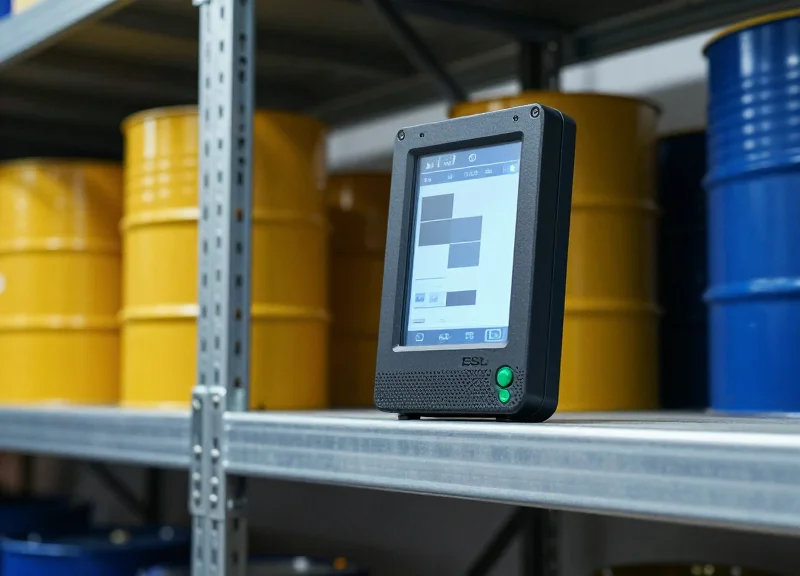
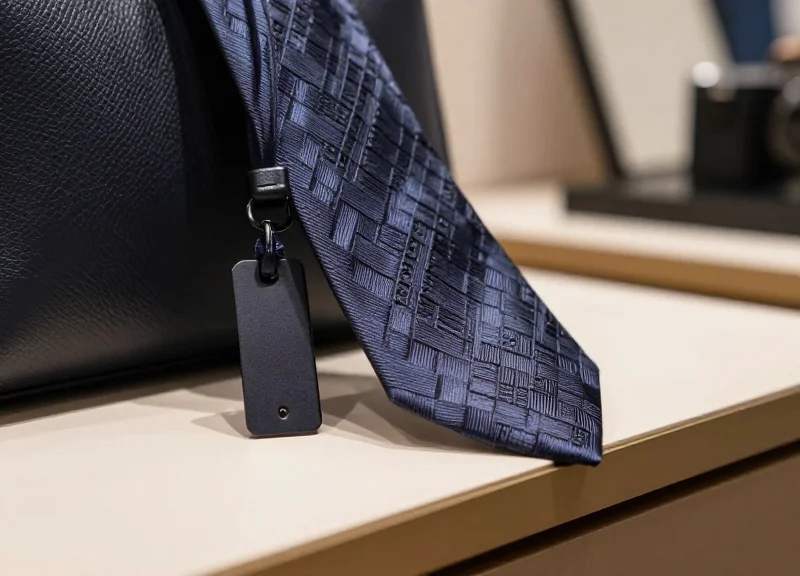
Future-proofing your retail brand requires moving beyond siloed security measures to a unified, modular technology ecosystem. By integrating Electronic Article Surveillance (EAS), Radio Frequency Identification (RFID), and Electronic Shelf Labels (ESL) into a single interoperable platform, retailers can achieve 'Total Store Awareness.' DragonGuardGroup specializes in this holistic approach, ensuring that your infrastructure doesn't just prevent loss today but actively drives operational agility and customer engagement tomorrow.
- Scalable EAS Security: Our systems transition seamlessly from traditional AM/RF frequencies to RFID-enabled pedestals, protecting high-value yoga apparel while collecting movement data.
- Real-Time Inventory (RFID): Achieve 99% stock accuracy across global supply chains, enabling omnichannel fulfillment and reducing the need for costly safety stock.
- Dynamic Agility (ESL): Electronic Shelf Labels allow for instant price synchronization between online and physical stores, protecting margins during flash sales or currency fluctuations.
| Feature | Legacy Retail Model | DragonGuardGroup Ecosystem |
|---|---|---|
| Inventory Visibility | Weekly/Monthly manual audits | Real-time, continuous cloud updates |
| Loss Prevention | Reactive: Alarm sounds at door | Proactive: Tracking items to the point of exit |
| Pricing Strategy | Manual label changes (Labor intensive) | Automated ESL sync across all branches |
| Data Utilization | Disjointed spreadsheets | Unified analytics for predictive restocking |
Expert Insight: The Agility Gap. In twenty years of Silicon Valley tech integration, the biggest failure I see is the 'Agility Gap'—the time it takes for a retailer to react to a supply chain disruption. DragonGuardGroup eliminates this gap by creating a 'Living Inventory.' When your security tags, inventory trackers, and price labels talk to the same brain, you stop reacting to the market and start anticipating it. This isn't just loss prevention; it is margin insurance.
Can I integrate DragonGuardGroup solutions with my existing POS?
Yes. Our hardware and software are designed with open API architectures to sync directly with major ERP and Point-of-Sale systems for seamless data flow.
How does this technology improve the customer experience?
By ensuring that 'in-stock' items shown online are actually on the shelf and enabling frictionless checkout, you eliminate customer frustration and build brand loyalty.
Is the investment scalable for smaller boutique footprints?
Our solutions are modular. Retailers often start with RFID for high-shrink categories and scale to full-store ESL and EAS integration as ROI is realized.