As we approach 2026, the luxury retail sector faces a critical crossroads. Legacy Electronic Article Surveillance (EAS) systems, once the gold standard, are struggling to keep pace with sophisticated global theft syndicates and the demand for high-speed, omnichannel inventory accuracy. The solution emerging as the industry standard is the Next-Gen RFID+EAS hybrid system. By merging the deterrent power of EAS with the granular data capabilities of Radio Frequency Identification (RFID), luxury brands are finding a way to protect high-value assets while simultaneously optimizing the customer journey. This transition is not just about security; it is about the digital transformation of the boutique experience.
The Shifting Landscape of Luxury Loss Prevention

As we head toward 2026, the landscape of luxury loss prevention is undergoing a fundamental paradigm shift: moving away from static, reactive 'gates' toward intelligent, invisible perimeters. Traditional Electronic Article Surveillance (EAS) is no longer sufficient against the rise of Organized Retail Crime (ORC) syndicates who have mastered the art of bypassing legacy sensors. Today's luxury retailers must balance the 'Hardening of the Store' with the 'Fluidity of the Boutique Experience,' ensuring that high-value assets are protected without making elite clientele feel like they are entering a high-security facility.
The modern threat profile has evolved from the occasional shoplifter to professionalized teams using 'booster bags,' signal jammers, and rapid entry-exit tactics. In the luxury sector, where a single stolen handbag can represent a loss of $10,000 or more, the margin for error has vanished. This shift is driven by the realization that legacy systems provide no data on what was stolen, only that something was stolen, leaving inventory records in a state of 'dark shrinkage' that cripples omnichannel fulfillment.
| Feature | Legacy EAS Systems | Next-Gen RFID+EAS Hybrids |
|---|---|---|
| Detection Utility | Simple alarm trigger on exit | Item-level identification and real-time tracking |
| ORC Countermeasures | Easily bypassed by shielded bags | Intelligent sensing with jammer detection |
| Customer Experience | Obtrusive pedestals at entrances | Concealed or aesthetically integrated sensors |
| Inventory Impact | Negative (requires manual audits) | Positive (99% real-time stock accuracy) |
Expert Insight: The 'Invisible Sentinel' Strategy. In my two decades working with high-tech infrastructure, the most successful luxury deployments in 2026 will be those that treat security as a silent data layer. The unique value of RFID+EAS hybrids isn't just stopping theft—it's the 'digital twin' capability. When a product is moved toward an exit, the system knows exactly which SKU it is, its price point, and its history. This allows for 'Silent Alarms'—notifying security via haptic feedback on a smartwatch rather than a loud, brand-damaging siren.
Why is legacy EAS failing luxury brands today?
Legacy EAS lacks item-level intelligence. It cannot distinguish between a low-value accessory and a signature piece, and it offers no insights into how items are moving through the store before the theft occurs.
What is 'Dark Shrinkage' in luxury retail?
Dark shrinkage refers to missing inventory that is only discovered during end-of-quarter audits. Hybrid RFID systems eliminate this by providing real-time alerts the moment an item leaves the geofenced area.
How does technology improve the customer experience?
By integrating loss prevention into the inventory system, retailers can remove bulky hard tags and unsightly pedestals, creating a more open, welcoming boutique environment that relies on invisible digital protection.
The Technical Ceiling: Why Legacy EAS Systems are Obsolete
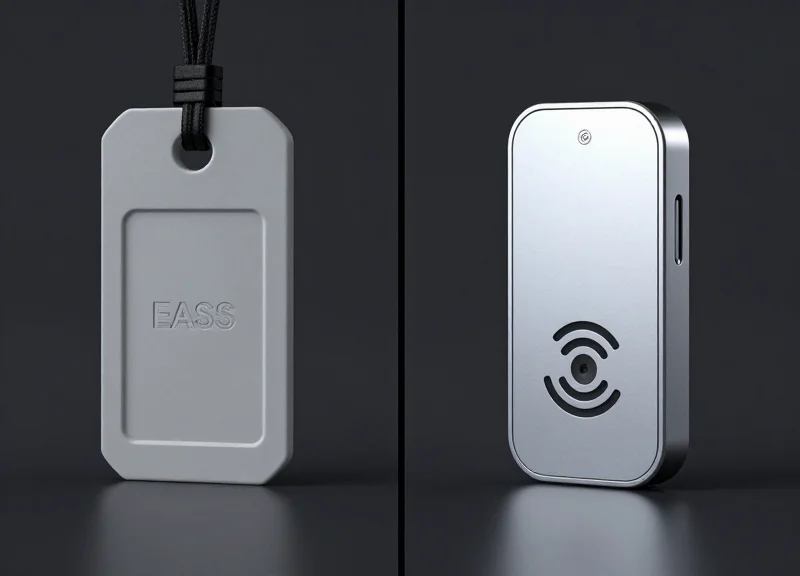
Legacy EAS systems, primarily Acousto-Magnetic (AM) and Radio Frequency (RF) technologies, have reached a 'technical ceiling' because they function as binary noise-makers rather than data-capture devices. While these systems can detect a live tag passing through a pedestal, they cannot identify what is being stolen, how many items are involved, or when the item was last processed at the point of sale. In a 2026 luxury environment where data-driven precision is the standard, a system that only offers a 'beep' without context is a liability that creates friction for high-value clients and provides zero actionable intelligence for loss prevention teams.
| Feature | Legacy AM/RF Systems | Next-Gen RFID+EAS Hybrids |
|---|---|---|
| Detection Logic | Binary (Tag Present/Not Present) | Granular (SKU, Color, Size, Price) |
| Data Output | Anonymous Alarm | Item-Level Transaction History |
| Directional Tracking | No (Triggers on approach) | Yes (In/Out/In-Store movement) |
| Omnichannel Sync | None | Real-time Inventory Accuracy |
| Shielding Resistance | Low (Susceptible to Booster Bags) | High (Advanced Signal Algorithms) |
The primary failure of legacy systems in the luxury sector is the 'False Positive Fatigue.' Traditional AM pedestals are notoriously sensitive to environmental interference and 'tag-to-tag' coupling, leading to frequent alarms for non-theft events. For a luxury brand, every false alarm is a customer experience disaster that erodes the 'white-glove' atmosphere. Furthermore, legacy systems are powerless against 'Booster Bags' (foil-lined bags) and professional detachers, as they lack the sophisticated signal processing required to distinguish between background noise and coordinated theft attempts.
What is the 'Phantom Loss Paradox' in legacy EAS?
The Phantom Loss Paradox occurs when a retailer knows they have a shrink problem but cannot identify which specific high-value SKUs are disappearing until a manual cycle count is performed. Legacy EAS provides no record of the specific item that triggered an alarm, meaning the 'loss' remains a mystery for weeks, preventing timely restocking and investigation.
Why is 'Directionality' a critical failure point for old systems?
Legacy pedestals often trigger when a tagged item is merely near the door, even if a customer is just browsing. Hybrid systems use beam-forming technology to identify the specific direction of travel, only alerting when an item actually exits the threshold, significantly reducing nuisance alarms.
How do legacy systems impact omnichannel fulfillment?
Legacy systems do not update inventory. If an item is stolen, the system thinks it is still on the shelf. This leads to 'Cancelled Orders' in Buy Online Pick Up In-Store (BOPIS) workflows because the digital twin of the inventory is out of sync with physical reality.
Expert Insight: From a Silicon Valley architectural perspective, legacy EAS is 'Dark Tech'—it consumes power and space but generates no usable metadata. In 2026, if your security hardware doesn't feed your ERP and AI-driven analytics engine, it's not a security tool; it's a decorative hurdle. Next-gen hybrids bridge this gap by turning every exit event into a structured data point, allowing brands to correlate theft trends with specific store layouts and staff shifts.
The Power of Convergence: Defining RFID+EAS Hybrid Technology

An RFID+EAS Hybrid is a unified loss prevention and inventory management system that integrates the item-level identification of Ultra-High Frequency (UHF) RFID with the robust, real-time alarm capabilities of Electronic Article Surveillance (EAS). Unlike legacy systems that merely trigger a generic beep, hybrid technology identifies exactly which high-value item is crossing the threshold, instantly cross-referencing its point-of-sale status to differentiate between a legitimate purchase and a potential theft. In the 2026 luxury landscape, this convergence eliminates the friction between 'high security' and 'high service,' allowing brands to protect inventory without compromising the boutique aesthetic.
| Feature | Legacy EAS (AM/RF) | Standard RFID | Next-Gen Hybrid |
|---|---|---|---|
| Item Identification | None (Generic Alarm) | Unique Serial Number | Unique Serial + SKU Mapping |
| Theft Alert Speed | Instant | Latency-prone | Instant & Actionable |
| Inventory Accuracy | 0% (Security Only) | Up to 98% | 99%+ with Real-time Updates |
| Detection Range | Limited to Pedestals | Wide Area | Zonal (Pedestal + Ceiling) |
The mechanical brilliance of the hybrid system lies in the 'Dual-Technology' tag. Modern luxury labels are now embedding ultra-thin inlays that house both an EAS resonator and an RFID chip. When these tags pass through a hybrid pedestal, the system doesn't just detect a signal interference; it reads the Electronic Product Code (EPC). This allows for 'Silent Alarming'—notifying security via haptic feedback on a smartwatch rather than a loud, brand-damaging siren—while simultaneously updating the digital inventory to reflect the loss in real-time.
How do hybrid systems handle 'Shielded Bag' detection?
Modern hybrids often include Integrated Metal Detection (IMD) sensors. This 'triple threat' approach detects foil-lined bags used by organized retail crime (ORC) groups before they even attempt to exit, combining physical security with digital intelligence.
Can existing RFID tags be used with hybrid pedestals?
Yes, but the full 'Hybrid' benefit is realized when using dual-purpose tags. The pedestal can read standard RFID, but the EAS component requires a specific magnetic or acoustic resonator to trigger traditional hardware-level alarms.
What is the 'Shadow Inventory' benefit?
Expert Tip: The greatest hidden ROI of hybrid tech is solving 'Shadow Inventory.' When an item is stolen, legacy systems leave a gap in your stock levels that isn't found until the next manual count. Hybrids automatically mark the item as 'Stolen/Missing' in your ERP, triggering an immediate reorder so you never miss a sale due to undetected theft.
By 2026, the 'Smart Pedestal' will act as the brain of the luxury store. These systems utilize beam-steering technology to ignore 'near-field' items (stock sitting close to the door) while maintaining 100% read rates on items moving at walking speed. This technological precision is what finally allows luxury retailers to remove the 'prison-gate' style antennas and move toward invisible, floor-integrated, or ceiling-mounted hybrid sensors.
Inventory Intelligence as the Ultimate Security Multiplier

In the context of luxury retail 2026, inventory intelligence is defined as the real-time, item-level visibility of every SKU in the store, enabled by hybrid RFID+EAS technology. Unlike legacy systems that merely signal an unauthorized exit, inventory intelligence provides a forensic 'digital twin' for every asset. This allows security teams to transition from reactive responses to proactive risk management by identifying exactly what is missing, where it was last seen, and how it left the premises, effectively multiplying the effectiveness of existing security personnel through actionable data.
For luxury brands, the most insidious threat is often not the 'smash-and-grab' but the slow drain of internal shrink—administrative errors, vendor fraud, and employee theft. Hybrid systems solve this by creating a continuous audit trail. When an item is moved from the backroom to the sales floor, or from one boutique to another, the system logs the event. This high-resolution visibility creates a 'psychological deterrent' for internal bad actors, as the window for plausible deniability regarding missing high-value stock closes permanently.
| Feature | Legacy EAS (Reactive) | Inventory Intelligence (Proactive) |
|---|---|---|
| Theft Insight | Knows something left. | Knows exactly what left (SKU, Color, Price). |
| Internal Shrink | Undetected until manual audit. | Flagged instantly via real-time discrepancy alerts. |
| Inventory Accuracy | Typically 65-75%. | Maintained at 98% or higher. |
| Recovery Potential | Low (no item data for police). | High (unique ID for grey-market tracking). |
One original insight often overlooked by generic security firms is the 'Legal Chain of Custody' for luxury goods. By 2026, the data gathered by hybrid RFID sensors will serve as admissible digital evidence. If a $10,000 handbag is stolen and later appears on a resale platform, the brand can use the item's unique RFID 'birth certificate' to prove it was never sold through an authorized channel, facilitating legal takedowns and product recovery that were previously impossible.
How does inventory intelligence reduce 'Phantom Inventory'?
Phantom inventory occurs when the system thinks an item is in stock, but it has actually been stolen or lost. Hybrid systems identify 'missing-but-not-sold' items daily, ensuring the digital catalog and physical shelf are always synced, preventing lost sales from frustrated customers.
Can this technology help with organized retail crime (ORC)?
Yes. By analyzing exit data patterns, hybrid systems can identify 'bulk theft' events in real-time. If five units of the same high-value SKU cross the sensors simultaneously without a POS trigger, the system can instantly alert security and lock smart-exits or trigger cloud-based cameras.
Does real-time tracking infringe on customer privacy?
Leading luxury brands implement 'Privacy Mode' at the POS. Once a purchase is verified, the RFID tag is cryptographically 'silenced' or reassigned as 'sold' in the database, ensuring the customer is not tracked outside the store environment.
Ultimately, the shift to inventory intelligence means luxury retailers no longer have to choose between a welcoming boutique atmosphere and a high-security fortress. The data does the heavy lifting, allowing for an open, high-touch shopping experience that is paradoxically more secure than the 'locked-case' models of the past decade.
Elevating the VIP Experience with Invisible Security

In the 2026 luxury landscape, 'Invisible Security' refers to the strategic deployment of RFID+EAS hybrid systems that protect high-value assets without compromising the boutique's aesthetic or the customer's sense of trust. By integrating security sensors into floor-to-ceiling architectural elements or under-floor arrays, and utilizing miniaturized dual-technology tags, luxury retailers can eliminate the 'security gate' bottleneck. This allows for a frictionless environment where the technology works silently in the background, ensuring that the first and last impression a VIP guest has is of the brand's hospitality, not its surveillance.
| Feature | Legacy EAS (Traditional) | Next-Gen RFID+EAS Hybrid |
|---|---|---|
| Visual Impact | Bulky plastic pedestals at exits. | Concealed antennas or 'Design-First' sleek pillars. |
| Tagging Aesthetics | Large, heavy hard tags that damage fabric. | Discrete, branded soft tags or 'Smart' thread labels. |
| Checkout Process | Manual detaching; high risk of false alarms. | Instant, bulk-deactivation and seamless mobile checkout. |
| Customer Perception | Feeling of being watched or mistrusted. | High-tech, personalized, and concierge-focused. |
The prestige of a luxury brand is often measured by the 'friction' present in the shopping journey. Traditional Electronic Article Surveillance (EAS) is high-friction; it requires physical intervention at the point of sale and creates a visual barrier at the entrance. Hybrid systems leverage the data-rich nature of RFID to enable 'Zone-Based Security.' This means the system knows exactly which item is moving toward an exit, allowing for a nuanced response rather than a generic, loud alarm that disrupts the entire store's ambiance.
Does 'invisible' security lead to higher theft rates?
Actually, the opposite is true. While the tech is less visible to the customer, the RFID component provides real-time tracking that legacy systems lack, allowing security to identify 'at-risk' items before they even reach the exit.
How does this improve the checkout experience for VIPs?
Hybrid systems support 'frictionless' mobile POS. A sales associate can complete a transaction on a tablet anywhere in the lounge, and the RFID system automatically whitelists those specific items for exit, eliminating the need for a formal 'security desk' stop.
Can dual-technology tags be customized for luxury packaging?
Yes, next-gen hybrid tags are now being manufactured as part of the brand's own woven labels or embedded within leather goods, making them completely undetectable to the naked eye while maintaining full security functionality.
Expert Insight: The 'Service-Led Intervention' Model. A unique advantage of 2026 hybrid systems is the shift from audible alarms to haptic notifications. Instead of a blaring siren that embarrasses a high-net-worth individual, the system sends a silent vibration to the sales associate’s smartwatch or mobile device. This allows the staff to approach the client with a 'service-first' mindset—perhaps asking if they need a bag for their items or if they'd like to see a matching accessory—effectively neutralizing a potential loss event through high-touch hospitality rather than confrontation.
Omnichannel Excellence: The Role of Hybrid Tech in BOPIS and Ship-from-Store
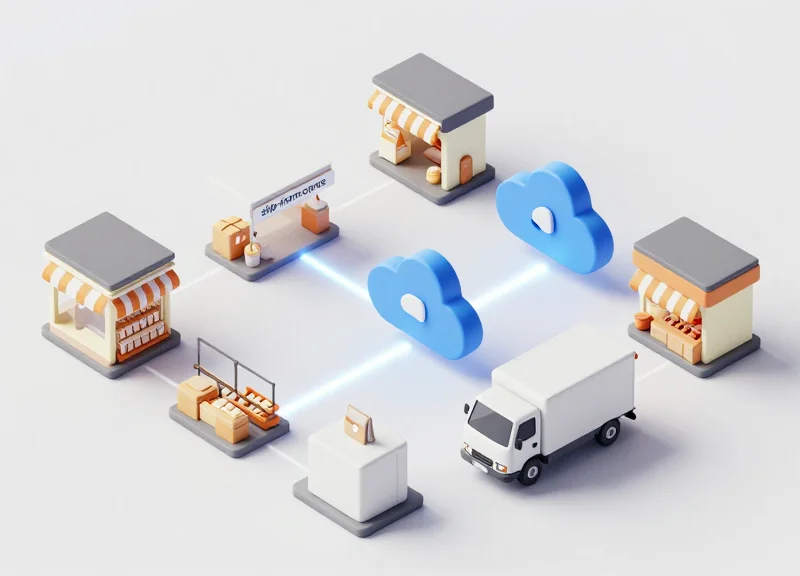
In the 2026 luxury landscape, omnichannel excellence is defined by the elimination of 'ghost stock'—inventory that appears in the system but does not exist on the floor. Next-gen RFID+EAS hybrid systems solve this by merging item-level tracking with loss prevention, providing the 99% accuracy required for Buy Online, Pick Up In Store (BOPIS) and Ship-from-Store (SFS) workflows. Unlike legacy systems that merely alarm at a door, hybrid technology tracks the specific movement of every SKU, ensuring that when a high-net-worth client reserves a limited-edition handbag online, it is physically present and ready for pickup.
| Fulfillment Metric | Legacy EAS (Traditional) | Hybrid RFID+EAS (Next-Gen) |
|---|---|---|
| Inventory Accuracy | 65-75% (Manual audits) | 99%+ (Real-time tracking) |
| BOPIS Cancellation Rate | High (Due to ghost stock) | Near Zero |
| SFS Efficiency | Slow (Manual search) | Instant (Geolocated items) |
| Shrink Visibility | Unknown until audit | Immediate at point of loss |
For luxury brands, the cost of an 'out-of-stock' notification after a customer has already paid is not just a lost sale; it is a significant hit to brand equity. Hybrid systems allow retailers to treat their physical boutiques as mini-distribution centers with total confidence. By utilizing the RFID component for cycle counting and the EAS component for security, staff no longer waste hours searching for 'missing' items that were actually stolen or misplaced. This visibility allows for a thinner safety stock margin, freeing up capital while maintaining 100% fulfillment reliability.
How does hybrid tech reduce BOPIS friction?
It provides a real-time 'truth' of inventory. If a customer buys the last item online, the hybrid system verifies its location in the store immediately, preventing the system from selling the same item to a walk-in customer simultaneously.
Can hybrid systems help with Ship-from-Store (SFS) logistics?
Yes. RFID-enabled tags allow staff to use handheld 'Geiger counter' modes to locate specific SKUs for shipping in seconds, significantly reducing the labor cost of fulfillment.
Does this technology impact the checkout experience?
Actually, it improves it. Hybrid systems enable 'bulk scanning' where multiple items can be read and deactivated at once, facilitating the white-glove, swift checkout experience luxury clients expect.
Expert Tip: Implement a 'Zero-Buffer' inventory strategy. Most luxury retailers keep a 5-10% inventory buffer for online orders to account for system errors. With the 99% accuracy of RFID+EAS hybrids, you can safely reduce this buffer to 1%, instantly increasing your available online assortment by 4-9% without adding a single new product to your warehouse.
Sustainability and Efficiency: The Long-Term Gains of Modern Hardware
Sustainability in luxury retail is no longer a marketing elective; it is a core operational requirement for 2026. Next-generation RFID+EAS hybrids achieve this through 'functional convergence,' where a single intelligent component replaces the redundant hardware footprints of traditional loss prevention and inventory management. By consolidating the security trigger and the data carrier into a single eco-friendly housing, luxury brands can reduce their physical waste by up to 50% while simultaneously lowering the energy demands of their storefronts through smarter, sensor-driven hardware.
| Sustainability Metric | Legacy EAS Systems | Modern Hybrid (RFID+EAS) |
|---|---|---|
| Consumable Waste | High: Separate EAS hard tags and RFID stickers | Low: Single integrated smart-tag |
| Energy Consumption | High: Always-on high-voltage pedestals | Low: Motion-activated low-energy sensors |
| Labor Efficiency | Manual: Double-scanning required | Automated: Bulk-scan and security-check |
| Hardware Lifespan | 3-5 years (Analog drift/failure) | 8-10 years (Software-updatable digital) |
A unique, often overlooked advantage of modern hybrid hardware is 'Digital Life-Extension.' Unlike legacy tags that are discarded after a sale, modern hybrid tags can be programmed to support the secondary luxury market. By leaving the RFID component dormant but functional, brands can facilitate authenticated resale or circular recycling programs years later without ever needing to manufacture or attach new tracking hardware. This 'tag-once' philosophy transforms a security expense into a lifelong product passport.
How does hybrid technology reduce the carbon footprint of a retail store?
Hybrid systems use power-efficient digital signal processing (DSP) that consumes significantly less electricity than old-school analog acoustic-magnetic systems. Furthermore, the reduction in manufacturing volume for tags—moving from two separate tags to one integrated unit—slashes the carbon cost of the supply chain.
Does the transition to modern hardware require a total store overhaul?
No. Many modern hybrid pedestals are designed with a modular architecture, allowing retailers to use their existing structural footprints while upgrading only the internal electronics and antennas, thus minimizing construction waste and capital expenditure.
What is the 'Invisible ROI' of these systems?
The 'Invisible ROI' comes from the drastic reduction in 'Dead Stock' and 'Shrink Mystery.' By providing 99.9% inventory accuracy, retailers stop over-ordering replacement stock, which leads to less excess manufacturing and lower logistics emissions.
Ultimately, the transition to RFID+EAS hybrids is a move toward 'Lean Luxury.' By removing the friction of manual inventory counts and the waste of redundant security labels, retailers can reallocate labor toward clienteling—the highest-value human activity in the store—while maintaining a leaner, greener operational profile that resonates with the environmentally conscious Gen-Z and Alpha luxury consumers.
ROI Analysis: Balancing the Initial Investment Against Long-Term Savings
The return on investment (ROI) for next-gen RFID+EAS hybrid systems is defined by the convergence of two critical financial levers: the drastic reduction of 'unknown shrink' and a measurable sales lift driven by 99% inventory accuracy. While legacy Electronic Article Surveillance (EAS) acts strictly as a cost center for loss prevention, hybrid systems function as a profit-generation tool. By providing item-level visibility, luxury retailers can recover the high initial capital expenditure (CAPEX) through reduced labor costs, optimized stock levels, and the elimination of 'phantom stock'—items that appear in the system but are missing from the floor.
| Financial Metric | Legacy EAS (AM/RF) | Next-Gen RFID+EAS Hybrid |
|---|---|---|
| Initial CAPEX | Moderate | High (Hardware + Software) |
| Inventory Accuracy | 60% - 70% | 98% - 99.5% |
| Shrink Reduction | Passive (Deterrence only) | Active (Item-level identification) |
| Labor Efficiency | Manual counting required | Automated real-time tracking |
| Typical ROI Period | N/A (Sunk Cost) | 12 - 18 Months |
How does hybrid technology reduce operational labor costs?
Legacy systems require manual 'wall-to-wall' inventory counts that are labor-intensive and prone to error. RFID+EAS hybrids allow staff to scan thousands of items in minutes with 99% accuracy, redirecting hundreds of labor hours toward high-touch VIP customer service.
Can hybrid systems actually increase sales revenue?
Yes. Luxury retail often suffers from 'out-of-stock' scenarios where an item is in the backroom but not on the floor. Hybrid systems provide real-time alerts, ensuring high-margin floor samples are always available, typically resulting in a 2% to 5% sales lift.
What is the impact on the supply chain insurance and write-offs?
With item-level tracking, retailers can pinpoint exactly where in the supply chain loss occurs. This forensic data reduces insurance premiums and allows for more aggressive tax write-offs on verified lost goods rather than estimated losses.
Expert Insight: The 'Shadow Margin' Gain. Most luxury brands overlook the cost of 'over-stocking' as a hedge against poor inventory visibility. By transitioning to a hybrid model, retailers can reduce safety stock levels by up to 15%. This frees up significant working capital that was previously tied up in redundant inventory, effectively subsidizing the cost of the RFID infrastructure within the first two fiscal quarters.
Preparing for 2026: Steps to Integrate Hybrid Security into Your Strategy
To successfully integrate hybrid RFID+EAS security by 2026, luxury retailers must execute a four-phase transition: conducting a comprehensive audit of existing EAS pedestal infrastructure, upgrading cloud-based data silos to support real-time serialized inventory, piloting dual-technology tags on high-shrink merchandise categories, and training boutique staff to pivot from 'enforcement' to 'enhanced clienteling' based on real-time data alerts. This approach ensures that security enhances, rather than disrupts, the high-end customer journey while providing the granular data needed for modern omnichannel fulfillment.
- The Infrastructure Audit: Evaluate your current electronic article surveillance (EAS) hardware. Many modern pedestals can be retrofitted with RFID readers, saving significant capital expenditure. Assess whether your current store layouts can support 'invisible' overhead antennas to maintain a clean boutique aesthetic.
- Data Ecosystem Calibration: Ensure your Enterprise Resource Planning (ERP) and Warehouse Management Systems (WMS) can ingest serialized data. Hybrid systems do more than beep; they tell you exactly which SKU left the store. Your backend must be ready to reconcile this data with sales records in real-time.
- The 'High-Value' Pilot: Launch a 90-day pilot focusing on a single high-shrink category, such as leather goods or timepieces. Monitor the delta between the hybrid system’s inventory counts and manual stocktakes to calculate the accuracy lift and shrink reduction.
- Staff Cultural Alignment: Shift the internal perception of security. Train sales associates to use RFID hand-scanners not just for loss prevention, but for finding 'missing' stock for a customer on the floor, thereby turning a security tool into a sales-enablement tool.
| Phase | Key Milestone | Strategic Focus |
|---|---|---|
| Q3 2024 - Q1 2025 | Legacy Audit & Vendor RFP | Determining hardware compatibility and selecting a hybrid partner. |
| Q2 2025 - Q3 2025 | Software Integration & Pilot | Connecting RFID data to ERP systems and testing in flagship locations. |
| Q4 2025 - Q2 2026 | Global Fleet Rollout | Full deployment of dual-tech tags and decommission of legacy EAS-only tags. |
| Q3 2026 & Beyond | Optimization | Leveraging AI-driven insights from security data to predict future shrink patterns. |
Expert Tip: Don't settle for 'off-the-shelf' tags. For luxury, the hardware must be an extension of the brand. We are seeing a trend toward 'Bespoke Tagging,' where RFID+EAS tech is embedded into high-quality leather hang-tags or custom-branded hardware that remains on the product through the 'try-on' phase, providing data on customer behavior without the 'plastic alarm' stigma.
Will hybrid systems interfere with my boutique's Wi-Fi or POS systems?
Modern 2026-gen hybrid systems operate on specific UHF and Acousto-Magnetic frequencies that are engineered to avoid interference with 5G and enterprise Wi-Fi 7 networks.
How long does the hardware transition typically take per store?
A standard luxury boutique can typically be retrofitted with hybrid pedestals and reader infrastructure in less than 48 hours, often performed overnight to avoid disrupting the client experience.
Is the ROI immediate?
Most retailers see a return on investment within 12-18 months, driven by a 20-30% reduction in shrink and a 5-10% lift in sales through improved on-shelf availability.