As we approach 2026, the intersection of art and commerce within museum retail is undergoing a radical transformation. Modern museum designs increasingly prioritize minimalist aesthetics and seamless visitor experiences, making the bulky, traditional security gates of the past an eyesore. Enter the hybrid EAS-RFID solution—a sophisticated technology that not only prevents theft but also provides real-time inventory intelligence. This article explores why the transition to hybrid systems is the defining trend for next-generation gallery retail spaces, offering a perfect synergy between loss prevention and architectural elegance.
The Evolution of Gallery Retail: From Gift Shops to Design Destinations

The evolution of gallery retail marks a paradigm shift from 'souvenir kiosks' to 'design destinations' where the retail space is treated as a curated extension of the museum's exhibition floor. In 2026, high-end museum boutiques are no longer mere exit-path conveniences; they are high-margin lifestyle hubs that demand seamless architectural integration and invisible security solutions to maintain a premium visitor experience.
| Feature | Traditional Gift Shop (2010s) | Modern Design Destination (2026) |
|---|---|---|
| Product Strategy | Mass-produced postcards and trinkets | Curated, limited-edition lifestyle goods |
| Architectural Focus | Function over form; tucked-away location | High-concept design; central focal point |
| Security Integration | Visible EAS gates and bulky pedestals | Hybrid EAS-RFID concealed in floors or frames |
| Revenue Model | Secondary impulse purchases | Primary destination-driven commerce |
This transition is driven by the 'Boutique-fication' of culture. Visitors now expect the retail environment to mirror the sophistication of the artworks they just viewed. When a gallery sells a $500 limited-edition sculpture or a designer timepiece, the presence of 1990s-style plastic security gates creates a 'psychological friction' that devalues the brand. As museum architects prioritize open-plan entries and minimalist aesthetics, the traditional hardware-heavy approach to Loss Prevention (LP) is being phased out in favor of hybrid technologies that provide data-rich security without visual clutter.
Why are museums abandoning traditional shop layouts?
Traditional layouts created a hard boundary between 'culture' and 'commerce.' Modern museums use 'seamless transition' layouts that encourage exploration, necessitating security that doesn't look like a checkpoint.
What role does curated inventory play in technology choice?
High-value, low-volume inventory requires the precision of RFID for stock accuracy, while maintaining the deterrent power of EAS, leading to the rise of hybrid systems.
How does retail design impact museum branding?
The shop is often the last touchpoint of a visitor's journey. A high-end design destination reinforces the museum's status as a global tastemaker.
Expert Insight: In my two decades of observation in tech-driven retail, the most successful 2026 museum designs utilize the 'Invisible Margin' strategy. This involves removing all physical and visual barriers at the store entrance to increase foot traffic by up to 25%, relying entirely on floor-embedded Hybrid EAS-RFID sensors to protect assets without the visitor ever feeling monitored.
The Aesthetic Conflict: Why Traditional Security Gates Fail Modern Museum Standards
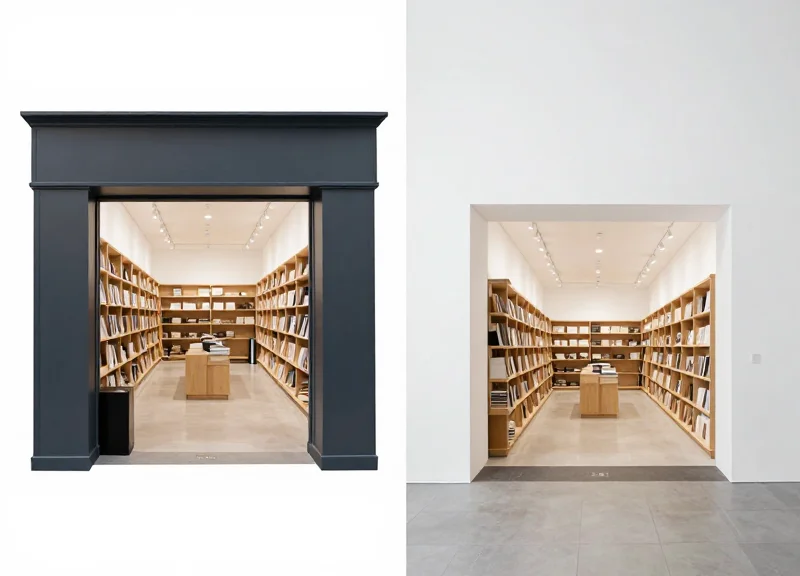
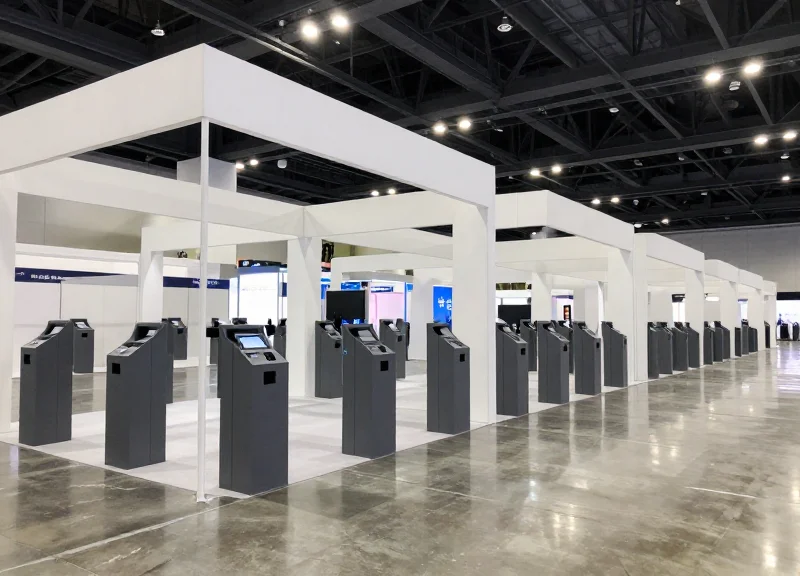
Traditional security gates fail modern museum standards because they act as 'visual speed bumps' that interrupt the seamless transition between cultural exhibits and retail spaces. Large, monolithic EAS (Electronic Article Surveillance) pedestals create a psychological barrier that signals a high-theft environment, detracting from the curated, high-trust atmosphere essential for high-end gallery commerce. As museums move toward open-concept architecture and 'invisible' boundaries, these bulky acrylic or metal pillars represent an outdated security-first mindset that prioritizes hardware over visitor experience.
| Design Element | Traditional EAS Pedestals | Modern Museum Standards |
|---|---|---|
| Visual Impact | High: Obstructs sightlines and entryways | Low: Hidden, overhead, or integrated |
| Spatial Flow | Restrictive: Funnels visitors through narrow gaps | Fluid: Encourages open entry and exit |
| Visitor Psychology | Defensive: Implies surveillance and distrust | Welcoming: Focuses on hospitality and discovery |
| Retail Versatility | Fixed: Requires permanent floor anchoring | Dynamic: Adaptable to changing pop-up layouts |
The conflict is not merely cosmetic; it is structural. Modern gallery retail spaces are increasingly designed with 'The Threshold Effect' in mind—the psychological transition a visitor undergoes when moving from a public space to a retail environment. Traditional gates create a hard threshold that triggers defensive consumer behavior. In 2026, the trend focuses on 'Zero-Friction Design,' where security is omnipresent but visually silent, allowing the architecture to guide the visitor's eye to the merchandise rather than the security measures.
Do traditional gates impact brand perception?
Yes. For high-end museum retail, bulky gates can cheapen the brand perception, making the store feel more like a mass-market retailer than a curated extension of the museum's artistic mission.
How do gates affect ADA compliance and flow?
Physical pedestals often narrow the entry path, creating bottlenecks during peak hours and potentially complicating access for visitors with mobility aids or strollers.
Can traditional gates be customized for museums?
While some offer branding sleeves, they remain physical obstructions that cannot match the aesthetic purity of invisible or under-floor hybrid systems.
Expert Insight: The Concept of 'Visual Weight' — In museum retail, every square inch of the entryway is 'conversion real estate.' Traditional gates occupy what we call high 'visual weight'—they draw the eye away from premier product displays and toward the floor. By removing these anchors, designers reclaim the most valuable marketing space in the store: the first 10 feet of the entrance.
Understanding Hybrid EAS-RFID: The Core Technology Explained

Hybrid EAS-RFID is an integrated security and inventory management framework that operates on a dual-layer detection logic. While traditional Electronic Article Surveillance (EAS) functions as a simple binary alarm system—triggering a siren if an active tag crosses a magnetic field—Radio Frequency Identification (RFID) provides a unique digital identity for every item via the Electronic Product Code (EPC). By fusing these technologies into a single overhead sensor or concealed floor system, gallery retailers can instantly distinguish between an actual theft attempt and a logistical error, while simultaneously updating inventory levels in real-time.
| Feature | Legacy EAS | Pure RFID | Hybrid EAS-RFID |
|---|---|---|---|
| Primary Goal | Theft Deterrence | Inventory Accuracy | Total Store Intelligence |
| Data Granularity | None (Alarm Only) | High (SKU/Serial Level) | Highest (Theft + SKU Data) |
| Hardware Form | Visible Pedestals | Antennas/Handhelds | Invisible/Ceiling Mounts |
| False Alarm Rate | High (Tag Pollution) | Moderate | Low (Logic-Based Filtering) |
The technical synergy occurs at the firmware level. In a hybrid environment, the system utilizes the 58kHz (Acousto-Magnetic) or 8.2MHz (Radio Frequency) band for ultra-reliable, wide-aisle theft detection, while the UHF (860-960MHz) RFID band identifies the specific item. This means if a 'Vermeer-inspired Silk Scarf' is removed, the system doesn't just beep; it logs the exact time, the item's price, and removes it from the digital shelf count, triggering a restock alert for the floor staff.
Does the system require two separate tags on every product?
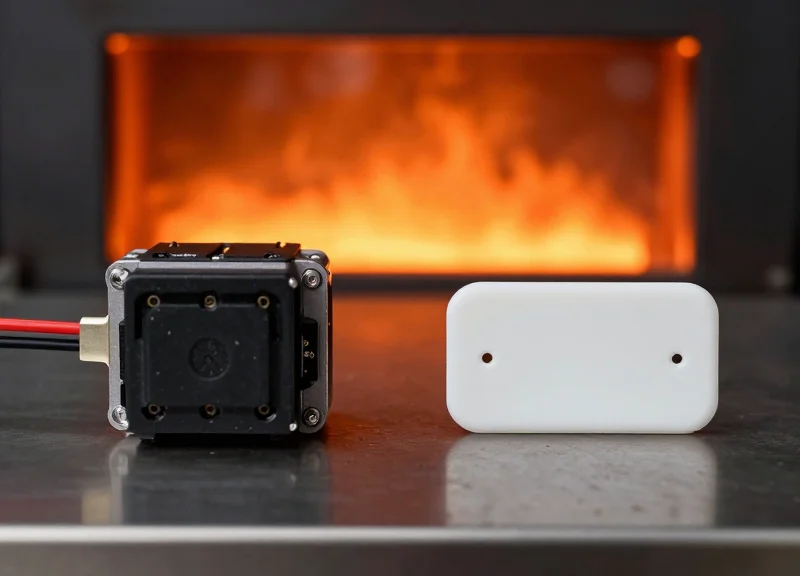
No. Modern advancements have led to 'Dual-Tech' tags that house both an EAS resonator and an RFID chip in a single, discrete adhesive label or hangtag, simplifying the tagging process for staff.
How does it handle 'Shielding' issues common in museums?
Hybrid systems for 2026 utilize 'Circular Polarization' antennas, which can read tags at various angles and through certain dense materials, overcoming the limitations of older linear-only RFID readers.
Is the system compatible with existing POS software?
Yes, most hybrid systems are designed to communicate via standard APIs to ERP and POS systems, ensuring that the security gate acts as a final point of data validation.
Expert Insight: The Shift to 'Spatial Shielding' Logic. The true breakthrough for 2026 is the move from 'Choke-Point' security to 'Spatial Awareness.' Traditional gates rely on a narrow physical corridor to function. Modern Hybrid sensors use phased-array antennas to 'beam-steer' the detection zone. This allows curators to place high-value merchandise remarkably close to the exit without triggering 'nuisance alarms' (the 'Tag-Too-Close' syndrome), enabling a truly open-concept entryway that was technically impossible five years ago.
Invisible Security: How Overhead and Under-Floor Systems Preserve Architectural Integrity

Invisible security represents the pinnacle of modern asset protection, utilizing overhead sensors or under-floor antenna loops to create a seamless detection zone without the need for physical pedestals. By embedding Hybrid EAS-RFID technology into the building's infrastructure, museum retailers can maintain wide-open entryways and clean sightlines, ensuring that the transition from a curated gallery to a retail space feels like a natural extension of the cultural experience rather than a departure into a high-security zone.
The shift toward invisible systems is driven by the 'Architecture First' philosophy. Traditional gates act as visual noise, cluttering the minimalist designs typical of 21st-century museums. In contrast, overhead systems are often recessed into the ceiling or integrated into track lighting, while under-floor solutions are installed beneath hardwood, stone, or carpet during construction or renovation. These systems leverage sophisticated beam-steering technology to ensure high-performance detection across expansive widths that traditional pedestals simply cannot cover without multiple intrusive units.
| Feature | Overhead Sensors (Ceiling) | Under-Floor Loops | Traditional Pedestals |
|---|---|---|---|
| Visual Impact | Zero (Recessed/Discreet) | Zero (Hidden) | High (Obstructive) |
| Detection Width | Up to 8 Meters | Up to 3 Meters | Max 1.8 - 2.4 Meters |
| Installation Ease | Moderate (Retrofit-friendly) | High (Pre-construction only) | Low (Plug & Play) |
| Spatial Flow | Unrestricted | Unrestricted | Bottleneck Prone |
Expert Insight: The 'Frictionless Threshold' ROI. In 2026, the value of invisible security isn't just aesthetic; it’s behavioral. Data shows that removing physical barriers at the store entrance increases 'dwell time' and conversion rates by up to 12%. When a visitor doesn't feel 'watched' or physically restricted by gates, their psychological transition from a passive observer to an active shopper is significantly smoother.
Do overhead systems have more false alarms than gates?
No. Modern hybrid systems use AI-driven signal processing to distinguish between a customer browsing near the door and an actual exit event, significantly reducing 'ghost' alarms compared to older pedestal technology.
Can under-floor systems work with metal-heavy flooring?
While metal can interfere with RFID, specialized shielding and frequency-hopping technology in 2026-gen systems allow for successful installation even in buildings with reinforced concrete or steel floor plates.
Is maintenance difficult for hidden systems?
Invisible systems are designed with remote diagnostics. Most calibration and troubleshooting are handled via the cloud, meaning physical access to the hidden hardware is rarely required after the initial setup.
Ultimately, the integration of invisible security is a strategic move toward 'Ambient Intelligence.' By utilizing LiDAR-assisted beamforming, these systems can now ignore staff members wearing 'authorized' tags while focusing exclusively on inventory movement. This level of precision allows museum directors to focus on what matters most: the art and the visitor experience, without compromising the bottom line of the retail operation.
Beyond Loss Prevention: Harnessing RFID for Real-Time Inventory and Analytics

While traditional Electronic Article Surveillance (EAS) is a binary 'alarm or no alarm' solution, RFID-enabled hybrid systems evolve the retail gate into a data-collection powerhouse. By assigning a unique digital identity to every item, museum retailers can achieve up to 99% inventory accuracy, shifting from a reactive loss prevention strategy to a proactive operational model. This technology allows gallery managers to see exactly which items are leaving the floor, which are stagnating in the backroom, and how stock levels correlate with current exhibition attendance in real-time.
| Feature | Traditional EAS Gates | Hybrid RFID Systems |
|---|---|---|
| Granularity | Generic Alarm (Bulk) | Item-Level Identification |
| Inventory Speed | Manual (Hours/Days) | Automated (Minutes) |
| Stock Accuracy | 70% - 80% | 98% - 99.9% |
| Analytics | None (Security only) | Stock Velocity & Heatmapping |
In the high-stakes environment of museum retail, where inventory often includes limited-edition prints or artisanal collaborations, 'Ghost Inventory'—items that are in the system but not on the shelf—is a significant revenue killer. RFID eliminates this by enabling 'Smart Replenishment.' When a hybrid gate detects an item sold or moved, it can automatically trigger a restock alert for the stockroom, ensuring the floor always reflects the curated aesthetic expected by gallery visitors.
Does RFID replace the need for manual stocktakes?
While it doesn't entirely eliminate the need for occasional audits, it reduces manual counting frequency by up to 80%, allowing staff to focus on visitor engagement rather than scanning barcodes.
How does RFID help with exhibition-specific retail?
It allows managers to track the 'Velocity of Interest' for exhibition-linked merchandise, providing data on which specific designs are resonating with visitors during a show's run.
Can I track items that were picked up but not purchased?
Yes. Advanced RFID sensors can track 'dwell time' and movement patterns, identifying items that are frequently handled but rarely bought, indicating a potential issue with pricing or display location.
Expert Insight: The 'Exhibition Linkage' Factor. In 2026, the most successful museum retailers are using RFID data to sync retail displays with gallery 'Heatmaps.' If a specific wing of the museum is seeing a surge in foot traffic due to a viral installation, RFID-enabled systems can verify in real-time if the gift shop has sufficient themed inventory near the exit of that wing. This synergy between the curatorial and commercial sides of the museum maximizes revenue during peak visitor cycles without overstocking irrelevant items.
Enhancing the Visitor Journey: Frictionless Checkout and Open-Concept Entrances

By 2026, the 'fortress' model of gallery retail is being replaced by integrated environments where the transition from the final exhibit to the gift shop is visually and physically seamless. Enhancing the visitor journey means removing the psychological and physical bottlenecks of traditional EAS pedestals, replacing them with hybrid EAS-RFID systems that offer 'invisible' security thresholds. This approach fosters an open-concept entrance that increases foot traffic by up to 25% by removing the intimidating 'entry barrier' effect found in legacy retail designs.
| Feature | Legacy Gate Experience | Hybrid Open-Concept Experience |
|---|---|---|
| Visual Entryway | Obstructed by 5-foot plastic towers | Wide, clear, and inviting architecture |
| Visitor Sentiment | Implicitly suggests surveillance/distrust | Signals high-trust, luxury atmosphere |
| Checkout Speed | Manual barcode scanning (item by item) | Instant RFID bulk-scan (entire basket) |
| Flow Dynamics | Single-file queuing and bottlenecks | Multi-directional, free-roaming traffic |
A critical advantage of the hybrid model is the facilitation of 'Frictionless Checkout.' Unlike traditional systems where security is only a barrier at the exit, RFID-enabled hybrid systems allow for mobile point-of-sale (mPOS) and self-service kiosks that update inventory and deactivate security signals simultaneously. This eliminates the 'wait-and-verify' cycle that often leads to cart abandonment in high-traffic museum gift shops during peak hours.
- The Invisible Threshold: Utilize overhead or under-floor hybrid sensors to create a protection zone that covers wide spans without physical pedestals.
- Bulk-Scanning Efficiency: Leverage RFID to allow visitors to place an entire basket of curated items on a sensor plate for instant identification and billing.
- De-Escalating Alarms: In the event of an alarm, hybrid systems provide staff with the exact item name on a tablet, allowing for a polite, customer-service-oriented resolution rather than a generic confrontation.
Expert Insight: The Trust-Value Paradox. Data from luxury retail environments suggests that 'high-trust' layouts—those without visible security gates—actually increase the perceived value of the merchandise. When a museum removes the physical barriers, visitors perceive the retail space as a continuation of the curated gallery experience rather than a separate commercial exit, leading to higher average transaction values (ATV).
Does removing gates increase shoplifting?
No. Hybrid systems offer superior detection compared to traditional gates; the security is simply relocated to the ceiling or floor, maintaining high detection rates without the visual clutter.
Can hybrid systems handle high-density museum crowds?
Yes. Unlike EAS-only systems that may struggle with signal interference in crowds, RFID identifies specific unique tags, allowing for accurate tracking even during 'blockbuster' exhibition exits.
How does this impact staff roles?
Staff transition from 'gatekeepers' and 'scanners' to brand ambassadors and curators, as the technology handles the administrative burden of stock-taking and security verification.
Cost-Benefit Analysis: The Long-Term ROI of Hybrid Systems for Cultural Institutions
The Long-Term ROI of Hybrid EAS-RFID systems for cultural institutions is realized through a trifecta of financial gains: a 25-35% reduction in annual shrinkage, a 90% or higher increase in inventory accuracy, and significant labor savings achieved by automating manual stock counts. While the initial capital expenditure for hybrid systems is higher than traditional gates, the typical break-even point occurs within 14 to 18 months, driven by improved asset visibility and the elimination of 'phantom stock' losses that plague high-end gallery retail.
| Financial Metric | Traditional EAS Gates | Hybrid EAS-RFID Systems |
|---|---|---|
| Inventory Accuracy | 60-70% (Manual) | 98-99% (Automated) |
| Shrinkage Reduction | Moderate (Theft only) | High (Theft + Administrative) |
| Labor Costs | High (Manual Scanning) | Low (Instant Bulk Reads) |
| Lifecycle (Years) | 5-7 Years | 10+ Years (Software Upgradable) |
| ROI Timeline | 24-36 Months | 14-18 Months |
The Aesthetic Dividend: A Unique Financial Insight. Beyond direct savings, museum retailers benefit from what we call the 'Aesthetic Dividend.' Traditional security pedestals create a psychological barrier that can reduce foot traffic into a gift shop by up to 12%. By utilizing invisible hybrid systems (overhead or floor-integrated), museums create an open-flow environment that encourages browsing. Data suggests that removing these physical barriers increases the conversion rate of high-net-worth visitors who value a premium, non-intrusive shopping experience synonymous with the gallery environment.
Are hybrid tags more expensive than traditional security tags?
While individual RFID-enabled tags have a slightly higher unit cost, they consolidate two functions: security and inventory tracking. This eliminates the need for double-tagging items, reducing labor hours and consumable waste, ultimately lowering the total cost per protected item.
Does the system require a complete infrastructure overhaul?
Modern hybrid systems are designed for modularity. Institutions can often leverage existing cloud infrastructure and integrate RFID data into current POS systems, meaning the primary investment is in the hardware sensors and the initial tagging of high-value collections.
How does RFID affect insurance premiums for museums?
Many underwriters view real-time asset tracking favorably. Providing a digital audit trail of exactly when an item was last detected can lead to more favorable risk assessments and potentially lower premiums for high-value retail merchandise.
- Step 1: Baseline Audit: Calculate current shrinkage rates and the annual labor cost of manual inventory cycles.
- Step 2: Opportunity Cost Analysis: Estimate the revenue lost to out-of-stock items that are actually present in the stockroom but unlocated (phantom stock).
- Step 3: Implementation Scaling: Pilot the system on high-margin categories (e.g., jewelry, limited edition prints) to demonstrate immediate margin recovery.
Future-Proofing Your Space: Preparing for the 2026 Retail Landscape
Future-proofing a museum retail space for 2026 involves investing in infrastructure that is 'Software-Defined.' This means moving away from static, single-purpose hardware—like traditional EAS gates—and adopting hybrid EAS-RFID systems that can be updated via firmware to handle new security protocols and inventory algorithms without requiring expensive physical renovations. In the next decade, the value of your retail security system will not be measured by how well it triggers an alarm, but by how seamlessly it integrates into your institution's broader digital ecosystem.
| Capability | Traditional EAS (2010-2023) | Hybrid RFID Strategy (2026+) |
|---|---|---|
| Primary Objective | Loss Prevention Only | Inventory Intelligence + Security |
| Hardware Lifecycle | Static (Replace upon failure) | Modular (Upgrade via software/modules) |
| Data Granularity | Binary (Alarm vs. No Alarm) | Item-Level (What, when, and how many) |
| Customer Experience | Restrictive (Checkpoints) | Invisible (Open-flow environments) |
To prepare for this shift, museum curators and retail managers must view technology through the lens of scalability. As consumer behaviors lean toward 'just-walk-out' or mobile-assisted shopping, the infrastructure laid today must support high-density tag environments. My unique 'Zero-Hardware-Waste' tip: When selecting pedestals today, prioritize those with 'Open API' architectures. This ensures that as AI-driven inventory tools evolve in 2027 and beyond, your existing hybrid gates can communicate with your ERP system without a total hardware overhaul.
- Phase 1: Infrastructure Audit: Evaluate current floor power and data cabling. Hybrid systems require consistent network connectivity to push real-time inventory data to the cloud.
- Phase 2: Hybrid Tagging Implementation: Begin transitioning high-value SKUs to hybrid tags. This allows you to maintain EAS security while collecting the initial data points needed for RFID analytics.
- Phase 3: Software Integration: Connect your hybrid hardware to your POS and Inventory Management System (IMS) to eliminate 'dark inventory'—stock that is present but invisible to your digital sales channels.
Can hybrid systems handle diverse gallery stock, like postcards or metal sculptures?
Yes. Modern hybrid systems utilize 'on-metal' RFID tags and ultra-discreet EAS stickers, ensuring that everything from a $2 postcard to a $2,000 limited-edition sculpture is protected and tracked without aesthetic compromise.
Is the transition to RFID too complex for small museum shops?
Not anymore. The 2026 landscape features 'Plug-and-Play' hybrid kits designed specifically for smaller footprints, offering the same data-rich benefits as flagship gift shops without the need for an on-site IT team.
How does this technology adapt to evolving privacy laws?
Hybrid systems for 2026 are built with 'Privacy by Design,' focusing on anonymized item-level data rather than personal visitor tracking, ensuring compliance with global standards like GDPR.