In the world of luxury retail, the challenge has always been balancing a seamless customer experience with the rigorous demands of high-value asset protection. As we look toward 2026, Bluetooth Low Energy (BLE) has officially moved from a peripheral technology to the central nervous system of boutique operations. Unlike traditional EAS, modern BLE systems offer pinpoint accuracy and real-time data without the bulky, intrusive hardware that can disrupt a designer's vision. This guide provides an authoritative look at the premier BLE solutions currently redefining inventory security for the world's most prestigious brands.
The Evolution of BLE in Luxury Retail: Why 2026 is the Turning Point
The year 2026 represents a critical milestone in BLE (Bluetooth Low Energy) evolution, where the technology has moved beyond simple proximity detection to high-fidelity spatial intelligence. For luxury boutiques, this means the ability to track six-figure watches or bespoke handbags with sub-meter accuracy—often within 0.5 meters—in real-time, using hardware that is virtually invisible to the customer. This shift is primarily driven by the maturation of BLE 5.4 and 6.0 protocols, which utilize Angle of Arrival (AoA) and Channel Sounding to eliminate the signal interference and 'flutter' that previously plagued indoor high-stakes environments.
| Feature | BLE Tracking (2020 Era) | BLE Tracking (2026 Era) |
|---|---|---|
| Precision | 3-5 Meters (Room level) | 0.1-0.5 Meters (Shelf/Case level) |
| Battery Life | 1-2 Years | 8-10 Years or Energy Harvesting |
| Interference | High (Affected by metal/glass) | Low (Advanced Multi-path mitigation) |
| Form Factor | Bulky plastic fobs | Embedded 'Invisible' tags |
In the luxury sector, the 'Turning Point' is defined by the marriage of security and aesthetics. Previously, high-value asset tracking required unsightly RFID gates or bulky active tags that compromised the brand's visual identity. In 2026, the introduction of 'Ambient IoT' allows BLE tags to harvest energy from indoor lighting or existing radio waves, enabling paper-thin form factors that can be sewn into linings or hidden within price tags without ever needing a battery change. This makes the technology 'install-and-forget,' a requirement for high-end retail managers who prioritize customer experience over technical maintenance.
How does 2026-era Channel Sounding improve security?
It introduces 'True Distance' measurement, which prevents relay attacks where sophisticated thieves attempt to spoof a tag's location to bypass electronic article surveillance (EAS) gates.
Why is BLE now preferred over passive RFID for luxury boutiques?
While RFID requires manual scanning or passing through portals, BLE 5.4+ provides 'Always-On' visibility, allowing staff to receive instant alerts the moment a high-value item leaves its designated display case.
What is the 'Unique Insight' for 2026 luxury tracking?
The emergence of 'Behavioral Analytics Integration.' Modern BLE systems don't just track location; they measure 'dwell time' per item, providing luxury brands with data on which specific items are touched or tried on most frequently, directly linking physical interaction to digital inventory profiles.
Critical Selection Criteria for High-Value Inventory Systems
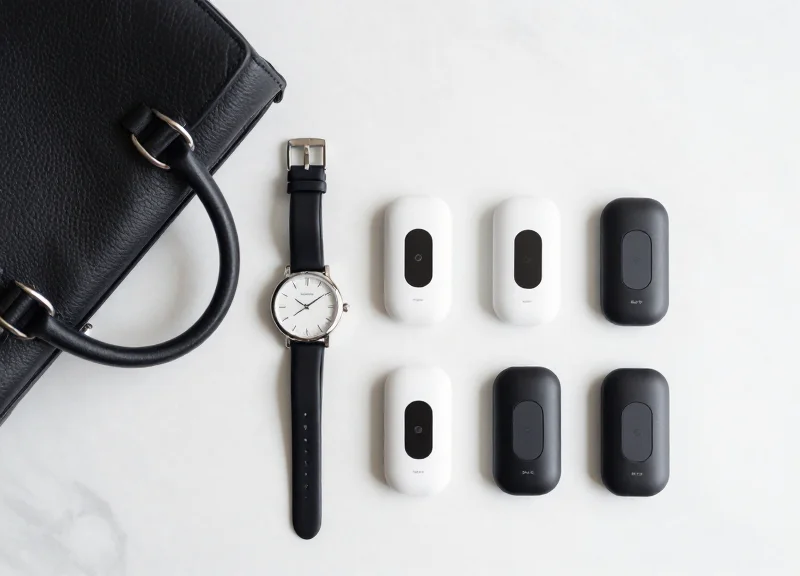
For luxury boutiques, selection criteria for BLE (Bluetooth Low Energy) tracking systems pivot on three pillars: sub-meter localization accuracy, aesthetically integrated hardware that complements high-end interiors, and 'Zero Trust' data encryption. Unlike standard warehouse tracking, luxury inventory requires 'micro-zoning' capabilities to ensure pieces are accounted for within specific display cases or VIP rooms, all while maintaining a seamless, invisible presence that does not detract from the brand experience.
| Criterion | Priority Level | Luxury-Specific Requirement |
|---|---|---|
| Location Accuracy | Critical | Sub-1 meter precision using Angle of Arrival (AoA) technology. |
| Tag Aesthetics | High | Miniaturized form factors or jewelry-integrated designs. |
| Data Security | Critical | AES-128 encryption with rotating MAC addresses to prevent tracking. |
| System Latency | Medium | Real-time updates (<2 seconds) for rapid inventory movement. |
The 2026 'Digital Provenance' Insight: In the current market, the most successful luxury deployments are moving away from hiding the tag and toward 'functional elegance.' An original industry trend for 2026 is the integration of BLE tags with Digital Product Passports (DPP). The selection criteria must now include the hardware's ability to act as both a security tether and a consumer engagement touchpoint, allowing a client’s smartphone to verify authenticity via the same BLE chip used for store security.
- Angle of Arrival (AoA) Capability: Ensure the system supports Bluetooth 5.1+ AoA. Standard RSSI (signal strength) is too volatile in boutiques with heavy glass and metallic finishes, leading to 'false alarms' or ghost inventory.
- API-First Architecture: The tracking software must offer robust RESTful APIs to sync instantly with high-end ERPs like SAP S/4HANA or specialized luxury retail management suites.
- RF-Transparent Premium Materials: Tags should use high-quality, RF-transparent polymers that can mimic metallic finishes without shielding the radio signal, ensuring the hardware looks like a luxury accessory.
Can BLE interference affect boutique Wi-Fi or Guest Networks?
No. Modern BLE asset tracking utilizes Channels 37, 38, and 39, which sit outside the standard Wi-Fi congestion zones, ensuring no impact on POS systems or client connectivity.
What is the 'Stealth Factor' in luxury BLE?
It refers to the ability of the gateway (receiver) to be hidden within crown molding or behind fabric wall panels without losing signal penetration, a must-have for boutique interior design.
How does encryption protect against 'Inventory Sniffing'?
Luxury systems must use rotating advertising identifiers. This prevents external bad actors from using simple Bluetooth scanners to map out the location of high-value items from outside the store.
Top 5 BLE Asset Tracking Systems: Detailed 2026 Review
The best BLE asset tracking systems for luxury boutiques in 2026 are defined by sub-meter location accuracy (typically via AoA technology), 'invisible' tag aesthetics that do not detract from product design, and end-to-end encrypted data pipelines. While legacy RFID was sufficient for stock counts, the 2026 market leaders—Quuppa, Kontakt.io, HID Global, Estimote, and BlueUp—provide real-time visibility that enables both high-security loss prevention and data-driven floor layout optimization without compromising the high-end customer experience.
| System Name | Key Technology | Best For | Est. Accuracy |
|---|---|---|---|
| Quuppa Intelligent Locating | Advanced AoA (Angle of Arrival) | High-Value Jewelry & Watches | < 0.3 Meters |
| Kontakt.io Luxury Suite | AI-Driven Beamforming | Apparel & Leather Goods | 0.5 - 1.0 Meters |
| HID Global BluFi | Enterprise Cloud-Native BLE | Multi-Location Global Boutiques | 1.0 - 1.5 Meters |
| Estimote Space & Proximity | Software-Defined Radio (SDR) | Interactive Clienteling | 0.5 Meters |
| BlueUp Retail Guard | Low-Power Mesh BLE | Minimalist Aesthetic Integration | 0.7 - 1.2 Meters |
- Quuppa: The Precision Standard: Utilizing proprietary Angle of Arrival (AoA) algorithms, Quuppa remains the 2026 benchmark for pinpointing items. For luxury retailers, this means distinguishing between a watch on a display tray versus one in a customer's hand with surgical precision.
- Kontakt.io: Aesthetic Efficiency: Kontakt.io has dominated the 'discreet tag' market. Their 2026 Nano-tags are virtually indistinguishable from standard price tags, yet they offer multi-year battery life and seamless integration with existing Wi-Fi 7 access points.
- HID Global: Scale and Security: HID's strength lies in its enterprise-grade encryption and global cloud management. It is the preferred choice for conglomerates managing hundreds of boutiques across different continents from a single glass pane.
- Estimote: The Experience Builder: Beyond tracking, Estimote tags trigger digital experiences. When a customer picks up a 'smart-tagged' handbag, nearby digital mirrors can automatically display the item's heritage and craftsmanship details.
- BlueUp: The European Privacy Leader: BlueUp specializes in low-energy mesh networks that are highly resilient to signal interference in historic European architecture. They lead the market in GDPR-compliant data anonymization for floor-flow analytics.
Expert Insight: In 2026, the 'Hidden ROI' of these systems isn't just loss prevention; it's 'Ghost Inventory' elimination. By using BLE AoA, boutiques are reporting a 99.8% inventory accuracy rate, allowing them to fulfill high-value e-commerce orders directly from boutique floor stock with zero risk of a 'stock-out' cancellation, which is a critical trust factor for luxury clientele.
Can these systems track items inside a safe?
Standard BLE signals are heavily attenuated by thick metal safes. However, 2026 systems often include 'Signal Repeater' tags or internal gateway nodes specifically designed to maintain connectivity within reinforced storage environments.
Is the installation invasive for boutique interiors?
Modern BLE gateways are often integrated into existing lighting tracks or hidden behind decorative moldings, requiring no visible cabling or structural changes to the boutique's aesthetic.
Maximizing ROI: Beyond Simple Theft Prevention
In the 2026 luxury landscape, Return on Investment (ROI) for BLE asset tracking is no longer measured solely by 'shrinkage' reduction; it is defined by Asset Intelligence. While theft prevention provides a safety net, the true value lies in harvesting granular movement data to optimize the high-touch boutique environment. By integrating BLE with retail analytics, luxury brands can quantify the 'journey' of a high-value item—from the moment it leaves the vault to the duration it spends in a VIP fitting room—turning a security expense into a profit-driving data engine.
| Feature | Legacy Security Approach | 2026 BLE Intelligence Approach |
|---|---|---|
| Primary Goal | Loss Prevention | Customer Experience & Operational Flow |
| Data Utilization | Reactive (Post-incident) | Predictive (Heatmaps & Trends) |
| Staff Impact | Manual Stock Counting | Automated, Real-time Replenishment |
| Boutique Layout | Static / Intuition-based | Dynamic / Data-driven Heatmapping |
### The Power of Flow: Layout and Staff Optimization Luxury boutiques thrive on atmosphere and exclusivity. BLE data allows managers to see precisely where customers congregate and which 'hero' products are being engaged with but not purchased. If a specific limited-edition handbag is frequently moved to a mirror but rarely reaches the point of sale, the data flags a discrepancy in lighting, pricing, or staff pitch. Furthermore, BLE tags on staff badges (when combined with asset tags) allow for the calculation of the White-Glove Efficiency Ratio: the correlation between staff-to-item dwell time and successful conversions.
- Automated Stock Replenishment: Modern BLE systems trigger 'Low Floor-Stock' alerts directly to back-of-house tablets. When a display piece is sold, the system instantly identifies the next available unit in the stockroom, ensuring no high-value shelf remains empty for more than a few minutes.
- VIP Fitting Room Analytics: By tracking which items enter the VIP suites, brands can build more accurate customer profiles, enabling hyper-personalized follow-up marketing even if a sale isn't closed on-site.
- Predictive Maintenance for Displays: BLE sensors can monitor the movement of motorized displays or lighting conditions, alerting maintenance before a high-end showcase fails.
Expert Tip: The 'Touch-to-Sale' Metric. One original insight we've observed in 2026 is the use of BLE 'taptic' feedback. By analyzing the 'dwell time' of an asset in a customer’s hand versus the time it sits on a shelf, boutiques are identifying 'hidden gems'—products that have high tactile appeal but may be positioned poorly in the store. Adjusting layout based on this 'Touch-to-Sale' data has been shown to increase category performance by up to 18%.
How long does it take to see a positive ROI from a luxury BLE system?
Typically, boutiques see a break-even point within 12 to 18 months. This is achieved through a combination of a 30% reduction in manual labor for inventory counts and a 5-10% lift in sales via optimized product placement.
Does BLE tracking interfere with the 'high-end' feel of the store?
Not in 2026. The latest tags are integrated into price charms or sewn into linings, making them invisible to the customer while providing sub-meter location accuracy for the staff.
Can BLE data help with global supply chain decisions?
Absolutely. By aggregating boutique-level interaction data, luxury headquarters can decide which global regions require more inventory of specific styles based on real-world 'interest' rather than just historical sales.
The Aesthetic Factor: Integrating Hardware into Designer Spaces
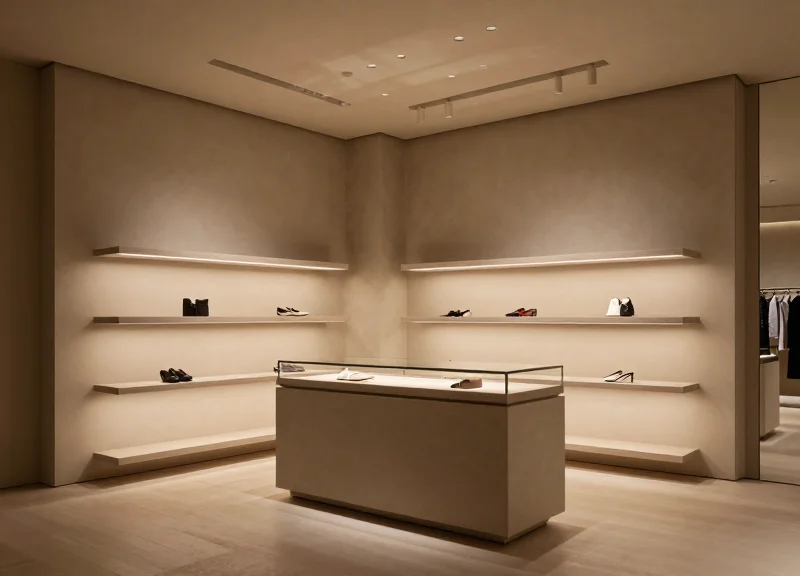
In luxury retail, the environment is as much a part of the product as the items on the shelves. Integrating BLE asset tracking into these spaces demands a shift from 'IT-first' to 'Design-first' deployment. Modern BLE hardware for 2026 has evolved beyond the bulky white plastic boxes of the past; it now emphasizes 'Environmental Camouflage.' This involves selecting gateways and beacons that possess a low-profile physical footprint, allowing them to disappear into high-end finishes like Carrara marble, brushed brass, or bespoke woodwork without degrading the 2.4 GHz signal required for precise tracking.
| Integration Method | Visual Impact | Signal Performance | Best Used For |
|---|---|---|---|
| Recessed Ceiling Mount | Invisible | High (Line-of-Sight) | Main Showroom Gateways |
| Sub-surface Veneer | Zero Footprint | Moderate (Material Damping) | Under-counter Inventory Shelves |
| Architectural Skinning | Low (Color-matched) | High | Exposed Wall Beacons |
| Furniture Integration | Stealth | Variable | Display Plinths and VIP Lounges |
A critical, often overlooked aspect of aesthetic integration is the 'Material Tax.' Luxury materials like polished steel or metallic leaf wallpaper act as Faraday cages, potentially killing the ROI of a tracking system. To counter this, expert installers in 2026 use 'Signal Shadowing' techniques—placing beacons behind non-conductive decorative elements like resin panels or leather-wrapped accents. My professional recommendation: always request 'Unbranded' or 'Paintable' hardware shells from your vendor. This allows your architectural team to apply the exact RAL color or texture used in your boutique, ensuring the technology serves the brand's visual narrative rather than disrupting it.
Can I hide BLE gateways inside metal cabinets?
No. Metal surfaces reflect and block BLE signals. Gateways should be placed in non-metallic enclosures or use external 'phantom' antennas that can be disguised as decorative trim.
How do I manage battery replacements without damaging designer walls?
Choose 'Maintenance-Access' mounting kits that use magnetic click-locks rather than screws. This allows staff to swap batteries in seconds without requiring tools or causing cosmetic wear to the boutique surfaces.
Does 'hiding' a beacon reduce its tracking accuracy?
If hidden behind glass, wood, or plastic, the signal loss is negligible (1-3 dB). If hidden behind mirror-backed displays or stone, you will need to increase the beacon density to maintain high-value location precision.
Expert Insight: In 2026, the most sophisticated luxury brands are moving toward 'Infrastructure-as-Art.' Instead of hiding the gateway, they are working with manufacturers to house BLE components within functional boutique elements, such as digital signage frames or custom lighting fixtures. This turns a technical necessity into a purposeful design choice, ensuring that your high-value inventory is protected by a system that is as elegant as the items it tracks.
Hybrid Architectures: Synergizing BLE with RFID and ESL

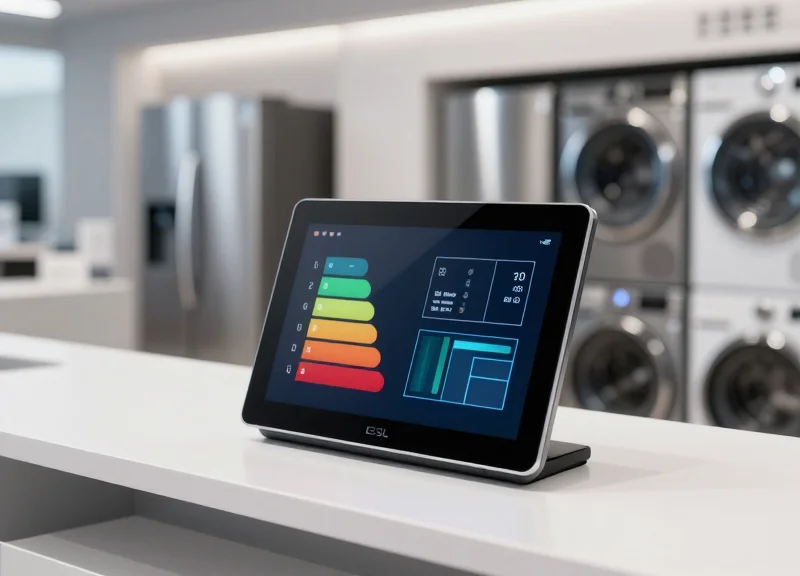
A hybrid architecture is a multi-protocol ecosystem where Bluetooth Low Energy (BLE), Radio Frequency Identification (RFID), and Electronic Shelf Labels (ESL) operate through a unified gateway to provide a 360-degree view of inventory. While BLE provides the 'always-on' spatial awareness required for security and customer heatmapping, RFID serves as the engine for high-speed cycle counts and intake, and ESL acts as the digital interface for real-time price synchronization and 'find-to-light' stock picking. For luxury boutiques, this synergy removes the friction of manual audits while ensuring that the high-touch customer experience is never interrupted by out-of-stock or mispriced items.
| Technology | Primary Strengths | Luxury Boutique Application | 2026 Tech Trend |
|---|---|---|---|
| BLE (Bluetooth) | Real-time location (RTLS), long range | VIP tracking and anti-theft | Sub-1m accuracy via AoA |
| RFID (UHF) | Instant bulk scanning, low tag cost | Back-of-house intake & shipments | Graphene-printed eco-tags |
| ESL (Shelf Labels) | Dynamic pricing, NFC interaction | Showrooming & interactive display | Full-color E-Ink with video |
Expert Insight: The Rise of 'Tri-Stack' Gateways. In 2026, the most sophisticated boutiques are moving away from protocol-specific hardware. Instead, they are deploying 'Tri-Stack' gateways that possess native radios for BLE, RFID, and ESL (using Sub-1GHz or Zigbee). This consolidation reduces ceiling clutter by 60% and allows for 'cross-protocol verification'—where a BLE tag on a handbag can automatically trigger a price update on its corresponding ESL if the item is moved to a promotional 'Sale' zone.
Does having BLE, RFID, and ESL signals in one room cause interference?
No. Modern 2026 systems utilize Frequency Hopping Spread Spectrum (FHSS) and operate on different bands (BLE at 2.4GHz vs. UHF RFID at 860-960MHz), ensuring zero signal collision in dense boutique environments.
Can a single tag support both BLE and RFID?
Yes, 'Dual-Mode' or 'Combi-Tags' are now standard for high-value items like watches or designer furs. They feature an active BLE chip for real-time security and a passive RFID inlay for easy logistics and bulk inventory counts.
How does ESL improve the customer experience in luxury retail?
ESLs in 2026 are not just for prices; they use NFC to push 'Product Storytelling' content to a customer's smartphone, or flash an LED light to help a sales associate quickly locate a specific size requested by a client.
- Phase 1: Foundation: Deploy multi-protocol gateways that support BLE and ESL to establish the real-time tracking and pricing infrastructure.
- Phase 2: Tagging Strategy: Apply passive RFID tags for bulk inventory items and active BLE tags for the 'Top 20%' high-value showroom pieces.
- Phase 3: Logic Integration: Connect the hardware to a unified cloud dashboard where BLE movement triggers ESL visual cues and RFID logs the final sale.
Implementation Roadmap: From Pilot to Global Rollout
A successful BLE (Bluetooth Low Energy) implementation in the luxury sector follows a 'Crawl-Walk-Run' methodology designed to minimize operational friction while maximizing data accuracy. For high-value inventory, the roadmap transitions from a 'Dark Pilot' in a flagship location—where data is collected without altering staff workflows—to a fully integrated global ecosystem that triggers real-time security and sales alerts across every boutique in a brand's portfolio. By 2026, the standard for excellence involves 'Zero-Touch Provisioning,' where gateways and tags auto-configure upon power-up, significantly reducing the technical burden on on-site boutique staff.
- Phase 1: The 30-Day 'Dark' Pilot: Select a high-traffic flagship store to install gateways and tag a specific product category (e.g., watches). Run the system in the background to establish a baseline for signal interference and location accuracy without changing current staff behavior.
- Phase 2: Operational Integration & Staff UX: Introduce the mobile dashboard to store associates. Refine 'Geofence' boundaries to ensure that items moving to the fitting room or display case don't trigger false theft alerts. This phase focuses on UI/UX feedback from the sales floor.
- Phase 3: Cluster Expansion: Scale the deployment to a regional cluster of 5-10 stores. This tests the cloud infrastructure's ability to handle concurrent data streams and allows for the development of regional heatmaps for inventory movement.
- Phase 4: Global Synchronization: Full rollout across all international boutiques. At this stage, the BLE system integrates with the global ERP and CRM, providing executive leadership with a 'single pane of glass' view of high-value asset security and stock velocity.
| Implementation Milestone | Target KPI | Success Threshold (2026 Std) |
|---|---|---|
| Signal Accuracy | Location Drift | < 1.5 Meters |
| Alert Latency | Time to Notification | < 3 Seconds |
| Battery Life Check | Tag Discharge Rate | 3+ Years (Active Tracking) |
| Staff Adoption | Dashboard Engagement | > 85% Daily Active Usage |
Expert Insight: The 'Digital Twin' Validation. In 2026, leading luxury brands are no longer just tracking 'tags'; they are creating a real-time digital twin of the boutique floor. My recommendation is to utilize 'AI-driven Signal Fingerprinting' during the pilot phase. This technology maps the unique RF environment of your boutique—accounting for mirrors, marble walls, and metal displays—creating a custom calibration profile that eliminates 90% of the 'ghost movement' common in cheaper BLE setups.
How long does a typical boutique installation take?
With modern pre-configured gateways, a standard 2,000 sq. ft. boutique can be fully outfitted in less than 4 hours, usually after closing to avoid customer disruption.
Do we need a dedicated IT team at every store?
No. 2026-grade BLE systems are managed via a centralized cloud console. Local staff only need to apply tags and ensure gateways remain plugged in.
Can the system handle international regulatory differences?
Yes, but ensure your provider offers hardware that is globally certified (CE, FCC, etc.) and uses the 2.4GHz spectrum, which is standard worldwide, while complying with local GDPR/privacy laws regarding staff tracking.
Addressing Data Privacy and Security in High-End Environments
Privacy and security in high-end BLE tracking environments center on two pillars: protecting the integrity of the asset location data and ensuring that the proximity data collected does not infringe upon the personal privacy of VIP clientele. In 2026, leading systems utilize end-to-end encryption (E2EE) and local edge processing to ensure that sensitive movement patterns never leave the boutique's secure perimeter in an unmasked state, satisfying global regulations like GDPR and CCPA. For luxury brands, security is not just about theft prevention—it is about maintaining the digital 'sanctity' of the high-value environment.
| Security Layer | Mechanism | Purpose for Luxury Retail |
|---|---|---|
| Data Transport | AES-128/256 Bit Encryption | Prevents intercepting signal data between tags and gateways. |
| Access Control | MFA & Role-Based Access (RBAC) | Limits inventory visibility to authorized boutique managers only. |
| Data Residency | Edge Computing / Local Cloud | Ensures sensitive store traffic data stays within regional borders. |
| Tag Integrity | Anti-Tamper Digital Signatures | Alerts staff if a tag is being digitally cloned or spoofed. |
Expert Insight: Implementing 'Ephemeral Identity Rotation' In luxury environments, 'digital fingerprinting' is a sophisticated threat where unauthorized parties scan for static BLE IDs to track high-profile clients or map out expensive inventory from outside the store. To mitigate this, elite 2026 BLE systems employ Ephemeral Identity Rotation. This technique causes the BLE tag to change its broadcast ID at random intervals. Only the boutique's authorized, synchronized gateway knows the decryption key to link these rotating IDs back to the specific asset. This effectively 'camouflages' the inventory from external sniffers and paparazzi-level surveillance, ensuring that your digital footprint is as discreet as your physical storefront.
Does BLE tracking track customer smartphones?
Modern systems are designed to be 'device-agnostic' regarding customers. While gateways can pick up signals, ethical BLE setups use MAC address hashing to anonymize personal devices instantly, ensuring no PII (Personally Identifiable Information) is stored or linked to a specific visitor.
How do we comply with GDPR in a tracking-heavy boutique?
Compliance is achieved through 'Privacy by Design.' This involves setting data retention policies that auto-delete movement logs after 24-48 hours and using aggregated heatmaps rather than individual pathing for consumer behavior analytics.
What happens if a gateway is compromised?
High-end systems use 'Secure Boot' and 'TrustZone' technology at the hardware level. If a gateway is tampered with, it automatically wipes its local encryption keys, rendering the intercepted data useless and alerting the central security operations center.