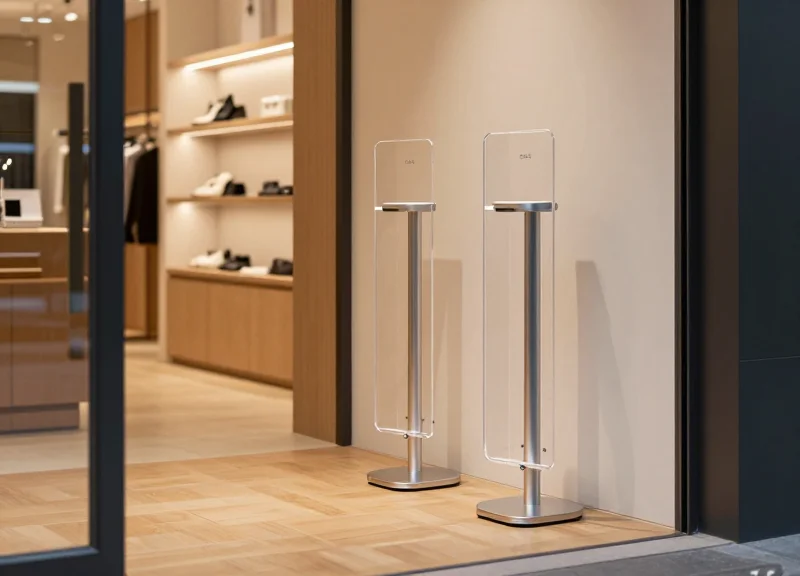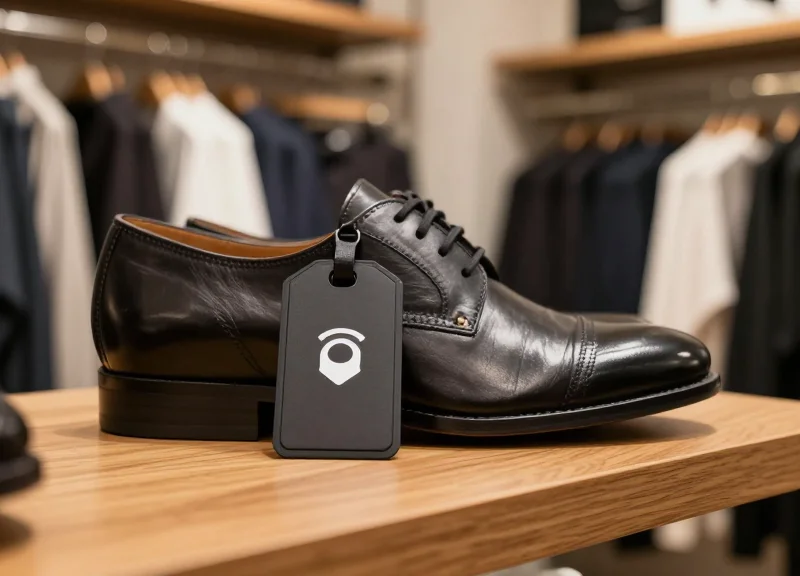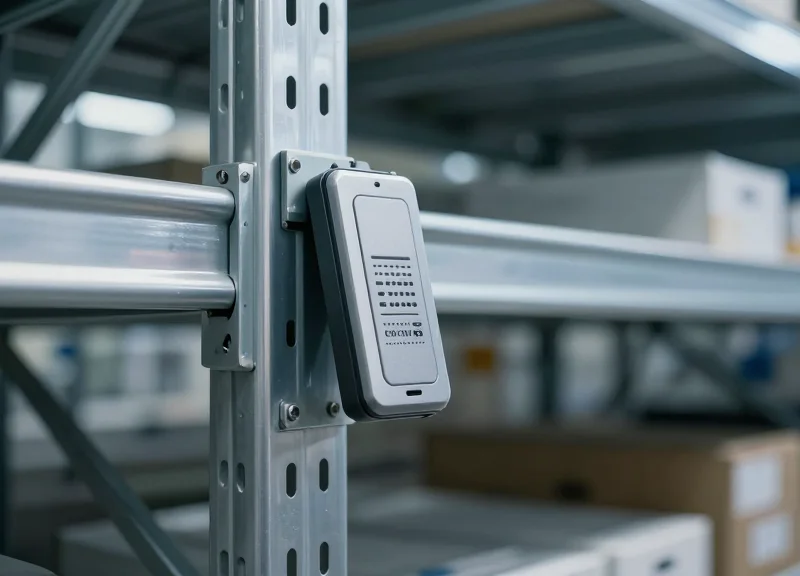

The vape retail landscape is undergoing a massive digital transformation. As we approach 2026, boutique owners face a pivotal decision: continue relying on traditional Electronic Article Surveillance (EAS) or transition to the high-intelligence world of Radio Frequency Identification (RFID). With high-value products and shrinking margins, the next-gen 'Connected Vape Boutique' requires a strategy that goes beyond just stopping shoplifters—it needs real-time data, seamless inventory control, and a frictionless customer experience. In this guide, we analyze the shifting tides of retail security and whether RFID is finally ready to claim the throne.
The Evolution of Vape Retail: From Security to Connectivity

The evolution of vape retail represents a fundamental shift from reactive loss prevention to proactive operational intelligence. While traditional Electronic Article Surveillance (EAS) served as a binary gatekeeper—identifying only whether an item crossed a threshold—the 2026 connected boutique utilizes Radio Frequency Identification (RFID) to transform security hardware into a data-gathering node. This transition allows retailers to move beyond simple 'shrinkage control' and toward a holistic ecosystem where inventory accuracy, shelf-level availability, and security are managed through a single, invisible thread of connectivity.
In the early days of the industry, vape shops were often utilitarian, counter-service operations. As the market matured into the 'boutique' era, the physical environment became more open and interactive. This increased the risk of theft but also the demand for high-fidelity data. Modern retailers are realizing that the cost of 'out-of-stocks' often exceeds the cost of theft. Consequently, the technology stack in a next-gen boutique is no longer just a defensive expense; it is a critical driver of the customer experience.
| Feature | Legacy Vape Retail (2015-2022) | Connected Vape Boutique (2026+) |
|---|---|---|
| Primary Focus | Theft Prevention (Loss Prevention) | Operational Intelligence & Experience |
| Core Technology | Acousto-Magnetic (AM) / RF EAS | RFID, IoT Sensors & AI Analytics |
| Data Granularity | Binary (Alarm/No Alarm) | Item-Level (SKU, Batch, Expiry) |
| Display Strategy | Locked Cases (High Friction) | Open Merchandising (Low Friction) |
| Inventory Method | Manual Cycle Counts | Real-Time Automated Tracking |
Why is the shift to connectivity happening now?
The convergence of lower RFID tag costs and the rise of high-value, small-form-factor devices makes item-level tracking economically viable for the first time in the vape sector.
Can RFID coexist with legacy EAS systems?
Yes, many boutiques use 'dual-technology' tags during the transition, but the trend is moving toward pure RFID to eliminate the bulky hardware associated with traditional EAS.
How does connectivity improve the customer experience?
By ensuring 99% inventory accuracy, retailers can offer reliable 'Buy Online, Pick Up In-Store' (BOPIS) services and personalized recommendations based on real-time shelf interactions.
Expert Insight: Solving the 'Ghost Inventory' Crisis. One of the most overlooked benefits of the evolution toward RFID is the elimination of 'Ghost Inventory'—items that your POS system says are in stock but aren't actually on the shelf due to misplacement or untracked theft. In high-velocity vape retail, ghost inventory is a silent killer of revenue. Unlike traditional EAS, which only alerts you to a loss at the exit, RFID connectivity provides a real-time 'heat map' of your stock, allowing you to replenish high-demand e-liquids or disposables before the customer even walks through the door.
EAS: The Proven Defense Against Shrinkage
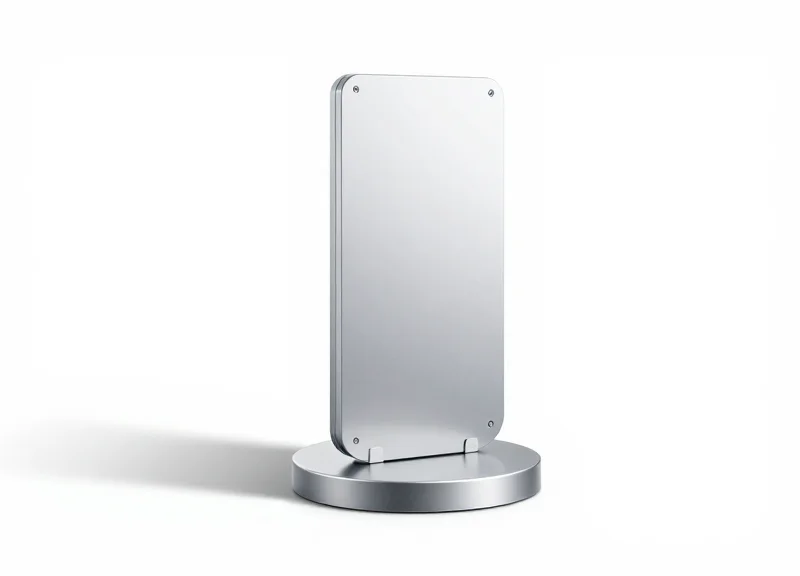
Electronic Article Surveillance (EAS) is a cost-effective loss prevention technology that uses sensors at store exits to detect active security tags or labels on unpaid merchandise. For the modern vape boutique, EAS serves as the 'front line' of defense, offering a physical and psychological deterrent that immediately signals a high-security environment to potential shoplifters. While emerging technologies offer more data, EAS remains the global gold standard for shrinkage reduction because it addresses theft at the moment of exit with a loud, unambiguous auditory alert.
| Feature | RF (Radio Frequency) 8.2MHz | AM (Acousto-Magnetic) 58kHz |
|---|---|---|
| Detection Range | Standard (Up to 1.2m) | Wide (Up to 2.4m) |
| Interference | High sensitivity to foil/metal | Low sensitivity (Superior for hardware) |
| Tag Cost | Very Low (Ideal for liquids) | Moderate (Best for devices) |
| Best Use Case | High-volume, low-cost disposables | Premium mods and hardware kits |
Why is EAS still preferred over RFID for theft prevention?
EAS is built for deterrence; the alarm sounds at the door, alerting staff to a live incident. RFID is primarily a tracking technology; while it can detect an item leaving, its primary value is inventory data, and it often lacks the robust, immediate alarm triggers necessary to stop a fast-moving shoplifter.
Is EAS cost-effective for small boutique footprints?
Yes. A standard EAS pedestal system typically pays for itself within 6 to 12 months by reducing shrinkage in high-margin categories like premium e-liquids and high-end pod systems.
Can EAS handle the metallic packaging common in vape products?
AM (Acousto-Magnetic) systems are specifically designed to penetrate metallic environments, making them the superior choice for vape shops where coils, foil-wrapped disposables, and metallic device bodies might shield standard RF signals.
Expert Insight: The 'Active Deterrence Gap'. After 20 years in retail tech, I’ve observed that many boutiques make the mistake of prioritizing data over presence. In the compact environment of a vape shop—where a single employee may be managing a tasting bar while others browse—the visible 'pedestals' at the door act as a silent security guard. Unlike RFID, which can be 'invisible,' the physical presence of EAS pedestals significantly lowers the impulse to steal. For 2026, the strategy isn't necessarily replacing EAS, but utilizing its AM (Acousto-Magnetic) variety to overcome the signal-shielding properties of the foil-backed blister packs common in modern disposable vapes.
RFID: The Brain Behind the Next-Gen Boutique

Radio Frequency Identification (RFID) represents a fundamental shift from 'detecting a breach' to 'knowing the inventory.' While traditional EAS systems act as a perimeter alarm, RFID serves as the central nervous system of the next-gen vape boutique. By assigning a unique digital birth certificate to every individual juice bottle, disposable pod, or high-end mod, RFID enables a level of granular visibility that transforms a retail space into a data-driven IoT node. In the 2026 landscape, an RFID-enabled boutique doesn't just stop theft; it orchestrates the entire lifecycle of a product from the warehouse to the hand of the consumer.
| Feature | Traditional EAS | Connected RFID |
|---|---|---|
| Primary Goal | Theft Deterrence | Inventory Intelligence & Security |
| Data Granularity | Binary (Tag present/not present) | Unique Serial Number (SKU, Batch, Expiry) |
| Stock Counting | Manual / Barcode Scanning | Automated / Real-time (Bulk scanning) |
| IoT Integration | Non-existent | Smart Shelves & Predictive Analytics |
| Customer Experience | Security Gates / Friction | Frictionless Checkout / Self-Service |
The true power of RFID lies in its ability to solve the 'Ghost Stock' phenomenon—a major profit-killer in the vape industry where system records show items in stock that aren't actually on the floor. With RFID, retailers can perform a full store inventory count in minutes with 99.9% accuracy, compared to hours for manual barcode scanning. This connectivity allows for 'Smart Shelves' that automatically trigger restocking alerts when a specific flavor profile or nicotine strength drops below a threshold, ensuring that the next-gen boutique never misses a sale due to human error in inventory management.
Does RFID work with metal vape mods or liquid bottles?
Modern 'on-metal' and 'liquid-resistant' RFID tags use specialized spacers and frequencies to overcome the interference traditional tags faced, making them perfect for premium vape hardware and e-liquids.
Can RFID help with product recalls or expiry dates?
Yes. Because every item has a unique ID, the system can instantly locate specific batches of e-liquid for recall or identify bottles nearing their expiration date, ensuring compliance and safety.
How does RFID improve the customer experience?
It enables 'interactive kiosks' where a customer can pick up a device and the screen automatically displays the specs, compatible coils, and available flavors based on the tag's proximity.
Expert Insight: In 2026, the competitive edge isn't just about preventing shrinkage; it's about 'Velocity of Data.' I’ve observed that boutiques implementing item-level RFID tracking reduce out-of-stock scenarios by 30% and increase overall sales by 4-6% simply by ensuring the right product is always in the right place at the right time. RFID isn't an expense; it's a revenue engine.
Comparative Analysis: Accuracy vs. Affordability
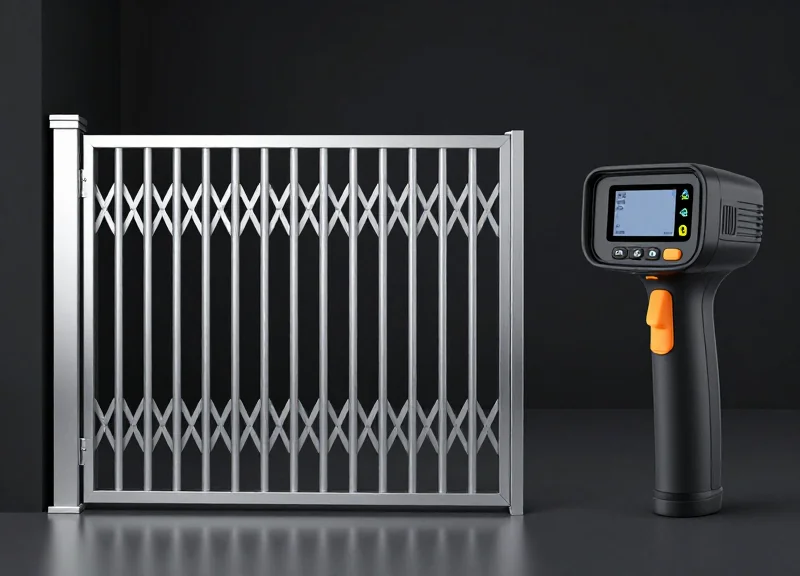
The choice between Electronic Article Surveillance (EAS) and Radio Frequency Identification (RFID) in a vape boutique is a strategic trade-off: EAS provides a cost-effective, high-visibility deterrent against physical theft, whereas RFID offers surgical precision in inventory management and nearly 100% detection accuracy at a higher price point. While EAS systems typically trigger alarms based on proximity alone, RFID provides unique item-level data, allowing retailers to distinguish between a legitimate sale and a security breach with granular detail.
| Feature | Traditional EAS (AM/RF) | Next-Gen RFID (UHF) |
|---|---|---|
| Detection Accuracy | 75% - 85% (Prone to shielding) | 99.8% (Item-level identification) |
| Average Cost per Tag | $0.02 - $0.05 | $0.08 - $0.15 |
| False Alarm Rate | Moderate (Tags not deactivated) | Low (Data verified against POS) |
| Inventory Visibility | None (Binary: In or Out) | Full (Real-time stock levels) |
| Implementation Effort | Low (Plug-and-play) | High (Requires software integration) |
The 'Signal Density' Challenge: Vape boutiques present a unique technical environment because of the high concentration of metallic components in coils and the liquid-filled nature of e-juice bottles. Traditional EAS often struggles with 'body shielding' where a thief hides a product close to the body. RFID, specifically with modern 'On-Metal' or 'Flag' tags, overcomes this by using the product's own geometry to reflect signal, ensuring that even small pods are accounted for in a crowded display.
Can RFID justify its higher cost for a small boutique?
Yes, through 'Labor Arbitrage.' While the tags cost more, RFID reduces the time spent on manual inventory counts from hours to minutes, allowing staff to focus on high-margin consultations and upselling.
Does EAS still have a place in 2026?
Absolutely. For high-volume, low-margin shops that primarily face 'grab-and-run' theft, the psychological deterrent of visible EAS pedestals often provides a better immediate ROI than a complex RFID data suite.
What is the biggest risk of switching to RFID?
Signal interference from liquid. E-liquids can absorb RF energy, meaning boutiques must invest in high-quality Gen2 tags specifically tuned for liquid environments to maintain accuracy.
Expert Tip: For the 'Next-Gen' boutique, I recommend a Hybrid Deployment. Use traditional EAS gates for visual deterrence at the front door, but utilize RFID for 'Smart Shelves' and inventory. This 'Silicon Valley' approach to retail maximizes security while keeping the cost-per-tag manageable for lower-value items, only utilizing the expensive RFID tracking for premium hardware and high-end mods.
2026 Market Drivers: Why the Shift is Accelerating

In 2026, the shift from traditional Electronic Article Surveillance (EAS) to Radio Frequency Identification (RFID) is no longer a luxury for vape boutiques; it is a strategic response to a complex retail environment. While EAS focuses solely on preventing theft, RFID serves as the foundational data layer for the 'Connected Boutique.' The acceleration is driven by three primary catalysts: the demand for 99.9% inventory accuracy to support omnichannel sales, the rising cost of labor making manual counts unsustainable, and new 'Track and Trace' regulations that require item-level provenance for nicotine products.
| Market Driver | Legacy EAS Impact | 2026 RFID Impact |
|---|---|---|
| Inventory Accuracy | Approx. 65-70% (Manual counts) | 99%+ (Real-time digital twin) |
| Omnichannel (BOPIS) | High cancellation rates due to ghost stock | Seamless fulfillment from store shelves |
| Regulatory Compliance | None (Security only) | Automated batch & serial tracking |
| Customer Experience | Intrusive alarms & locked cabinets | Frictionless checkout & smart displays |
How does RFID support 'Buy Online, Pick Up In-Store' (BOPIS)?
Vape boutiques often carry hundreds of unique SKU combinations (flavors, nicotine strengths, coil types). RFID provides the real-time visibility required to guarantee a product is actually on the shelf before a customer drives to the store, eliminating the 'out-of-stock' frustration that kills brand loyalty.
Is regulatory pressure a factor in RFID adoption?
Yes. By 2026, many jurisdictions are expected to tighten serialized tracking requirements to combat the illicit trade of vapor products. RFID allows retailers to automate the logging of batch numbers and expiration dates, turning a compliance headache into a background process.
What is the 'Labor Efficiency' argument for the shift?
Manual inventory audits in a high-SKU vape shop can take hours. With RFID, a single employee can scan an entire boutique's stock in minutes using a handheld reader, allowing staff to focus on high-value consultations and upselling rather than counting boxes.
Expert Insight: The 'Serialization Survival' Pivot. As a veteran of Silicon Valley retail tech, I’ve observed that the most overlooked driver for 2026 is 'Micro-Fulfillment Efficiency.' In the competitive vape landscape, the boutique is becoming a mini-warehouse. RFID isn't just about stopping a thief from walking out with a mod; it’s about the 'Digital Ghost' problem. If your system says you have one bottle of a specific premium e-liquid left but you can't find it, you've lost the sale and the customer. RFID solves the 'search and find' problem that plagues high-density specialty retail.
- Phase 1: Compliance Integration: Retailers adopt RFID first to meet mandatory tracking and tracing laws for nicotine-containing products.
- Phase 2: Operational Optimization: Data is leveraged to reduce shrinkage and optimize stock levels, preventing over-ordering of slow-moving juices.
- Phase 3: Experience Transformation: RFID tags trigger interactive in-store displays, showing lab results or flavor profiles when a customer picks up a tester unit.
The Power of ESL Integration in Connected Stores

Electronic Shelf Label (ESL) integration represents the visual manifestation of a connected store's intelligence, where RFID-tracked inventory data is instantly reflected on digital displays to enable dynamic pricing, automated restock alerts, and seamless omnichannel synchronization. By 2026, the 'Connected Boutique' will utilize this synergy to eliminate the friction between back-end data and front-end customer experience, ensuring that what is on the shelf is always accurately reflected in the digital ledger.
The true power of this integration lies in its ability to turn passive shelves into active sales tools. When an RFID system identifies a batch of e-liquids approaching its 'best before' date, it can trigger the ESLs to automatically apply a 'Flash Sale' price. This level of automation—which I call Price-Elasticity Automation—allows boutique owners to protect margins by clearing aging stock without manual intervention. This is particularly critical in the vape industry, where product cycles are fast and flavor trends shift overnight.
| Feature | Traditional Manual Labels | RFID + ESL Integrated System |
|---|---|---|
| Price Update Speed | 6-10 hours for a full store | Less than 60 seconds |
| Inventory Visibility | Delayed (depends on manual audits) | Real-time (synced with RFID scans) |
| Regulatory Compliance | High risk of outdated warnings | Automated updates for all labels |
| Operational Focus | Task-oriented (printing/sticking) | Customer-oriented (consulting) |
Beyond pricing, the ESL-RFID duo serves as a beacon for store staff. In a high-density environment like a vape shop, locating a specific SKU for an online order pickup can be like finding a needle in a haystack. With integrated systems, a staff member can trigger a 'Flash' command from their handheld RFID reader, causing the specific ESL on the shelf to blink, reducing 'pick-to-pack' time by up to 40%.
How does ESL integration improve the customer experience?
Customers can scan QR codes on the ESL to view detailed lab results (COAs), flavor profiles, or video reviews, bridging the gap between physical shopping and digital research.
Is the ROI justifiable for smaller vape boutiques?
Yes. While the upfront cost is higher than paper, the reduction in labor hours and the elimination of pricing errors typically result in a break-even point within 14 to 18 months.
Can ESLs help with inventory theft if integrated with RFID?
While ESLs don't stop theft directly, they provide 'Out-of-Stock' alerts the moment an RFID-tagged item leaves the shelf without a checkout event, allowing for immediate staff intervention.
Cost of Ownership: ROI Beyond the Hardware
Transitioning from traditional Electronic Article Surveillance (EAS) to Radio Frequency Identification (RFID) represents a fundamental shift from a defensive 'loss prevention' expense to a strategic 'profit enablement' investment. While EAS provides a low-cost barrier against shoplifting, its utility ends at the door. In contrast, the Total Cost of Ownership (TCO) for RFID is offset by a massive surge in operational efficiency, specifically through the reduction of labor hours spent on manual cycle counts and the elimination of 'invisible out-of-stocks' that can cost a boutique up to 10% of its annual revenue.
| Financial Metric | Traditional EAS | Next-Gen RFID (2026) |
|---|---|---|
| Upfront Capital Expenditure | Low to Moderate | Moderate to High |
| Inventory Accuracy | Approx. 65-75% | 99.8% |
| Labor Cost (Weekly Inventory) | 8-12 Staff Hours | 15-30 Minutes |
| Shrinkage Reduction | Deterrence Only | Deterrence + Item-Level Insight |
| ROI Timeline | Indefinite (Cost Center) | 12-18 Months (Value Driver) |
In the high-density environment of a vape boutique—where a single shelf can hold hundreds of small e-liquid bottles and tiny coil packs—manual barcode scanning is a recipe for human error. My professional observation over two decades in Silicon Valley retail tech is that boutiques using RFID see an immediate 2-4% lift in top-line sales. This isn't just from stopping theft; it's from ensuring that the specific 3mg nicotine salt flavor a customer wants is actually on the shelf when they walk in. When you recover 180+ labor hours a year from inventory tasks, your staff shifts from 'stock counters' to 'brand experts,' which is the ultimate ROI in the 2026 connected retail landscape.
Is RFID too expensive for a single-location vape shop?
While the initial hardware cost is higher than EAS, the reduction in 'phantom inventory' and labor savings typically leads to a break-even point within 14 months. For 2026, many providers are moving to a 'Tags-as-a-Service' (TaaS) model to lower entry barriers.
How does RFID improve the omnichannel experience?
RFID provides the real-time accuracy required for 'Buy Online, Pick Up In-Store' (BOPIS). Without 99%+ accuracy, boutiques risk customer dissatisfaction when online orders cannot be fulfilled due to inventory discrepancies.
Does the interference from metal and liquids still affect RFID ROI?
By 2026, advanced flag-tags and 'on-metal' RFID spacers have largely solved these issues. The cost of specialized tags has dropped 40% since 2022, making them viable for even the smallest vape components.
Expert Insight: The 'Alpha Move' for 2026 is using RFID serialized data to negotiate better credit terms with distributors. By proving exactly how fast specific SKUs move through your boutique with timestamped data, you can move from 'guess-based' ordering to 'just-in-time' replenishment, significantly freeing up cash flow that was previously locked in overstocked backroom inventory.
Hybrid Solutions: The Best of Both Worlds?

A hybrid security solution in 2026 is defined as a dual-technology infrastructure that integrates Electronic Article Surveillance (EAS) and Radio Frequency Identification (RFID) into a single hardware ecosystem. This approach allows vape boutique owners to maintain the high-deterrence physical security of AM or RF systems while simultaneously unlocking the item-level visibility and supply chain intelligence offered by RFID. By utilizing 'dual-tech' tags, retailers can bridge the gap between loss prevention and inventory optimization without requiring a full 'rip-and-replace' of their existing security gates.
| Feature | Traditional EAS | Pure RFID | Hybrid Solution |
|---|---|---|---|
| Theft Prevention | High (Visual Deterrent) | Moderate (Data-driven) | High (Dual Layer) |
| Inventory Accuracy | None (Check-point only) | 99.8% (Item-level) | 99.8% (Item-level) |
| False Alarm Rate | Low/Moderate | High (Environmental noise) | Low (Filtered via Dual-check) |
| Implementation Cost | Low | High | Balanced/Incremental |
Expert Insight: The 'Legacy-Lockout' Mitigation. One of the biggest risks I see in Silicon Valley retail deployments is 'Legacy-Lockout'—where a store invests so heavily in one proprietary tech that they can't pivot when the market shifts. In 2026, hybrid solutions act as a future-proofing insurance policy. By using tags that house both an acoustic-magnetic (AM) resonator and a Gen2 RFID chip, you can continue using your paid-off 58kHz pedestals for theft detection while using handheld RFID readers for 10-second stock takes. This 'sweats the asset' of your old EAS while building the data muscle of RFID.
- Phase 1: Dual-Tagging: Apply hybrid labels to high-value items like premium mods and limited-edition e-liquids to test data accuracy without removing physical security.
- Phase 2: Reader Integration: Install overhead RFID sensors at the exit while keeping EAS pedestals active to correlate 'alarms' with specific 'missing items'.
- Phase 3: Ecosystem Expansion: Link the RFID data stream to your POS and ESL (Electronic Shelf Labels) for real-time stock replenishment alerts.
Why not just go 100% RFID?
While RFID is great for data, its signal can be shielded by foil-lined packaging or high-liquid content in e-juice bottles. Traditional EAS remains more robust for physical detection in these specific 'noisy' environments.
Is the hardware footprint larger?
No. Modern 2026 pedestals are 'SDR' (Software Defined Radio) capable, meaning one slim antenna housing can process both EAS and RFID frequencies simultaneously.
What is the ROI on hybrid tags?
Though dual-tech tags cost roughly 15-20% more than standalone RFID tags, the reduction in 'shrinkage-uncertainty' (knowing exactly what was stolen) usually pays for the delta within 14 months.
Overcoming the Challenges of RFID Implementation
To successfully overcome RFID implementation challenges in the next-gen vape boutique, retailers must adopt a phased deployment strategy that prioritizes high-margin inventory, utilizes specialized 'on-metal' or 'flag' tags to mitigate interference from e-liquids and battery casings, and leverages cloud-native 'RFID-as-a-Service' models to shift significant capital expenditures (CapEx) into manageable operating expenses (OpEx).
| Implementation Hurdle | Traditional Barrier | 2026 Boutique Solution |
|---|---|---|
| High Initial Tag Cost | Expensive individual tagging at store level. | Source-tagging by manufacturers and recycled 'hard tags' for premium hardware. |
| Signal Interference | Liquids and metals in vapes block radio waves. | Advanced UHF 'Flag Tags' that create physical distance between the liquid and the antenna. |
| IT Complexity | Need for heavy on-site servers and local DBs. | Edge-computing readers that sync directly to cloud-based inventory management systems. |
| Staff Resistance | Learning curve for new scanning protocols. | Mobile-first apps with gamified 'stock-take' challenges to encourage daily use. |
One of the most overlooked hurdles is the 'Signal-to-Juice Ratio.' Because e-liquids are conductive, they can absorb RF energy, leading to false negatives during inventory counts. To solve this, boutiques are moving away from standard adhesive inlays toward specialized spacer tags. My expert tip: For 2026, look for 'Dual-Dipole' antenna designs in your tags; they offer 360-degree readability regardless of the orientation of the vape juice bottle, significantly reducing the time spent 'waving' the handheld reader.
- Conduct an RF Site Survey: Before buying hardware, map out your boutique's 'dead zones' caused by metal display cases or glass shelving to determine optimal fixed reader placement.
- Implement a 'Hero SKU' Pilot: Start by tagging only high-value devices and premium salt-nic lines. This proves the ROI without the complexity of tagging every low-cost coil or drip tip.
- Automate Data Sanitization: Use middleware to filter out 'stray reads' from neighboring stores or tags in the backroom, ensuring your sales floor data is 100% accurate.
How can a small boutique afford the initial hardware?
Many vendors now offer 'RFID-as-a-Service' (RaaS), providing readers, software, and support for a monthly subscription fee rather than a $20,000 upfront cost.
Will RFID tags affect the aesthetic of premium vape packaging?
Modern 'invisible' tags can be embedded inside the cardboard packaging during the printing process, maintaining the sleek look of boutique brands.
What is the fastest way to train employees on RFID?
Use 'Search and Find' mini-games on their handheld devices. Having staff locate a specific 'hidden' bottle of juice using the RFID Geiger-counter mode builds muscle memory in minutes.