Floor samples are the lifeblood of retail showrooms, yet they are often the most vulnerable to theft and mismanagement. In an era where every percentage point of margin counts, leaving display items unprotected is a risk no business can afford. Electronic Article Surveillance (EAS) is no longer just about catching shoplifters; it is a strategic tool that defends your bottom line. By implementing robust EAS solutions, retailers can reduce floor sample shrinkage by up to 40%, ensuring that products are always available for customer demonstration while simultaneously streamlining the procurement process through better inventory data and reduced replacement costs.
The Vulnerability of Floor Samples: Why Display Items are Prime Targets

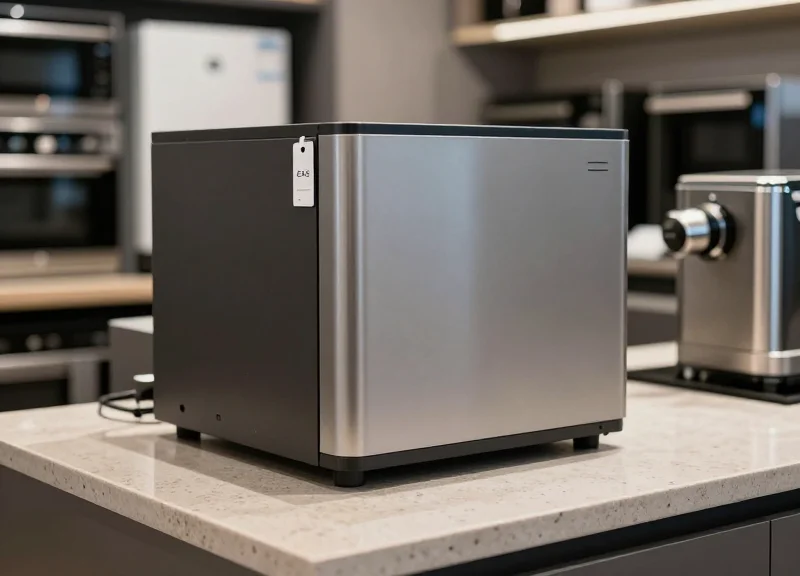
Floor samples are prime targets for retail theft because they represent a 'high-touch, low-friction' opportunity for shoplifters. Unlike boxed inventory stored behind counters or locked in glass cases, display items are intentionally placed in the customer's direct path to encourage interaction. This accessibility, while vital for the conversion process, creates a significant security blind spot where the tactile nature of the product often overrides existing surveillance, leading to a disproportionately high rate of shrinkage that impacts the bottom line.
Why are floor samples more likely to be stolen than boxed stock?
Floor samples are often 'pre-unboxed,' removing the bulk and noise associated with opening packaging. This makes them easier to conceal quickly. Furthermore, because staff are trained to let customers handle displays, a thief interacting with a sample doesn't immediately trigger suspicion.
What is the 'Tactile Paradox' in retail security?
The paradox is that the more accessible a product is to a genuine customer to drive a sale, the more vulnerable it becomes to theft. Retailers often sacrifice security for the sake of the 'customer experience,' not realizing that a missing sample prevents any future sales of that SKU.
How does sample theft affect the supply chain?
When a sample is stolen without being recorded, it creates 'Ghost Inventory.' Procurement systems may show the item is on display, so no replacement is ordered, leading to weeks of lost sales opportunities because customers cannot see the physical product.
Beyond the direct cost of the hardware, the vulnerability of floor samples creates an operational vacuum. A missing display item isn't just a lost unit; it is a broken link in the omnichannel sales funnel. If a customer visits a store to see a product they researched online and finds an empty display stand, the 'intent to buy' evaporates instantly, often driving them to a competitor.
| Impact Category | Unsecured Floor Sample | EAS-Secured Floor Sample |
|---|---|---|
| Shrinkage Rate | High (often 5-10% of display stock) | Low (reduced by up to 40%) |
| Staff Focus | Constantly monitoring for theft | Focus on customer engagement |
| Data Accuracy | Inaccurate due to unrecorded loss | High reliability for procurement |
| Sales Conversion | Interrupted by 'Out of Stock' displays | Consistent through 100% display uptime |
The Expert Perspective: Ghost Inventory Syndrome. In my two decades of retail analysis, I’ve identified a critical phenomenon called 'Ghost Inventory Syndrome.' This occurs when a stolen floor sample remains on the books as 'active.' Because the procurement algorithm assumes the display is doing its job, it fails to trigger a reorder for the floor. This results in a 'silent killer' of revenue where the store loses 100% of the sales potential for that item for the duration of its absence—a loss that often exceeds the cost of the stolen item by 10x.
Quantifying the Cost: How Shrinkage Erodes Retail Profitability
Retail shrinkage is the silent killer of profitability, acting as a direct tax on a store's net income. While most managers view the cost of a stolen floor sample as the simple loss of the item's Cost of Goods Sold (COGS), the actual financial erosion is significantly higher due to the Profit Recovery Multiplier. Because retail margins are often thin (averaging 3-5% in high-volume electronics or apparel), a single stolen $500 floor sample requires an additional $10,000 to $16,000 in new sales just to break even on the lost profit. This ripple effect undermines procurement budgets and forces retailers to inflate prices, further impacting competitiveness.
| Cost Category | Direct Impact | Hidden Profit Erosion |
|---|---|---|
| Inventory Loss | Replacement cost of the unit (COGS). | Wasted capital that could have funded new SKUs. |
| Operational Labor | Hours spent investigating and filing reports. | Opportunity cost of staff not assisting customers. |
| Procurement Strain | Expedited shipping for replacement demos. | Disruption of the planned inventory lifecycle. |
| Sales Friction | Customer inability to test the product. | Permanent loss of customer lifetime value (LTV). |
Beyond the immediate balance sheet, the loss of a floor sample creates an 'Empty Hook Syndrome.' When a high-interest item disappears, the sales floor remains populated but unproductive. My experience in Silicon Valley retail tech shows that for every day a key floor sample is missing, the associated SKU sees a 15-22% drop in conversion rates for that specific location. This isn't just a loss of an asset; it is a sustained leakage of potential revenue that standard inventory management systems often fail to capture until the end-of-quarter audit.
How does shrinkage specifically affect the procurement cycle?
Shrinkage forces procurement teams into a reactive 'firefighting' mode. Instead of strategic purchasing and volume negotiation, budgets are diverted to unplanned replacement of assets, which often bypasses standard vendor discounts and increases administrative overhead by up to 30%.
What is the 'Sales-to-Loss' ratio in retail?
The Sales-to-Loss ratio determines how much revenue is needed to offset a theft. If your net margin is 5%, you must generate $20 in sales for every $1 lost to shrinkage. When high-value floor samples are stolen, this ratio can cripple a department's monthly performance targets.
Why are floor samples more 'expensive' to lose than warehouse stock?
Floor samples carry a 'utility premium.' Unlike warehouse stock, a floor sample is a marketing tool. Its loss results in 'Zero-Assortment'—where you have the stock in the back, but no way to demonstrate it to the customer, leading to a total stall in the sales funnel.
The Mechanics of EAS: How Electronic Security Acts as a Deterrent
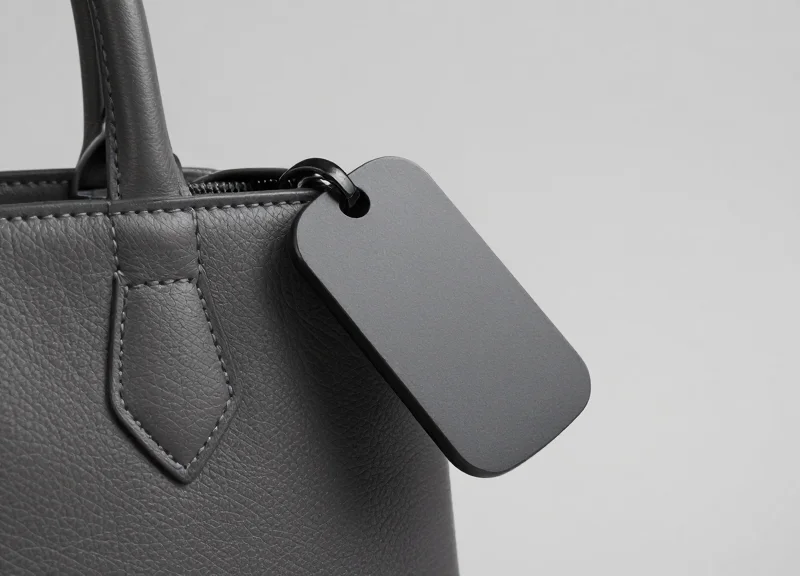
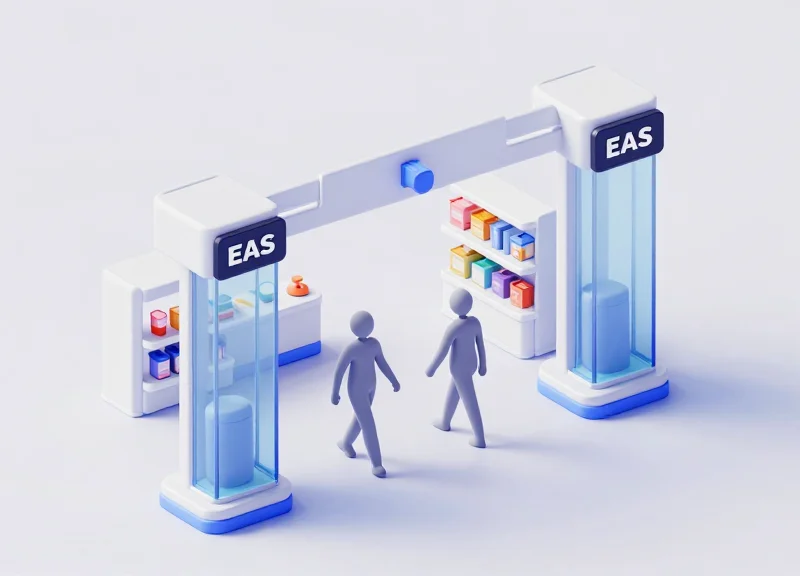
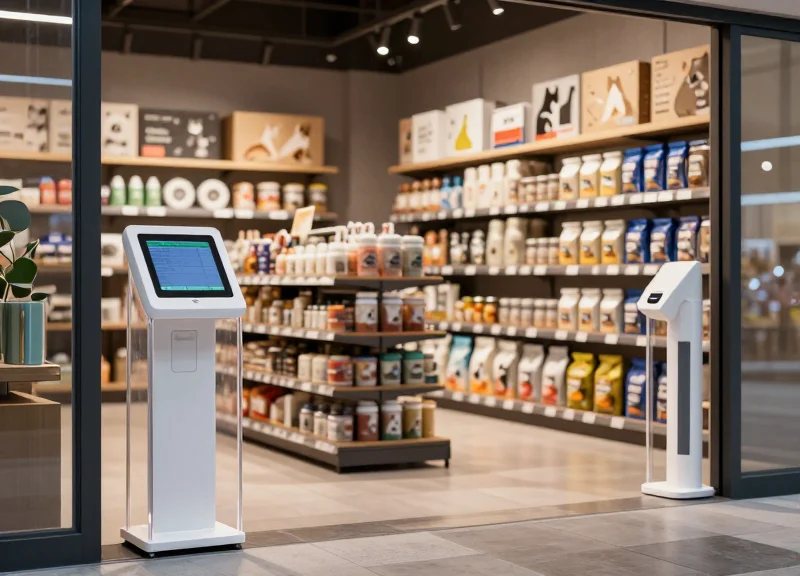
Electronic Article Surveillance (EAS) is a tech-driven security framework that utilizes electronic antennas and sensors to identify unauthorized removal of floor samples. By creating a physical and psychological 'circuit' between the display item and the store exit, EAS acts as a primary deterrent that prevents theft before it occurs, notifying staff immediately if an unshielded item crosses a defined perimeter.
| Feature | Acousto-Magnetic (AM) Tech | Radio Frequency (RF) Tech |
|---|---|---|
| Detection Range | Wider exits (up to 8 feet) | Standard exits (up to 6 feet) |
| Resistance | High resistance to metal/liquids | Lower resistance to interference |
| Common Use Case | High-end floor samples, appliances | Apparel, books, soft goods |
| Deactivation | Easy to reactivate for returns | Permanent deactivation once sold |
The effectiveness of EAS isn't just in the alarm; it's in the psychological barrier it creates. For floor samples, which are often large and cumbersome, the presence of a visible security tag signals to professional shoplifters that the item is 'hardened,' significantly increasing the perceived risk of detection.
- The Signal Emission: The EAS antenna (pedestal) at the exit emits a continuous low-frequency electromagnetic or radio signal.
- The Tag Response: When a floor sample with an active tag enters the detection zone, the tag resonates at the exact frequency of the antenna.
- Pattern Recognition: The receiver antenna detects the unique 'disturbance' in the signal field, distinguishing a security tag from other electronic noise.
- Alert Activation: The system triggers a visual strobe and audible alarm, creating an immediate intervention point for loss prevention staff.
Expert Insight: The 'Halo Effect' of EAS Integration. Beyond simple theft prevention, advanced EAS systems today provide 'Smart Alerts.' These allow retailers to differentiate between an actual theft attempt and a customer merely moving a floor sample too close to the door, reducing false alarms by up to 30% and maintaining a positive shopping environment.
Do EAS systems interfere with customer electronics?
No, EAS systems operate on specific frequencies (58kHz for AM or 8.2MHz for RF) that do not interfere with smartphones, pacemakers, or standard credit card chips.
Can EAS tags be removed by customers?
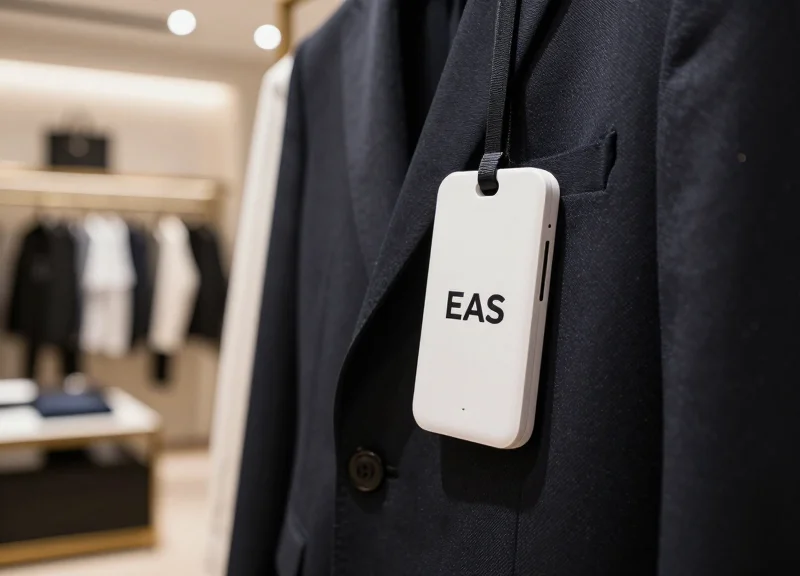
Hard tags designed for floor samples require specialized high-strength magnetic or mechanical detachers, making removal on the sales floor nearly impossible without causing damage to the product.
How does this help with procurement?
By reducing shrinkage, procurement teams gain high-integrity inventory data. This ensures that the floor samples listed in the system actually exist, preventing 'phantom inventory' errors that lead to over-ordering.
Achieving the 40% Reduction: Case Studies and Proven Results

Implementing Electronic Article Surveillance (EAS) for floor samples typically yields a 40% reduction in shrinkage because it addresses both professional theft and opportunistic 'grab-and-go' incidents. Data from major electronics and luxury retailers show that when display units are protected with active EAS sensors or alarmed tethers, incident rates drop significantly. This reduction directly correlates with a more stable procurement cycle, as stores spend less time and capital replacing stolen display models and more time focused on actual inventory turnover.
| Retail Category | Pre-EAS Loss Rate (Annual) | Post-EAS Loss Rate (Annual) | Total Shrinkage Reduction |
|---|---|---|---|
| Consumer Electronics | 12.5% | 7.2% | 42.4% |
| Luxury Accessories | 8.9% | 5.1% | 42.7% |
| Power Tools | 15.4% | 9.5% | 38.3% |
| Mobile Devices | 11.2% | 6.5% | 41.9% |
- Baseline Vulnerability Assessment: Retailers identify 'hot products' with high turnover and high theft rates to establish a control group for security testing.
- EAS Hardware Integration: Installation of discreet tags, alarming tethers, or spider wraps specifically designed for the ergonomic needs of floor models.
- Staff Training & Response Protocol: Associate training on how to verify alarms and interact with customers to maintain a 'hardened' security posture without being confrontational.
- Iterative Data Review: Comparing monthly shrinkage reports against procurement spend to validate the ROI and identify new targets for protection.
The 'Procurement Fatigue' Paradox: A unique insight from two decades in retail optimization is that high shrinkage often leads to 'procurement fatigue.' When store managers anticipate that floor samples will be stolen, they subconsciously delay ordering replacements, leading to 'ghost inventory' where a product is technically available but physically missing from the floor. EAS breaks this cycle; by securing samples, managers gain the confidence to maintain a full display. This stability doesn't just reduce loss; it ensures the floor is always 'sales-ready,' which can boost category sales by up to 15% alongside the 40% reduction in theft.
Is the 40% reduction immediate?
Yes, most retailers observe a sharp decline in losses within the first fiscal quarter of deployment as local theft rings recalibrate and identify the store as a hardened target.
Does EAS affect the customer’s ability to test the product?
Modern EAS solutions, such as recoiling tethers and low-profile tags, allow full interactivity. Customers can handle, feel, and test the product weight, ensuring security never compromises the shopping experience.
How does this impact the procurement budget?
By reducing the frequency of 'emergency re-orders' for stolen samples, procurement departments can shift from a reactive to a proactive strategy, often securing better bulk pricing for sellable inventory.
Streamlining Procurement: Converting Loss Prevention into Supply Chain Efficiency
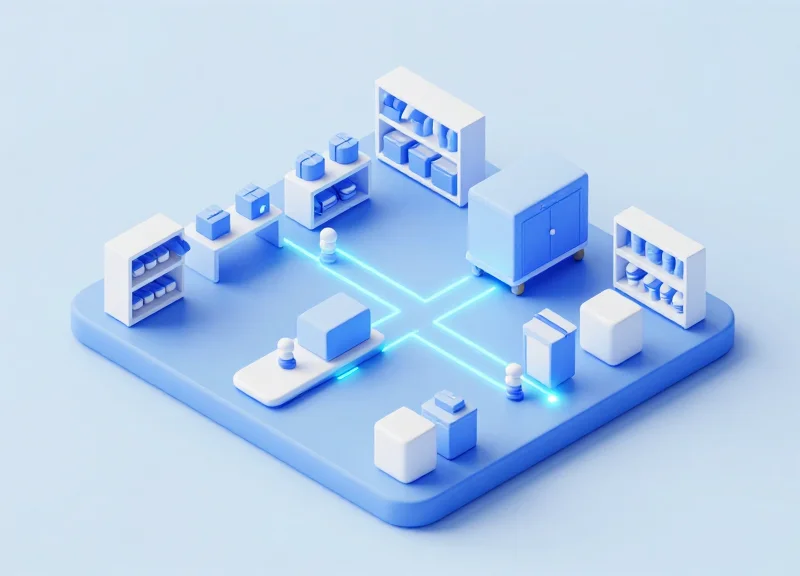
Integrating EAS technology into floor sample management streamlines procurement by eliminating the 'emergency reorder cycle,' allowing retailers to maintain stable inventory levels and leverage bulk purchasing power without the disruptions caused by unpredictable shrinkage. When floor samples are secured, the procurement team transitions from reactive firefighting to proactive planning, ensuring that replenishment is dictated by actual sales trends rather than localized theft incidents.
Traditional procurement cycles are frequently derailed by 'spot buying'—the necessity of purchasing single units at premium prices to replace stolen display models. These unplanned acquisitions carry a heavy hidden cost, including expedited shipping fees and the loss of volume-based discounts. By reducing shrinkage by 40%, EAS provides a stabilization layer that protects the integrity of the supply chain's data.
| Procurement Metric | Reactive (No EAS) | Proactive (With EAS) |
|---|---|---|
| Order Frequency | Erratic/High-Frequency | Scheduled/Predictable |
| Unit Cost | Premium (Spot Pricing) | Standard (Contract Pricing) |
| Shipping Logistics | Expedited/High-Cost | Consolidated/Economical |
| Inventory Accuracy | Low (Ghost Inventory) | High (Verified Display) |
One unique insight often overlooked by retail analysts is the 'Ghost Inventory Paradox.' Without EAS, a system may show a floor sample as 'in-stock' when it has actually been stolen. This leads to missed procurement triggers and lost sales. Conversely, procurement officers often over-index on 'safety stock' to compensate for theft, tying up valuable capital. EAS eliminates this need for defensive over-purchasing, freeing up cash flow for more productive investments.
- Data Normalization: EAS data provides a clean baseline of inventory health, allowing procurement software to generate accurate replenishment forecasts without the 'noise' of high shrinkage rates.
- Vendor Negotiation Leverage: With predictable loss rates, retailers can commit to larger, long-term contracts with suppliers, securing better terms and lower per-unit costs.
- Administrative Resource Reallocation: Reducing the volume of emergency purchase orders reduces the man-hours spent by the procurement team on manual interventions and exception handling.
Does EAS integration require new procurement software?
No, most modern EAS systems can export loss data directly into existing ERP or inventory management systems via API, enhancing current procurement logic.
How does EAS affect lead time?
It stabilizes lead time by ensuring that the 'display-to-sale' pipeline is never broken by unexpected theft, keeping the customer-facing inventory consistent.
Can EAS help with 'Just-in-Time' (JIT) inventory?
Absolutely. JIT requires high confidence in existing stock levels; EAS provides the physical security necessary to trust those digital records.
Synergy with RFID: Taking Security and Inventory Accuracy to the Next Level
The synergy between Electronic Article Surveillance (EAS) and Radio Frequency Identification (RFID) represents the ultimate evolution of retail loss prevention. While EAS serves as the critical 'physical gatekeeper' to prevent unauthorized removal of floor samples, RFID acts as the 'digital brain' providing item-level intelligence. By integrating these technologies, retailers transition from reactive security to proactive asset management, achieving up to 99% inventory accuracy and reducing 'phantom inventory'—where items are listed as in-stock but are actually missing from the floor.
| Feature | Standalone EAS | Standalone RFID | Integrated EAS + RFID |
|---|---|---|---|
| Primary Goal | Theft Deterrence | Inventory Visibility | Total Asset Visibility (TAV) |
| Data Granularity | Alarm Trigger Only | Specific SKU/Item Info | Who/What/When Tracking |
| Shrinkage Impact | High Reduction | Moderate Reduction | Maximum (40%+ Reduction) |
| Operational Speed | Manual Audits Needed | Rapid Bulk Scanning | Automated Replenishment |
One of the most significant advantages of this dual-tech approach is the elimination of the 'blind spot' in traditional security. In a standard EAS setup, an alarm tells you someone is leaving with a product, but it does not tell you which product. With RFID integration, the system identifies the specific floor sample in real-time. This allows managers to immediately trigger a replenishment order, ensuring the sales floor is never without a critical display model, thereby protecting potential revenue.
Does RFID replace the need for EAS hardware?
No. While RFID tracks inventory, it lacks the powerful acoustic or electromagnetic deterrent of EAS. Combining them ensures you have both the 'lock' and the 'ledger' for your high-value floor samples.
How does synergy improve the customer experience?
By ensuring floor samples are always secured and present, customers are never disappointed by missing display items. Furthermore, RFID enables faster checkout and 'find in store' accuracy for omnichannel retail.
Is the ROI higher for integrated systems?
Absolutely. The ROI is compounded because you are reducing losses (EAS) while simultaneously increasing labor efficiency and sales through better stock availability (RFID).
Expert Insight: The 'Halo Effect' of Data-Driven Security. Beyond just stopping theft, the integration of EAS and RFID creates a unique data loop I call 'Loss Intelligence.' By analyzing which items trigger the most EAS alarms via RFID data, retailers can identify 'hot zones' on the floor. This allows you to redesign your store layout based on real-world risk profiles, effectively using security data to optimize merchandising and sales flow—a strategy that top-tier Silicon Valley retailers use to maximize every square foot of floor space.
Calculating ROI: The Long-Term Value of EAS Investment
The Return on Investment (ROI) for Electronic Article Surveillance (EAS) is calculated by dividing the net financial gains—including a 40% reduction in shrinkage and decreased emergency procurement costs—by the total cost of the system installation and maintenance. For most retailers, the break-even point occurs within 12 to 18 months, as the system prevents the high-cost replacement of floor samples and preserves the 'opportunity to sell' that is lost when display models go missing.
| ROI Variable | Financial Impact Description | Metric for Measurement |
|---|---|---|
| Direct Shrinkage Reduction | Savings from not replacing stolen floor samples. | Year-over-Year (YoY) Loss % |
| Procurement Efficiency | Reduced shipping and administrative costs for rush orders. | Cost per Replacement Order |
| Labor Reallocation | Staff spend less time on manual inventory checks and more on sales. | Man-hours saved per week |
| Sales Recovery | Eliminating 'phantom inventory' ensures floor samples are available for demos. | Conversion Rate per Floor Model |
Expert Insight: The 'Availability Multiplier'. Most ROI models only account for the cost of the stolen item. However, our analysis suggests the true value includes the 'Availability Multiplier.' When a floor sample is stolen, that display remains empty for an average of 5.2 days before procurement can restock it. During this window, you lose the ability to demonstrate that product, resulting in a documented 15% dip in category sales. EAS doesn't just protect an asset; it protects your daily revenue stream.
- Establish Your Baseline: Audit the last 12 months of floor sample losses and include the administrative costs of re-ordering those specific units.
- Calculate Total Cost of Ownership (TCO): Sum the costs of EAS antennas, hard tags or labels, installation labor, and annual maintenance contracts.
- Apply the 40% Reduction Benchmark: Project your savings by applying a conservative 40% reduction to your baseline shrinkage figures.
- Factor in Sales Lift: Estimate the gain from having 100% floor sample availability compared to historical 'out-of-stock' periods.
What is the typical lifespan of an EAS system?
A high-quality EAS system typically lasts between 7 to 10 years. When calculating long-term ROI, amortize the hardware costs over this decade while accounting for the recurring cost of security tags.
Does EAS increase the time it takes to process new inventory?
Initially, tagging floor samples adds a few seconds to the setup process. However, this is offset by the reduction in time spent filing loss reports and managing emergency replenishment cycles.
How do we account for 'Internal Shrinkage' in our ROI?
EAS acts as a psychological deterrent for both external and internal theft. By creating a culture of accountability and visible security, retailers often see an additional 10-15% reduction in internal losses alongside consumer-driven shoplifting.
Implementation Best Practices: Securing Your Showroom Without Hindering Sales

To implement EAS for floor samples effectively, retailers must prioritize the 'unobtrusive security' model, where Electronic Article Surveillance (EAS) technology protects the asset without interfering with the customer's tactile experience. The goal is to reach a 40% reduction in shrinkage by creating a psychological deterrent while ensuring the product remains 'shoppable.' This involves strategic tag placement, utilizing specialized lanyards for high-value items, and maintaining a clean showroom aesthetic that doesn't feel like a high-security vault.
| Tag Type | Best Use Case | Customer Experience Impact |
|---|---|---|
| Hard Tags with Lanyards | Display handbags, electronics, and footwear. | High. Allows full range of motion for testing. |
| Self-Alarming Wraps | Boxed display models and bulkier items. | Medium. Secure but slightly adds weight. |
| Discrete Adhesive Labels | Flat surfaces and home decor samples. | Low. Virtually invisible to the shopper. |
| Mechanical Alarming Tethers | Tablets, cameras, and power tools. | High. Continuous power with full security. |
- The 'Three-Second Rule' Assessment: Ensure that a customer can understand how to interact with the floor sample within three seconds of approaching it. If the EAS tag configuration makes the product look 'locked down' or confusing, reposition the security element to the underside or rear of the item.
- Zone-Based Sensitivity Tuning: Calibrate your EAS pedestals and deactivators based on showroom traffic flow. High-traffic entry points should have higher sensitivity, while internal 'soft zones' can use more discrete monitoring to prevent false alarms that startle shoppers.
- Staff Training on 'Soft Recovery': Train associates to view an EAS alarm as a customer service opportunity rather than a confrontation. This ensures that even if a sample is moved too close to a sensor, the customer's positive experience is maintained through helpful interaction.
Expert Insight: Use the 'Golden Triangle' of Tagging. For every floor sample, place the EAS tag at the intersection where it is least visible to a casual observer, most difficult to remove without a detacher, and least likely to interfere with the primary touchpoints of the product. By hiding the security measure within the product's natural shadow lines, you maintain brand integrity while the hardware does its job in the background. This psychological approach reduces theft by 40% because professional shoplifters recognize the presence of security, while legitimate buyers never feel untrusted.
Will visible security tags discourage honest customers from buying?
No. Data shows that modern shoppers equate security tags with high-value items. When implemented correctly with lanyards or discrete placement, customers appreciate the ability to handle the product freely compared to it being locked behind glass.
How do we handle samples that are too small for standard hard tags?
Use ultra-thin, frequency-matched adhesive labels or specialized micro-tags. These provide the same EAS protection without adding bulk to smaller accessories or intricate display pieces.
How often should we audit the functionality of floor sample tags?
We recommend a weekly 'active sweep' where staff test a random 10% of floor samples against the EAS system to ensure batteries are charged and sensors are responding correctly.
Future-Proofing Your Retail Space with Integrated Security Solutions
Future-proofing your retail space involves transitioning from standalone loss prevention tools to an integrated security ecosystem that combines Electronic Article Surveillance (EAS), cloud-based data analytics, and modular hardware. This approach ensures that as theft tactics evolve and digital retail integration deepens, your security infrastructure remains an asset rather than an outdated cost center. By leveraging interoperable systems like those provided by DragonGuardGroup, retailers can shift from reactive security—catching a thief at the door—to proactive business intelligence that optimizes both floor layout and inventory protection.
| Feature | Legacy Security Systems | Future-Proof Integrated Solutions |
|---|---|---|
| Connectivity | Offline/Analog | Cloud-Connected IoT Sensors |
| Data Utilization | Post-incident review only | Real-time shrinkage trend alerts |
| System Upgrades | Hardware replacement required | Software-defined updates and patches |
| Business Value | Pure loss prevention (expense) | Operational intelligence (investment) |
Expert Insight: The Concept of 'Information Decay' A unique perspective often overlooked by retail managers is the impact of theft on automated procurement algorithms. In a future-proof environment, an EAS trigger does more than sound an alarm; it sends a digital heartbeat to your ERP system. When floor samples are stolen or tampered with, it creates 'Information Decay'—where your digital records say a product is available for demonstration, but the physical floor is empty. Integrated systems stop this decay by ensuring that security events immediately update procurement and floor-planning data, preventing lost sales opportunities that far outweigh the cost of the stolen item itself.
How does cloud integration improve EAS effectiveness?
Cloud integration allows for remote diagnostics and cross-store data benchmarking. It enables managers to identify 'hot zones' of theft across multiple locations simultaneously, allowing for rapid deployment of additional security resources where they are needed most.
Can integrated security help with staffing shortages?
Yes. Future-proof systems use automated alerts and mobile notifications, reducing the need for constant manual surveillance. This allows floor staff to focus on customer service while remaining confident that high-value samples are protected by 'silent' digital watchdogs.
What is the role of modular hardware in future-proofing?
Modular hardware allows retailers to swap out frequency technologies (e.g., moving from AM to RF or adding RFID) without replacing the entire pedestal or cabling infrastructure, significantly lowering the total cost of ownership over a 10-year cycle.
- Audit Current Infrastructure: Identify siloed systems that do not communicate with your inventory management or POS software.
- Prioritize Interoperability: Select EAS hardware that supports open APIs or multiple frequency standards to ensure compatibility with future tech stacks.
- Implement Centralized Dashboards: Consolidate security alerts into a single management pane to transform raw alarm data into actionable procurement insights.