For decades, the 8.2MHz RF antenna has been the silent sentinel of sports retail, deterring theft with reliable simplicity. However, as we approach 2026, the retail landscape is shifting from mere protection to intelligent data acquisition. Traditional Electronic Article Surveillance (EAS) is no longer enough to meet the demands of a high-velocity sports market. Leading retailers are now integrating dual EAS-RFID solutions. This hybrid approach does not just stop shoplifters; it transforms every soccer ball, basketball, and tennis racket into a data point, enabling real-time tracking and unmatched inventory accuracy. In this article, we explore why this convergence is the new gold standard for the sporting goods industry.
The Evolution of Retail Security: From 8.2MHz RF to Digital Intelligence
The evolution of retail security represents a fundamental shift from reactive loss prevention using 8.2MHz Radio Frequency (RF) systems—which merely alert staff to a potential theft—to proactive digital intelligence powered by RFID. This transition allows 2026 sports retailers to track individual item movement, maintain 99% inventory accuracy, and identify specific shrinkage patterns in real-time, effectively turning security gates into sophisticated data capture points for the entire supply chain.
For over forty years, the 8.2MHz antenna stood as the silent sentry of the sports store. It operated on a simple, binary logic: if an active tag crossed the magnetic field, the alarm sounded. While effective for basic deterrence, this 'analog' approach provides zero context. In an era where a high-end soccer ball can cost upwards of $160, retailers can no longer afford 'blind' security. Legacy RF systems cannot tell you which ball was taken, how many are left on the shelf, or if the item was simply a 'false positive' caused by electronic interference. The digital intelligence era replaces this guesswork with serialized data, transforming every product into a trackable digital asset.
| Feature | Legacy 8.2MHz RF | Modern RFID | Dual EAS-RFID (2026 Standard) |
|---|---|---|---|
| Primary Role | Loss Prevention Only | Inventory Management | Total Retail Visibility |
| Data Intelligence | None (Binary Alarm) | Item-Level ID (EPC) | Real-time Logic & Analytics |
| Detection Range | Limited Aisle Width | Wide Open Entrances | Optimized Multi-Aisle |
| Omnichannel Sync | No | Yes | Instantaneous |
Expert Tip: The 'Shadow Inventory Effect' is the greatest hidden cost in sports retail. When an 8.2MHz system triggers, you know something left the store, but your inventory system doesn't know what. This leads to 'out-of-stock' scenarios on the floor while the computer thinks the item is still there. Dual EAS-RFID eliminates this by automatically decommissioning the specific serial number from your inventory the moment it passes the gate, ensuring your online 'available' count is perfectly synced with the physical shelf.
Why is 8.2MHz RF no longer sufficient for sports retailers?
Legacy RF systems lack item-level identification, meaning they cannot distinguish between different products and offer no data for inventory replenishment or omnichannel accuracy.
What is the 'Digital Intelligence' aspect of modern security?
Digital intelligence refers to the use of RFID sensors to collect data on item movement, dwell time, and stock levels, turning security hardware into a source of business analytics.
How does Dual EAS-RFID improve the customer experience?
By reducing false alarms and ensuring that products listed as 'in-stock' are actually on the shelves, it creates a frictionless shopping environment.
Understanding the Dual EAS-RFID Architecture: How It Works

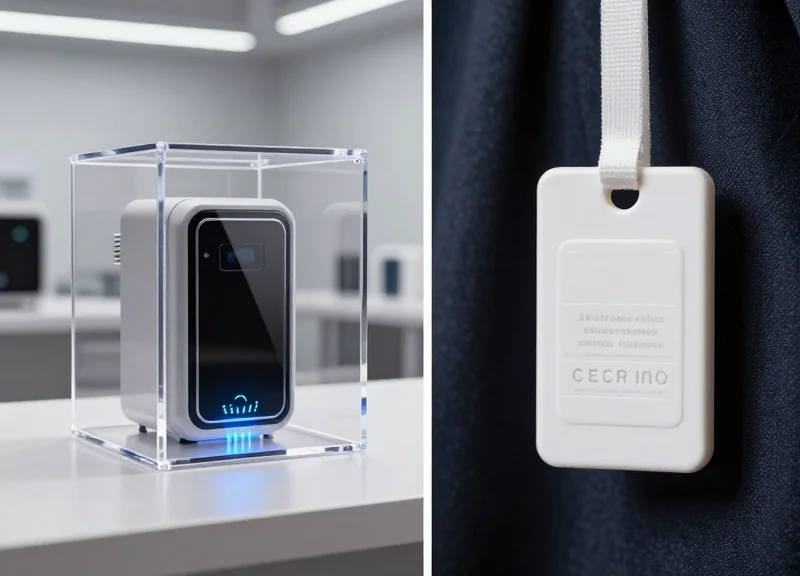
Dual EAS-RFID architecture is a unified retail technology stack that combines traditional loss prevention (EAS) with granular inventory intelligence (RFID) using a single hybrid tag. By operating on dual frequencies—typically 8.2MHz for RF or 58kHz for AM alongside 860-960MHz for UHF RFID—the system allows sports retailers to trigger security alarms while simultaneously recording exactly which item is passing through the exit choke point for real-time inventory reconciliation. This dual-layer approach transforms a 'dumb' alarm into a 'smart' data event, providing the who, what, and when of every potential shrink incident.
| Feature | Legacy EAS (8.2MHz) | UHF RFID | Dual EAS-RFID Hybrid |
|---|---|---|---|
| Primary Goal | Theft Deterrence | Inventory Visibility | Loss Prevention + Intelligence |
| Data Capacity | 1-bit (On/Off) | 96-256 bit (Unique ID) | Unique ID + Alarm State |
| Real-Time Tracking | No | Yes | Yes |
| 2026 Readiness | Low | Medium | High (Future-Proof) |
The architecture relies on three core components: the hybrid tag (attached to the sports equipment), the dual-technology pedestal (located at entrances/exits), and a cloud-based analytics engine. In the context of ball tracking—where items like soccer balls or basketballs are often high-velocity and high-theft—this system ensures that if a ball leaves the store without being decommissioned at the POS, the RFID reader captures its specific Electronic Product Code (EPC) while the EAS component triggers the physical alarm.
- Source Tagging: A hybrid tag containing both a resonating EAS circuit and an RFID microchip is embedded into the product packaging or the ball itself during manufacturing.
- The Interrogation Zone: As a customer approaches the exit, the dual-frequency antenna emits an electromagnetic field that powers the passive RFID chip and detects the EAS circuit's resonance.
- Synchronized Detection: The system cross-references the EAS 'alarm' signal with the RFID 'ID' signal. If the RFID status is 'not sold' in the database, the alarm sounds and the specific SKU is logged as a loss.
- Automated Restock Trigger: The 2026-gen systems automatically update the inventory management software to flag the missing item, potentially triggering a restock order for that specific ball model immediately.
Expert Insight: The 'Shielded Wavefront' Breakthrough. A common failure in older RFID systems was 'false reads' from items sitting too close to the door. By 2026, leading sports retailers are utilizing Beamforming Antenna Arrays. These allow the system to create a precise digital 'curtain,' ensuring that only items moving through the threshold at a specific velocity and direction are captured, effectively eliminating the background noise from nearby display racks.
Can dual systems work with my existing 8.2MHz tags?
Most dual pedestals are backward compatible, meaning they can detect your old EAS tags while you transition to hybrid tagging.
Does the RFID signal penetrate pressurized sports balls?
Yes, modern UHF RFID tags are designed to perform reliably near the materials used in sports equipment, though placement is optimized to avoid interference from metallic coatings.
Is the system cost-effective for 2026?
While the initial hardware cost is higher, the ROI is realized through a 30-40% reduction in shrink and significantly higher inventory accuracy.
The Limitations of Traditional EAS in Modern Sports Retail
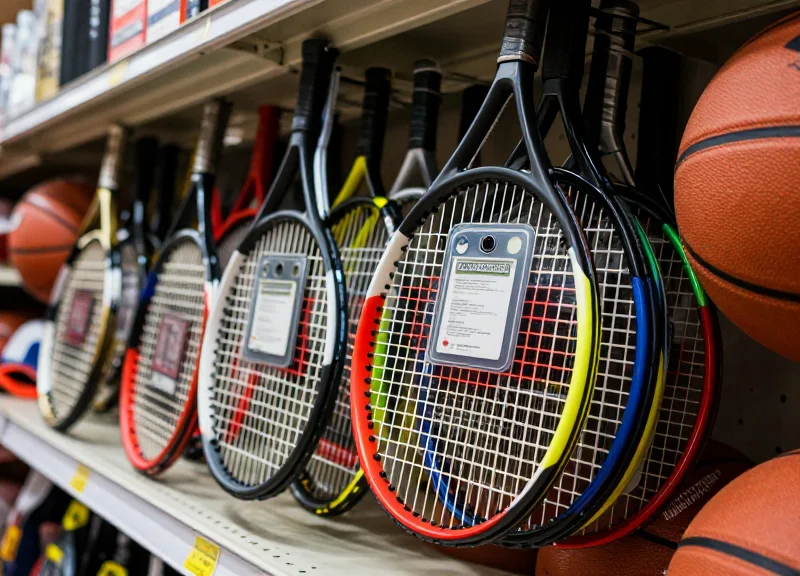
Traditional 8.2MHz Electronic Article Surveillance (EAS) is a binary technology: it either triggers an alarm or it stays silent. While effective as a blunt-force deterrent for over 50 years, legacy RF systems are 'item-blind,' meaning they cannot distinguish between a $150 premium basketball and a $10 pair of socks. In the high-velocity world of 2026 sports retail, where inventory must serve as a local hub for 'buy-online-pickup-in-store' (BOPIS), the inability of legacy EAS to provide real-time data on exactly what is leaving the store renders it an obstacle to growth rather than a security asset.
| Feature | Legacy 8.2MHz RF EAS | Modern Digital Retail Needs |
|---|---|---|
| Data Granularity | Binary (Alarm/No Alarm) | Item-level (SKU, Size, Color) |
| Inventory Integration | None (Isolated system) | Real-time sync with ERP/POS |
| Shrink Analysis | Manual tally of alarms | Automated 'What, When, Where' analytics |
| Omnichannel Support | Zero visibility for BOPIS | High-accuracy stock locating |
In a sports retail environment, high-density SKU layouts—such as racks of jerseys or bins of sports balls—frequently cause 'shielding' or 'detuning' of traditional 8.2MHz tags. When items are bunched together, the magnetic fields often overlap or cancel out, leading to failed detections at the exit pedestals. Furthermore, legacy systems offer no path toward 'Smart Shelf' technology or automated replenishment, forcing staff to perform manual cycle counts that are often outdated the moment they are completed.
Why is 'Phantom Alarming' such a problem in sports stores?
Legacy 8.2MHz systems are highly susceptible to electronic noise from nearby LED screens and digital signage common in flagship sports stores. These 'ghost alarms' create friction, leading to a poor customer experience and 'alarm fatigue' among staff who eventually stop checking receipts.
Can legacy EAS identify which specific items are being targeted by shoplifters?
No. Legacy EAS only tells you that a tag passed the gate. It cannot identify the SKU. This prevents retailers from identifying 'hot products' or specific patterns in organized retail crime (ORC) that target high-value balls or limited-edition footwear.
How does traditional EAS impact omnichannel fulfillment?
Traditional EAS does not update inventory levels. If a ball is stolen, the system thinks it is still on the shelf. When a BOPIS order comes in for that item, the store must cancel the order, leading to a negative customer experience and lost revenue.
Expert Insight: The 2026 'Visibility Gap' As we move toward 2026, the biggest limitation of legacy EAS is not its security, but its 'data silence.' Modern sports retail thrives on velocity. If your security gate cannot tell your inventory management system that 'Item X' has left the building, you are operating with a 15-20% margin of error in your stock levels. In the Silicon Valley model of high-efficiency retail, that 'Visibility Gap' is the difference between a profitable flagship and a failing outlet.
Why Real-Time Ball Tracking is the 2026 Competitive Advantage

In the 2026 retail landscape, real-time ball tracking is the definitive competitive advantage because it bridges the gap between physical loss prevention and digital inventory intelligence. Unlike legacy 8.2MHz systems that only signal an alarm at the door, dual EAS-RFID solutions allow retailers to monitor the exact movement of high-value stock—such as FIFA-spec soccer balls or professional-grade basketballs—throughout the entire store ecosystem. This granular visibility ensures 99% inventory accuracy, virtually eliminates 'phantom stock' errors, and enables predictive replenishment models that keep high-demand items on shelves during peak seasonal surges.
| Metric | Legacy 8.2MHz EAS | 2026 Dual EAS-RFID |
|---|---|---|
| Inventory Accuracy | 65% - 75% (Estimated) | 99.2% (Real-Time) |
| Replenishment Trigger | Manual / Periodic Counts | Automated Threshold Alerts |
| Shrinkage Insight | Exit Alarm Only | Path-to-Exit Analytics |
| Supply Chain Role | Reactive Security | Proactive Logistics Node |
Expert Insight: The Aerodynamic Tagging Pivot. A unique challenge in 2026 is the 'Aerodynamic Tagging Paradox.' Traditional hard tags can unbalance professional-grade balls during in-store demos. The competitive edge now lies in 'Source Tagging,' where RFID inlays are embedded into the ball's bladder or under the synthetic leather skin during manufacturing. This transforms the product into a permanent data carrier that facilitates not just store security, but also post-purchase engagement and lifetime authentications.
- Automated Receiving and Verification: Shipments of pressurized balls are scanned in bulk upon arrival, instantly updating the ERP without opening cartons.
- Smart-Shelf Depletion Alerts: As balls move from the display to the checkout or dressing room, the system tracks 'intent to buy' versus stock levels.
- Dynamic Reordering: Real-time data feeds directly into supply chain software, shortening the lead time for restocking high-velocity SKUs.
How does real-time tracking reduce Out-of-Stock (OOS) scenarios?
By utilizing RFID sensors within the shelving units, the system detects when the last physical unit is removed and triggers an immediate back-stock alert or vendor purchase order.
Can dual systems handle the interference of sports equipment materials?
Yes, 2026 dual-tags are specifically tuned to mitigate the 'detuning' effect caused by the high-density rubbers and synthetic polymers used in professional sports balls.
What is the primary ROI for sports retailers?
The ROI is found in 'Inventory Velocity'—the ability to sell more units with less safety stock on hand, combined with a 30-40% reduction in labor costs associated with manual inventory audits.
Synergy in Action: Combining Loss Prevention with Inventory Management

Synergy in action occurs when the dual EAS-RFID architecture creates a 'single source of truth' for every item in a sports retail environment. Unlike legacy systems that operate in silos, the integrated approach uses the security gate not just as a deterrent, but as a final inventory reader. This allows retailers to reconcile physical stock with digital records in real-time, ensuring that when an item leaves the store—whether through a sale or theft—the inventory management system is updated instantly to reflect the loss, thereby maintaining 99% accuracy across the supply chain.
| Capability | Traditional 8.2MHz EAS | Integrated Dual EAS-RFID |
|---|---|---|
| Detection Type | Generic Frequency Alarm | Item-Level SKU Identification |
| Inventory Accuracy | Manual Counts (65-75% accuracy) | Automated Continuous Counts (99%+) |
| Shrinkage Analysis | Know value was lost, not which item | Know exactly which SKU/size/color was stolen |
| Out-of-Stock Risk | High (due to 'Ghost Inventory') | Minimal (instant replenishment triggers) |
- Source Tagging Efficiency: Retailers apply a single dual-technology tag at the point of manufacture, reducing in-store labor and ensuring that every product arrives 'security-ready' and 'inventory-visible'.
- Automated Cycle Counting: Using handheld or fixed RFID readers, staff can scan thousands of items per minute, verifying that what is on the shelf matches the digital inventory, a feat impossible with 8.2MHz systems.
- Real-Time Loss Attribution: When the EAS alarm triggers, the RFID component logs the specific EPC (Electronic Product Code). This attribution allows managers to see if a specific high-value basketball model is being targeted systematically.
- Instant Replenishment: The system automatically triggers a reorder or a back-stock pull the moment a 'theft event' is recorded, preventing lost sales due to out-of-stock scenarios caused by shrinkage.
Expert Insight: Solving the 'Ghost Inventory' Paradox. The most significant financial drain for 2026 sports retailers isn't just the theft itself, but the 'Ghost Inventory' it creates. When a premium ball is stolen under an 8.2MHz system, the ERP still believes it is on the shelf, preventing the system from ordering a replacement. This leads to weeks of missed sales. The dual-system synergy solves this by converting a security event into an operational data point, automatically 'writing off' stolen stock so the replenishment cycle remains unbroken. This shift from reactive security to proactive inventory control is the hidden ROI of the dual-system transition.
Does a dual system require more staff training?
Actually, it requires less. Because the tagging process is unified and the inventory counts are automated via RFID, employees spend less time on manual security checks and more time on customer-facing roles.
Can the system differentiate between a sale and a theft?
Yes. If an item passes the EAS-RFID gate without being 'killed' or 'decommissioned' at the POS, the system flags it specifically as a shrinkage event rather than a standard depletion of stock.
What is the impact on Omni-channel fulfillment?
It is transformative. With 99% accuracy, retailers can confidently offer 'Buy Online, Pick Up In-Store' (BOPIS) for high-value sports equipment without the fear that the item was stolen and is no longer on the shelf.
Overcoming Implementation Challenges: Cost vs. ROI in 2026
Transitioning to a dual EAS-RFID ecosystem in 2026 represents a shift from a reactive security expenditure to a proactive operational investment. While the upfront costs of hybrid antennas and serialized tagging are higher than legacy 8.2MHz systems, the return on investment (ROI) is realized through the 'Triple-A' framework: Accuracy, Availability, and Analytics. By 2026, industry benchmarks indicate that sports retailers implementing these systems see a 25% reduction in out-of-stock scenarios and a 15-20% decrease in total shrinkage, leading to a typical break-even point within 14 to 18 months of full-scale deployment.
| Financial Metric | Legacy 8.2MHz EAS | 2026 Dual EAS-RFID Solution |
|---|---|---|
| Average CAPEX (Per Store) | Low ($5k - $10k) | Moderate ($15k - $35k) |
| Tagging Cost (Per Unit) | $0.02 (Hard tag/Disposable) | $0.04 - $0.07 (Hybrid Serialized) |
| Inventory Accuracy | 65% - 70% | 98.5% - 99.9% |
| Primary ROI Driver | Theft Deterrence Only | Omnichannel Fulfillment & Labor Efficiency |
Expert Insight: In 2026, the most successful retailers are moving away from treating RFID as an IT cost. Instead, they are leveraging 'Data Monetization.' By tracking the specific dwell time of high-performance soccer balls or basketballs on the shelf versus the demo area, retailers can sell 'Engagement Analytics' back to manufacturers (like Nike or Adidas), essentially turning their security system into a secondary revenue stream.
- Phase 1: Source Tagging Integration: Lower labor costs by mandating that manufacturers embed dual-purpose tags during production, moving the cost from OPEX to COGS.
- Phase 2: Edge-Computing Infrastructure: Deploy lightweight edge gateways rather than massive local servers to handle real-time ball tracking data, reducing initial IT infrastructure spend.
- Phase 3: Labor Reallocation: Shift staff from manual cycle counting to high-value customer service roles, utilizing the 90% reduction in time required for inventory audits.
How do we justify the software licensing fees for dual systems?
Licensing fees are offset by the reduction in 'safety stock' levels. With 99% visibility, retailers can carry 10% less inventory while maintaining the same service levels.
Is the hardware compatible with existing 8.2MHz tags?
Yes, most 2026 dual-antennas are backward compatible, allowing for a phased transition where old stock remains on legacy tags while new stock uses hybrid RFID.
What is the biggest hidden cost in 2026?
Data hygiene. The challenge isn't capturing the RFID signal; it's ensuring your POS and ERP systems are fast enough to process real-time movement data without latency.
Consumer Experience: How RFID Streamlines the Sporting Goods Journey
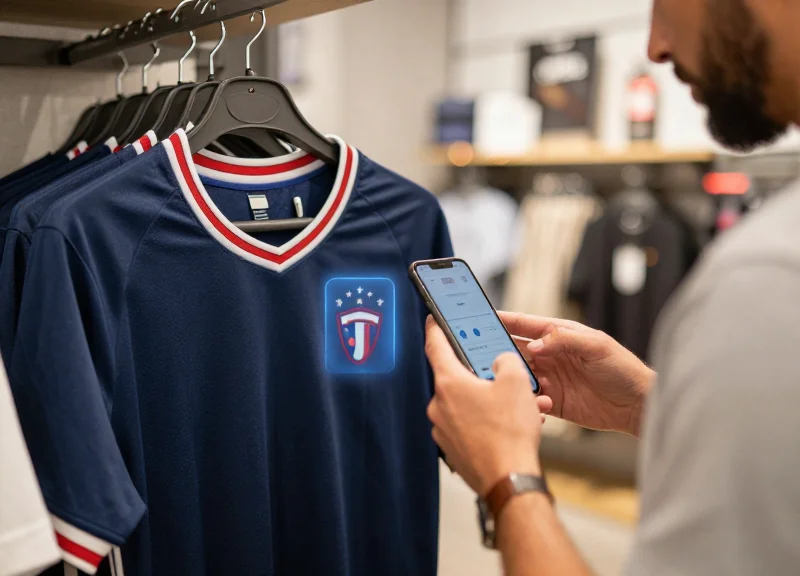
In the 2026 retail landscape, the sporting goods journey is no longer defined by the friction of searching through stacks of boxes or waiting in line; it is defined by 'invisible commerce.' By integrating dual EAS-RFID solutions, retailers move beyond simple theft prevention to create a seamless 'phygital' environment. For the consumer, this means 99% inventory accuracy that ensures the 'In Stock' badge online is actually true in the store, and a checkout process that can process an entire basket of equipment in under 10 seconds without individual barcode scanning.
| Touchpoint | Legacy Experience (8.2MHz EAS) | 2026 RFID-Enabled Experience |
|---|---|---|
| Product Search | High risk of 'Ghost Stock' (system says yes, shelf says no). | Real-time item-level visibility with 99%+ accuracy. |
| Fitting Room | Manual counting and anti-theft tag anxiety. | Smart mirrors suggest matching gear based on RFID tags. |
| Checkout | Manual scanning of every barcode; slow for bulk items. | Instant bulk-scanning; zero-touch automated checkout. |
| Returns | Receipt verification and manual item inspection. | Instant authentication and automated inventory reintegration. |
One unique insight often overlooked is the 'Game-Day Guarantee.' In sports retail, timing is everything. A consumer needing a specific racket tension or a particular pair of turf shoes for a match that evening cannot afford a 30% margin of error in stock levels—a common occurrence in legacy EAS environments. RFID eliminates the 'last-mile frustration' where high-intent buyers leave empty-handed because a product was misplaced in the wrong aisle or hidden in the backroom.
Does RFID make the checkout process faster?
Absolutely. Because RFID does not require line-of-sight scanning, customers can place their entire basket—balls, apparel, and hardware—into a checkout zone that reads all items simultaneously, reducing wait times by up to 75%.
How does RFID improve the 'Buy Online, Pick Up In Store' (BOPIS) experience?
RFID allows staff to locate the exact item in seconds using Geiger-counter style handhelds. This ensures that when a customer arrives for a pickup, their order is ready and accurate, eliminating the 'item not found' cancellation emails that plague traditional retail.
Is my privacy protected with RFID-tagged sports gear?
Yes. Modern 2026 standards include 'kill' commands or privacy-bit encryption that can deactivate or de-identify the tag at the point of sale, ensuring that the tag no longer transmits personal data once you leave the store.
Ultimately, the integration of RFID into the sporting goods journey shifts the store associate's role from a 'stock hunter' to a 'performance consultant.' Instead of searching for a missing size in the warehouse, they spend their time helping the consumer choose the right gear, leveraging the data provided by the RFID system to offer a more personalized, high-value interaction.
Future-Proofing Your Store: Steps to Transition to Hybrid Systems
Future-proofing a sports retail environment in 2026 requires a strategic migration from passive 8.2MHz Electronic Article Surveillance (EAS) to a hybrid infrastructure that integrates Ultra-High Frequency (UHF) RFID. This transition allows retailers to maintain traditional loss prevention measures while gaining granular, item-level visibility into inventory—such as tracking the specific movement and dwell time of high-performance basketballs or soccer balls. The goal is to move from 'detecting a theft' to 'understanding a journey,' ensuring your store infrastructure can support AI-driven analytics and automated replenishment.
| Transition Phase | Primary Focus | Technology Stack | Outcome |
|---|---|---|---|
| Phase 1: Audit | Frequency Mapping | Spectrum Analyzers | Identify dead zones and interference. |
| Phase 2: Hybrid Install | Antenna Replacement | Dual EAS-RFID Pedestals | Maintains legacy protection + RFID capability. |
| Phase 3: Tag Migration | Source Tagging | Dual-Technology Hard Tags | Single tag for both security and tracking. |
| Phase 4: Integration | Cloud Data Sync | Middleware & ERP Connectors | Real-time inventory and theft alerts. |
- Conduct a Signal Interference Audit: Before installing new hardware, assess your store's RF environment. Sporting goods stores are filled with metal (racks, weights, equipment) which can cause multi-path interference for RFID. Ensure your 8.2MHz system isn't bleeding noise into the 860-960MHz RFID bands.
- Implement Source Tagging for Ball Inventory: Transition from in-store manual tagging to source tagging at the factory level. In 2026, premium sports balls should arrive with embedded dual-tech tags, reducing labor costs and ensuring 100% of high-value stock is trackable from the moment it hits the loading dock.
- Deploy Dual-Frequency Pedestals: Instead of a complete rip-and-replace, install hybrid pedestals at exits. These units detect legacy 8.2MHz hard tags while simultaneously reading RFID chips, providing a 'soft landing' for your technology transition while you phase out old inventory.
- Bridge the Data Gap with Middleware: Connect your RFID readers to a centralized cloud platform. This allows you to differentiate between a 'security event' (tag at the door) and a 'sales event' (tag at the POS), providing the data needed for real-time ball tracking and stock accuracy.
Expert Insight: The 'Ghosting' Mitigation Strategy. A common pitfall in hybrid transitions is 'Signal Ghosting,' where the high-power pulse of an 8.2MHz antenna desensitizes the RFID receiver. In 2026, top-tier retailers are using 'Time-Division Multiplexing' (TDM) controllers. These devices sync the two frequencies so they never fire at the exact same millisecond, preserving 99.9% read accuracy for your ball tracking data while maintaining maximum theft detection range.
Can I keep my existing 8.2MHz tags during the transition?
Yes. Hybrid pedestals are backward compatible, allowing you to use your remaining stock of 8.2MHz tags on lower-value items while prioritizing RFID for high-tracking-value items like sports balls.
How long does a typical store-wide transition take?
For a medium-sized sports retailer, a full hardware and software rollout typically takes 4 to 6 months, including staff training and backend integration.
Does real-time tracking work for balls stored in metal cages?
Metal cages act as Faraday cages. To track balls inside, you must use 'on-metal' RFID tags or install internal shelf-level antennas that bypass the shielding effect.