In modern industrial environments, visibility is the cornerstone of both safety and profitability. Despite advancements in automation, 'blind spots'—areas where personnel and assets are untracked—continue to pose significant risks and financial drains. RFID Zone Positioning emerges as a transformative solution, offering more than just tracking; it provides actionable intelligence. By implementing granular zone monitoring, facilities can see a 40% reduction in emergency response times, directly impacting the bottom line and ensuring every worker returns home safely.
The High Cost of Industrial Blind Spots
Industrial blind spots are defined as physical areas or operational gaps in large-scale facilities where personnel and asset movements are unmonitored by real-time tracking systems. In high-stakes environments like manufacturing and warehousing, these gaps create a 'Visibility Tax'—a systemic accumulation of hidden costs including delayed emergency response, increased OSHA compliance risks, and labor inefficiencies. Eliminating these blind spots is not merely a safety protocol; it is a strategic move to recapture lost ROI that can amount to millions in annual operational overhead.
The danger of a blind spot isn't just what you can't see; it's the time lost when you need to see it most. In emergency scenarios, every second spent locating a worker in an unmonitored zone increases the severity of the outcome. Historically, facilities have relied on manual headcounts and radio checks—methods that are notoriously slow and prone to error during the 'Golden Hour' of medical response. When visibility is zero, response times can balloon, leading to increased worker compensation claims and potential legal liabilities that far exceed the cost of prevention.
| Impact Category | Primary Risk Factor | Economic Consequence |
|---|---|---|
| Safety & Health | Delayed Medical Response | $42,000+ per medically consulted injury (National Safety Council) |
| Regulatory Compliance | OSHA Safety Violations | Up to $16,131 per 'Serious' violation (2024 rates) |
| Operational Efficiency | Asset/Personnel Search Time | Average 10-15% reduction in labor productivity |
| Indirect Costs | Downtime & Investigation | Typically 4x the direct cost of an accident |
How do blind spots impact the 'Golden Hour' in emergencies?
In medical emergencies, the first 60 minutes are critical. Blind spots force safety teams into manual search modes, which can delay intervention by 15 to 20 minutes. RFID zone positioning removes this search phase, allowing for a 40% faster direct-to-incident response.
What is the correlation between blind spots and 'Motion Waste'?
In lean manufacturing, movement without value is waste. Blind spots often hide systemic bottlenecks where workers or equipment are clustered unnecessarily. Without visibility, management cannot identify or rectify these flow interruptions.
Do blind spots affect insurance premiums?
Yes. Carriers increasingly look at 'Verifiable Safety Technology' when calculating premiums. Facilities with 100% visibility via RFID positioning often qualify for lower Experience Modification Rates (EMR), directly reducing insurance overhead.
The Veteran Perspective: The 1% Visibility-to-EBITDA Rule. Having audited industrial workflows for two decades, I have observed a consistent pattern: for every 1% improvement in facility-wide visibility, there is a corresponding 0.5% to 0.8% increase in EBITDA. This isn't just about avoiding accidents; it is about the precision of labor allocation. When you eliminate blind spots, you stop paying for 'ghost hours'—time where assets and people are effectively lost to the system—turning a safety necessity into a profit engine.
Defining RFID Zone Positioning for Modern Industry

RFID Zone Positioning is a strategic spatial-tracking framework that utilizes fixed-point readers to partition a facility into logical 'visibility sectors' rather than tracking absolute X,Y coordinates. Unlike standard portal-based RFID, which only logs entries and exits, zone positioning provides continuous presence detection within defined areas, offering a cost-effective middle ground between basic identification and high-precision Real-Time Location Systems (RTLS). By deploying antennas to create a 'blanket' of coverage over specific aisles, bays, or safety zones, industrial operators can maintain 100% visibility over assets and personnel without the prohibitive infrastructure costs of ultra-wideband (UWB) solutions.
| Feature | Standard RFID (Checkpoints) | RFID Zone Positioning | Precision RTLS (UWB/BLE) |
|---|---|---|---|
| Visibility Pattern | Point-in-time (Last seen) | Area Presence (Continuous) | Coordinate Mapping (Exact) |
| Implementation Cost | Low | Moderate | High |
| Precision Range | Pass-through only | Room or Zone-level | Sub-meter accuracy |
| Primary Use Case | Inventory Audits | Workflow & Safety Monitoring | Automated Tool Calibration |
In a modern industrial context, the 'Zone' is defined by the signal radius of an RFID reader's antenna. When a passive or active tag enters this radius, the system registers the asset as 'Present' in that specific zone. Expert Tip: To optimize ROI, engineers should utilize 'Signal RSSI Filtering.' This technical approach ignores weak signals from neighboring zones, ensuring that an asset is only mapped to the area where it is physically located, effectively eliminating 'signal bleed'—a common failure point in poorly designed industrial deployments.
Why is zone positioning preferred over absolute precision in warehouses?
In most industrial environments, knowing that a forklift is in 'Aisle 4' (Zone) is more actionable than knowing it is at specific coordinates. Zone-based data is easier to integrate into ERP systems and requires significantly less bandwidth and battery power than coordinate-heavy RTLS.
How does this technology reduce emergency response times?
By creating 'Safety Zones' near high-risk machinery or loading docks, the system can trigger instant alerts if an unauthorized tag enters a restricted area, providing the immediate spatial context needed for emergency teams to reach the exact location without searching.
Can existing passive RFID tags be used for zone positioning?
Yes, provided the reader density is sufficient to cover the zone. However, for large-scale safety applications, hybrid active-passive systems are often recommended to ensure consistent signal strength across high-interference metal environments.
The 40% Difference: Accelerating Emergency Response

The 40% reduction in emergency response time is achieved by slashing the 'Identification and Search' phase of a rescue operation. In traditional industrial settings, emergency protocols rely on manual muster stations and radio-based headcounts, which are prone to human error and panic-induced delays. RFID zone positioning replaces this uncertainty with a real-time 'Last Known Location' (LKL) database, allowing first responders to bypass blind searches and move directly to the precise zone where an employee is trapped or unresponsive.
| Response Phase | Traditional Manual Method | RFID Zone Positioning |
|---|---|---|
| Personnel Accounting | 15–30 mins (Manual Roll Call) | Sub-60 seconds (Auto-Muster) |
| Location Accuracy | Last Check-in / Verbal Report | Real-time Zone Coordinates |
| Search Strategy | Grid Search (High Risk) | Targeted Extraction (Low Risk) |
| First Responder Safety | Blind Entry into Danger Zones | Informed Entry with Hazard Mapping |
When seconds represent the difference between a minor injury and a fatality, the automation of the 'Golden Hour' workflow is critical. Here is how RFID intelligence compresses the rescue timeline:
- Instantaneous 'Ghost' Detection: The system identifies 'ghosts'—employees who have not checked into a muster point—within seconds of an alarm being raised, eliminating the need to wait for a physical headcount.
- Automated Hazard Proximity Alerts: By overlaying zone data with sensor data (e.g., gas leaks or fire), the system prioritizes rescues for individuals located in the highest-threat zones.
- Dynamic Evacuation Routing: Safety officers can broadcast exit routes to workers based on their specific zone location, steering them away from developing hazards.
Expert Insight: The 'Negative Accountability' Principle. Most safety managers focus on finding everyone. However, the true ROI in emergency response comes from 'Negative Accountability'—the ability to instantly confirm who is not in danger. By digitally verifying 98% of your staff are safe in under a minute, rescue teams can focus 100% of their cognitive load and resources on the 2% who are actually missing.
Does RFID positioning work if the power goes out?
Industrial-grade RFID systems utilize battery-backed readers and passive tags that do not require external power. Data is often cached locally at the zone level or synced to a cloud-based 'Safety Dashboard' accessible via mobile devices during power failures.
How does zone positioning handle 'Vertical Blind Spots' in multi-story plants?
Unlike GPS, which struggles indoors and with altitude, RFID zone positioning uses floor-specific gateways. This ensures that a worker on a mezzanine is correctly identified as being above the ground floor, preventing rescuers from searching the wrong level.
Quantifying ROI: Efficiency Gains Beyond Safety

The Return on Investment (ROI) for RFID zone positioning is realized through the conversion of spatial data into actionable operational intelligence. While safety is the primary driver, the financial justification stems from a 20-30% increase in workflow efficiency, achieved by eliminating 'industrial blind spots' that hide equipment bottlenecks, labor underutilization, and asset shrinkage. By creating a real-time digital map of facility movements, enterprises transition from reactive management to a proactive, data-driven model where every square foot of the floor is monitored for maximum throughput.
| Operational Metric | Standard Manual Tracking | RFID Zone Positioning | Estimated ROI Impact |
|---|---|---|---|
| Asset Search Time | 15-45 mins / shift / worker | < 2 mins (Real-time) | 90% reduction in labor waste |
| Inventory Accuracy | 75% - 85% (Periodic audits) | 99.5% (Continuous) | Reduced overstock & capital tie-up |
| Workflow Bottlenecks | Identified via hindsight | Identified in real-time | 15% increase in daily throughput |
| Insurance Premiums | Standard rates | Safety-discount eligible | 5-10% annual premium savings |
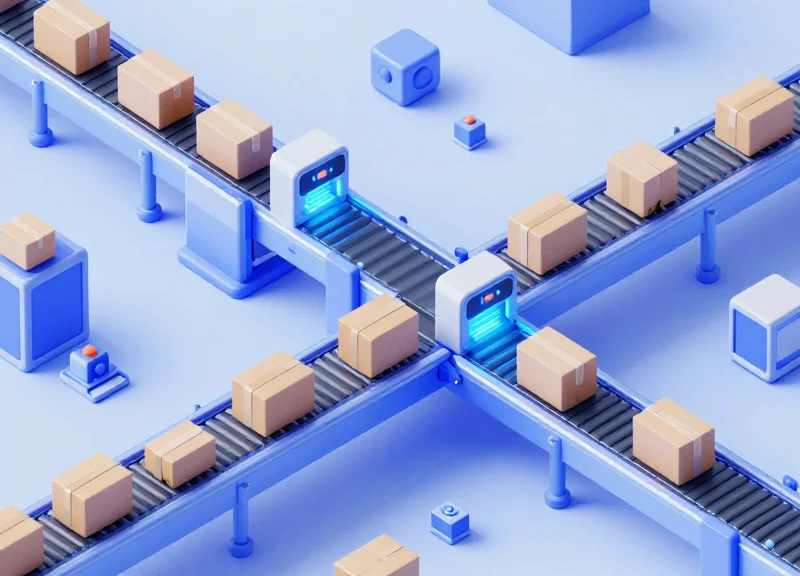
One of the most profound, yet often overlooked, efficiency gains is the elimination of 'Ghost Labor'—the time workers spend in transit or searching for tools rather than performing value-add tasks. In a typical 500,000 sq. ft. facility, an employee may walk several miles a day. RFID zone positioning allows managers to perform 'Zone-Based Heatmap Audits.' By analyzing where personnel and equipment dwell unnecessarily, facilities can redesign floor layouts to minimize travel distance. This lean optimization frequently yields a 40% reduction in internal logistics costs within the first year of deployment.
Does RFID zone positioning help with asset loss prevention?
Yes. By setting 'geofence' alerts, the system automatically notifies security if high-value assets leave a designated zone, drastically reducing shrinkage and replacement costs.
How does this technology impact labor allocation?
It allows for dynamic staffing. If data shows a bottleneck forming in 'Zone B' during a shift, supervisors can reallocate nearby personnel immediately, maintaining steady production flow.
What is the typical payback period for an RFID zone system?
Most industrial facilities see a full return on investment within 12 to 18 months, driven by combined savings in emergency response readiness, labor efficiency, and asset utilization.
Expert Insight: To truly maximize ROI, integrate your RFID zone data directly into your ERP (Enterprise Resource Planning) or WMS (Warehouse Management System). When your inventory levels update automatically based on zone transitions, you eliminate the 'data lag' that causes over-purchasing. This creates a 'Just-In-Time' safety and operational environment where capital is never wasted on redundant assets or idle time.
Hardware and Infrastructure: Building a Robust System
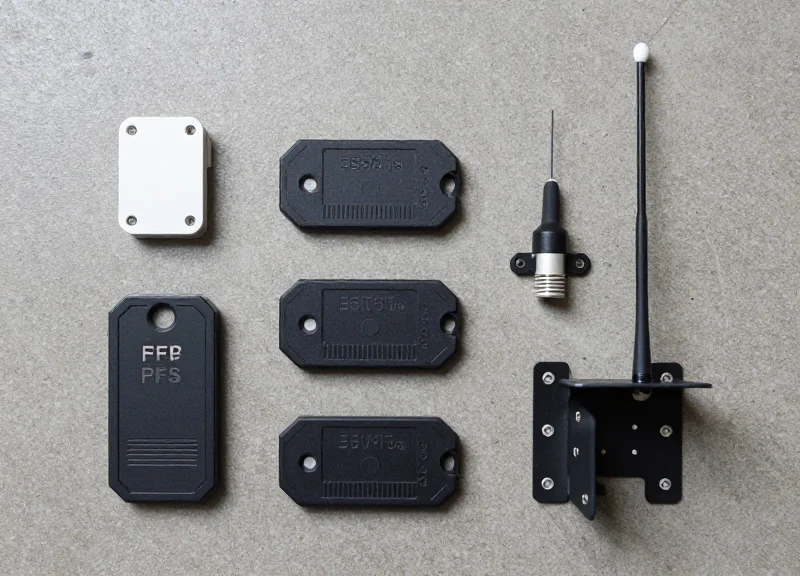
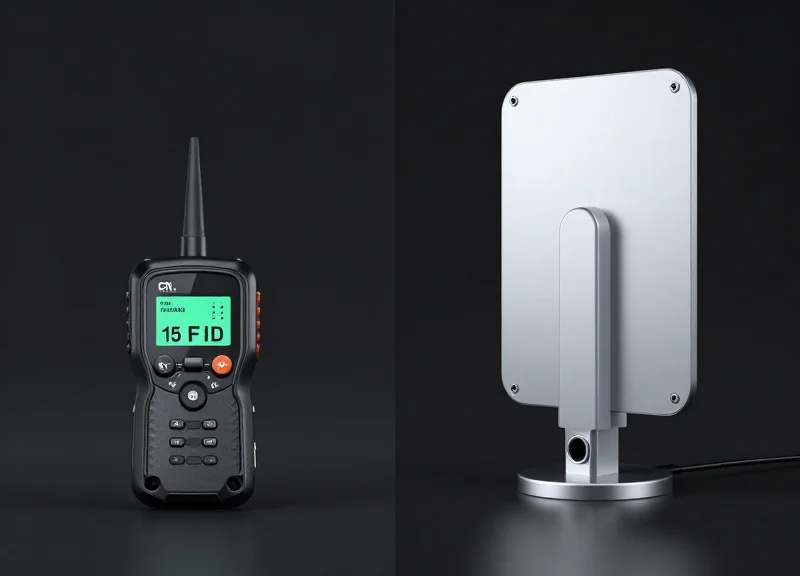
A robust RFID zone positioning system is the physical backbone of industrial safety and efficiency, consisting of specialized tags, high-gain readers, and low-latency middleware. Unlike standard retail tracking, industrial-grade infrastructure must be 'hardened' to operate in environments filled with metallic interference (multipath), high temperatures, and electromagnetic noise. To achieve a 40% reduction in emergency response times, the hardware must provide 99.9% uptime and precise zone granularity, ensuring that every 'blind spot' is eliminated through a redundant mesh of sensors.
| Component Type | Passive RFID (UHF) | Active RFID (BLE/WiFi) | Semi-Passive (BAP) |
|---|---|---|---|
| Primary Use | Short-range asset tracking | Long-range zone positioning | Environmental sensing |
| Battery Life | Infinite (Powered by reader) | 3-5 Years (Replaceable) | 1-3 Years |
| Read Range | Up to 10 meters | Up to 100+ meters | Up to 30 meters |
| Industrial Fit | Cost-effective for high volume | Best for personnel safety | Best for volatile materials |
How do you mitigate interference from heavy machinery?
Utilize Circular Polarized Antennas rather than linear ones. Linear antennas are prone to signal dropouts when tags rotate, whereas circular polarization ensures a consistent 'handshake' between the tag and reader regardless of orientation in high-metal environments.
Are ruggedized tags necessary for all personnel?
Yes. Standard plastic tags often fail due to vibrations or chemical exposure. We recommend IP67 or IP68-rated tags that can withstand pressure washing and accidental impacts without compromising the internal chip.
What is the role of RFID Middleware?
Middleware acts as the brain, filtering 'raw' data bursts from readers to prevent duplicate pings and ensuring only actionable location data is sent to the ERP or Emergency Response Dashboard.
Expert Insight: The 'Ghost Zone' Paradox. In my 20 years of Silicon Valley industrial deployments, the biggest mistake I see is over-tuning reader power. In a facility with high metal content (like a warehouse with steel racking), setting readers to maximum power creates 'Ghost Zones' where signals bounce off metal surfaces and register a tag in the wrong area. The secret to a robust system isn't more power—it's Antenna Diversity. By using multiple lower-power antennas at varied angles, you create a dense 'shrubbery' of coverage that eliminates the multipath interference that plagues high-gain setups.
- Electromagnetic Site Audit: Identify existing RF noise from heavy motors and WiFi mesh networks to select the cleanest frequency channels.
- Zone Calibration: Define virtual 'Geofences' within the software that trigger alerts the moment a tag enters a restricted or hazardous zone.
- Redundancy Integration: Install secondary power sources (PoE+ with UPS) for readers to ensure the safety system remains online during facility power failures.
Strategic Implementation: Mapping Your Zones
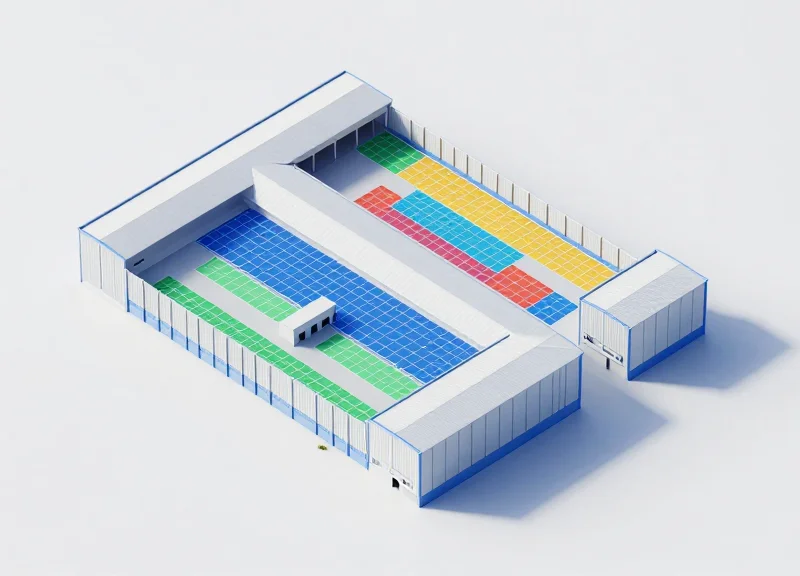
Strategic zone mapping is the process of partitioning an industrial facility into a logical digital hierarchy using RFID readers and antennas to eliminate monitoring gaps. By aligning digital zones with physical risk profiles and operational workflows, organizations can ensure that every critical square foot—from high-traffic loading docks to restricted chemical storage areas—is visible in real-time, facilitating the 40% reduction in emergency response times previously discussed.
- Conduct a Shadow Audit: Walk the floor to identify 'blind spots' where Wi-Fi or cellular signals are traditionally weak and identify areas with the highest density of personnel or hazardous machinery.
- Establish the Zone Hierarchy: Define 'Macro-zones' for general facility movement (e.g., Warehouse A, Production Floor) and 'Micro-zones' for high-precision areas (e.g., Charging Station 4, Emergency Exit 2).
- Determine Portal vs. Presence Detection: Decide where you need to know someone passed through a point (Portal) versus where you need to know they are currently dwelling (Presence).
- Calibrate Signal RSSI Thresholds: Configure Received Signal Strength Indicator (RSSI) levels to prevent 'leakage,' ensuring a tag in Zone A doesn't accidentally report in Zone B through a thin partition.
| Zone Type | Primary Objective | Typical Hardware Setup |
|---|---|---|
| Transit Zones | Monitor movement between departments | High-gain directional antennas at chokepoints |
| Hazard Zones | Immediate alert if unauthorized entry | Short-range, high-density reader arrays |
| Assembly/Work Zones | Efficiency tracking and labor allocation | Overhead 'Exciter' arrays for 360-degree coverage |
| Muster Points | Safety accounting during evacuations | Ruggedized outdoor readers with battery backup |
Expert Tip: The 'Buffer Zone' Strategy. To avoid the common pitfall of 'tag flickering'—where an asset appears to bounce between two adjacent zones—implement a 2-meter software-defined buffer zone. By requiring a tag to maintain a higher RSSI in a new zone for at least three seconds before registering the change, you eliminate data noise and ensure your emergency response data is 100% accurate.
How many zones does a typical 100,000 sq. ft. facility need?
On average, a facility of this size requires 15-25 Macro-zones and 10-15 Micro-zones for high-risk areas, though this varies based on the complexity of the floor plan.
Can zones be adjusted after hardware installation?
Yes. If using a modern RFID middleware, you can adjust the 'logical' boundaries of a zone via software by tuning the power levels of the readers without physically moving them.
What is the biggest mistake in zone mapping?
Over-complicating the map. Start with critical safety zones and exit paths first; you can add granularity to production zones once the primary safety ROI is realized.
Overcoming Technical Challenges: Interference and Signal Accuracy
In the 'RF-hostile' landscape of a modern factory, signal integrity is often compromised by the 'Multipath Effect'—where radio waves bounce off metallic machinery and create phantom signals or 'ghost reads.' To achieve a 40% reduction in emergency response times, the system must distinguish between a worker actually entering a hazardous zone and a stray signal reflecting off a nearby forklift. This level of precision is not achieved by raw power alone, but through the strategic orchestration of hardware orientation and algorithmic data smoothing at the edge.
| Challenge | Technical Root Cause | Mitigation Strategy |
|---|---|---|
| Metal Interference | Signal reflection and detuning | Use of 'On-Metal' spacers and Circular Polarized antennas |
| Signal Bleed | RF waves penetrating thin walls | Power-level tuning and RSSI thresholding (Signal Strength) |
| Human Body Shielding | Water content absorbing UHF energy | Dual-tagging or 360-degree antenna arrays |
| Multipath Fading | Destructive interference from reflections | Frequency hopping and spatial diversity |
How do we stop signals from bouncing off metal surfaces?
We utilize Circularly Polarized antennas which emit waves in a corkscrew pattern. This allows the signal to maintain its integrity regardless of the tag's orientation, significantly reducing the 'null spots' common with linear antennas in high-metal areas.
Can RFID accurately track near high-voltage equipment?
Yes, by utilizing shielded cables for readers and selecting specific UHF bands that do not overlap with the electromagnetic frequencies emitted by industrial motors and power lines.
What is the 'Fuzzy Logic' approach to zone accuracy?
Instead of relying on a single 'ping,' the software uses temporal filtering to analyze a sequence of reads. If a tag is seen for only 0.1 seconds, the system ignores it as a reflection; if it persists for 1.5 seconds with increasing signal strength, it confirms a zone entry.
Expert Insight: The 'Goldilocks' Power Principle. Many engineers mistakenly believe that increasing reader power improves accuracy. In reality, over-powering a reader in a metallic environment increases 'RF Noise' and creates more reflections. The Silicon Valley standard is to use the 'Minimum Viable Power' (MVP) strategy: tune each antenna to the lowest power setting required to cover its specific zone, then use RSSI (Received Signal Strength Indicator) 'fingerprinting' to define the zone's digital boundary. This creates a sharp 'cut-off' that prevents false positives in adjacent safety zones.
- Site Survey & RF Mapping: Use a spectrum analyzer to identify existing interference from Wi-Fi, Bluetooth, or heavy machinery.
- Antenna Polarization Selection: Deploy circular antennas for general tracking and linear antennas for high-ceiling, narrow-aisle accuracy.
- RSSI Boundary Tuning: Walk the zone perimeter to establish the signal strength 'floor' that triggers a zone entry event.
- Edge Filter Implementation: Apply logic at the reader level to discard outlier pings caused by transient metallic reflections.
Integration and Scaling: From RFID to ESL and EAS

Scaling industrial RFID from a standalone safety solution into a converged ecosystem involving Electronic Shelf Labels (ESL) and Electronic Article Surveillance (EAS) represents the pinnacle of operational maturity. By integrating these technologies, organizations move beyond simple 'presence detection' to a state of 'Total Asset Intelligence.' This integration allows a single piece of infrastructure to manage safety protocols via zone positioning, automated inventory updates through ESL, and loss prevention through EAS, effectively amortizing the initial hardware investment across multiple business units.
| Technology | Primary Industrial Role | Scaling Benefit | Interoperability Factor |
|---|---|---|---|
| RFID (UHF/Active) | Zone Positioning & Safety | Real-time asset visibility | Backbone for data orchestration |
| ESL (e-Paper/BLE) | Dynamic Labeling & Picking | Reduces manual labor by 90% | Communicates through existing APs |
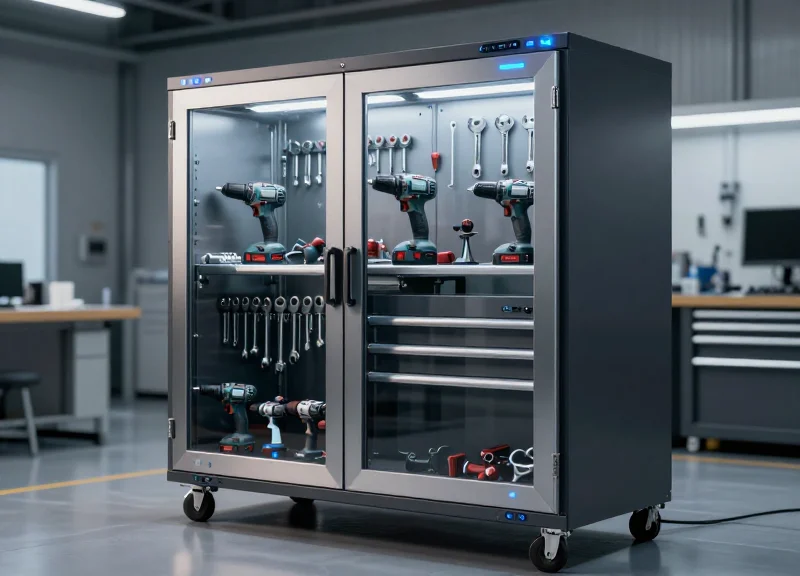
| EAS (RF/AM) | Loss Prevention & Security | Prevents high-value tool shrinkage | Dual-mode tags combine EAS/RFID |
The 'Silicon Valley Secret' to successful scaling is the move toward Protocol Multi-tenancy. Instead of deploying three separate networks, modern enterprises utilize software-defined readers and access points capable of handling BLE, UHF RFID, and proprietary ESL protocols simultaneously. This unified frequency strategy prevents signal congestion and reduces maintenance overhead, allowing a safety-first RFID deployment to pay for itself by enabling retail-ready inventory accuracy in the warehouse.
How does ESL integration improve industrial ROI?
ESL allows for real-time visual feedback on the floor. When integrated with RFID zone data, an ESL can automatically flash or change price/status when a specific asset enters a zone, reducing picking errors and eliminating the need for manual paper labeling.
Can RFID readers double as EAS gates?
Yes, high-performance overhead RFID readers can act as virtual EAS gates. By defining a 'security zone' at an exit, the system can trigger alarms if an item moves through that zone without an 'authorized' status in the database, eliminating the need for bulky pedestals.
What is the biggest challenge in scaling these systems?
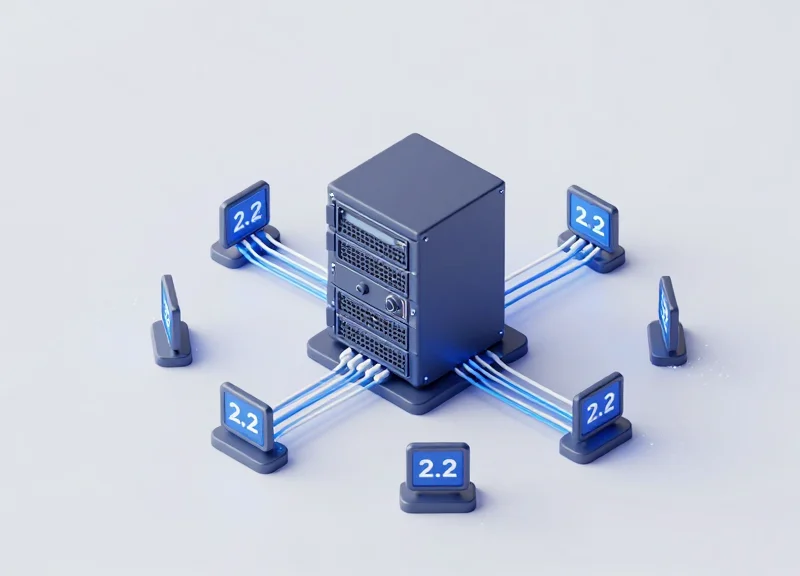
Data orchestration is the primary hurdle. Success requires a robust middleware layer that can ingest disparate data streams from RFID, EAS, and ESL and translate them into a single 'source of truth' for the ERP or WMS.
- Unified Hardware Selection: Prioritize dual-modality readers that support both inventory tracking (RFID) and low-power communication (BLE/ESL).
- Middleware Consolidation: Deploy a central management platform that visualizes zone positioning data alongside shelf-level inventory metrics.
- Pilot Cross-Functional Zones: Implement a 'Smart Staging' area where items are simultaneously tracked for safety (RFID) and automatically updated on digital displays (ESL).