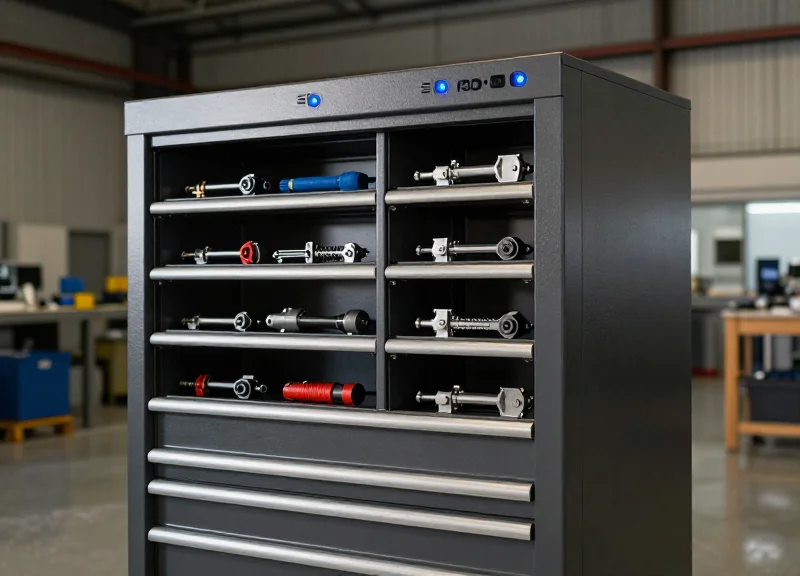
In the high-stakes world of Maintenance, Repair, and Overhaul (MRO), a single missing wrench isn't just an inconvenience—it's a critical safety risk and a massive financial drain. As we approach 2026, the industry is moving beyond manual logs and basic barcodes toward sophisticated, heavy-duty RFID smart cabinets. These automated systems provide real-time visibility, ensuring every tool is accounted for, calibrated, and ready for use. This guide explores how to choose the right RFID hardware to eliminate tool loss and optimize your operational workflow in the most demanding industrial settings.
The Real Cost of Tool Loss in Modern MRO Operations

In heavy-duty MRO (Maintenance, Repair, and Overhaul) environments, the cost of a lost tool is rarely limited to its invoice price. Instead, it triggers a 'Multiplier Effect' where the disappearance of a single calibrated torque wrench can result in thousands of dollars in lost productivity, compromised safety, and regulatory fines. For sectors like aviation and energy, a missing tool is not just an accounting error; it is a critical safety hazard known as Foreign Object Debris (FOD) that can lead to catastrophic mechanical failure or the grounding of an entire fleet.
| Cost Category | Direct Impact | Hidden Operational Cost |
|---|---|---|
| Asset Replacement | High: Cost of specialized, calibrated tooling. | Procurement overhead and lead-time delays for 2026 supply chains. |
| Labor Productivity | Moderate: Time technicians spend searching for tools. | The 'Search Vacuum': Average technician loses 15-30 mins per shift tracking assets. |
| AOG & Downtime | Extreme: Hourly costs for Aircraft on Ground or Turbine outages. | Contractual penalties for missed delivery milestones or service level agreements. |
| Compliance & Fines | Variable: Audit failures and safety violations. | Increased insurance premiums and potential loss of operating licenses. |
Unique Expert Insight: The 1:40 Rule. Historically, MRO managers calculated tool loss by the unit. However, 2026 industry benchmarks suggest that for every $1 spent on a lost tool's replacement, the organization absorbs $40 in indirect costs—primarily driven by 'Ghost Labor' (technicians performing manual inventory instead of maintenance) and the 'Shadow Risk' of unrecorded tool breakage being hidden to avoid reprimand.
How does tool loss specifically impact aviation safety?
A missing tool in aviation is classified as a potential FOD risk. If a tool cannot be accounted for at the end of a shift, the entire aircraft must be grounded and inspected until the item is found, costing upwards of $10,000 to $100,000 per incident depending on the aircraft type.
What is the impact of tool loss on technician morale?
Frequent tool loss creates a culture of frustration and blame. When high-performance technicians lack the necessary equipment, job satisfaction drops, leading to higher turnover rates in an industry already facing a skilled labor shortage.
Can RFID smart cabinets actually eliminate 'hoarding'?
Yes. One of the biggest 'hidden' costs is tool hoarding, where technicians keep tools in personal lockers to ensure availability. RFID cabinets provide 100% visibility, ensuring tools stay in circulation and reducing the need for redundant inventory purchases.
As we move into 2026, the integration of real-time tracking is no longer a luxury. With the rising costs of specialized aerospace alloys and the increasing complexity of renewable energy infrastructure, the financial 'bleed' from manual tool tracking is often the difference between a profitable MRO facility and one that is struggling to keep pace with modern safety standards.
Why RFID Smart Cabinets are the 2026 Industry Standard
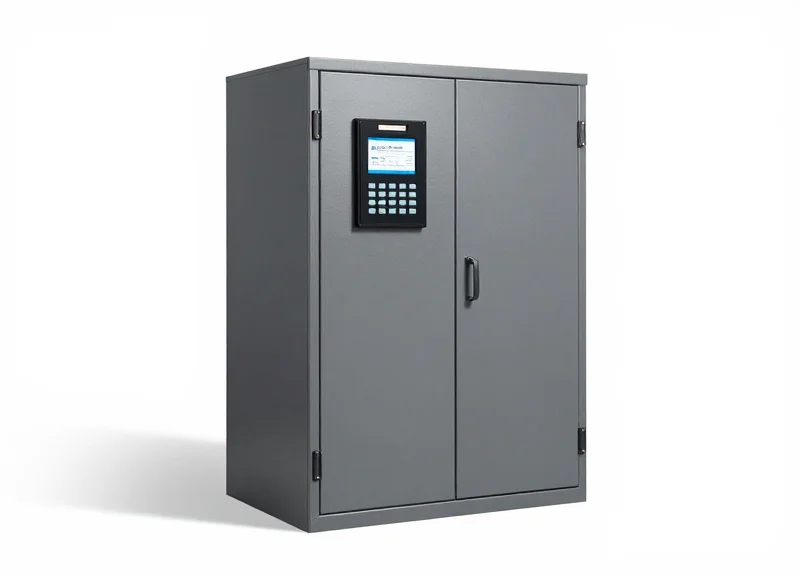
By 2026, RFID smart cabinets have transitioned from 'luxury tech' to a mandatory MRO requirement because they provide automated, 100% accurate tool accountability without human intervention. Unlike manual checkout systems or barcode scanning, RFID-enabled storage utilizes Ultra-High Frequency (UHF) waves to identify hundreds of tools simultaneously the moment a cabinet door closes. This real-time visibility eliminates the 'hidden factory' of manual log-keeping, ensuring that every asset is tracked, every technician is held accountable, and foreign object debris (FOD) risks are virtually eradicated through digital twin synchronization.
| Feature | Legacy Tool Cribs/Storage | 2026 RFID Smart Cabinets |
|---|---|---|
| Checkout Speed | 2-5 minutes per tool | Sub-second (Instantaneous) |
| Data Accuracy | 60-80% (Subject to human error) | 99.9% (Automated UHF sensing) |
| Inventory Visibility | Periodic manual audits | Live 24/7 dashboard |
| FOD Compliance | Reactive / Manual inspection | Proactive / Automated alerts |
| ERP Integration | Manual data entry | Native API synchronization |
Expert Insight: The Shift to 'Passive Compliance'. The breakthrough of the 2026 standard is not just the hardware, but the philosophy of passive compliance. In previous years, technology often hindered the workflow—technicians had to stop and scan. Modern RFID cabinets are designed so the workflow is the data entry. By simply removing a tool and closing a door, the system handles the audit trail. This 'frictionless accountability' is what allows MRO facilities to maintain peak safety standards without sacrificing the lightning-fast turnaround times required in modern aviation and energy sectors.
How do RFID cabinets handle tools of different sizes and materials?
Modern 2026-spec cabinets use specialized 'on-metal' RFID tags and phased-array antennas that can read through high-density environments, ensuring that even small sockets or large pneumatic wrenches are detected regardless of their orientation.
Can these systems integrate with existing CMMS or ERP platforms?
Yes. The current industry standard requires RESTful APIs that allow the cabinet to communicate directly with platforms like SAP, Maximo, or Oracle, automatically triggering reorders or maintenance tickets based on tool usage cycles.
What is the primary ROI driver for switching in 2026?
Beyond preventing loss, the primary driver is 'Labor Optimization.' MRO facilities report an average 15-20% increase in technician wrench time because they no longer spend hours searching for misplaced tools or waiting at a manned tool crib.
Furthermore, the 2026 standard emphasizes 'Predictive Maintenance of Assets.' Because the cabinet tracks exactly how many times a torque wrench or specialized gauge has been used, it can automatically lock the tool out of service once it reaches its calibration limit. This level of automated safety ensures that no tool is ever used out of spec, shielding the organization from massive liability and regulatory fines.
Decoding Heavy-Duty Construction: Durability Requirements
Heavy-duty construction in the 2026 MRO landscape refers to a cabinet's ability to maintain structural integrity and RFID read accuracy while exposed to the relentless stresses of industrial operations. Unlike standard tool chests, a true heavy-duty RFID smart cabinet must utilize a minimum of 14-gauge (ideally 12-gauge) cold-rolled steel for its chassis, integrated with vibration-dampening mounts for internal sensors. This dual-layer protection ensures that high-precision electronics are shielded from the physical impact of heavy tool returns and the ambient seismic vibrations common in aerospace hangars or energy plants.
| Material Property | Standard Cabinet (Retail/Office) | Heavy-Duty MRO Cabinet (2026 Standard) |
|---|---|---|
| Steel Thickness | 18-22 Gauge (Thin) | 12-14 Gauge (Reinforced) |
| Coating Type | Standard Powder Coat | Chemical-Resistant Nano-Ceramic Hybrid |
| Ingress Protection | IP20 (Dust only) | IP54 or IP65 (Fluid & Grime resistant) |
| Hinge Load Rating | 50 lbs per door | 250+ lbs (Continuous Piano Hinges) |
- Structural Steel Grade: Opt for double-walled 12-gauge steel construction to prevent warping under the weight of heavy torque wrenches and pneumatic tools.
- Chemical and Fluid Resistance: Ensure the finish is rated for resistance against Skydrol, hydraulic fluids, and industrial solvents common in MRO settings.
- Electronic Component Isolation: Internal RFID antennas and readers should be mounted on shock-absorbing rubber gaskets to prevent hardware failure from floor vibrations.
- IP Rating (Ingress Protection): Look for at least an IP54 rating to protect the internal computer and touchscreens from airborne metal shavings and oil mist.
Expert Insight: The 'Hidden' Failure Point — Beyond the steel shell, the most frequent failure point in MRO environments is the 'RFID Signal Drift' caused by micro-vibrations. Leading 2026 models now incorporate 'Active Antenna Stabilization.' This technology uses internal gyroscopic stabilizers or high-density foam housing to ensure that even if a forklift drives by, the RFID field remains calibrated. Without this, your 100% accuracy claim will degrade to 85% within eighteen months due to physical hardware shifting.
Can these cabinets withstand high-traffic forklift zones?
Yes, provided they are spec'd with reinforced base plates and anchor-ready frames that prevent the cabinet from shifting or losing level alignment upon minor impacts.
Is the touchscreen glass durable enough for grease-covered hands?
Quality 2026 units use 4mm chemically-strengthened Gorilla Glass with oleophobic coatings that allow for glove-touch operation and easy cleaning of industrial lubricants.
How do these cabinets handle extreme temperature fluctuations in hangars?
Look for cabinets with integrated thermal management systems (passive or active cooling) that keep the internal RFID reader within its optimal operating temperature of 32°F to 110°F.
UHF RFID Technology: Solving the 'Metal' Problem

In the physics of radio frequency, metal is traditionally the enemy of RFID; it reflects signals and causes 'detuning' which renders standard tags unreadable. However, 2026-grade UHF (Ultra-High Frequency) RFID smart cabinets solve the 'Metal Problem' by using specialized On-Metal tags that feature a built-in dielectric gap. This gap creates a physical buffer that prevents the metal surface of a wrench or socket from shorting the tag's antenna, effectively allowing the tool's metallic body to act as an extended ground plane that occasionally even boosts the signal range rather than inhibiting it.
| Feature | Standard RFID (Legacy) | Industrial On-Metal RFID (2026 Standard) |
|---|---|---|
| Signal Interaction | Absorption/Reflection Interference | Controlled Backscatter via Dielectric Spacers |
| Typical Accuracy in MRO | 70% - 85% (High False Negatives) | 99.7% - 99.9% (Validated) |
| Tag Form Factor | Paper/Inlay Stickers | Ceramic or Encapsulated Rugged Tags |
| Read Environment | Non-conductive Only | Dense Metal-on-Metal (Tools/Cabinets) |
To achieve surgical-grade precision, the cabinet architecture itself must be considered an active RF environment. Modern systems no longer rely on a single antenna but use phased-array configurations to eliminate 'null zones' caused by multipath interference.
- Select High-Permeability On-Metal Tags: Ensure tags are specifically tuned for the tool material (e.g., chrome-vanadium steel) and have a form factor that fits the tool's profile without affecting ergonomics.
- Circular Polarization Deployment: Use circular polarized antennas within the cabinet to ensure tags are read regardless of their orientation—horizontal, vertical, or tilted—within the drawer.
- Dynamic Power Shielding: Calibrate the cabinet's internal power levels to reflect signals off the interior walls (multipath) while ensuring zero signal leakage outside the closed door.
Expert Insight: The 'Shadow Zone' Advantage. A common misconception is that internal metal walls are a liability. In 2026, top-tier cabinets utilize 'Adaptive Signal Bouncing.' By treating the internal metallic environment as a reverberation chamber, the system uses reflections to reach the 'shadow zones' behind large power tools that would otherwise be shielded from a direct line-of-sight signal.
Can RFID tags survive high-vibration MRO environments?
Yes, 2026-spec industrial tags are typically epoxy-encapsulated or ceramic-based, rated for IK08 impact resistance and high-frequency vibrations found in aerospace and automotive shops.
Will metal shavings interfere with the reader?
While significant debris can affect any electronic system, the UHF protocol used in smart cabinets includes 'Anti-Collision' algorithms that can distinguish between tagged tools and static metallic noise.
Do I need to tag every individual socket?
For mission-critical FOD (Foreign Object Debris) prevention, yes. Modern nano-tags are now small enough to fit on 1/4-inch drive sockets without compromising their fit in the fastener.
Software Interoperability: Integrating with ERP and EAM
Software interoperability in MRO environments is the seamless bidirectional exchange of data between RFID smart cabinet hardware and core business systems like Enterprise Resource Planning (ERP) or Enterprise Asset Management (EAM) platforms. By 2026, the industry standard has moved beyond simple CSV exports to real-time API-driven synchronization. This ensures that every tool movement at the point-of-use is instantly reflected in your 'Single Source of Truth,' allowing for automated procurement, precise maintenance scheduling, and 100% accountability without manual data entry.
| Integration Type | Mechanism | Best For | Data Latency |
|---|---|---|---|
| RESTful API | Direct JSON/HTTPS calls | Modern EAMs (Maximo, Infor) | Near Real-Time |
| Middleware/Bridges | Custom scripts/ESBs | Legacy ERPs (SAP ECC, Oracle) | Scheduled (1-5 min) |
| Webhooks | Event-driven triggers | Inventory alerts & Reordering | Instantaneous |
| Flat File (FTP) | CSV/XML transfer | Offline/Air-gapped sites | Batch (Daily/Shift) |
Expert Insight: The 'Work Order Lock' Strategy. A common pitfall in tool management is the 'ghost checkout'—tools taken without being tied to a job. In 2026, top-tier RFID cabinets utilize 'Work Order Validation.' The cabinet remains locked until a user scans a valid EAM work order. This original approach ensures that 100% of tool depreciation and loss risk is accounted for against specific project budgets, effectively eliminating 'shadow inventory' that typically accounts for 15% of annual MRO spend.
- Requirement Mapping: Identify which fields (e.g., Tool ID, Employee ID, Timestamp, Work Order) must sync between the cabinet and the ERP.
- API Authentication: Establish secure handshakes using OAuth 2.0 or dedicated API keys to ensure data integrity and cybersecurity compliance.
- Bidirectional Syncing: Ensure the system can both push data (tool checkout) and pull data (authorized user lists or updated tool certification statuses).
- Automated Trigger Configuration: Set logic for low-stock alerts or 'overdue' tool notifications to be sent directly to the EAM dashboard.
Can we integrate with custom-built internal databases?
Yes, look for cabinets that offer a 'Headless' API architecture. This allows your developers to build custom endpoints that pull data directly into proprietary MRO management software.
What happens if the facility Wi-Fi goes down?
Quality industrial cabinets use 'Store-and-Forward' logic. They cache all RFID transaction data locally and sync with the ERP/EAM automatically once the connection is restored, preventing data loss.
Does integration require a per-user license?
Typically, no. Most modern RFID cabinet providers offer an enterprise-wide API license, meaning you pay for the connection rather than the number of individual employees accessing the system.
User Authentication and Access Control Protocols
In 2026, user authentication in MRO environments has evolved from simple locking mechanisms to sophisticated identity management systems. These protocols ensure that only authorized personnel can access high-value assets, creating a 'digital chain of custody' for every tool. By integrating with existing corporate identity providers (IdP), modern RFID cabinets transform a storage unit into a secure endpoint that tracks 'who, what, and when' with absolute precision, effectively eliminating the 'anonymous loss' factor that plagues traditional toolrooms.
| Authentication Method | Security Level | Pros | Cons |
|---|---|---|---|
| Biometric (Facial/Palm Vein) | Highest | Cannot be shared or lost; no-touch options available. | Higher initial cost; privacy compliance (GDPR) requirements. |
| RFID/HID Proximity Cards | High | Uses existing employee badges; very fast throughput. | Cards can be stolen, lost, or shared among workers. |
| PIN Code Access | Medium | No hardware required by user; excellent as a backup. | High risk of social engineering and 'shoulder surfing'. |
| Multi-Factor (MFA) | Critical | Highest level of accountability for calibrated/hazmat tools. | Adds 3-5 seconds to the checkout process. |
Expert Insight: For 2026, we recommend 'Palm Vein Recognition' over traditional fingerprint scanners for MRO environments. Fingerprint sensors often fail in industrial settings due to grease, grit, or the need for workers to remove heavy-duty gloves. Palm vein technology is sub-dermal and contactless, allowing for high-accuracy identification even if the surface of the skin is dirty or if the user is wearing thin latex-style PPE often used in precision assembly.
- Role-Based Access Control (RBAC): Define permissions based on job roles; for example, only certified technicians can unlock the drawer containing torque wrenches requiring active calibration.
- Temporal Restrictions: Limit access to specific shift windows to prevent unauthorized after-hours tool removal.
- Local Credential Caching: Ensure the cabinet maintains an encrypted local database of user permissions so authentication works even during an enterprise network outage.
Can we use our existing building access badges?
Yes, look for cabinets equipped with 'Universal' or 'Multi-Protocol' readers that support HID, Mifare, and DESFire standards to avoid re-badging your entire workforce.
What happens if a worker forgets their badge?
Standard protocols include a 'Manager Override' or a temporary one-time PIN (OTP) generated via the cabinet's mobile app to maintain productivity without compromising the audit trail.
How is user data protected?
Top-tier 2026 cabinets utilize AES-256 encryption for stored user data and communicate with ERP systems via secure TLS 1.3 tunnels to ensure SOC2 compliance.
Calculating ROI: Beyond the Initial Investment

Return on Investment (ROI) for heavy-duty RFID smart cabinets is calculated by measuring the reduction in Tool Replacement Costs (TRC) and the reclaiming of 'Hidden Labor' hours, typically yielding a full capital recovery within 12 to 18 months. Beyond the sticker price, a true MRO financial analysis must account for the elimination of Foreign Object Debris (FOD) risks, automated compliance auditing, and the drastic reduction in 'walk-and-wait' time that plagues unmanaged toolrooms.
| Cost Category | Traditional Storage (Manual) | RFID Smart Cabinet (Automated) |
|---|---|---|
| Annual Tool Shrinkage | 15% - 25% of total inventory | < 1% through total accountability |
| Daily Audit Time | 45 - 60 minutes per shift | 3 - 5 minutes (Automated) |
| Search Time Per Tech | 15 - 20 minutes / day | Near zero (Real-time locating) |
| Data Entry Errors | High (Manual logs/spreadsheets) | Zero (Direct ERP/EAM sync) |
Expert Insight: The 'Shadow Inventory' Tax. In my two decades observing industrial supply chains, the biggest hidden cost isn't the lost tool—it's the 'Shadow Inventory' tax. When technicians don't trust the toolroom, they hoard equipment in private lockers. This forces procurement to over-buy assets by 20-30% to ensure availability. An RFID smart cabinet eliminates this distrust, allowing you to liquidate underutilized assets and reduce your standing inventory capital by nearly a third.
- Quantify Tool Shrinkage Savings: Analyze your purchase history for the last 24 months. Total the cost of replacement tools due to loss or 'disappearance.' In RFID environments, these costs drop by 90%.
- Calculate Reclaimed Labor: Multiply the hourly rate of your technicians by the average time spent searching for tools or performing manual check-outs. This often represents thousands of dollars in annual 'found' productivity per cabinet.
- Assess Regulatory and Audit Savings: For aerospace or nuclear MRO, calculate the cost of a single missed tool audit. Automated reporting can save 100+ administrative hours during annual compliance reviews.
How long does it typically take to see a positive ROI?
Most high-utilization MRO facilities see a break-even point between 12 and 18 months, primarily driven by the immediate cessation of tool theft and hoarding.
Do software subscription fees negatively impact the ROI?
While SaaS fees are an ongoing cost, they are offset by the reduction in IT overhead and the value of automated ERP updates, which prevent over-purchasing and streamline the supply chain.
Is the ROI higher for specific tool types?
Yes. ROI is significantly higher for calibrated assets (torque wrenches, multimeters) where the cost of a lost or out-of-calibration tool includes massive fines or rework liabilities.
Scalability and Future-Proofing Your MRO Facility
To future-proof an MRO facility in 2026, scalability must be addressed at both the hardware and software layers. A truly scalable RFID smart cabinet system utilizes a modular 'master-satellite' architecture, allowing facilities to expand tool capacity by daisy-chaining additional units to a single control hub. This ensures that as your technician count or tool inventory grows, your infrastructure can expand horizontally without the need for redundant network drops or separate software licenses, while remaining compatible with emerging Private 5G and Edge Computing standards.
| Feature Category | Legacy Limitation | 2026 Scalability Standard |
|---|---|---|
| Hardware Expansion | Stand-alone units with independent CPUs | Modular 'Plug-and-Play' satellite cabinets |
| Connectivity | Static Ethernet or Wi-Fi 5 | Dual-band 5G/6G and Wi-Fi 6E/7 Ready |
| Processing | Cloud-dependent data syncing | Edge Intelligence for offline autonomy |
| Integration | Hard-coded vendor silos | Open API and Webhook-first architecture |
Expert Tip: The Edge-First Mandate. By 2026, the most resilient MRO environments will transition from pure cloud-based systems to Edge-Computing cabinets. Look for units equipped with onboard Neural Processing Units (NPUs). These allow the cabinet to perform complex RFID signal filtering and pattern recognition locally. This means the system remains 100% operational during network outages and can process thousands of tag reads in milliseconds, preventing the 'bottleneck' effect at shift changes.
- Prioritize API-First Software: Ensure the cabinet software is built on RESTful or GraphQL APIs. This allows your IT team to pull tool data into future AI-driven maintenance platforms without waiting for vendor-specific updates.
- Demand Over-the-Air (OTA) Updates: Hardware should support remote firmware updates to accommodate evolving RFID protocols (like RAIN RFID Gen3) and security patches without technician intervention.
- Evaluate 5G Network Slicing Compatibility: For large-scale aerospace or transit MROs, ensure cabinets can connect to Private 5G networks, utilizing 'network slicing' to guarantee dedicated bandwidth for critical inventory data.
Will 2026 cabinets be backward compatible with older RFID tags?
Yes, high-quality heavy-duty cabinets utilize multi-protocol readers that support legacy EPC Gen2 tags while being optimized for newer, high-sensitivity silicon chips.
Can I mix cabinet sizes in a single modular chain?
Ideally, yes. A scalable system should allow a high-capacity floor cabinet to act as a master for smaller, wall-mounted satellite units in specialized work cells.
How does 5G improve tool tracking over Wi-Fi?
5G provides lower latency and higher device density support, meaning thousands of tagged tools across an entire hangar can be audited simultaneously without the interference common in congested Wi-Fi environments.
Maintenance and Calibration Tracking Features
In a modern MRO environment, the value of a tool is determined not just by its physical presence, but by its operational readiness and compliance status. Maintenance and calibration tracking features within RFID smart cabinets transform these storage units into active compliance gatekeepers. By embedding software-driven logic into the hardware, these systems automatically track the usage hours, cycle counts, and expiration dates of every tagged asset, ensuring that precision instruments like torque wrenches or micrometers are never utilized when they are out of spec. This shift from manual logging to automated tracking eliminates the risk of regulatory fines and catastrophic mechanical failures caused by uncalibrated tools.
| Feature | Manual Tracking Approach | 2026 RFID Cabinet Solution |
|---|---|---|
| Tracking Method | Paper logs or Excel spreadsheets | Real-time digital audit trail via RFID |
| Compliance Control | Relies on technician honesty/memory | Automated lockout of expired tools |
| Service Alerts | Periodic manual audits | Predictive, automated email/SMS alerts |
| Certification Access | Stored in separate filing cabinets | Digital certificates linked to specific IDs |
- Automated Service Gating: The system prevents a user from checking out a tool if the calibration date has passed or if the tool has exceeded its usage threshold, forcing it to remain in 'quarantine' until cleared.
- Usage-Based Maintenance (UBM): Instead of static time-based scheduling, the cabinet tracks exactly how many times a tool was cycled, allowing for maintenance based on actual wear and tear.
- Digital Certificate Repository: Stores and displays digital calibration certificates directly through the cabinet's touchscreen or mobile app for instant verification during safety audits.
Expert Insight: The 'Compliance-First' Gating Protocol. One of the most significant advancements for 2026 is the implementation of 'Compliance-First' gating. Unlike traditional cabinets that simply notify you when a tool is late for service, high-end RFID cabinets now use an electronic locking mechanism that physically prevents the drawer from opening for a specific item if its calibration data is invalid. This moves your MRO facility from a 'reactive' safety posture to a 'preventative' one, where the technology effectively prevents human error before it can happen on the shop floor.
Can the cabinet track tools calibrated by outside vendors?
Yes. Most enterprise-grade smart cabinets allow administrators to upload third-party calibration data and certificates via a central dashboard, syncing the new expiration date directly to the tool's RFID tag.
What happens if a tool expires while it is checked out?
The software flags the tool as 'overdue for return and service' in the dashboard. If the tool is not returned within a grace period, the system can automatically escalate alerts to floor managers and block the user from further check-outs.
Does the system support ISO and FAA compliance standards?
Absolutely. Modern RFID cabinets generate 21 CFR Part 11 compliant logs and meet the rigorous traceability requirements of ISO 9001, AS9100, and FAA Part 145 operations.