In an era where every second counts, many businesses are still shackled by the 'paper trap'—manual tracking systems that invite human error, delay decision-making, and drain resources. Moving from paper to profit isn't just a digital upgrade; it's a fundamental shift in how assets and personnel are deployed. By integrating Radio Frequency Identification (RFID) technology, companies are now unlocking unprecedented visibility into their operations. This article explores how a strategic RFID implementation can streamline resource allocation to achieve a staggering 40% boost in overall operational efficiency, transforming stagnant workflows into high-performance profit engines.
The Hidden Costs of Paper-Based Resource Allocation

The hidden costs of paper-based resource allocation represent the cumulative financial and operational losses—often exceeding 20% to 30% of total labor expenses—stemming from manual data entry, human error, information silos, and the physical time wasted tracking assets via clipboards. Unlike automated systems, paper-based workflows lack real-time visibility, leading to 'ghost assets,' excessive safety stock, and a reactive management style that erodes profit margins and stifles scalability.
| Cost Driver | Paper-Based Impact | Hidden Financial Leak |
|---|---|---|
| Labor Productivity | 15-20 minutes per shift spent on data entry. | High salary overhead diverted to non-value-added tasks. |
| Inventory Accuracy | Typical accuracy rates hover between 65-75%. | Excess capital tied up in 'just-in-case' safety stock. |
| Audit Compliance | Days or weeks required for manual file retrieval. | Increased risk of regulatory fines and legal liability. |
| Decision Velocity | 24-48 hour lag between event and data availability. | Lost opportunity costs due to delayed operational pivots. |
Why is manual entry considered a 'silent killer' of profit?
Manual entry carries an inherent 1-3% error rate. In a high-volume warehouse or hospital, these small errors compound into massive logistical failures, such as shipping incorrect items or misallocating critical machinery, which require expensive 'expedited' fixes.
How does paper impact employee morale and retention?
Repetitive, manual clerical work is a leading cause of burnout. In the current 'War for Talent,' modern workers expect digital tools; forcing skilled laborers to use physical clipboards often leads to higher turnover and increased training costs.
What is the 'Search Cost' in resource allocation?
Search cost is the time employees spend physically looking for tools or inventory that were logged incorrectly on paper. Studies show workers can spend up to 10% of their day simply 'hunting' for what they need to do their jobs.
A unique perspective often overlooked by generic analyses is the concept of 'Data Decay.' In a paper-based system, information begins to lose value the moment the pen touches the page. By the time a supervisor collects the clipboards, aggregates the data, and manually keys it into a spreadsheet, the information is effectively 'dead.' You aren't managing your current operations; you are performing an autopsy on yesterday's mistakes. Transitioning to RFID doesn't just digitize paper; it replaces 'Dead Data' with 'Living Data,' allowing for predictive rather than reactive resource allocation.
RFID Technology: The Digital Backbone of Modern Efficiency
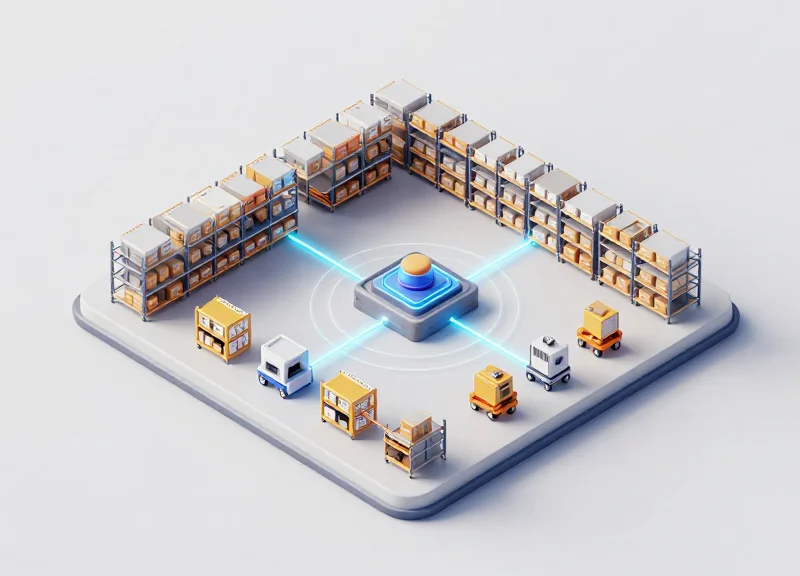
RFID (Radio Frequency Identification) is a contactless communication technology that uses radio waves to capture data from tags attached to physical objects. Unlike traditional barcodes, RFID allows for bulk scanning without direct line-of-sight, creating a persistent 'Digital Twin' of every asset in a facility. This technological backbone ensures that resource allocation is based on actual real-time location data rather than historical logs or manual estimates. By automating the data capture process, businesses eliminate the friction of manual entry, effectively turning physical movement into actionable intelligence.
| Core Component | Functional Role | Operational Value |
|---|---|---|
| RFID Tags | Data storage and transmission | Assigns a unique digital identity to every physical asset. |
| Readers/Antennas | Signal interrogation and capture | Automates data collection at gates, docks, and workstations. |
| Middleware Software | Data filtering and aggregation | Cleans raw signal data and integrates it into ERP/WMS systems. |
The true power of RFID lies in its ability to eliminate 'Human Latency.' In paper-based environments, there is an inherent delay between an event—such as a pallet leaving a bay—and its documentation. RFID closes this gap by synchronizing physical movement with digital updates in milliseconds. This real-time visibility layer allows managers to redirect resources dynamically, ensuring that labor and equipment are always deployed where they provide the highest ROI.
How does RFID outperform traditional barcoding in a warehouse?
RFID allows for simultaneous reading of hundreds of tags from several meters away without line-of-sight. This enables entire truckloads to be scanned in seconds, whereas barcodes require manual, one-by-one interaction.
Is RFID middleware necessary for efficiency?
Yes. Middleware is the 'brain' that filters out duplicate reads and noise, ensuring only clean, relevant data enters your business systems to prevent data bloat and system slowdowns.
Can RFID operate in metal-heavy or liquid environments?
Modern specialized tags, such as 'On-Metal' or encapsulated tags, are designed specifically to overcome signal interference in challenging industrial environments, maintaining high accuracy levels.
Unique Industry Insight: To achieve a 40% efficiency boost, companies must focus on 'Data Velocity' rather than just 'Data Accuracy.' While accuracy is a baseline, velocity—the speed at which data travels from the warehouse floor to the decision-maker—is the primary driver of profit. High-efficiency firms use RFID not just to find things, but to feed predictive algorithms that re-route staff before a bottleneck even forms. This shift from reactive searching to proactive orchestration is what separates market leaders from those simply trying to digitize their paper mess.
Automating the Asset Lifecycle: From Reception to Dispatch
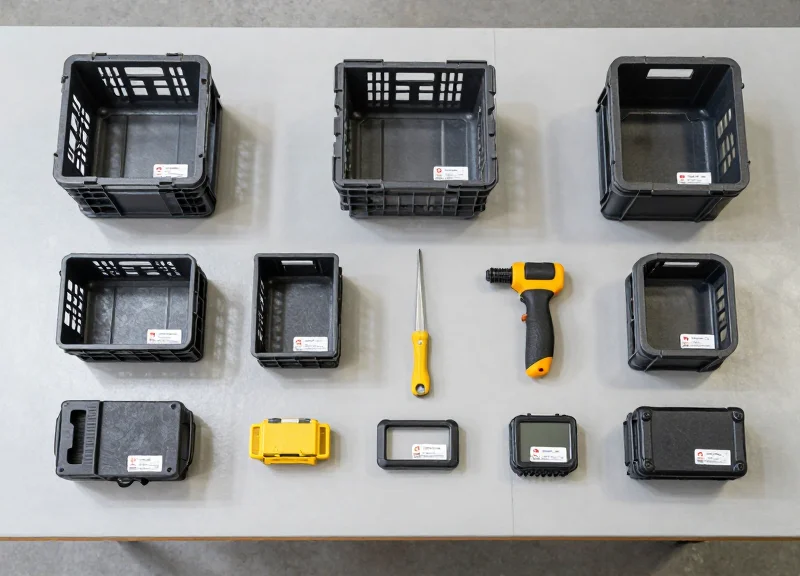
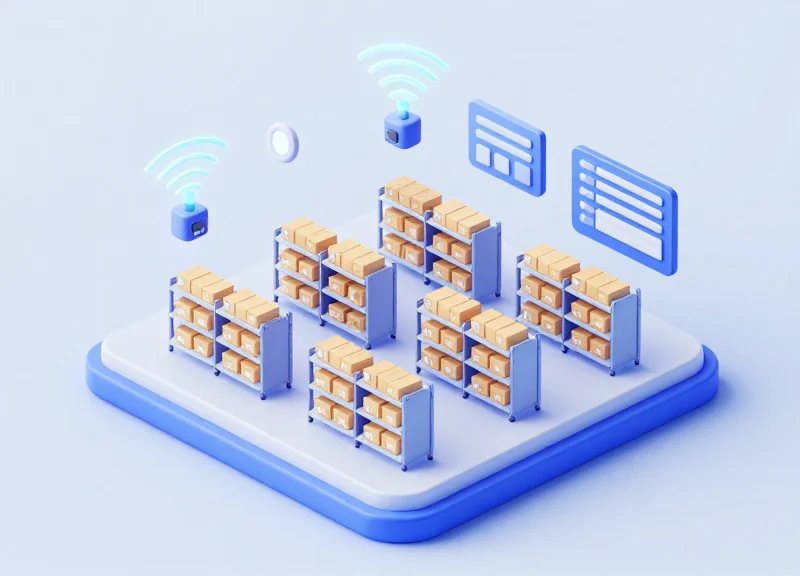
Automating the asset lifecycle involves transitioning from active, manual tracking to a passive, event-driven system where assets communicate their status independently. By integrating RFID readers at key transition points—such as dock doors, zone transitions, and dispatch gates—businesses eliminate the need for individual line-of-sight barcode scanning. This shift allows for the simultaneous processing of hundreds of items in seconds, ensuring that the digital inventory record is always a perfect mirror of physical reality without requiring a single human touchpoint for data entry.
- Automated Receiving: Pallets pass through RFID dock portals, instantly reconciling bulk shipments against purchase orders in the ERP without opening boxes.
- Dynamic Put-away: Fixed readers track the movement of assets into specific zones, updating location data automatically to prevent misplaced inventory.
- Work-in-Progress (WIP) Tracking: As assets move between production stages, their status is updated, providing a real-time bottleneck analysis for floor managers.
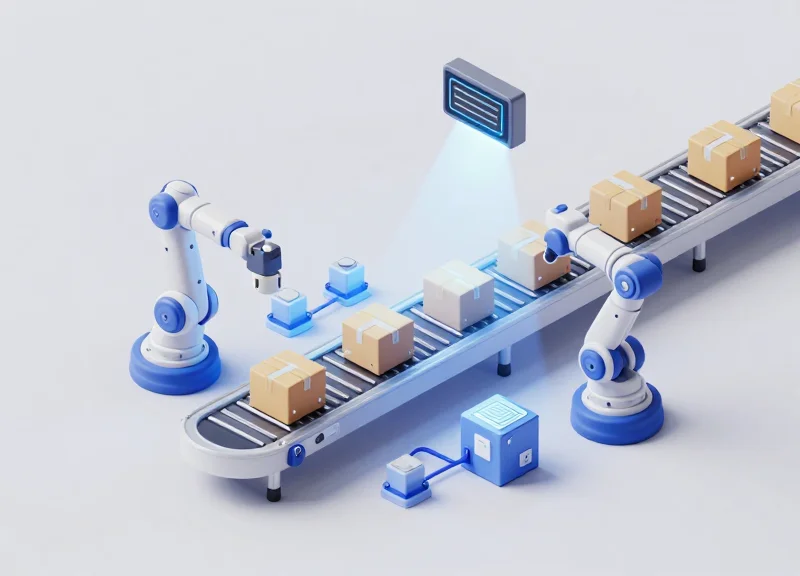
- Precision Picking and Packing: Handheld or overhead RFID readers verify that the correct assets are selected for an order, triggering alerts if a wrong item is packed.
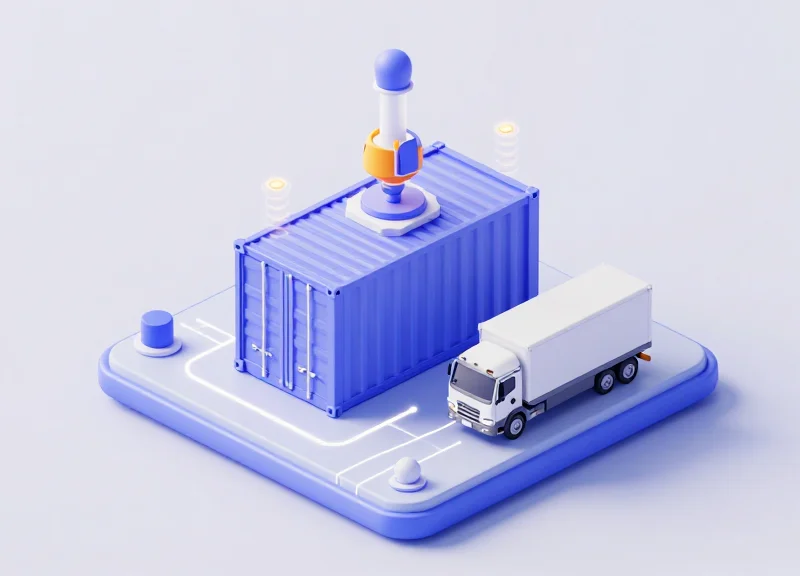
- Automated Dispatch: Final verification occurs at the shipping gate, where the system confirms the manifest is 100% accurate before the truck leaves the dock.
| Operational Phase | Manual/Paper-Based Process | RFID-Automated Process |
|---|---|---|
| Inbound Receiving | 30-60 minutes per pallet (Individual scans) | < 30 seconds per pallet (Bulk portal scan) |
| Inventory Auditing | Annual/Quarterly (Requires total shutdown) | Daily/Continuous (Zero downtime) |
| Search Time | Average 15-20 mins per item search | Instantaneous (Proximity geofencing) |
| Dispatch Accuracy | 95-97% (Human error prone) | 99.9% (Automated gate validation) |
One unique insight often overlooked is the 'Compound Error Effect' in manual systems. In a paper-based lifecycle, a 1% error rate at receiving cascades into a 5% error at picking and a 10% error at dispatch because the foundation of data is flawed. RFID provides 'Atomic Accuracy' at the point of entry. By ensuring the very first data point is 100% accurate through passive validation, you eliminate the downstream labor costs associated with 'exception handling'—the expensive process of humans manually finding and fixing data discrepancies.
Does RFID require a direct line of sight?
No, unlike barcodes, RFID uses radio waves to read tags through packaging, wood, and plastic, allowing for bulk scanning of entire pallets at once.
How does this impact labor costs?
By removing the 'walk-and-scan' requirement, companies typically see a 30-50% reduction in warehouse labor hours dedicated purely to data collection.
Can RFID prevent shipping errors?
Yes, RFID portals at dispatch gates can be programmed to trigger an alarm or stop a conveyor if an item not on the shipping manifest is detected.
The 40% Efficiency Equation: Where the Gains Come From

The 40% efficiency boost realized through RFID implementation is not a random figure; it is the mathematical result of collapsing the 'Time-to-Data' gap. In a paper-based environment, there is a significant lag between a physical event (like a pallet moving) and its digital record (an entry in a ledger). RFID eliminates this lag, allowing for the recovery of lost labor hours previously spent on manual verification, physical searching, and administrative rework. By transforming assets from 'silent' objects into 'broadcasting' data points, businesses achieve a compound efficiency effect where small gains in multiple departments aggregate into a massive organizational leap.
| Operational Task | Paper-Based Time | RFID-Enabled Time | Efficiency Impact |
|---|---|---|---|
| Full Inventory Audit | 48 - 72 Hours | 1 - 2 Hours | 97% Reduction in Labor |
| Locating Specific Assets | 15 - 20 Minutes | Under 30 Seconds | 98% Search Time Recovery |
| Inbound Receiving/Verify | 45 Minutes/Pallet | 3 Minutes/Pallet | 93% Faster Throughput |
| Shipping Accuracy Check | 5 Minutes/Order | Instantaneous | Elimination of Human Error |
One of the most profound shifts occurs in the 'Search-to-Action' ratio. In legacy systems, warehouse staff often spend up to 30% of their shift simply finding the tools or materials they need to begin their actual job. RFID implementation essentially flips this ratio. When location data is 99.9% accurate in real-time, labor is instantly reallocated from 'seeking' to 'executing.' This is what I call Opportunity Cost Recovery: you aren't just saving money on labor; you are increasing your facility's total capacity without hiring a single additional person.
Is a 40% efficiency gain realistic for mid-sized operations?
Yes. In fact, mid-sized operations often see higher percentage gains than enterprises because their previous paper-based processes were more susceptible to human error and lacked the redundant checks found in massive corporations.
Does the 40% include the time saved on data entry?
Absolutely. A significant portion of the gain comes from eliminating manual data entry. RFID readers automatically update the ERP or WMS, removing the 5-10 minutes per hour employees typically spend writing on clipboards or typing into terminals.
How long does it take to reach the 40% peak?
Most companies see an immediate 15-20% boost in the first 30 days of full deployment. The remaining 20% gain occurs over the following 3-6 months as workflows are optimized around the new real-time data visibility.
The 'Secret Sauce' of this equation lies in the reduction of Safety Stock. Because you can trust your inventory counts with 99% certainty, you no longer need to over-order 'just in case' materials. This frees up working capital and reduces warehouse congestion, which further streamlines movement and adds another layer of operational speed that paper systems simply cannot match.
Dynamic Resource Allocation: Personnel Management via RFID

Dynamic resource allocation via RFID is the practice of using Real-Time Location Systems (RTLS) to monitor staff movement and automatically rebalance labor based on live operational demands. Unlike traditional static scheduling, which relies on historical assumptions, RFID-driven allocation allows managers to visualize 'labor velocity'—the speed and efficiency at which personnel complete tasks in specific zones. This digital oversight enables a shift from reactive firefighting to proactive optimization, ensuring that the highest-skilled workers are always positioned at the most critical bottlenecks in real-time.
| Feature | Static Manual Allocation | Dynamic RFID Allocation |
|---|---|---|
| Visibility | Delayed (End of shift reports) | Instant (Live heatmaps) |
| Task Assignment | Fixed/Pre-planned | Algorithmic/Demand-based |
| Idling Detection | Difficult to quantify | Automated alerts for 'dwell time' |
| Resource Mobility | Rigid silos | Fluid movement across zones |
- Active RFID Tagging: Personnel are equipped with lightweight RFID badges or wearables that transmit low-frequency signals to ceiling-mounted readers, providing sub-meter accuracy of their location.
- Geofencing & Zone Logic: The facility is divided into digital zones (e.g., Receiving, Sorting, High-Value Storage). Thresholds are set for minimum and maximum staffing levels in each area.
- Trigger-Based Alerts: When a bottleneck is detected (e.g., a pile-up in 'Sorting'), the system identifies the nearest available qualified personnel and sends a push notification to their handheld device for immediate reassignment.
Expert Insight: Skill-Based Proximity Dispatching. A common mistake in resource management is assigning the 'nearest' person to a problem. Our unique Silicon Valley approach involves integrating the RFID location layer with an HR Skill Matrix. The system doesn't just find the closest body; it identifies the closest person with the specific certification or expertise required for that zone's current task. This 'surgical' allocation prevents the secondary efficiency losses caused by putting unskilled labor in complex environments.
{
  "event_type": "ZONE_UNDERSTAFFED",
  "zone_id": "WH-SEC-04",
  "required_staff": 5,
  "current_staff": 2,
  "recommended_action": "REASSIGN_NEAREST_SKILLED",
  "candidates": [
    {"staff_id": "E102", "proximity_meters": 12, "skill_match": 0.95},
    {"staff_id": "E204", "proximity_meters": 18, "skill_match": 0.88}
  ]
}
Does RFID personnel tracking infringe on privacy?
In a professional setting, data is typically anonymized to 'roles' rather than 'individuals' for general analytics, focusing on operational flow rather than personal monitoring. Transparency with labor unions and staff regarding the safety benefits—such as instant muster counts during fires—usually increases buy-in.
What is the typical ROI for RFID labor management?
Most enterprises see a full ROI within 12 to 18 months, primarily through a 15-20% reduction in unallocated 'travel time' and a significant decrease in overtime costs by utilizing existing staff more effectively.
Can it integrate with existing WMS?
Yes, modern RFID platforms use REST APIs to feed real-time location data directly into Warehouse Management Systems, allowing for automated task interleaving and labor forecasting.
Integrating RFID with Legacy ERP and WMS Systems
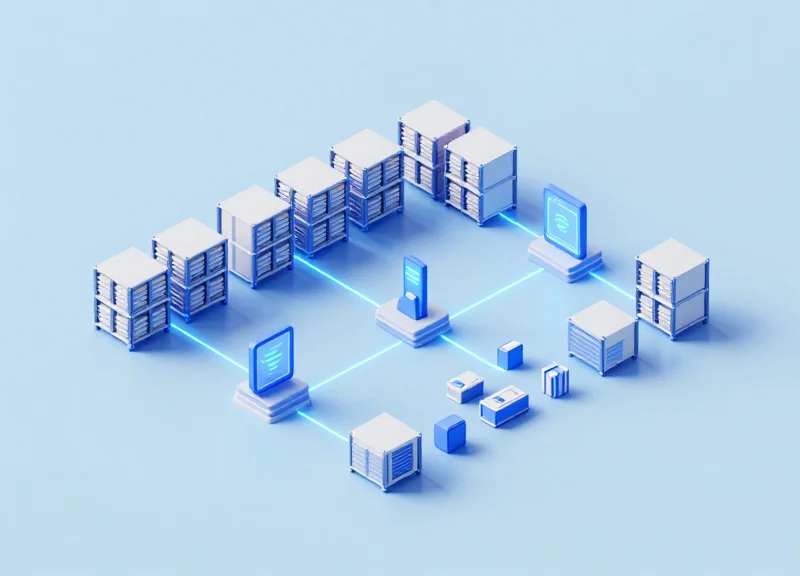
Integrating RFID with legacy ERP (Enterprise Resource Planning) and WMS (Warehouse Management Systems) is the process of bridging the physical 'edge' of operations with the digital 'core.' This is achieved by implementing an intelligent middleware layer that captures, filters, and aggregates raw tag data before translating it into standardized business transactions—such as ASN (Advanced Shipping Notice) updates or inventory adjustments—that older systems can ingest without requiring a complete architectural overhaul.
- Identify Integration Touchpoints: Audit your current WMS/ERP workflows to find where manual data entry occurs. These are your primary candidates for RFID automation, such as receiving docks or packing stations.
- Deploy an Abstraction Middleware: Rather than connecting readers directly to the ERP, use a middleware solution to manage device health and filter 'noisy' data pings.
- Mapping and Data Translation: Map unique RFID Electronic Product Codes (EPC) to your existing SKU or Part Number structures within the legacy database.
- Asynchronous Data Synchronization: Configure the integration to update the legacy system in batches or via asynchronous APIs to prevent system lag during high-volume scanning events.
| Integration Factor | Direct-to-Legacy Approach | Middleware-Centric Approach |
|---|---|---|
| System Load | High: Every tag read pings the ERP. | Low: Only 'State Changes' are sent. |
| Flexibility | Low: Hard-coded connections. | High: Easily swap readers or tags. |
| Data Integrity | Risk of duplicate entries. | Automated de-duplication and filtering. |
| Implementation Speed | Slow: Requires custom ERP coding. | Fast: Uses pre-built connectors. |
The Expert Perspective: The 'Semantic Data Gap'. A common mistake in RFID deployment is treating a tag read like a barcode scan. While a barcode represents a single human-initiated event, an RFID reader can generate thousands of reads per minute for the same item. My veteran tip: Implement 'Edge Intelligence'—configure your readers to only transmit data when a 'State Change' occurs (e.g., an item moves from 'In-Stock' to 'Staged'). This prevents your legacy ERP from being overwhelmed by a 'data tsunami' and ensures your 40% efficiency boost isn't negated by system crashes.
Do I need to replace my old WMS to use RFID?
No. Most legacy systems can remain intact by using middleware that mimics manual keyboard wedge entry or utilizes existing API/EDI hooks to update records.
How does RFID handle data security with legacy systems?
Modern middleware adds a layer of encryption and authentication that many older ERPs lack, securing data in transit from the warehouse floor to the server room.
What is the biggest technical hurdle?
Data latency is the primary challenge. Ensuring the physical movement of goods matches the digital record in near real-time requires optimized network bandwidth and efficient database triggers.
Overcoming Common RFID Implementation Challenges
Overcoming RFID implementation challenges requires a dual-focus strategy: addressing physical physics limitations and managing human operational shifts. The most common barriers include signal interference from metal or liquid environments, improper hardware-to-application matching, and employee resistance to new automated workflows. By conducting thorough site surveys and implementing a structured change management protocol, organizations can transition from manual 'paper' processes to a high-efficiency digital layer without the typical friction of technological adoption.
| Challenge Category | Common Obstacle | Strategic Solution |
|---|---|---|
| Environmental | RF Interference (Metal/Liquid) | Utilize 'on-metal' spacers or specialized tags designed for high-dielectric environments. |
| Hardware | Read-Zone Overlap | Configure directional antennas and RSSI (Received Signal Strength Indicator) filters. |
| Data | Information Silos | Implement middleware that standardizes tag data before it hits the ERP/WMS. |
| Operational | Tagging Labor Costs | Source-tagging strategy: Require vendors to apply RFID tags during the manufacturing phase. |
- Phase 1: The Site Physics Audit: Conduct a comprehensive RF spectrum analysis to identify 'dead zones' and sources of electromagnetic interference (EMI) that could hamper read rates.
- Phase 2: Tag-to-Asset Validation: Test multiple tag form factors (Inlays, Hard Tags, Flag Tags) against the specific physical properties of your inventory to ensure 99.9% read reliability.
- Phase 3: The WIIFM Workshop: Execute a 'What’s In It For Me' session with floor staff to demonstrate how RFID eliminates the 'drudge work' of manual counting, directly improving their daily work-life balance.
- Phase 4: Iterative Pilot Scaling: Start with a high-value, low-volume product line to refine data workflows before scaling to the entire facility.
Why is our RFID read rate dropping in certain areas?
This is often due to 'Multipath Interference' where signals bounce off metallic surfaces. Using circular polarized antennas and adjusting power levels can usually resolve this.
How do we handle the cost of individual tags for low-margin items?
Focus on 'Process-Level Tagging' or reusable rugged tags for internal assets. For consumables, the cost is often offset by the 40% reduction in labor hours and loss prevention.
Will RFID replace our existing barcodes?
Rarely. The best practice is a hybrid approach where RFID handles bulk automation and barcodes serve as a fail-safe backup for individual item verification.
Expert Tip: Avoid 'Pilot Purgatory' by defining 'Failure Thresholds' early. Many implementations stall because teams seek 100% perfection in a vacuum. In Silicon Valley, we've learned that a 98% read rate that is integrated and actionable is far more profitable than a 100% read rate that never leaves the testing lab. Focus on the data flow, not just the hardware.
Case Study: Scaling Success from Pilot to Enterprise
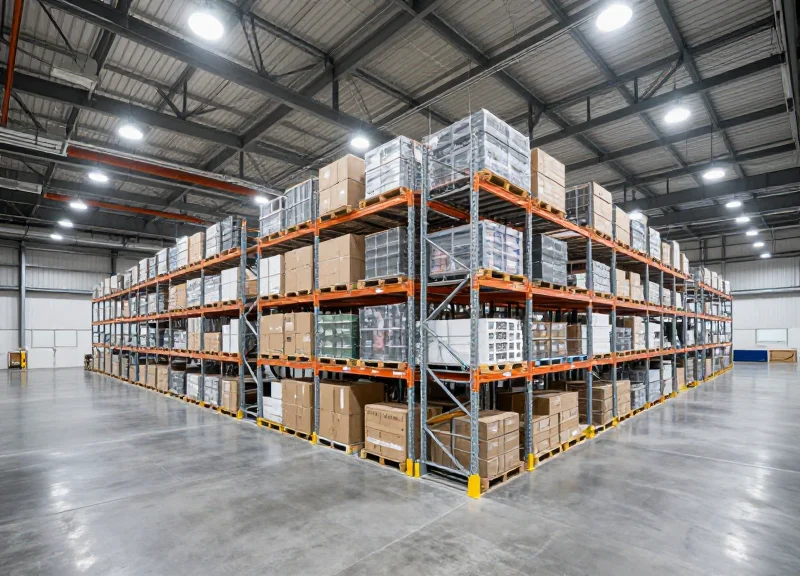
Scaling success from an RFID pilot to a full enterprise deployment is the strategic process of migrating from a localized 'proof of concept'—often limited to a single warehouse or production line—to a standardized, company-wide operational framework. This transition moves a business away from fragmented paper-based tracking and into a 'Unified Resource Model' where real-time asset data is integrated directly into global ERP and WMS systems to drive automated decision-making across all departments.
| Feature | Pilot Phase (Fragmented) | Enterprise Phase (Unified) |
|---|---|---|
| Data Scope | Single-site or departmental silos | Global, end-to-end visibility |
| Primary Interface | Manual dashboards and Excel exports | Automated API triggers and ERP integration |
| Resource Allocation | Reactive staffing based on local observation | Predictive staffing based on system-wide throughput |
| Error Rate | Reduced (approx. 10-15%) | Minimized (achieving the 40% efficiency target) |
- Benchmark Validation: Confirm that the pilot metrics (e.g., search time reduction) are repeatable and not just the result of 'the observer effect' during the trial period.
- Infrastructure Hardening: Upgrade from temporary handheld readers to fixed industrial portals and overhead arrays that provide hands-free data capture without human intervention.
- Standard Operating Procedure (SOP) Digitalization: Rewrite internal protocols to remove 'paper fallback' options, ensuring the digital RFID record is the only authorized source of truth for inventory and personnel movement.
- Enterprise Data Harmonization: Integrate the RFID middleware with the central ERP system so that a physical movement in the warehouse automatically updates financial and procurement records globally.
Expert Insight: To truly differentiate your enterprise rollout, leverage 'Negative Data Logic.' In a pilot, teams focus on what they see on the screen. In a mature enterprise deployment, the system is programmed to proactively alert managers to what is missing—a pallet that didn't arrive, a tool that wasn't returned, or a worker who hasn't checked into a safety zone. This shift from 'presence-based tracking' to 'exception-based management' is what unlocks the final 15-20% of operational efficiency gains.
What is the typical timeline for an enterprise-wide RFID rollout?
While a pilot can be stood up in 4 to 8 weeks, a full enterprise rollout generally spans 12 to 18 months, depending on the number of facilities and the complexity of the legacy software integration.
Does scaling require tagging every single asset?
No. Successful enterprises use a 'Tiered Tagging Strategy,' applying high-end active tags to high-value mobile equipment and low-cost passive tags to consumables or inventory, optimizing the cost-per-read.
How do we handle hardware interference as we add more readers?
Scaling requires a 'Radio Frequency Site Survey' to manage channel allocation and prevent reader-to-reader interference, a step often skipped in small-scale pilots.
Calculating Your ROI: The Financial Case for RFID Investment
Calculating the Return on Investment (ROI) for RFID technology involves comparing the Total Cost of Ownership (TCO)—including hardware, software, and integration—against the cumulative gains in operational speed and asset visibility. For most enterprises, a successful RFID implementation shifts the balance from a 'Paper-Based' reactive model to a 'Digital-First' proactive model, typically achieving a break-even point within 12 to 18 months by reducing labor costs by 30% and virtually eliminating inventory write-offs.
| Financial Metric | Manual/Paper Process | RFID-Enabled Process |
|---|---|---|
| Inventory Accuracy | 65% - 75% | 99.5%+ |
| Stock-Out Rates | 8% - 10% | < 1% |
| Cycle Count Time | Hours/Days | Minutes/Seconds |
| Shrinkage/Loss | 2% - 3% of Revenue | Reduced by 75% |
- Phase 1: Baseline Labor Audit: Quantify the man-hours currently spent on manual data entry, searching for misplaced assets, and performing physical cycle counts.
- Phase 2: Direct Cost Reductions: Apply the 40% efficiency multiplier to your current labor spend and calculate the immediate savings from reduced overtime and headcount reallocation.
- Phase 3: Inventory Carrying Cost (ICC) Analysis: Calculate the savings from reducing safety stock. With 99% visibility, companies can typically reduce on-hand inventory by 10-15%, freeing up significant working capital.
- Phase 4: Implementation Amortization: Factor in the cost of tags (passive vs. active), readers, and middleware integration against the projected 3-year lifespan of the hardware.
Expert Tip: Look for 'The Velocity Multiplier.' Most ROI models focus only on cost-cutting. The true Silicon Valley approach is to measure 'Inventory Turns.' When RFID allows you to cycle inventory 20% faster, you are not just saving money; you are increasing your revenue capacity without increasing your footprint. This 'Capital Recapture' is the hidden driver behind the 40% operational boost.
What is the average cost per RFID tag for ROI modeling?
For high-volume retail or logistics, passive UHF tags range from $0.05 to $0.15. Specialized ruggedized tags for industrial equipment can range from $1.00 to $5.00.
How does RFID impact EBITDA specifically?
RFID impacts EBITDA by lowering the Cost of Goods Sold (COGS) through reduced waste and lowering SG&A expenses through automated administrative tasks.
Can ROI be achieved in small-scale pilots?
Yes, but the ROI is often 'soft' in pilots (improved data). Hard financial ROI scales exponentially as the system is integrated into the ERP/WMS for enterprise-wide visibility.