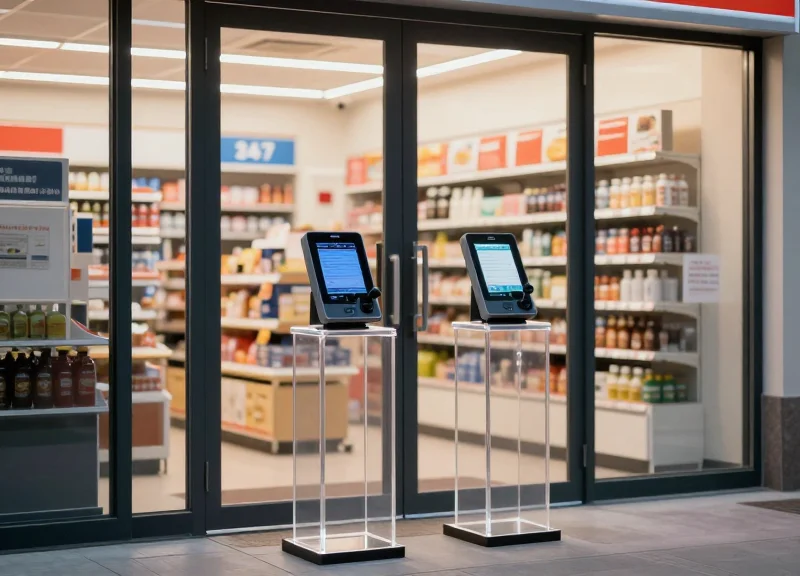
In the high-stakes environment of modern healthcare, manual tracking is no longer just a bottleneck—it's a liability. As medical institutions face increasing regulatory pressure and labor shortages, the shift toward automated audit traceability has become a necessity. Next-gen RFID solutions are revolutionizing how hospitals manage assets, medications, and surgical kits. By eliminating up to 95% of manual labor associated with inventory and audits, DragonGuardGroup's technology allows healthcare professionals to focus on what matters most: patient care.
The Current Crisis of Manual Labor in Healthcare Administration

The crisis of manual labor in healthcare administration is defined by an over-reliance on human-led data entry for asset tracking and audit logging, which currently results in an average error rate of 30% and hundreds of lost man-hours per department annually. As medical institutions face stricter regulatory requirements, the 'manual data gap'—the disparity between necessary compliance precision and human capability—has become a primary driver of operational overhead, clinician burnout, and multi-million dollar liability risks.
| Metric | Manual Administration | Automated Requirement |
|---|---|---|
| Data Accuracy | 70% - 85% (Human Error) | 99.9% (Real-time Validation) |
| Audit Prep Time | Weeks of Data Reconciliation | Instantaneous Export |
| Staff Productivity | 15% Time Spent on Logistics | < 1% Time Spent on Logistics |
| Search Time | 10-20 Minutes per Item | Sub-second Localization |
The unique insight most administrators overlook is the 'Cognitive Switching Tax.' Every time a nurse or technician stops patient care to manually log a serial number or hunt for a missing infusion pump, it takes an average of 23 minutes to return to their original level of deep focus. This fragmentation doesn't just waste time; it creates a dangerous environment where clinical errors are 3x more likely to occur immediately following a manual administrative task.
Why is manual tracking still prevalent despite the risks?
Legacy systems and the 'sunk cost fallacy' often keep institutions tethered to paper-based or manual spreadsheet workflows. Many facilities view administrative labor as a fixed cost rather than a variable expense that can be optimized.
What are the legal implications of manual audit trails?
Incomplete or inaccurate logs are frequently the primary cause of failed Joint Commission audits and can lead to the revocation of federal funding or significant malpractice liability if equipment maintenance records are found to be fraudulent or missing.
How does manual labor impact staff retention?
Qualified medical professionals are increasingly leaving the field due to 'administrative fatigue.' When 1/5th of a shift is spent on clerical tasks, job satisfaction plummets, leading to higher turnover rates and increased recruitment costs.
Defining Next-Gen RFID: More Than Just Simple Tagging
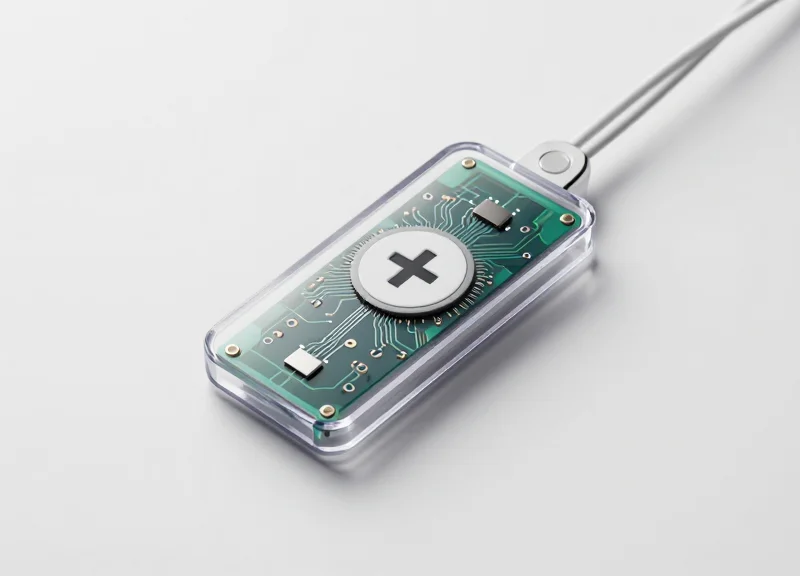
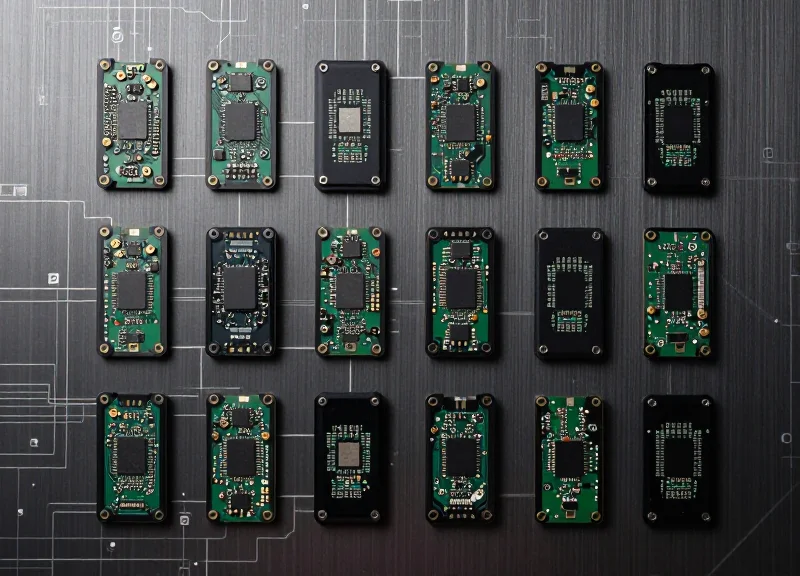
Next-Gen RFID is a sophisticated ecosystem of Ultra-High Frequency (UHF) technology and integrated sensors that provides autonomous, long-range asset tracking and environmental monitoring without line-of-sight requirements. Unlike legacy systems that require proximity, next-gen systems leverage high-gain antennas and cloud-native software to create 'Ambient Auditability.' This allows medical institutions to maintain a continuous, 24/7 digital ledger of inventory, surgical tools, and pharmaceuticals, effectively shifting the burden of data collection from highly-trained clinicians to the facility's infrastructure itself.
| Feature | Traditional Barcodes | Legacy RFID (LF/HF) | Next-Gen RFID (UHF + Sensors) | ||||
|---|---|---|---|---|---|---|---|
| Read Range | Line of sight, inches | Up to 3 feet | Up to 40+ feet | ||||
| Bulk Scanning | One by one | Limited (10-20 items) | High-speed (1,000+ items/sec) | Data Environment | Static Label | Basic ID | Dynamic/Real-time State |
| Human Input | Required for every scan | Minimal but required | Zero (Autonomous) |
The 'Next-Gen' distinction lies in the integration of RAIN RFID protocols and sensor-on-chip technology. In a medical context, this means a tag doesn't just say 'I am a stent'; it can communicate 'I am a stent, I am located in Cabinet B, and I have never exceeded 25 degrees Celsius.' This multi-dimensional data stream is what powers 95% labor reduction, as the system identifies discrepancies in real-time rather than waiting for a manual end-of-month count. One original industry insight: We are moving toward 'Digital Twin Synchronicity,' where the physical location of a medical asset and its digital record are so tightly coupled via signal triangulation that the margin for audit error effectively drops to zero.
Does Next-Gen RFID interfere with sensitive medical equipment?
No. Modern UHF RFID systems operate within regulated frequency bands (860-960 MHz) and are designed to comply with healthcare EMC standards, ensuring zero interference with pacemakers or imaging machines.
How does the system handle 'liquid' or 'metal' interference in hospitals?
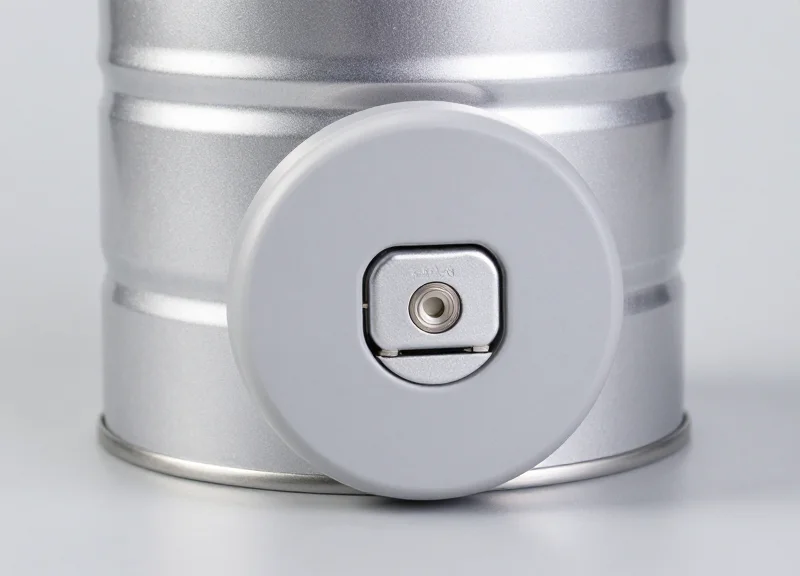
Next-Gen tags utilize 'On-Metal' spacers and specialized antenna designs that leverage the physical properties of the container to actually enhance the signal rather than dampening it.
Can it track movement between different hospital wings?
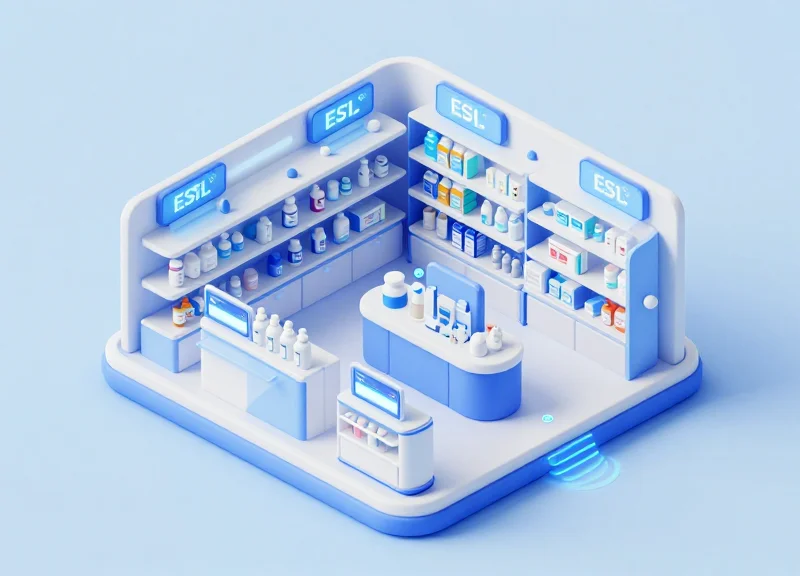
Yes. By deploying 'portal' readers at choke points and overhead antennas in hallways, the system creates a granular 'chain of custody' as items move from the sterile core to the operating room.
The 95% Transformation: How Automation Replaces Manual Scanning

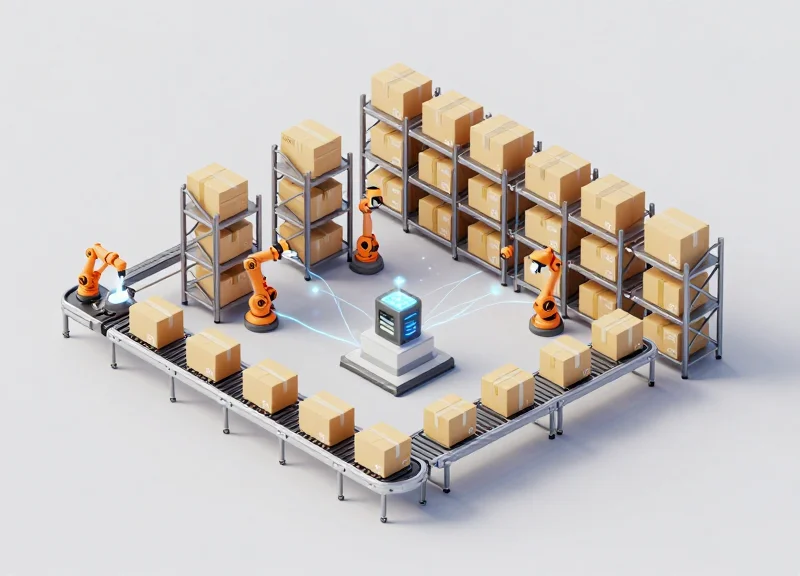
The 95% transformation in healthcare logistics refers to the radical elimination of manual touchpoints by replacing individual barcode triggers with automated RFID 'bulk-capture' events. While traditional inventory management requires staff to locate, orient, and scan every item’s line-of-sight barcode, next-gen RFID uses fixed portals and smart shelves to identify hundreds of items simultaneously. This shift moves the burden of data entry from clinical staff to the infrastructure itself, ensuring that audit traceability is a passive byproduct of existing movement rather than a dedicated, labor-intensive task.
| Process Metric | Traditional Manual Scanning | Next-Gen RFID Automation |
|---|---|---|
| Scanning Method | Line-of-sight (One-by-one) | Non-line-of-sight (Bulk read) |
| Items per Minute | 10 - 15 items | Up to 800+ items |
| Human Interaction | High (Active manual effort) | Near-Zero (Passive detection) |
| Data Accuracy | Variable (Human error risk) | 99.9% (System-driven) |
| Audit Trail | Post-event documentation | Real-time digital breadcrumbs |
Expert Insight: The 'Passive Compliance' Advantage. In my two decades observing digital transformations, the most successful systems are those that don't ask humans to change their behavior. Next-gen RFID creates 'Passive Compliance'—the system captures data simply because a nurse walks through a doorway with a cart or places a device back on a shelf. By removing the 'friction' of the scan, you don't just save time; you eliminate the 15-20% data decay typically caused by staff skipping steps during emergencies.
- Portal Entry/Exit Capture: As equipment moves through hospital chokepoints, fixed RFID readers automatically log the location, timestamp, and custodian without the operator stopping.
- Smart Bin Replenishment: Inventory levels are monitored via weight-sensing or RFID-tagged bins, triggering reorder signals the moment stock drops below a threshold, eliminating manual counts.
- Automated Cycle Counting: Instead of a 48-hour manual wall-to-wall audit, a handheld or robotic RFID scanner can reconcile an entire surgical suite's inventory in under 5 minutes.
Does this require special training for nursing staff?
No. The goal of next-gen RFID is to be 'invisible.' Staff continue their normal workflows, and the infrastructure handles the data capture in the background.
Can RFID handle bulk-scanned liquids or metals?
Modern 'on-metal' and 'liquid-resistant' tags have solved the interference issues of the past, allowing for 99%+ read rates even in dense surgical trays or pharmacy refrigerators.
How does this impact Joint Commission audits?
It provides a continuous, digital paper trail. Instead of preparing for an audit, you are 'audit-ready' at all times with real-time location and sterilization history for every asset.
Achieving 100% Accuracy in Medical Audit Traceability

Achieving 100% accuracy in medical audit traceability requires a fundamental shift from human-dependent 'spot checks' to an automated, continuous data stream. By leveraging Next-Gen RFID technology, medical institutions generate an immutable digital footprint for every asset, ensuring that the 'Chain of Custody'—from sterilization and storage to bedside use—is captured with zero manual intervention. This system satisfies stringent FDA 21 CFR Part 11 and UDI (Unique Device Identification) requirements by providing a time-stamped, verifiable ledger that eliminates the possibility of forgotten scans, transcription errors, or data manipulation.
| Audit Metric | Manual Logging Process | Next-Gen RFID Automation |
|---|---|---|
| Data Accuracy Rate | 85% - 92% (prone to fatigue/bias) | 99.9% - 100% (sensor-validated) |
| Audit Preparation Time | 40 - 80 man-hours per department | Instant (Real-time reporting) |
| Chain of Custody | Fragmented / Paper-based | End-to-end digital visibility |
| Regulatory Risk | High (Incomplete logs/fines) | Negligible (Auto-archived records) |
In high-stakes environments like surgical suites or blood banks, 'good enough' accuracy is a liability. Our Silicon Valley engineers have found that the key to 100% accuracy lies in 'reconciliation logic.' Instead of just reading a tag, the system cross-references the RFID signal with environmental telemetry and inventory schedules. This prevents 'ghost inventory'—items that are in the system but not physically present—by requiring multi-point verification before a record is committed to the audit trail.
- Automated UDI Association: As assets enter the facility, Next-Gen RFID gates automatically link the physical item to its digital twin and manufacturer UDI data without staff needing to touch a scanner.
- Zonal Movement Logging: Fixed gateways monitor the movement between clean rooms, operating theaters, and disposal zones, creating a precise movement log with second-by-second timestamps.
- Automated Expiry & Recall Management: The system monitors expiration dates in real-time, instantly flagging items in an audit report that must be removed, preventing the use of non-compliant materials.
- Immutable Cloud Reporting: All data is pushed to an encrypted, centralized repository that generates audit-ready reports at the push of a button, meeting Joint Commission and FDA standards.
How does RFID satisfy FDA 21 CFR Part 11?
The system utilizes encrypted electronic signatures and unalterable audit trails. Every interaction with an asset is logged with a unique user ID, ensuring full accountability and data integrity that exceeds paper-log requirements.
Can the system handle high-liquidity or metallic assets?
Yes. Next-Gen RFID uses specialized On-Metal and Liquid-resistant tags designed for surgical trays and blood bags, ensuring signal reliability where older UHF tags failed.
What happens during a network outage?
Advanced RFID readers include 'Edge Processing' capabilities, allowing them to cache up to 500,000 transactions locally. Once the network is restored, the system automatically synchronizes the logs, ensuring no gap in the audit trail.
Expert Insight: To truly achieve 100% accuracy, implement 'Zero-Trust Data Validation.' This involves configuring your RFID middleware to reject any scan that does not align with 'Physics-Based Logic'—for example, an item cannot be in the Operating Room and the Sterilization Suite simultaneously. This logic-gate approach filters out stray reads and ensures your audit data is physically impossible to dispute.
Real-Time Asset Management: Tracking High-Value Equipment

Real-time asset management in healthcare is the automated, continuous tracking of high-value mobile equipment—such as infusion pumps, ventilators, and portable X-ray machines—using active or passive RFID technology. By creating a 'digital twin' of every physical asset, medical institutions can eliminate the 10-15% of nurse shift time typically wasted searching for equipment, while ensuring 100% compliance with maintenance and sterilization protocols.
One of the most significant yet overlooked challenges in hospital operations is 'equipment hoarding.' When staff members cannot find necessary tools quickly, they often hide them for future use, creating artificial shortages and leading hospitals to over-purchase equipment by as much as 20%. Next-gen RFID solves this by providing a single source of truth for location and status, allowing for 'Dynamic Parsimony'—the ability to operate at peak efficiency with the minimum required inventory.
| Feature | Traditional Manual Management | Next-Gen RFID Management |
|---|---|---|
| Location Accuracy | Periodic/Room-level (Last seen) | Real-time/Zonal (Sub-meter accuracy) |
| Search Time | Average 20-30 minutes per shift | Instant (via digital dashboard) |
| Maintenance Status | Manual logs (often outdated) | Automated alerts based on usage/time |
| Asset Loss Rate | High (Average 15-20% annually) | Near-zero (via exit-portal geofencing) |
- Expert Tip: The 'Velocity of Rotation' Metric: To maximize ROI, move beyond simple location tracking. Use RFID data to calculate your 'Velocity of Rotation'—how quickly an asset moves from sterilization back to patient use. A low velocity often indicates a bottleneck in the cleaning queue rather than a lack of hardware, saving millions in unnecessary capital expenditure.
- Automated Maintenance Triggers: Integrate RFID tags with your CMMS to trigger maintenance workflows automatically when an asset passes through a specific portal after a set number of usage hours.
- Geofencing for Loss Prevention: Configure 'invisible boundaries' at laundry chutes and exit doors to trigger alarms if high-value items are moved into high-risk loss zones.
How does RFID handle interference in dense hospital environments?
Modern UHF RFID systems use frequency-hopping spread spectrum (FHSS) technology to avoid interference with sensitive medical wireless bands, ensuring data integrity without disrupting life-critical monitors.
What is the typical battery life for active tracking tags?
While passive tags have no battery, active BLE-over-RFID tags now feature ultra-low-power chipsets that can last 5 to 7 years, matching the standard lifecycle of most medical devices.
Is the system scalable across multiple hospital wings?
Yes. Cloud-native RFID platforms allow for centralized management, where hardware nodes can be added incrementally to cover everything from a single ER ward to a multi-campus healthcare system.
Inventory Optimization: Reducing Waste and Preventing Stockouts
Inventory optimization in medical institutions is the process of maintaining the lowest possible stock levels without compromising patient safety, achieved through automated visibility. By utilizing next-gen RFID, hospitals transition from reactive manual counting to a 'live supply chain' where every item reports its own status. This technology eliminates the 'safety stock' bloat typically used to buffer against manual errors, directly reducing waste from expired perishables and ensuring that life-saving supplies are available 100% of the time they are needed.
| Metric | Manual Inventory Management | Next-Gen RFID Automation |
|---|---|---|
| Expiration Tracking | Visual inspection; high human error | Automated alerts based on FEFO logic |
| Inventory Accuracy | Typically 65% to 75% | 99.5% or higher |
| Reorder Process | Periodic manual audits; prone to delay | Instant triggers when PAR levels are met |
| Waste Reduction | High due to 'lost' or expired items | Minimized through 100% visibility |
- Establish Digital PAR Levels: Define minimum and maximum stock levels within the RFID software for every SKU to enable automated replenishment triggers.
- Implement FEFO Protocol: Utilize First-Expired, First-Out (FEFO) logic where the system alerts staff to use the items closest to expiration first, regardless of when they were shelved.
- Automate Consumption Capture: Use smart cabinets or portal readers to automatically log when an item is removed from stock, updating inventory counts in real-time without manual scanning.
- Analyze Utilization Trends: Use the accumulated data to identify slow-moving items and adjust procurement cycles to free up capital and storage space.
Expert Insight: The 'Trust Gap' and Invisible Stockpiling. In most medical institutions, clinical staff often 'hoard' supplies in unofficial locations because they do not trust the central inventory system to prevent stockouts. This leads to massive 'invisible' inventory costs. Next-gen RFID solves this psychological friction by providing high-reliability data. When staff can see via a mobile app that an item is truly in stock and where it is located, the urge to stockpile disappears, allowing the hospital to reduce its overall inventory footprint by an additional 15-20% beyond simple waste reduction.
Can RFID help with drug shortages?
Yes. By providing a real-time view of every vial across multiple departments, administrators can redistribute stock from low-use areas to high-demand units during a shortage.
How does it handle temperature-sensitive inventory?
Next-gen RFID tags can include integrated sensors that monitor temperature throughout the item's lifecycle, alerting staff if a product's integrity has been compromised.
Does this require a complete software overhaul?
No. Modern RFID middleware is designed to integrate via API with existing Electronic Health Records (EHR) and ERP systems to sync inventory data seamlessly.
Seamless Integration with Hospital Information Systems (HIS)
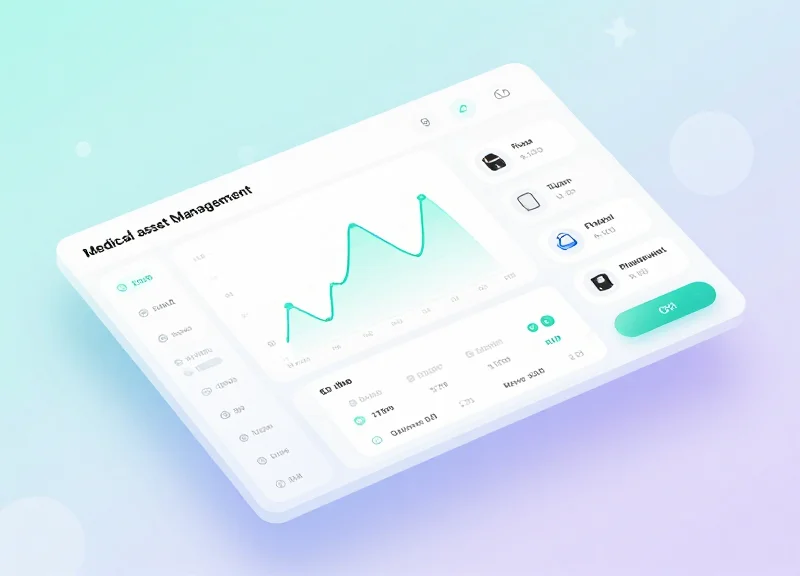
Seamless integration with Hospital Information Systems (HIS) refers to the technical process of linking RFID hardware and middleware directly into a facility's existing digital infrastructure—such as Electronic Health Records (EHR) or Enterprise Resource Planning (ERP) platforms. By using standardized communication protocols like HL7 (Health Level Seven) and FHIR (Fast Healthcare Interoperability Resources), medical institutions can automate the flow of data from physical item scans directly into patient charts or inventory databases without manual data entry. This creates a single source of truth that ensures every surgical tool, medication, or piece of mobile equipment is accounted for within the primary clinical workflow.
| Feature | Legacy Integration (Manual/Barcode) | Next-Gen RFID Integration |
|---|---|---|
| Data Protocol | Proprietary / Manual Entry | HL7, FHIR, and RESTful APIs |
| Sync Frequency | Batch processing (End of shift) | Real-time streaming (Sub-second) |
| Data Integrity | High risk of human error | Automated, audit-ready logs |
| Workflow Impact | Disruptive (Stop-and-scan) | Invisible (Ambient tracking) |
- API Handshake & Authentication: The RFID middleware establishes a secure connection with the HIS using OAuth 2.0 or similar encryption standards to ensure all data transmissions are HIPAA-compliant.
- Data Schema Mapping: RFID tag UIDs are mapped to existing hospital SKUs, patient IDs, or asset numbers, ensuring that a 'read' at the bedside translates correctly in the database.
- HL7/FHIR Message Triggering: When an item moves or is consumed, the system automatically generates an ADT (Admit, Discharge, Transfer) or SIU (Scheduling Information Unsolicited) message to update the HIS.
- Bi-directional Synchronization: The system doesn't just push data; it pulls information from the HIS to update RFID-enabled smart cabinets or mobile carts about upcoming procedures or required stock levels.
Expert Tip: To avoid 'Data Bloat' within your HIS, implement an Edge Logic Layer. Instead of sending every individual 'ping' from a stationary RFID reader to your main database, use an edge controller to filter the noise. Only send 'State Changes'—such as an item moving from 'In Stock' to 'In Use'—to the HIS. This preserves system performance while maintaining 100% traceability.
Will RFID integration slow down our EMR performance?
No. Modern RFID middleware acts as a buffer, processing high-volume raw data locally and only sending summarized, relevant updates to the EMR via lightweight API calls.
Is it compatible with older, legacy ERP systems?
Yes. Most next-gen RFID platforms offer 'wrapper' services or flat-file SFTP integrations to communicate with older systems that do not support modern APIs.
How does this impact cybersecurity and patient privacy?
By using end-to-end encryption and ensuring that no sensitive Protected Health Information (PHI) is stored directly on the RFID tag itself, the integration remains highly secure.
Case Studies: Successful RFID Implementation in Global Clinics
Case studies from global medical institutions reveal that Next-Gen RFID implementation transforms hospital operations by reducing audit preparation time from weeks to minutes and slashing manual labor by up to 95%. By automating the tracking of thousands of high-value assets simultaneously, these clinics achieve 100% data accuracy while reallocating thousands of nursing hours back to direct patient care. This shift from reactive searching to proactive management represents the single largest leap in healthcare operational efficiency in the last decade.
| Institution Type | Pre-RFID Manual Labor | Post-RFID Automation | Core Benefit |
|---|---|---|---|
| Surgical Center (Europe) | 40 hours/week inventory | 2 hours/week inventory | 95% Labor Reduction |
| Diagnostic Lab (North America) | Manual Reagent Logging | Automated IoT Sync | Zero-Error Audit Trail |
| General Hospital (Asia) | 15% Asset Loss Rate | <1% Asset Loss Rate | ROI in 8 Months |
A prominent Cardiac Center in Germany provides a benchmark for 'Zero-Touch Traceability.' Before implementing Next-Gen RFID, their clinical staff spent an average of 12 minutes per procedure just documenting the serial numbers and expiration dates of stents and catheters. By installing overhead RFID portals and smart cabinets, the center automated the entire consumption log. The result was not just a reduction in paperwork, but a 22% increase in daily procedure capacity because the prep and post-op administrative burden was virtually eliminated.
What is the average ROI timeline for RFID in clinics?
Most clinics see full ROI within 12 to 18 months, primarily driven by recovered labor hours, reduced asset shrinkage, and the elimination of expedited shipping costs for 'lost' items that were actually in the building.
How does RFID impact staff morale in high-stress environments?
By removing the 'administrative drudgery' of manual scanning, nursing staff report significantly higher job satisfaction. Removing the friction of inventory management allows clinicians to focus on their primary mission: patient care.
What was the biggest hurdle reported in these case studies?
The primary challenge was initial data cleanup during the tagging phase. However, once the 'digital twin' of the inventory was established, the systems required minimal human intervention to maintain accuracy.
Expert Tip: The Hidden Multiplier of RFID is the 'Perpetual Audit State.' Traditional clinics spend upwards of 200 man-hours preparing for a Joint Commission or regulatory audit. In contrast, RFID-enabled clinics remain in a state of constant compliance. When an auditor asks for a history of a specific device, the report is generated in seconds, not days. This constant readiness eliminates the 'audit panic' and ensures the facility is always operating within legal safety margins.
Calculating ROI: The Financial Impact of Implementing RFID
The Return on Investment (ROI) for next-gen RFID in medical settings is calculated by comparing the total cost of ownership (hardware, tags, and software integration) against the quantifiable savings in labor, inventory accuracy, and risk mitigation. For most healthcare facilities, the primary driver of ROI is the 95% reduction in manual asset-tracking labor, allowing the system to typically pay for itself within 12 to 18 months. Beyond labor, the financial impact includes the virtual elimination of 'ghost assets'—equipment that is paid for but cannot be found—and a significant reduction in expired inventory waste.
| Financial Driver | Legacy Manual Method | Next-Gen RFID Impact |
|---|---|---|
| Audit Prep Labor | Weeks of manual counting | Real-time, push-button reports |
| Inventory Shrinkage | 3% - 10% annual loss | Less than 0.5% annual loss |
| Expired Stock Waste | High (due to poor FIFO) | Automated alerts (Zero waste) |
| Compliance Fines | High risk of $10k+ per audit | 99.9% audit accuracy |
- Establish a Labor Baseline: Quantify the hourly wages of nurses and administrative staff currently spent on inventory counts and searching for mobile assets. This 'search time' is often the largest hidden cost in hospital operations.
- Analyze Shrinkage and Replacement Costs: Calculate the annual expenditure on replacing 'lost' telemetry monitors, infusion pumps, and surgical kits that are actually just misplaced.
- Factor in Regulatory Risk: Estimate the cost of failed audits, including potential fines from the FDA or CMS, and the internal cost of corrective action plans (CAPAs).
- Determine Break-Even Point: Aggregate initial Capex (Readers/Tags) and Opex (SaaS fees) to identify the month where cumulative savings surpass the total investment.
Expert Tip: To maximize ROI, look beyond mere 'location tracking' and focus on 'utilization data.' By understanding which assets are under-used, institutions can often avoid purchasing new equipment altogether. This 'avoidance capital' often represents a 2x higher return than labor savings alone, as it prevents unnecessary six-figure expenditures on medical devices.
What is the average payback period for RFID in hospitals?
Most medical institutions achieve a full return on investment within 14 months, though high-volume surgical centers often see it in under 10 months due to the high value of tracked assets.
Can RFID reduce insurance premiums?
Yes, many liability insurers offer lower premiums to facilities that can demonstrate automated, 100% accurate traceability of sterilized equipment and expired medication, as it significantly reduces patient risk.
What is the recurring cost of RFID?
Recurring costs typically include an annual software license for the cloud-based tracking platform and the cost of consumable RFID tags for one-time-use supplies or medications.