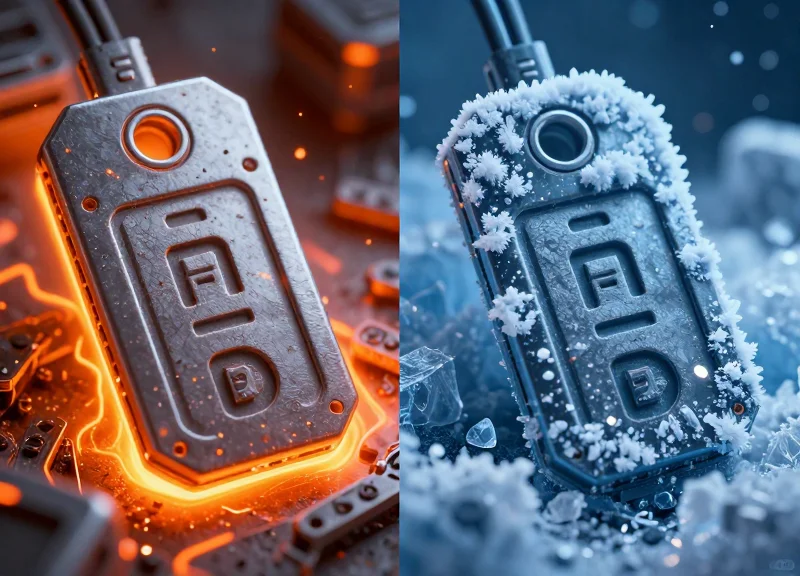
In industrial environments, standard RFID tags often fail under the stress of extreme temperature fluctuations. Whether it is the intense heat of an automotive paint shop or the sub-zero conditions of a food storage facility, your tracking system is only as strong as its weakest link. This guide provides a roadmap for selecting ruggedized RFID solutions that ensure data integrity and operational efficiency at both ends of the thermometer.
The Evolution of Industrial RFID for Extreme Environments

The evolution of industrial RFID for extreme environments represents a shift from simple identification to advanced material science engineering. While standard RFID tags are designed for room-temperature logistics, extreme-environment tags utilize specialized encapsulation—such as high-grade ceramics, Polybutylene Terephthalate (PBT), or Polyphenylene Sulfide (PPS)—to protect the integrated circuit (IC) and antenna from thermal expansion, moisture ingress, and chemical degradation. Modern evolution focuses on maintaining data integrity across a temperature gradient of 240°C, enabling seamless tracking from deep-freeze storage (-40°C) directly into high-heat industrial ovens (+200°C).
| Feature | Standard Logistics RFID | Extreme Environment RFID |
|---|---|---|
| Temperature Range | -20°C to +70°C | -50°C to +250°C+ |
| Encapsulation | Paper / PET Inlay | Ceramic / PPS / FR4 / Teflon |
| Attachment Method | Acrylic Adhesive | High-temp Epoxy / Welding / Rivets |
| Key Failure Mode | Adhesive Melting / IC Crack | Coefficient of Thermal Expansion (CTE) Mismatch |
A critical, often overlooked factor in the evolution of these tags is the management of the 'Thermal Fatigue Factor.' In early ruggedized iterations, tags often failed not because of the heat itself, but because the different materials inside the tag (the copper antenna vs. the silicon chip vs. the plastic housing) expanded at different rates. This 'CTE Mismatch' would eventually shear the connection between the chip and the antenna. Modern high-temperature RFID tags solve this through 'floating' internal architectures or specialized conductive epoxies that remain flexible even at peak temperatures, ensuring a lifespan of thousands of thermal cycles rather than just a single pass.
Why can't I use standard 'rugged' tags for +200°C applications?
Most 'rugged' tags are designed for impact or moisture, not extreme heat. At +200°C, standard solder melts and common plastics like ABS or Polycarbonate deform, leading to immediate internal component failure.
What is the primary benefit of Ceramic RFID in these environments?
Ceramics offer near-zero thermal expansion and are inherently flame-retardant. They provide a stable substrate for the antenna, which is crucial for maintaining a consistent read range as the environment heats up.
Does cold affect RFID as much as heat?
Yes, but differently. Deep-freeze environments (below -30°C) can make tag housings brittle. The challenge in deep-freeze logistics is preventing the housing from cracking upon impact or during handling.
Understanding the Physics: How Heat Impacts RFID Performance
At temperatures exceeding 200°C, the physical properties of RFID components undergo radical shifts: electrical resistance in the antenna increases, signal resonance drifts, and the structural integrity of the chip-to-antenna bond is threatened by thermal expansion. For industrial applications, 'heat-resistant' isn't just about not melting; it is about maintaining electromagnetic consistency when the laws of physics are actively working to degrade the signal.
The primary failure point in high-heat RFID is the Coefficient of Thermal Expansion (CTE) Mismatch. Every material—the silicon chip, the copper or aluminum antenna, and the ceramic or FR4 substrate—expands at a different rate. When a tag enters a 200°C curing oven, the substrate may expand faster than the rigid silicon die, physically shearing the electrical connection (delamination). Even if the tag survives one cycle, the repeated expansion and contraction of 'thermal cycling' eventually lead to fatigue and total transponder failure.
| Physical Variable | Impact at +200°C | Operational Consequence |
|---|---|---|
| Antenna Resistance | Increases (Phonon Scattering) | Reduced read range and lower energy harvesting efficiency. |
| Substrate Dielectric | Permittivity shifts | Detuning of the antenna frequency away from 860-960 MHz. |
| Solder/Adhesive | Softening or Brittle failure | Chip delamination and permanent signal loss. |
Expert Insight: The 'Conductivity Tax' of Extreme Heat. Most engineers overlook that as temperature rises, the conductivity of metal antennas actually drops. In a +200°C environment, the increased vibration of atoms within the antenna creates 'traffic jams' for electrons—a phenomenon known as phonon scattering. This effectively increases the antenna's resistance, meaning the tag requires a significantly stronger signal from the reader to wake up than it would at room temperature.
Why does my RFID tag work at 25°C but fail at 210°C?
This is usually due to 'Frequency Drift.' The heat changes the dielectric constant of the tag's housing, shifting the resonant frequency outside the range of your reader's tuning.
What is the biggest risk of deep-freeze transitions?
The transition itself is the risk. Moving from a +200°C paint shop to a cold storage area causes rapid contraction, which is the leading cause of micro-cracks in the ceramic casing.
Does heat impact the data stored on the chip?
Yes. While the data is non-volatile, extreme heat can accelerate 'data retention failure' where the charge stored in the memory cells leaks away faster than intended.
Material Matters: High-Performance Polymers and Ceramics
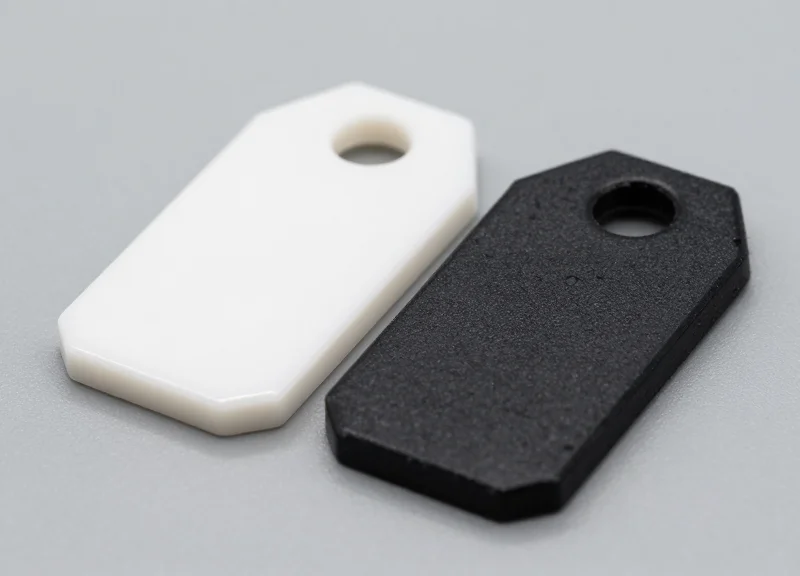
In extreme industrial environments, the housing material is the primary line of defense against electronic failure. For temperatures exceeding +200°C or deep-freeze cycles, standard plastics like ABS or PVC will warp, become brittle, or lose their moisture seal. Instead, high-performance polymers such as PPS (Polyphenylene Sulfide), PEEK (Polyether Ether Ketone), and technical ceramics are used to provide a thermal and chemical shield that ensures the internal silicon chip and antenna remain operational despite thermal shock or aggressive cleaning agents.
| Material Type | Continuous Temp Range | Chemical Resistance | Impact Strength |
|---|---|---|---|
| PPS (Polyphenylene Sulfide) | -40°C to +220°C | Excellent | Moderate |
| PEEK (Polyether Ether Ketone) | -60°C to +260°C | Superior | High |
| Technical Ceramics | -100°C to +300°C+ | Total Inertness | Low (Brittle) |
Expert Insight: The CTE Mismatch Trap. While peak temperature ratings are vital, the Coefficient of Thermal Expansion (CTE) is the hidden factor in tag longevity. In high-heat cycles, the housing expands at a different rate than the internal chip and antenna. This differential expansion creates mechanical stress that can shear the delicate 'gold-bump' connections between the chip and the substrate. Selecting a material with a low CTE, such as glass-reinforced PEEK or custom-engineered ceramics, is critical for applications involving rapid temperature fluctuations, such as autoclave sterilization or paint-shop curing lines.
- PPS (Polyphenylene Sulfide): The industry standard for automotive paint shops. It offers a cost-effective balance of heat resistance and chemical stability but can be brittle under heavy mechanical impact.
- PEEK (Polyether Ether Ketone): The gold standard for durability. PEEK is used in aerospace and medical implants because it can withstand repetitive sterilization and high-pressure steam without losing its shape or sealing properties.
- Technical Ceramics (Alumina/Zirconia): Used for the most extreme heat (up to 400°C in some configurations). Ceramics are naturally immune to most acids and bases but require specialized mounting to prevent cracking from physical shock.
Why can't I use standard epoxy-coated tags for +200°C?
Standard epoxies often reach their glass transition temperature (Tg) below 150°C, causing them to soften and allow moisture ingress, which eventually corrodes the antenna.
Does ceramic housing interfere with the RFID signal?
No, technical ceramics like Alumina are RF-transparent. In fact, they can provide a more stable dielectric constant than some polymers, improving signal consistency across temperature swings.
Is PEEK worth the premium cost over PPS?
Yes, if your application involves high-pressure washdowns or physical abrasion. PEEK is significantly tougher and maintains its hermetic seal under mechanical stress better than PPS.
The Deep-Freeze Challenge: Overcoming Cold Chain Obstacles
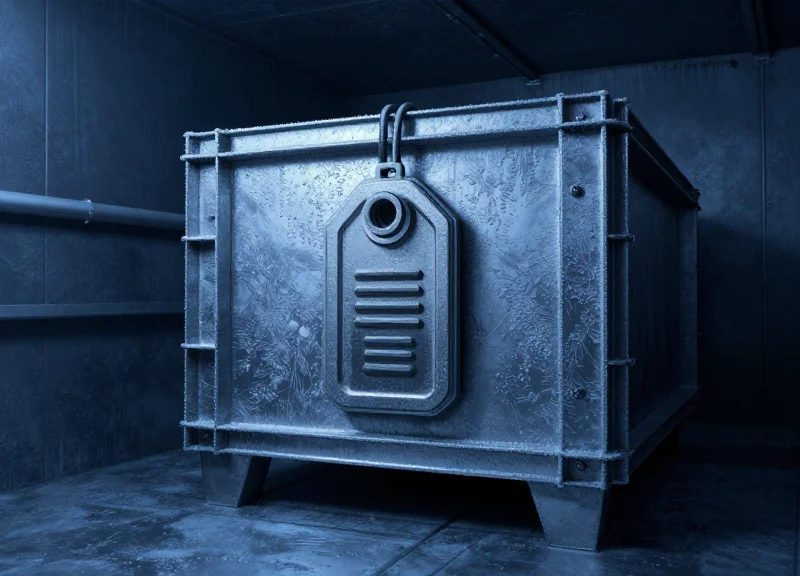
In deep-freeze logistics, temperatures frequently plummet to -30°C for food storage and as low as -80°C for pharmaceutical 'ultra-cold' chains. At these extremes, standard RFID components face two primary points of failure: the chemical depletion of batteries in active tags and the loss of viscoelasticity in adhesives. To overcome these obstacles, engineers must prioritize passive RFID designs or specialized low-temperature battery chemistries that prevent the internal resistance spikes common in standard lithium-ion cells.
| Feature | Active RFID (Standard) | Active RFID (Low-Temp) | Passive RFID (Industrial) |
|---|---|---|---|
| Min Op Temp | -20°C | -40°C to -80°C | -40°C to -200°C |
| Power Source | Li-Ion / Alkaline | Li-SOCl2 (Thionyl Chloride) | RF Energy Harvesting |
| Failure Mode | Voltage Drop / Shutdown | Seal Contraction | Physical Impact/Icing |
| Typical Use | Ambient Warehousing | Cryogenic Tracking | Global Cold Chain |
One of the most overlooked aspects of sub-zero RFID deployment is the 'Glass Transition Temperature' (Tg) of adhesives. Standard pressure-sensitive adhesives (PSAs) turn brittle and lose their 'tack' at temperatures below -10°C, causing tags to fall off assets during transit. For deep-freeze applications, specialized cryo-grade acrylic adhesives or mechanical fasteners are mandatory. Furthermore, the 'Dew Point Trap'—where tags move from cold storage to warm loading docks—creates condensation that can seep into poorly sealed housings, freezing and expanding into ice crystals that physically crack the RFID tag's internal circuitry.
How does extreme cold affect RFID read range?
While cold itself does not significantly degrade RF signal propagation, the accumulation of frost or ice (which contains water) on the tag surface can detune the antenna and reduce read ranges by up to 30%.
Why is Passive RFID often preferred for deep-freeze logistics?
Passive tags lack batteries, which are the primary point of failure in cold environments. Without chemical electrolytes to freeze or expand, passive tags offer much higher reliability and a lower total cost of ownership.
What is the best way to attach tags to frozen surfaces?
Applying tags to a surface that is already frozen is often unsuccessful. Tags should be applied at room temperature to a clean, dry surface, allowing the adhesive to 'wet out' for 24 hours before entering the deep-freeze environment.
Expert Tip: To ensure 99.9% readability in high-moisture cold chains, utilize 'Off-Metal' tags with a thicker spacer even if applying to plastic. The extra distance between the antenna and the asset helps mitigate the detuning effects caused by heavy frost build-up on the tag's surface.
Key Performance Metrics: Read Range and Durability
In extreme-temperature environments, the true measure of an RFID tag is not its peak performance on a laboratory datasheet, but its consistency under thermal flux. For +200°C heat and deep-freeze logistics, performance metrics must shift from simple distance to signal reliability and physical integrity. Specifically, 'Read Range' must be validated as a stable metric across the entire temperature curve, while 'Durability' must encompass both chemical resistance and mechanical impact protection to ensure a return on investment in harsh industrial cycles.
| Performance Metric | Standard Environment Expectation | Extreme Environment Reality (+200°C / -50°C) |
|---|---|---|
| Read Range | Constant distance based on frequency. | Fluctuates due to antenna impedance shifts and thermal expansion. |
| Data Retention | 50+ years. | Accelerated 'leaking' of charge at high heat; risk of bit-flip. |
| Attachment Integrity | Standard pressure-sensitive adhesive. | Adhesive failure; requirement for mechanical fasteners or high-temp epoxy. |
| Impact Resistance | Low priority (static inventory). | Critical; materials become brittle in deep-freeze or soft in high heat. |
Expert Insight: The Thermal Hysteresis Factor. In my 20 years observing RFID deployments, the most overlooked metric is signal 'hysteresis.' This is the phenomenon where a tag's read range does not return to its original state after a thermal cycle. High-quality industrial tags should show less than a 5% deviation in read range after 100 cycles of moving from room temperature to +200°C. If your range degrades further, the internal antenna-to-chip bond is likely fracturing due to mismatched Coefficient of Thermal Expansion (CTE).
- Signal Stability (The 'Dead Zone' Test): Evaluate how the tag performs at the 'edges' of your temperature cycle. Often, a tag that works at -40°C will fail at -10°C during the transition phase due to moisture condensation affecting the RF signal.
- IP Rating vs. Pressure Washing: For logistics involving food or chemicals, IP68 is not enough. You must look for IP69K, which ensures the tag can withstand high-pressure steam cleaning, a common necessity in heat-intensive processing.
- Mechanical Shock and IK Rating: In deep-freeze warehouses, plastic housings become glass-brittle. Ensure tags have an IK07 rating or higher to survive accidental impacts from forklifts or conveyor jams.
How does read range change at +200°C?
As temperature increases, the electrical resistance of the antenna metal rises, typically causing a 10-20% reduction in read range. Always over-specify your reader power to account for this 'Thermal Fade'.
Are ceramic tags always more durable than polymer tags?
Not necessarily. While ceramics handle heat better, they are more susceptible to cracking under mechanical shock compared to high-performance polymers like PEEK.
Does cold affect passive RFID tags differently than active ones?
Yes. Passive tags are generally more resilient to deep-freeze because they lack a battery, which would suffer from electrolyte freezing and rapid voltage drop.
Mounting and Attachment Strategies for High-Stress Surfaces
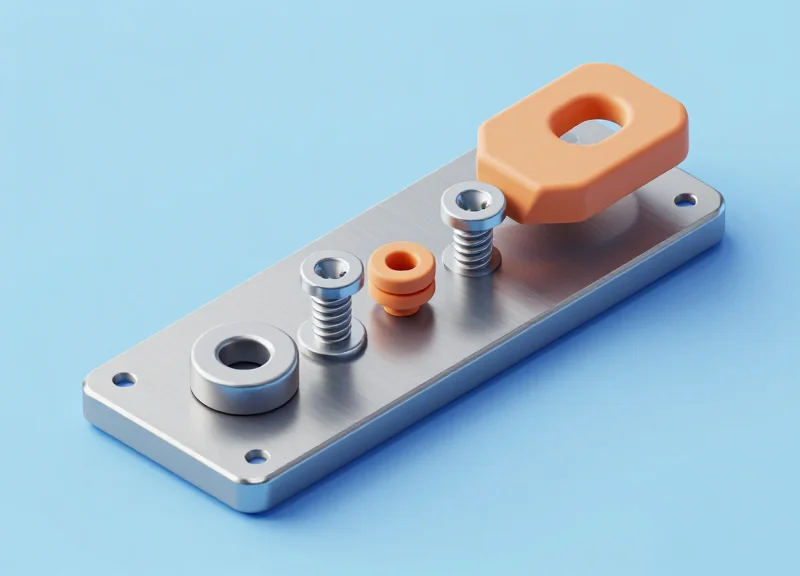
In extreme thermal environments, the primary cause of RFID tag failure is not electronic malfunction, but mechanical detachment due to the Coefficient of Thermal Expansion (CTE) mismatch. When a tag is bonded to a metal substrate, the two materials expand and contract at different rates as they move from +200°C ovens to ambient temperatures or deep-freeze storage. This differential movement creates massive shear stress that can snap rigid adhesives or shear off standard mounting pins. Successful mounting requires a strategy that either absorbs this movement through compliant materials or allows for independent expansion via mechanical 'floating' designs.
| Attachment Method | Temperature Ceiling | Best Use Case | Risk Factor |
|---|---|---|---|
| Mechanical Screws (M3/M4) | 500°C+ | Heavy machinery, metal pallets | Vibration loosening without thread-locker |
| Silicone-Based Adhesives | 260°C | Surfaces with high thermal swing | Longer curing times required |
| High-Temp VHB Tape | 230°C (Short term) | Smooth plastic or glass surfaces | Reduced bond strength at sub-zero |
| Structural Epoxy | 200°C | Permanent ceramic tag placement | Brittle failure during rapid cooling |
| Welded Metal Brackets | 1000°C+ | Smelter and foundry assets | Permanent; requires specialized labor |
Expert Tip: The 'Floating' Mounting Technique. For tags encased in ceramic or hard PEEK, never use two tight-fitting screws. Instead, use one fixed screw and one 'slotted' hole with a wave washer. This allows the substrate (like a steel rack) to expand up to several millimeters without exerting bending force on the brittle tag housing, effectively decoupling the tag from the physical stress of the asset.
- Surface De-energizing: Before applying adhesives, the surface must be chemically cleaned with an industrial degreaser (like Isopropyl Alcohol or Heptane) to remove oils that outgas at 200°C and create bubbles in the bond.
- CTE Alignment: Select an adhesive with a modulus of elasticity that can bridge the gap between the tag’s expansion rate and the metal’s expansion rate.
- Thermal Buffer Zones: In deep-freeze applications, use a thin PTFE or silicone spacer between the tag and the metal to prevent 'cold bridging' which can cause localized condensation and ice-jacking.
Why do adhesives fail in deep-freeze if they are rated for heat?
Many high-heat adhesives reach their 'Glass Transition Temperature' (Tg) and become extremely brittle in deep-freeze logistics. A slight impact at -40°C can cause the bond to shatter like glass.
Can I use standard zip-ties for high-heat RFID?
Standard nylon zip-ties will become brittle and snap almost instantly at 200°C. Use stainless steel cable ties or PEEK-based fasteners specifically designed for aerospace-grade thermal resistance.
How does mounting affect read range?
For on-metal tags, the air gap created by the adhesive or bracket is often calculated into the antenna's tuning. Using a different thickness of adhesive than recommended by the manufacturer can detune the tag.
Case Studies: From Automotive Paint Lines to Pharmaceutical Storage
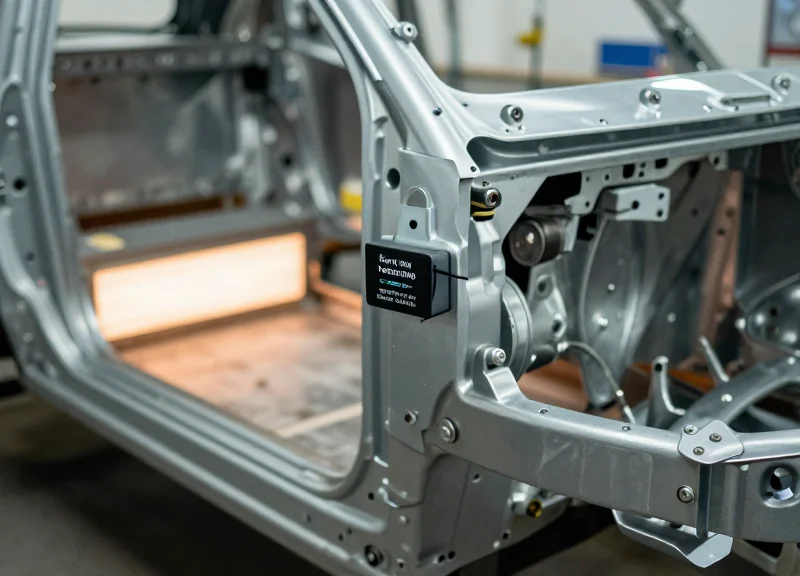
Case studies in extreme-environment RFID prove that success depends on matching tag chemistry and housing physics to specific thermal cycles. Whether surviving the 220°C bake cycles of an automotive paint shop or the cryogenic -80°C depths of a pharmaceutical repository, these implementations replace manual, error-prone tracking with automated, data-rich workflows that withstand physical stress that would destroy standard electronics.
| Industry | Environment | Temperature Range | Key Challenge | Tag Solution |
|---|---|---|---|---|
| Automotive | Paint & Curing Lines | +180°C to +230°C | Chemical resistance and thermal expansion | Ceramic-encapsulated Passive UHF Tags |
| Biotech/Pharma | ULT (Ultra-Low Temp) Storage | -40°C to -86°C | Adhesive failure and signal attenuation | Cryogenic-grade specialized label tags |
| Foundry/Steel | Mold & Ingot Tracking | +250°C (Peak) | High metal interference and mechanical impact | Ruggedized PPS or PEEK bolt-on tags |
Expert Insight: The Thermal Inertia Factor. A common mistake is evaluating a tag only by its peak temperature rating. In my experience, the 'ramp rate' or thermal shock—how fast the tag moves from 20°C to 200°C—is what usually causes failure. Successful automotive installations use tags with specific 'thermal buffers' in their housing to slow the internal chip's heat absorption, preventing the silicon from reaching its critical failure point even when the exterior is scorching.
- The Automotive Paint Shop Win: A Tier-1 manufacturer implemented heat-resistant RFID to track skid-mounted chassis through E-coat tanks and curing ovens. By utilizing PPS-housed tags capable of 200+ cycles at 210°C, they eliminated manual scanning at oven exits, reducing 'lost' chassis instances by 98% and ensuring perfect synchronization between the paint shop and final assembly.
- The Pharmaceutical Cold Chain Solution: A global vaccine distributor faced 15% data loss due to barcode frosting in -80°C freezers. By transitioning to passive RFID tags with low-temperature optimized adhesives, they achieved 100% read rates through freezer doors. This automated the GxP-compliant logging process, saving 20 man-hours per week in manual inventory counts.
Can these tags survive high-pressure washing after the heat cycle?
Yes, most +200°C tags are IP69K rated. In automotive paint lines, they must survive not just the heat, but also high-pressure chemical rinses and phosphate baths without losing data integrity.
Do -80°C environments require active RFID tags?
Not necessarily. While active tags provide longer range, their batteries often fail at ultra-low temperatures. Passive cryogenic tags are usually preferred for pharmaceutical storage because they have no battery to die and rely on specialized materials that don't become brittle.
How do you attach tags to metal surfaces in these extremes?
For heat, mechanical fasteners (screws/rivets) are preferred because adhesives often outgas or liquefy. In deep-freeze, specialized acrylic adhesives designed for low-surface-energy plastics are used to prevent 'pop-off' during thermal contraction.
Total Cost of Ownership: Balancing Quality with Budget
In extreme environments—ranging from +200°C automotive paint lines to -80°C pharmaceutical cold chains—the purchase price of an RFID tag represents only a fraction of its Total Cost of Ownership (TCO). TCO is the comprehensive calculation of all costs associated with an RFID system over its entire lifecycle, including procurement, installation, and, most critically, the financial impact of hardware failure. While a standard tag might cost $1.50 and a ruggedized high-temperature tag costs $15.00, the 'cheaper' option often becomes the most expensive line item when it fails mid-process, requiring manual intervention, line stoppages, and data recovery efforts.
| Expense Category | Standard Industrial Tag | Ruggedized (+200°C/Deep-Freeze) Tag |
|---|---|---|
| Unit Purchase Price | $1.00 - $3.00 | $12.00 - $25.00 |
| Expected Lifespan in Extreme Temps | 1 - 3 months (High failure rate) | 3 - 5+ years |
| Replacement Labor Cost | High (Frequent re-tagging) | Negligible (One-time install) |
| Risk of Data Loss | High (Thermal delamination) | Minimal (Encapsulated chip) |
| 3-Year Projected Cost Per Point | $150+ (Due to failure/labor) | $25 - $40 (Total) |
The 'Failure Spiral' occurs when organizations optimize for CAPEX (initial purchase) rather than OPEX (long-term operations). In a high-heat environment, a sub-optimal tag's adhesive fails or its internal antenna oxidizes. This doesn't just mean a $2.00 loss; it means a technician must spend 15 minutes identifying the failure, locating the asset, and applying a new tag—a process that often costs $50 to $100 per instance in labor and lost throughput.
How does 'Thermal Cycle Fatigue' impact TCO?
Every time a tag moves from extreme heat to ambient temperature, materials expand and contract. Premium tags use specialized potting compounds with matched expansion coefficients to prevent internal solder joint cracks, whereas budget tags fracture quickly, leading to intermittent 'ghost' reads that are difficult and expensive to troubleshoot.
Is there a budget-friendly way to scale high-temp RFID?
Yes. Instead of tagging every single item with a $20 tag, use a 'Carrier-Based' strategy. Affix the premium tag to a reusable pallet, rack, or skid that survives the entire thermal cycle, while using cheaper barcodes or software-level tracking for individual items on that carrier.
What is the '10x Rule' of field replacement?
Industry experts apply the 10x rule: the cost to replace a failed RFID tag in the field is at least 10 times the original cost of the tag. If you save $10 on a tag but it fails in a deep-freeze warehouse, the logistics of a technician entering that zone to fix it will exceed $100 in overhead.
Expert Insight: When auditing your RFID budget, always include a 'Resilience Buffer.' In extreme logistics, a tag with a 99.9% reliability rate is often 500% more profitable than one with 95% reliability. That 4.9% difference represents thousands of manual scans and potential shipping errors that directly erode your bottom line.
Strategic Checklist for Selecting Your Industrial RFID Partner
Selecting a strategic RFID partner for extreme environments involves moving beyond simple price-per-tag metrics to evaluate 'thermal engineering competency.' A qualified partner, such as DragonGuard, must demonstrate a proven ability to design hardware where the internal IC (Integrated Circuit) and antenna assembly remain functionally bonded despite the massive physical expansion of materials at +200°C or the extreme brittleness induced by deep-freeze cycles. Your partner should serve not just as a supplier, but as a technical consultant capable of validating performance in your specific chemical and thermal ecosystem.
| Feature | Commodity RFID Vendor | Industrial Specialty Partner |
|---|---|---|
| R&D Focus | High-volume consumer retail | Material science for harsh environments |
| Thermal Testing | Ambient temperature samples | Cyclic oven and cryogenic chamber data |
| Customization | Fixed catalog only | Custom form factors and mounting solutions |
| Certifications | Standard ISO 9001 | ATEX, IECEx, and IP69K specialized ratings |
- Verify Vertical Integration: Ensure the partner controls the manufacturing process from antenna etching to encapsulation. This guarantees that the proprietary adhesives used to withstand +200°C are consistently applied across every batch.
- Request Thermal Drift Documentation: Ask for data showing how the tag's resonant frequency shifts as temperature rises. Elite partners tune their tags specifically to account for this 'drift' so that read ranges remain stable at peak heat.
- Assess Laboratory Transparency: A reliable partner should provide detailed test reports covering salt spray, vibration, and thermal shock. If they cannot provide a data sheet for 'thermal cycling' (repeatedly moving from -40°C to +200°C), they are likely not industrial-grade.
- Evaluate Material Science Expertise: Discuss the encapsulation material. For +200°C, you should be looking for PEEK, PPS, or specialized ceramics rather than standard ABS plastics which warp and off-gas.
Expert Insight: In my 20 years in the industry, the biggest mistake I see is ignoring 'Coefficient of Thermal Expansion' (CTE) mismatch. In extreme heat, the copper antenna and the plastic housing expand at different rates. If your partner hasn't engineered a 'buffer' layer or used flexible bonding agents, the tag will literally tear its own internal connections apart after 10 cycles. Always ask: 'How does your design manage internal mechanical stress during rapid thermal transition?'
Can the vendor provide samples for on-site pilot testing?
A reputable industrial partner will offer 'Extreme Environment Sample Packs' to allow customers to run tags through their specific paint lines or freezers before a full-scale rollout.
What is the typical lead time for custom-engineered tags?
While stock items may ship immediately, custom solutions for unique mounting surfaces usually require 4-8 weeks for prototyping and validation testing.
Do they offer global compliance support?
Ensure the partner provides tags compliant with both ETSI (Europe) and FCC (Americas) frequencies, especially if your logistics chain crosses international borders.