Managing thousands of linens in a centralized laundry facility demands precision and extreme durability. By 2026, the standard for high-performance tracking has shifted towards RFID tags capable of enduring 200+ industrial wash cycles. As facilities scale, the cost of tag failure becomes a critical bottleneck. This guide explores the technical benchmarks, material innovations, and selection criteria necessary to ensure your facility maintains 100% visibility throughout the entire lifecycle of your textile assets.
The Evolution of RFID in Industrial Laundries
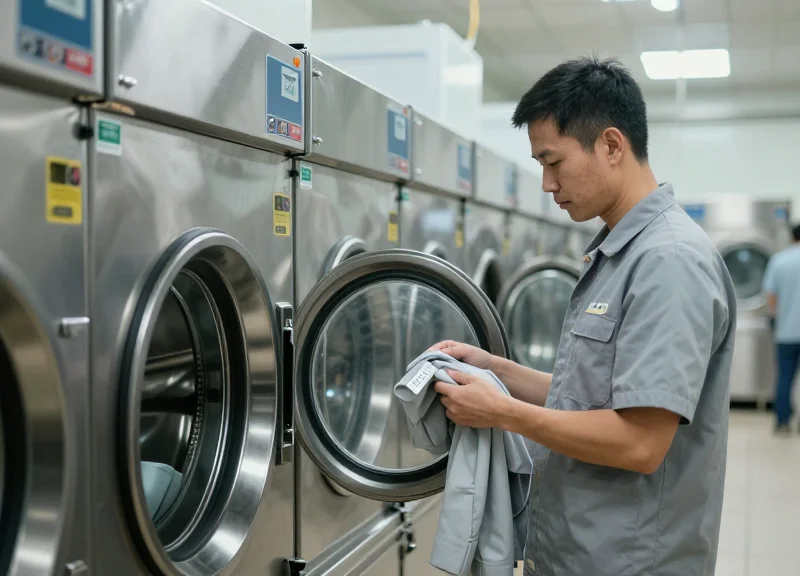
The evolution of RFID in industrial laundries represents a shift from simple asset identification to mission-critical data intelligence. Originally, industrial facilities relied on Low-Frequency (LF) or High-Frequency (HF) tags that required proximity and manual scanning. However, as of 2026, the industry standard has converged on Ultra-High Frequency (UHF) EPC Gen2 technology, which allows for bulk reading of hundreds of items simultaneously. The pivotal advancement lies in durability: while early tags failed after 50 cycles due to mechanical stress and chemical ingress, modern 2026-spec tags utilize advanced polymer encapsulation and flexible antenna designs to comfortably exceed the 200-wash cycle threshold demanded by high-volume centralized facilities.
| Era | Primary Technology | Max Wash Cycles | Key Capability |
|---|---|---|---|
| 2000s: The Manual Era | LF (125 kHz) / HF | 20 - 50 | One-by-one scanning; basic inventory tracking. |
| 2015: The UHF Transition | UHF (Rain RFID) | 100 - 150 | Bulk reading of soiled linen; improved logistics speed. |
| 2026: The Industrial Gold Standard | UHF with Advanced PPS/Silicone | 200+ | Extreme pressure resistance; chemical-proof; cloud analytics. |
One unique insight often overlooked by procurement teams is the 'ROI Tipping Point.' In 2026, the cost-per-read becomes exponentially lower once a tag crosses the 180-cycle mark. Tags capable of 200+ cycles effectively pay for themselves by the second year of service, whereas 100-cycle tags force a 'refresh cycle' that doubles long-term hardware costs and increases manual labor for re-tagging. The evolution is no longer about whether the tag works, but how many cents per wash it costs over the entire lifecycle of the textile.
Why is the 200-cycle durability mark so critical in 2026?
Modern textiles, especially high-grade polyester blends used in hospitals and hotels, are designed to last roughly 200 washes. If a tag fails at 100 cycles, the asset becomes 'invisible' halfway through its life, leading to inventory shrinkage and lost revenue. Matching tag life to textile life is essential for accurate lifecycle management.
How has tag encapsulation evolved for centralized hubs?
Early tags often cracked under the 60-bar pressure of industrial extractors. Today's tags use 'soft' silicone housings or high-performance Polyphenylene Sulfide (PPS) to absorb mechanical shock and protect the delicate silicon chip from the high-pH detergents and 180°C drying temperatures typical of centralized hubs.
What role does the 'Antenna Memory' play in modern evolution?
Modern evolution has introduced flexible, stainless-steel thread antennas that 'remember' their shape. Unlike older copper etched antennas that snapped under repeated bending, these 2026-era flexible antennas maintain high-gain performance even after 200+ cycles of being twisted and tumbled.
Material Science: Why PPS and Silicone Dominate
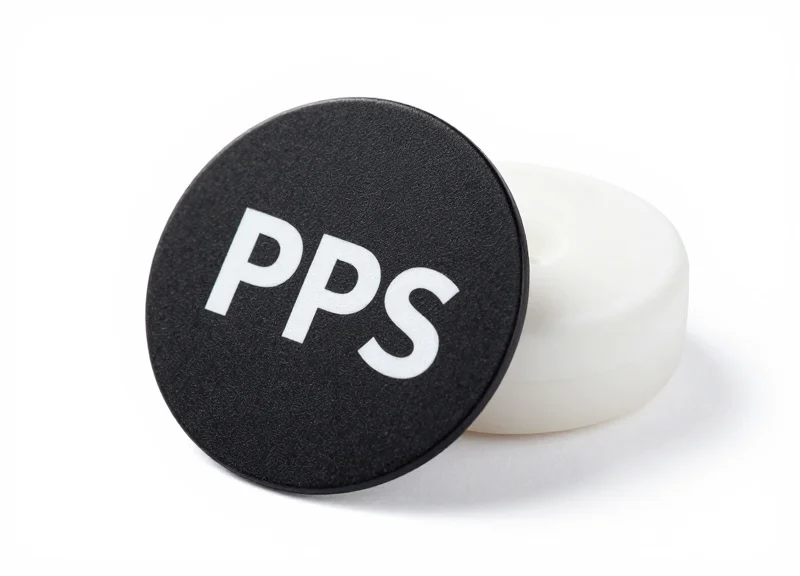
In the rigorous environment of centralized industrial laundries, the longevity of an RFID tag is determined by its encapsulation material's ability to resist hydrolytic degradation and thermal cycling. PPS (Polyphenylene Sulfide) and high-grade Silicone dominate the 2026 landscape because they offer a unique combination of high glass transition temperatures (Tg) and chemical inertness. These materials act as a 'molecular shield' for the sensitive RFID chip and antenna, ensuring the tag maintains structural integrity across 200+ cycles of high-pressure extraction, 180°C drying phases, and exposure to caustic pH levels (11.0+) and oxidizing agents like hydrogen peroxide.
| Material Property | Polyphenylene Sulfide (PPS) | Industrial-Grade Silicone |
|---|---|---|
| Form Factor | Hard Disc/Rigid Tag | Soft/Flexible Strip |
| Max Temp (Intermittent) | 200°C - 220°C | 230°C - 250°C |
| Chemical Resistance | Exceptional (Acids/Bases/Solvents) | High (Oils/Steam/Oxidizers) |
| Primary Use Case | Workwear, Heavy Uniforms | Flat Linens, Towels, Bedding |
| Mechanical Stress Profile | Impact & Crush Resistant | Bending & Compression Resistant |
PPS is a semi-crystalline engineering thermoplastic characterized by a symmetrical molecular backbone that makes it incredibly rigid and resistant to almost all known solvents below 200°C. In 2026, premium PPS tags are further reinforced with glass fiber to prevent warping during the intense mechanical extraction process (reaching up to 60 bars of pressure). Conversely, silicone’s dominance stems from its flexible siloxane backbone (Si-O-Si). This allows the tag to flex with the fabric of a bedsheet or towel without delaminating, providing a 'soft touch' that is imperceptible to the end-user while remaining thermally stable during sterilization.
- The Expert Insight: CTE Synchronicity: A critical but often overlooked factor in 200+ cycle durability is the Coefficient of Thermal Expansion (CTE). High-end 2026 tags match the CTE of the encapsulation material (PPS or Silicone) with the internal bonding adhesive. If these materials expand at different rates during a 180°C drying cycle, 'micro-fractures' occur at the chip-to-antenna bond. Always ask your supplier for tags where the internal potting compound is chemically matched to the outer shell to prevent this hidden failure point.
Does PPS become brittle after 100 cycles?
Lower-grade PPS can become brittle if it lacks UV stabilizers or proper glass fiber reinforcement. High-quality PPS tags are engineered for 'Hydrolytic Stability,' meaning they do not break down when exposed to steam under pressure, maintaining their impact strength well beyond 200 cycles.
Why not use TPU or PVC for high-cycle tags?
TPU (Thermoplastic Polyurethane) and PVC are cost-effective but typically fail between 30 and 70 cycles. They suffer from 'thermal fatigue' and polymer chain scission when exposed to the repeated 120°C+ heat of industrial ironers, leading to antenna exposure and chip failure.
How does silicone handle chemical bleaches?
Medical-grade silicone is chemically inert to the standard concentrations of chlorine and oxygen-based bleaches used in industrial healthcare laundering, making it the safest choice for high-frequency sterilization environments.
UHF vs. HF: Choosing the Right Frequency for Bulk Reading
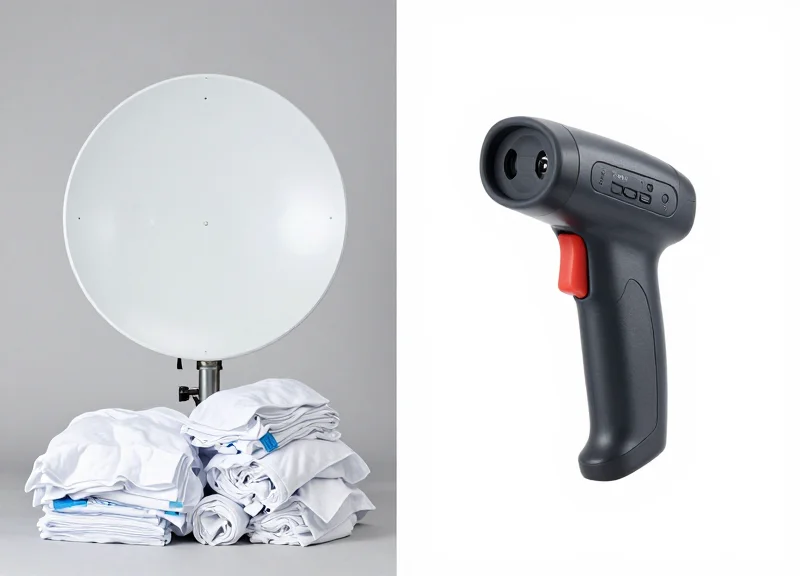
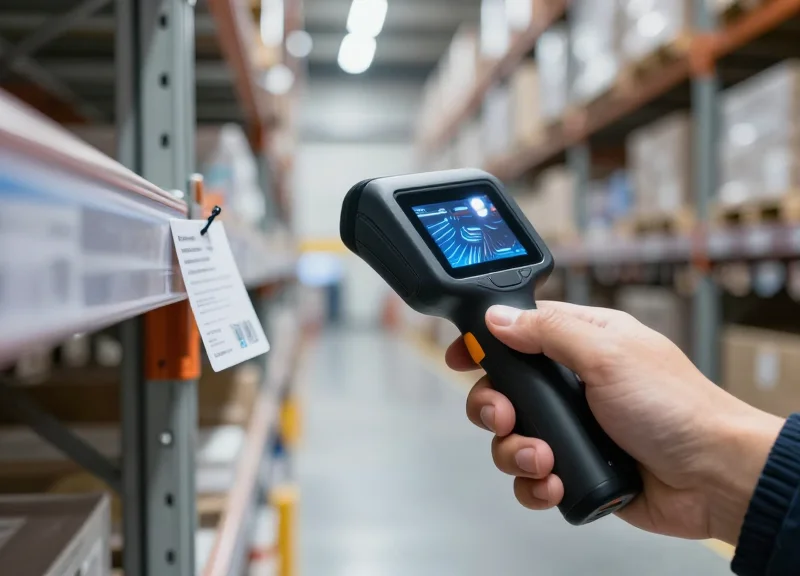
In the context of industrial laundry management, the primary differentiator between UHF (Ultra-High Frequency) and HF (High Frequency) is the ability to perform 'bulk reading.' UHF RFID, operating at 860-960 MHz, is the definitive choice for centralized facilities because it allows for the simultaneous scanning of 400+ items in a single cart from distances of up to 7 meters. While HF RFID (13.56 MHz) offers excellent performance near water or metal, it is limited by a short read range (less than 1 meter) and slower anti-collision capabilities, making it unsuitable for the high-throughput requirements of 200+ wash cycle industrial environments.
| Feature | HF (13.56 MHz) | UHF (860-960 MHz) |
|---|---|---|
| Read Range | Near-field (up to 30-90cm) | Far-field (up to 7-10 meters) |
| Reading Speed | 10-20 tags per second | 400-800+ tags per second |
| Bulk Scan Accuracy | Moderate (Small batches) | High (Full laundry carts) |
| Standard Protocol | ISO 15693 | ISO 18000-6C (EPC Gen2) |
| Primary Benefit | High resistance to liquid | Maximum automation throughput |
As we move into 2026, the adoption of the RAIN RFID (UHF) standard has become nearly universal in centralized facilities. This shift is driven by the physical limitations of HF; while HF is excellent for tracking individual high-value designer garments in a boutique setting, it creates a bottleneck in an industrial tunnel. UHF tags utilize backscatter technology, which allows the reader to 'wake up' and identify tags without direct line-of-sight, even when they are buried deep within a pile of wet linens.
- Why Centralized Facilities Demand UHF: Centralized facilities process thousands of items hourly. UHF's ability to integrate with high-speed conveyor belts and bulk reading tunnels eliminates the need for manual sorting or individual scanning, drastically reducing labor costs.
- The 2026 Advantage: Gen2V3 Protocols: Modern UHF laundry tags now support advanced Gen2V3 security and memory management, providing better data integrity over 200+ wash cycles compared to older HF alternatives.
- Expert Tip: The 'Moisture Shadow' Mitigation: A common critique of UHF is its sensitivity to moisture. However, 2026 antenna designs (such as 3D or omnidirectional dipoles) have mitigated this. For maximum accuracy, always position your tunnel readers at staggered angles to eliminate 'shadow zones' caused by wet, high-density cotton loads.
Is UHF more expensive than HF in 2026?
No. Due to massive economies of scale in the global supply chain, UHF laundry tags are now generally more cost-effective than HF tags, despite offering superior range and speed.
Can I mix HF and UHF tags in the same facility?
It is not recommended. While dual-frequency tags exist, they are significantly more expensive and often compromise on the durability required to survive 200+ industrial wash cycles.
What is the 'read rate' target for a 2026 facility?
A high-performing UHF system should achieve a 99.9% read rate for a cart containing 250 items passing through a laundry tunnel at 5 km/h.
Survival Metrics: Heat, Pressure, and Chemical Resistance
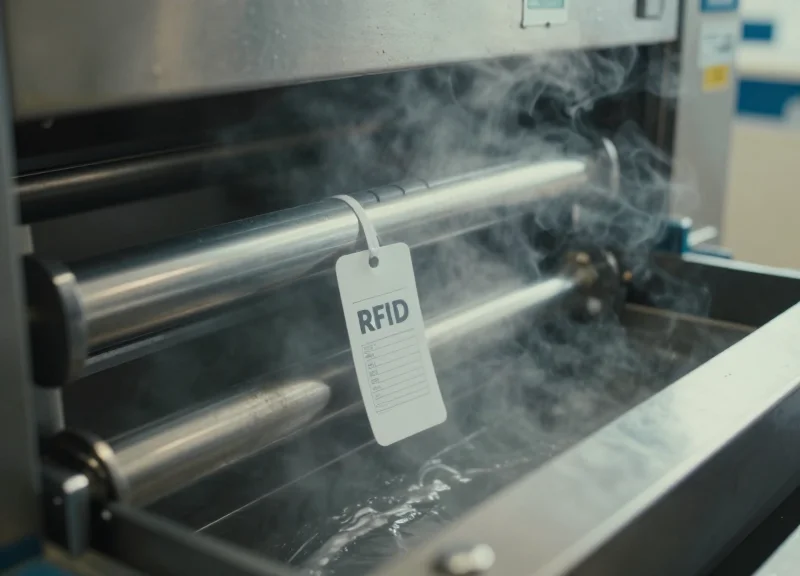
To guarantee a lifespan of 200+ cycles in centralized laundry facilities, an RFID tag must be engineered to survive a brutal trifecta of stressors: thermal peaks of up to 200°C (392°F) during finishing, mechanical extraction pressures reaching 60 bars, and repeated immersion in aggressive alkali detergents. Survival metrics are not merely lab benchmarks; they represent the threshold between a high-ROI automated system and a catastrophic failure of facility-wide visibility. In 2026, the industry standard has shifted from 'surviving' these conditions to maintaining 100% read-rate accuracy through the very last cycle.
| Stressor Category | Required Threshold (200+ Cycles) | Industrial Process Context |
|---|---|---|
| Thermal (Dry) | 200°C (392°F) for 15-20 seconds | High-speed ironing and tunnel finishers |
| Thermal (Wash) | 90°C (194°F) for 60 minutes | Medical-grade disinfection washes |
| Mechanical Pressure | 60 Bars (approx. 870 PSI) | Hydraulic water extraction presses |
| Chemical Resistance | pH 2 to pH 12 | Aggressive bleaching and alkali detergents |
Expert Insight: The 'Thermal Shock' Delta. While most manufacturers advertise peak temperature resistance, the most common cause of tag failure in 2026 is actually thermal shock—the rapid transition from a 90°C wash to a cold rinse, or a wet garment hitting a 200°C iron. Tags with inferior bonding between the chip and antenna will experience micro-fractures during these rapid delta-T shifts. For centralized facilities, we recommend tags that have been specifically tested for a '100°C Instantaneous Delta' to ensure the internal circuitry remains intact through 200 rapid temperature cycles.
How does high-pressure extraction affect UHF performance?
Modern 60-bar presses can physically deform the internal antenna of low-quality tags. This deformation shifts the resonance frequency, causing 'detuning' where the tag can no longer be read by standard UHF readers even if the chip is still functional.
Can tags survive ozone and peroxide treatments?
Yes, but only if the encapsulation material is chemically inert. PPS (Polyphenylene Sulfide) is the gold standard here; it resists the oxidative stress of ozone and hydrogen peroxide better than epoxy-based tags, which tend to yellow and crack over time.
What role does moisture play in heat resistance?
In a process known as the 'popcorn effect,' moisture trapped inside a poorly sealed tag can turn to steam during high-heat drying, causing the tag to expand and burst. 2026-spec tags utilize vacuum-sealed encapsulation to eliminate internal air pockets.
Attachment Methods and Their Impact on Longevity
In high-volume centralized facilities, the physical bond between the RFID tag and the textile is often the primary failure point before the electronic component itself reaches its end-of-life. To guarantee survival through 200+ cycles, the attachment method must mitigate 'mechanical shear'—the force exerted during high-pressure extraction—and account for the differing thermal expansion rates between the rigid tag material and the flexible fabric. Selecting the wrong method can lead to tag loss, garment tearing, or compromised read rates due to tag misalignment.
| Attachment Method | Durability Rating | Installation Speed | Best Application |
|---|---|---|---|
| Industrial Sewing | High (200+ Cycles) | Moderate | Linens, Uniforms, Heavy Workwear |
| Heat-Sealing (Adhesive) | Medium/High (150-200 Cycles) | Fast | Thin Garments, Patient Scrubs |
| Pouching (Pocketing) | Maximum (300+ Cycles) | Slow (Manual) | Flat Linens, High-Value Textiles |
| Hang-Tagging | Low (<50 Cycles) | Very Fast | Temporary Tracking Only |
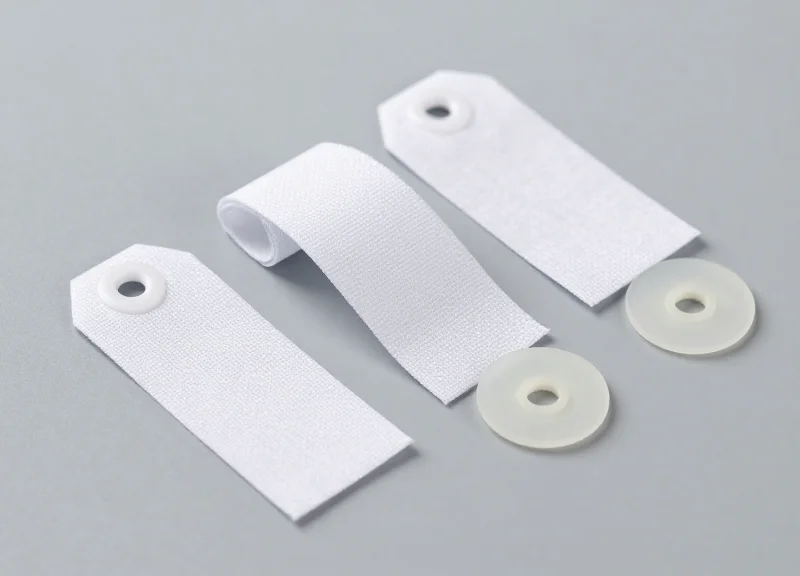
Sewing remains the gold standard for long-term reliability. By using a polyester thread with high tensile strength and sewing through designated 'safe zones' on the tag (typically the outer rim of a PPS disc), the tag is mechanically locked to the garment. Heat-sealing uses thermoplastic adhesives that melt into the fabric fibers; however, for 200+ cycles, the heat press must be precisely calibrated to 180°C-200°C for exactly 12-15 seconds. Pouching, while labor-intensive, offers the best protection by allowing the tag to 'float' inside a small fabric pocket, shielding it from direct friction and chemical exposure.
Expert Tip: The Stress-Relief Buffer Technique. For facilities using high-pressure extraction presses (exceeding 40 bar), we recommend the 'Floating Stitch' method. Instead of a tight perimeter stitch, use a bartack or loose zigzag stitch. This creates a mechanical buffer that allows the fabric to stretch during extraction without transferring the tension directly to the RFID chip's solder points, effectively extending the tag's functional life by 15-20%.
Does heat-sealing damage the RFID chip?
Modern PPS and silicone tags are designed to withstand the short-duration high heat of industrial presses (up to 200°C). As long as the press time does not exceed manufacturer specifications, the internal antenna and chip remain unaffected.
Can I use standard cotton thread for sewing RFID tags?
No. Cotton thread degrades quickly in the presence of industrial bleach and high-alkali detergents. Only 100% polyester or poly-core spun threads should be used for 200+ cycle requirements.
What is the leading cause of tag detachment?
Incomplete adhesive polymerization during heat-sealing is the #1 cause. This is usually due to uneven pressure in the heat-press or moisture present in the fabric at the time of application.
Data Integrity and Memory Retention Over Time
In centralized laundry facilities, a tag's physical survival is only half the battle; data integrity—the chip's ability to retain its Electronic Product Code (EPC) and user memory without corruption—is the true metric of longevity. As tags undergo repeated thermal expansion and contraction (thermal cycling) during the wash-dry-iron process, the floating gates within the chip's EEPROM can suffer from charge leakage. For 200+ cycles, facility managers must specify chips with high-end non-volatile memory that guarantees data retention for at least 10 to 20 years, even when subjected to 180°C sterilization peaks.
| Feature | Standard Consumer Chip | Industrial Laundry Grade (2026) | Impact on 200+ Cycles |
|---|---|---|---|
| Write Endurance | 10,000 cycles | 100,000+ cycles | Crucial for dynamic tracking logs |
| Data Retention | 10 years | 50+ years | Prevents 'bit-rot' during storage |
| Thermal Shielding | None | Integrated Thermal Buffer | Protects silicon die from heat spikes |
| Memory Type | Standard EEPROM | Hardened Non-Volatile | Ensures zero-bit-flip reliability |
Expert Insight: The Flip-Chip Advantage. In 2026, the gold standard for high-volume centralized facilities has shifted from traditional 'wire-bonded' chips to 'flip-chip' technology. Wire bonds are vulnerable to mechanical fatigue caused by the high-pressure extraction presses (up to 60 bar) used in industrial laundries. Flip-chip designs eliminate these fragile wires, soldering the silicon die directly to the antenna, which significantly reduces the risk of electrical disconnects and ensures the data remains accessible even after hundreds of mechanical impacts.
Does the heat of industrial dryers affect RFID data?
While the heat doesn't 'erase' data like a magnet, it can accelerate 'charge leakage' in poor-quality silicon. High-grade laundry tags use chips specifically tuned to maintain their logic state at temperatures exceeding 200 degrees Celsius.
Can electromagnetic interference (EMI) from industrial motors corrupt tags?
Centralized facilities are high-EMI environments. Modern UHF chips include parity checks and error-correcting codes (ECC) to prevent stray signals from causing 'bit-flips' during the read/write process.
Why is 'Block Locking' important for data integrity?
To ensure 200+ cycle reliability, the EPC memory should be 'permanently locked' after commissioning. This prevents accidental overwriting or corruption during bulk scanning in high-density environments.
When evaluating vendors, always request the 'Memory Retention Curve' under thermal stress. A tag that reads perfectly at cycle 50 may fail at cycle 150 not because the plastic broke, but because the silicon's ability to hold a charge has been compromised by the cumulative 'Thermal Hysteresis' effect.
Calculating ROI: Total Cost of Ownership vs. Initial Price

Return on Investment (ROI) for RFID laundry systems is often miscalculated by focusing solely on the 'per-tag' purchase price. In a centralized facility, the true financial metric is the Total Cost of Ownership (TCO), which accounts for the initial cost, the labor required for attachment, and the operational disruption caused by tag failure. A tag that survives 200 cycles eliminates the need for three subsequent re-tagging interventions compared to a 50-cycle budget tag, effectively slashing labor overhead and ensuring consistent data visibility across the garment's entire lifecycle.
| Cost Factor (Over 200 Cycles) | Budget Tag (50-Cycle Life) | Premium Tag (200-Cycle Life) |
|---|---|---|
| Initial Purchase Price | $0.45 x 4 tags = $1.80 | $0.85 x 1 tag = $0.85 |
| Labor Cost (Attachment) | $0.50 x 4 events = $2.00 | $0.50 x 1 event = $0.50 |
| Admin/Data Correction | High (Manual Entry on Fail) | Negligible |
| Total Cost of Ownership | $3.80 per garment slot | $1.35 per garment slot |
As demonstrated above, the premium tag is nearly 65% cheaper over the full 200-cycle duration. This calculation doesn't even factor in the 'blind spots' created when tags fail mid-process, leading to lost inventory and customer dissatisfaction.
- Labor Amortization: The most significant expense in RFID deployment is the human labor required to sew or heat-seal tags. By choosing a 200+ cycle tag, you amortize that labor cost over four times as many washes.
- Inventory Accuracy and Safety Stock: Reliable tags reduce the need for 'safety stock.' When tags fail frequently, facilities over-order linens to compensate for lost visibility, tying up capital in stagnant inventory.
- Equipment Wear and Tear: Frequent re-tagging via heat-sealing can damage the fabric of the linen itself. Fewer tagging events extend the physical life of your textiles.
The Veteran's Insight: The 'Shadow Labor' Multiplier. Most managers forget that replacing a failed tag isn't just about sewing a new one; it’s about the time spent identifying the 'dead' item, verifying its ID in the database, and clearing the system error. In my 20 years of experience, I’ve found that the internal cost of managing a single tag failure is often 5x the price of the tag itself. A high-durability tag is essentially an insurance policy against administrative friction.
How long does it take to see a return on a premium tag investment?
Most centralized facilities see a break-even point within the first 60 to 75 cycles, after which the savings in labor and replacement costs contribute directly to the bottom line.
Does a higher initial price guarantee a longer lifespan?
Not necessarily. ROI is maximized only when the high price is backed by ISO 18000-6C compliance and specific 'laundry-grade' certifications for pressure and chemical resistance.
Interoperability and Software Integration in 2026
Interoperability in 2026 refers to the capability of high-cycle RFID laundry tags to communicate seamlessly across diverse hardware and software ecosystems without proprietary silos. For centralized facilities, this means selecting tags compliant with RAIN RFID (EPC Gen2v2) standards that support multi-vendor read/write operations and offer standardized data mapping. True integration allows real-time data flow from the physical wash floor to cloud-based ERPs, enabling predictive inventory management and automated billing cycles that are hardware-agnostic.
As we move further into the 2020s, the 'walled garden' approach to laundry management has collapsed. Modern centralized facilities now utilize a 'Best-of-Breed' tech stack where tags must interact with robotic sorters from one brand, tunnel washers from another, and inventory software hosted on AWS or Azure. The focus has shifted from simple UID (Unique Identifier) scanning to 'Smart Payload' handling, where the tag's memory architecture is optimized for rapid data exchange with edge computing devices.
| Integration Layer | Standard Requirement | 2026 Impact on Operations |
|---|---|---|
| Protocol | ISO/IEC 18000-63 (Gen2v2) | Ensures global compatibility with all high-speed industrial readers. |
| Cloud Connectivity | RESTful APIs / MQTT | Enables real-time linen tracking and automatic replenishment alerts. |
| Automation Hub | OPC UA Compatibility | Direct communication between tags and PLC-controlled robotic folders. |
| Security | AES-128 Encryption | Prevents data spoofing or unauthorized inventory redirection. |
Expert Insight: The Rise of Digital Twin Synchronization. In 2026, the most advanced facilities are no longer just tracking 'tags'; they are managing 'Digital Twins.' Every high-cycle tag acts as a real-time tether to a cloud-based model of the textile. By integrating RFID data with detergent dosing sensors and moisture meters, the software can calculate the 'residual life' of a sheet or towel. If a tag reports its 180th cycle but the Digital Twin shows excessive chemical wear from a previous re-wash, the system can automatically flag the item for downgrading before it fails in a guest room.
Will these tags work with my existing legacy ERP?
Most 2026-compliant tags use standard EPC formats. However, integration requires a 'Middleware' layer that translates raw RFID reads into the specific database schema of your legacy software.
How does RFID integrate with Electronic Shelf Labels (ESL)?
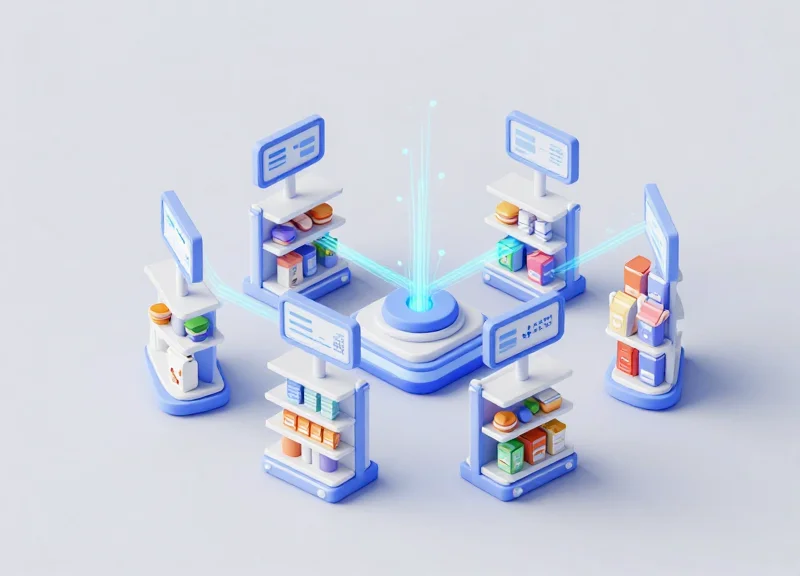
In smart linen rooms, RFID readers detect incoming stock and automatically update the ESLs on the racks, showing staff exactly how many clean units are available without manual counting.
Is cloud integration secure for hospital laundry?
Yes, by utilizing Gen2v2 'Untraceable' features and encrypted cloud handshakes, facilities can track medical linens while remaining fully compliant with patient privacy and data security regulations.