In the world of high-end menswear, where a single suit or leather accessory can represent thousands of dollars in revenue, inventory shrinkage is more than just a nuisance—it is a direct threat to the bottom line. Traditional security measures often fall short or disrupt the luxury atmosphere that customers expect. However, data from leading retailers shows that strategic EAS (Electronic Article Surveillance) integration can lead to a staggering 40% reduction in shrinkage. This article explores how modern technology, discreet hardware, and smart placement strategies create a fortress for your profit margins without sacrificing the boutique experience.
The High Stakes of Menswear Shrinkage
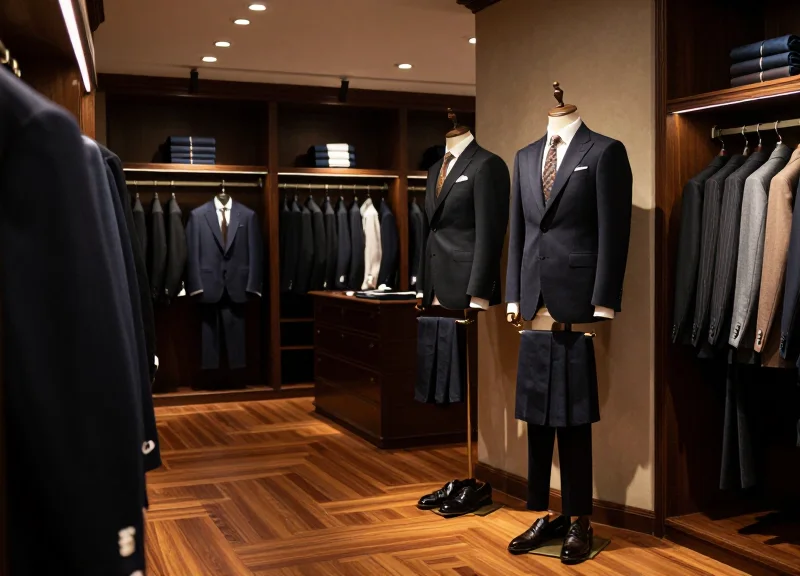
In the luxury menswear sector, shrinkage is far more than a line item for 'lost goods'; it is a critical threat to brand equity and net profitability. For retailers carrying items such as Loro Piana cashmere or Brioni tailoring, the loss of a single unit can erase the profit margin of ten subsequent sales. High-end menswear is uniquely targeted because of its high 'black market liquidity'—products are easily transportable, lack the serial-number tracking of electronics, and retain up to 80% of their retail value on secondary peer-to-peer marketplaces. When organized retail crime (ORC) syndicates target these stores, the resulting 2-3% loss in gross revenue often translates to a 15-20% hit on the bottom line.
| Metric | Mass-Market Retail | High-End Menswear |
|---|---|---|
| Average Unit Value | $25 - $60 | $400 - $4,500 |
| Resale Potential | Low (10-20% MSRP) | High (60-80% MSRP) |
| Theft Motivation | Personal Use / Impulse | Professional Resale (ORC) |
| Margin Recovery | High Volume Required | Critical (Loss is often non-recoverable) |
The sophistication of modern shoplifting has evolved beyond the 'smash and grab.' Professional thieves now use 'booster bags' lined with signal-blocking foil and sophisticated detachers to bypass legacy security systems. For a menswear boutique, the stakes include not just the cost of goods sold (COGS), but also the 'out-of-stock' cost—where a loyal client leaves disappointed because a specific size in a limited-run collection was stolen, leading to a permanent loss of customer lifetime value (CLV).
Why is menswear targeted more than womenswear?
Menswear items like leather jackets, high-end denim, and luxury sneakers have more standardized sizing and a more aggressive resale market, making them 'faster' assets for thieves to liquidate compared to highly seasonal or trend-dependent womenswear.
How does shrinkage impact luxury brand perception?
Frequent theft often forces retailers to lock items behind glass or tether them with heavy cables, which degrades the 'touch-and-feel' luxury experience that high-net-worth individuals expect, indirectly driving down conversion rates.
What is the 'Economic Multiplier' of a theft loss?
To recover the cost of a stolen $2,000 suit, a retailer with a 10% net profit margin must generate $20,000 in additional new sales just to break even on that single lost unit.
Expert Insight: In my two decades of analyzing retail P&Ls, I've observed a 'phantom' cost of shrinkage that many CEOs miss: the impact on employee morale and retention. When floor staff in a high-end boutique feel targeted by professional thieves, their focus shifts from high-touch salesmanship to defensive monitoring. This shift in energy is palpable to customers and is often the primary reason for a decline in mystery shopper scores in high-shrink environments.
Defining Strategic EAS Integration for Luxury Retail
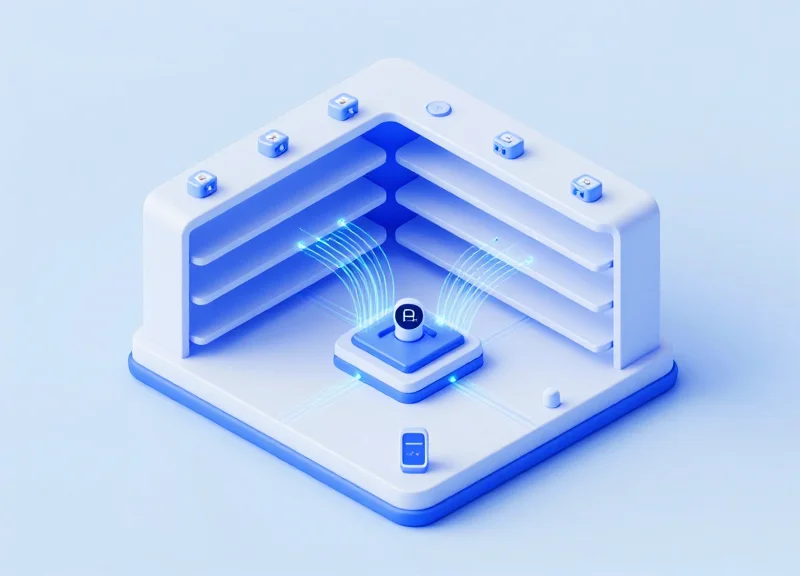
Strategic Electronic Article Surveillance (EAS) integration is the holistic deployment of anti-theft technologies—such as Acousto-Magnetic (AM) or Radio Frequency (RF) systems—that are architecturally blended into a boutique environment. Unlike standalone alarms, strategic integration involves connecting antennas, intelligent tagging, and backend analytics into a unified ecosystem that provides real-time visibility into shrink patterns while protecting the high-margin customer journey and maintaining the brand's premium visual standards.
| Feature | Legacy EAS | Strategic EAS Integration |
|---|---|---|
| Primary Goal | Generic theft deterrence | Profit protection and data-driven loss prevention |
| Aesthetic Impact | Obtrusive pedestals that disrupt store flow | Concealed or design-forward invisible antennas |
| Tagging Method | Standard hard tags (often damaging) | Bespoke, fabric-safe, high-security specialized tags |
| Data Utility | No data; local alarm only | Real-time cloud analytics and shrinkage heatmaps |
In high-end menswear, the move to strategic integration is driven by the need for 'invisible security.' This involves three core pillars: concealed detection systems (such as floor-loop or overhead antennas), specialized tagging for delicate fabrics like vicuna or Super 150s wool, and software integration that alerts staff via mobile devices rather than loud, disruptive sirens. Expert Tip: The most overlooked component of strategic EAS is the Tactical Tagging Protocol. By utilizing variable-length pins tailored to the specific GSM (grams per square meter) of the fabric, retailers eliminate the permanent dimpling and fabric stress that often leads to forced markdowns on high-end suiting—essentially protecting the margin even if the item is never stolen.
How does EAS integration specifically benefit menswear retailers?
Menswear boutiques carry high-value, high-risk items like leather jackets and tailored suits. Strategic integration allows for specialized 'lanyard' or 'pin-less' tagging that secures these items without piercing delicate leathers or distorting the drape of a jacket.
Can EAS be integrated with existing inventory systems?
Yes. Modern strategic EAS often utilizes RFID-enabled tags, allowing the security system to double as a real-time inventory management tool, drastically improving stock accuracy alongside loss prevention.
Will these systems disrupt the luxury boutique atmosphere?
No. The 'strategic' element focuses on subtlety. Advanced systems use under-floor or in-door frame antennas that are completely hidden from the customer's view, ensuring the architectural integrity of the store remains intact.
AM vs. RF Technology: Which is Best for Fine Fabrics?
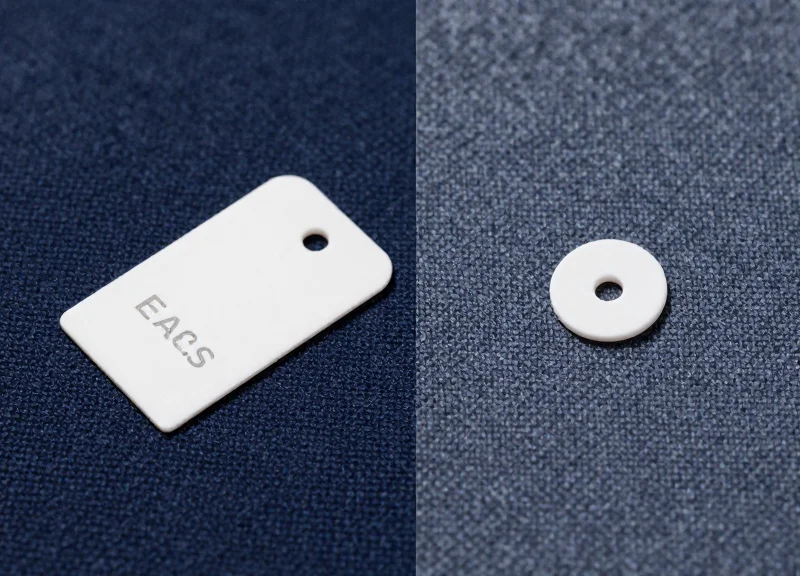
For high-end menswear retailers, Acousto-Magnetic (AM) technology at 58 kHz is the industry standard for protecting fine fabrics due to its superior resistance to metallic interference and the availability of ultra-slim needle pins. While Radio Frequency (RF) systems operating at 8.2 MHz are cost-effective for general retail, they frequently struggle with 'shielding' caused by metallic fibers, high-end zippers, or foil-lined bags, making AM the preferred choice for safeguarding luxury suits and outerwear.
| Feature | Acousto-Magnetic (AM) | Radio Frequency (RF) |
|---|---|---|
| Frequency | 58 kHz | 8.2 MHz |
| Detection Width | Up to 2.4m (Wide entrances) | Up to 1.8m (Standard entrances) |
| Metal Resistance | High (Works near zippers/buttons) | Low (Susceptible to shielding) |
| Tag Size | Small, elongated profiles | Flat, often larger square footprints |
| Fabric Safety | Excellent (Fine-gauge pins available) | Moderate (Standard pins can tear silk) |
The 'Pin-Hole Paradox' is a major concern for luxury retailers. High-thread-count Egyptian cottons and silk-blend suit linings are susceptible to permanent fiber displacement if heavy-gauge security pins are used. AM systems often utilize specialized 'Precision Pins'—thinner, surgical-grade steel needles that slip between fabric weaves rather than piercing the yarns. This ensures that once the tag is removed at the point of sale, the garment remains in pristine, 'boutique-fresh' condition without visible puncture marks.
Why does metal interference matter for menswear?
Many luxury menswear items feature metallic components like silver-coated buttons, Riri zippers, or even metallic threads in the weave. RF systems often generate 'false negatives' because these metals interfere with the 8.2 MHz signal. AM technology is virtually immune to this interference, ensuring consistent detection.
Can I use adhesive labels on fine wool?
Avoid using RF adhesive labels on high-end wool or cashmere. The adhesive residue can bond with delicate natural fibers, leading to 'pilling' or discoloration upon removal. Hard tags with smooth-stem pins are always recommended for tailored garments.
What is the Expert Tip for discreet protection?
Look for 'Lanyard Tags' for luxury leather goods and unstructured knitwear. Instead of piercing the material, the tag loops through a buttonhole or hardware, maintaining the structural integrity of the piece while providing the same AM-level security.
Ultimately, the decision rests on the specific inventory mix. If your floor is dominated by bespoke tailoring and technical outerwear with heavy hardware, the higher initial investment in AM technology pays for itself by preventing the 'shielding' techniques used by professional shoplifters and preserving the delicate hand-feel of your most expensive SKUs.
The Art of Discreet Protection: Invisible Antennas and Soft Tags
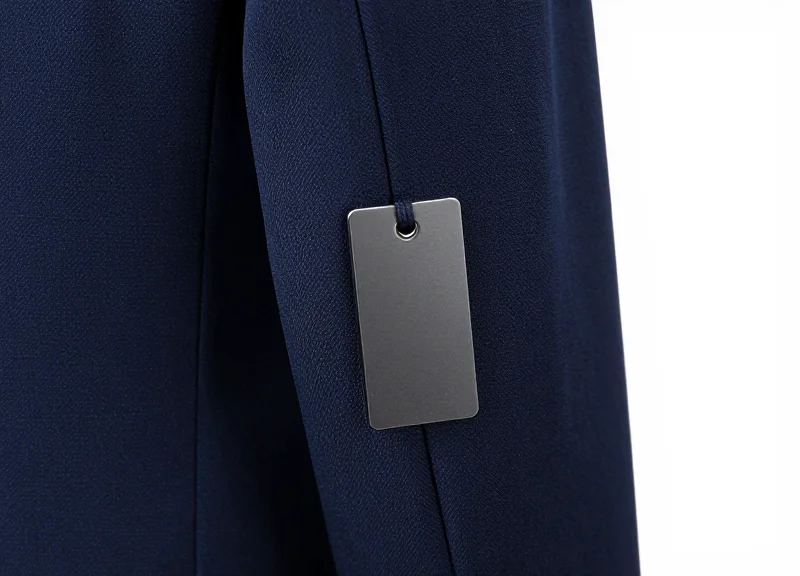
In luxury menswear, the 'shopping experience' is a tangible asset that is often at odds with traditional security measures. Discreet protection refers to the integration of Electronic Article Surveillance (EAS) technology that provides a 40% reduction in shrinkage without the use of intrusive, bulky pedestals at the entrance. By utilizing under-floor loops (invisible antennas) and ultra-thin, frequency-matched soft tags, retailers create a seamless, open-concept environment that preserves the brand's prestigious image while maintaining a rigid security perimeter.
| Feature | Traditional Pedestals | Invisible Floor Antennas | Overhead Sensors |
|---|---|---|---|
| Visual Impact | High: Obstructs entrance view | Zero: Completely hidden under-floor | Low: Mounted on high ceilings |
| Detection Range | Standard (1.2m - 1.8m) | Superior (Up to 2.5m width) | Moderate (Requires line-of-sight) |
| Aesthetic Alignment | Functional/Industrial | Luxury/Minimalist | Architectural/Modern |
| Ideal Application | Mass market retail | Bespoke showrooms & Boutiques | Flagship stores with high ceilings |
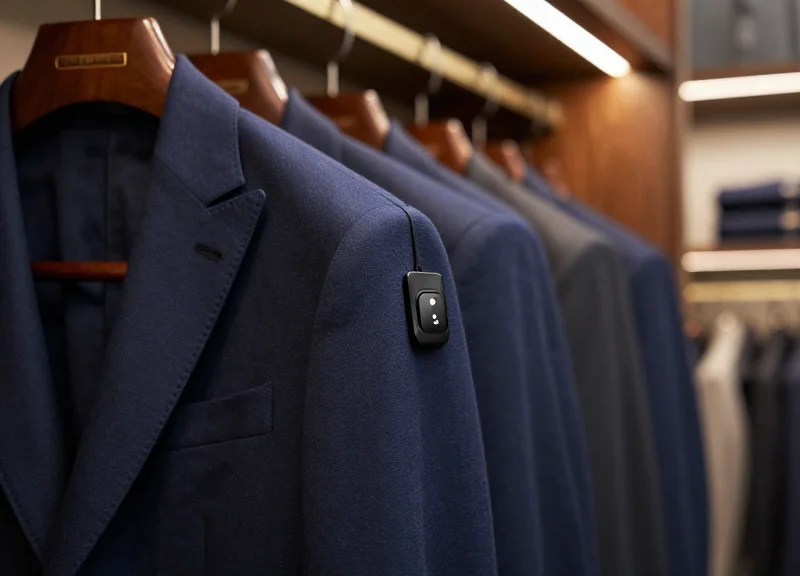
The success of invisible systems relies on the precision of the tags applied to the garments. For menswear, where fabrics like Super 150s wool, cashmere, and silk are common, the physical 'hard tag' is often too heavy or damaging. This is where high-performance soft tags and micro-pencil tags come into play. These devices are designed to be tucked into internal pockets or applied to care labels, ensuring they are invisible to the customer during the try-on process but highly visible to the under-floor sensors.
Will invisible antennas work through marble or hardwood flooring?
Yes. Modern AM (Acousto-Magnetic) floor loops are designed to be installed beneath 20mm of stone, tile, or wood without signal degradation, provided there is no significant metal interference in the immediate sub-floor.
How do soft tags prevent damage to delicate linings?
High-end retailers use 'clutchless' or 'smooth-pin' micro-tags. These use a surgical-grade needle that slides between fabric fibers rather than piercing through them, preventing permanent holes in expensive suit linings.
Are invisible systems as effective at deterring theft as visible ones?
While they lack the 'visual deterrent' of a pedestal, they are more effective against professional shoplifters who specifically look for ways to shield or bypass visible sensors. The 'surprise' of a silent alarm or a localized alert provides a higher recovery rate.
Expert Insight: The Veblen Security Paradox. In my two decades of retail strategy, I’ve observed that overt security measures can actually devalue a luxury brand’s perceived exclusivity. If a store looks like a high-security vault, the customer's subconscious associates the product with 'risk' rather than 'reward.' Invisible EAS integration solves this by employing what I call 'Transparent Security'—a psychological state where the customer feels trusted, yet the inventory is safer than ever. By removing the physical barrier of the pedestal, you invite the customer into a higher-conversion 'flow state' while the technology works silently in the background.
Optimizing Tag Placement for Maximum Deterrence
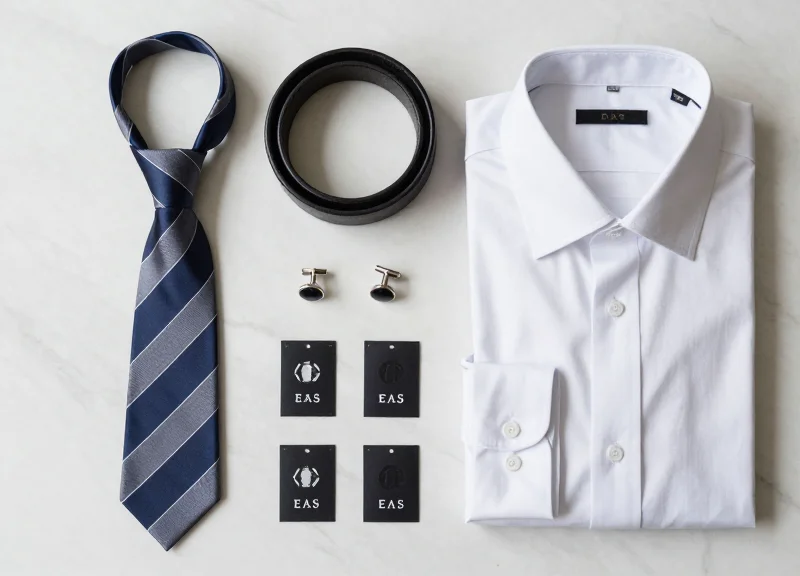
Optimizing EAS tag placement requires a 'security-first, fabric-safe' approach where tags are positioned on the garment’s structural anchors—such as sleeve vents, inseams, or reinforced labels—to ensure maximum detection by sensors while preventing permanent fiber distortion. For high-end menswear, the objective is to make the security device visible enough to provide a psychological deterrent to shoplifters while ensuring the pin placement does not compromise the drape or resale value of luxury materials like Super 150s wool or Nappa leather.
| Garment Type | Primary Placement Location | Security Rationale | Fabric Protection Strategy |
|---|---|---|---|
| Bespoke Suits | Left sleeve vent (3rd button) | High visibility for deterrence; standardized for easy cashier removal. | Pin through the lining seam only to avoid piercing the face fabric. |
| Silk Ties | Keeper loop (reverse side) | Protects against 'pocketing' while remaining discreet during styling. | Use a fine-gauge 'smooth-pin' to prevent snagging delicate silk fibers. |
| Leather Outerwear | Underarm seam or pocket welt | Difficult to remove without damaging the high-value item. | Never pierce the leather grain; use existing stitching holes or eyelets. |
| Cashmere Knitwear | Back neck seam/Label area | Ensures the tag moves with the garment; prevents snagging. | Place pin through the woven brand label to support the weight of the tag. |
The Expert Perspective: The 'Structural Anchor' Principle. In Silicon Valley luxury retail circles, we move away from random tagging to the 'Structural Anchor' principle. This dictates that a tag should only be applied where at least two layers of fabric meet (a seam) or where reinforced interfacing is present. This prevents 'gravity sag,' where the weight of a heavy hard tag creates a permanent hole or 'dimple' in lightweight fabrics during long-term display.
- The 45-Degree Pin Entry: Instruct staff to insert the EAS pin at a 45-degree angle relative to the fabric weave. This allows the pin to slide between fibers rather than severing them, which is critical for high-thread-count cottons and fine wools.
- Uniform Left-Side Tagging: Standardize all tag placements on the left side of every garment. This speeds up the checkout process and allows floor managers to conduct a 'visual audit' in seconds to identify untagged high-risk items.
- Fitting Room Symmetry Check: Ensure tags are placed where they do not interfere with the garment's fit during a try-on. A tag placed too high on a trouser waist, for example, prevents the customer from closing the button, often leading to lost sales.
How do we tag items that cannot be pierced, like unlined leather?
For unlined leather or delicate suede, use high-strength lanyard tags looped through buttonholes or zipper pulls. This provides the same EAS protection without creating a permanent hole in the hide.
Should tags be hidden or visible for luxury brands?
Data shows that 'Visual Deterrence' is more effective than 'Catching the Thief.' Tags should be visible upon close inspection to discourage professional shoplifters, but not so prominent that they ruin the store's luxury aesthetic.
What is the best way to handle 'Tag-Switching' fraud?
Use 'ink-return' tags on high-risk items like leather jackets. If a shoplifter attempts to force the tag off to swap it with a lower-value item's tag, the ink vial breaks, rendering the garment unsellable.
Empowering Staff through EAS Data and Alerts

Staff empowerment through EAS data transforms a passive security system into a proactive sales and loss prevention tool. By integrating real-time alerts with mobile devices or discreet wearables, high-end menswear consultants can shift from reactive 'alarm-chasing' to a 'Service-First' security model. This approach ensures that security incidents are handled with the same level of sophistication as a bespoke fitting, maintaining the luxury store's ambiance while significantly deterring internal and external shrinkage.
| Feature | Legacy Alarm Systems | Strategic Data-Driven EAS |
|---|---|---|
| Notification Method | Public, audible siren | Discreet mobile/wearable notifications |
| Staff Response | Confrontational/Defensive | Customer Service Pivot (The 'Assistance' approach) |
| Data Utility | None (Noise only) | Heatmaps, peak-theft timing, and item-level data |
| Customer Experience | Embarrassing/Intrusive | High-end, seamless, and professional |
- Implement Mobile Alert Integration: Link your EAS system to staff tablets or smartwatches. When a tag is detected near an exit, the closest sales associate receives a silent vibration, allowing them to approach the customer under the guise of 'checking for a missed security tag' before they leave the premises.
- Analyze Tag-Alarm Heatmaps: Use backend data to identify which zones of the store trigger the most 'near-miss' alarms. If the tailored suit section triggers more alerts than the accessories wall, adjust your staffing levels to ensure a higher floor presence in that specific high-risk zone.
- The 'Customer Service Pivot' Training: Train staff to use the 'Service Pivot'—treating every alarm as a technical error or a forgotten tag. By saying, 'I think our system missed a tag on your new blazer, let me quickly clear that for you,' staff can recover merchandise without making a direct accusation.
Expert Insight: In luxury retail, the 'False Alarm' is often a bigger threat to the bottom line than shoplifting because it alienates high-net-worth clients. Modern EAS data allows you to track 'Tag-In-Pocket' (TIP) incidents. If data shows a high frequency of tags being removed in fitting rooms but not passing the POS, it’s a clear signal to refocus staff attention on fitting room management rather than entrance security.
How does EAS data improve staffing efficiency?
By tracking 'alarm-to-intervention' times, managers can see if staff are properly positioned during peak hours. If alarms are going unaddressed during busy Saturday afternoons, it indicates a need for optimized floor scheduling rather than more hardware.
Can real-time alerts reduce internal shrink?
Yes. When employees know that every tag movement and alarm is logged and time-stamped in a central dashboard, the 'opportunity' for internal theft is significantly diminished due to increased digital oversight.
What is the best way to handle an alarm for a VIP client?
The data tells the story. If the POS data shows a $5,000 purchase but the EAS alarm triggers, the staff can instantly see the transaction on their tablet and apologize for the 'manual tagging error' before the client even feels the need to stop.
Synergy Between EAS and RFID for Inventory Accuracy
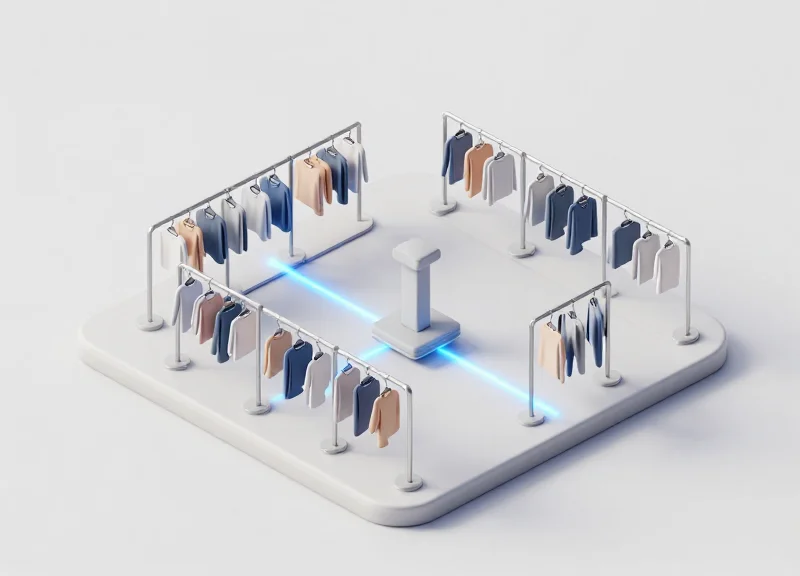
The synergy between Electronic Article Surveillance (EAS) and Radio Frequency Identification (RFID) is the strategic convergence of exit-point security and item-level intelligence. While traditional EAS notifies staff that an item is leaving the store, an integrated RFID-EAS system identifies exactly which item is being removed—down to the specific SKU, size, and color of a bespoke wool suit. This hybrid approach allows high-end menswear retailers to maintain 99.9% inventory accuracy while reducing manual cycle counts by up to 80%.
| Feature | Standard EAS Only | Integrated RFID-EAS Hybrid |
|---|---|---|
| Primary Function | Theft Deterrence | Security + Real-time Visibility |
| Data Granularity | Binary (Alarm/No Alarm) | Specific SKU & Serial Identification |
| Inventory Impact | None (Manual count required) | Automated stock level updates |
| Shrinkage Insight | Volume-based | Root-cause analytics (What/When/Where) |
One of the most significant advantages of this integration is the elimination of 'Phantom Inventory.' In luxury menswear, if a specific size-42 tuxedo is stolen but not accounted for until the next manual audit, the retailer loses not just the cost of the garment, but the revenue from every customer who would have purchased it in the interim. A dual-system triggers an immediate stock-out alert the moment the item exits, enabling automated re-ordering or cross-store transfer.
- Select Dual-Technology Hardware: Utilize hard tags or fabric labels that house both an AM/RF coil for security and an RFID chip for data tracking.
- Deploy Intelligent Gateways: Install overhead or floor-based RFID readers near EAS antennas to capture item data as the alarm is triggered.
- Synchronize with ERP/POS: Link the RFID data stream to your Enterprise Resource Planning software to update 'Available to Promise' (ATP) stock in real-time.
Expert Insight: The 'Zero-Day Audit' Advantage. Most retailers treat shrinkage as a retrospective metric calculated at the end of a quarter. By integrating RFID with EAS, you shift to a 'Zero-Day' model. When a high-value item leaves the store illicitly, the system instantly identifies the loss. This allows security teams to review high-definition CCTV footage for that specific timestamp, significantly increasing the chances of recovery or identifying organized retail crime (ORC) patterns before they escalate.
Does RFID replace the need for EAS?
No. RFID is excellent for data, but EAS remains superior for physical deterrence and high-speed detection at wide exits. The two should work in tandem for a 360-degree solution.
Can RFID tags be hidden in high-end labels?
Yes, many luxury brands now use 'source tagging' where a microscopic RFID inlay is embedded directly into the brand's woven neck label during manufacturing.
Is the ROI justifiable for smaller boutiques?
While the initial investment is higher, the reduction in labor costs for inventory counting and the prevention of lost sales due to out-of-stocks typically leads to a full ROI within 12-18 months.
Case Study: The Roadmap to a 40% Shrinkage Reduction

High-end menswear retailers achieve a 40% shrinkage reduction by transitioning from passive security to a 'layered intelligence' model, combining invisible EAS detection, data-driven staff deployment, and specialized tagging for high-value items like bespoke wool suits and silk accessories. This success is not merely a result of installing hardware, but the outcome of a structured roadmap that integrates loss prevention into the customer service experience.
| Implementation Phase | Key Strategic Action | Expected Shrinkage Impact |
|---|---|---|
| Phase 1: Diagnostic | Item-level loss auditing and vulnerability mapping. | 5-8% Reduction (Prevention focus) |
| Phase 2: Integration | Deployment of invisible AM EAS and discreet tagging. | 15-20% Reduction (Detection focus) |
| Phase 3: Human Capital | Staff training on alert response and concierge security. | 10% Reduction (Deterrence focus) |
| Phase 4: Optimization | Data analytics integration for proactive scheduling. | 5-7% Reduction (Precision focus) |
- The Baseline Audit: Retailers begin by identifying 'hot spots' within the boutique. In luxury menswear, this often includes accessory walls (silk ties and pocket squares) and hidden fitting room corners. Establishing a granular baseline of loss per SKU is essential for calculating the subsequent ROI of EAS hardware.
- Discreet Hardware Deployment: To maintain the boutique aesthetic, retailers install concealed floor-loop antennas or pedestal-free systems. For the merchandise, magnetic-clutch pencil tags with delicate pins are utilized to protect Loro Piana wools and cashmere without fiber displacement.
- The 'Concierge-Security' Hybrid Model: Staff are trained to view EAS alerts not as police actions, but as customer service opportunities. When a tag triggers, staff approach with a 'May I help you with that item?' posture, which effectively deters casual shoplifters while maintaining a high-end experience for legitimate clients.
- Iterative Data Refinement: Successful retailers review weekly EAS alarm data against point-of-sale records. This reveals 'internal shrinkage' patterns or specific times of day when the sales floor is under-protected, allowing for precise management of labor hours.
Expert Insight: The 'Halo Effect' of EAS integration is often overlooked. When high-end retailers secure their most expensive items effectively, they feel confident moving inventory from the stockroom to the sales floor. This increases product accessibility and leads to a documented 3-5% lift in top-line sales, effectively paying for the EAS system through increased revenue alone, independent of loss prevention.
How long does it take to see the 40% reduction?
Most high-end retailers see an immediate 15% drop within the first 90 days of implementation, with the full 40% reduction realized at the 18-month mark as staff culture and data processes mature.
Will EAS tags damage delicate tailored garments?
No, when using high-quality fine-pin needles and smooth-bore clutch mechanisms, the fibers of high-micron wools are pushed aside rather than severed, ensuring zero damage to the garment's integrity.
What is the typical ROI for this roadmap?
For a mid-sized luxury boutique, the EAS investment typically pays for itself within 12 months through a combination of recovered inventory and reduced labor costs associated with manual stock counts.
Future-Proofing Your Security Infrastructure
Future-proofing your security infrastructure means transitioning from static, hardware-dependent Electronic Article Surveillance (EAS) to a dynamic, software-defined ecosystem. For high-end menswear retailers, this ensures that the initial investment in loss prevention remains effective against sophisticated Organized Retail Crime (ORC) tactics—such as booster bags and jamming devices—by allowing for remote firmware updates, AI-driven analytics, and seamless integration with future IoT sensors without needing to rip and replace physical pedestals.
| Feature | Legacy EAS Systems | Future-Proof Infrastructure |
|---|---|---|
| Architecture | Standalone, Hardware-based | Cloud-connected, Software-defined |
| ORC Defense | Reactive (Alarm only) | Proactive (Signal jamming detection) |
| Scalability | Manual per-store configuration | Centralized remote management |
| Data Utilization | None/Local log | Predictive AI & Traffic analytics |
How does future-proofing address Organized Retail Crime (ORC)?
Modern systems include 'Metal and Jammer Detection' capabilities that identify professional shoplifting tools, such as foil-lined booster bags, the moment they enter the store, alerting staff before a theft even occurs.
Can my current EAS hardware be upgraded?
Leading-edge EAS controllers are now built with modular slots and expandable ports, allowing retailers to add RFID capabilities or upgraded sensors later without replacing the aesthetic antenna housings.
What is the role of Cloud Analytics in future-proofing?
Cloud connectivity allows for 'Health Monitoring,' ensuring your security system is 100% operational across all global branches and providing cross-store data to identify regional theft trends.
Expert Insight: The most overlooked aspect of future-proofing is 'Edge-Based Pattern Recognition.' Beyond simple frequency detection, modern EAS systems now use machine learning at the 'edge' (within the antenna itself) to distinguish between a legitimate customer accidental tag-carry and a deliberate 'speed-run' theft. This drastically reduces false alarms, which is critical for maintaining the high-touch, premium atmosphere of luxury menswear boutiques while simultaneously tightening the net against professional thieves.