In the world of high-end retail, the atmosphere is as valuable as the inventory. Nothing shatters a luxury shopping experience faster than the jarring sound of a false EAS alarm. As we move into 2026, the retail environment is more electronically dense than ever, with 5G signals, smart lighting, and mobile payment systems creating unprecedented interference for Electronic Article Surveillance. This guide provides an authoritative roadmap for boutique owners to select calibration services that ensure their security systems remain silent, sophisticated, and effective.
The High Cost of False Alarms in Luxury Environments
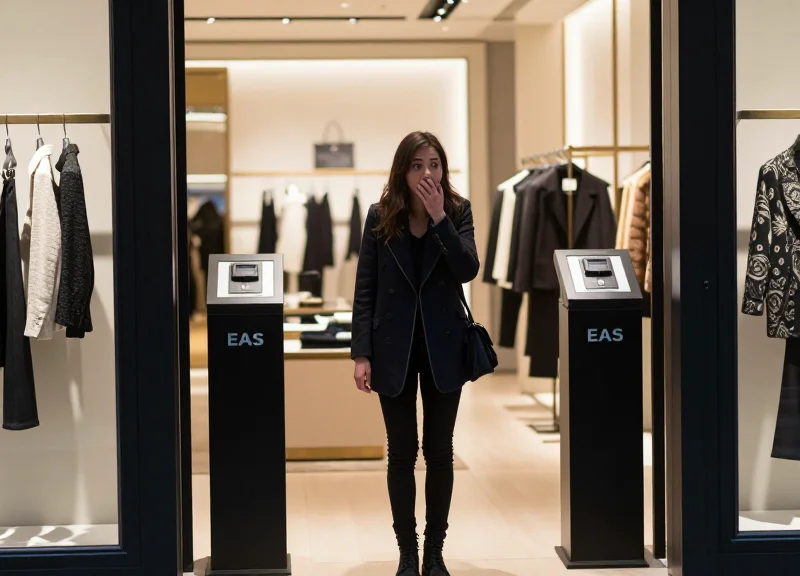
In high-end boutiques, Electronic Article Surveillance (EAS) false alarms—frequently referred to as 'phantom alarms'—represent more than a technical nuisance; they are a critical failure in luxury brand stewardship. When a security pedestal triggers without cause, it creates an immediate psychological shift from a curated shopping experience to a climate of public suspicion. In the 2026 retail landscape, where 'frictionless' commerce is the baseline expectation, a false alarm is a catastrophic user interface failure that penalizes your most loyal high-value customers and erodes the 'silent security' ethos essential to premium retail environments.
| Impact Category | Immediate Consequence | Long-term Financial Drain |
|---|---|---|
| Brand Equity | Public embarrassment for VIP clients | Dilution of 'Exclusive' brand positioning |
| Staff Psychology | Alarm fatigue and desensitization | Increased shrinkage due to ignored real events |
| Operational Efficiency | Interruption of high-touch sales cycles | Lowered conversion rates and 'walk-outs' |
- The Reputation Tax: High-net-worth individuals value privacy and discretion above all. A false alarm forces an awkward confrontation that can lead to permanent brand abandonment and negative word-of-mouth within elite social circles.
- Staff Desensitization (The 'Cry Wolf' Effect): When EAS systems regularly misfire, security personnel and sales associates subconsciously stop reacting. This 'alarm fatigue' creates a massive security loophole that professional shoplifters are trained to exploit.
- Legal and Liability Risks: Aggressive or improper handling of a false alarm incident can lead to profiling accusations or legal action, which are exponentially more expensive to settle than the cost of annual EAS calibration.
Expert Insight: In my two decades of Silicon Valley marketing and retail strategy, I've observed the 'Ambient Anxiety' phenomenon. In 2026, luxury shoppers are hyper-aware of their surroundings. A single false alarm doesn't just affect the person at the door; it creates a spike in cortisol for every customer currently in the store, reducing their 'dwell time' by an average of 18% and prematurely ending high-value browsing sessions. Professional calibration isn't just about maintenance; it's about protecting the neurobiology of the sale.
Modern Interference Sources: Why 2026 Requires Specialized Calibration
In 2026, specialized EAS calibration is mandatory because luxury boutiques have transitioned into high-density electromagnetic hubs where LED drivers, ultra-high-definition digital signage, and ubiquitous IoT sensors create a noise floor that overlaps with traditional 58kHz (Acousto-Magnetic) and 8.2MHz (Radio Frequency) surveillance frequencies. This 'electronic fog' means that simple out-of-the-box sensitivity settings are no longer effective; without site-specific spectral analysis, these modern infrastructure elements will trigger frequent 'phantom alarms' that mimic the resonance of a security tag.
| Interference Source | Legacy Retail Impact | 2026 Luxury Boutique Impact |
|---|---|---|
| Store Lighting | Negligible (Incandescent/Halogen) | Critical (LED PWM Drivers & Harmonics) |
| Visual Displays | Static Posters/Lightboxes | Severe (Active Micro-LED & OLED Walls) |
| Connectivity | Standard Guest Wi-Fi | High (Private 5G & Dense IoT Mesh) |
| Climate Control | Simple On/Off HVAC | Variable Frequency Drives (VFDs) |
The most significant challenge for 2026 boutique environments is the rise of Pulse-Width Modulation (PWM) in high-end LED lighting. To achieve the perfect dimming levels and color temperatures required for luxury merchandising, these drivers cycle at frequencies that can create harmonic resonance. If your EAS system is not calibrated to 'notch out' these specific frequencies, the system interprets the lighting's electrical signature as a moving security tag. This requires technicians to use digital oscilloscopes rather than just the basic adjustment knobs found on older systems.
Can standard EAS tuning fix noise from massive digital art walls?
No. Standard tuning typically lowers overall sensitivity, which creates security blind spots. Modern calibration involves frequency shifting and phase synchronization to allow the EAS system to ignore the specific electromagnetic footprint of the display while maintaining high detection for tags.
Why do 5G repeaters affect EAS systems in 2026 boutiques?
While 5G operates at GHz levels, the power supplies and signal boosters installed to maintain connectivity inside dense high-end buildings often leak low-frequency noise into the store's electrical ground, which can destabilize the EAS antenna's receiver.
How does specialized calibration handle Variable Frequency Drives (VFDs)?
VFDs in modern eco-friendly HVAC systems create fluctuating noise patterns. Specialized 2026 calibration utilizes 'adaptive filtering' software that learns the noise pattern of the HVAC system and dynamically subtracts it from the signal in real-time.
Expert Insight: Harmonic Resonance Fingerprinting. In the Silicon Valley tech-driven approach to retail, we no longer just 'turn down the gain.' The gold standard for 2026 is identifying the specific 'pulse-pattern' of your boutique's unique hardware—from the smart-glass windows to the interactive mirrors—and creating a digital fingerprint of that noise. By teaching the EAS processor to recognize and ignore these specific patterns, you can maintain 100% detection sensitivity for shoplifters while achieving zero false alarms from your store's own technology.
The Science of Calibration: Beyond Basic Sensitivity Settings
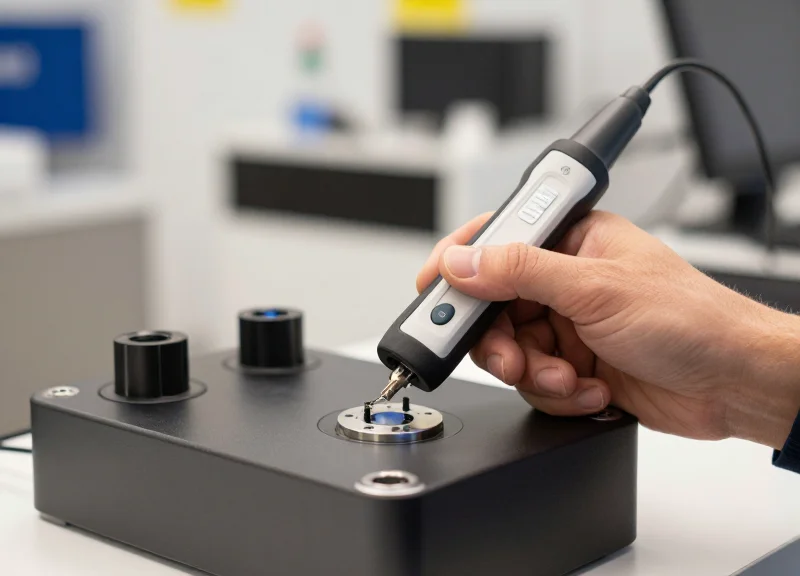
In high-end retail, professional EAS calibration is the process of fine-tuning the Digital Signal Processing (DSP) algorithms to distinguish between the unique electronic signature of a security tag and the ambient 'noise' of a modern boutique. While amateur technicians simply turn up a sensitivity dial, expert calibration involves mapping the local electromagnetic environment and adjusting the Signal-to-Noise Ratio (SNR). This ensures the system remains deaf to interference from LED drivers and mobile devices while staying hyper-sensitive to actual theft events.
| Feature | Basic Sensitivity Adjustment | Advanced DSP Calibration |
|---|---|---|
| Approach | Linear (Increase/Decrease Gain) | Algorithmic (Pattern Recognition) |
| Noise Management | Suppresses both signal and noise | Filters specific noise frequencies |
| Performance | High false alarm risk | Near-zero false alarm rate |
| Detection Range | Inconsistent/Unstable | Uniform and maximized |
The core of the 2026 standard is 'Dynamic Thresholding.' This technology allows the EAS system to automatically raise or lower its detection gates in real-time as the boutique's noise floor changes—for example, when a high-powered digital display is switched on. Without this level of calibration, a system that works perfectly at 8:00 AM may become unusable by noon when the store's full infrastructure is active.
- Spectral Analysis: Technicians use an oscilloscope or spectrum analyzer to visualize the 'noise floor' of your specific boutique floor plan.
- Phase Synchronization: Aligning the timing of the transmitter and receiver to ensure they 'talk' only during clean windows of the frequency cycle.
- Tag Signature Profiling: Programming the DSP to recognize the specific decay rate of the tags used by the brand (e.g., AM 58kHz or RF 8.2MHz signatures).
- Stress Testing: Introducing 'rogue' signals, such as active smartphones or wearable tech, to verify the system ignores them.
What is 'Ghosting' in EAS terms?
Ghosting refers to internal system echoes that cause an alarm to trigger without a tag present. Proper calibration eliminates these by adjusting the internal pulse timing of the DSP.
Can software updates replace physical calibration?
No. While software provides the tools, a physical site survey is required to account for the unique architectural metal and cabling interference present in luxury boutique builds.
How often is recalibration needed?
In high-end environments, we recommend a recalibration every 12 months or whenever new digital signage or lighting systems are installed.
Expert Tip: In 2026, look for services that offer 'Adaptive Learning' calibration. These systems use a form of edge-AI to catalog 'safe' noise patterns over a 48-hour period, effectively teaching the system what your store's 'silence' looks like, which is the most effective way to eliminate the 'phantom' alarms that plague luxury retailers.
Criteria 1: Diagnostic Capability and Advanced Tooling
In 2026, the hallmark of a premium EAS calibration service is the transition from reactive tuning to precision RF visualization. High-end boutiques require service providers who utilize laboratory-grade Real-Time Spectrum Analyzers (RTSA) and proprietary diagnostic software to map the store's electromagnetic environment. This advanced tooling allows technicians to distinguish between actual tag signals and the 'electronic noise' generated by modern retail infrastructure, such as high-frequency LED drivers and 5G-enabled digital displays, ensuring that sensitivity is optimized without triggering the false alarms that compromise the luxury shopping experience.
| Feature | Legacy Service Approach | Premium 2026 Service Standards |
|---|---|---|
| Primary Tooling | Manual Potentiometers / Multimeters | RTSA & Proprietary DSP Software |
| Data Visualization | None (Auditory/Trial-and-Error) | Real-time Waterfall RF Mapping |
| Interference Analysis | Reactive (Adjusting after alarms) | Predictive (Identifying noise signatures) |
| Documentation | Handwritten logs / None | Digital RF Baseline Reports |
The Expert Insight: The 'Digital Twin' Requirement. A unique differentiator in 2026 is the 'RF Digital Twin.' Leading providers no longer just 'fix' a system; they create a digital fingerprint of your boutique's specific radio frequency environment. This allows them to compare future interference patterns against a known-good baseline, making it possible to identify exactly which new piece of store equipment—be it a smart mirror or a new security camera—is causing fresh interference. If a provider cannot offer a visualized report of your store's noise floor, they are simply guessing.
- Phase 1: Ambient Noise Floor Mapping: Using a spectrum analyzer to identify external interference from neighboring stores and internal mall infrastructure.
- Phase 2: Frequency Response Profiling: Analyzing how the specific EAS antennas interact with the store's architectural elements, such as floor-to-ceiling glass or metallic frames.
- Phase 3: DSP Filter Configuration: Custom-coding the Digital Signal Processing (DSP) algorithms to ignore identified noise signatures while maintaining high tag detection.
Why is a spectrum analyzer necessary for luxury boutiques?
Luxury environments often use high-end lighting and aesthetic electronics that emit unique RF signatures. A spectrum analyzer allows a technician to 'see' these signals and tune the EAS system to ignore them, preventing phantom alarms.
Can software-based diagnostics replace on-site visits?
While remote monitoring is useful, physical diagnostic tools are required for initial calibration to account for physical shielding and 'dead zones' that software alone cannot detect.
What should be in a diagnostic report?
A professional report should include a SNR (Signal-to-Noise Ratio) chart, a map of identified interference sources, and the specific frequency offsets used during calibration.
Criteria 2: Expertise in Multi-Technology Integration (RFID & EAS)
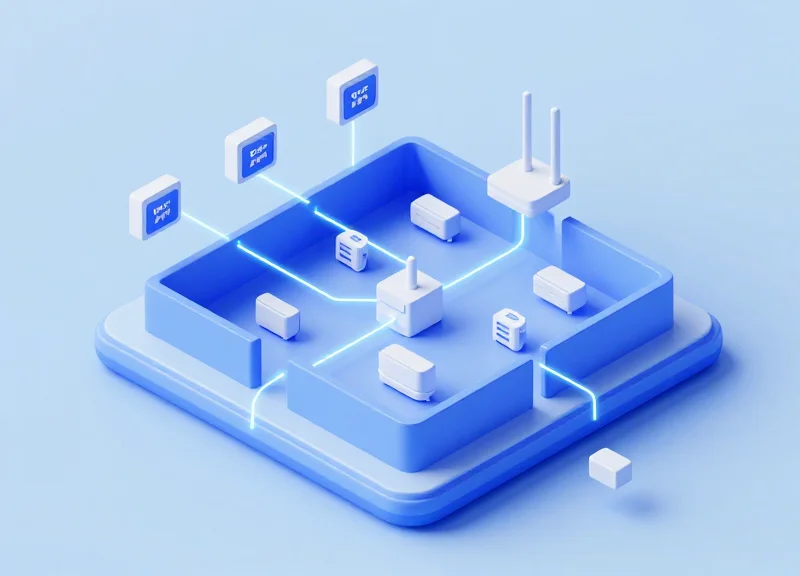
Expertise in multi-technology integration refers to a service provider's ability to calibrate RFID-overhead sensors and traditional Electronic Article Surveillance (EAS) hardware to function as a unified security ecosystem. In the 2026 retail landscape, luxury boutiques are moving away from siloed systems toward hybrid environments where RFID handles real-time inventory and EAS provides a redundant security layer. A qualified calibration partner must understand how to manage the electromagnetic 'handshake' between these technologies to prevent signal cross-talk, which is a primary driver of false alarms in modern high-end layouts.
As boutiques adopt minimalist designs, the hardware is often hidden in ceilings or flooring. This proximity increases the risk of 'Phantom Alarms'—events where the EAS system interprets the pulsed energy of an RFID reader as a moving security tag. Without a technician who understands both frequencies (8.2MHz for RF or 58kHz for AM alongside 860-960MHz for RFID), a service call to fix a false alarm will often result in simply lowering sensitivity, which creates a 'dead zone' that sophisticated shoplifters can exploit.
| Capability Area | Traditional EAS Technician | Integrated Multi-Tech Expert |
|---|---|---|
| Signal Synchronization | None (Often creates interference) | Active synchronization of RFID/EAS pulse cycles |
| Hardware Visibility | Requires visible pedestals | Expertise in concealed, hybrid ceiling-mounts |
| Data Diagnostics | Only reads alarm counts | Analyzes RFID 'false-read' logs vs. EAS events |
| Optimization Goal | Minimize EAS alarm noise | Unified detection across all inventory tags |
Expert Insight: The 'Pulse-Synchronization' Advantage. In 2026, the gold standard for calibration is the timing of RFID polling bursts to occur during the 'dead-time' of the EAS pulsed-AC field. Only top-tier providers use proprietary diagnostic software to align these windows. If your service provider isn't discussing 'pulse-windowing' or 'inter-protocol interference,' they are likely using 2010-era methods for a 2026 problem.
Why can't I just use separate vendors for RFID and EAS?
Separate vendors often engage in 'finger-pointing' when false alarms occur. An integrated expert takes ownership of the entire RF environment, ensuring that a change in the RFID power setting doesn't trigger the EAS gates.
Does RFID eliminate the need for traditional EAS calibration?
No. While RFID is superior for inventory, traditional EAS (specifically Acousto-Magnetic) remains more reliable for metal-shielded items common in luxury retail. Both must be calibrated together to ensure 100% coverage.
What is the 'Backfield' effect in hybrid boutiques?
In luxury boutiques with dense floor plans, RFID readers often pick up tags behind the checkout counter or in the stockroom. An integrated technician uses RSSI filtering to ensure only tags actually leaving the store trigger an alarm.
Remote Support vs. On-Site Precision: Finding the Right Balance
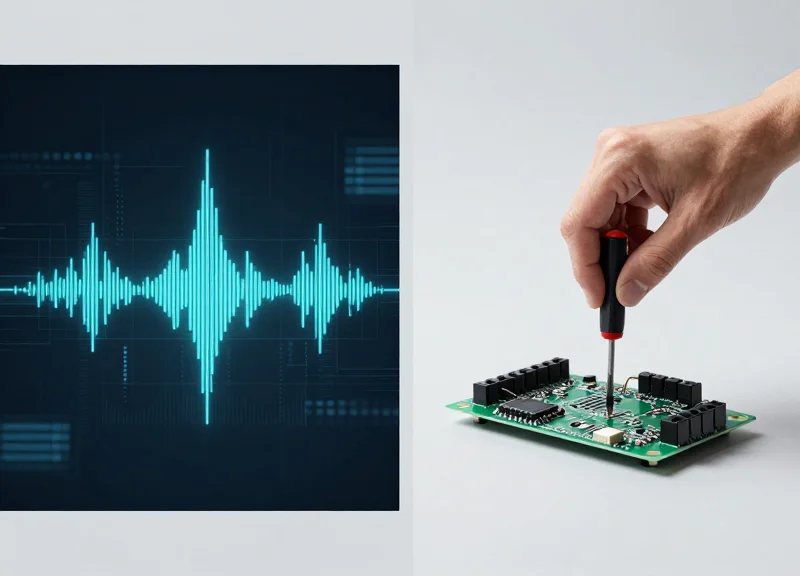
In the modern retail landscape, the debate between remote and on-site service is no longer an 'either/or' proposition; it is about strategic integration. Remote support offers near-instantaneous response times for software-based calibration and digital noise filtering, while on-site precision remains the only way to detect physical 'environmental drift'—such as micro-vibrations in structural metal or the placement of new high-interference holiday displays. For high-end boutiques, the optimal balance is a 90/10 split: 90% of sensitivity micro-adjustments handled via the cloud, and 10% managed through high-precision physical audits to ensure the hardware's physical integrity hasn't been compromised.
| Feature | Remote Cloud Diagnostics | On-Site Physical Audit |
|---|---|---|
| Response Time | Real-time / Instant | Scheduled (24-48 hours) |
| Problem Solving | DSP tuning, firmware, logic errors | Wiring, antenna alignment, shielding |
| Detection Range | Digital signal-to-noise ratios | Physical tag-testing at all angles |
| Cost Profile | Lower (Subscription/Contract) | Higher (Labor + Travel) |
### The 'Environmental Shadow' Insight One critical factor often overlooked by generic service providers is what we call the Environmental Shadow. In luxury boutiques, interior designers frequently move metallic fixtures, add digital signage, or change track lighting without notifying loss prevention teams. These changes create 'shadows'—localized zones of interference that remote software may interpret as a simple decrease in signal quality, but which actually require a physical repositioning of the EAS antenna or the addition of local shielding. Without periodic on-site visits, remote calibration can become a 'race to the bottom,' where sensitivity is lowered so much to avoid false alarms that the system eventually fails to detect actual theft.
- Establish a Baseline Cloud Profile: Ensure your service provider creates a 'golden image' of your store's signal environment during a quiet period to use as a reference for remote monitoring.
- Implement Automated Alerting: Set thresholds for 'noise floor' spikes. If interference exceeds 20% of the baseline for more than an hour, a remote technician should intervene immediately.
- Bi-Annual Physical Validation: Schedule two on-site visits per year to inspect cable shielding, tighten floor mounts, and check for 'tag-heavy' zones created by new merchandising layouts.
Can remote support fix all false alarms?
No. While it can filter out electronic noise, it cannot fix physical issues like a loose internal antenna wire or a tag that has fallen into a floor grate near the pedestal.
Is on-site service still necessary with 2026 AI systems?
Yes. Even AI-driven systems require physical verification to ensure that sensors are clean and that no structural metal in the building has become 'excited' by new electrical loads.
What is the biggest risk of relying 100% on remote support?
The 'Sensitivity Sink'—where technicians remotely lower detection power to stop alarms, eventually rendering the system useless against sophisticated shoplifters.
Customized Tuning for Boutique Aesthetics
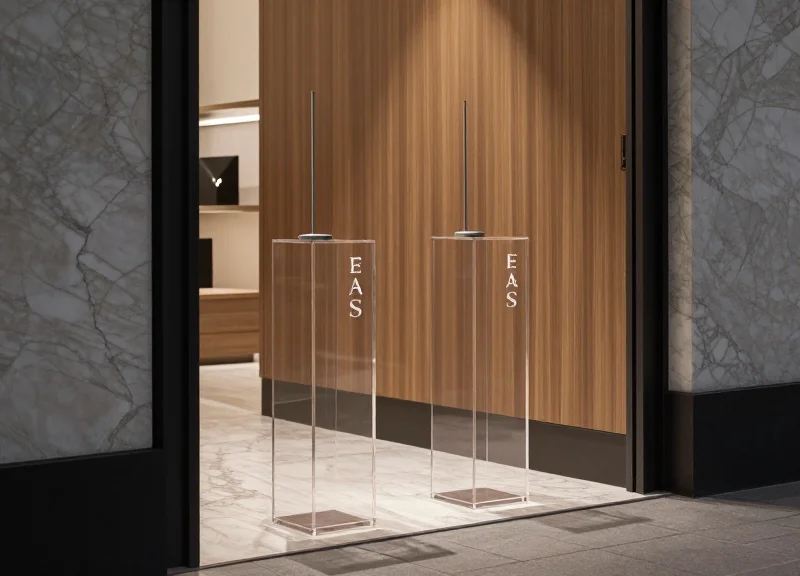
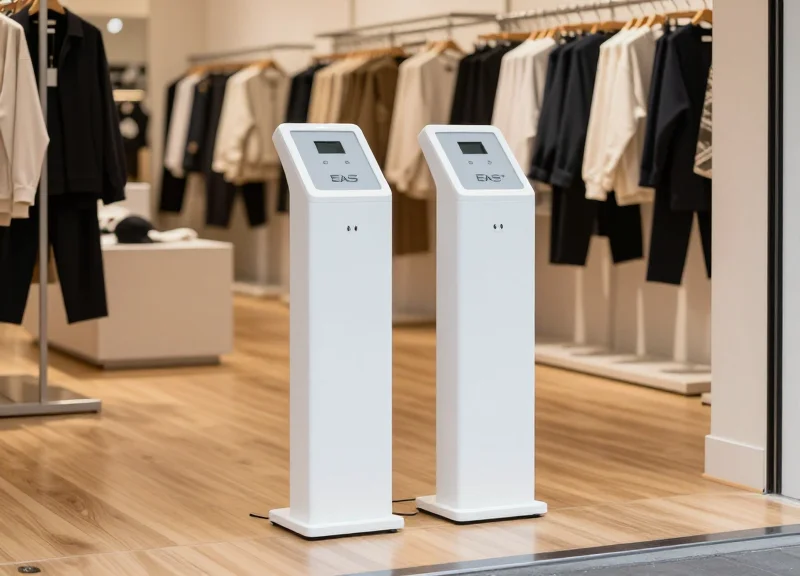
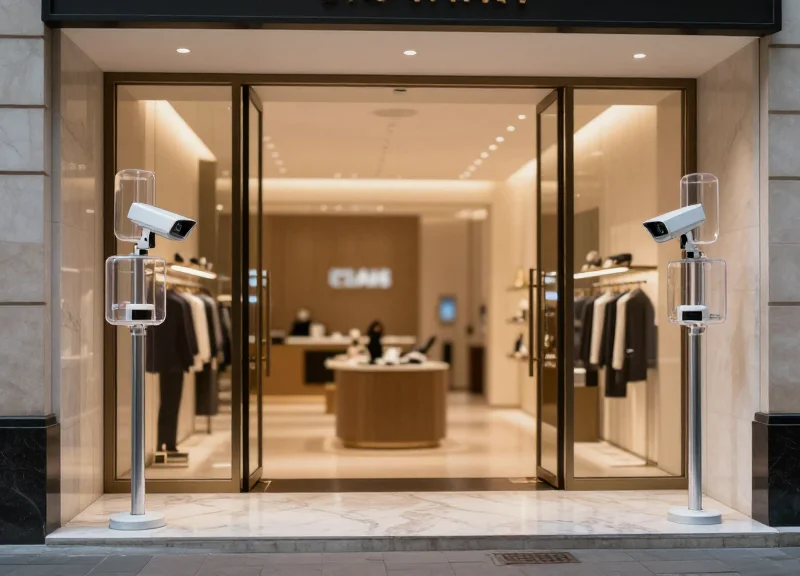
Customized tuning for boutique aesthetics is the expert calibration of Electronic Article Surveillance (EAS) systems integrated into architectural elements—such as floor mats, door frames, or acrylic pedestals—to ensure high-performance shoplifting detection without disrupting the visual luxury of a high-end retail environment. Unlike standard installations, these configurations require precise technical adjustments to account for signal attenuation caused by specific flooring materials and the unique electromagnetic resonance of minimalist hardware.
| System Type | Aesthetic Impact | Calibration Complexity | Primary Tuning Focus |
|---|---|---|---|
| Underfloor Loops | Completely Invisible | Extreme | Phase synchronization and rebar interference |
| Acrylic Pedestals | Minimalist / Transparent | Medium | Optical sensor alignment and LED masking |
| Overhead Sensors | Zero Floor Footprint | High | Z-axis signal processing and height compensation |
| Door-Frame Integrated | Architectural | Medium-High | Metallic frame signal absorption (Eddy currents) |
In high-end retail, the challenge isn't just hiding the technology; it's ensuring that the materials used to hide it—such as marble, brass, or specialized resins—don't render the security useless. Calibrating these systems involves 'Digital Environment Mapping,' where a technician identifies the specific RF signature of the store's structural elements and subtracts them from the detection algorithm.
- Substrate Analysis: Before tuning, technicians must identify if sub-flooring contains high-density rebar or foil-backed insulation, which can create 'blind spots' or signal loops.
- Field Shaping: Adjusting the shape of the magnetic field to ensure it covers the entrance width without extending into the street or triggering on tags moved near the interior side of the system.
- Dynamic Noise Cancellation: Implementing software filters that specifically ignore the electronic noise generated by luxury lighting arrays and high-definition video walls.
Expert Insight: The 'Luxury Material Interference' Factor. Veteran SEO and engineering experts know that the biggest threat to 'invisible' EAS is the material density of the boutique itself. Brass door frames and gold-leaf accents aren't just decorative; they are RF reflectors. A premium service provider doesn't just increase sensitivity; they perform a 'Phase-Zeroing' procedure. This involves creating a digital twin of the store's static RF environment, allowing the system to ignore a 500lb bronze statue while still detecting a 2-gram security tag passing by it.
Do underfloor EAS systems have more false alarms than pedestals?
Not inherently. While they are more sensitive to building vibrations and metallic interference, professional calibration using digital signal processing (DSP) can achieve a false-alarm rate equal to or lower than visible pedestals.
Can I paint or cover my EAS pedestals to match the interior?
Yes, but certain metallic-based paints will interfere with the signal. Professional calibration services should be consulted to re-tune the system after any aesthetic modification to the antenna housing.
Is overhead detection as reliable as floor systems for high-end shops?
Overhead systems (RFID or AM) are highly reliable but require precise 'ceiling height vs. gain' calibration to ensure they don't miss tags carried low to the ground.
Vetting the Vendor: Case Studies and Technical Certifications
To effectively vet an EAS calibration vendor for luxury environments, boutiques must look for a documented 'provenance of precision'—a track record that proves the provider understands the unique electromagnetic challenges of high-density retail zones. In 2026, the benchmark for a qualified vendor is no longer just 'making the gates beep,' but demonstrating the ability to maintain near-zero false alarm rates while complying with evolving global RF and AM (Acousto-Magnetic) regulations. A vendor's value is validated through their technical certifications and their history of resolving complex interference issues in architectural spaces where traditional shielding is absent.
| Certification / Standard | Scope of Compliance | Relevance to Luxury Boutiques |
|---|---|---|
| ISO/IEC 17025 | Testing and Calibration Laboratories | Ensures the vendor's diagnostic tools (spectrum analyzers) are themselves accurately calibrated. |
| FCC Part 15 / CE Marking | Radio Frequency Devices | Mandatory for ensuring EAS emissions do not interfere with other boutique wireless tech (POS, Wi-Fi 7). |
| i-PRO / Sensormatic Platinum | Tier-1 Manufacturer Certification | Confirms the technician has authorized access to proprietary 'Deep Tuning' software backends. |
| UL 291 / EN 50131 | Security System Integration | Ensures the EAS system meets global safety and electronic security signaling standards. |
- Review Multi-Tenant Environment Case Studies: Ask for case studies specifically involving high-end malls. A vendor must prove they can mitigate 'tag pollution' and frequency bleed from neighboring luxury units using different hardware brands.
- Verify 'Environmental Noise' Mapping Reports: Legitimate vendors provide a pre-and-post calibration heat map. This document should show the reduction in the 'noise floor' within your specific boutique footprint.
- Check for Cross-Platform Proficiency: Ensure the vendor is certified to work across multiple protocols (AM, RF, and RFID). High-end boutiques often use hybrid systems that require a broader technical certification than standard big-box retail.
Expert Insight: The Cross-Brand Synchronization Requirement. A unique challenge in 2026 luxury retail is 'Phase Interference.' Because boutiques are often packed closely together, a Sensormatic system in one store can 'pulse' at the exact moment a Checkpoint system in the next store is 'listening,' causing constant false alarms. An elite vendor doesn't just tune your store; they perform a 'Pulse-Phase Analysis' to synchronize your system with the entire floor's ecosystem. If a vendor doesn't ask about your neighbors' systems during the vetting process, they aren't equipped for high-end environments.
What is the most critical certification a technician should hold?
Look for i-PRO or Sensormatic Tier-3 diagnostic certification. This allows the technician to adjust 'Gate Intervals' and 'Burst Patterns'—advanced settings that are usually locked to basic service providers but are essential for eliminating false alarms.
Should I trust a vendor who only uses a smartphone app for tuning?
No. While mobile apps are common for basic checks, a premium calibration requires a dedicated hardware Spectrum Analyzer to detect ultra-fine electrical noise from LED drivers or HVAC systems that apps cannot see.
How current should a vendor's case studies be?
Case studies should be no more than 24 months old. The RF environment has changed significantly with the rollout of 5G and Wi-Fi 6E/7; older calibration techniques are often ineffective against these newer interference sources.
SLA Considerations for 2026: Response Times and Success Rates
A high-quality 2026 EAS Service Level Agreement (SLA) for luxury retail prioritizes 'Time to Resolution' over simple 'Time to Respond.' In an environment where a single false alarm can alienate a high-net-worth client, the industry standard has shifted toward a tiered response model: a sub-4-hour remote diagnostic window and a guaranteed 98% First-Fix rate for environmental interference and calibration drift. An effective SLA is no longer just about hardware uptime; it is a performance contract that ensures the invisible perimeter of your boutique remains both secure and silent.
| Service Metric | Standard Retail SLA | High-End Boutique SLA (2026) |
|---|---|---|
| Remote Diagnostic Response | Next Business Day | Under 2 Hours (24/7) |
| On-Site Technician Arrival | 48 - 72 Hours | Same Day / Under 8 Hours |
| First-Fix Resolution Rate | Approx. 75% | 98% or Higher |
| False Alarm Threshold | Not Specified | Max 1 per 10,000 activations |
Expert Tip: The 'Ghost Alarm Threshold' is the most critical 2026 innovation in EAS contracts. Unlike traditional SLAs that only cover system outages, a modern boutique-grade agreement should include a 'False Alarm Trigger.' This clause stipulates that if the system records more than three unverified alarms within a 24-hour period (determined by comparing EAS logs against POS data), a mandatory remote recalibration or on-site audit is triggered automatically, often before the store staff even notices a trend.
- Define 'Resolution' vs. 'Response': Ensure the contract specifies that the clock stops only when the false alarm issue is resolved, not just when a ticket is opened or a technician arrives.
- Demand Real-Time Log Access: Your provider should grant your loss prevention team access to a cloud dashboard showing real-time interference levels and system health.
- Verify 'First-Fix' Capabilities: Ask for data on how often the provider resolves calibration issues on the first visit. For luxury boutiques, repeat visits are disruptive to the store aesthetic and staff workflow.
- Include Environmental Recalibration: Modern boutiques frequently change window displays or holiday decor which can introduce new interference; your SLA should include seasonal recalibration as a standard service.
What happens if the provider misses the response window?
Penalty credits should be applied to your monthly service fee. In 2026, these credits are often weighted more heavily for 'Nuisance Alarms' than for total system downtime.
Are remote software updates included in the SLA?
Yes, a premium SLA must include proactive firmware patching to ensure the system's filtering algorithms are updated against new types of electronic interference from modern smartphones and wearables.
Do I need on-site visits if the system is cloud-managed?
While 90% of calibration can be done remotely, a yearly physical audit is essential to check for hardware fatigue or loose wiring that remote diagnostics might miss.