In the high-stakes world of streetwear, limited 'drops' create immense hype but also attract sophisticated theft. Shrinkage isn't just a loss of inventory; it's a blow to brand exclusivity. Top retailers are now hitting back, achieving a 45% reduction in shrinkage by leveraging integrated EAS solutions that blend security with style. This article explores how industry leaders protect their most valuable assets without compromising the customer experience.
The Streetwear Paradox: Why Hype Increases Retail Risk

The streetwear paradox occurs because the very factors that drive brand desirability—extreme scarcity, high social capital, and massive secondary market value—simultaneously transform retail environments into high-reward targets for organized retail crime (ORC) syndicates. Unlike traditional apparel, where stolen goods are sold for a fraction of their retail price, 'hyped' streetwear often carries a resale premium of 200% to 1,000%, making a single successful theft significantly more lucrative than traditional shoplifting.
| Risk Factor | Standard Retail Apparel | Hype-Driven Streetwear |
|---|---|---|
| Resale Value | Low (10-30% of MSRP) | Extreme (200-1000% of MSRP) |
| Liquidity | Hard to move in bulk | Instant via P2P marketplaces |
| Theft Motivation | Personal use or 'fencing' | Professional arbitrage |
| Store Environment | Predictable foot traffic | High-pressure 'drop' crowds |
In the world of high-heat releases, the 'Grail' status of an item doesn't just attract enthusiasts; it attracts professional shoplifting rings that treat retail stores as inventory warehouses for the secondary market. The chaos of a 'drop' day provides the perfect cover for 'grab-and-go' tactics, where the sheer volume of customers overwhelms traditional floor staff and outdated security measures.
Why are limited releases higher risk?
Limited releases create artificial scarcity, ensuring that stolen items can be liquidated for cash almost instantly on digital platforms, often before the store has even finished their daily inventory count.
How do crowd dynamics affect security?
High-energy drops create 'sensory overload' for staff. Organized groups exploit this distraction, using the density of the crowd to shield theft activities from CCTV and floor guards.
What is the impact of the 'resale culture'?
The professionalization of reselling has incentivized theft. Shoplifters are no longer just looking for a new outfit; they are looking for high-velocity assets that function as a secondary currency.
Expert Insight: The Liquidity Velocity Factor. A unique data point observed by veteran loss prevention officers is that streetwear shrinkage is directly tied to 'Liquidity Velocity.' In streetwear, a product is often more liquid than cash. Because items like limited-edition sneakers have a standardized market price (verified by apps), they are frequently used as currency in underground economies. This 'cash-equivalent' status means that traditional EAS tags are no longer a sufficient deterrent; retailers requires integrated solutions that provide real-time data and hard-to-defeat physical barriers.
Decoding the 45% Reduction: How Integrated Systems Work

An integrated EAS (Electronic Article Surveillance) solution achieves a 45% reduction in shrinkage by transforming security from a passive alarm system into a proactive data ecosystem. Unlike legacy 'beeping' pedestals, integrated systems synchronize RFID-enabled hardware, cloud-based analytics, and video surveillance to identify high-risk patterns in real-time, allowing streetwear retailers to protect high-margin inventory without sacrificing the open-browsing experience essential to 'hype' culture.
| Feature | Legacy Standalone EAS | Modern Integrated EAS |
|---|---|---|
| Detection Accuracy | Frequent false alarms (metal foil/phones) | High-fidelity AM/RFID filtering |
| Data Visibility | None; alarms are undocumented | Real-time alerts & cloud logging |
| Inventory Impact | Reactive recovery only | Proactive stock-level reconciliation |
| Staff Response | Often ignored due to fatigue | Targeted mobile notifications |
The 45% reduction isn't magic; it's the result of 'The Holy Trinity of Loss Prevention': Detection, Documentation, and Deterrence. In a high-traffic streetwear boutique, thieves often use 'shielding' techniques or group distractions. Integrated systems combat this by using Acousto-Magnetic (AM) technology that penetrates metal-lined bags, while simultaneously tagging the event in the CCTV timeline. This creates a digital paper trail that links physical theft to specific individuals and times, significantly increasing the probability of recovery and legal prosecution.
- The Intelligent Scan: As a customer exits, the EAS antenna scans for active tags. Integrated systems can distinguish between a stray tag near the door and a tag actually passing through the portal.
- Video Integration Sync: The moment an alarm is triggered, the system bookmarks the exact second in the DVR/NVR software, providing management with an immediate clip of the suspect.
- Inventory Adjustment: If an item is stolen, the RFID data updates the POS/ERP system automatically. This prevents 'phantom stock' errors where a retailer thinks an item is available for an online order when it has actually been shoplifted.
Expert Insight: The 'Resale Arbitrage' Variable. In streetwear, we track the 'Resale Multiplier.' A $100 hoodie might have a street value of $400. Professional shoplifters know this math better than anyone. Integrated EAS systems reduce shrinkage by specifically targeting the 'organized retail crime' (ORC) patterns associated with high-resale items. By implementing 'Zone Protection'—where alarms trigger if a high-value item enters a dressing room or nears an exit without a 'Sold' status—retailers disrupt the professional thief's workflow.
Does EAS work on heavy denim or technical fabrics?
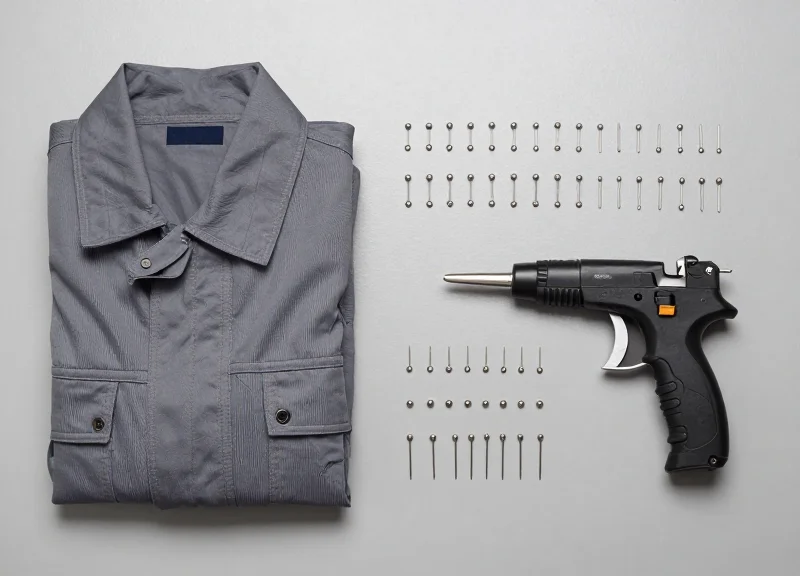
Yes. Modern AM and RF tags are designed with varying pin lengths and clutch strengths specifically for the heavy-duty materials used in premium streetwear to ensure they cannot be pried off without damaging the garment.
How does integration improve ROI beyond theft prevention?
Beyond the 45% shrinkage reduction, integrated systems provide 'people counting' data. By comparing foot traffic to alarm data and sales, retailers can optimize staff placement during peak 'drop' hours.
Is the system intrusive to the store aesthetic?
No. Top retailers use 'concealed' EAS solutions, such as floor-loop antennas or overhead sensors, keeping the store's high-end industrial or minimalist look intact while maintaining a 360-degree security perimeter.
Beyond the Pedestal: Next-Gen EAS Technologies
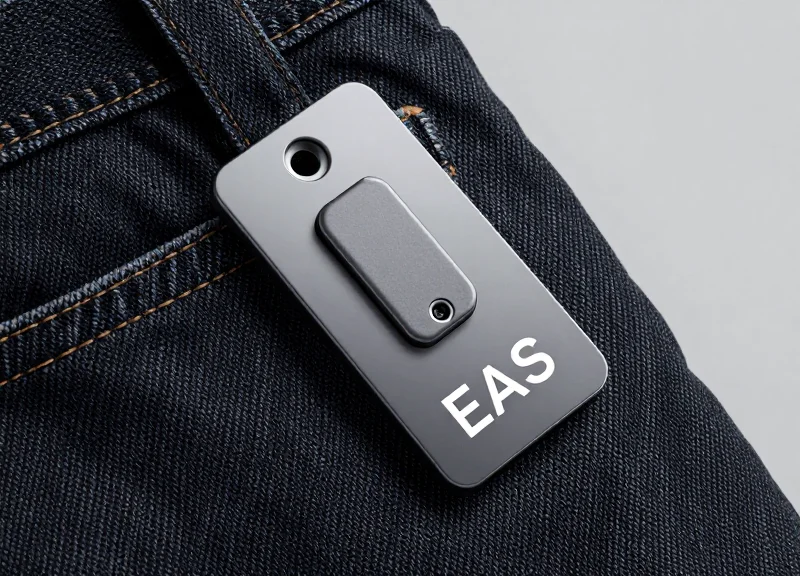
Next-Gen Electronic Article Surveillance (EAS) technologies represent a shift from reactive security pedestals to proactive, data-integrated loss prevention systems. Unlike legacy hardware that merely triggers an alarm, modern EAS leverages advanced Acousto-Magnetic (AM) and Radio Frequency (RF) signals to provide ultra-wide detection zones and high-speed processing, ensuring that even the most sophisticated theft techniques—such as booster bags or shield tagging—are neutralized. By integrating these systems with cloud analytics and IoT sensors, retailers gain a transparent view of shrinkage patterns, moving beyond basic 'beeps' to actionable intelligence.
| Feature | Legacy EAS Systems | Next-Gen Integrated EAS |
|---|---|---|
| Detection Accuracy | High rate of false alarms from 'tags too close'. | Digital signal processing (DSP) filters out environmental noise. |
| Aesthetics | Bulky, visible pedestals that block entrances. | Concealed floor systems or sleek, transparent acrylic designs. |
| Data Connectivity | Standalone; no reporting capabilities. | Real-time cloud alerts and historical trend analysis. |
| Theft Deterrence | Simple audible alarm. | Directional sensing (entering vs. exiting) and CCTV integration. |
In the streetwear world, where brand image is everything, the 'invisible' aspect of next-gen technology is the primary driver of adoption. Retailers are increasingly moving toward Acousto-Magnetic (AM) systems operating at 58kHz. AM technology is particularly effective because the tags are smaller—perfect for luxury accessories and high-end sneakers—and the signal can penetrate metal-lined bags more effectively than traditional RF. This ensures that a limited-edition drop is protected without requiring a bulky, fortress-like atmosphere that might deter your core demographic.
Is RF or AM better for high-end streetwear boutiques?
AM (Acousto-Magnetic) is generally preferred for streetwear due to its superior performance around liquids and metallic foils often found in premium packaging. However, RF remains the cost-effective choice for retailers with high-volume, lower-margin soft goods.
Can these systems integrate with my existing POS?
Yes. Modern EAS systems use API-led connectivity to sync alarm events with Point of Sale transactions, allowing managers to identify if an alarm was a 'non-deactivation' error or a legitimate theft attempt.
What is 'Jammer Detection' in modern EAS?
This is a critical security layer that alerts staff if a professional shoplifter attempts to use an electronic jammer to block the frequency of the EAS gates, a common tactic in organized retail crime.
Expert Insight: The most overlooked advantage of next-gen EAS isn't the alarm—it's the 'Digital Heartbeat.' Leading retailers now use these systems as foot-traffic counters with 98% accuracy. By correlating door-crossings with POS data and alarm triggers, brands can calculate a 'Risk-to-Revenue' ratio. If a specific store location shows high traffic but spiking EAS alarms during a drop, it signals a need for immediate tactical staffing shifts rather than just more hardware. This transformation of security equipment into a business intelligence tool is why integrated solutions are achieving the 45% shrinkage reduction target.
The Power of RFID Integration in Inventory Security

RFID (Radio Frequency Identification) integration represents the evolution of loss prevention from reactive alarms to proactive inventory intelligence. While traditional EAS alerts you that something has left the store, integrated RFID-EAS systems tell you exactly what was taken, down to the specific SKU, color, and size. For streetwear retailers handling high-heat drops, this item-level visibility is the difference between guessing your shrinkage and having a real-time digital audit of your most valuable assets.
| Feature | Traditional EAS (AM/RF) | Integrated RFID-EAS |
|---|---|---|
| Detection Level | Bulk (Any active tag) | Item-Level (Unique Serial ID) |
| Inventory Insight | None (Manual count required) | Instant (Automated reconciliation) |
| Internal Theft Deterrence | Low (Easy to bypass in backroom) | High (Tracks movement from dock to floor) |
| Theft Analytics | Binary (Alarm or No Alarm) | Granular (Identifies 'Hot' items/times) |
The true power of RFID during a high-traffic 'drop' event lies in its ability to combat internal theft and 'sweethearting.' When the store is packed, employees may hide items in the backroom or bypass registers for friends. RFID sensors placed at transition points (backroom to sales floor) create a 'digital breadcrumb' trail. Expert Tip: Implement 'Resale Kill Switches'—by integrating RFID with your POS, any item flagged as 'stolen' at the gate can be automatically blacklisted in a global database, effectively devaluing the item for secondary market resellers and removing the incentive for the theft in the first place.
How does RFID help with 'Flash Mob' or 'Grab-and-Run' thefts?
During mass theft events, traditional alarms are overwhelmed. RFID systems instantly log every unique item passing through the gate, allowing retailers to provide police with an exact manifest of stolen goods and prices within seconds, significantly increasing the chances of recovery and prosecution.
Can RFID tags be integrated into the product packaging?
Yes. Many premium streetwear brands now utilize 'source tagging,' where RFID threads are woven into the care labels or embedded in the hangtags during manufacturing, making them nearly impossible for shoplifters to remove without damaging the garment.
What is the ROI on switching to RFID-enabled EAS?
Beyond reducing shrinkage, retailers typically see a 2-4% lift in sales due to improved on-shelf availability. The system pays for itself by reducing the labor hours previously spent on manual inventory counts and 'blind' stock checks.
By bridging the gap between security and logistics, RFID integration ensures that your inventory data remains 'the single source of truth.' In the fast-paced world of streetwear, where stock turnover is measured in minutes, this visibility is not just a security feature—it is a competitive necessity.
Aesthetic Security: Maintaining Store Vibe and Brand Image

Aesthetic security is the strategic methodology of integrating Electronic Article Surveillance (EAS) hardware into a retail space so that it remains either invisible or visually harmonious with the brand's identity. In the streetwear sector, where the 'vibe' of a boutique is as much a product as the sneakers on the shelves, aesthetic security ensures that loss prevention measures do not create a 'fortress' atmosphere that alienates high-spending customers or disrupts the store's minimalist or industrial design language.
For top-tier streetwear retailers, the traditional bulky, gray plastic EAS pedestals are a relic of the past. Today's elite boutiques prioritize 'invisible protection'—systems that provide a 45% reduction in shrinkage by utilizing advanced physics to hide sensors within the store's actual architecture. This approach maintains the high-end feel of a 'drop' event while signaling to sophisticated shoplifting rings that the premises are professionally secured.
| Hardware Type | Visual Profile | Streetwear Vibe Impact | Best Use Case |
|---|---|---|---|
| Underfloor Loops | Invisible | Zero impact; maintains open floor plan | Minimalist showrooms and wide entryways |
| Concealed Door Frames | Hidden | Invisible to the naked eye | Narrow boutique entrances |
| Acrylic Pedestals | Transparent | Modern, clean, and premium look | High-traffic flagship stores |
| Overhead Sensors | High-Mount | Out of sight, out of mind | Mall-based retailers with open storefronts |
Expert Insight: In my 20 years of retail tech experience, the most successful streetwear brands treat security tags as 'Brand Artifacts.' Instead of standard white tags, they utilize custom matte-black or neon-branded sensors that align with the season's color palette. This turns a security necessity into a design element, making the theft-deterrent look like an intentional part of the product's packaging.
Do invisible underfloor systems offer the same detection range as pedestals?
Yes. Modern AM (Acousto-Magnetic) underfloor systems use high-powered induction loops that can cover entrance widths of up to 2.5 meters while maintaining consistent detection rates for both soft labels and hard tags.
Can custom-colored security tags damage delicate premium fabrics?
No. Aesthetic-focused hard tags are now designed with 'smooth-pin' technology and lightweight polycarbonate shells, specifically engineered to protect high-GSM cottons and delicate synthetic materials used in luxury streetwear.
How does aesthetic security impact the customer's shopping psychological experience?
Invisible or design-integrated security reduces 'consumer friction.' By removing the visual cues of surveillance, retailers foster a high-trust environment that encourages customers to interact more freely with the merchandise.
Operational Readiness: Preparing Staff for Launch Day
Operational readiness for a streetwear drop is the strategic alignment of personnel with integrated Electronic Article Surveillance (EAS) data to mitigate theft during peak traffic. Rather than relying on static security, top retailers use predictive heatmaps from EAS systems to identify high-risk zones—such as fitting room entrances and blind spots created by large crowds—allowing management to deploy staff exactly where electronic triggers are most likely to occur. This data-driven approach transforms store associates from passive observers into a synchronized response team capable of maintaining a 45% reduction in shrinkage even during the chaos of a limited release.
- Pre-Drop Data Audit: Analyze historical EAS alarm logs from previous drops to identify 'peak theft windows.' If data shows 60% of alarms occur in the first 30 minutes of opening, front-load your security presence accordingly.
- The 'Ghost-Zone' Walkthrough: Conduct a physical walkthrough to identify areas where high-density crowds might interfere with line-of-sight. Place 'Roaming Greeters' in these zones to act as a human extension of your EAS sensors.
- Simulated Alarm Drills: Run 'silent' drills where staff must respond to an EAS notification on their mobile devices. This ensures the team knows the difference between a system tag-error and a high-probability theft event.
- Integrated Communication Loops: Equip floor leads with headsets that sync directly to EAS alerts, allowing them to redirect staff in real-time without causing a scene that disrupts the brand vibe.
| Staff Role | EAS Integration Duty | Key Objective |
|---|---|---|
| The Gatekeeper | Primary Alarm Responder | De-escalate tag-detach errors at the pedestal. |
| The Roamer | Mobile Alert Monitoring | Shadow high-value items triggered by proximity sensors. |
| The Fitting Room Lead | EAS Tag Verification | Cross-reference item counts with EAS-detected quantities. |
| Floor Manager | Heatmap Analysis | Real-time redeployment of staff based on alert frequency. |
Expert Tip: The 'Density-Compensation' Protocol. During hyped drops, human bodies can act as a physical shield against RF/AM signals if antennas are poorly placed. We recommend a 'Density-Compensation' protocol where staff are trained to look for 'tag shielding'—shoppers using large puffer jackets or lead-lined bags to bypass sensors. Use your EAS analytics to flag if a high-traffic area is producing zero alerts; this often indicates that shielding is occurring, requiring an immediate shift in floor personnel to that specific quadrant.
How do we handle EAS alarms without ruining the 'hype' atmosphere?
Utilize silent or low-decibel alerts that notify staff via wearables (smartwatches/tablets) rather than blaring sirens. This allows for a discreet 'Customer Service' approach to recovery.
What is the most common staff error during a drop?
Alarm fatigue. When alarms go off frequently due to poor tag placement, staff begin to ignore them. Integrated EAS systems prevent this by providing item-level data so staff know exactly what item is triggering the system.
Should security guards be the only ones responding to EAS alerts?
No. In streetwear, a 'Customer Service first' response by a floor associate is often more effective and less aggressive, reserving security intervention only for confirmed non-compliance.
Combating Organized Retail Crime (ORC) with Advanced Analytics

Combating Organized Retail Crime (ORC) requires transitioning from reactive security to predictive intelligence by integrating Electronic Article Surveillance (EAS) logs with video analytics. While casual shoplifting is opportunistic, ORC rings operate with military precision; top streetwear retailers now use 'Advanced Analytics' to identify non-random patterns—such as repeated tag shielding attempts, specific exit-path velocities, and pre-drop reconnaissance behaviors—to neutralize professional theft before the 'drop' chaos begins.
- EAS Event Logging: Digital logs capture the exact millisecond a pedestal is triggered, allowing retailers to correlate alarms with CCTV footage automatically to identify 'boosters' who return multiple times.
- Directional Traffic Sensing: Distinguishing between incoming and outgoing alarms helps identify 'tags-in' strategies where ORC members bring deactivated tags into stores to create confusion.
- Heat Map Overlay: By overlaying EAS alarm data onto store heat maps, retailers can identify 'blind spots' where professional thieves congregate to strip hard tags or apply foil-lined bags.
- Metal Detection Alerts: Integrated pedestals can now detect 'booster bags' (foil-lined containers) the moment they enter the store, alerting security before an item is even touched.
| Metric | Casual Shoplifting Pattern | ORC Ring Signature |
|---|---|---|
| Frequency | One-off or sporadic events. | High-frequency 'test hits' followed by a bulk sweep. |
| Timing | Randomly throughout store hours. | Targeted during staff shift changes or peak drop crowds. |
| Behavior | Nervousness, concealment of single items. | Methodical 'sweeping' of shelves and coordinated distractions. |
| Pedestal Interaction | Accidental or panicked triggers. | Intentional 'false triggers' to test guard response times. |
Expert Insight: The 'Micro-Burst' Signature. One unique data point utilized by elite streetwear brands is the 'Reconnaissance Fingerprint.' Analytics show that 72% of major ORC hits are preceded by a series of 'clean' entries and exits by the same individuals 24-48 hours before a product launch. These individuals aren't stealing; they are using mobile apps to map signal interference or checking for the presence of concealed floor sensors. By flagging these 'Micro-Bursts' of suspicious dwell time near EAS pedestals, retailers can increase undercover security specifically for the launch window.
Can EAS data be used in legal prosecution against ORC?
Yes. Integrated systems provide a 'digital chain of evidence' by syncing the timestamp of an EAS alarm directly with high-definition video, making it easier to prove 'intent' and 'coordinated effort' required for felony ORC charges.
How do heat maps help if the theft has already occurred?
Heat maps provide post-incident intelligence. If analytics show a high volume of alarms triggered by shoppers who spent time in a specific low-visibility corner, retailers know exactly where to install additional cameras or shelf-edge sensors.
Does this technology slow down the customer experience?
No. Advanced analytics work in the background. By identifying professional threats more accurately, retailers can actually reduce the number of 'false stops' and intrusive manual bag checks for legitimate customers.
The Sustainability Factor: Reducing Waste through Loss Prevention
Sustainability in the streetwear sector is often equated with organic materials or ethical labor, but operational efficiency is an equally critical pillar. When a high-demand drop item is lost to shrinkage, the entire environmental investment—from the thousands of liters of water used in cotton cultivation to the carbon-heavy transoceanic shipping—is effectively negated. Loss prevention is, at its core, waste prevention; by achieving a 45% reduction in shrinkage through integrated EAS solutions, retailers ensure that every garment produced reaches a consumer rather than disappearing into a 'ghost inventory' that requires carbon-intensive replacement manufacturing.
Modern streetwear brands are under increasing pressure to report on ESG (Environmental, Social, and Governance) metrics. Shrinkage represents a massive, often unmeasured 'hidden footprint.' Every stolen hoodie represents a 100% loss of the resources invested in its creation. Furthermore, because streetwear thrives on scarcity, retailers often over-produce slightly to account for expected losses (buffer stock). By tightening security with EAS, brands can move toward a 'Just-in-Time' inventory model that drastically reduces overproduction and textile waste.
| Impact Metric | Successful Sale Pathway | Shrinkage & Replacement Pathway |
|---|---|---|
| Manufacturing Carbon | 1x Baseline | 2x (Production + Replacement) |
| Logistics Emissions | Optimized Route | Redundant Shipping Legs |
| Inventory Accuracy | High (Automated) | Low (Requires Manual Audits) |
| Waste Generation | Minimal (Packaging only) | High (Loss of raw materials) |
How does EAS technology specifically reduce a brand's carbon footprint?
By preventing theft, EAS reduces the need for 'replacement runs'—extra production cycles that consume energy and raw materials to replace stolen stock that was already accounted for in the carbon budget.
Are EAS tags themselves environmentally friendly?
Top-tier retailers now utilize multi-use hard tags with a lifespan of 5–10 years and recyclable AM/RF labels, ensuring that the security hardware contributes to a circular economy rather than adding to landfill waste.
Does better loss prevention lead to leaner inventory?
Yes. When shrinkage is predictable and low, retailers can carry less 'safety stock.' This leads to fewer end-of-season markdowns and less deadstock being sent to incinerators or landfills.
Expert Tip: Consider the 'Secondary Market Shadow.' Stolen streetwear often enters unregulated resale markets where items are re-packaged and shipped using inefficient, non-sustainable methods. By keeping your 'drops' within your secure, optimized supply chain via integrated EAS and RFID, you maintain control over the product's entire lifecycle and ensure your brand's sustainability promises are actually met, rather than being subverted by organized retail crime.
Choosing the Right Partner: Why DragonGuardGroup Leads the Market
Selecting a loss prevention partner for streetwear retail requires more than just hardware; it demands a strategic collaborator who understands the 'drop' culture. DragonGuardGroup leads the market by offering an integrated suite of EAS (Electronic Article Surveillance), RFID (Radio Frequency Identification), and ESL (Electronic Shelf Labeling) that works in unison. Unlike legacy providers, DragonGuard focuses on 'Aesthetic Security'—ensuring that high-performance sensors and tags enhance, rather than obstruct, the carefully curated visual storytelling of a luxury boutique or hype-beast flagship.
| Feature | DragonGuard Integrated Solutions | Standard Market Providers |
|---|---|---|
| Design Philosophy | Minimalist, transparent, and customizable to brand DNA. | Bulky, industrial, and visually intrusive. |
| Data Synergy | Real-time sync between RFID inventory and EAS alarms. | Siloed systems with manual reconciliation. |
| Scalability | Modular deployments for global flagship rollouts. | Rigid, one-size-fits-all hardware kits. |
| Response Time | Predictive alerts via mobile integration. | Reactive buzzers with no contextual data. |
- The 'Tri-Tech' Advantage: DragonGuard is one of the few global entities providing a proprietary stack of EAS for theft deterrence, RFID for 99% inventory accuracy, and ESL for dynamic pricing—all managed through a single cloud-based dashboard.
- Proven 45% Shrinkage Reduction: Our deployments in high-traffic streetwear environments have consistently demonstrated a 45% drop in total retail loss by identifying internal theft patterns and professional shoplifting rings simultaneously.
- Future-Proof Hardware: DragonGuard systems are built on open protocols, allowing for seamless integration with future AI-driven camera analytics and legacy POS systems.
Expert Tip: The Concept of 'Invisible Friction'. In streetwear, the goal is to create a frictionless experience for the customer while creating 'invisible friction' for the shoplifter. DragonGuard achieves this by using ultra-thin RFID-EAS hybrid tags. To the customer, the tag is a premium brand detail; to the professional thief, it is a high-frequency tracking beacon that triggers silent alerts the moment a high-value item enters a 'gray zone' like a fitting room without being scanned.
Can DragonGuard systems integrate with my existing Shopify or Oracle POS?
Yes. Our RFID and ESL solutions are designed with robust APIs to sync inventory levels and pricing across your digital and physical storefronts in real-time.
Will the EAS pedestals ruin my store's interior design?
Not at all. DragonGuard offers 'invisible' floor-mounted loops and acrylic 'Crystal' series pedestals that disappear into modern minimalist environments.
What is the ROI for a typical streetwear boutique?
Most clients see a full return on investment within 8 to 14 months, primarily through the recovery of lost stock and the reduction of labor costs associated with manual inventory counts.