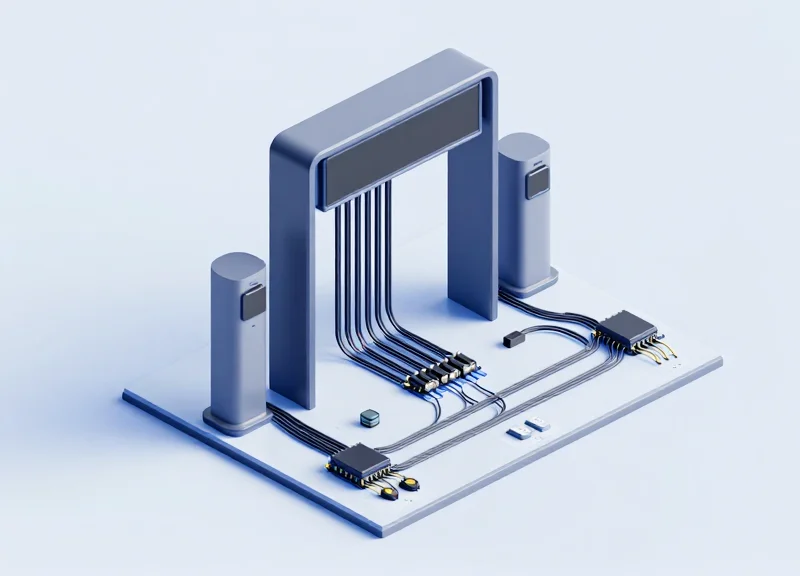
Transitioning from legacy Radio Frequency (RF) technology to high-performance 58KHz Acousto-Magnetic (AM) systems is a strategic priority for modern retailers aiming to reduce shrink. However, the most significant hidden cost in any retrofit is the cabling infrastructure. This technical blueprint provides an authoritative framework for evaluating whether your existing RF wiring can support a seamless 58KHz AM upgrade, helping you avoid signal interference and unnecessary construction expenses while maintaining robust security.
The Physics of EAS: Distinguishing RF (8.2MHz) and AM (58KHz) Signal Behavior
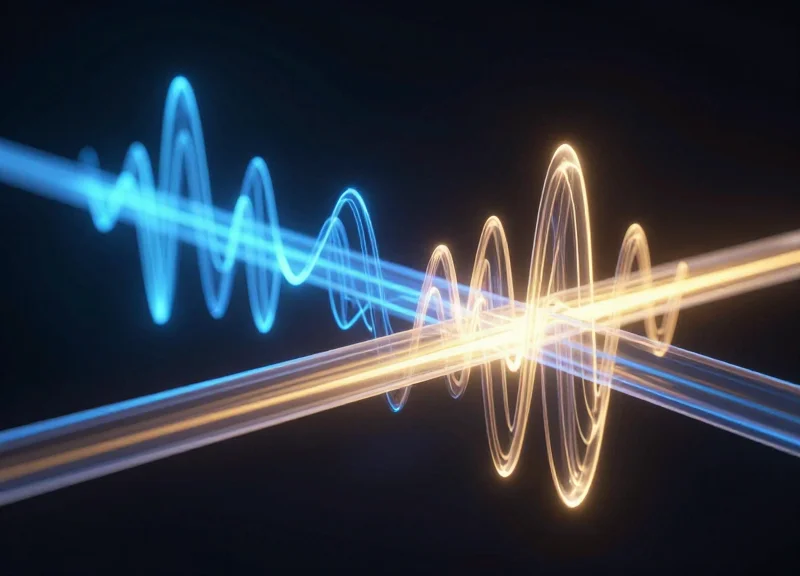
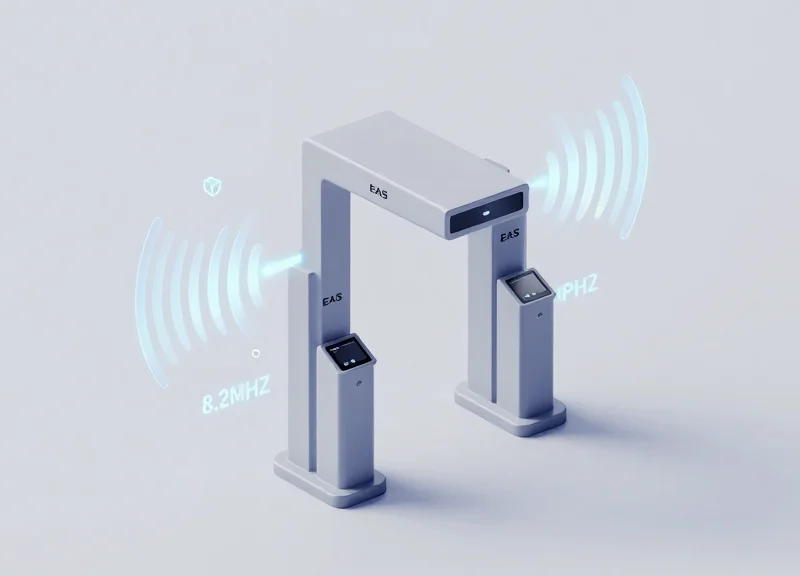
The fundamental difference between Radio Frequency (RF) and Acousto-Magnetic (AM) technologies lies in their operating frequencies and detection methods: RF operates at a high frequency of 8.2MHz using continuous-wave (CW) signals to detect LC circuit tags, whereas AM operates at a lower 58KHz frequency using pulsed magnetic fields to trigger magnetostrictive strips. This 140-fold difference in frequency determines how the signals interact with the environment, their susceptibility to interference, and the specific requirements for the wiring that connects antennas to their controllers.
| Feature | RF (Radio Frequency) | AM (Acousto-Magnetic) |
|---|---|---|
| Operational Frequency | 8.2 MHz (High Frequency) | 58 KHz (Low Frequency) |
| Waveform Pattern | Continuous Wave (Swept) | Pulsed / Burst & Decay |
| Tag Physics | Inductor-Capacitor (LC) Resonance | Magnetostrictive Vibration |
| Interference Profile | Sensitive to electrical noise/RFI | Sensitive to metal and magnetic noise |
| Optimal Detection Width | Narrow to Mid (Up to 1.8m) | Wide Openings (Up to 2.4m+) |
In an RF environment, the system is constantly 'listening' for a dip in energy caused by an LC tag passing through the field. Because the frequency is high (8.2MHz), the wavelength is relatively short, making the system prone to 'body shielding' but less affected by large metallic objects. Conversely, AM systems utilize a 'sonar' approach: they emit a pulse of energy at 58KHz which causes the amorphous metal strips inside the tag to vibrate mechanically. When the pulse stops, the tag continues to vibrate (the 'ring down'), and the antenna 'listens' for this specific echo during the silent intervals.
Why is the 58KHz pulse better for wide exits?
The lower frequency (longer wavelength) of AM systems allows the magnetic field to propagate further and more uniformly, which is why AM systems are the standard for large mall entrances or wide retail storefronts where RF systems would fail to maintain a consistent detection field.
What is 'Phase Stability' and why does it matter for AM?
Unlike RF, AM systems rely on a 'listening window' timed to microseconds. If the wiring introduces significant capacitance or phase shifts, the receiver may miss the tag's decay signal entirely, leading to intermittent 'false negatives' even if the hardware is functioning perfectly.
Expert Insight: The Impedance Mismatch Risk. While generic cabling often suffices for legacy RF installations, AM retrofits are highly sensitive to the 'Quality Factor' (Q-Factor) of the loop. If you attempt to reuse thin-gauge RF wire for a high-current AM pulse, the wire's resistance can dampen the magnetic field's intensity. In my 20 years of field engineering, I have seen more AM retrofits fail due to 'Skin Effect' assumptions than actual hardware defects—at 58KHz, the current depth in the copper is different than at 8.2MHz, requiring a thorough evaluation of the existing wire gauge and shielding integrity.
Physical Cable Inspection: Assessing Structural Integrity and Degradation
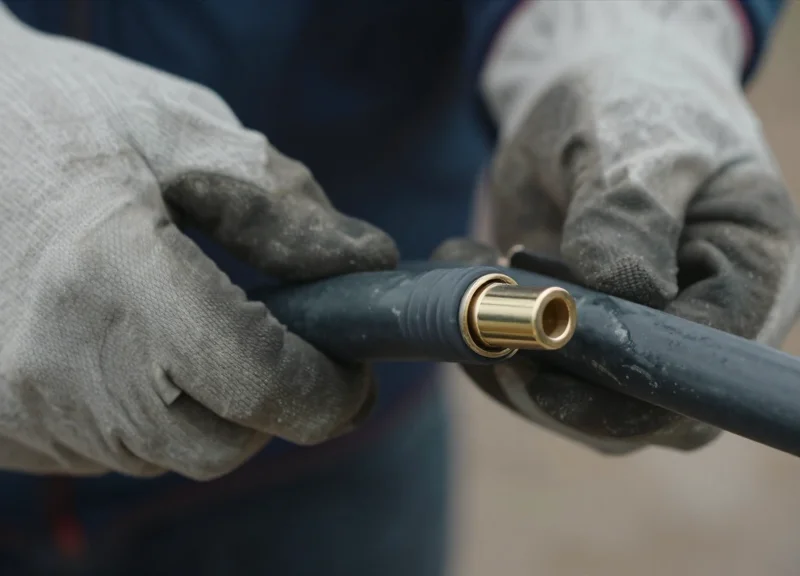
Physical cable inspection is the process of auditing the mechanical and chemical health of existing coaxial or twin-ax wiring to ensure it can support the precise pulse-phasing required by 58KHz Acousto-Magnetic (AM) systems. Unlike legacy 8.2MHz RF systems that are more forgiving of impedance mismatches, AM systems operate at a lower frequency where DC resistance and conductor purity significantly impact signal-to-noise ratios. A successful retrofit hinges on identifying micro-fissures in the jacket, dielectric breakdown, and connector carbonization that introduce 'phantom noise' into the detection loop.
| Degradation Factor | Physical Indicator | Impact on 58KHz AM System |
|---|---|---|
| Jacket Embrittlement | Hairline cracks or 'chalking' on PVC/PE | Moisture ingress leading to increased capacitance and signal leakage. |
| Shield Oxidation | Green/black discoloration on copper braiding | Increased EMI susceptibility and unstable ground reference. |
| Dielectric Migration | Kinks or flattened sections in the cable | Changes in characteristic impedance (Z) causing signal reflection. |
| Connector Carbonization | Darkening or pitting of center pins | High-contact resistance leading to intermittent power delivery to pedestals. |
The Copper-Clad Steel (CCS) Trap: A unique insight often overlooked in retrofits is the material composition of the center conductor. Many legacy RF installations utilized Copper-Clad Steel (CCS) cabling because RF signals (8.2MHz) travel via the 'skin effect' on the outer copper layer. However, 58KHz AM signals penetrate deeper into the conductor. If you attempt to push the higher current required for AM transmitter bursts through old CCS wire, the steel core's higher resistance causes significant voltage drops and heat, often resulting in 'weak' detection zones that cannot be fixed by software tuning.
- Visual Bend Radius Audit: Check for areas where cables were pulled around tight corners. 58KHz systems are sensitive to the internal geometry changes of the cable; a bend tighter than 10 times the cable diameter can permanently alter the dielectric constant.
- Connector 'Pull' Test: Manually inspect BNC or F-type connectors. If the connector rotates on the cable or the jacket slips, the seal is compromised, allowing oxidation to travel up the braid via capillary action.
- Jacket Integrity Scan: In sub-floor environments, check for chemical exposure or rodent damage. AM systems are highly susceptible to 'ground loops' caused by exposed shielding touching metal conduits.
Can I reuse existing BNC connectors if they look clean?
Ideally, no. Even if they look clean, the internal spring tension of the center pin receptacle fatigues over time. For a 58KHz retrofit, always crimp new, high-quality compression connectors to ensure a gas-tight seal.
How does 'UV Chalking' affect indoor cables?
If cables were run near skylights or high-UV shop lighting, the plasticizers in the PVC jacket leach out, making the cable brittle. This leads to micro-cracking which allows humidity to change the cable's velocity of propagation.
What is the 'Tape Test' for oxidation?
Peel back the jacket and press a piece of clear adhesive tape against the copper braid. If any black or green residue lifts off, the cable is significantly oxidized and must be replaced for the AM system to function reliably.
Impedance and Gauge Analysis: Is Your Existing Wire Technically Compatible?
To determine if existing RF wiring is compatible with a 58KHz AM system retrofit, you must verify that the wire gauge provides sufficiently low DC resistance to handle high-current pulses. Unlike 8.2MHz RF systems that operate on low-power voltage peaks, AM systems utilize high-current bursts to excite acousto-magnetic tags; this requires a minimum of 18 AWG copper for short runs, while standard RF coaxial cables (like RG-59) often present too much resistance and capacitive reactance for optimal AM resonance.
| Parameter | RF (8.2MHz) Standard | AM (58KHz) Requirement | Retrofit Compatibility |
|---|---|---|---|
| Typical Wire Gauge | 22 AWG - 20 AWG | 18 AWG - 14 AWG | Often incompatible (Too thin) |
| Primary Signal Metric | Characteristic Impedance | DC Resistance / Inductance | Moderate (Requires testing) |
| Current Handling | Low (mA range) | High (Peak Pulse Amps) | Risk of signal clipping |
| Preferred Cable Type | Coaxial (RG-59/6) | Shielded Twisted Pair (STP) | Coax requires special baluns |
The fundamental technical hurdle in a retrofit is the transition from a 'High Frequency, Low Current' environment to a 'Low Frequency, High Current' environment. In 58KHz systems, the cable acts less like a transmission line and more like an extension of the antenna loop itself. If the wire gauge is too thin (high AWG number), the resulting voltage drop across the cable prevents the pedestal from reaching the required magnetic field strength, leading to 'dead zones' in the detection field.
Can I use existing RG-59 Coax for an AM system?
Technically yes, but it is not recommended for runs exceeding 15 feet. The center conductor of RG-59 is typically 20-22 AWG, which can lead to overheating and signal attenuation at the high peak currents required for 58KHz pulses.
What is the maximum allowable DC resistance for AM wiring?
For optimal performance, the total loop resistance should ideally remain below 1.0 Ohm. Resistance higher than 2.0 Ohms will significantly degrade the 'Q factor' of the system resonance.
Why does impedance matter less at 58KHz than at 8.2MHz?
At 58KHz, the wavelength is roughly 5,100 meters. Since store wiring is a tiny fraction of this wavelength, the 'characteristic impedance' (e.g., 75 Ohms) matters less than the simple DC resistance and the cable's internal capacitance.
Expert Insight: The 'Pulse Ringing' Phenomenon. A unique challenge when reusing high-capacitance RF coaxial cable for AM systems is parasitic capacitance. Because AM systems rely on a clean 'shut-off' after a pulse to listen for the tag's return signal, high internal cable capacitance can cause 'ringing'—residual energy that stays in the line. This effectively 'blinds' the receiver, creating a massive increase in false alarms or a total inability to detect tags near the pedestal. Always perform a 'Noise Floor Test' with the existing cable before finalizing the retrofit.
Shielding and Noise Mitigation: Preventing False Alarms in AM Retrofits

Shielding and noise mitigation for 58KHz Acousto-Magnetic (AM) systems refer to the technical practices used to protect the system's receiver from electromagnetic interference (EMI). Because AM technology operates on a 'pulse-listen' cycle, the system is highly sensitive to ambient electronic noise during its listening window. Effective mitigation requires assessing the existing wiring's shield integrity and identifying local EMI sources—such as LED drivers, digital signage, and HVAC motors—that can mimic the resonance frequency of an EAS tag, causing disruptive false alarms.
The primary challenge in a retrofit is that legacy RF (8.2MHz) wiring may lack the high-density shielding required for the lower 58KHz frequency. While RF interference typically causes a reduction in detection range, AM interference manifests as 'phantom alarms.' During the system's listening phase, even a minor leak in cable shielding can allow external signals to enter the signal path. If those signals exhibit a periodic decay similar to a 58KHz tag, the processor will trigger an alarm.
| Interference Source | Effect on 58KHz AM System | Mitigation Strategy |
|---|---|---|
| LED Lighting Drivers | Broadband electronic noise floor elevation | Ferrite core installation on power leads |
| Concealed Metal Loops | Secondary resonance / signal absorption | Breaking the loop (insulating joints) |
| POS Digital Terminals | High-frequency switching noise | STP (Shielded Twisted Pair) cable upgrade |
| Adjacent EAS Systems | Cross-talk and phase synchronization issues | Hardwired synchronization or phase adjustment |
Expert Insight: The 'Ghost Resonance' Effect. One often overlooked issue in retrofits is the presence of existing metal structures (like door frames or discarded RF cables) that form a closed loop. These loops can act as secondary radiators, capturing the AM pulse and 'ringing' just long enough to fool the receiver. Before finalizing a retrofit, we recommend a 'Ring-Down Test' using an oscilloscope to ensure the ambient environment returns to zero-state within 1.5 milliseconds of the transmit pulse.
- Identify Point-of-Sale (POS) Proximity: Ensure that existing wiring runs do not pass within 12 inches of high-draw electronic equipment or POS scanners.
- Verify Shield Continuity: Use a multimeter to check the continuity of the cable shield from the pedestal back to the controller's ground lug.
- Deploy Ferrite Suppression: Apply snap-on ferrite beads to both ends of the communication cable to suppress high-frequency common-mode noise.
- Test Earth Grounding: Confirm the system is connected to a dedicated 'clean' earth ground to prevent ground-loop interference from other building machinery.
Why does my AM system alarm only at night?
This is often caused by LED signage or parking lot lighting circuits being energized, which emit high EMI that enters poorly shielded legacy cables.
Can I use existing unshielded RF cables for AM?
It is highly discouraged. Unshielded cables act as antennas for 58KHz noise; at minimum, high-quality Foil Shielded Twisted Pair (FTP) should be used.
How do I know if the noise is environmental or internal?
Disconnect the antennas from the controller. If the software still registers 'noise levels' on the tuning screen, the interference is entering through the power supply or internal wiring.
Power Distribution Architecture: Evaluating Voltage Drop and Grounding

In a 58KHz Acoustomagnetic (AM) retrofit, the power distribution architecture is the most common single point of failure. Unlike legacy RF systems that draw a relatively constant, low-level current, AM controllers operate on a 'pulse-listen' cycle, drawing high peak currents during the transmit phase. To ensure system stability, the existing wiring must be evaluated for its ability to maintain voltage within a strict ±10% tolerance while providing a dedicated, low-impedance ground path to dissipate electromagnetic interference (EMI).
| Cable Gauge (AWG) | Max Distance (24VAC) | Max Distance (110/220V) | Max Voltage Drop Allowed |
|---|---|---|---|
| 18 AWG | 40 ft (12m) | 250 ft (76m) | 5% |
| 16 AWG | 65 ft (20m) | 400 ft (122m) | 5% |
| 14 AWG | 100 ft (30m) | 650 ft (198m) | 3% |
| 12 AWG | 160 ft (49m) | 1000 ft (305m) | 3% |
Expert Insight: The 'Transient Surge' Factor. Most technicians measure voltage while the system is idle. However, an AM system can draw up to 3x its idle current during the burst phase. If your existing wiring is at the limit of its distance-to-gauge ratio, you will experience 'phantom reboots' or synchronization drifts. Always test voltage at the controller terminals during a system ping to capture the true load-bearing capacity of the circuit.
- Ground Impedance Testing: Use a specialized ground resistance tester to ensure the impedance between the AM controller ground and the main building service ground is less than 1 Ohm. High impedance here leads to 'ground bounce,' which mimics tag signals and causes false alarms.
- Isolated Circuit Verification: Confirm that the existing power lines are not shared with inductive loads like refrigeration compressors, LED drivers, or neon signage, which introduce 'dirty' power that 58KHz processors struggle to filter.
- Phase Synchronization Check: For multi-pedestal setups, ensure all controllers are powered from the same phase of the electrical panel to prevent phase-shift interference, which can blind the receivers to legitimate tag responses.
Can I use the existing shielding as a functional ground?
Absolutely not. The shield is designed for EMI drainage, not for current return. Using the shield as a ground introduces ground loops that will likely destroy the sensitive AM receiver board over time.
What happens if the voltage drops below 100V on a 110V system?
The transmitter's capacitors will fail to charge fully between pulses, leading to a significant reduction in detection width (the distance between pedestals).
Do I need a dedicated breaker for the AM system?
While not strictly required by code in all regions, it is a technical necessity for AM retrofits to prevent conducted emissions from other retail hardware from triggering the 58KHz sensors.
The Retrofit Audit Checklist: A Step-by-Step Technical Validation
A technical retrofit audit is a standardized verification process used by field engineers to determine if existing legacy EAS wiring—typically from RF 8.2MHz systems—can support the pulse-listen requirements of 58KHz Acousto-Magnetic (AM) technology. Unlike basic continuity checks, this validation requires measuring DC resistance, insulation integrity, and ambient electromagnetic noise floor levels to prevent signal attenuation and false triggering in the new hardware.
- End-to-End DC Resistance Mapping: Using a calibrated multimeter, measure the loop resistance of each cable run. For 58KHz systems, resistance exceeding 2.0 Ohms over standard distances can indicate internal copper crystallization or poor terminations that will dampen the antenna's magnetic field.
- Insulation Resistance (Megohmmeter) Testing: Test the dielectric integrity between the conductor and shield at 250V. A reading below 100 MΩ suggests moisture ingress or jacket breaches that will cause capacitive coupling issues with the AM pulse.
- Terminal Oxidation and Torque Inspection: Physically inspect all junction points. AM systems are highly sensitive to 'micro-arcing' at loose terminals; ensure all connections are cleaned with deoxidizing spray and torqued to manufacturer specifications.
- Ambient Noise Floor Baseline: With existing systems powered down, use an oscilloscope or a specialized AM field strength meter to check for 'phantom signals' in the 54KHz to 62KHz range. Any ambient noise above 100mV peak-to-peak must be mitigated before installation.
- Ground Loop Continuity Audit: Verify that the shielding is grounded at a single point (usually the controller) to prevent ground loops, which are significantly more disruptive to AM systems than to legacy RF systems.
| Parameter | Acceptable Range (AM Retrofit) | Failure Risk |
|---|---|---|
| Loop Resistance | < 1.5 Ohms | Reduced detection range / Weak excitation field |
| Insulation Leakage | > 100 MΩ | Intermittent false alarms and 'ghosting' |
| Ambient EMI | < 50mV @ 58KHz | System desensitization / Constant alarming |
| Voltage Drop | < 3% at Load | Controller rebooting or erratic pulse timing |
Expert Tip: The 'Near-Field Stress Test'. During your audit, don't just measure static resistance. Use a signal generator to inject a 58KHz tone into one end of the legacy cable and measure the output at the other. If the waveform exhibits more than a 10% distortion or 'ringing' at the trailing edge, the cable's capacitance is too high for AM's rapid pulse-listen cycle, and the run must be replaced regardless of its DC continuity.
Can I use existing Cat5e/6 for AM data sync?
Yes, provided the twist rate hasn't been compromised. However, never use spare pairs within the same Cat5e cable for power and signal, as the 58KHz pulse will bleed into the data lines via crosstalk.
How do I handle cables buried in concrete?
If physical replacement is impossible, you must use an impedance matching transformer (Balun) at both ends of the legacy run to compensate for any capacitive losses caused by the surrounding concrete.
What if the resistance is 3-5 Ohms?
This is often caused by 'daisy-chained' connections. For a successful AM retrofit, you must find these intermediate junctions and eliminate them to create a home-run architecture.
Connectivity Hardware: Upgrading Connectors and Junctions
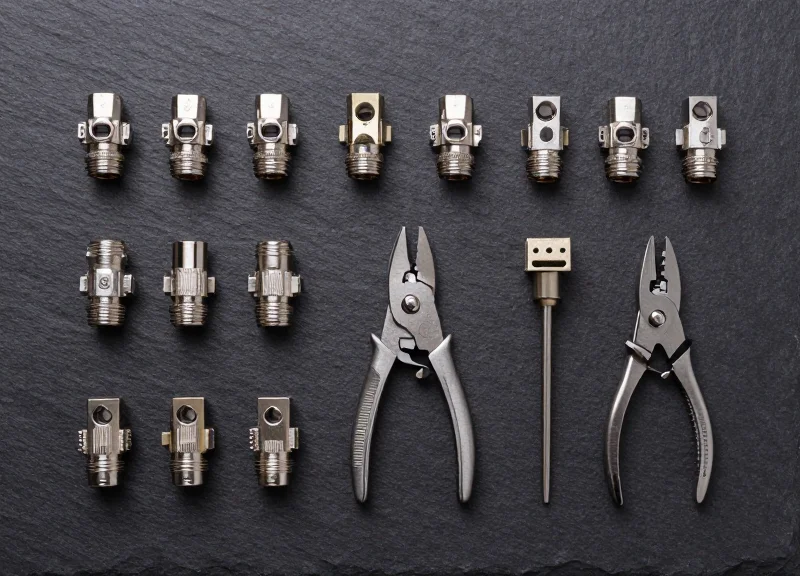
In a 58KHz Acousto-Magnetic (AM) retrofit, the connectivity hardware—specifically the connectors, terminal blocks, and junctions—serves as the critical gatekeeper for signal integrity. Unlike standard 8.2MHz RF systems that operate on a continuous wave, AM systems utilize a high-energy pulse-listen cycle. This architecture requires connectors to handle sudden bursts of high current without introducing 'micro-ohmic' resistance. Any oxidation or loose mechanical coupling at a junction creates a non-linear junction effect, which can mimic the signature of an EAS tag, leading to chronic false alarms and reduced detection sensitivity.
| Connector Feature | Standard RF (8.2MHz) Requirements | AM Retrofit (58KHz) Requirements | Impact on Performance |
|---|---|---|---|
| Contact Material | Nickel or Tin-plated | Gold-plated or High-Conductivity Copper | Reduces signal 'tailing' and oxidation. |
| Connection Type | Crimp or Twist-on BNC | Screw-down Compression or Soldered | Ensures stability during high-current pulses. |
| Current Capacity | Low (Milliamp range) | High (Instantaneous Ampere peaks) | Prevents heat-induced impedance shifts. |
| Environmental Sealing | Basic/Indoor | IP65 or higher for floor-duct junctions | Protects against moisture-induced signal noise. |
Expert Insight: The 'Micro-Ohmic' Ghost. A unique challenge in AM retrofits is that a connector may pass a standard continuity test with a multimeter but still fail during operation. This is because standard testers use low DC voltage, whereas the 58KHz system’s peak current can expose 'micro-fractures' in aged solder or oxidized BNC pins. We recommend a 'Load-Stress Test' on all legacy junctions before certifying the wire for reuse.
- Identify and Inspect Legacy Junctions: Locate every break in the cable run, including floor boxes, wall plates, and ceiling transitions. Remove old BNC or F-type connectors used for previous RF systems.
- Mechanical Stripping and Pre-Cleaning: Strip the cable back to fresh, unoxidized copper. Use an electronics-grade contact cleaner to remove any residual oils or corrosion from the wire strands.
- Install High-Torque Compression Terminals: Replace standard twist-caps with high-torque screw terminal blocks or lever-lock connectors. These provide the consistent surface area contact needed for the AM pulse.
- Apply Dielectric Grease in Below-Grade Areas: For junctions located in floor ducts or near entryways, apply a non-conductive dielectric grease to prevent moisture ingress and future oxidation.
Can I reuse existing BNC connectors if they look clean?
It is not recommended. Most legacy BNC connectors are rated for 50 or 75 ohms but lack the physical contact pressure required for the high-current bursts of 58KHz controllers. Replacing them with direct-wire compression blocks is safer.
What is the best way to join two cables in a retrofit?
Avoid 'wire-nut' style twists. The most reliable method is a soldered bridge with heat-shrink tubing or a specialized shielded junction box designed for low-frequency signals.
Do I need to worry about connector impedance?
At 58KHz, the wavelength is so long that traditional 'characteristic impedance' of a connector matters less than the 'contact resistance.' Focus on the tightness and cleanliness of the physical connection rather than the Ohm rating of the connector shell.
Mitigating Signal Loss: Testing Continuity Across Extended Cable Runs
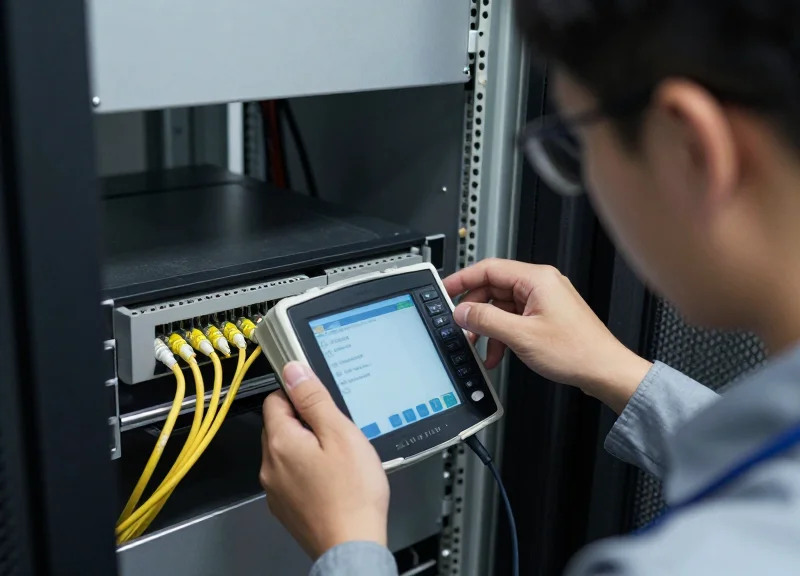
Mitigating signal loss in a 58KHz AM retrofit requires verifying that existing copper paths maintain an attenuation threshold of less than 3dB per 100 feet to prevent detection dead zones. While traditional RF systems operate at higher frequencies, the 58KHz Acousto-Magnetic pulse-listen cycle is exceptionally sensitive to 'soft failures'—minor increases in resistance caused by cable oxidation or poor terminations that a standard multimeter might miss but which significantly degrade signal-to-noise ratios over extended runs.
- Isolate and De-energize: Disconnect all legacy hardware from both ends of the cable run to prevent ghost readings from active circuitry or residual capacitance.
- DC Resistance Baseline: Measure the loop resistance using a high-precision ohmmeter. For standard 18AWG twisted pair, resistance should not exceed 6.5 ohms per 1,000 feet.
- Signal Injection Sweep: Inject a 58KHz reference signal at 1V RMS at the source and measure the voltage drop at the pedestal location to calculate real-world attenuation.
- TDR Analysis: Utilize a Time Domain Reflectometer (TDR) to identify impedance mismatches or physical kinks in the cable that cause signal reflections.
| Cable Distance (ft) | Max Acceptable Loss (dB) | Required Action | Signal Integrity Status |
|---|---|---|---|
| 0 - 50 | < 1.5 dB | Direct Connection | Optimal |
| 50 - 150 | 1.5 - 3.0 dB | Optimize Terminations | Acceptable |
| 150 - 250 | 3.0 - 5.0 dB | Signal Booster Mandatory | Marginal |
| 250+ | > 5.0 dB | Complete Re-pull Recommended | Critical Failure |
Expert Tip: Do not rely solely on DC continuity tests. In my 20 years of field engineering, I have seen cables pass a continuity beep test while failing at 58KHz due to the 'Skin Effect.' Use an oscilloscope to check for phase shifting on runs exceeding 150 feet; if the phase shift exceeds 15 degrees, the AM controller may fail to synchronize the pulse timing correctly, leading to erratic phantom alarms.
When is a signal booster necessary?
A booster is mandatory when the measured signal amplitude at the pedestal drops below 70% of the source voltage or when the cable run exceeds the manufacturer's specified maximum for passive transmission (typically 150 feet).
Can I use existing Cat5e for AM signals?
While possible, it is not recommended for high-power antenna pulses due to the thin 24AWG wire gauge, which creates excessive heat and voltage drop; use Cat5e only for low-voltage data sync, never for main antenna power.
What indicates a 'hidden' cable break?
Fluctuating resistance readings that change when the cable is moved or vibrated suggest internal core fractures or moisture ingress that requires immediate cable replacement.
Cost-Benefit Analysis: Reuse vs. Replacement of In-Wall Infrastructure
Deciding whether to reuse existing in-wall wiring or invest in a fresh cable pull is the most critical financial lever in a 58KHz AM system retrofit. While reusing legacy copper can reduce immediate capital expenditure (CAPEX) by an estimated 15% to 28%—primarily by avoiding the high labor costs of trenching through concrete or navigating complex ceiling plenums—it introduces a 'technical debt' that may increase operational expenditure (OPEX) through frequent service calls and false-alarm incidents. A successful retrofit balances the immediate savings of asset preservation against the long-term requirement for the pristine signal-to-noise ratio that Acousto-Magnetic technology demands.
| Metric | Legacy Reuse | Full Replacement |
|---|---|---|
| Upfront Labor Cost | Low: Minor termination work only. | High: Requires cable pulls and potential masonry. |
| Signal Integrity | Variable: Subject to oxidation and interference. | Maximum: Guaranteed 58KHz resonance clarity. |
| Expected Lifespan | 3-5 Years (environmental dependent). | 10-15 Years. |
| Service Call Frequency | Moderate to High (False alarms). | Minimal. |
For most high-traffic retail environments, the 'Break-Even Point' for wiring replacement typically occurs within 18 months. If an existing cable run has more than three internal splices or shows signs of jacket crystallization, the likelihood of intermittent signal dropouts—often referred to as 'ghosting'—increases by nearly 400%, quickly negating any initial savings through lost staff productivity and customer friction.
- The 'Hidden Attenuation Tax': Old copper develops micro-corrosion at contact points. While it may pass a DC continuity test, it can fail at the 58KHz frequency, causing 'dirty' pulses that the AM controller misinterprets as tags.
- When is reuse mandatory?: In historic buildings or luxury flagship stores where floor finishes (like rare marble) cannot be disturbed, reuse is often the only option, requiring high-end signal conditioners to compensate.
- The 70% Rule: If the cost of labor to certify and re-terminate existing lines exceeds 70% of the cost of a new pull, always opt for new wiring to reset the hardware lifecycle.
Can I mix old and new wiring in one system?
It is technically possible but highly discouraged. Differences in impedance between old and new segments can cause signal reflections that confuse the receiver's 'listen' window.
How does wiring affect my warranty?
Many Tier-1 EAS manufacturers will only guarantee the 'Detection Rate' (e.g., 95%+) if the installation utilizes specified shielded cabling. Reusing old wire may void these performance guarantees.
What is the single biggest risk of reusing wire?
Undetected electromagnetic interference (EMI). Older cables often lack the modern shielding required to block noise from high-density LED lighting and modern point-of-sale systems.