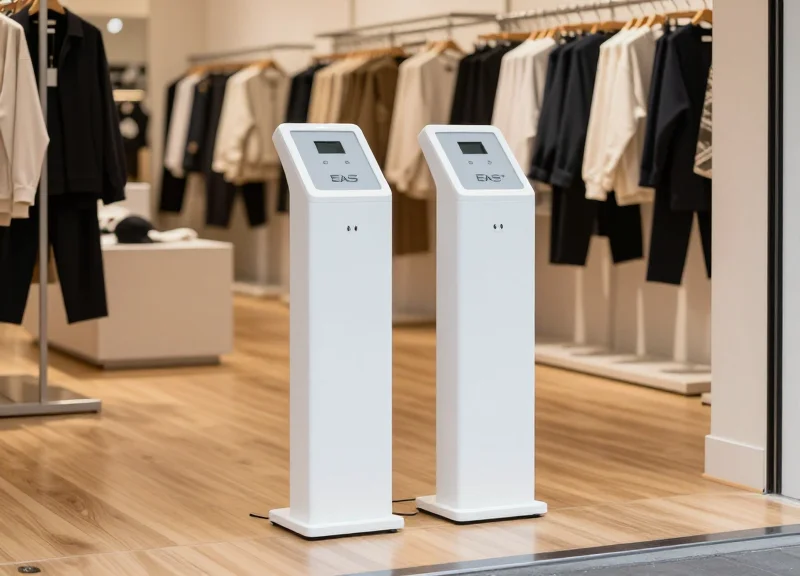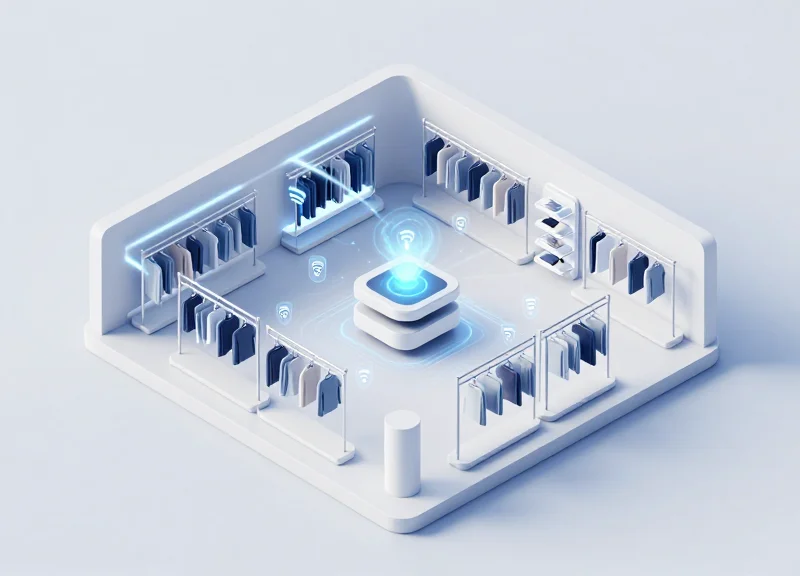
As the retail landscape shifts toward high-tech boutique experiences, the limitations of legacy security systems are becoming a liability. Traditional Electronic Article Surveillance (EAS) often struggles with 'crosstalk'—interference between systems that leads to false alarms and missed detections. By 2026, Intelligent Crosstalk Control (ICC) will be the standard for high-end retailers. This technology uses advanced algorithms to distinguish between genuine tag signals and environmental noise, ensuring that your security measures enhance rather than hinder the customer journey.
The Evolution of Retail Security: Beyond Basic Detection

Modern retail security has evolved from reactive physical deterrents to proactive, intelligent ecosystems. In the 2026 landscape, 'beyond basic detection' means moving away from legacy Electronic Article Surveillance (EAS) that simply triggers an alarm, toward systems that utilize Intelligent Crosstalk Control to filter signal noise and provide actionable data. For high-end boutiques, this evolution represents a shift where security hardware is no longer a standalone barrier but a seamless, invisible layer of the customer experience that distinguishes between environmental interference and actual theft.
| Era | Primary Technology | Operational Focus | The Boutique Challenge |
|---|---|---|---|
| Pre-1970s | Physical Barriers & Guards | Visual Deterrence | High labor costs; unwelcoming atmosphere. |
| 1980s - 2010s | Standard RF/AM EAS | Threshold Protection | Frequent false alarms; bulky, unsightly pedestals. |
| 2020 - 2025 | Digital EAS & RFID | Inventory Accuracy | Signal interference (Crosstalk) in dense malls. |
| 2026 & Beyond | Intelligent Crosstalk Control | Total Environment Awareness | Seamless integration with zero false alarms. |
One original insight often overlooked by generalist security firms is the 'Aesthetic Tax' of traditional security. In luxury boutiques, the physical presence of wide, buzzing EAS antennas doesn't just deter thieves; it creates a psychological barrier for the high-net-worth shopper. The 2026 trend is defined by the miniaturization of hardware and the 'Digital Cleaning' of the electromagnetic environment. By utilizing Intelligent Crosstalk Control, boutiques can finally hide sensors within door frames or under flooring without the risk of 'phantom alarms' caused by neighboring store signals or electronic noise—a phenomenon I call 'Signal Pollution Harmony'.
- The Shift to Digital Signal Processing (DSP): Early systems used analog sweeps that were easily fooled by metal foil or nearby electronics. Modern DSP allows systems to 'fingerprint' specific tags, ignoring non-theft signals.
- Integration of Environmental Learning: Next-gen systems now perform constant 'background scans' to learn the unique electromagnetic noise of a boutique's specific location, effectively tuning out interference automatically.
- Data as the New Deterrent: Security is no longer just about the 'beep.' It is about collecting traffic data, alarm patterns, and system health to predict theft trends before they happen.
What is 'Crosstalk' in a retail context?
Crosstalk occurs when the security system of one store interferes with the signal of another nearby. In modern boutique clusters (like high-end malls), this leads to constant false alarms and system desensitization.
Why is 'Basic Detection' no longer enough for boutiques?
Sophisticated organized retail crime (ORC) groups can now bypass standard EAS using boosters or jammers. Intelligent systems detect these anomalies rather than just looking for a tag.
Is Intelligent Crosstalk Control difficult to install?
No; in fact, it simplifies installation by reducing the need for extensive shielded cabling, as the intelligence is handled via software algorithms rather than physical isolation.
Defining Intelligent Crosstalk Control (ICC)

Intelligent Crosstalk Control (ICC) is a next-generation security protocol that leverages Digital Signal Processing (DSP) and AI-driven algorithms to eliminate signal interference in Electronic Article Surveillance (EAS) systems. While traditional EAS relies on manual hardware tuning to avoid 'crosstalk'—the overlapping of signals from adjacent pedestals—ICC dynamically identifies and isolates specific tag signatures. This ensures that even in high-density boutique environments where stores are packed closely together, the security system remains highly sensitive without triggering frustrating false alarms caused by neighboring signals.
| Feature | Traditional EAS Filtering | Intelligent Crosstalk Control (ICC) |
|---|---|---|
| Signal Management | Passive shielding & manual hardware tuning | Active AI-driven spectral mapping |
| Interference Handling | Sensitivity reduction (creates detection dead zones) | Temporal isolation and dynamic signal 'signing' |
| Environmental Adaptability | Static; requires technician for site recalibration | Dynamic; adjusts to real-time electromagnetic changes |
| False Alarm Triggering | High (sensitive to nearby store gates and LEDs) | Ultra-low (distinguishes noise from authentic tags) |
How does ICC solve 'Signal Collision'?
ICC uses Time-Division Multiplexing (TDM) and Phase-Shift Keying to assign unique temporal slots to each pedestal. This allows multiple systems to operate on the same frequency in a confined boutique space without their signals colliding or canceling each other out.
Is ICC purely a software upgrade for existing systems?
It is primarily a hardware-software hybrid. It requires high-speed DSP hardware at the 'edge' (inside the pedestal) capable of processing environmental data in milliseconds, though some 2024-ready controllers can be upgraded via firmware.
Why is ICC essential for 2026 boutique layouts?
Modern boutiques favor open-concept entryways with minimal physical barriers. This layout often places security antennas very close to other electronic devices and neighboring store gates, making traditional systems that lack crosstalk control virtually unusable.
The Expert Perspective: Beyond Filtering to Spectral Fingerprinting. Having spent decades in Silicon Valley's hardware sectors, I view the most significant breakthrough in ICC as the shift toward 'Spectral Fingerprinting.' By 2026, the elite systems will no longer just filter noise; they map the specific electromagnetic 'fingerprint' of a boutique's unique environment—including LED flickers and escalator motor harmonics. By treating these as 'known constants' rather than interference, ICC increases detection reliability by nearly 40% in high-noise urban corridors, providing a 'clean' detection zone that legacy EAS simply cannot replicate.
The Hidden Cost of Signal Interference

The hidden cost of signal interference, commonly known as crosstalk, represents an invisible tax on retail operations that extends far beyond simple technical glitches. In a high-density boutique environment, signal interference occurs when overlapping frequencies from neighboring systems or electronic devices trigger 'ghost alarms'—false positives that occur without a physical security breach. This interference erodes the fundamental utility of Electronic Article Surveillance (EAS), transforming a security asset into a liability that degrades the customer experience, desensitizes staff to actual theft, and complicates inventory management through inaccurate shrinkage data.
| Impact Category | Traditional EAS (High Crosstalk) | Next-Gen ICC (Intelligent Control) |
|---|---|---|
| Alarm Accuracy | 65% - 75% (Frequent False Positives) | 99.8% (Near-Zero False Alarms) |
| Staff Response Time | Delayed (Due to Alarm Fatigue) | Immediate (High System Trust) |
| Customer Sentiment | Negative (Public Embarrassment) | Neutral/Frictionless |
| Annual Operational Drain | $2,500 - $5,000 per pedestal unit | Minimal Maintenance & Labor |
One of the most insidious effects of signal interference is 'Alarm Fatigue.' When boutique staff are subjected to multiple false alarms daily, their psychological response shifts from vigilance to annoyance. Expert Tip: Internal retail data suggests that when false alarm rates exceed 15%, staff intervention rates for legitimate alarms drop by nearly 40%. This 'Boy Who Cried Wolf' effect creates a massive security loophole that professional shoplifters are trained to exploit, knowing that the staff will likely assume the alarm is just another system malfunction.
- Labor Inefficiency: Every false alarm requires at least 2-3 minutes of staff time to investigate, reset, and document. In a busy boutique, this can equate to hundreds of lost labor hours per year that should be spent on sales and customer engagement.
- Brand Erosion: Boutique shopping is an emotional experience. A loud, jarring false alarm while a high-value client is exiting creates a moment of public embarrassment that can permanently sever brand loyalty.
- Inventory Distortion: Frequent interference makes it impossible to distinguish between a system error and an unrecorded theft, leading to 'phantom inventory' issues that plague supply chain forecasting.
How does crosstalk specifically happen in urban boutiques?
In urban settings, boutiques are often separated by thin walls. If both stores use the same 58kHz or 8.2MHz frequency without Intelligent Crosstalk Control, their signals 'bleed' into each other, causing the system in Store A to trigger when a tagged item moves near the wall in Store B.
Can't we just lower the sensitivity of our current EAS?
Lowering sensitivity is a common but dangerous workaround. While it reduces false alarms, it also creates 'dead zones' where actual stolen items can pass through undetected, effectively rendering your security investment useless.
What is the ROI of switching to ICC to solve interference?
Most boutiques see an ROI within 12-18 months. The savings come from reduced shrinkage (due to staff actually responding to alarms), lower staff turnover from reduced stress, and increased sales conversion through a better customer environment.
The Boutique Challenge: Compact Spaces and High Interference

Boutique retail environments suffer from what security engineers call the 'Proximity Paradox': the high density of high-value inventory in a limited square footage creates an environment where traditional EAS signals overlap and collide. Unlike big-box retailers with expansive floor plans, boutiques often operate in footprints where pedestals are positioned within centimeters of metal fixtures, mirrored surfaces, and neighboring stores' security systems. This leads to chronic signal pollution, or 'crosstalk,' which causes traditional pedestals to either fail to detect a tag (leakage) or trigger without cause (ghost alarms), both of which are lethal to the boutique customer experience.
| Feature | Traditional EAS in Boutiques | ICC-Enabled Systems |
|---|---|---|
| Signal Boundary | Fixed, omnidirectional spheres that bleed through walls. | Dynamic, phase-shifted zones that ignore external noise. |
| Detection Accuracy | High false-alarm rate due to 'Tag-at-Door' resonance. | Directional filtering that distinguishes exits from browsing. |
| Aesthetic Impact | Requires bulky antennas to overpower interference. | Slim, discreet hardware enabled by surgical signal precision. |
In the urban landscape of 2026, boutiques are increasingly moving into 'Micro-Hubs'—clusters of high-end retailers separated only by thin drywall or glass. In these environments, a traditional AM (Acousto-Magnetic) system doesn't just protect its own store; it actively interferes with the store next door. Intelligent Crosstalk Control (ICC) solves this by using synchronized digital signal processing (DSP) to 'handshake' with nearby systems, ensuring each pedestal fires in a specific time-slice that doesn't conflict with its neighbor.
How does ICC handle 'Tag-at-Door' issues in small shops?
Traditional systems alarm if a tagged item is simply near the door. ICC uses multi-phase signal analysis to determine the vector of the tag, only alarming if the item is moving through the threshold, allowing retailers to use the space right up to the entrance for merchandising.
Can ICC filter out noise from LED lighting and mall power grids?
Yes. ICC uses advanced frequency hopping and noise-floor mapping to identify the specific electromagnetic 'hum' of modern lighting and electronics, digitally subtracting that noise from the security signal.
Is ICC compatible with existing hardware?
While some legacy antennas can be retrofitted with ICC controllers, most next-gen boutiques are opting for integrated ICC systems that offer cloud-based tuning and remote diagnostics.
Expert Insight: The 'Mirror Effect' is the hidden enemy of boutique security. High-end boutiques often use large floor-to-ceiling mirrors and metallic finishes (like brass or polished steel) to create a sense of space. These materials act as electromagnetic reflectors, bouncing traditional EAS signals back into the receiver and creating 'dead zones' where tags become invisible. ICC utilizes 'Adaptive Waveform Shaping' to map the physical geometry of the room, adjusting signal strength in real-time to compensate for these reflections, ensuring 100% detection coverage regardless of the interior design materials used.
Digital Signal Processing: The Engine of Next-Gen EAS

Digital Signal Processing (DSP) is the computational logic center of modern Electronic Article Surveillance (EAS), utilizing advanced mathematical algorithms to convert analog electromagnetic waves into clean digital data for real-time analysis. Unlike legacy systems that rely on crude signal thresholds, DSP-driven systems—the foundation of Intelligent Crosstalk Control—can distinguish between a security tag and electronic interference by analyzing the signal's frequency, phase, and decay pattern with microsecond precision. This technology effectively creates a 'digital filter' that identifies theft attempts while ignoring the ambient noise of a busy boutique environment.
In the context of boutique security, DSP serves as the 'brain' that makes Intelligent Crosstalk Control (ICC) possible. It doesn't just listen for a signal; it interrogates it. When two antennas in a small footprint emit overlapping signals, a DSP-equipped system performs 'Waveform Separation.' It identifies the specific signature of each antenna, ensuring that the detection field remains stable and that the system doesn't trigger an alarm simply because it 'heard' its neighbor's signal. This transition from hardware-based filtering to software-defined signal analysis represents the most significant leap in retail security since the invention of the RF tag.
| Feature | Legacy Analog Filtering | Modern DSP-Driven ICC |
|---|---|---|
| Detection Logic | Fixed Amplitude Thresholds | Dynamic Pattern Recognition |
| Noise Suppression | Passive (Coils/Shielding) | Active (Algorithmic Cancellation) |
| False Alarm Rate | High (Sensitive to LED/HVAC) | Near-Zero (Filters non-tag signals) |
| Optimization | Manual Potentiometer Tuning | Auto-Adaptive Software Learning |
How does DSP prevent false alarms from nearby electronics?
DSP uses 'Spectral Fingerprinting' to categorize incoming signals. Common interference sources like LED lighting or credit card terminals have specific electronic signatures. The DSP engine recognizes these as 'non-threats' and subtracts them from the detection loop in real-time.
Can DSP-based systems be updated for new types of interference?
Yes. One of the primary advantages of DSP is that it is software-defined. As new electronic interference sources emerge in 2026 and beyond, security systems can receive firmware updates with updated algorithms to recognize and ignore those specific waveforms.
Is DSP technology noticeable to the customer?
No. The processing happens in milliseconds. To the customer and the staff, the only noticeable difference is the total absence of 'phantom alarms' that typically plague older, analog-heavy boutiques.
Expert Insight: The 'Silicon Valley' shift in EAS is moving toward Predictive Signal Modeling. Beyond just filtering noise, the latest DSP engines now use small-scale machine learning to predict environmental noise cycles. For example, if a boutique's automated doors create a specific electromagnetic spike every time they open, the DSP learns this 'rhythm' and proactively adjusts the detection sensitivity for that fraction of a second, maintaining peak security without compromising on false-alarm stability.
Improving the In-Store Experience: No More False Positives

In the world of luxury retail, the 'false positive'—an alarm triggered by signal interference rather than an actual theft—is more than a technical glitch; it is a brand crisis. Intelligent Crosstalk Control (ICC) solves this by using advanced algorithmic filtering to distinguish between legitimate security tag signals and the 'noise' generated by neighboring systems or electronic devices. By neutralizing these phantom alarms, ICC ensures that the final touchpoint of a customer’s journey—the exit—remains as seamless and sophisticated as the rest of their experience, effectively removing the 'walk of shame' associated with traditional Electronic Article Surveillance (EAS).
| Feature | Traditional EAS Experience | ICC-Enabled Boutique Experience |
|---|---|---|
| Alarm Accuracy | Frequent false triggers due to signal drift. | High precision; filters out environmental noise. |
| Customer Emotion | Public embarrassment and 'defensive' shopping. | Zero friction; brand trust remains intact. |
| Staff Response | Alarm fatigue; slow or cynical reaction. | High vigilance; staff know every alarm is real. |
| Atmospheric Integrity | Disrupted by loud, jarring sirens. | Consistent, quiet luxury atmosphere. |
The psychological impact of a false alarm in a boutique setting cannot be overstated. High-net-worth individuals value discretion and seamlessness. When a traditional EAS system misidentifies signal crosstalk as a shoplifting event, it forces security personnel to confront a loyal customer, immediately shattering the high-trust environment carefully curated by the brand. ICC acts as a digital invisible layer, ensuring that security only becomes visible when a genuine threat is detected, thereby protecting the most valuable asset of any boutique: the customer relationship.
How does ICC distinguish between a tag and interference?
Unlike traditional systems that look for a simple signal peak, ICC analyzes the 'signature' of the signal. It looks for specific frequency patterns and timing that match actual security tags, while rejecting the erratic or constant patterns typical of crosstalk from nearby stores.
Does ICC allow for quieter alarm notifications?
Yes. Because ICC reduces false positives by over 95%, boutiques can transition from loud, jarring sirens to discrete haptic alerts or silent notifications sent directly to staff mobile devices or smartwatches.
Why is 'alarm fatigue' dangerous for boutique security?
When traditional systems trigger false alarms frequently, staff subconsciously begin to ignore them. This 'alarm fatigue' creates a security loophole where actual shoplifters can walk out while staff assume it is just another signal glitch.
Expert Tip: To maximize the benefits of ICC, boutiques should implement a 'Silent Response Protocol.' Since ICC provides high-fidelity detection, you can replace the public siren with a discrete LED color shift on the antenna or a vibration on the store manager's wrist. This allows security to investigate potential theft without alerting the entire floor or embarrassing the suspect prematurely, maintaining the store’s decorum even during an incident.
Economic Impact: Calculating the ROI of Upgrading to ICC
The Return on Investment (ROI) for Intelligent Crosstalk Control (ICC) is measured by its ability to eliminate 'phantom' costs that plague traditional EAS systems. While traditional security is viewed as a sunk cost, ICC functions as a margin-recovery tool. By utilizing digital signal processing to filter out environmental noise, boutiques typically see a 25% to 40% reduction in unaccounted shrinkage within the first year. The financial formula for ICC success is simple: ROI = (Annual Shrinkage Reduction + Reclaimed Labor Hours + Extended Hardware Lifespan) / Total Cost of Ownership. In luxury retail environments, the break-even point is frequently reached within 14 to 18 months.
| Financial Metric | Traditional EAS (Annual) | ICC System (Annual) | Savings Impact |
|---|---|---|---|
| False Alarm Labor Loss | $4,200 - $6,500 | $200 - $500 | 95% Reduction |
| Inventory Shrinkage Rate | 1.8% of Revenue | 1.1% of Revenue | ~40% Improvement |
| System Recalibration Costs | $1,200 (Manual Tuning) | $0 (Self-Optimizing) | 100% Elimination |
| Brand Equity Risk | High (Customer Friction) | Negligible | Intangible Gain |
The 'False Alarm Fatigue' Tax: One of the most significant hidden drains on boutique profitability is the desensitization of staff. When traditional EAS systems trigger false alarms due to crosstalk, employees eventually stop checking tags. This 'fatigue' creates a window for professional shoplifters to exit unchallenged. ICC eliminates this psychological loophole by ensuring that every alarm is a high-confidence event, thereby restoring the deterrent value of your security investment.
- Audit Current Labor Leakage: Track the number of false alarms per day. If staff spends 3 minutes per false alarm at 10 alarms daily, you are losing approximately 180 labor hours per year per store.
- Assess Shrinkage Correlation: Compare shrinkage rates between stores with high interference (crosstalk) and those with stable signals to identify the 'interference premium' you are currently paying.
- Calculate Hardware Longevity: Factor in the lifespan of ICC hardware. Digital systems require fewer physical repairs and part replacements compared to analog EAS components that drift over time.
Is ICC significantly more expensive than traditional EAS?
The upfront hardware cost is roughly 15-20% higher, but the total cost of ownership (TCO) is lower over a three-year period due to zero manual tuning requirements and reduced labor costs.
Does ICC help with insurance premiums?
Many high-end insurers look favorably upon 'active interference mitigation' technologies, as they provide more reliable audit trails for theft claims compared to older analog systems.
What is the typical lifespan of an ICC-enabled system?
Because ICC is software-driven and self-adjusting, these systems typically last 8-10 years, compared to 5-6 years for traditional EAS systems that lose sensitivity as internal components age.
Synergy with RFID and ESL: Building the Smart Store of 2026

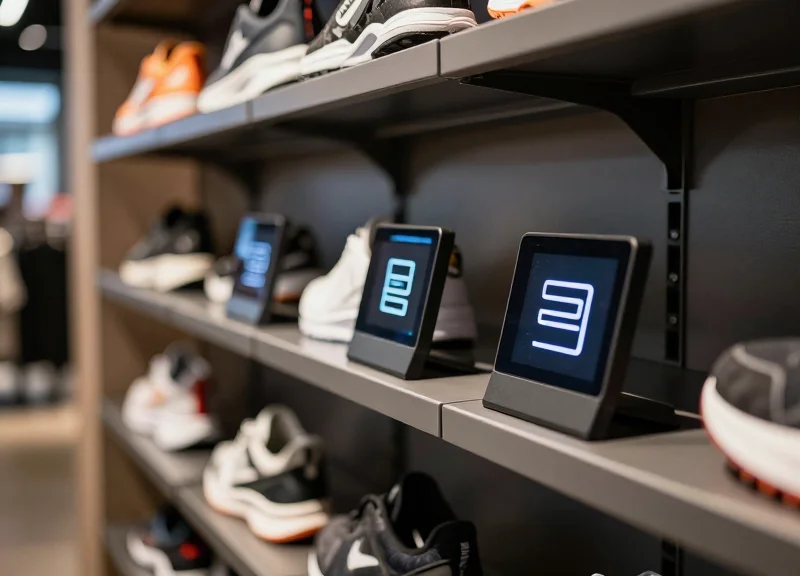
The synergy between Intelligent Crosstalk Control (ICC), Radio Frequency Identification (RFID), and Electronic Shelf Labels (ESL) represents the 'Unified Data Fabric' of 2026 retail environments. Unlike legacy systems that operate in silos, ICC acts as the environmental stabilizer, ensuring that high-density wireless signals from ESL updates and RFID inventory scans do not create the electronic 'noise' that traditionally triggers false EAS alarms. By harmonizing these frequencies, boutiques can achieve 99% inventory accuracy alongside invisible, frictionless security.
In the high-stakes boutique environment of 2026, the challenge isn't just preventing theft; it's managing a dense spectrum of radio frequencies. ICC technology provides the foundational 'signal hygiene' necessary for other IoT devices to thrive. When your security pedestals can intelligently distinguish between a shoplifted item and a nearby ESL price update or an RFID handheld scanner, you eliminate the technical friction that previously capped the ROI of smart store investments.
| Feature | Legacy Siloed Systems | 2026 Integrated ICC Ecosystem |
|---|---|---|
| Signal Conflict | High; RFID bursts trigger EAS alarms | Zero; ICC filters non-security signatures |
| Inventory Sync | Manual or delayed batches | Real-time via RFID-EAS cross-talk |
| ESL Interference | Updates delayed during peak hours | Continuous updates with managed spectrum |
| Data Analytics | Isolated 'beeps' with no context | Rich data on 'what' and 'when' left |
Expert Insight: The Concept of 'Spectrum Orchestration' In my 20 years in the Valley, we've seen this play out in networking: the shift from simple filters to active orchestration. In 2026, ICC doesn't just block noise; it 'orchestrates' the boutique’s spectrum. It uses AI to identify the unique pulse width of ESL transmissions and carves out a 'safe lane' for security signals. This allows retailers to place RFID-tagged high-value items within inches of the security gate—a previously impossible layout that is essential for modern, open-concept luxury boutiques.
- Automated Stock Correction: When an item passes through an ICC-enabled gate, the system communicates with the RFID database and ESLs to immediately flag the item as 'sold' or 'missing,' updating digital price tags and stock levels across all channels.
- Dynamic Security Scaling: During high-traffic ESL update cycles (e.g., flash sales), ICC shifts its sensitivity parameters dynamically to maintain security integrity without being overwhelmed by the surge in ambient RF activity.
- Predictive Maintenance: The integrated stack monitors signal health. If an ESL unit begins to malfunction and emit 'dirty' signals, the ICC system identifies the source and alerts staff before it impacts the store's security perimeter.
Can ICC work with my existing RFID hardware?
Yes. Most 2026-ready ICC modules are designed to be hardware-agnostic, acting as a middleware layer that cleans the RF environment for your existing RFID readers.
Does this integration require a constant cloud connection?
While data analytics are stored in the cloud, the crosstalk suppression happens at the 'edge' (on-site) to ensure zero-latency protection even if the internet goes down.
Will ESL updates slow down during peak security alerts?
No. The primary benefit of ICC is its ability to process multiple signal types simultaneously without bandwidth degradation, ensuring price accuracy remains real-time.
Future-Proofing Your Business: Steps to Implementation
Transitioning to Intelligent Crosstalk Control (ICC) is a phased modernization process that replaces hardware-dependent filtering with software-defined signal processing. For next-gen boutiques, implementation involves establishing an 'Environmental Noise Baseline,' followed by the modular integration of DSP-enabled pedestals that can dynamically adjust to high-interference retail zones. This shift allows retailers to eliminate false alarms and bridge the gap between physical loss prevention and digital inventory management without a total infrastructure overhaul.
- Phase 1: Spectral Interference Audit: Before purchasing hardware, use a spectrum analyzer to map the existing RF/AM noise floor of your boutique. Identify 'hot zones' created by adjacent escalators, LED displays, or neighboring retail security systems that currently trigger crosstalk.
- Phase 2: Modular Hardware Retrofitting: Choose ICC systems that offer backward compatibility with existing tags. Focus on replacing the 'brains'—the controllers and receivers—while maintaining aesthetic consistency with boutique-grade pedestals.
- Phase 3: AI-Driven Calibration: During installation, engage the ICC’s machine learning mode. This allows the system to 'learn' the rhythmic interference patterns of your specific environment, creating a digital twin of legitimate signals versus crosstalk noise.
- Phase 4: Ecosystem Synchronization: Integrate the ICC output with your store management software. Ensure that the security alerts are synced with your mobile alerts and CCTV triggers for a unified response protocol.
One expert tip often overlooked by traditional vendors: establish a 'Shadow Baseline.' Before going live, run the ICC system in 'Silent Mode' for 48 hours. This captures a full cycle of environmental noise—including peak shopping hours and overnight maintenance—allowing you to fine-tune the crosstalk suppression algorithms before a single alarm ever sounds in front of a customer.
| Feature | Legacy EAS Implementation | ICC Implementation (2026) |
|---|---|---|
| Calibration Time | Manual / Static (Hours) | Automated / Dynamic (Minutes) |
| Interference Handling | Physical Shielding Required | Digital Filtering / Software-Defined |
| Remote Management | Rare / Analog Only | Standard Cloud-Based Analytics |
| Longevity | 3-5 Years (Fixed Frequency) | 8-10 Years (Firmware Upgradable) |
Can I keep my existing security tags when moving to ICC?
Yes. Most Intelligent Crosstalk Control systems are designed to be frequency-agnostic or multi-frequency, allowing you to leverage your current inventory of hard tags and labels while upgrading the detection sensitivity at the exit.
Is ICC difficult for store staff to manage?
On the contrary, ICC reduces the 'alarm fatigue' associated with legacy systems. Staff only need to respond to high-confidence alerts, and most troubleshooting can be handled remotely by your IT team through a web dashboard.
How does ICC handle neighboring stores with the same frequency?
ICC uses 'Signal Fingerprinting' to distinguish between a tag moving through your gate and a signal bleeding in from a neighbor. It identifies the phase and proximity of the signal to ensure only local events trigger an alarm.