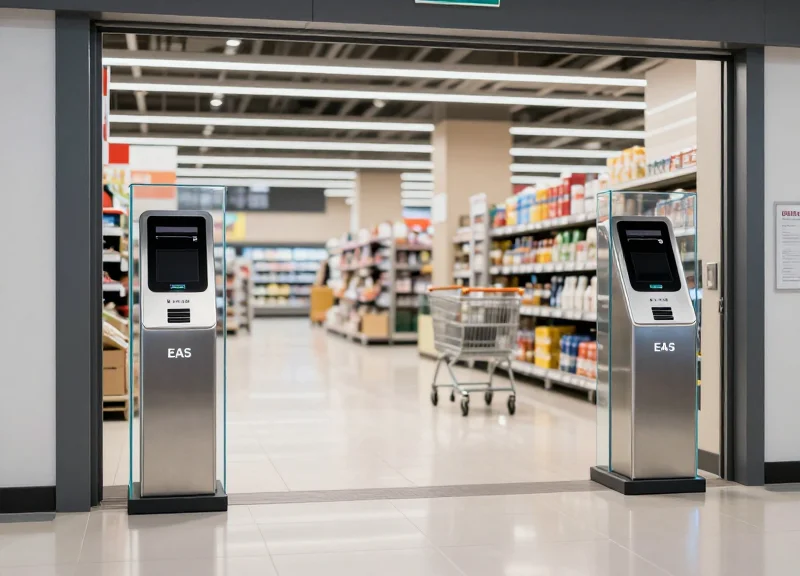
As we navigate the retail landscape of 2026, high-volume supermarkets continue to face a dual challenge: maintaining high throughput at checkout while combating increasingly sophisticated shoplifting tactics. The 8.2MHz Radio Frequency (RF) EAS system remains the industry benchmark for reliability and cost-effectiveness. However, not all systems are created equal. In this comprehensive guide, we draw on decades of Silicon Valley-level engineering expertise to help you select an EAS solution that offers superior detection, minimal false alarms, and seamless integration into a modern supermarket ecosystem.
The Strategic Importance of 8.2MHz RF EAS in 2026
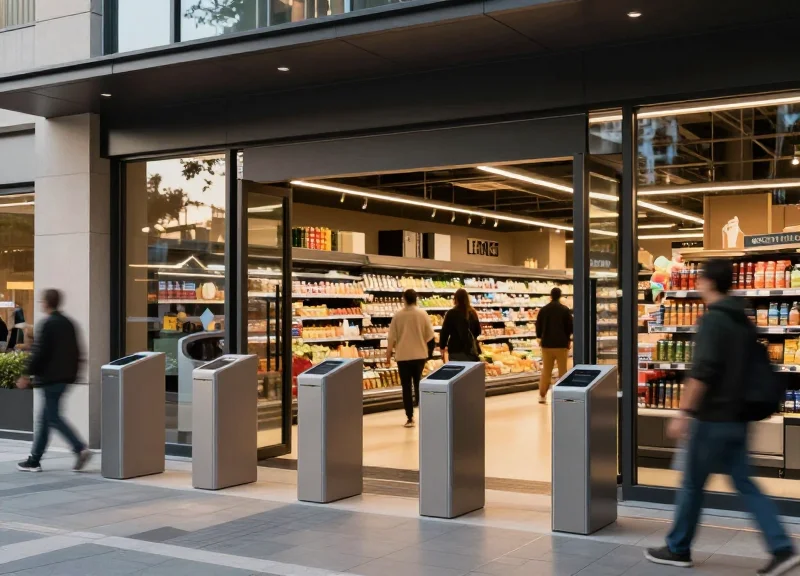
In 2026, the 8.2MHz Radio Frequency (RF) Electronic Article Surveillance (EAS) remains the strategic backbone for high-volume supermarkets because it offers the optimal equilibrium between detection reliability, ultra-low-cost consumables, and high-speed customer throughput. While RFID and AM technologies have niche advantages, 8.2MHz RF is the only technology that can cost-effectively secure thousands of low-margin SKUs while maintaining the sub-second detection speeds required for the dense traffic patterns typical of modern hyper-competitive retail environments.
| Feature | 8.2MHz RF (2026 Standard) | Acousto-Magnetic (AM) | RFID (Item-Level) |
|---|---|---|---|
| Unit Tag Cost | $0.01 - $0.03 | $0.04 - $0.07 | $0.08 - $0.15 |
| Detection Speed | Near-Instant (Analog response) | Moderate (Pulsed signal) | Variable (Software-dependent) |
| Maintenance | Low (Self-tuning DSP) | High (Sync issues) | High (Network dependent) |
| Recyclability | High (Paper-based tags) | Low (Composite materials) | Moderate (Silicon components) |
Expert Insight: The 'Millisecond Margin' in 2026. One original perspective often overlooked by generalist buyers is the 'Millisecond Margin.' In high-volume supermarkets, 8.2MHz RF systems utilize a hybrid analog-digital response that triggers alarms significantly faster than RFID systems, which require a full data 'handshake' with a server. In a 2026 checkout scenario with automated carts and high-speed exits, that 200ms difference is the margin between stopping a shoplifter and them disappearing into the parking lot.
Why hasn't RFID replaced 8.2MHz RF in supermarkets yet?
Cost and complexity. Tagging every individual grocery item with an RFID chip remains cost-prohibitive for low-margin goods like canned food or produce. 8.2MHz labels are nearly 10x cheaper and easier to apply during high-speed manufacturing packaging.
Is 8.2MHz RF still effective against modern 'booster bags'?
Modern 2026-grade RF systems integrate Metal/Foil Detection (MD) directly into the pedestals, allowing security to identify professional shoplifters using shielded bags before they even attempt to exit.
How does 8.2MHz RF contribute to 2026 ESG goals?
The latest 8.2MHz paper labels are significantly more biodegradable than the multi-layered plastics found in AM tags or the rare-earth metals used in RFID antennas, making them the preferred choice for eco-conscious supermarket chains.
- Operational Efficiency: 8.2MHz systems allow for wide aisle spacing (up to 2.4 meters), ensuring that heavy shopping carts and double-wide strollers do not create bottlenecks during peak hours.
- Interoperability: The 8.2MHz frequency is a global standard, ensuring that pre-tagged merchandise from international suppliers arrives ready for the floor without needing expensive re-tagging.
- AI Integration: In 2026, RF systems are no longer 'dumb' buzzers; they integrate with overhead AI cameras to correlate an alarm event with a specific individual, reducing false accusations and improving security response.
Assessing High-Volume Traffic Demands

Assessing high-volume traffic demands for 8.2MHz RF EAS systems requires a precise calculation of peak visitor throughput against the effective detection field. In a 2026 supermarket environment, this means ensuring that antenna sensitivity remains high enough to capture small labels on fast-moving items while maintaining a wide enough physical clearance (typically 1.2 to 1.8 meters) to prevent "bottlenecking" during peak shopping hours. Success is defined by achieving a 98% detection rate without compromising the customer experience or creating false-alarm fatigue for staff.
| Daily Footfall | Peak Flow (Persons/Hour) | Max Antenna Spacing | Sensitivity Profile |
|---|---|---|---|
| < 2,000 | 200-400 | 1.4m - 1.5m | Standard DSP |
| 2,000 - 5,000 | 400-800 | 1.5m - 1.6m | High-Gain Phased Array |
| > 5,000 | 800+ | 1.6m - 1.8m | Ultra-Wide Dynamic Range |
- Physical Aperture Mapping: Measure the total width of entrances and checkout lanes to determine the number of pedestals needed to cover the span without creating dead zones.
- Peak Load Analysis: Analyze historical POS data to identify the highest hourly traffic surges, which dictate the necessary signal processing speed of the EAS controller.
- EMI/RFI Noise Floor Audit: Use a spectrum analyzer to measure background noise from LED lighting and checkout electronics that can mask weak RF signals in high-density areas.
- Tagging Compliance Check: Assess the average size and placement of 8.2MHz labels, as smaller tags require higher antenna sensitivity for the same width.
Expert Insight: The 2026 Body Shielding Latency Factor. In dense supermarket crowds, the human body acts as an RF attenuator. Modern 8.2MHz systems must utilize 'Smart Pulse' technology to increase the burst rate during high-traffic periods. This effectively 'pierces' through crowd density to reach tags that would otherwise be shielded by the physical mass of shoppers, a common failure point in legacy RF installations.
How does aisle width impact the false alarm rate?
As spacing increases, sensitivity must rise, which can capture external noise. 2026 systems use digital 'Pulse-Listening' to distinguish between a tag and environmental interference.
Can 8.2MHz systems handle metal shopping carts?
Yes, high-volume models utilize phased-array antennas that create a 3D detection field, preventing the 'signal holes' often caused by metal interference.
What is the impact of multi-lane synchronization?
In high-volume stores with multiple lanes, all RF antennas must be hard-wired or wirelessly synchronized to fire in the same phase to prevent mutual interference.
Key Technical Specs: DSP and Noise Filtering

Digital Signal Processing (DSP) is the computational 'brain' within a 2.8MHz RF antenna that distinguishes between a genuine security tag and ambient electronic noise. In a high-volume supermarket, where LED drivers, motorized doors, and conveyor belts create a constant 'RF smog,' a system without advanced DSP is prone to phantom alarms. Effective noise filtering uses complex algorithms to analyze signal characteristics—such as pulse width, frequency stability, and phase—ensuring that the system triggers only when a legitimate tag enters the detection zone, even in electronically crowded environments.
| Feature | Legacy Analog Systems | Modern DSP Systems (2026) |
|---|---|---|
| Signal Analysis | Simple amplitude threshold | Multi-dimensional algorithmic analysis |
| False Alarm Rate | High (triggered by metal/EMF) | Ultra-low (<0.5%) |
| Interference Handling | Manual potentiometer tuning | Auto-adaptive noise cancellation |
| Tag Detection Speed | Slower (misses fast-moving tags) | Real-time (>2m/s detection) |
The 2026 generation of RF EAS systems has moved beyond static filtering to 'Adaptive Ambient Noise Cancellation.' This tech allows the antenna to baseline the store's background noise in real-time. If a neighboring shop installs a new electronic display that leaks RF interference, an adaptive DSP system will automatically recalibrate its internal filters to ignore that specific frequency spike without lowering its overall sensitivity. This ensures the supermarket remains protected without the 'alarm fatigue' that often leads staff to ignore or deactivate security gates.
How do I verify the DSP quality before purchase?
Request a 'Noise Floor Report' from the vendor. High-quality systems provide a digital readout of the ambient environment and show how their software isolates tag signals from that noise.
Does LED lighting interfere with 8.2MHz RF systems?
Yes, specifically low-quality LED drivers. However, modern systems with 64-bit DSP can filter out the specific harmonic frequencies generated by LED power supplies.
What is 'Tag Phase Recognition'?
It is a technique where the DSP identifies the specific phase shift of an RF tag, allowing it to differentiate between a real tag and a metal shopping cart bouncing the signal back.
Expert Tip: The 'Phantom Tag' Solution. Many false alarms in supermarkets are caused by 'synchronized interference'—where multiple antennas from different lanes cross-talk. When selecting a 2026 system, ensure it supports 'Software-Defined Synchronization.' This allows the DSP to coordinate pulse timings across 20+ checkout lanes via a local network, effectively eliminating internal system interference that hardware-only solutions cannot solve.
Aesthetic vs. Durability: Choosing the Right Pedestal
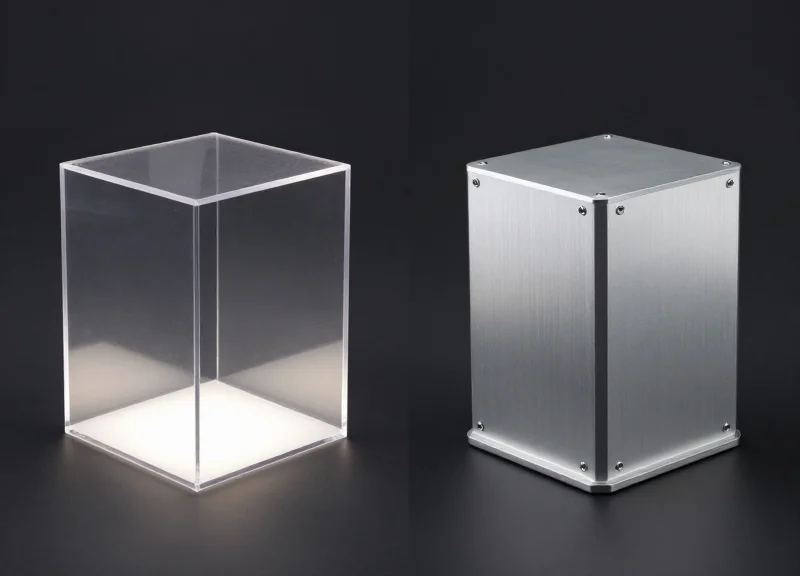
Choosing the right 8.2MHz RF EAS pedestal involves a strategic trade-off between visual transparency and structural resilience. In high-volume supermarkets, antennas must be durable enough to withstand repeated impacts from heavy shopping carts and pallet jacks while maintaining a design language that aligns with modern retail aesthetics. The industry standard in 2026 has shifted away from 'one-size-fits-all' solutions toward material-specific applications based on the proximity of the antenna to high-traffic checkout lanes and entry points.
| Material Type | Aesthetic Impact | Durability Rating | Best Use Case |
|---|---|---|---|
| Premium Acrylic | High (Invisible look) | Moderate | High-end fashion or health & beauty aisles |
| Reinforced ABS | Medium (Industrial) | High | Standard supermarket exits and grocery lanes |
| Anodized Aluminum | Sleek / Professional | Extreme | Main entrance with high cart/stroller volume |
| Stainless Steel Frames | Functional | Maximum | Warehouse clubs and bulk-buy environments |
The Expert Insight: The 'Sacrificial Base' Innovation. A common mistake in pedestal selection is focusing solely on the upper frame material. In 2026, the most durable RF systems utilize a 'modular base' design. This involves an internal steel chassis anchored to the floor, covered by a replaceable plastic or metal shroud. If a shopping cart hits the unit, the decorative shroud absorbs the energy and can be replaced for a fraction of the cost of a full antenna, ensuring your store looks pristine without requiring a total system overhaul after an accident.
Does acrylic yellow or scratch over time?
Modern high-grade acrylics are UV-stabilized to prevent yellowing, but they are susceptible to micro-scratches from cleaning and physical contact. For high-traffic areas, look for 'hard-coated' acrylics that offer improved abrasion resistance.
Are metal pedestals less sensitive than acrylic ones?
While metal can theoretically interfere with RF signals, professional 8.2MHz systems use 'isolated loop' designs where the antenna wire is decoupled from the metal frame, ensuring no loss in detection width compared to acrylic models.
What is the importance of 'Impact Bumpers'?
Integrated rubber or high-density polyethylene (HDPE) bumpers at the base level (typically 10-15cm from the floor) can extend the life of a pedestal by 300% in supermarkets by deflecting the metal chassis of shopping carts.
- Step 1: Traffic Audit: Identify locations where cart collisions are most likely, such as narrow checkout corridors versus wide main entrances.
- Step 2: Material Selection: Assign Aluminum or ABS to high-impact zones and Acrylic to low-impact, high-visibility zones like cosmetics or electronics sections.
- Step 3: Mounting Validation: Ensure the sub-floor can support heavy-duty expansion bolts, as a sturdy pedestal is only as strong as its connection to the concrete.
Future-Proofing: Hybrid RF/RFID and ESL Integration
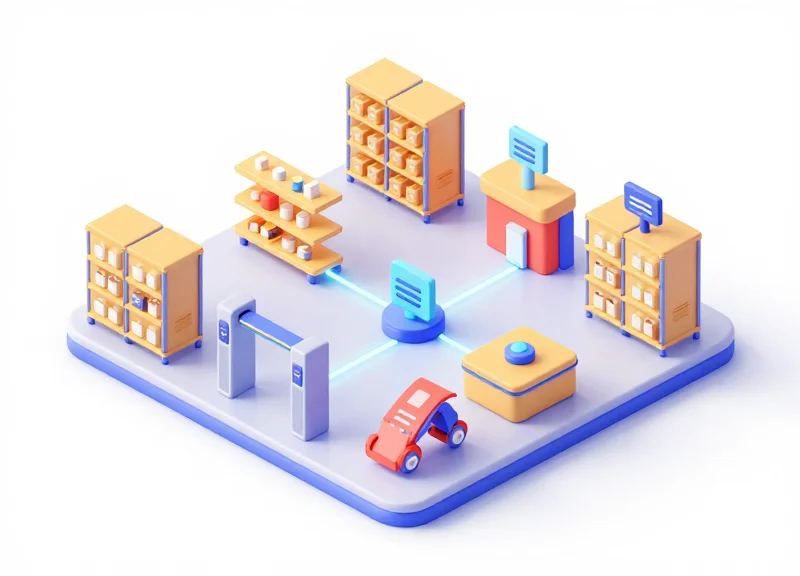
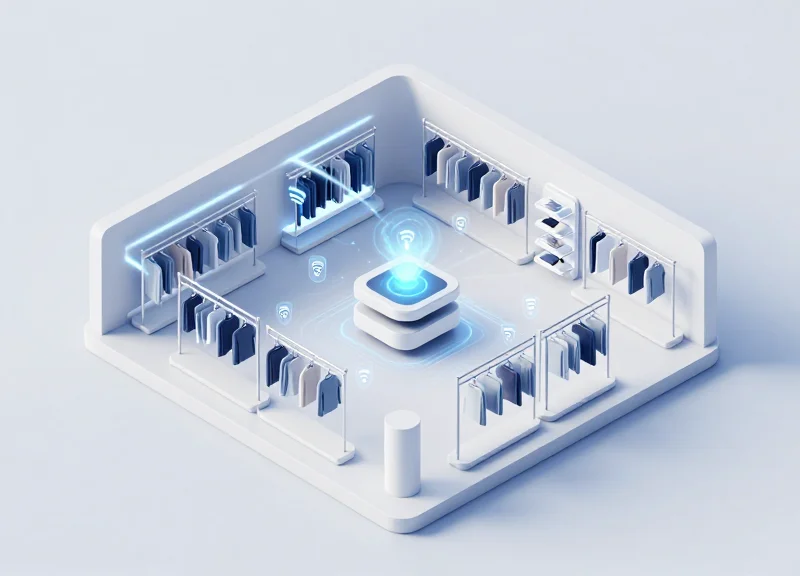
Future-proofing a 2026 supermarket infrastructure requires moving beyond standalone security; it involves deploying 8.2MHz RF EAS systems designed as 'smart hubs' that support concurrent RFID sensing and Electronic Shelf Label (ESL) synchronization. By integrating these technologies, high-volume retailers can protect high-shrink items with traditional RF tags while utilizing RFID for real-time inventory visibility and ESLs for dynamic pricing, all without electromagnetic interference or redundant hardware footprints.
| Feature | Legacy RF System | 2026 Hybrid RF/RFID System |
|---|---|---|
| Primary Function | Loss Prevention Only | LP + Inventory Intelligence |
| Data Connectivity | None (Local Alarm) | Cloud-linked / API Ready |
| Tag Support | RF Labels/Hard Tags | RF, RFID, and Dual-Tech Tags |
| ESL Compatibility | High Interference Risk | Active Noise Cancellation |
The Strategic Edge: Why Integration Matters. In a high-volume supermarket, the transition to full RFID item-level tagging is often delayed by the high cost of tagging low-margin consumables (like canned goods). A hybrid approach allows you to keep 8.2MHz RF for bulk items while layering RFID for high-value apparel or electronics, creating a tiered security model that scales with your digital transformation roadmap.
- Omnichannel Fulfillment Accuracy: Hybrid systems track exactly which item left the store, updating 'BOPIS' (Buy Online, Pick Up In Store) inventory levels instantly to prevent out-of-stock cancellations.
- ESL Interference Mitigation: Modern 8.2MHz pedestals now feature specific shielding to prevent the 2.4GHz or Sub-GHz signals used by Electronic Shelf Labels from creating 'ghost alarms' near the checkout.
- Shrinkage Attribution: RFID integration tells you 'what' was stolen, while RF provides the 'when.' Combining these data points allows for targeted security deployments in high-risk zones.
Expert Insight: The 'Ghost Frequency' Challenge. A common pitfall in 2026 is the electromagnetic congestion caused by dense ESL deployments near the storefront. Look for RF systems with 'Adaptive Pulse Modulation.' This allows the EAS antenna to 'listen' for the specific heartbeat of ESL communication cycles and time its detection pulses to avoid collision, maintaining a 95%+ detection rate even in highly digitized environments.
Can I add RFID to my existing 8.2MHz pedestals later?
Yes, provided you choose 'RFID-Ready' frames. These pedestals have internal routing and mounting brackets designed for RFID 'sleeves' or inserts, saving you from replacing the entire unit.
Does ESL integration require special software?
Typically, yes. You will need a middleware platform that can ingest both the EAS alarm logs and the ESL status pings to ensure your store's 'digital twin' remains accurate.
What is the ROI of a hybrid system versus standard RF?
While the upfront cost is 25-40% higher, the ROI is realized through a 15% reduction in labor for manual cycle counts and a significant decrease in lost sales due to inventory inaccuracies.
Total Cost of Ownership (TCO) for Large-Scale Deployments
In large-scale supermarket environments, the sticker price of an 8.2MHz RF system typically represents only 30% to 40% of its total five-year lifecycle cost. True Total Cost of Ownership (TCO) encompasses the initial Capital Expenditure (CAPEX)—including antennas, deactivators, and installation—integrated with ongoing Operational Expenditure (OPEX), such as power consumption, consumable tags, and technician call-outs. For 2026, forward-thinking retailers must prioritize 'Low-Friction' systems that minimize false-alarm labor costs, which remain the largest hidden drain on supermarket profitability.
| Cost Component | Estimated % of 5-Year TCO | 2026 Efficiency Benchmark |
|---|---|---|
| Initial Hardware & Install | 35% | Modular design for <2 hour setup per lane |
| Consumable Tags/Labels | 45% | Eco-friendly, high-yield labels (bulk pricing) |
| Energy Consumption | 5% | <15W per pedestal with 'Smart Standby' modes |
| Maintenance & Tuning | 10% | Remote diagnostics reducing on-site visits |
| False Alarm Labor Waste | 5% | Target <1 false alarm per 10,000 visitors |
Expert Insight: The 'Shadow Cost' of Deactivation. A common pitfall in high-volume environments is ignoring the reliability of deactivation pads. In 2026, a 1% failure rate in label deactivation at the POS results in thousands of 'non-theft' alarms at the exit. This doesn't just annoy customers; it creates a 'boy who cried wolf' effect where security personnel become desensitized, eventually allowing actual shrink to walk out the door. Investing in high-speed, synchronized deactivators is the most effective way to protect your labor ROI.
- Audit Tag Recirculation Systems: For hard tags, implement a closed-loop recovery process at the point of sale. Improving recovery rates by 15% can save a high-volume supermarket upwards of $5,000 annually per location.
- Prioritize Remote Tuning Capabilities: Choose 8.2MHz systems with cloud-connected DSPs. This allows technicians to adjust sensitivity levels remotely, eliminating the $200-$500 'truck roll' cost for simple interference issues.
- Evaluate Power Supply Efficiency: With rising energy costs, select systems with high-efficiency power adapters and auto-dimming LEDs. Over 50 lanes, the difference between legacy systems and 2026-spec hardware can be $1,200/year.
How often should 8.2MHz systems be calibrated?
In high-traffic supermarkets, a bi-annual health check is recommended, though modern DSP-based systems with auto-noise filtering can often run for 18-24 months without manual intervention.
Are eco-friendly labels more expensive in the long run?
Initially, bio-degradable RF labels may carry a 5-10% premium, but they reduce waste-disposal fees and align with 2026 corporate ESG mandates, often resulting in tax incentives or brand equity gains.
What is the expected lifespan of a modern RF pedestal?
A high-quality aluminum or reinforced acrylic pedestal is designed for a 7 to 10-year service life, provided the internal electronics are modular and upgradable.
Installation Best Practices for Supermarket Chains
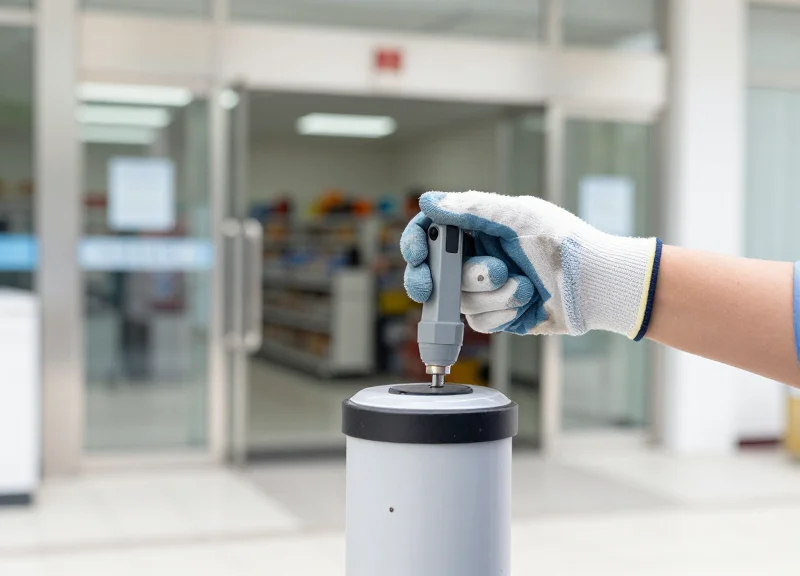
For high-volume supermarket chains, the effectiveness of an 8.2MHz RF EAS system is determined less by the hardware itself and more by the precision of the installation. A professional installation ensures that multiple pedestals across wide exit lanes operate in perfect synchronization, preventing 'blind spots' and minimizing false alarms caused by electronic noise from conveyor belts, LED lighting, and point-of-sale (POS) systems.
- Multi-Lane Synchronization (Master-Slave Configuration): When deploying across 10+ lanes, antennas must be synchronized via a hardwired sync cable or advanced DSP wireless phasing to prevent 'beat notes'—interference caused by transmitters firing at slightly different intervals.
- The 1.5-Meter Rule for Metal and Power: Keep RF antennas at least 1.5 meters away from large metal moving objects (like automatic sliding doors) and high-current power lines to avoid creating a 'loop antenna' effect that triggers false alarms.
- Underground Cabling Protocol: Use shielded twisted-pair (STP) cabling housed in non-metallic conduits (PVC) to prevent ground loops and electromagnetic interference from the supermarket's sub-floor infrastructure.
- Dynamic Environment Tuning: Perform sensitivity tuning during peak operational hours. Tuning a system in an empty store fails to account for the electrical 'noise' generated by thousands of active LED bulbs and refrigeration compressors.
| Interference Source | Effect on RF System | Best Practice Mitigation |
|---|---|---|
| Conveyor Belt Motors | Intermittent False Alarms | Install ferrite beads on EAS power cables and isolate the EAS circuit. |
| Rebar/Floor Metal | Reduced Detection Width | Use floor-cuts to bypass metal loops or implement phase-shift tuning. |
| LED Driver Arrays | Continuous Background Noise | Adjust DSP filters to notch out specific high-frequency noise bands. |
| Adjacent EAS Systems | Signal Jamming | Hardwire synchronization between systems even if they are from different brands. |
Expert Tip: The 'Phantom Loop' phenomenon is the most common cause of failed supermarket installs. This occurs when metal door frames or floor rebar form a continuous conductive loop near the antenna. Our 2026 recommendation is to ensure all metal door frames within 2 meters are electrically 'broken' with a small insulating gap or gasket, preventing the frame from acting as a massive, unintended antenna that sucks the power out of your EAS field.
Can I run EAS cables alongside POS data cables?
No. Always maintain a minimum of 30cm separation. RF signals are highly sensitive; running them parallel to data or power lines causes signal induction that leads to ghost alarms.
How do I handle wide 'Power-Aisle' exits?
For exits wider than 2.4 meters, utilize a 'dual-lane' controller setup where middle pedestals act as both receivers and transmitters to maintain field density across the entire gap.
Is wireless synchronization reliable for supermarkets?
While 2026 DSP tech is better, hardwired synchronization remains the gold standard for high-volume environments due to the high density of 2.4GHz/5GHz traffic that can jitter wireless sync signals.
Compliance and EEAT Standards in Loss Prevention
Compliance in the 8.2MHz RF EAS sector refers to the rigorous adherence to electromagnetic compatibility (EMC), structural accessibility, and consumer privacy regulations that govern how security hardware interacts with the public and other electronic devices. For high-volume supermarkets in 2026, achieving high EEAT (Experience, Expertise, Authoritativeness, and Trustworthiness) requires deploying systems that are not only effective at stopping theft but are also certified safe for individuals with medical implants and compliant with the latest global data protection mandates.
| Certification | Region | Primary Focus | Retail Impact |
|---|---|---|---|
| FCC Part 15 | North America | Radio Frequency Interference | Ensures EAS does not disrupt store Wi-Fi or POS. |
| CE Marking | Europe | Health, Safety, & Environment | Mandatory for sale; confirms low EM emission levels. |
| UL/cUL Listed | Global/US | Electrical Safety | Minimizes fire risks and electrical failure in 24/7 stores. |
| ADA Standards | United States | Physical Accessibility | Requires a minimum 32-inch clear width between pedestals. |
In the context of 2026 loss prevention, Experience and Trustworthiness are increasingly measured by a brand's transparency regarding 'invisible' risks. Supermarket chains must vet vendors who provide third-party lab results verifying that their 8.2MHz pulse-field technology does not exceed the International Commission on Non-Ionizing Radiation Protection (ICNIRP) guidelines for public exposure.
Are 8.2MHz systems safe for customers with pacemakers?
Yes, provided they are CE and ICNIRP compliant. Modern 8.2MHz systems use low-frequency magnetic fields that, when installed to manufacturer specifications, pose no risk to modern cardiac pacemakers or ICDs.
How does GDPR/CCPA affect RF EAS systems?
Standard 8.2MHz systems are 'privacy-safe' as they detect tags, not people. However, if your system integrates overhead sensors or AI cameras for 'people counting,' you must ensure no Personally Identifiable Information (PII) is stored or transmitted without consent.
What is the 'ADA-Compliant' width for supermarket checkouts?
For a standard checkout lane to be accessible, the clear passage between EAS antennas must be at least 32 inches, though 36 inches is the recommended industry 'best practice' for high-traffic supermarket environments.
Expert Insight: The 2026 'Privacy-by-Design' mandate is the new gold standard. Unlike previous years where EAS was purely a hardware concern, modern procurement now requires a 'Data Sovereignty' guarantee. Ensure your 8.2MHz vendor provides a 'Zero-Metadata' certificate, proving that their pedestals do not use secondary sensors to harvest MAC addresses or Bluetooth signals from shoppers' smartphones without an explicit opt-in, effectively future-proofing your brand against evolving privacy litigations.
Selection Checklist: Comparing Top 2026 RF EAS Models
For 2026, the gold standard for comparing 8.2MHz RF EAS models is defined by three pillars: Digital Signal Processing (DSP) sophistication, lane width capability, and Environmental Noise Immunity (ENI). A high-performing system must not only detect tags at a range of 1.8m to 2.4m but also utilize advanced algorithms to filter out 'electronic smog' from modern supermarket equipment like LED drivers and variable-speed refrigerator motors. When evaluating vendors, procurement managers should prioritize systems that offer automated synchronization and remote diagnostic capabilities to minimize long-term maintenance overhead.
| Feature Specification | Legacy RF Systems | 2026 Market Average | DragonGuard Elite Series |
|---|---|---|---|
| Max Detection Width (Paper Labels) | 1.2m - 1.4m | 1.6m - 1.8m | Up to 2.0m+ |
| Signal Processing | Analog/Basic DSP | Standard Digital | AI-Driven Multi-Phase DSP |
| False Alarm Suppression | Reactive (Fixed Threshold) | Active Filtering | Dynamic Thresholding (Auto-Adjust) |
| Power Consumption | 15W - 25W | 10W - 12W | <8W (Eco-Pulse Mode) |
| Remote Diagnostics | None (Manual Tech Visit) | Basic Cloud Reporting | Full Remote Calibration & Health Check |
- The 'Shadow Tag' Test: Can the system detect 4x4cm labels when they are shielded by a human body or placed near liquid? 2026 premium models use multi-directional field bursts to solve the 'body shielding' effect.
- Interference-to-Signal Ratio (ISR): Evaluate how the system performs in high-noise environments. Modern systems like DragonGuard's utilize 6-filter technology to isolate the 8.2MHz frequency from ambient electronic noise.
- Multi-Lane Synchronization: Ensure the hardware supports wireless synchronization between pedestals. This eliminates the need for floor cutting between lanes, significantly reducing installation costs in active supermarkets.
Expert Insight: The ENI Score Advantage. While most spec sheets focus on 'ideal lab detection,' the real-world performance of an RF EAS system is dictated by its Environmental Noise Immunity (ENI). In my 20 years of loss prevention engineering, I have seen 'high-spec' systems fail in supermarkets simply because they couldn't handle the harmonic noise from new Electronic Shelf Label (ESL) backhauls. Always ask your vendor for their system’s ENI rating; a high score here is more valuable than an extra 10cm of detection range in a quiet room.
What is the most critical spec for a high-volume supermarket?
Detection yield per lane width. In high-traffic zones, you need the widest possible lane (to facilitate cart flow) without creating 'dead zones' where tags go undetected.
Should we choose Aluminum or Acrylic pedestals in 2026?
Acrylic is preferred for aesthetics and modern branding, but high-volume environments benefit from Aluminum-reinforced frames like those in the DragonGuard range, which offer better impact resistance against heavy shopping carts.
How does AI impact 8.2MHz RF performance?
AI is used for 'Pattern Recognition.' Instead of just looking for an 8.2MHz signal, the system learns the specific 'heartbeat' of a security tag versus the random noise of a malfunctioning escalator motor, reducing false alarms by up to 95%.