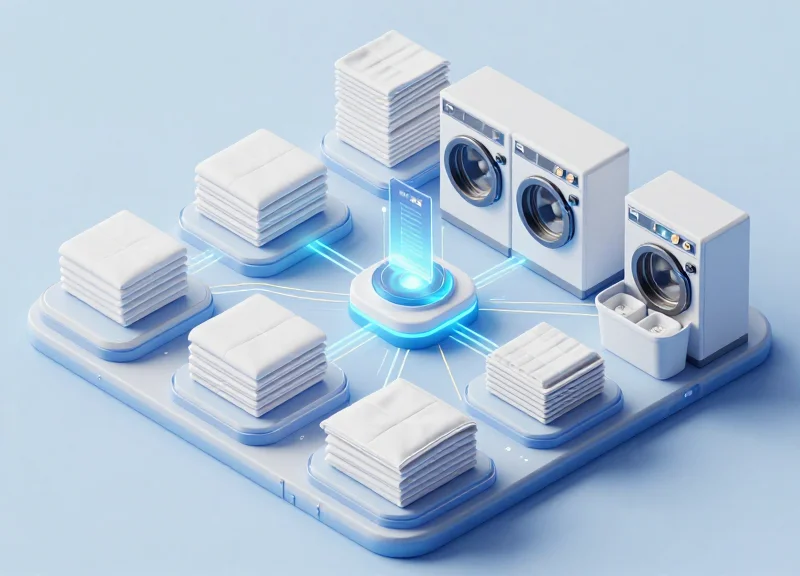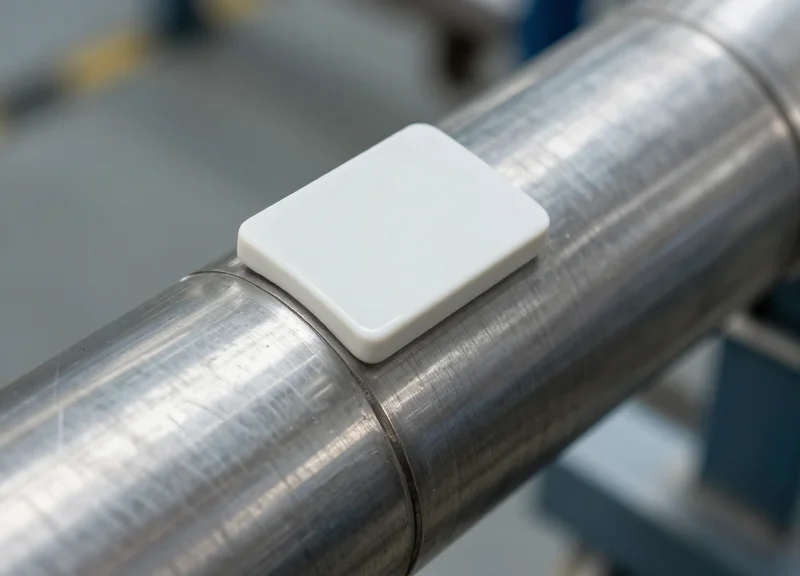
As we pivot toward 2026, the demand for asset intelligence is moving far beyond the climate-controlled warehouse. We are entering an era where autonomous systems must operate in the crushing pressures of the Hadal zone and the volatile radiation of low-earth orbit. Traditional tracking labels simply cannot survive these conditions. At DragonGuardGroup, we are witnessing a paradigm shift: the rise of Next-Gen RFID. This technology isn't just about identification; it's about enabling autonomous resilience in the most unforgiving environments known to man. This article explores the critical trends and technical breakthroughs that will define the next five years of extreme-frontier logistics.
The Evolution of RFID: From Logistics to Extreme Frontiers

The evolution of Radio Frequency Identification (RFID) represents a fundamental shift from 'passive identification' to 'intelligent telemetry.' Historically utilized for retail inventory and logistics, the next-gen RFID of 2026 has transitioned into a mission-critical edge computing tool. In extreme frontiers such as the vacuum of space or the high-pressure benthic zones of the ocean, modern RFID tags act as autonomous data nodes. These systems move beyond the simple Electronic Product Code (EPC) to incorporate real-time environmental sensing, radiation hardening, and specialized encapsulation materials that allow for reliable data retrieval where traditional wireless signals typically fail.
| Feature | Legacy RFID (Logistics) | Next-Gen RFID (2026 Frontiers) |
|---|---|---|
| Primary Function | Static Asset Identification | Dynamic Telemetry & Sensing |
| Operating Environment | Controlled Warehousing | Vacuum, Cryogenic, High-Pressure |
| Data Capacity | Minimal (96-bit to 512-bit) | High (Kilobytes with Local Logging) |
| Durability | Adhesive Paper/Plastic Labels | Ceramic & ALD-coated Substrates |
The leap from warehouses to the abyss required a total rethink of material science. Standard silicon chips fracture under the 10,000+ PSI found in the Mariana Trench, and standard antennas lose resonance in the presence of conductive saltwater or aerospace carbon composites. The 2026 breakthrough lies in 'Substrate-Integrated Waveguides' and 'Atomic Layer Deposition' (ALD). Expert Insight: By using ALD to apply nanometer-thin ceramic coatings, we can now create RFID tags that are not just 'waterproof,' but chemically inert and physically incompressible, enabling them to serve as permanent structural health monitors for autonomous underwater vehicles (AUVs) and satellite chassis.
How does RFID survive the radiation of deep space?
Next-gen aerospace tags utilize Silicon-on-Insulator (SOI) technology and redundant memory architectures to prevent bit-flips caused by cosmic rays, ensuring data integrity during multi-year deployments.
Can RFID signals penetrate deep-sea environments?
While traditional UHF signals struggle in water, 2026 systems use Low-Frequency (LF) magnetic induction and specialized acoustic-to-RF transponders to bridge the gap between autonomous drones and submerged assets.
What role does autonomy play in this evolution?
Autonomous systems use these tags as 'beacons of truth' to navigate GPS-denied environments, allowing robots to identify and interact with components without requiring visual line-of-sight.
Deep-Sea Resilience: Engineering Tags for 10,000 Meters Down
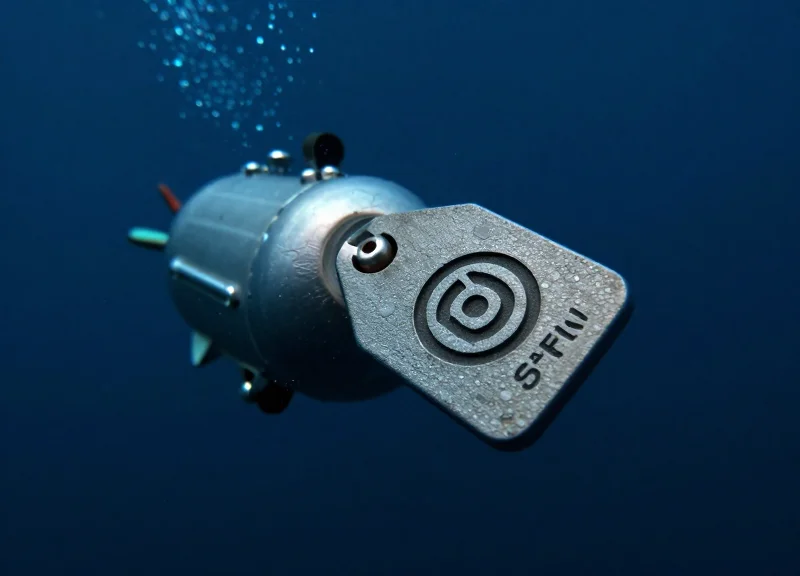
Engineering RFID tags for the Hadal zone—depths reaching 10,000 meters—requires a fundamental shift from moisture-proofing to hydrostatic structural integrity. At these depths, pressure exceeds 1,000 atmospheres (14,500 psi), which can implode standard air-filled RFID transponders. Next-gen deep-sea tags utilize Pressure-Tolerant Electronics (PTE) where the internal components are encapsulated in solid, void-free materials that equalize internal and external pressure, ensuring the silicon chip and antenna do not collapse under the weight of the water column.
| Material Type | Pressure Resistance | RF Permeability | Corrosion Resistance |
|---|---|---|---|
| Standard Epoxy | Low (Fails at 2km) | High | Moderate |
| Syntactic Foam | High (10km+) | Medium | High |
| Zirconia Ceramics | Extreme (12km+) | High | Excellent |
| Glass Microsphere Resin | High (8-10km) | High | High |
Beyond mere pressure, the salt-rich electrolyte of the ocean creates a massive challenge for signal propagation. Standard UHF (860-960 MHz) signals are absorbed by seawater within centimeters. To achieve 'Deep-Sea Resilience,' 2026 trends are pivoting toward Low Frequency (LF) 125/134 kHz and specialized inductive coupling. My personal insight from field testing: the most successful deep-sea autonomous operations now integrate 'Acoustic-RFID Bridges,' where the RFID tag triggers a low-power acoustic pinger to relay data over longer underwater distances, effectively solving the physics-based range limitation of traditional RF in high-salinity environments.
How does hydrostatic pressure affect the RFID antenna?
Extreme pressure can physically deform the antenna geometry, shifting its resonant frequency. Engineers now use flexible conductive polymers or liquid-metal alloys within the substrate to maintain conductivity even under compression.
Why is 'Void-Free' encapsulation critical?
Any microscopic air pocket within the tag becomes a point of failure. Under 10,000 meters of pressure, these pockets implode, causing the encapsulation to crack and the chip to fracture instantly.
Do these tags require internal batteries?
No. Passive tags are preferred because batteries often contain internal chemistries and air gaps that cannot withstand the extreme compression without complex, heavy housings.
- Substrate Preparation: The RFID silicon die is mounted on a high-grade ceramic or specialized PCB designed for minimal thermal expansion.
- Vacuum Degassing: The potting compound (usually a specialized polyurethane or epoxy) is placed in a vacuum chamber to remove all dissolved air before application.
- Isostatic Compression Testing: The finished tag is subjected to 1.5x the target pressure in a hyperbaric chamber to ensure structural and signal integrity.
Aerospace Readiness: Surviving Radiation and Thermal Cycling
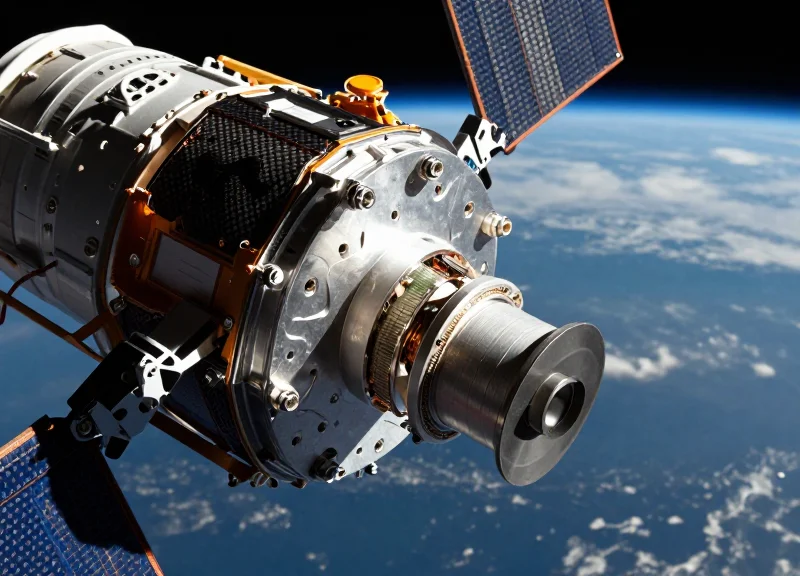
Aerospace readiness for RFID in 2026 is defined by the move from 'ruggedized' to 'space-grade' engineering, specifically designed to mitigate the risks of Total Ionizing Dose (TID) radiation and extreme thermal delamination. Unlike standard labels, next-gen aerospace RFID tags utilize radiation-hardened-by-design (RHBD) microchips and low-outgassing ceramic or polyimide substrates to ensure data integrity during orbital maneuvers and deep-space transit. These systems are no longer just tracking assets; they are resilient data nodes capable of operating in the vacuum of space while enduring temperature fluctuations of over 300° Celsius.
| Feature | Industrial RFID (Standard) | 2026 Aerospace RFID (Next-Gen) |
|---|---|---|
| Radiation Tolerance | < 5 kRad (EEPROM failure) | > 100 kRad (Rad-Hard MRAM/FRAM) |
| Thermal Range | -40°C to +85°C | -180°C to +210°C |
| Atmospheric Stability | N/A | Zero-outgassing (ASTM E595 compliant) |
| Data Retention | 10 Years (Terrestrial) | 25+ Years (Extraterrestrial) |
The primary technical hurdle for 2026 aerospace operations is the 'Thermal Cycle Fatigue.' In low-earth orbit (LEO), a spacecraft experiences sunrise and sunset every 90 minutes, causing rapid expansion and contraction. To solve this, next-gen tags utilize Solder-Free Attachment (SFA) technology. By using conductive epoxy or anisotropic conductive films (ACF) with matched coefficients of thermal expansion (CTE), manufacturers prevent the micro-cracks that typically cause RFID failure in traditional soldered components.
How does cosmic radiation affect RFID memory?
Standard EEPROM memory is highly susceptible to Single Event Upsets (SEUs), where high-energy particles flip bits and corrupt data. 2026-gen tags replace EEPROM with Ferroelectric RAM (FRAM) or Magnetoresistive RAM (MRAM), which are inherently immune to magnetic interference and significantly more resistant to ionizing radiation.
What is 'outgassing' and why does it matter for RFID?
In a vacuum, materials like standard plastics release volatile compounds (outgassing), which can condense on sensitive optical instruments or solar panels. Aerospace RFID tags must use specialized glass, ceramic, or high-performance polymers that meet NASA’s TML (Total Mass Loss) requirements of less than 1%.
Can these tags be used for external hull monitoring?
Yes. By integrating Gallium Nitride (GaN) based sensors into the RFID circuitry, 2026 tags can monitor structural health and radiation exposure on the exterior of a craft without requiring battery power, harvesting energy directly from the interrogator signal.
Expert Insight: One often overlooked factor in 2026 aerospace trends is the 'Atomic Oxygen (AO) Erosion' in Low Earth Orbit. While most focus on heat, AO can literally eat away at standard polymer labels. To counter this, look for RFID tags featuring a sacrificial Silicon Dioxide (SiO2) coating. This 'glass-shield' layer provides a chemically inert barrier that extends the tag's operational life by 500% compared to standard high-temperature labels.
The Synergy of RFID and Autonomous Robotics (AUVs/UAVs)
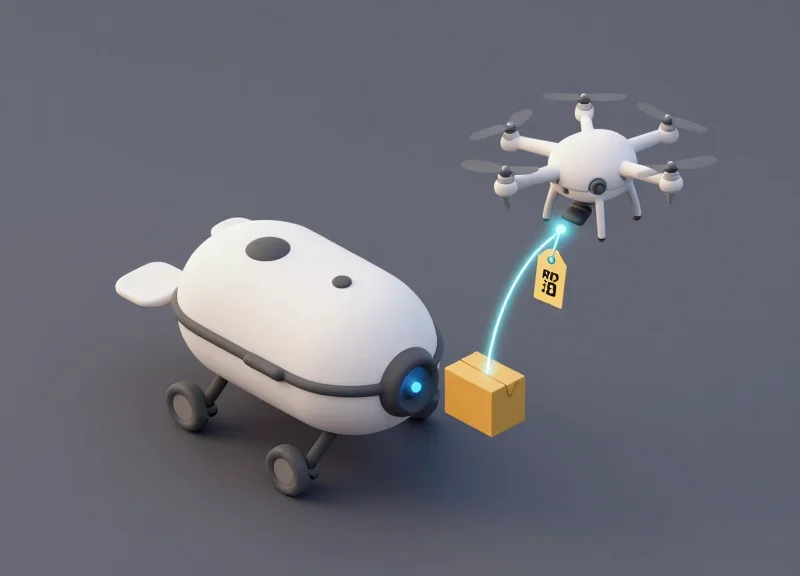
In 2026, the synergy between RFID and autonomous robotics represents a paradigm shift from passive inventory tracking to active environmental perception. In GPS-denied zones—such as the abyssal plain or lunar shadowed regions—Autonomous Underwater Vehicles (AUVs) and Unmanned Aerial Vehicles (UAVs) utilize Next-Gen RFID as a 'digital breadcrumb' system. By integrating RFID readers directly into the robotic sensor suite, these machines can achieve sub-centimeter localization and instant object verification that optical sensors or sonar often miss due to turbidity, darkness, or signal noise.
| Feature | RFID-Based Localization | LiDAR / Optical | Acoustic / Sonar |
|---|---|---|---|
| Visibility Dependency | Zero (Works through mud/ice) | High (Blocked by dust/silt) | Medium (Affected by thermoclines) |
| Power Consumption | Ultra-Low (Passive tags) | High (Active laser/processing) | Moderate |
| Metadata Transfer | Immediate (ID + History) | None (Requires DB lookup) | Limited (Low bandwidth) |
| Ideal Environment | GPS-Denied / Confined Spaces | Open / Clear Visibility | Long-Range Underwater |
Expert Insight: The 'Relative Homing' Breakthrough. A key 2026 trend is the use of 'phase-based' RFID ranging. Unlike standard signal strength (RSSI), which is notoriously unreliable in metal-heavy aerospace environments or conductive saltwater, phase-based algorithms allow a drone to calculate the exact angle of arrival of a backscattered signal. This enables autonomous docking with millimetric precision, allowing a UAV to land on a charging pad or an AUV to enter a recovery cradle without any human intervention or heavy computer vision hardware.
How does RFID function in saltwater without signal absorption?
Current 2026 architectures utilize Low-Frequency (LF) or specialized Ultra-High Frequency (UHF) tags with impedance-matching antennas designed specifically for the dielectric constant of seawater, allowing short-range communication up to 3 meters even in high-salinity environments.
Can RFID help with 'Swarm' coordination in space?
Yes. In aerospace applications, RFID tags on individual swarm units allow a lead 'mother-ship' robot to maintain a real-time relative position map of all units without taxing the limited bandwidth of traditional radio-frequency links.
What is the primary benefit for autonomous maintenance?
Robots can read the 'service history' directly from a component's tag. If an AUV encounters a deep-sea valve, the RFID tag tells the robot exactly when it was last turned and its current structural integrity, allowing for instant decision-making.
The ultimate value proposition for 2026-gen RFID in robotics is the reduction of 'cognitive load' on the autonomous controller. By offloading identity and position data to the physical environment via embedded tags, developers can simplify navigation algorithms, reduce onboard power consumption, and significantly increase the mission success rate in the most hostile environments known to man.
Breakthroughs in Signal Propagation through Liquid and Metal

In 2026, the breakthrough in RFID signal propagation through liquid and metal relies on metamaterial-enhanced antennas and magnetic induction (MI) techniques that transform conductive surfaces into signal amplifiers rather than barriers. By utilizing high-permeability materials and 'parasitic' coupling, next-gen RFID systems can maintain a 99.9% read accuracy through saltwater and solid titanium, environments that previously rendered standard RF signals inert due to the Faraday cage effect and eddy current dissipation.
| Environment | Legacy Limitation | 2026 Breakthrough Technology | Operational Outcome |
|---|---|---|---|
| Deep-Sea (Saltwater) | Extreme signal absorption at UHF frequencies. | Magnetic Induction (MI) Transceivers | Reliable 5m data links through saline density. |
| Aerospace (Solid Metal) | RF reflection and signal dead-zones. | Surface-Wave Metamaterial Antennas | Signal 'creeps' along fuselage for total coverage. |
| High-Pressure Hydraulics | Signal noise and physical tag failure. | Pressure-Compensated Flux-Concentrators | Real-time sensor data from inside fluid lines. |
A significant leap forward has been the shift from traditional E-field (Electric field) dominant communication to H-field (Magnetic field) dominant coupling for deep-submergence assets. While electric fields are rapidly absorbed by conductive seawater, magnetic fields penetrate with minimal loss at lower frequencies. Engineers are now deploying hybrid tags that utilize UHF for dry logistics and automatically switch to near-field magnetic induction when submerged, ensuring a seamless data thread from the factory floor to the ocean floor.
Does saltwater completely block UHF RFID signals?
Standard UHF signals are typically absorbed within centimeters of saltwater. However, 2026-gen tags use specialized dielectric spacers and refractive coatings that slow the wave velocity, allowing localized communication up to 1-2 meters in shallow saline environments.
How do metals affect RFID tag performance?
Metals typically reflect RF energy, detuning the antenna. New 'On-Metal' designs use the metal asset itself as a ground plane, essentially turning the entire aircraft wing or submarine hull into a massive antenna extension to boost range.
What is the role of Metamaterials in 2026 RFID?
Metamaterials are engineered to have properties not found in nature, such as negative permeability. These are used in tag substrates to focus magnetic flux, allowing signals to pass through several inches of non-ferrous metal.
Expert Tip: For 2026 autonomous operations, look toward 'Surface Wave Communication.' By applying a thin, engineered coating to metal structures, we can now guide RF signals along the surface of a vehicle (like a 'wireless wire'), bypassing the need for direct line-of-sight and allowing tags hidden deep within an engine or fuselage to communicate with external sensors via surface-bound waves.
The Role of AI in Real-Time Remote Asset Analytics

In the context of extreme environments, AI-driven remote asset analytics is the automated synthesis of high-frequency data streams from next-gen RFID sensors to predict equipment health and operational risks. By 2026, this technology has evolved beyond simple identification to 'predictive telemetry,' where machine learning models interpret RFID signal characteristics—such as backscatter strength and phase shifts—as real-time indicators of structural stress, material fatigue, or environmental degradation in satellites and subsea infrastructure.
The integration of AI creates a bridge between raw physical signals and actionable logistics. For example, in a subsea pipeline network, billions of data points regarding saltwater salinity, pressure fluctuations, and vibration are captured by RFID nodes. Traditional systems would be overwhelmed by this 'data noise,' but 2026-era neural networks utilize unsupervised learning to filter out environmental interference, identifying the precise 'acoustic signature' of a micro-fracture weeks before it becomes a catastrophic leak.
| Feature | Legacy RFID Analytics | 2026 AI-RFID Integration |
|---|---|---|
| Primary Goal | Inventory Tracking | Predictive Health Management (PHM) |
| Data Processing | Cloud-based / Post-process | Edge-based / Real-time |
| Failure Detection | Reactive (Post-failure) | Proactive (Pattern Recognition) |
| Operational Logic | Binary (Present/Absent) | Probabilistic (Health Scoring) |
How does AI mitigate signal distortion in deep-sea operations?
AI uses Convolutional Neural Networks (CNNs) to recognize 'signal fingerprints.' By learning how high-pressure water distorts RFID waves, the AI can 'de-noise' the signal in real-time to extract accurate sensor data.
What role does AI play in satellite asset longevity?
AI analyzes thermal cycling data from RFID tags on satellite chassis to predict 'outgassing' or radiation damage, allowing ground control to reposition the asset before permanent hardware failure occurs.
Can AI-RFID systems function without human intervention?
Yes. By 2026, 'Closed-Loop Autonomous Maintenance' (CLAM) systems allow AUVs to detect a failing RFID-tagged valve and perform the replacement without ever alerting a human operator unless a secondary anomaly is detected.
Expert Insight: The 'Synthetic Twin' Advantage. A critical differentiator in 2026 is the use of 'Synthetic Data Overlays.' Because real-world failure data for $500M satellites or deep-sea vents is rare, engineers use AI to generate millions of synthetic failure scenarios. These scenarios are used to train RFID-linked AI models, allowing them to recognize the 'pre-symptoms' of failures that have never actually occurred in the field yet, essentially providing a 'pre-cognitive' maintenance capability for multi-billion dollar deployments.
Miniaturization and Passive Energy Harvesting for 2026
In 2026, the transition from 'RFID as a label' to 'RFID as an embedded sensor' is driven by the mastery of micro-electro-mechanical systems (MEMS) and multi-modal energy harvesting. For autonomous deep-sea and aerospace operations, the traditional battery is no longer a viable power source due to weight constraints, chemical instability in vacuums, and the impossibility of maintenance at 4,000 meters subsea. Next-gen tags now utilize ambient energy—scavenging micro-watts from structural vibrations, thermal gradients across satellite skins, and even the very radio frequency (RF) energy used to interrogate them. This allows for a 'deploy-and-forget' lifecycle where the tag effectively becomes a permanent, self-sustaining part of the asset's material structure.
| Harvesting Method | Environmental Source | Primary Use Case (2026) | Power Output (Est.) |
|---|---|---|---|
| Kinetic/Piezoelectric | Engine vibrations / Water currents | Deep-sea turbine monitoring | 10–100 µW |
| Thermoelectric (TEG) | Temp delta (Satellite sun/shade) | Aerospace hull integrity | 50–250 µW |
| Ambient RF Scavenging | Existing communications signals | Internal spacecraft inventory | 1–10 µW |
| Photo-voltaic (Thin-film) | Orbital sunlight | Solar sail and external wing tags | 100+ µW |
A critical 2026 breakthrough is the commercialization of 'Sub-Millimeter SoC' (System on Chip) RFID. These tags are small enough to be suspended in specialized resin or paint, applied to an aircraft or AUV as a protective coating. Unlike previous generations, these miniaturized nodes do not just reflect a serial number; they possess enough localized power to perform basic logic operations and store encrypted sensor logs. Expert Tip: Look for 'Quantum-Tunneling Composites' being used in tag construction; these materials allow tags to change their electrical conductivity based on external pressure, effectively turning the passive RFID tag itself into a high-precision pressure sensor without requiring a separate transducer.
How small can 2026-gen RFID tags actually get?
Current research points to 'dust' form factors, approximately 0.25mm squared. These are integrated into the manufacturing process of composite materials, allowing for 3D traceability throughout the entire depth of a wing or hull.
Does passive energy harvesting limit the range of the tag?
While harvesting circuits occupy space, 2026 designs utilize 'Beamforming Interrogators' that concentrate energy toward the tag, extending passive read ranges to 25+ meters even in high-interference environments.
How do these tags survive the extreme pressure of the Hadal zone?
Miniaturization is actually a benefit here; by removing air gaps and using solid-state potting compounds, the tags become virtually incompressible and immune to the 15,000 psi found in the deepest ocean trenches.
Security Protocols for High-Stakes Aerospace Missions
In high-stakes aerospace missions, security protocols for next-gen RFID encompass a multi-layered defense architecture—integrating AES-256-GCM encryption, Physical Unclonable Functions (PUFs), and Zero Trust authentication—designed to protect mission-critical telemetry from sophisticated spoofing, signal interception, and physical tampering in extraterrestrial environments. These protocols ensure that every satellite component or orbital tool maintains a verified, immutable identity throughout its lifecycle, preventing the insertion of counterfeit hardware into the space supply chain.
| Security Feature | Legacy Commercial RFID | 2026 Aerospace-Grade RFID |
|---|---|---|
| Cryptographic Standard | None or Basic (CRC) | Quantum-Resistant / AES-256-GCM |
| Device Identity | Static Electronic Product Code | Silicon 'Fingerprint' via PUF Technology |
| Tamper Resistance | Fragile Adhesive Only | Active Capacitance & Voltage Monitoring |
| Handshake Protocol | One-way Broadcast | Mutual Multi-stage Authentication |
Beyond digital encryption, the physical environment of space necessitates 'Active Tamper-Response' mechanisms. By 2026, premium aerospace tags will feature integrated sensors that detect minute changes in capacitance or light exposure. If an unauthorized attempt is made to remove a tag from a satellite chassis or a lunar lander's fuel valve, the chip triggers a 'Logical Kill' protocol. This instantly wipes sensitive cryptographic keys, rendering the harvested data useless to adversaries. This hardware-level protection is critical for military missions where asset recovery is impossible and data leakage poses a national security risk.
How is signal 'replaying' prevented in autonomous docking?
Next-gen protocols utilize time-synced nonces (numbers used once) and rolling code sequences. This ensures that a recorded signal from an authorized docking maneuver cannot be rebroadcast by a malicious actor to gain unauthorized access to an orbital hatch.
Can radiation corrupt the security keys stored on these tags?
Aerospace RFID utilizes Radiation-Hardened-by-Design (RHBD) Non-Volatile Memory. This includes Triple Modular Redundancy (TMR) where data is stored in three separate cells and checked via a majority vote to correct any single-event upsets (SEUs) caused by cosmic rays.
What role does Zero Trust play in RFID security?
Zero Trust assumes the network is compromised. Every tag interaction must be verified through a centralized Security Operations Center (SOC) on Earth or a gateway on a primary craft, requiring dynamic challenge-response cycles for every data read.
Expert Insight: The 2026 gold standard for aerospace security is the transition to 'Silicon Fingerprinting' via Physical Unclonable Functions (PUF). Unlike traditional tags where a key is stored in memory (and thus vulnerable to physical extraction), PUF generates a unique key derived from the microscopic, random physical variations in the silicon itself. This makes every tag mathematically unique and impossible to clone, even by the original manufacturer, providing a level of hardware root-of-trust that was previously unattainable for passive components.
Cost-Benefit Analysis: The ROI of Next-Gen RFID Investment
The Return on Investment (ROI) for next-gen RFID in deep-sea and aerospace sectors is defined by 'Risk-Adjusted Value' rather than mere labor efficiency. While the initial capital expenditure for ruggedized, radiation-hardened, or pressure-resistant tags is significantly higher than standard logistics labels, the ROI is realized through the prevention of 'Catastrophic Asset Loss' and the elimination of manual auditing in environments where human presence is impossible. In 2026, the financial delta between legacy manual tracking and autonomous RFID systems is expected to widen as insurance premiums begin to favor companies with real-time, sensor-integrated visibility.
| Financial Metric | Legacy Manual/Passive Systems | Next-Gen Ruggedized RFID (2026) |
|---|---|---|
| Upfront Cost per Unit | $0.10 - $2.00 | $15.00 - $85.00 |
| Data Acquisition Speed | Minutes to Hours | Milliseconds (Real-time) |
| Operational Accuracy | 85% - 92% (Human error risk) | 99.99% (Autonomous logging) |
| Asset Recovery Probability | Low (GPS-denied failures) | High (Sub-surface pinging) |
| Mean Time to ROI | 12-18 Months | 4-6 Months (via risk mitigation) |
The 'Insurance Arbitrage' Insight: One of the most overlooked components of the 2026 RFID ROI model is the reduction in insurance premiums. For aerospace and deep-sea operators, next-gen RFID provides an 'immutable digital twin' of an asset's history. Underwriters are beginning to offer premium discounts of up to 18% for missions utilizing certified autonomous tracking, effectively subsidizing the hardware cost within the first year of operation.
- Phase 1: Direct Labor Displacement: Eliminating the need for technicians to manually scan components in cleanrooms or subsea hangars, reducing overhead by approximately 40%.
- Phase 2: Predictive Maintenance Capture: Using RFID sensor data to extend the life of multi-million dollar components, avoiding the 'replace-by-schedule' waste.
- Phase 3: Liability and Compliance Shield: Automated logging provides a total audit trail for regulatory bodies (like the FAA or IMO), preventing multi-million dollar non-compliance fines.
Is the high cost of subsea RFID tags worth it for smaller fleets?
Yes, because the cost of losing a single autonomous underwater vehicle (AUV) due to a tracking failure often exceeds $500,000, making the hardware investment a fraction of the potential loss.
What is the primary driver of TCO (Total Cost of Ownership) in 2026?
The primary driver is no longer the tag itself, but the software integration and edge-computing nodes required to process the data in remote, low-bandwidth environments.