As the luxury market evolves toward 2026, the battle against sophisticated counterfeiters intensifies. Traditional security measures are no longer enough to protect brand integrity. High-security RFID technology has emerged as the frontline defense, offering real-time authentication and supply chain transparency. In this guide, we explore the critical factors that decision-makers must consider when selecting RFID tags to effectively eliminate forgeries and restore consumer trust in an increasingly digital marketplace.
The Rising Threat of High-End Counterfeits in 2026

In 2026, the global luxury counterfeit market is projected to surpass $3 trillion in annual value, representing a sophisticated technological arms race rather than a mere trade in 'knock-offs.' Today's counterfeiters have moved beyond visual mimicry to 'Deep-Faking' physical goods. Using AI-assisted 3D printing and high-precision automated manufacturing, bad actors can now replicate the exact weight, texture, and visual signatures of luxury handbags, watches, and apparel. These 'Super-Fakes' are often indistinguishable even to trained inspectors, making the verification of a product's digital provenance—specifically through high-security RFID—the only reliable line of defense for brand integrity.
| Feature | Legacy Counterfeits (Pre-2023) | 2026 Sophisticated Fakes |
|---|---|---|
| Manufacturing | Manual/Small-batch labs | AI-optimized automated factories |
| Material Fidelity | Poor quality substitutes | Grade-A sourced or lab-grown clones |
| Digital Attack Vector | Visual copy of QR codes | Cloned RFID UIDs and tag emulation |
| Market Reach | Street vendors/Shady sites | Mainstream resale and grey markets |
The fundamental shift in 2026 is the emergence of the 'Digital Twin Hijack.' Counterfeiters no longer just copy the bag; they attempt to steal the digital identity associated with it. When a luxury brand uses low-security RFID tags with static identifiers, sophisticated criminal syndicates use sniffers and emulators to clone the tag's data. This creates a 'double-spend' problem for physical assets where two identical items—one real and one fake—share the same digital record in a brand's database, effectively poisoning the secondary market and destroying consumer trust.
Why are legacy RFID and NFC systems failing luxury brands today?
Legacy systems often rely on open-standard UIDs that lack cryptographic authentication. Criminals can easily 'sniff' these signals and duplicate them onto blank tags, making the fake item appear genuine to basic scanners.
How does AI impact the counterfeit landscape in 2026?
AI is used to analyze brand-protection patterns and predict serial number sequences, allowing counterfeiters to produce 'pre-emptive' fakes that enter the market before the authentic batches are even released.
What is the primary risk of the 'Grey Market' for luxury goods?
The Grey Market acts as a laundering machine where Super-Fakes are mixed with genuine overstock. Without high-security RFID that supports mutual authentication, it becomes impossible to distinguish redirected stock from high-end clones.
Expert Tip: To survive 2026, brands must move away from 'Proof of Presence' (the tag is there) to 'Proof of Authenticity' (the tag is unique and cannot be copied). This requires moving beyond simple Gen2 RFID to tags that incorporate ECC (Elliptic Curve Cryptography) or AES-128 bit encryption. In my two decades of securing Silicon Valley supply chains, I have seen that the cost of a high-security chip is negligible compared to the 30% revenue loss brands face when their digital identity is compromised.
Factor 1: Advanced Cryptography and Digital Signature Support

In the 2026 luxury landscape, the standard for 'authentic' has evolved from a simple identifier to a verifiable cryptographic proof. Advanced Cryptography and Digital Signature Support refer to the capability of an RFID chip to perform complex mathematical calculations—specifically using AES-128 or Elliptic Curve Cryptography (ECC)—to respond to a reader's challenge. Unlike legacy tags that broadcast a static, easily cloned serial number, these high-security tags generate a unique, one-time digital signature for every single scan. This 'challenge-response' mechanism ensures that even if a malicious actor intercepts the signal, the data captured is useless for creating a counterfeit duplicate.
| Security Feature | Legacy RFID Tags (Pre-2023) | Advanced RFID Tags (2026 Standard) |
|---|---|---|
| Encryption Type | None or Proprietary (Weak) | AES-128 / ECC (NIST Recommended) |
| Authentication | Static UID (Fixed ID) | Dynamic Digital Signatures |
| Cloning Resistance | Low (Vulnerable to Emulators) | High (Tamper-Resistant Hardware) |
| Data Privacy | Publicly Readable | Mutual Authentication Only |
- Symmetric AES-128 Encryption: Utilizes a shared secret key between the tag and the brand's secure server. It is highly efficient for high-volume inventory but requires a secure key management infrastructure.
- Asymmetric ECC (Elliptic Curve Cryptography): The gold standard for 2026. It uses public-private key pairs, allowing anyone to verify authenticity via the public key while ensuring only the brand can generate the signature with the private key.
- Mutual Authentication: A process where both the reader and the tag must prove their identity to each other before any sensitive data (like manufacturing origin) is transmitted.
Expert Insight: The Shift to Side-Channel Attack Resistance. In my 20 years in the Valley, I've seen hackers move from cracking software to attacking hardware physics. For 2026, it is no longer enough to have strong math; you must select RFID silicon with physical countermeasures against 'Side-Channel Attacks.' These attacks involve measuring power consumption or electromagnetic leaks to deduce encryption keys. Ensure your tag provider specifically cites DPA (Differential Power Analysis) resistance in their 2026 data sheets.
Why can't I just use a standard QR code or basic NFC?
QR codes and basic NFC tags are static. They can be photographed or skimmed and then printed on thousands of fakes. Cryptographic RFID requires the physical chip to be present and active to 'solve' a mathematical puzzle that proves its identity.
Does advanced encryption slow down the scanning process for staff?
No. Modern secure chips, such as those from NXP's DNA series or Impinj, can complete a full AES or ECC handshake in less than 50 milliseconds, making the security invisible to the end user.
Is cryptographic support required for every item or just high-value goods?
While the cost of secure silicon is decreasing, brands in 2026 typically prioritize it for items with a high resale value or high counterfeit risk, creating a 'trust halo' across the entire product line.
Factor 2: Physical Security and Tamper-Evidence Features
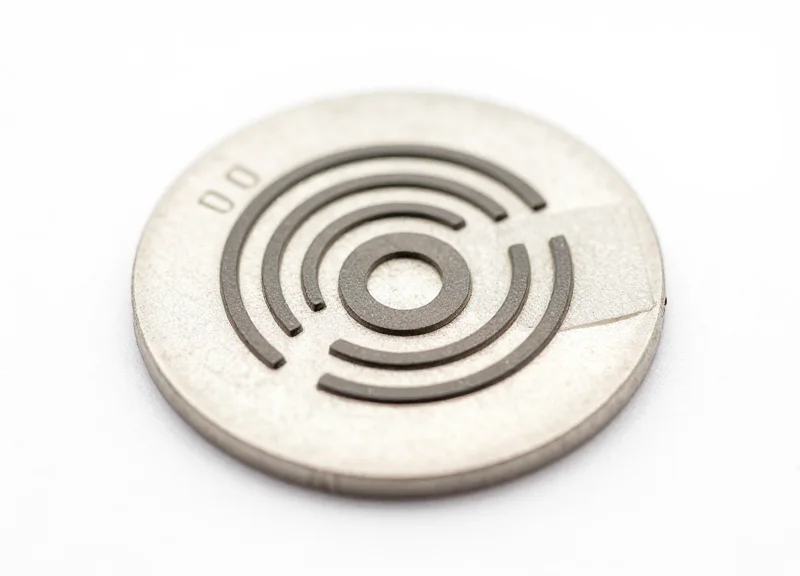
Physical security and tamper-evidence features represent the 'hardware firewall' of an RFID system, specifically designed to prevent 'tag migration'—the illicit practice where a legitimate chip is harvested from an authentic luxury item and re-affixed to a counterfeit. In 2026, simply having an encrypted chip is insufficient; the tag must be physically engineered to self-destruct if tampered with. This ensures that the digital identity provided by the RFID remains permanently and irreversibly bonded to the specific physical asset it was assigned to during manufacturing.
| Tamper-Evidence Technology | Functional Mechanism | Anti-Counterfeit Value |
|---|---|---|
| Fragile Antenna Design | Aluminum or copper traces etched on a brittle film that breaks upon peeling. | Prevents the removal and reuse of the tag on a secondary item. |
| Destructive Substrates | The tag material shatters into micro-fragments when mechanical stress is applied. | Makes it impossible to recover the tag in one piece for transplanting. |
| Void-Pattern Adhesives | High-bond adhesives that leave a visible 'VOID' or 'OPENED' message behind. | Provides immediate visual confirmation of tampering to customs or retail staff. |
| Micro-Perforation | Laser-cut weak points in the tag structure that force tearing during removal. | Ensures the antenna loop is broken, rendering the chip unreadable. |
The Expert Perspective: The 'Electronic Death' Requirement. As a veteran in the field, I’ve seen sophisticated counterfeiters use heat guns and chemical solvents to lift standard labels. The unique insight for 2026 is the shift toward 'Electronic Death'—where the physical removal doesn't just damage the label, it fundamentally breaks the electrical continuity between the IC (Integrated Circuit) and the antenna. When selecting a tag, look for 'Fragile-Inlay-on-Paper' (FIP) or 'Fragile-Inlay-on-Film' (FIF) constructions that offer zero-tolerance for mechanical displacement.
Can fragile RFID tags withstand the rigors of global luxury shipping?
Yes. While these tags are designed to break during intentional peeling, they are reinforced against vertical pressure and vibrations. High-end brands use specialized top-coats to protect against environmental wear while maintaining lateral fragility.
Does tamper-evidence affect the read range of the tag?
Minimal impact. Modern fragile antennas are precision-etched to maintain standard impedance. However, it is vital to test the tags against the specific material of your product (e.g., leather vs. silk) to ensure the adhesive bond is stronger than the antenna's structural integrity.
Is visual tamper-evidence still necessary if the tag is hidden?
Absolutely. For luxury goods, 'Security through Obscurity' is a failing strategy. Even if a tag is sewn into a lining, using a destructive substrate ensures that any attempt to 'cut out' the tag results in an unreadable chip, signaling a red flag to the secondary market.
Ultimately, the goal of physical security in 2026 is to increase the 'Cost of Attack' for counterfeiters. By utilizing destructive RFID designs, luxury brands can effectively decouple the resale value of a genuine tag from the fake product, as the tag becomes a one-time-use digital seal that guarantees the provenance of the item it currently occupies.
Factor 3: Seamless Integration with Blockchain and Distributed Ledgers

In 2026, the 'Digital Twin' is no longer a luxury—it is the standard for luxury. Seamless blockchain integration means the RFID tag serves as the physical anchor for a decentralized record, ensuring that every movement, repair, and change of ownership is recorded on an immutable ledger. This synergy eliminates the 'garbage in, garbage out' risk by using cryptographic chips to verify that the physical item and its digital record are one and the same.
| Feature | Legacy Database Tracking | Blockchain-Integrated RFID (2026) |
|---|---|---|
| Data Integrity | Vulnerable to central admin tampering | Immutable; cryptographically secured |
| Transparency | Opaque; siloed by the manufacturer | Publicly verifiable by consumers |
| Interoperability | Low; requires proprietary software | High; supports global standards (DIDs) |
| Resale Value | Limited by physical certificate trust | Enhanced by verified digital provenance |
The key to success lies in the use of Decentralized Identifiers (DIDs). Unlike traditional serial numbers, a DID-compliant RFID tag allows a luxury brand to sign a piece of data that can be verified by any third party—be it a high-end reseller or a customs official—without requiring access to the brand's private internal database. This creates a 'Phygital' bridge that stays intact even if the original manufacturer changes their IT infrastructure a decade from now.
Does blockchain integration slow down the supply chain?
No. Modern Layer-2 scaling solutions and 'off-chain' verification mean that the RFID tag only triggers a transaction hash, maintaining millisecond-level reading speeds during logistics.
How is consumer privacy protected in a public ledger?
Leading RFID implementations in 2026 use Zero-Knowledge Proofs (ZKPs). This allows the tag to prove it is 'authentic' and 'sold by an authorized dealer' without revealing the buyer's identity or location.
Can the digital twin be stolen if the tag is cloned?
Only if the tag lacks the cryptographic features mentioned in Factor 1. High-security tags use a unique 'challenge-response' mechanism that ensures the blockchain only recognizes the original silicon chip.
Expert Insight: The Shift to 'Zero-Knowledge Provenance'. While most brands focus on tracking, the elite players in 2026 are using RFID-Blockchain integration to enable 'Selective Disclosure.' This allows brands to share manufacturing ethics data (like leather sourcing) with ethical consumers while keeping the specific factory location hidden from competitors. Look for tags that support the W3C Verifiable Credentials standard to future-proof your investment.
Factor 4: Reader Compatibility and Global Standards Compliance
Reader compatibility and standards compliance in 2026 ensure that high-security RFID tags remain functional and interoperable across the entire global luxury supply chain. To eliminate counterfeits effectively, tags must adhere to ISO/IEC 18000-63 (EPC Gen2v2) and ISO/IEC 29167 security standards. This universal language allows luxury brands to track authentic goods from European ateliers through international logistics hubs and into the hands of global consumers without facing hardware lock-in or regional regulatory friction.
| Standard | Focus Area | Importance for Luxury Goods |
|---|---|---|
| ISO/IEC 18000-63 | Air Interface (UHF) | Ensures the tag is readable by any standard RAIN RFID hardware globally. |
| ISO/IEC 29167 | Crypto-Security | Standardizes the authentication protocols (AES/ECC) to prevent tag cloning. |
| GS1 TDS 2.0 | Data Encoding | Provides a universal format for serial numbers and digital certificates. |
| ISO/IEC 20248 | Digital Signature | Allows offline authentication of high-value items via mobile devices. |
A critical challenge for 2026 is navigating the fragmented radio frequency landscape. While the US follows FCC regulations (902-928 MHz), Europe adheres to ETSI (865-868 MHz), and China uses SRRC (920-925 MHz). High-security tags must be designed with 'broadband' performance characteristics, ensuring that a Chanel bag manufactured in France maintains high-performance readability and security handshake capabilities when it arrives at a boutique in Shanghai or a reseller in New York.
Can luxury tags be read by consumer smartphones?
In 2026, the convergence of NFC and UHF (RAIN) RFID in dual-frequency tags is standard. This allows brands to use UHF for logistics and NFC for consumer engagement/authentication via standard smartphones.
What happens if a tag is not ISO-compliant?
Non-compliant tags often rely on proprietary protocols, creating 'data silos' and forcing brands to buy specific, often overpriced hardware, while limiting the ability to authenticate goods across third-party customs or resale platforms.
How do standards prevent 'Ghost Shipments'?
By using GS1-compliant unique identifiers, the system ensures that every tag ID is globally unique, making it impossible for counterfeiters to inject 'ghost' serial numbers into the official supply chain ledger.
Expert Tip: Beware of 'Compliance Drift.' As 2026 approaches, ensure your hardware provider supports 'Dynamic Spectrum Compliance.' This emerging technology allows RFID readers to automatically adjust power output and frequency hopping based on GPS coordinates, ensuring your anti-counterfeit measures remain 100% effective and legal as products cross international borders. Without broadband-optimized antenna design in your tags, you risk a 15-20% drop in read range when moving items between ETSI and FCC zones, creating blind spots that counterfeiters are quick to exploit.
Factor 5: Long-Term Durability and Material Compatibility

In 2026, the success of an anti-counterfeiting strategy hinges on 'Life-Cycle Resilience.' For a luxury brand, a high-security RFID tag must remain functional and readable for as long as the product exists—often decades. Durability in this context means the tag's antenna and microchip must withstand environmental stressors such as moisture, extreme temperature fluctuations during global shipping, and the physical wear of daily use without compromising the cryptographic security embedded within.
| Product Material | Tag Form Factor | Primary Durability Challenge | Recommended Solution |
|---|---|---|---|
| Premium Leather | Flexible Inlay / Stitched Tag | Tanning chemical migration & bending stress | PI (Polyimide) substrates with pH-neutral adhesives |
| High-End Watches | On-Metal / Ceramic Tag | Signal interference & mechanical shock | LCP (Liquid Crystal Polymer) encapsulated tags |
| Silk & Fine Textiles | Thread-based / Yarn RFID | Industrial laundering & dry cleaning | Thermoplastic Elastomer (TPE) coating |
| Cosmetics & Spirits | Tamper-evident Seal | Solvent exposure & moisture | BOPP (Biaxially Oriented Polypropylene) overlays |
Expert Insight: The 'Tannin Trap' and Adhesive Failure. A common pitfall in luxury RFID implementation is failing to account for the chemical volatility of high-end materials. For instance, the residual tannins and oils in vegetable-tanned leathers can chemically react with standard acrylic adhesives over a 24-month period, causing tags to peel or the antenna to oxidize. By 2026, leading brands are moving toward 'inert encapsulation,' where the RFID component is isolated within a chemically resistant barrier before being integrated into the product, ensuring the digital identity remains uncorrupted by the very material it is meant to protect.
How long should a luxury RFID tag last?
A high-security tag should be designed for a minimum functional life of 10 to 15 years to support the burgeoning 'pre-loved' or secondary luxury market, where authentication is most critical.
Does heat from dry cleaning destroy RFID tags?
Standard tags will fail, but high-security tags designed for textiles use specialized PPS (Polyphenylene Sulfide) or silicone encapsulation to withstand temperatures up to 200°C and high-pressure extraction.
Can the tag affect the aesthetic of the luxury item?
Modern tags are increasingly 'invisible' or integrated into functional components like care labels, brand patches, or internal linings to ensure security does not compromise the designer's aesthetic vision.
Finally, material compatibility extends to the radio frequency (RF) performance. Metals and liquids are notorious for detuning RFID antennas. For luxury watches or perfumes, selecting tags with 'autotuning' capabilities or specific spacers is essential to ensure that the tag remains readable even when placed directly against gold, steel, or glass housing.
The Evolution of Consumer Authentication via NFC
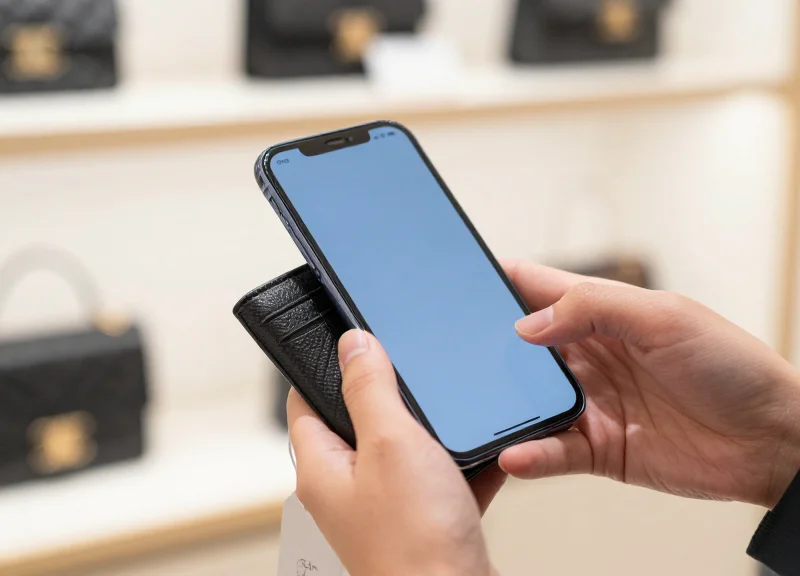
The evolution of consumer authentication via Near Field Communication (NFC) represents the democratization of brand protection. By 2026, the shift from proprietary handheld readers used in warehouses to standard consumer smartphones means every customer becomes an auditor, capable of verifying luxury goods with a single tap. This transition leverages the 13.56 MHz frequency to create a secure, encrypted handshake between a product's digital twin and the consumer's mobile device, effectively eliminating the need for third-party appraisal and fostering an immediate bond of trust at the point of sale.
| Feature | Legacy Authentication (2015-2020) | Modern NFC Evolution (2026) |
|---|---|---|
| Primary Hardware | Industrial RFID scanners | Standard iOS/Android smartphones |
| Security Protocol | Static UID (Easy to clone) | Dynamic AES-128/ECC Cryptography |
| User Experience | In-store staff verification only | Zero-friction 'Tap-and-Go' by consumer |
| Post-Sale Value | Limited to inventory tracking | Digital Product Passport (DPP) access |
Beyond simple anti-counterfeiting, NFC is now the primary vehicle for the 'Digital Product Passport' (DPP). In the 2026 luxury landscape, consumers don't just tap to see if a bag is real; they tap to view its carbon footprint, artisan provenance, and ownership history on the blockchain. This shift transforms the security tag from a 'hidden' industrial component into a visible badge of authenticity and a premium interactive feature.
Why is NFC superior to QR codes for luxury authentication?
QR codes are easily photocopied and visually disruptive to high-end design. NFC tags are embedded within the product material, cannot be visually duplicated, and utilize rolling cryptographic keys that change with every tap, making them virtually impossible to clone.
Do consumers need to download a specific brand app?
No. Modern NFC implementation uses 'Native URI' redirection, meaning a tap triggers a secure browser window or a system-level notification on both iPhone and Android without requiring a pre-installed app, maximizing engagement rates.
How does NFC authentication impact the resale (pre-loved) market?
It provides an immutable link to the original purchase record. By tapping the item, a second-hand buyer can verify the authenticity and ownership transfer history, significantly increasing the item's residual value and brand prestige.
Expert Insight: The 'State-Aware' Authentication Shift. The most significant leap in 2026 is 'State-Aware' NFC tags. Unlike static tags, these chips can detect 'physical events'—such as a seal being broken or the tag being tampered with—and change their digital response accordingly. For luxury spirits or sealed leather goods, the tag doesn't just say 'I am genuine'; it says 'I am genuine and I have never been opened,' providing a level of consumer confidence that was technically impossible a few years ago.
Cost vs. Value: Calculating the ROI of High-Security RFID
In 2026, the Return on Investment (ROI) for high-security RFID in the luxury sector is no longer measured solely by the reduction in shrinkage or theft. Instead, the true value is calculated through the 'Brand Integrity Multiplier'—a combination of recovered revenue from counterfeit displacement, the reduction in gray market leakage, and the significant increase in the resale value of authenticated goods. While a high-security cryptographic tag may cost 3x to 5x more than a standard Gen2 tag, the cost of a single counterfeit breach often exceeds the total deployment cost of a secure system across an entire product line.
| Metric | Standard RFID (Basic) | High-Security RFID (Encrypted) |
|---|---|---|
| Unit Cost (Estimated) | $0.07 - $0.15 | $0.45 - $1.20 |
| Cloning Protection | Low (Easily duplicated) | Near-Immune (Hardware-based crypto) |
| Brand Equity Risk | High (Vulnerable to spoofing) | Extremely Low |
| ROI Driver | Inventory Accuracy | Revenue Recovery & Market Trust |
Expert Tip: To see the true financial picture, luxury brands must adopt a 'Circular ROI' model. Because high-security tags provide a permanent, unforgeable link to a digital twin, they facilitate a secure secondary market. Data shows that luxury items with a verifiable, blockchain-linked RFID history command a 15-20% premium on resale platforms. This 'Luxury Aura Buffer' ensures that the brand remains the ultimate authority over its products long after the initial sale, transforming the tag from a supply chain expense into a value-added product feature.
- Identify Counterfeit Displacement Revenue: Estimate the percentage of counterfeit sales that can be converted back to genuine purchases once authentication becomes accessible to the end consumer via NFC-enabled smartphones.
- Quantify Operational Savings in Authentication: Calculate the reduction in labor hours spent by legal and compliance teams manually verifying suspicious returns or secondary market listings.
- Factor in Insurance and Litigation Costs: Many insurers are beginning to offer lower premiums for brands that implement tamper-proof, cryptographic tracking systems, as they significantly reduce the liability of product diversion.
Is high-security RFID too expensive for entry-level luxury items?
No. When you consider that entry-level items (like small leather goods) are the most frequently counterfeited, the cost of the tag as a percentage of the retail price remains negligible compared to the brand damage caused by mass-market fakes.
How long does it typically take to see a positive ROI?
Most luxury brands report a break-even point within 12 to 18 months, primarily driven by a sharp decline in fraudulent returns and unauthorized 'gray market' transshipments.
What is the hidden cost of staying with standard RFID?
The hidden cost is 'False Security.' Using standard RFID gives the illusion of protection while allowing sophisticated counterfeiters to clone tags, leading to a loss of consumer trust that can take decades to rebuild.
How DragonGuardGroup Secures the Future of Luxury
DragonGuardGroup secures the future of luxury by deploying a multi-layered defense strategy that bridges the gap between physical loss prevention and digital item-level intelligence. Unlike generic providers, we specialize in 'Security-First RFID,' where tags are not merely data carriers but active deterrents against sophisticated counterfeiting rings. By integrating high-security AES-128 cryptographic authentication into every tag and leveraging proprietary EAS (Electronic Article Surveillance) hardware, we provide luxury brands with a 360-degree 'Lifecycle Security Loop' that protects products from the manufacturing floor to the high-street boutique and the burgeoning secondary resale market.
| Feature | Generic RFID Tags | DragonGuardGroup Luxury Solutions |
|---|---|---|
| Authentication | Simple EPC matching | Cryptographic Challenge-Response (ECC/AES) |
| Form Factor | Standard adhesive stickers | Custom 'Invisible' integration (Leather, Fabric, Metal) |
| EAS Synergy | None (Requires separate tag) | Dual-Frequency Hybrid (UHF + AM/RF) in one tag |
| Data Retention | Standard (10 years) | Industrial Grade (50+ years for heritage items) |
What is the 'Invisible Guardian' technology?
This is our proprietary method of embedding ultra-thin, flexible RFID inlays directly into the structural components of luxury goods—such as within the lining of a handbag or the sole of a shoe—making the tag impossible to remove or tamper with without destroying the item's integrity.
How does DragonGuardGroup handle global frequency variations?
Our high-security tags utilize wide-band antenna designs that maintain consistent read ranges across all global regulatory bands (860-960 MHz), ensuring a seamless cross-border supply chain for international luxury houses.
Can your tags prevent 'Grey Market' diversion?
Yes, through geo-fencing data encoded at the point of manufacture. If a tag assigned to the European market is scanned at an unauthorized retail location in Asia, the system flags the diversion instantly via our cloud-integrated platform.
A unique advantage of the DragonGuardGroup ecosystem in 2026 is our 'Quantum-Shield' encoding protocol. While most RFID tags are vulnerable to 'cloning' through specialized radio equipment, our protocol uses a unique silicon-based fingerprint (PUF - Physically Unclonable Function) for every chip. This ensures that even if a counterfeiter copies the data, the physical chip signature will not match, rendering the clone useless. This level of forensic-grade security is why the world's leading fashion houses trust us to protect their brand equity in an increasingly digital world.