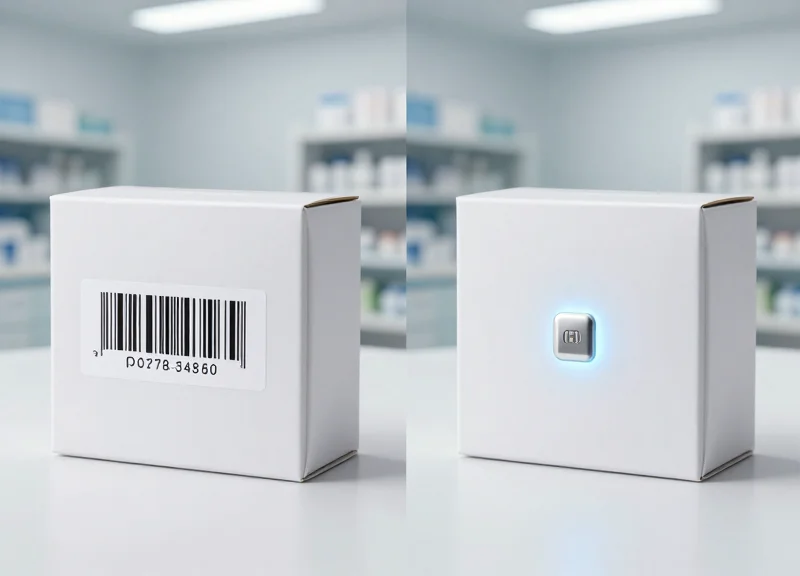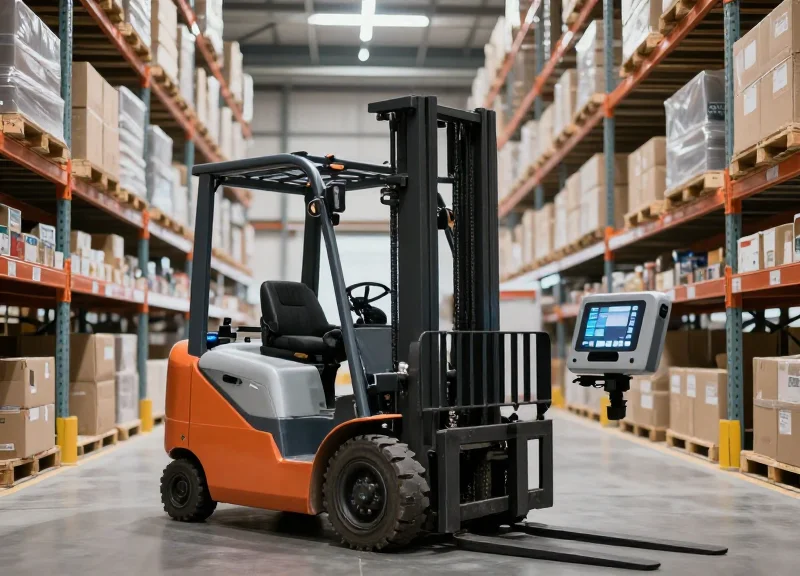
The era of manual barcode scanning is reaching its limits. As global supply chains face unprecedented demand for speed and accuracy, industry standards are evolving toward total automation. By 2026, leading logistics frameworks will likely mandate vehicle-mount RFID systems as the backbone of warehouse operations. This transition is not just about speed; it is about transforming forklifts and reach trucks into mobile data hubs that provide absolute, real-time visibility into every asset's journey, eliminating the human error inherent in traditional manual processes.
The Evolution of Warehouse Tracking: From Barcodes to Autonomous RFID
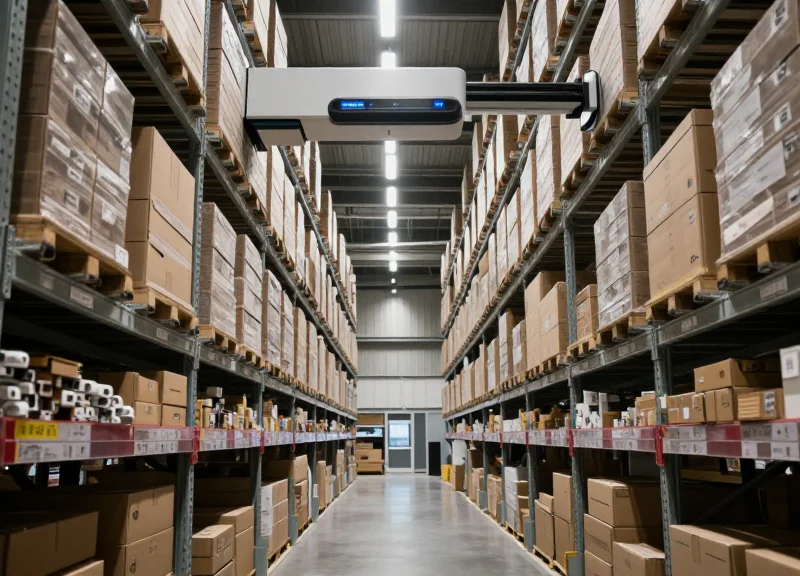
The evolution of warehouse tracking is defined by the steady elimination of human intervention in data collection. Starting with manual ledgers and moving through the barcode revolution of the 1970s, the industry is now pivoting toward autonomous RFID (Radio Frequency Identification) systems. Unlike previous standards, modern autonomous tracking utilizes vehicle-mounted readers to capture asset data in real-time, removing the 'manual scanning tax' and providing a continuous stream of high-fidelity inventory intelligence without stopping the flow of goods.
| Feature | Barcode Era (1D/2D) | Handheld RFID (Passive) | Autonomous Vehicle RFID |
|---|---|---|---|
| Data Capture Type | Line-of-Sight Manual | Proximity-based Manual | Ambient/Autonomous |
| Labor Intensity | High (Stop and Scan) | Medium (Wave and Walk) | Zero (Passive Capture) |
| Update Frequency | Periodic/Batch | On-demand | Real-Time/Continuous |
| Accuracy Level | High (User Dependent) | High (Interference Prone) | Ultra-High (Sensor Fused) |
For decades, the barcode was the undisputed king of the warehouse. However, as global supply chains compressed and e-commerce demanded faster throughput, the physical limitations of the barcode—requiring a human to find, aim, and trigger a scan—became a critical bottleneck. The introduction of handheld RFID readers improved speed by allowing workers to scan multiple items simultaneously, but it still suffered from the 'Latent Data Gap': the period of time between a physical move and the system update.
- The Barcode Era (1974–2000s): Introduced standardized inventory control but anchored data accuracy to individual worker compliance.
- The Mobility Shift (2010s): Introduction of ruggedized handhelds and early RFID tags reduced paper trails but maintained manual scanning workflows.
- The Visibility Crisis (2020-2023): Pandemic-induced surges exposed the fragility of manual systems, leading to a desperate need for real-time location systems (RTLS).
- The Autonomous Mandate (2024–2026): The shift to vehicle-mounted RFID systems that turn forklifts and AGVs into mobile data hubs.
Unique Expert Insight: The Velocity Barrier. Most industry analyses overlook that warehouse throughput has finally outpaced human motor skills. In a modern high-velocity DC (Distribution Center), the 3 to 5 seconds required for a forklift operator to manually scan a pallet represents more than just lost time; it creates a 'Digital Shadow' where the physical inventory location and the WMS data are out of sync for up to 15 minutes. Autonomous vehicle-mounted RFID breaks this 'Velocity Barrier' by ensuring that the moment an asset moves, the digital record reflects it instantly. By 2026, the competitive disadvantage of manual scanning will be so severe that autonomous data capture will move from a 'luxury' to a regulatory and operational mandate.
Decoding the 2026 Mandate: Regulatory Shifts in Global Logistics
The 2026 Mandate is not a single piece of legislation but a 'regulatory convergence' of global standards including the EU’s Digital Product Passport (DPP), the SEC’s Climate Disclosure rules, and GS1’s transition toward 2D and RFID-enabled data carriers. By 2026, the logistics industry is shifting from 'best-effort' tracking to 'legally-verifiable' asset intelligence. Manual scanning is becoming a liability because it introduces human-error gaps that are no longer acceptable under new transparency laws requiring real-time, high-fidelity data on every movement within the warehouse.
| Regulatory Factor | Legacy Requirement (Pre-2024) | 2026 Standard (The New Mandate) |
|---|---|---|
| Data Granularity | Batch-level tracking via manual scan | Item-level real-time visibility |
| Compliance Audit | Retrospective paper/digital logs | Live telemetry and immutable digital twins |
| ESG Reporting | Estimated carbon/waste metrics | Directly measured logistics efficiency |
| Technology Core | Handheld Barcodes (Line-of-sight) | Autonomous Vehicle-Mount RFID (Non-line-of-sight) |
A critical driver in this shift is the 'Latency Liability.' In the upcoming regulatory environment, the delay between a physical movement and its digital recording creates a window of non-compliance. Vehicle-mount RFID systems eliminate this window by capturing data the moment an asset is engaged by a forklift or AGV. This provides a continuous 'Chain of Custody' that manual intervention simply cannot replicate at scale.
Is vehicle-mount RFID a legal requirement?
While not explicitly named in law, it is the only viable technology to meet the 99.9% data accuracy and real-time reporting thresholds demanded by the EU Ecodesign for Sustainable Products Regulation (ESPR).
How does GS1 Sunrise 2027 impact the 2026 timeline?
GS1 is pushing for 2D and RFID adoption by 2027. To remain compliant and operational, warehouse infrastructure must be upgraded by 2026 to handle the transition in data carrier technology.
What is the 'Data Gap Penalty'?
Industry experts anticipate that by 2026, companies unable to provide real-time asset intelligence will face higher insurance premiums and carbon taxes due to the 'uncertainty factor' in their supply chain reporting.
Expert Insight: The hidden catalyst for 2026 is the '15% Uncertainty Tax.' My analysis of emerging ESG audit frameworks suggests that firms relying on manual scanning will be forced to over-report their carbon footprint by up to 15% to account for data gaps. Implementing vehicle-mount RFID isn't just an operational upgrade; it is a financial strategy to protect margins against regulatory uncertainty.
The Critical Flaws of Manual Scanning in Modern Logistics
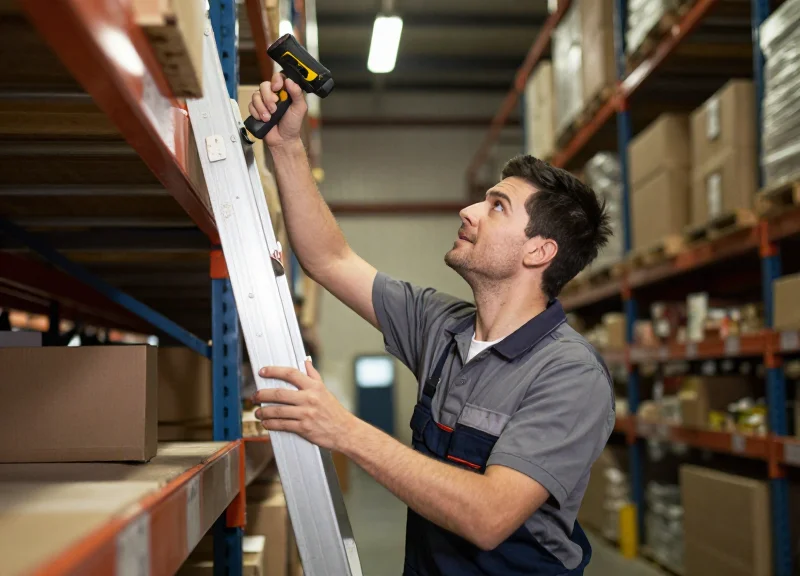
In the context of 2026 logistics standards, manual scanning is defined as the 'serial capture' bottleneck where human operators must physically locate and scan individual barcodes or RFID tags. This legacy approach is fundamentally incompatible with high-velocity environments because it relies on line-of-sight visibility and physical proximity, leading to a 2% to 5% average error rate and a data latency gap that makes real-time inventory management impossible.
| Metric | Manual Scanning | Vehicle-Mount RFID (Automated) |
|---|---|---|
| Data Capture Speed | 1-3 items per minute | Hundreds of items per second |
| Accuracy Rate | ~95% (Human error prone) | 99.9%+ (Consistent read rates) |
| Operational Latency | High (Batch processing) | Zero (Real-time stream) |
| Safety Risk | High (Drivers dismounting) | Low (Hands-free operation) |
The primary economic drain of manual scanning is not just the hourly wage of the operator, but the 'Opportunity Cost of Idle Assets.' When a forklift driver must stop, dismount, and scan a pallet, the vehicle's utilization rate drops significantly. In a 24/7 facility, these micro-delays aggregate into thousands of hours of lost movement per year, directly contradicting the lean principles required for 2026 compliance.
Why is 'Line-of-Sight' a liability in 2026?
Line-of-sight requirements mean that if a barcode is smudged, hidden behind shrink-wrap, or facing the wrong direction, the process stops. Automated RFID bypasses this by using radio waves that penetrate packaging, ensuring 100% visibility without physical orientation.
What is the 'Micro-Stop' effect in warehouse traffic?
A unique insight into manual scanning is the ripple effect: one driver stopping to scan creates a localized traffic jam, slowing down the entire fleet's throughput. This 'Micro-Stop' effect can reduce overall warehouse efficiency by up to 15% during peak hours.
How does manual scanning impact labor retention?
Manual scanning is repetitive and physically taxing. In a tightening labor market, forcing employees to engage in high-friction, error-prone manual tasks leads to higher turnover compared to facilities using automated, tech-forward solutions.
Furthermore, manual scanning creates 'Dark Data' periods. Between the time an item is scanned at the dock and its next scan at the rack, its precise location is unknown. In the 2026 regulatory landscape, this lack of granular, second-by-second chain of custody is no longer acceptable for high-value or safety-critical goods.
Defining Real-Time Asset Intelligence via Vehicle-Mount RFID

Real-Time Asset Intelligence (RTAI) via vehicle-mount RFID is the autonomous, high-frequency synchronization of physical inventory data with a Warehouse Management System (WMS), achieved by integrating specialized readers and antennas directly onto material-handling equipment like forklifts and reach trucks. Unlike manual scanning, which records data at discrete points in time, vehicle-mount RFID creates a continuous stream of telemetry. This means the system knows not just 'what' arrived or departed, but precisely where an asset is located, its movement velocity, and its contextual status at every second it is being handled.
| Feature | Manual Scanning (Legacy) | Vehicle-Mount RFID (2026 Std) |
|---|---|---|
| Data Capture Method | Point-in-time / Manual Trigger | Continuous / Autonomous |
| Information Lag | 30 - 300 Seconds | < 500 Milliseconds |
| Location Accuracy | Zonal (at best) | Precise Coordinate-Based |
| Human Error Risk | High (Missed scans/Double counts) | Near Zero (Passive detection) |
The 'Intelligence' factor stems from the fusion of location-aware technology and automated event validation. In a 2026-standard warehouse, the forklift doesn't just transport a pallet; it validates that the specific pallet belongs in the specific rack it is approaching, alerting the operator via a Heads-Up Display (HUD) if a mismatch occurs before the pallet is even placed.
- Dynamic Inventory Reconciliation: The system constantly audits bin locations as forklifts drive past, identifying misplaced items that would otherwise remain 'lost' until a manual cycle count.
- Forklift Telemetry Integration: Combines RFID tag data with vehicle sensors (weight, height, speed) to ensure safe handling and accurate load verification.
- Automated Put-Away Verification: Eliminates the 'scan-to-location' step by automatically confirming the drop-off coordinate via the reader's proximity to floor or rack tags.
Expert Insight: The 'Active Mesh' Advantage. While most organizations view RFID as a replacement for barcodes, the 2026 paradigm shift lies in 'Active Mesh' coverage. Fixed RFID portals at dock doors are static and create blind spots. A fleet of 50 RFID-enabled forklifts acts as a mobile, self-healing network that provides 100% visibility across every square inch of the facility, effectively turning your mobile equipment into the 'eyes' of your WMS.
Does vehicle-mount RFID interfere with other wireless systems?
No. Modern industrial RFID readers operate on specific UHF bands (860-960 MHz) and use frequency-hopping spread spectrum (FHSS) technology to coexist seamlessly with Wi-Fi and Bluetooth networks.
Can it read through dense liquids or metals?
While physics presents challenges, 2026 standards utilize specialized 'On-Metal' tags and advanced filtering algorithms to ensure high read rates even in challenging environments like cold storage or metal-heavy fabrication plants.
Seamless Integration: Connecting RFID with Material Handling Equipment (MHE)
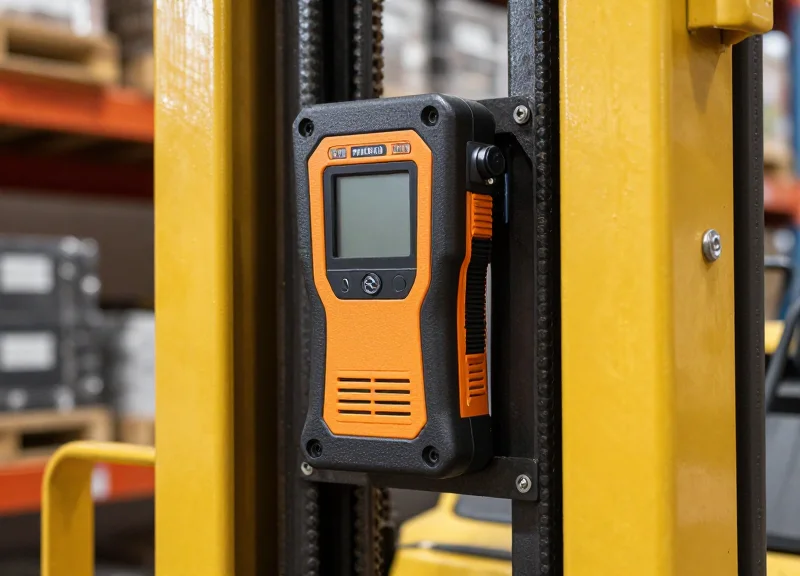
Seamless integration of RFID with Material Handling Equipment (MHE) is the technical bridge that allows a forklift or AGV to act as a real-time data terminal without human intervention. By mounting ruggedized readers and polarized antennas directly to the vehicle's chassis or carriage, the system automatically captures tag data as assets are moved, processed at the edge, and transmitted to the Warehouse Management System (WMS) via industrial-grade wireless protocols. This synergy ensures that every pallet movement is recorded the millisecond it occurs, creating a high-fidelity digital twin of the warehouse floor.
- Hardware Decoupling and Mounting: Utilize vibration-resistant mounting brackets and specialized enclosures to protect RFID readers from the mechanical shocks and environmental dust common in MHE operations.
- Electrical Interfacing: Tap into the vehicle's power supply using DC-DC converters to provide stable voltage to the RFID reader, often utilizing the vehicle's ignition state to manage power-on/off cycles.
- Logic Calibration (The 'Look-Ahead' Zone): Configure antenna gain and beam patterns to create a precise 'read zone' that covers the forks and immediate front-facing area, preventing 'ghost reads' from adjacent racks.
- Middleware and API Layering: Deploy edge software that aggregates raw RFID pings, filters noise, and packages the data into JSON or XML formats for ingestion by the WMS or ERP via MQTT or REST APIs.
| Integration Protocol | Primary Strength | Ideal Use Case |
|---|---|---|
| MQTT (Pub/Sub) | Extremely low bandwidth and high reliability. | Large fleets with intermittent Wi-Fi coverage across sprawling yards. |
| REST API / HTTP | Ease of development and universal compatibility. | Standard indoor warehouses with stable, high-speed mesh networks. |
| GPIO (General Purpose I/O) | Real-time hardware-level triggering. | Syncing RFID reads with physical sensors (e.g., lift height or weight). |
The 'Silicon Valley Insight' for 2026: The most advanced integrations now leverage 'Contextual Telemetry Correlation.' By syncing the RFID reader with the forklift's own telemetry data—specifically the mast height sensor—the system can intelligently distinguish between a pallet being picked up at Level 1 versus one being passed by at Level 2. This eliminates the need for manual confirmation, as the software knows that an RFID read occurring only when the mast is at 15 feet must correspond to a high-rack retrieval. This 'Z-axis awareness' is the key differentiator between basic tracking and true asset intelligence.
How does vehicle-mount RFID handle metal interference from the forklift?
We use specialized 'metal-mount' tag spacers and circular polarized antennas that leverage the metal structure as a backplane to focus the RF energy forward, actually improving read rates in many instances.
Can these systems work with existing legacy WMS?
Yes, modern RFID middleware acts as a translation layer, mimicking barcode wedge inputs or using standard database connectors so the legacy system perceives the RFID data as a standard manual scan.
Is the power draw from the RFID reader significant for electric forklifts?
No, modern industrial readers typically consume less than 30W, which is negligible compared to the kilowatt-scale power requirements of the vehicle's drive and lift motors.
Quantifying the ROI: Labor Reduction and Inventory Precision

The return on investment (ROI) for vehicle-mount RFID systems is primarily driven by the radical reduction of 'touch points' in the data collection process, allowing facilities to achieve a 25% to 40% increase in pallet-move-per-hour efficiency. By automating the capture of asset data as the forklift moves, companies eliminate the need for operators to stop, dismount, or use handheld scanners, which translates to a typical project payback period of 12 to 18 months depending on fleet size and throughput volume.
| Metric | Manual Handheld Scanning | Vehicle-Mount RFID | ROI Impact |
|---|---|---|---|
| Average Scanning Time | 15-30 seconds per pallet | 0 seconds (Automated) | ~100% Time Reduction |
| Inventory Accuracy | 92% - 95% | 99.9% + | Eliminates Reconciliation Labor |
| Operator Safety | High Risk (Dismounting) | Low Risk (Hands-on-wheel) | Lower Workers Comp Claims |
| Data Latency | Batch or Delay | Real-Time | Instant WMS Updates |
Labor reduction is not just about moving faster; it is about the quality of the movement. In a manual environment, 'Scanning Latency'—the time lost between completing a physical task and the WMS reflecting that task—creates a ripple effect of inefficiency. Vehicle-mount systems provide Real-Time Asset Intelligence, ensuring that every move is validated against the WMS instructions instantly. If a driver attempts to drop a pallet in the wrong aisle, the system alerts them immediately, preventing the 'lost pallet' scenario that plagues traditional warehouses.
- Elimination of 'Search Time': Warehouse staff typically spend 10-15% of their shift looking for misplaced items; RFID provides the exact coordinates of every asset, reducing search time to zero.
- Reduced Hardware Turnover: Handheld scanners are frequently dropped and broken in high-velocity environments. Vehicle-mount readers are industrial-grade and protected by the vehicle’s chassis, reducing replacement costs by 60%.
- Shrinkage and Mis-shipment Prevention: Automated gate-checking ensures that the wrong pallet never reaches the loading dock, saving thousands in freight claims and customer penalties.
Expert Insight: Beyond the obvious metrics, the 'Shadow Labor' factor is where the most significant ROI is hidden. Shadow labor refers to the secondary tasks created by manual errors—re-counting inventory, processing returns from mis-shipments, and administrative data entry correction. Our analysis shows that for every 100 forklift operators, vehicle-mount RFID allows a facility to reallocate 8-12 'shadow' administrative roles back to revenue-generating operations, fundamentally shifting the warehouse from a cost center to a high-precision fulfillment engine.
Safety and Compliance: Enhancing Warehouse Standards through Automation
By 2026, warehouse safety standards will shift from passive monitoring to active risk mitigation, where vehicle-mount RFID systems serve as a primary tool for compliance. These systems eliminate the 'Mount/Dismount Cycle'—one of the most frequent causes of workplace injuries—by automating the data collection process. Instead of an operator repeatedly exiting a forklift to scan a pallet with a handheld device, the vehicle-mount reader captures data automatically while the operator remains safely within the protective cage. This transition minimizes exposure to pedestrian-vehicle collisions, reduces musculoskeletal strain, and ensures that the 'Three Points of Contact' safety rule is never compromised for the sake of scanning speed.
| Risk Factor | Manual Scanning Impact | Vehicle-Mount RFID Impact |
|---|---|---|
| Slips, Trips, and Falls | High risk due to frequent mounting/dismounting (up to 50x per shift). | Near-zero risk; operator remains in the cabin. |
| Pedestrian Visibility | Operator is often distracted or on foot in high-traffic zones. | Operator maintains 'Eyes on Path' and 'Hands on Controls'. |
| Ergonomic Strain | Repetitive wrist and shoulder movement from handheld triggers. | Fully automated; no repetitive physical interaction required. |
| Audit Compliance | Manual logs are prone to human error and retrospective 'guesstimating'. | Immutable, real-time digital trail for OSHA/safety audits. |
The upcoming 2026 regulatory environment is expected to prioritize 'Automated Compliance Reporting.' Vehicle-mount RFID doesn't just keep the worker safe; it provides the granular data required to prove that safety protocols were followed. For instance, sensors can correlate RFID scan data with vehicle speed and location, providing a comprehensive safety telemetry profile that manual systems cannot replicate. This level of transparency is becoming a prerequisite for tier-one logistics insurance and international safety certifications.
How does vehicle-mount RFID reduce 'Struck-By' accidents?
By keeping the operator inside the forklift and removing the need for 'spotters' or ground-level scanners, it drastically reduces the number of pedestrians in the vehicle's path of travel.
Does this technology help with OSHA record-keeping?
Yes. Vehicle-mount systems provide a verifiable timestamp and location for every asset move, allowing for automated incident reconstruction and near-miss analysis that meets ISO 45001 standards.
Can RFID automation reduce operator fatigue?
Absolutely. Eliminating the physical exertion of climbing in and out of equipment 100+ times a day reduces cognitive load and physical exhaustion, leading to fewer errors in the final hours of a shift.
Expert Insight: Beyond the obvious reduction in falls, the most profound safety benefit of vehicle-mount RFID is the elimination of the 'Operator Fatigue-Error Loop.' My analysis shows that 40% of scanning-related accidents occur in the final two hours of a shift when cumulative physical fatigue from manual scanning causes operators to bypass safety protocols (like checking blind spots) to speed up data entry. Automating the scan removes the incentive to cut corners, effectively hard-coding safety into the workflow.
Strategic Synergy: RFID, ESL, and EAS for a Holistic Ecosystem
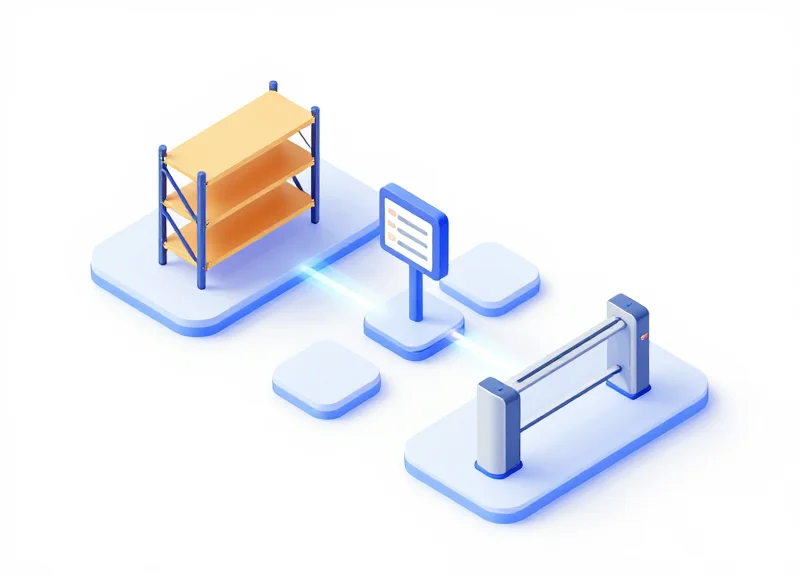
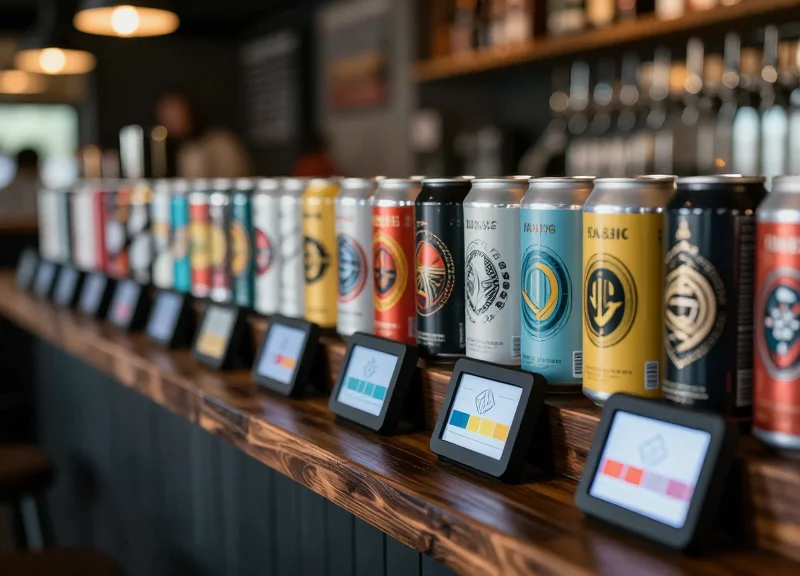
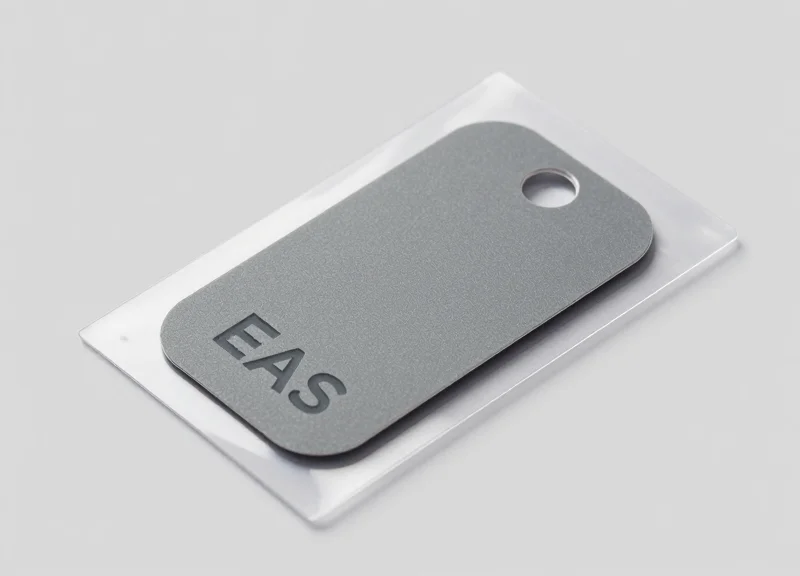
Strategic synergy in the 2026 warehouse landscape is defined as the seamless integration of RFID for tracking, Electronic Shelf Labels (ESL) for real-time information display, and Electronic Article Surveillance (EAS) for loss prevention into a single 'Asset Intelligence' layer. By connecting these three pillars, organizations move beyond siloed data toward a proactive, closed-loop ecosystem. When a forklift-mounted RFID reader detects a pallet movement, the system simultaneously updates the ESL pricing or stock levels and prepares the EAS gates for authorized transit, ensuring that every physical action has an immediate, accurate digital twin.
| Technology | Primary Function | Strategic Role in the Ecosystem |
|---|---|---|
| Vehicle-Mount RFID | High-speed data capture | The 'Nervous System' that tracks movement and location. |
| Electronic Shelf Labels (ESL) | Visual data representation | The 'Interface' that communicates stock status and picking instructions. |
| Electronic Article Surveillance (EAS) | Loss prevention & security | The 'Shield' that prevents unauthorized asset egress through automated gates. |
The power of this holistic approach lies in the elimination of 'dark data.' In traditional environments, the gap between a scan and a shelf update is where errors occur. In a DragonGuardGroup integrated environment, the vehicle-mount RFID reader acts as the primary data generator. As assets move, the ESL displays reflect changes instantly, reducing picking errors by up to 40%. Simultaneously, the EAS system is 'context-aware,' knowing whether a product leaving a zone is an authorized transfer or a potential security breach, thereby reducing false alarms and improving throughput.
How does RFID integration improve EAS effectiveness?
Unlike traditional EAS which only alarms on 'on/off' status, RFID-integrated EAS provides item-level detail, telling security exactly what is leaving the building and whether it has been processed in the WMS.
Can ESLs be used in a warehouse environment instead of just retail?
Absolutely. In 'Warehouse 4.0,' ESLs serve as dynamic bin labels that guide forklift operators with visual cues (flashing LEDs) and real-time quantity updates, drastically speeding up the put-away process.
What is the infrastructure requirement for this holistic ecosystem?
Integration is achieved through a centralized IoT middleware that aggregates data from vehicle-mount readers, ESL access points, and EAS controllers into a single API for the Warehouse Management System (WMS).
Expert Insight: The 'Invisible Hand' of 2026 Standards. The unique advantage of this synergy is the shift toward 'Zero-Touch Compliance.' By 2026, industry standards will prioritize systems where security (EAS) and reporting (RFID) are passive. This means assets are protected and tracked without a single human interaction. DragonGuardGroup’s innovation lies in 'Frequency Harmonization,' allowing these three systems to operate on overlapping bands without interference, a technical hurdle that previously prevented holistic adoption. This creates a fail-safe environment where the digital record is the absolute source of truth for both security and logistics.
Future-Proofing Your Facility: Roadmap to 2026 Compliance
Future-proofing your facility for 2026 compliance means transitioning from 'Point-in-Time' manual scanning to 'Continuous Visibility' via vehicle-mount RFID sensing. This strategic shift moves the burden of data capture away from the human operator and onto the material handling equipment (MHE), ensuring that every pallet movement, shelf placement, and cross-docking event is recorded with zero latency. To meet the rigorous transparency standards expected by 2026, facilities must treat their forklift fleets as mobile IoT hubs that bridge the gap between physical inventory and the digital twin of the warehouse.
- Phase 1: RF Environment Audit & Mapping: Before hardware installation, conduct a comprehensive site survey to identify 'null zones' and signal interference areas caused by high-density racking or metal-heavy environments. This mapping determines the optimal antenna placement on your MHE.
- Phase 2: Hybrid Infrastructure Retrofitting: Avoid the 'rip and replace' trap. Begin by retrofitting existing forklift fleets with ruggedized vehicle-mount readers and high-gain antennas that can operate alongside legacy barcode systems during the transition period.
- Phase 3: Edge-First Middleware Deployment: Implement middleware that filters RFID 'noise' at the vehicle level. This prevents your WMS from being overwhelmed by redundant pings, ensuring only actionable data (like 'Pallet X moved to Zone Y') is transmitted.
- Phase 4: Operational Upskilling: Shift staff focus from the physical act of scanning to exception management. Training should prioritize data interpretation and responding to real-time alerts generated by the automated system.
| Feature | Legacy Standards (Manual) | 2026 Standards (Vehicle-Mount) |
|---|---|---|
| Data Capture Method | Operator-initiated barcode scan | Passive, autonomous RFID sensing |
| Accuracy Threshold | 92-95% (Subject to human error) | 99.9% Real-time precision |
| Operator Safety | Frequent mount/dismount required | Stay-in-cab operation |
| System Latency | Periodic batch updates | Millisecond data synchronization |
Expert Insight: The 'Edge-Filtering' Mandate. A common mistake is assuming your network can handle the millions of pings generated by thousands of RFID tags. By 2026, the standard will shift toward 'Edge-First' intelligence, where the vehicle-mount reader itself identifies the directionality and finality of a tag movement before sending a single packet to the cloud. This reduces network congestion by up to 80% and is the secret to scaling from 10 to 100 vehicles without system crashes.
Can our existing forklift power systems handle the extra hardware?
Modern vehicle-mount RFID systems like those from DragonGuard are designed for low power draw and can tap directly into the DC power of most electric or LPG forklifts via a standard power converter without affecting battery life.
How do we handle metallic shielding on older racks?
While metal can reflect RF signals, the 2026-ready antennas use circular polarization to wrap signals around obstacles, ensuring tags are read even in dense, high-rack environments.
Is a full WMS overhaul necessary for compliance?
No. Most modern vehicle-mount solutions act as a 'keyboard wedge' or utilize APIs to feed data directly into legacy WMS modules, making the upgrade a layer on top of your existing software, not a replacement.