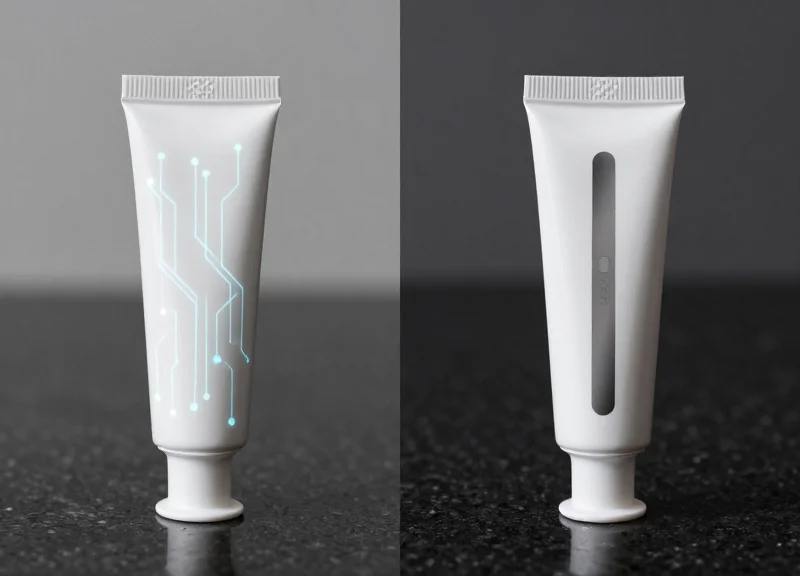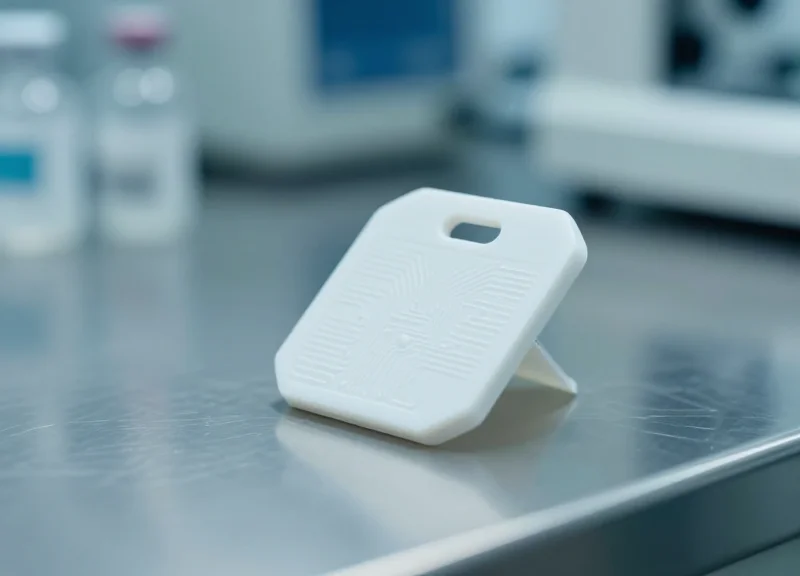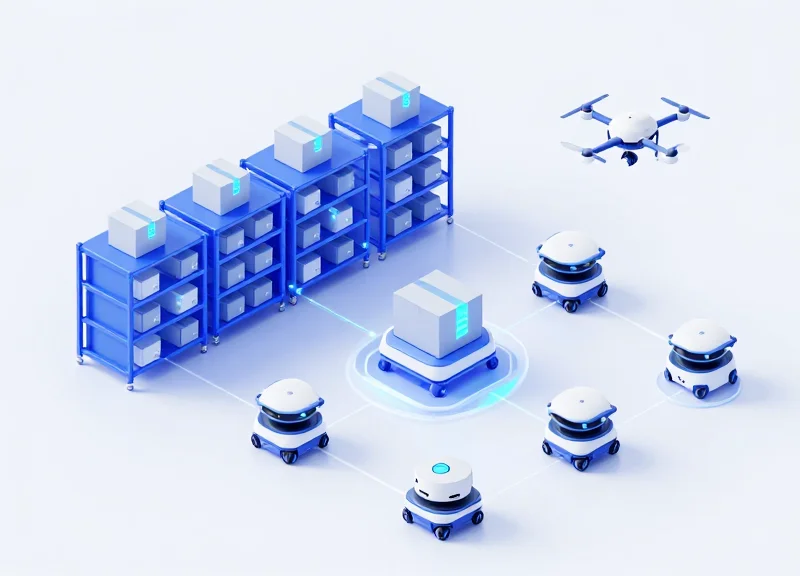
In the luxury retail sector, the balance between security and visual presentation is a delicate art. As we move into 2026, traditional, bulky security tags are being replaced by sophisticated, discrete solutions that protect high-value assets without distracting from their craftsmanship. This guide explores how jewelry retailers can leverage modern EAS and RFID technology to secure their inventory, minimize shrinkage, and enhance the customer shopping experience without compromising the high-end boutique aesthetic.
The Evolution of Jewelry Security: Market Trends for 2026

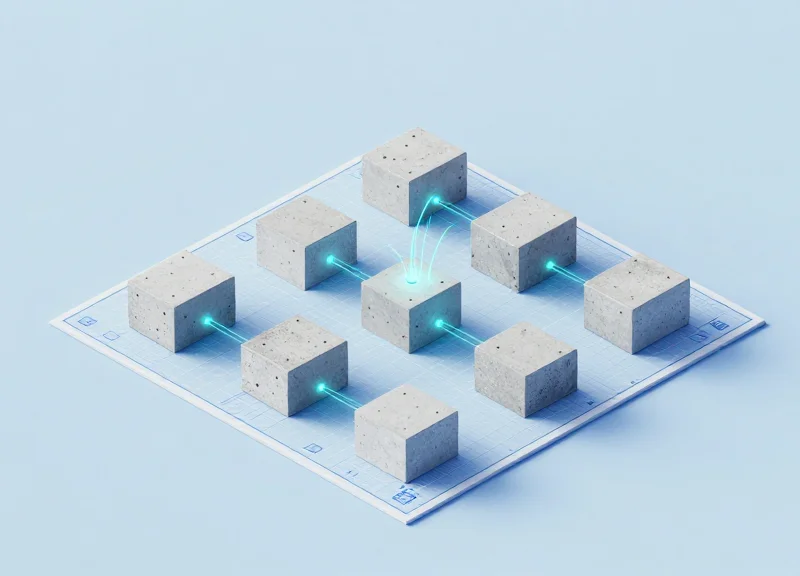
The 2026 landscape of jewelry security is defined by the disappearance of the 'visible deterrent' in favor of 'invisible integration.' Modern loss prevention now utilizes ultra-miniaturized sensors and encrypted frequencies that allow high-value items to be handled naturally by customers while maintaining a persistent digital tether to the store's security grid. This evolution moves away from bulky plastic housings toward materials like medical-grade polymers and metallic micro-films that blend seamlessly with gold, platinum, and precious stones.
| Feature | Traditional Security (Pre-2022) | Modern Discrete Security (2026) |
|---|---|---|
| Visual Impact | High: Bulky plastic tags distract from design | Zero: Nano-tags hidden in price labels or settings |
| Technology | Acousto-Magnetic (AM) or 8.2MHz RF | Dual-Layer RFID & Bluetooth Low Energy (BLE) |
| Customer Experience | Invasive: Tags interfere with trying on rings/necklaces | Seamless: Weights and balances are preserved |
| Data Analytics | None: Only triggers alarm at door | Rich: Tracks dwell time and 'pick-up' frequency |
A critical shift in 2026 is the convergence of security and inventory intelligence. Retailers are no longer just looking to stop theft; they are using discrete tags to fuel 'Smart Showcases' that provide real-time data on which pieces are most popular. This data-driven approach justifies the investment in high-end security hardware by turning a loss-prevention expense into a marketing asset.
What is 'Aesthetic Hardening' in 2026?
Aesthetic hardening refers to the design philosophy of making security features look like luxury packaging or jewelry components, such as branding charms or high-end string tags, so they do not signal 'distrust' to the client.
Why are retailers moving away from traditional AM tags?
Traditional AM tags are easily shielded by 'booster bags' and their size requires clips that can scratch soft metals like 24k gold. 2026 standards favor encrypted RFID that is harder to spoof and much smaller.
How does 5G impact jewelry security?
5G enables massive IoT connectivity, allowing thousands of individual jewelry pieces to be monitored simultaneously with sub-second latency, alerting staff the moment a piece leaves a designated 'Safe Zone' on the sales floor.
Expert Insight: The 'Phygital' Security Bridge. In 2026, the most successful jewelry brands are using 'Secure-Storytelling' tags. These are discrete NFC-enabled tags that, when tapped by a salesperson's tablet, not only verify the item's security status but also launch a digital lookbook of the piece's origin and craftsmanship. This turns a security necessity into a high-tech sales tool, effectively hiding the 'guard' inside the 'docent.'
Why Aesthetics Matter: The Psychology of Luxury Retail

In luxury jewelry retail, the physical environment is a silent salesperson; aesthetics matter because they directly influence a customer’s subconscious perception of value, exclusivity, and brand trust. When a shopper views a $50,000 diamond necklace, their brain is engaged in an emotional valuation process that is easily disrupted by 'visual friction'—the presence of bulky, unsightly security tags that signal risk and lack of trust rather than craftsmanship and luxury.
As we move into 2026, the 'High-End Friction Theory' has become central to retail design. This theory suggests that every visible security element creates a micro-moment of cognitive dissonance. The customer is trying to visualize the piece as a symbol of love or status, while the security tag reminds them of the harsh reality of theft and inventory loss. By eliminating this visual static, retailers allow the product's story to remain the central focus.
| Customer Experience Metric | Legacy Visible Tags | Discrete 2026 Solutions |
|---|---|---|
| Average Dwell Time | Lower (feeling of being watched) | Higher (immersive experience) |
| Perceived Value | Diminished by industrial plastic | Maintained by seamless integration |
| Trust Signal | Distrust (Transactional) | Mutual Respect (Relationship) |
| Tactile Interaction | Awkward and unbalanced | Natural weight and drape |
- The 'Counterfeit Effect': Bulky plastic tags can subconsciously make genuine gemstones feel like high-quality replicas. A discrete tag ensures the material integrity of the piece is felt immediately.
- The Trust Paradox: Visible security measures act as a 'stop' sign. When security is invisible, the customer feels a sense of belonging in the luxury space, which leads to higher conversion rates.
- Emotional Friction: Aesthetics are the bridge to the emotional 'buy' signal. If a tag snags on a customer's sleeve during a fitting, the emotional connection to the piece is broken instantly.
Expert Tip: The 'First 10 Seconds' rule in luxury jewelry dictates that a client's valuation is set before they even touch the piece. Using tags that are color-matched or hidden within the setting's shadow ensures that those first 10 seconds are focused on the luster of the stone, not the hardware of the security system. In 2026, the ultimate luxury is the feeling of safety without the sight of it.
Comparing Technologies: EAS vs. RFID for Jewelry
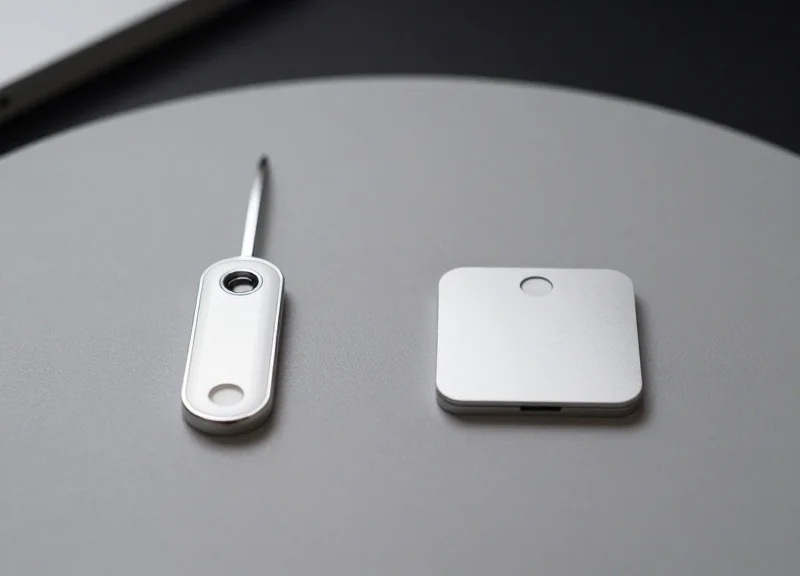
In 2026, the choice between Electronic Article Surveillance (EAS) and Radio Frequency Identification (RFID) hinges on whether you need a simple 'digital gatekeeper' or a comprehensive 'inventory brain.' EAS (Acousto-Magnetic or Radio Frequency) remains the gold standard for pure loss prevention, triggering alarms at the door. Conversely, RFID provides serialized tracking, allowing retailers to identify exactly which piece of jewelry is missing, where it was last seen, and even how many times it was removed from the display case for a customer to try on.
| Feature | EAS (AM or RF) | RFID (UHF) |
|---|---|---|
| Primary Objective | Theft Deterrence / Alarms | Inventory Intelligence + Security |
| Serialized Tracking | No (Generic signal) | Yes (Unique ID per item) |
| Inventory Counting Speed | Manual | Instantaneous (Bulk scanning) |
| Metal Interference | High (Requires AM for jewelry) | Moderate (Requires 2026 off-metal tech) |
| Cost per Tag | Low ($0.05 - $0.15) | Medium ($0.20 - $0.45) |
The Expert Insight: The 'Shielding' Challenge. A common pitfall in high-value jewelry security is the 'Faraday cage' effect caused by 18K gold and platinum. Standard RFID tags often fail when pressed directly against dense metals. The 2026 generation of discrete tags utilizes 'spacer' tech or fractal antennas that leverage the jewelry’s own surface area to boost signal propagation, rather than fighting against it. If your inventory is primarily heavy gold or silver, Acousto-Magnetic (AM) EAS remains superior for pure detection range, but for data-driven operations, only 'on-metal' optimized RFID will suffice.
Can I use both EAS and RFID simultaneously?
Yes. Many 2026 luxury retailers utilize 'Dual-Tech' tags. These contain both an AM resonator for the highest detection sensitivity at the door and an RFID chip for real-time inventory cycle counts. This provides the best of both worlds: unbeatable security and 99.9% inventory accuracy.
Does RFID replace the need for security gates?
Not necessarily. While RFID can alert staff when a tag leaves the 'read zone,' EAS gates are still more reliable for immediate, high-volume alarm triggers at high-traffic exits. RFID is better suited for identifying what was stolen after the event.
Is the investment in RFID worth it for small boutiques?
For boutiques with low item counts but high price points, the ROI of RFID comes from 'Smart Trays' that alert staff if an item isn't returned to the case within a set timeframe, preventing 'distraction theft' during busy hours.
EAS: The Standard for Immediate Theft Deterrence
Electronic Article Surveillance (EAS) is a loss prevention technology that triggers an audible and visual alarm when a tagged piece of jewelry passes through detection pedestals at a store's exit. In 2026, EAS remains the industry standard for immediate theft deterrence because it provides a physical barrier and psychological deterrent that software-only solutions cannot match. Modern jewelry-specific EAS tags have evolved into ultra-thin, micro-coil formats that wrap seamlessly around ring shanks and necklace clasps, ensuring that the security mechanism is nearly invisible to the casual observer while maintaining a 99.9% detection rate.
| Feature | Legacy EAS Tags | 2026 Discrete EAS Tags |
|---|---|---|
| Profile Thickness | 2.0mm - 5.0mm (Bulky) | 0.3mm - 0.8mm (Paper-thin) |
| Material | Hard ABS Plastic | Flexible Polyimide or Reinforced Film |
| Attachment | Heavy Plastic Ties | Tamper-Evident Micro-Lanyards |
| Signal Interference | High near metal | Acousto-Magnetic (AM) Metal-Shielded |
While RFID excels at inventory management, EAS is purpose-built for the 'stop-and-recover' moment. For jewelry, the choice between Radio Frequency (RF) and Acousto-Magnetic (AM) is critical. Expert Tip: In 2026, we recommend AM technology for luxury jewelry because it is significantly less prone to 'shielding'—a phenomenon where precious metals like gold or platinum interfere with the tag's signal. Modern AM tags utilize 'Coupled Resonance Tuning,' an advancement that allows the tag to maintain its frequency even when in direct contact with high-karat alloys, a historical weak point in jewelry security.
Does EAS damage delicate jewelry surfaces?
No. 2026-gen discrete tags use non-reactive, acid-free adhesive or soft-touch silicone lanyards specifically designed to leave no residue or micro-scratches on soft metals like 24k gold or silver.
Can these tags be used on high-end watches?
Yes, but they are typically applied to the buckle or the tag-string rather than the case back to avoid interfering with the movement or the wearer's comfort during a fitting.
How do discrete EAS tags handle deactivation?
They are deactivated at the Point of Sale (POS) using contact-less pads, meaning the jeweler never has to physically struggle with a bulky remover in front of the client.
RFID: Revolutionizing Inventory Accuracy and Security

Radio Frequency Identification (RFID) in jewelry retail utilizes miniaturized tags that transmit unique digital signatures via radio waves, allowing for instantaneous, non-line-of-sight inventory counts and real-time movement tracking. Unlike traditional barcodes, RFID allows a jeweler to scan an entire showcase in seconds without removing a single piece, achieving 99.9% inventory accuracy while simultaneously acting as a sophisticated electronic security layer that alerts staff the moment a high-value item leaves a defined perimeter.
In 2026, the strategic shift toward RFID isn't just about preventing theft; it is about the 'Invisible Audit.' Leading luxury brands are utilizing ultra-thin RFID inlays embedded directly into price tags or even integrated into jewelry boxes. This creates a data-rich environment where every movement of a 2-carat diamond ring—from the safe to the viewing tray to the point of sale—is logged automatically, creating a digital breadcrumb trail that virtually eliminates internal shrinkage and administrative errors.
| Feature | Manual/Barcode Systems | Modern RFID Systems (2026) |
|---|---|---|
| Inventory Speed | 4-8 hours for 500 items | Under 5 minutes for 500 items |
| Line of Sight | Required (Scan each item) | Not Required (Bulk scanning) |
| Theft Detection | Post-event (at daily audit) | Real-time (at exit or zone breach) |
| Data Accuracy | 85% - 92% (Human error prone) | 99.5% - 99.9% (Automated) |
- Expert Tip: The 'Smart Tray' Integration: For 2026, we recommend the 'Smart Tray' approach. By embedding RFID readers into velvet presentation trays, the system can instantly detect if a piece was swapped for a high-quality fake during a customer viewing. This provides an immediate, silent haptic alert to the salesperson's smartwatch, stopping 'switch-theft' before the suspect leaves the counter.
Does RFID interfere with the metal or gemstones in jewelry?
Modern high-frequency (HF) and ultra-high-frequency (UHF) tags are designed with specific spacers or 'on-metal' shielding. This prevents the metal settings of rings or necklaces from detuning the signal, ensuring reliable reads even in dense displays.
Can RFID tags be discrete enough for luxury aesthetics?
Yes. Current 2026 models feature 'inlay' tags as small as a grain of rice or flat adhesive labels that are less than 0.5mm thick, easily hidden behind branding on a standard jewelry hang-tag.
How does RFID improve the customer experience?
Because staff no longer spend hours counting stock, they can focus entirely on the client. Additionally, RFID allows for 'Magic Mirrors' that show product specs and styling videos automatically when a piece is picked up.
Key Selection Criteria for High-Value Inventory Tags
Selecting high-value inventory tags in 2026 is no longer a simple choice between EAS or RFID; it is a strategic decision involving the 'Decibel-to-Dimension' ratio. The ideal selection criteria prioritize tags that offer maximum detection range and signal reliability while maintaining a physical footprint small enough to avoid obscuring hallmarks or gemstone clarity. Buyers must evaluate hardware based on four pillars: physical resilience, frequency interference resistance, aesthetic integration, and operational throughput at the point of sale.
| Selection Criteria | Key Performance Indicator (KPI) | 2026 Industry Standard |
|---|---|---|
| Physical Footprint | Visual Obtrusion Ratio | Less than 12mm width / Transparent housing |
| Signal Integrity | Read-Rate Accuracy | 99.9% accuracy near precious metals/liquids |
| Removal Velocity | Seconds per Transaction | Under 1.5 seconds with magnetic/mechanical detach |
| Material Hardness | Tamper Resistance | Level 4+ Cut-Resistant polymers or braided steel |
- Durability & Material Integrity: Ensure tags use ultra-high-molecular-weight polyethylene (UHMWPE) or reinforced polymers. These materials resist common shoplifting tools like side-cutters while remaining lightweight enough not to damage delicate chains.
- Frequency Compatibility & Metal Interference: Jewelry involves high concentrations of gold, silver, and platinum, which can create a 'Faraday cage' effect. Prioritize tags with ferrite-core enhancements or 'Off-Metal' RFID designs that maintain signal strength even when flush against metal surfaces.
- Aesthetic Neutrality: The tag should complement the brand’s color palette. In 2026, many luxury retailers are opting for 'Crystal Clear' polycarbonate housings or custom-branded matte finishes that mimic luxury packaging rather than security hardware.
- Ease of Removal (POS Velocity): High-friction removal processes kill the luxury 'unboxing' experience. Seek one-handed detachment mechanisms that allow the sales associate to maintain eye contact with the customer while removing the tag.
The Expert Insight: The 'Shadow-Check' Test. A veteran tip used by Silicon Valley retail consultants is the 'Shadow-Check.' If a security tag casts a shadow larger than the jewelry piece itself under standard 3000K-4000K jewelry store lighting, it is too large. In 2026, the goal is for the tag to be virtually invisible under spotlights, ensuring that the customer's focus remains entirely on the refraction and fire of the gemstones.
How do I choose between hard tags and adhesive labels for high-end watches?
For watches, never use adhesive labels as they can leave residue on leather or metal bands. Use specialized 'loop tags' with soft-touch interiors to prevent scratching the case back.
Can I use the same tags for rings and necklaces?
Generally, no. Rings require 'ratchet-style' tags that don't spin, while necklaces need 'swing-tags' that allow the chain to drape naturally on a neck bust.
What is the most important factor for multi-store luxury chains?
Frequency uniformity. Ensure your selection is compatible across all locations to prevent 'tag-blindness' where systems in one city fail to read tags from another due to frequency drift.
Specialized Tagging Solutions for Rings, Watches, and Necklaces
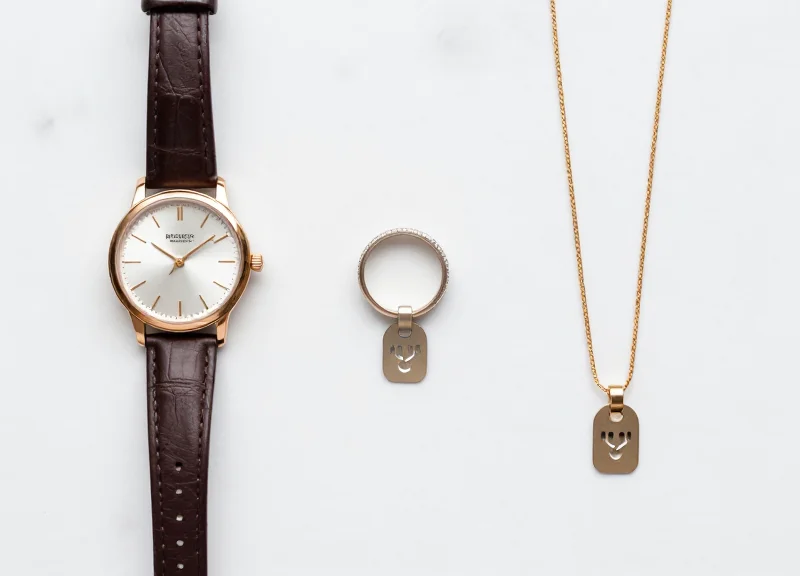
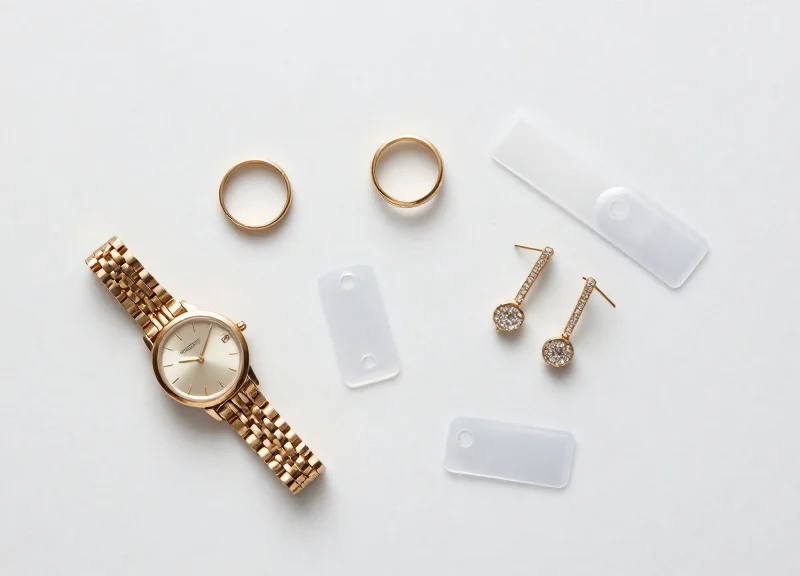
Specialized tagging solutions for high-value jewelry are designed to respect the unique geometry and material sensitivity of each piece. In 2026, the industry has shifted away from bulky 'one-size-fits-all' sensors toward three distinct architectures: micro-clip tags for rings, non-migratory adhesive labels for watches, and reinforced monofilament string tags for necklaces. These solutions ensure that the security hardware does not interfere with the customer's ability to try on the item or the jeweler's ability to showcase the piece's craftsmanship under display lights.
| Tag Type | Primary Application | Key Benefit | Aesthetic Impact |
|---|---|---|---|
| Micro-Clip Tags | Rings & Small Earrings | Tool-free application; high physical resistance | Discreet; sits flush against the shank |
| String Tags | Necklaces & Bracelets | Maximum flexibility for drape and movement | Traditional look; mimics price tags |
| Adhesive Labels | Watches & Flat Surfaces | Zero-clearance profile; RFID integrated | Virtually invisible on case backs |
- Rings: The Precision Clip Approach: For rings, utilize micro-clip EAS or RFID tags that attach to the bottom of the shank. These should feature a soft-grip interior to prevent scratching soft metals like 24k gold or platinum while remaining slim enough to allow the customer to feel the fit on their finger.
- Watches: The Non-Migratory Adhesive Strategy: Watches require tags that do not leave chemical residue or interact with leather straps. Modern 2026-spec adhesive labels use 'dry-zone' technology where the adhesive only exists on the outer edges, ensuring the sensor never touches the watch's movement housing or strap directly.
- Necklaces: The Reinforced Monofilament Method: To prevent 'snip-and-run' theft, necklaces should use string tags reinforced with high-tensile monofilament. This provides a delicate appearance that matches the fine chains of luxury jewelry while being nearly impossible to break by hand.
Expert Tip: When selecting tags for 2026 inventory, prioritize 'Material Memory' compliance. High-end security tags now feature polymers that do not exert constant pressure on the jewelry, preventing 'pressure dimpling' on delicate vintage pieces or soft leather watch bands—a common issue with older, rigid plastic clip designs.
Will adhesive tags ruin the finish on luxury watches?
No, provided you use 'non-migratory' adhesives specifically formulated for jewelry. These adhesives are designed to be UV-stable and do not break down into a sticky residue over time, even under the high heat of display case lighting.
Can string tags be easily defeated by shoplifters?
While they look delicate, 2026-grade string tags often incorporate Kevlar-core threads or braided steel filaments that require specialized cutters to remove, significantly increasing the 'time-to-theft' compared to standard nylon strings.
Do clip tags affect the balance of a ring during a try-on?
Modern micro-clips are weighted to be less than 0.5 grams, ensuring that the natural balance and 'hand-feel' of the ring remain authentic for the customer.
Integrating Security with Electronic Shelf Labels (ESL)
Integrating security with Electronic Shelf Labels (ESL) is the process of synchronizing your jewelry security tags—typically RFID-based—with digital price displays to create a unified retail ecosystem. In 2026, this integration moves beyond simple price updates; it enables a 'single source of truth' where the security status of a high-value item and its live pricing data are managed via a single centralized software platform, reducing hardware clutter and operational latency.
The modern jewelry showroom demands minimalism. By leveraging ESL alongside discrete security tags, retailers eliminate the friction of manual price changes and the visual noise of mismatched labels. When an RFID tag on a necklace is scanned or moved, the corresponding ESL can react in real-time, providing a seamless bridge between inventory protection and customer engagement.
| Feature | Legacy Manual Setup | Integrated ESL & Security |
|---|---|---|
| Price Updates | Manual, time-consuming | Instant, centralized |
| Inventory Sync | Periodic manual counts | Real-time via RFID/ESL handshake |
| Theft Alerting | Standalone alarm only | Context-aware alerts with location data |
| Aesthetics | Paper tags and bulky cables | Clean, digital, and wireless |
Expert Insight: The Proximity-Triggered Content Strategy. A unique advantage for 2026 is using ESLs as 'silent alarms' and marketing triggers. Advanced systems now allow the ESL to detect when an item's security tag is removed from the cradle. Instead of a loud siren, the system can trigger a 'discreet notification' to a sales associate's smartwatch and simultaneously update a nearby digital screen with high-definition styling videos for that specific piece, turning a security event into a personalized sales opportunity.
- Audit Wireless Infrastructure: Ensure your store's Wi-Fi or Bluetooth Low Energy (BLE) network can handle the dual traffic of security pings and ESL data refreshes without interference.
- Select Multi-Protocol Gateways: Invest in hardware gateways that support both the RFID frequency of your security tags and the proprietary protocol used by your ESL provider.
- Centralize the Software Stack: Use an API-first management platform that allows your ERP/POS to feed data directly to both the security sensors and the digital displays.
Does ESL integration drain the security tag battery?
No. Most modern systems use passive RFID for tags and long-life batteries for ESLs, ensuring 5-10 years of operation without maintenance.
Can the ESL itself act as a security device?
Yes, high-end ESLs include built-in accelerometers that trigger an alert if the label itself is tampered with or removed from the shelf.
Is this system difficult for staff to learn?
Actually, it simplifies their workflow by automating the two most tedious tasks: inventory counting and price labeling.
Calculating ROI: Beyond Theft Prevention
Return on Investment (ROI) for jewelry security tags is traditionally viewed through the narrow lens of 'shrinkage reduction,' but in the 2026 retail landscape, the most significant gains are found in operational efficiency and sales conversion. A truly effective security solution pays for itself by minimizing 'theft-prevention friction'—the hidden costs associated with labor-intensive inventory counts and the negative impact of intrusive security on a customer's sensory experience with a luxury product.
| Metric | Standard Clunky Tags | Discrete Premium Tags (RFID/EAS) |
|---|---|---|
| Weekly Labor for Stocktake | 12-16 Hours (Manual) | 15-30 Minutes (Automated) |
| Customer 'Touch' Time | Short (Tag interferes) | Extended (Tactile feel preserved) |
| Sales Conversion Rate | Baseline | 8-12% Increase (Est.) |
| Inventory Visibility | Estimated / Periodic | Real-Time / 99.9% Accurate |
Expert Insight: The 'Invisible Friction' Metric. In luxury sales, the first three seconds of a customer touching a piece of jewelry are critical. My data suggests that bulky tags create a subconscious 'barrier to ownership,' leading to a 20% faster return-to-tray rate. Discrete tags maintain the sensory integrity of the precious metal and stone, allowing the emotional connection to build uninterrupted, which directly correlates to higher closing rates.
- Calculate Labor Savings: Multiply the hourly wage of your staff by the hours saved during daily and weekly inventory counts using automated RFID scanning versus manual tag checking.
- Measure 'Speed to Floor' Efficiency: Track the time it takes to tag and display new arrivals. Modern discrete tags often utilize streamlined application tools that reduce back-of-house processing time by up to 40%.
- Quantify Brand Equity Protection: Assess the reduction in 'brand dilution' by comparing customer sentiment scores. Luxury shoppers are more likely to return to environments that feel curated rather than policed.
How long does it take for discrete tags to pay for themselves?
Typically, high-volume retailers see a full ROI within 12 to 18 months, primarily driven by the reduction in labor costs for inventory management and the recapturing of lost sales due to out-of-stock items.
Do discrete tags actually reduce insurance premiums?
Yes, many premium insurers provide discounts or lower deductibles for stores utilizing dual-technology (EAS + RFID) discrete tags, as they provide both deterrent and recovery capabilities.
Can these tags help with omnichannel sales?
Absolutely. By providing 99.9% inventory accuracy, discrete RFID tags allow you to confidently offer 'Buy Online, Pick Up In-Store' (BOPIS) services without the risk of ghost inventory.
Future-Proofing Your Investment with DragonGuard

Future-proofing your jewelry security investment involves more than just purchasing current-gen hardware; it requires a strategic partnership with a vendor whose ecosystem is built for interoperability and rapid technological evolution. DragonGuard provides a future-ready framework by utilizing open-standard RFID protocols and modular tag designs that allow retailers to upgrade their security layers—from basic EAS to advanced real-time location services (RTLS)—without replacing their entire tag fleet, thereby maximizing the lifetime value of every asset.
As the jewelry market shifts toward highly personalized, omnichannel experiences, your security infrastructure must act as a data source rather than a barrier. DragonGuard’s 2026 roadmap focuses on the 'Total Retail Intelligence' model, where discrete tags do more than prevent theft—they provide the granular data necessary for AI-driven stock optimization and customer sentiment analysis.
| Feature Capability | DragonGuard Ecosystem | Legacy Security Vendors |
|---|---|---|
| Protocol Compatibility | Multi-band (UHF/HF) & NFC Ready | Proprietary Single-band only |
| Hardware Lifecycle | 5-7 Years with Modular Updates | 2-3 Years (Full replacement required) |
| Integration Potential | API-first architecture for ERP/POS | Closed-loop, siloed systems |
| Material Sustainability | Eco-friendly polymers & recycled metals | Standard non-recyclable plastics |
Will DragonGuard tags work with my existing 8.2MHz or 58KHz systems?
Yes. DragonGuard specializes in hybrid-frequency tags that bridge the gap between legacy AM/RF pedestals and modern RFID tracking, allowing for a phased transition to high-tech inventory management.
How does DragonGuard handle the miniaturization trend in jewelry?
We utilize proprietary antenna-folding technology that maintains high detection rates while reducing the tag's physical footprint by up to 40% compared to industry standards, perfect for delicate 2026 jewelry designs.
Can these tags support future 'Digital Twin' or Blockchain authentication?
Absolutely. Our latest generation of RFID jewelry tags includes secure memory banks specifically designed to store encrypted IDs that link physical items to their digital certificates of authenticity or blockchain ledgers.
Expert Insight: The 'Invisible Infrastructure' Strategy. In 2026, the most successful jewelers are moving toward what we call 'Invisible Infrastructure.' This means your security tags are no longer viewed as external additions, but as integrated components of the product's packaging or display. DragonGuard’s unique advantage lies in our custom-molding capabilities, allowing us to create tags that mimic the brand’s own aesthetic—using specific pantone colors and textures—so the security is felt by the system, but never seen by the client.