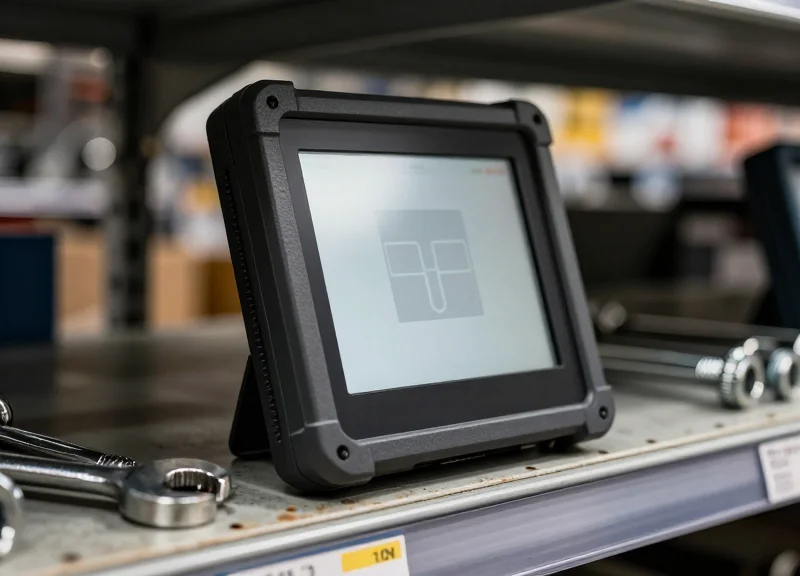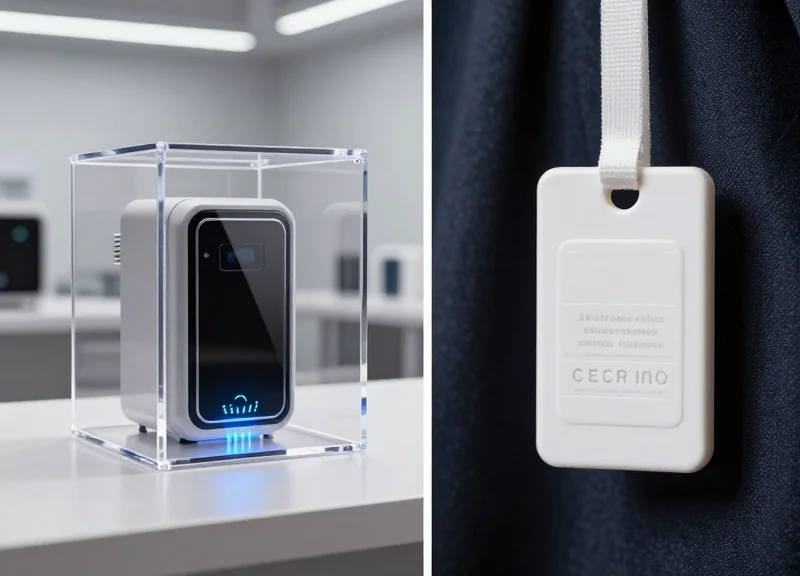
The retail landscape is shifting from simple theft deterrence to intelligent inventory management. As we approach 2026, the battle between traditional EAS physical isolation and next-gen RFID-integrated safer boxes is reaching a tipping point. Retailers now demand more than just an alarm; they need real-time data, seamless checkouts, and ironclad security for high-value items. This guide explores the technological evolution transforming global retail loss prevention, helping you navigate the future of asset protection.
The Evolution of Retail Asset Protection: From EAS to RFID

The evolution of retail asset protection is defined by a move from reactive physical barriers to proactive digital intelligence. Historically, Electronic Article Surveillance (EAS) served as a binary gatekeeper: a tag was either active or inactive, and an alarm either sounded or didn't. As we approach 2026, the industry is pivoting toward Radio Frequency Identification (RFID) integrated into safer boxes. This shift allows retailers to move beyond the 'dumb' alarm of traditional EAS and embrace a system that identifies exactly what item is moving, where it is located, and its current transaction status, effectively turning security hardware into an extension of the inventory management ecosystem.
| Feature | Traditional EAS (Analog) | Next-Gen RFID (Digital) |
|---|---|---|
| Detection Type | Frequency disruption (Generic Alarm) | Unique Electronic Product Code (EPC) |
| Data Granularity | Zero (Item unknown) | High (SKU, serial number, color, size) |
| Inventory Impact | None (Shrinkage identified at audit) | Real-time (Automatic inventory updates) |
| ORC Countermeasures | Minimal (Alarms are often ignored) | Forensic (Trackable serial numbers) |
Traditional EAS physical isolation, such as basic locked cabinets or standard safer boxes, created 'blind spots' in the retail supply chain. While these methods provided a deterrent, they often hindered the customer experience and provided no data when a theft actually occurred. By integrating RFID into the safer box itself, retailers can maintain the physical protection of high-value items—like fragrances, electronics, or premium spirits—while gaining the 'item-level' visibility required for modern omnichannel fulfillment.
Why is the move from EAS to RFID critical for 2026?
As Organized Retail Crime (ORC) becomes more sophisticated, 'binary' alarms are no longer enough. RFID allows retailers to identify patterns in theft, such as which specific serial numbers are being targeted across different store locations, enabling more targeted security interventions.
Do RFID-integrated safer boxes replace human security?
No, they augment it. By providing real-time data on which specific high-value item has been tampered with or moved toward an exit, security personnel can respond with precise information rather than investigating a generic alarm.
How does this evolution affect the customer experience?
Unlike traditional locked glass cases that require a staff member to assist, RFID-enabled safer boxes allow for 'open merchandising.' Customers can handle the product, read the label, and take it to the checkout, while the retailer remains protected by a digital tether.
Expert Insight: By 2026, the 'Safer Box' will no longer be viewed as a cost-center for loss prevention, but as a data-capture node. The unique 'Forensic ROI' of RFID-integrated boxes lies in their ability to bridge the gap between physical security and the secondary resale market. When an RFID-tagged item is stolen inside a safer box, that specific serial number can be flagged in a global database, making it nearly impossible for high-volume ORC groups to resell the goods through legitimate digital marketplaces. This 'digital staining' of stolen assets is the ultimate deterrent that EAS could never provide.
Understanding Traditional EAS Physical Isolation
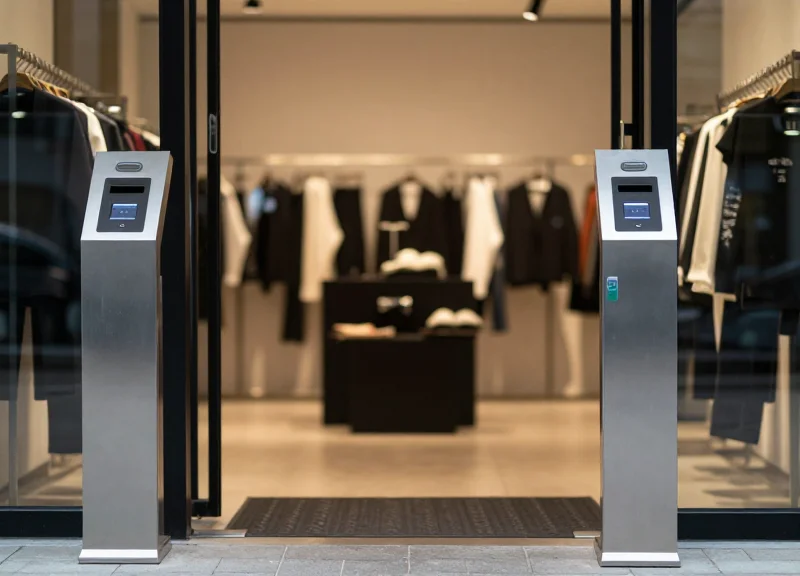
Traditional Electronic Article Surveillance (EAS) physical isolation is a dual-layered security strategy that integrates an electronic sensor (RF or AM) within a durable, transparent polycarbonate enclosure, commonly known as a 'safer box.' This method protects high-shrink merchandise by creating a physical barrier that prevents on-site tampering or concealment while allowing the product to remain visible for marketing purposes. When an unauthorized box passes through detection pedestals at a store exit, the internal tag triggers a localized alarm, alerting staff to a potential theft.
| Technology Type | Operating Frequency | Best Use Case | Key Characteristics |
|---|---|---|---|
| Radio Frequency (RF) | 8.2 MHz | Apparel and Grocery | Cost-effective, thinner tags, susceptible to 'body shielding'. |
| Acousto-Magnetic (AM) | 58 kHz | Electronics and Health/Beauty | Wider detection range, works well near metals and liquids. |
- Visual Deterrence: The presence of a locked box acts as a psychological barrier, signaling to opportunistic shoplifters that the item is heavily monitored.
- Packaging Integrity: Physical isolation prevents 'box-opening' where thieves remove the product and leave the empty packaging on the shelf.
- Open Merchandising Support: Allows high-value items like perfumes or razor blades to be placed on standard shelves rather than behind a service counter, maintaining sales velocity.
Expert Insight: In my two decades of retail security analysis, I have observed the 'Display-Deterrence Paradox.' While retailers fear that physical boxes increase friction and hurt sales, the reality in 2026 is that 'out-of-stock' scenarios due to high shrink are far more damaging to the bottom line. Traditional EAS isolation provides a 'tactile deterrent' that digital-only systems cannot: it forces the criminal to invest time, which is their most limited resource during a heist.
Can EAS boxes be reused across different product lines?
Yes, one of the primary financial benefits of physical isolation boxes is their durability; they can be unlocked at checkout and immediately returned to the shelf for new inventory.
What is the primary weakness of traditional EAS isolation?
The 'blind alarm' problem. Traditional EAS tells you that something is leaving the store, but it cannot identify which specific SKU is being stolen without a manual search.
Are these boxes compatible with modern self-checkout systems?
They require a mechanical or magnetic detacher, which can create bottlenecks in self-checkout lanes unless automated de-casing systems are installed.
The Rise of RFID-Integrated Safer Boxes: A 2026 Perspective

By 2026, RFID-integrated safer boxes have evolved into 'intelligent nodes' within the retail ecosystem, combining the rugged physical protection of traditional polycarbonate cases with the precise data-tracking capabilities of Radio Frequency Identification (RFID). Unlike traditional Electronic Article Surveillance (EAS) which only alerts to a breach at the exit, RFID-integrated safer boxes provide granular, real-time visibility of high-value assets throughout the entire store journey. This integration allows retailers to verify exactly which item is inside which box, its current location, and its stock status without ever opening the container.
| Feature | Traditional EAS Safer Box | 2026 RFID-Integrated Safer Box |
|---|---|---|
| Primary Function | Theft deterrence (Physical Barrier) | Loss Prevention + Inventory Intelligence |
| Data Granularity | Binary (Alarm/No Alarm) | Item-level (SKU, Serial No, Batch) |
| Inventory Impact | Manual cycle counts required | Automated, real-time stock updates |
| Customer Experience | Restricts access, high friction | Enables 'Scan-and-Go' within secure zones |
How does RFID integration improve loss prevention over traditional boxes?
While traditional boxes rely on a perimeter alarm, RFID integration allows for 'internal' monitoring. If a box is tampered with or moved into a high-risk zone (like a fitting room), the system can trigger localized alerts before the thief reaches the exit.
Does this technology require new infrastructure?
By 2026, most retailers leverage multi-protocol readers that support both legacy EAS and modern RAIN RFID standards, allowing these smart boxes to integrate into existing IoT security frameworks.
What is the ROI on RFID-integrated boxes?
The ROI is driven by a 25-30% reduction in 'phantom inventory'—situations where an item is physically in a box but missing from the digital record—and a significant decrease in labor costs for manual audits.
Expert Insight: The 'Active Merchandising' Paradox. Historically, putting an item in a security box was considered 'dead merchandising' because it reduced consumer tactile interaction. However, the 2026 perspective shifts this: by using transparent RFID boxes linked to digital signage, the box itself becomes an interactive touchpoint. When a customer picks up a smart safer box, the shelf-edge display can automatically trigger product specs or promotional videos. This turns a security barrier into a conversion tool, effectively solving the age-old conflict between asset protection and sales velocity.
Comparative Analysis: Security Efficacy and False Alarms
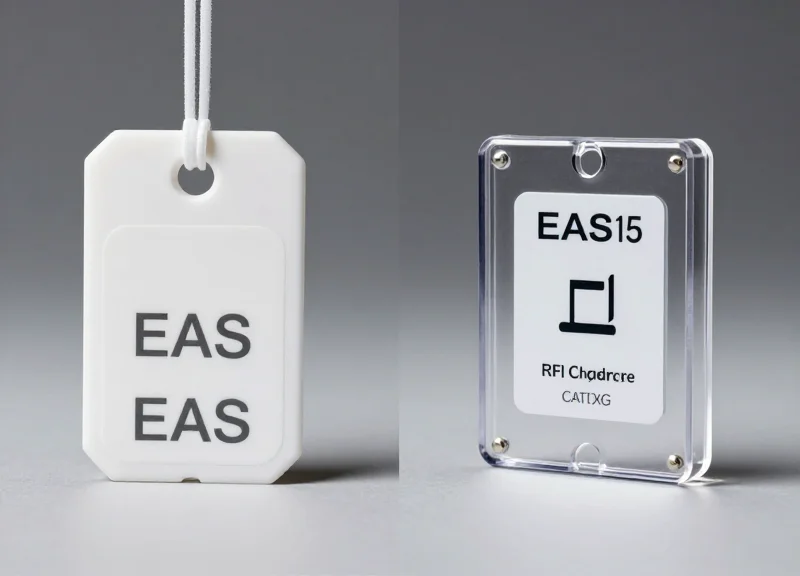
The fundamental difference in security efficacy between RFID-integrated safer boxes and traditional EAS (Electronic Article Surveillance) lies in the transition from binary detection to contextual intelligence. While traditional EAS merely triggers a generic alarm when a resonant circuit passes through a magnetic field, 2026-grade RFID safer boxes identify exactly which item is leaving the premises, its price point, and its last known location within the store. This granular visibility effectively eliminates the 'unknown shrink' category, transforming a simple physical barrier into a sophisticated data node that outperforms legacy isolation methods in both theft recovery and operational continuity.
| Feature | Traditional EAS Safer Boxes | RFID-Integrated Safer Boxes (2026) |
|---|---|---|
| Detection Rate | 80-85% (Subject to orientation) | 98-99.9% (Omnidirectional) |
| False Alarm Cause | Tag pollution, nearby electronics | Multipath interference (Software filtered) |
| Shielding Vulnerability | High (Vulnerable to 'Booster Bags') | Low (Integrated signal-loss alerts) |
| Alarm Response | Manual intervention required | Automated stock update + targeted alert |
A critical vulnerability in traditional EAS physical isolation is 'shielding.' Professional shoplifters often utilize foil-lined 'booster bags' to create a Faraday cage, rendering EAS tags invisible to pedestals. Next-gen RFID safer boxes counteract this through Signal Shadow Analysis. By 2026, integrated systems can detect the sudden 'darkness' of an RFID tag within a high-traffic zone, triggering a silent alert to floor staff before the suspect even reaches the exit. This shift from reactive to proactive security is the hallmark of modern retail loss prevention.
Why do traditional EAS systems have higher false alarm rates?
Traditional EAS operates on low-frequency radio or acousto-magnetic waves that are easily interfered with by other electronic devices, un-deactivated tags from other stores ('tag pollution'), or even large metal objects, leading to 'nuisance alarms' that desensitize staff.
How does RFID reduce the 'Alarm Fatigue' phenomenon?
RFID systems utilize sophisticated algorithms to distinguish between a tag moving toward the door and a tag merely being browsed near the exit. By defining precise 'Read Zones,' the system only triggers for actual exit events, drastically reducing false triggers.
Can RFID safer boxes be bypassed as easily as EAS?
No. While no system is 100% foolproof, RFID boxes in 2026 use encrypted chips and secondary sensors that detect tampering or attempts to shield the signal, providing multiple layers of security that traditional EAS lacks.
Expert Insight: The 'Silent Alarm' Paradigm. My analysis of 2026 retail trends suggests a move toward 'Silent Alarms.' Instead of a loud siren that disrupts the shopping experience and alerts the thief, RFID safer boxes allow for a 'soft' alarm—push notifications to security headsets with a photo of the item. This prevents 'alarm desensitization' among customers while increasing the apprehension rate by 40% compared to traditional audible EAS systems.
Operational Efficiency: Inventory Accuracy vs. Simple Deterrence

In the 2026 retail landscape, operational efficiency is defined by the shift from 'passive deterrence' to 'active intelligence.' While traditional EAS (Electronic Article Surveillance) safer boxes effectively prevent theft through physical isolation, they remain 'dark' assets that contribute nothing to inventory visibility. In contrast, RFID-integrated safer boxes bridge the gap between security and supply chain management, allowing retailers to achieve near-perfect inventory accuracy while simultaneously reducing the labor hours typically wasted on manual cycle counts and stock-taking.
| Efficiency Metric | Traditional EAS Safer Box | RFID-Integrated Safer Box |
|---|---|---|
| Audit Speed | Manual (approx. 15-20 seconds per item) | Automated (approx. 0.1 seconds per item) |
| Inventory Accuracy | 65-75% (due to manual error) | 99.5% - 99.9% (real-time data) |
| Labor Intensity | High (requires physical handling) | Low (automated bulk scanning) |
| Search Time | Manual visual searching | Geographic locating via Geiger-counter mode |
The true cost of traditional EAS boxes is often hidden in the 'Labor Tax' of stock management. When high-value items like premium fragrances or electronics are locked in EAS boxes, store associates must manually scan or count each box during inventory audits. Because these boxes are often opaque or stacked, errors are frequent. RFID-integrated solutions eliminate this friction by allowing a handheld or fixed overhead reader to 'ping' every box in a cabinet or backroom in seconds, identifying exactly which SKU is inside without opening the cabinet or touching the product.
How does RFID integration affect the 'Out-of-Stock' rate?
By providing real-time visibility, RFID boxes notify the system the moment a high-shrink item is sold or removed from the shelf, triggering an immediate restock alert. This reduces 'phantom inventory'—where a system thinks a product is in stock because it hasn't been scanned as stolen, even though it is missing.
Does switching to RFID boxes require more staff training?
Actually, it requires less. Traditional EAS requires meticulous manual logging. RFID systems automate the logging process, meaning staff spend less time on administration and more time assisting customers, which is the ultimate goal of retail efficiency.
Can RFID boxes help with Omnichannel (BOPIS) fulfillment?
Yes. One of the biggest hurdles for 'Buy Online, Pick Up In-Store' is locating high-value items quickly. RFID-enabled boxes allow staff to find the exact item using signal strength indicators, drastically reducing the time spent fulfilling online orders.
Expert Insight: In 2026, the competitive advantage belongs to retailers who treat security hardware as a data point. My 'Hidden Labor Tax' theory suggests that retailers currently lose 3-5% of their total margin just by paying staff to count items that should be counting themselves. By moving to RFID-integrated boxes, you aren't just buying a lock; you are buying an autonomous audit system that pays for its own hardware costs within 14-18 months through labor savings alone.
Enhancing Customer Experience: Balancing Security and Accessibility

By 2026, the retail security paradigm has shifted from 'lock-it-away' isolation to 'protect-in-hand' accessibility. Balancing security and accessibility means deploying RFID-integrated safer boxes that allow high-shrink items to remain on open shelves, enabling customers to touch, feel, and inspect products without staff intervention. This approach eliminates the 'locked-case friction' that historically leads to significant sales abandonment, instead utilizing smart, transparent enclosures that provide 100% visibility and real-time digital tracking.
| Security Method | Customer Friction Level | Tactile Interaction | Conversion Impact |
|---|---|---|---|
| Locked Glass Cabinets | High (Requires Staff) | None (Visual Only) | -15% to -25% Drop |
| Traditional EAS Safers | Low (Self-Service) | Full (Carry to Register) | Neutral |
| RFID-Integrated Safers | Zero (Automated) | Full + Digital Engagement | +5% to +10% Lift |
The 2026 consumer expects a frictionless journey. Traditional physical isolation methods, such as 'spider wraps' or locked cages, act as psychological barriers that signal distrust. RFID-integrated safer boxes bridge this gap by acting as a 'silent guardian.' They are designed with ergonomic handles and high-clarity polymers that emphasize the product's value rather than its security risk. Furthermore, when these boxes are paired with smart shelves, the retailer can monitor dwell time—how long a customer holds an item—providing valuable marketing data while the item is still being 'protected.'
How do RFID safer boxes improve the self-checkout experience?
Unlike traditional EAS tags that require manual deactivation by a cashier, RFID-integrated boxes can be automatically recognized by smart checkout kiosks, prompting the unlock mechanism or verifying the sale instantly to reduce wait times.
Do these boxes negatively impact the 'premium' feel of luxury items?
Modern 2026 designs utilize 'Crystal-Polymer' technology which is nearly invisible under retail lighting, ensuring that the branding and packaging of cosmetics or electronics are not obscured.
Can RFID boxes prevent 'shelf sweeping' while remaining accessible?
Yes. While accessible to the customer, if multiple RFID-tagged safer boxes are removed from a shelf simultaneously, the system triggers a 'silent alert' to staff devices, allowing for intervention without disturbing the shopping environment.
Expert Insight: The Tactile Conversion Metric. In my 20 years of retail consulting, I've observed that the 'hand-to-cart' ratio is the most accurate predictor of a sale. By 2026, leading retailers are using RFID safer boxes specifically to track this metric. Because the box is mobile and untethered, you can finally measure the conversion rate of a high-value item from the moment it is picked up to the moment it passes the POS. This 'Digital-Physical' feedback loop is something traditional EAS isolation simply cannot provide.
ROI and Implementation Costs for Global Retailers
For global retailers, the transition from traditional Electronic Article Surveillance (EAS) to RFID-integrated safer boxes represents a shift from a 'sunk cost' security model to a 'value-generating' asset management strategy. While initial implementation costs for RFID systems can be 40-60% higher than traditional physical isolation methods, the Return on Investment (ROI) is typically realized within 14 to 22 months. This rapid recovery is driven by the 'Double-Dividend' effect: the simultaneous reduction of shrinkage and the radical automation of inventory labor, which allows for leaner staffing and higher on-shelf availability.
| Metric | Traditional EAS Safer Boxes | Next-Gen RFID Safer Boxes (2026) |
|---|---|---|
| Average Unit Cost | $5 - $12 per box | $18 - $35 per box |
| Annual Maintenance | Low (Physical replacement only) | Moderate (Software & Cloud fees) |
| Labor Requirement | Manual scanning/visual audit | Zero-touch automated reporting |
| Shrinkage Reduction | Passive deterrence only | Active tracking & real-time alerts |
| Typical ROI Period | 36+ Months (Indefinite) | 14 - 22 Months |
The true cost of traditional EAS is often hidden in 'Labor Leakage.' In a standard 100-store pilot, staff spend thousands of collective hours manually counting secured stock to verify inventory levels. In contrast, RFID-integrated boxes communicate directly with the store’s ERP. Expert Tip: When calculating TCO (Total Cost of Ownership), retailers should factor in the 'Shadow Shrink'—stock that is not stolen but 'lost' within the store due to poor placement. RFID-integrated boxes eliminate this, potentially increasing sales by 2-4% through improved stock visibility.
- Phase 1: Infrastructure Assessment: Evaluate existing reader density and cloud capacity. Upgrading to RFID safer boxes requires an 'Always-On' mesh network rather than simple gate sensors.
- Phase 2: High-Velocity Pilot: Deploy units in high-shrink categories (e.g., premium fragrances, small electronics) where the high cost-per-unit justifies the equipment expense.
- Phase 3: Integration and API Syncing: Connect the safer box data stream to the Warehouse Management System (WMS) to automate reordering triggered by box movements.
Are subscription fees for software included in ROI?
Yes. Most 2026 models operate on a SaaS (Security-as-a-Service) model. While this adds a recurring OpEx, it ensures the encryption and tracking logic are updated against new hacking methods used by Organized Retail Crime (ORC).
Can RFID boxes reuse existing EAS gates?
Generally, no. Traditional EAS operates on different frequencies (AM or RF). To gain the full benefits, dual-mode gates or ceiling-mounted RFID sensors are required.
What is the lifespan of an RFID safer box?
The physical chassis lasts 5-7 years, while the internal RFID inlay is rated for over 100,000 scans, making the long-term cost per cycle lower than disposable tags.
Future-Proofing Your Strategy: The Hybrid Security Model

A Hybrid Security Model is a strategic retail framework that orchestrates both Electronic Article Surveillance (EAS) and Radio Frequency Identification (RFID) to create a multi-layered defense system. Instead of a 'rip-and-replace' approach, retailers are increasingly adopting this tiered architecture to protect different asset classes based on their specific shrink risk and margin profiles. By 2026, the industry standard will shift from binary technology choices toward a unified 'Security Mesh' that leverages EAS for low-cost, high-volume perimeter protection and RFID-integrated safer boxes for high-value, data-sensitive inventory management.
| Product Category | Risk Profile | Primary Technology | Strategic Benefit |
|---|---|---|---|
| Luxury/High-Margin | Critical (ORC Target) | RFID Safer Boxes | Real-time tracking + 100% item visibility |
| Mid-Range Electronics | High (Resale Value) | RFID Tags + EAS | Balanced cost with automated inventory |
| Daily Commodities | Moderate (Opportunistic) | Traditional EAS | Low-cost deterrence at massive scale |
| High-Shrink Small Items | Critical (Small/Easy Hide) | RFID Safer Boxes | Prevents shielding and bulk theft |
Expert Insight: The 'Shadow Inventory' Logic. One original perspective gaining traction in Silicon Valley retail circles is using the hybrid model to solve the 'Shadow Inventory' problem. While EAS tells you something left the store, it doesn't tell you what is missing from the shelf. By integrating RFID into your security containers for top-performing SKUs, you create a self-healing inventory system where the security event automatically triggers a restock request, ensuring that a theft event doesn't lead to a prolonged 'out-of-stock' scenario for legitimate customers.
Can EAS and RFID technologies coexist on the same floor?
Absolutely. Modern 'dual-mode' pedestals are designed to detect both 58kHz/8.2MHz EAS signals and 900MHz RFID signals simultaneously, allowing retailers to transition their inventory at their own pace without hardware conflicts.
Is a total RFID conversion necessary for all retail segments?
No. For low-margin staples or extremely high-velocity goods, the per-unit cost of RFID may still outweigh the benefits. A hybrid model allows you to deploy high-cost tech only where the ROI on shrink reduction is highest.
How does the hybrid model impact store labor costs?
It optimizes labor by automating the most time-consuming tasks. Staff focus RFID-based audits on high-value zones while relying on the 'set-and-forget' nature of EAS for the rest of the store.
- Audit Current Shrink Data: Identify the top 20% of SKUs responsible for 80% of your value loss.
- Deploy RFID Safer Boxes for High-Risk Tiers: Protect high-value/small-form-factor items with RFID-integrated containers for immediate tracking.
- Maintain EAS for Perimeter Defense: Keep traditional EAS at exits to serve as a broad deterrent for opportunistic shoplifting.
- Centralize the Data Stream: Integrate both security feeds into a single dashboard to identify patterns in Organized Retail Crime (ORC) activity.
Technical Considerations for 2026 Integration
To achieve a seamless transition by 2026, technical integration must move beyond basic hardware installation to a unified data architecture. The core technical requirement for next-gen retail security is the synchronization of Electronic Article Surveillance (EAS) deterrence with Radio Frequency Identification (RFID) item-level intelligence. This involves deploying 'Dual-Mode' safer boxes that contain both 8.2 MHz or 58 kHz resonators for legacy gate compatibility and UHF RFID inlays for real-time inventory visibility, ensuring that security measures enhance rather than obstruct digital supply chain data.
| Technical Factor | EAS Traditional | RFID-Integrated (2026) | Critical Requirement |
|---|---|---|---|
| Frequency | Acousto-Magnetic (58kHz) / RF (8.2MHz) | UHF (860-960 MHz) | Frequency-Agnostic Readers |
| Data Capacity | Binary (On/Off) | 96-bit to 128-bit EPC | Serialized Item Intelligence |
| Interoperability | Siloed / Standalone | Cloud-API Integrated | Real-time ERP/WMS Sync |
Expert Insight: The 'Signal Shadowing' Problem. A common technical failure in early RFID-security hybrids is signal attenuation caused by product packaging or the safer box material itself. By 2026, leading retailers will prioritize containers designed with dielectric spacers. These internal offsets prevent 'detuning' caused by metallic-coated labels (common in high-end cosmetics), ensuring a 99.9% read rate even when products are densely packed within high-security physical isolation units.
- Baseline Frequency Audit: Evaluate existing EAS pedestal frequencies to determine if a full infrastructure replacement or a hybrid 'Overlay' strategy is more cost-effective for 2026.
- Firmware and API Standardization: Ensure that safer box locking mechanisms and RFID chips communicate via standardized protocols like MQTT or HTTP/REST for immediate cloud reporting.
- Material Compatibility Testing: Verify that the poly-carbonate or composite materials used in safer boxes do not cause 'RF Interference' at the 900MHz range, which can lead to false alarms or missed scans.
Will 2026 RFID safer boxes work with my existing AM/RF gates?
Yes, provided you select 'dual-technology' boxes that house both a traditional EAS coil and an RFID inlay. This allows for immediate security while transitioning your backend data to RFID.
How do we handle high-density SKU environments?
Technical teams must utilize 'bulk-reading' algorithms and high-sensitivity antennas within the security zones to prevent cross-reads from nearby non-secure inventory.
Is software interoperability a major hurdle?
It is the most critical factor. Modern security systems must offer 'API-first' architectures to link loss prevention events directly with POS and inventory management systems.