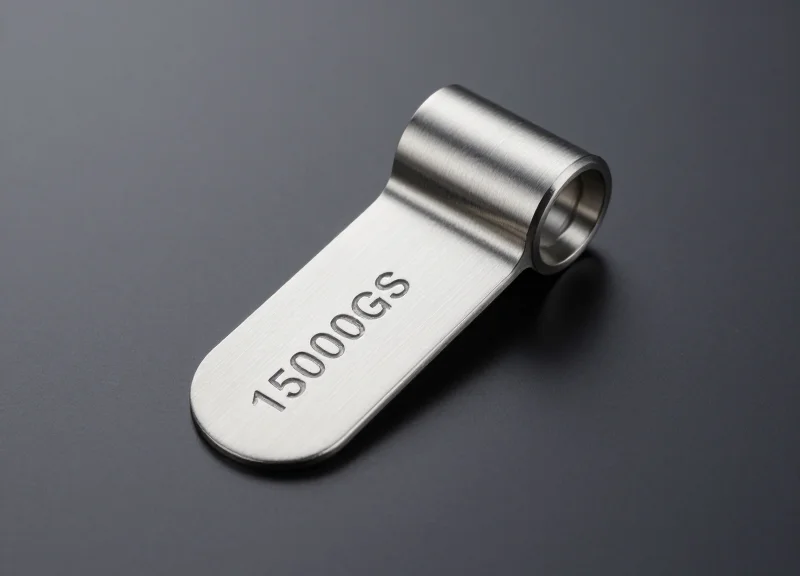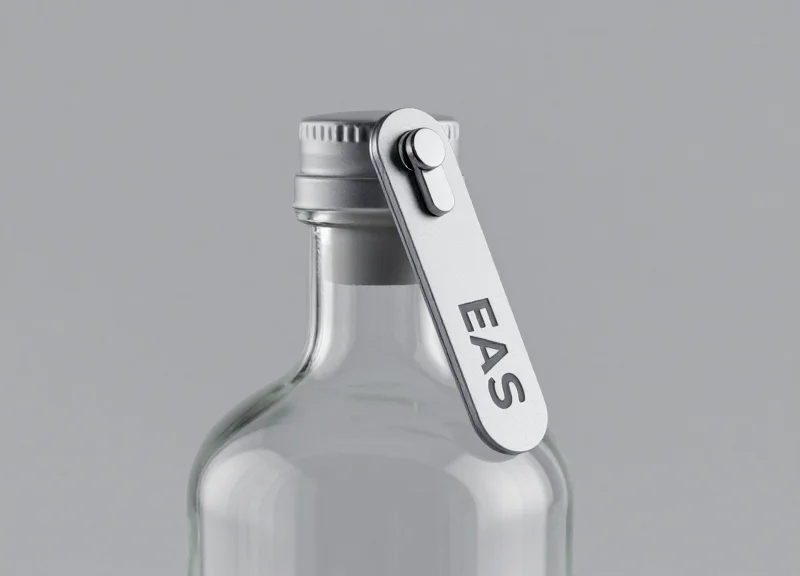
In the high-stakes world of retail health and wellness, canned supplements are prime targets for shoplifting due to their high resale value and compact size. However, retailers face a unique challenge: providing robust security without violating FDA or local regulatory requirements regarding nutrition label visibility. Applying 58kHz AM (Acousto-Magnetic) soft tags requires a strategic approach that balances loss prevention with consumer transparency. This guide explores professional techniques to achieve zero-blind-spot protection while ensuring your customers have access to the vital information they need.
The High-Shrink Reality of the Supplement Industry

The 'High-Shrink Reality' of the supplement industry refers to the disproportionately high rate of inventory loss—often ranging from 2% to 5% of total sales—attributed to the high resale value, portability, and universal demand for vitamins, proteins, and performance enhancers. Unlike bulkier retail goods, canned supplements represent a high-density value target for shoplifters, making them one of the most frequently stolen categories in modern pharmacies and health stores. For retailers, this shrink isn't just a loss of physical inventory; it is a direct erosion of net profit margins that are already compressed by rising supply chain costs.
Professional shoplifting rings, or Organized Retail Crime (ORC) groups, specifically target the supplement aisle because these products satisfy the 'CRAVED' model: they are Concealable, Removable, Available, Valuable, Enjoyable, and Disposable. A single shelf of high-end fat burners or premium whey protein can represent thousands of dollars in street-value inventory that can be liquidated within hours on secondary online marketplaces.
| Product Category | Average Shrink Rate | Primary Theft Driver |
|---|---|---|
| General Grocery | 1.2% - 1.5% | Internal errors / Opportunistic theft |
| Health & Beauty (HABA) | 2.5% - 3.5% | Organized Retail Crime (ORC) |
| Premium Supplements | 3.8% - 5.2% | High resale velocity / Ease of transport |
| Apparel | 1.8% - 2.2% | Fitting room concealment |
Why are canned supplements specifically targeted?
Canned supplements offer a uniform shape that is easy to sweep into bags (shelf-sweeping) and carry high price points—often between $30 and $80 per unit—making them highly lucrative for resale.
What is the financial impact of 'out-of-stock' events caused by theft?
Beyond the $50 loss of a stolen bottle, retailers face 'phantom inventory' issues where systems believe a product is in stock, preventing reorders and resulting in lost sales from legitimate customers who find empty shelves.
How does 58kHz AM technology help?
Acousto-Magnetic (AM) technology at 58kHz is the industry standard for metallic or liquid-heavy environments, providing superior detection range even when applied to products with foil seals or metallic packaging.
Expert Insight: The 'Resale Velocity' Metric. Most retailers focus on the dollar value of the item, but ORC syndicates focus on 'Resale Velocity'—how quickly an item can be converted to cash. Supplements have a higher resale velocity than electronics because they lack serial number tracking and have no 'kill switches' or activation requirements. This makes proactive EAS (Electronic Article Surveillance) tagging not just an option, but a baseline requirement for category profitability.
Why 58kHz AM Technology Wins for Supplement Security
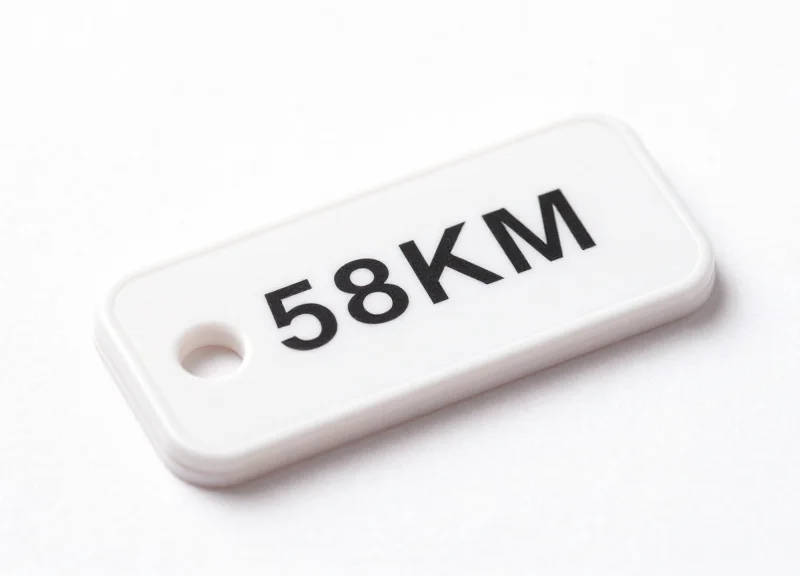
Acousto-Magnetic (AM) technology at 58kHz is the preferred choice for supplement security because it utilizes a magnetic field that can penetrate metallic-foiled seals and high-density liquids—two common components in premium nutrition packaging that typically render standard 8.2MHz Radio Frequency (RF) systems ineffective. While RF labels are prone to 'detuning' when in proximity to conductive materials, AM technology maintains a stable resonance, ensuring high detection rates at store exits regardless of the bottle's contents.
| Feature | 58kHz AM (Acousto-Magnetic) | 8.2MHz RF (Radio Frequency) |
|---|---|---|
| Metal/Foil Tolerance | High: Penetrates foil seals and metallic labels | Low: Signal is often shielded (Faraday Cage effect) |
| Liquid Performance | Excellent: Signal unaffected by bottle contents | Poor: Liquids absorb and dampen the signal |
| Detection Width | Wider: Effective for wide mall-style entrances | Standard: Best for narrower doorways |
| Deactivation Height | Up to 10-15cm from pad surface | Requires proximity or physical contact |
The technical superiority of AM technology stems from its operating principle: magnetostriction. Inside an AM soft tag, two metallic strips vibrate at a specific frequency when energized by the pedestal’s magnetic field. This mechanical vibration creates a unique signal that is distinct from environmental noise. In contrast, RF labels rely on a delicate LC (Inductor-Capacitor) circuit. When an RF label is placed on a supplement bottle with an aluminum induction seal or a high-mineral content liquid, the metal or liquid shifts the circuit's resonance, essentially 'blinding' the security system.
- Interference Immunity: AM systems are less susceptible to electronic interference from lighting and other store equipment compared to RF systems.
- Pseudo-Tag Detection: Modern AM systems can often detect 'booster bags' and other professional shoplifting tools more effectively than entry-level RF.
- Small Footprint: Despite their power, AM soft tags are narrow and elongated, making them easier to tuck into the margins of supplement labels.
Expert Insight: In the retail security industry, we refer to the 'Detuning Gap.' Most premium canned supplements use aluminum induction seals for freshness. These seals act as a secondary antenna for RF systems, causing the security tag to shift its frequency away from 8.2MHz. Because AM technology relies on a lower-frequency magnetic pulse, it effectively 'ignores' these seals, providing a consistent detection rate that is often 30-40% higher than RF in the vitamin and nutraceutical category.
Navigating Regulatory Compliance: The Nutrition Label Constraint
In the regulatory landscape of dietary supplements, the Nutrition Facts panel is considered a 'conspicuous' legal requirement under 21 CFR 101.9. This mandate requires that all mandatory information—including dosages, ingredients, and allergen warnings—remain clearly visible and legible to the consumer at the point of sale. Applying a 58kHz AM soft tag directly over this data doesn't just frustrate the health-conscious shopper; it creates a 'non-compliant package' status. This can lead to administrative fines from the FDA or regional health authorities, as well as potential liability in civil court if a consumer suffers an allergic reaction because an obscured label prevented them from identifying a contraindication.
| Risk Factor | Regulatory Consequence | Business Impact |
|---|---|---|
| Obscured Allergens | FDA Warning Letters / Class II Recalls | High Liability & Personal Injury Lawsuits |
| Hidden Dosage Info | Non-compliance with 21 CFR 101.9 | Customer Returns & Product Distrust |
| Covered Barcodes | Inaccurate Inventory Records | Point-of-Sale Friction & Ghost Shrinkage |
One original insight often overlooked by retail managers is the 'Security-Induced Non-Compliance' trap. While the manufacturer is responsible for the label's design, the retailer assumes legal responsibility for the label's visibility once it hits the shelf. If your loss prevention strategy involves 'blind-tagging' (applying tags rapidly without regard for placement), you are effectively altering the legal presentation of the product. In high-stakes environments like California, obscuring a Prop 65 warning with a security tag can result in specialized litigation, making the cost of the security measure far higher than the value of the stolen canned supplement.
Can I place the tag on the bottom of the can?
Yes, the bottom of the container is often the safest zone for compliance, provided it does not cover expiration dates or lot numbers which are crucial for recall tracking.
Does a transparent AM tag solve the problem?
While transparency helps, the internal circuitry (the resonators) of a 58kHz AM tag still creates visual interference. It is safer to place tags on 'white space' or secondary branding areas rather than over text-heavy panels.
What about the lid or cap?
Placing tags on the lid is effective for canned supplements, but ensure the tag does not interfere with the tamper-evident seal, as breaking the seal to apply a tag is a major safety violation.
Identifying the 'Safe Zones' for Tag Placement
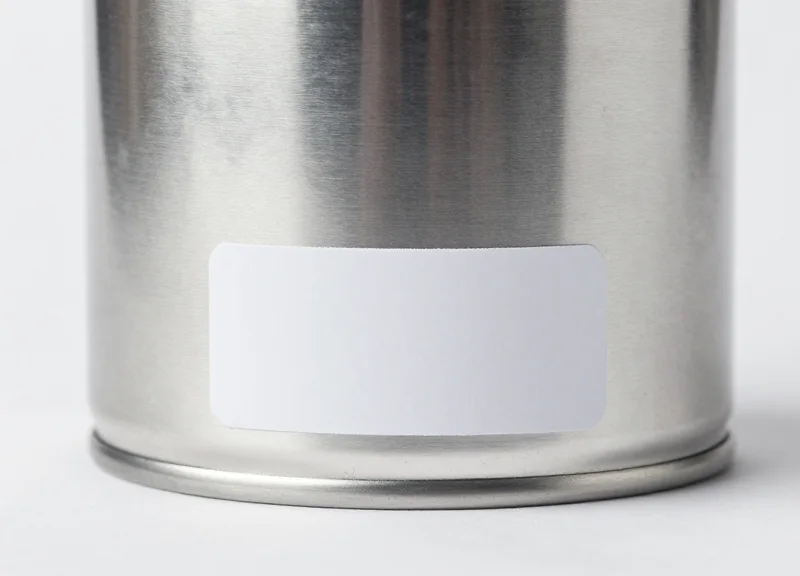
Identifying 'Safe Zones' for 58kHz AM soft tags involves locating specific non-informational surfaces on a supplement container—such as the bottom concave, the interior of a secondary lid, or the vertical 'white space' between label ends—where anti-theft technology can be applied without obscuring mandatory Nutrition Facts, ingredient lists, or branding. The goal is to balance maximum signal strength for Electronic Article Surveillance (EAS) gates with total compliance with FDA labeling regulations.
| Safe Zone Location | Discretion Level | Signal Integrity | Best Use Case |
|---|---|---|---|
| Bottom Concave | High (Hidden) | Excellent | Standard plastic HDPE or PET bottles |
| Inside Secondary Lid | Highest (Invisible) | Moderate | Premium powders with double-cap designs |
| Vertical White Space | Low (Visible Deterrent) | Maximum | High-turnover items where speed is key |
| Shoulder Curvature | Medium | High | Large canisters with significant top-taper |
Expert Tip: The 'Air Gap' Advantage. One unique benefit of 58kHz AM technology is its resilience near liquids. However, many supplements contain metallic foils or iron-heavy powders that can 'detune' a tag. By placing the tag in the bottom concave of a bottle, you create a natural 1-2mm air gap between the tag and the product contents. This micro-buffer significantly reduces parasitic capacitance, ensuring the tag resonates at exactly 58kHz when passing through pedestals, even if the container is foil-lined.
- Map the 'Dead Space': Identify areas on the packaging where no text exists. This is typically the 0.25-inch gap where the wrap-around label meets itself.
- Test for Induction: If the supplement uses an induction seal (foil), avoid placing the tag directly on top of the lid. The foil acts as a shield, potentially neutralizing the tag's magnetic field.
- Verify Deactivation Depth: Ensure the chosen zone allows the tag to come within 3 inches of your POS deactivation pad. Placing tags too deep inside large bulk tubs may prevent successful deactivation, leading to 'embarrassing alarms' at the exit.
Can I apply AM tags to the bottom of metal supplement tins?
Yes, but with caution. Unlike RF tags, AM tags can function on metal, but they should be applied using a 'spacer' or placed in the deepest part of the bottom concave to minimize direct contact with the conductive surface.
Will the adhesive damage the secondary branding?
Most high-quality 58kHz AM tags use a pH-neutral acrylic adhesive. If applied to the 'white space' of a synthetic label, they can be removed by the consumer post-purchase without tearing the underlying graphics.
Why not just tag the outer shrink-wrap?
Tagging the shrink-wrap is a 'high-blind-spot' strategy. Shoplifters can easily peel or cut the plastic wrap in-aisle, leaving the product unprotected while the tag remains on the shelf.
By adhering to these safe zones, retailers can maintain a professional 'clinical' look for their health products while ensuring that the 58kHz acousto-magnetic signal remains uncompromised by the container's geometry or contents.
Step-by-Step Application Guide for AM Soft Tags

To apply 58kHz AM soft tags to canned supplements effectively, you must follow a specialized protocol that prioritizes surface energy management and mechanical bonding. The process involves decontaminating the application site, aligning the tag's ferrite strips with the detection field, and applying firm pressure to activate the pressure-sensitive adhesive (PSA). Proper application prevents 'tag flagging'—where edges peel away—and ensures the tag remains active until deactivated at the point of sale.
- Surface Preparation: Wipe the application zone with a 70% isopropyl alcohol solution to remove manufacturing lubricants, dust, or fingerprints. On HDPE or PET plastics, a clean surface is critical for the adhesive to 'wet out' and create a permanent bond.
- Orientation for Detection: Align the tag vertically (parallel to the container's height) on cylindrical cans. This orientation maximizes the tag's cross-section as it passes through the 58kHz pedestal's magnetic field, significantly reducing 'dead zones' where the tag might go undetected.
- Strategic Placement: Position the tag in a pre-identified 'Safe Zone,' such as the white space near the barcode or the bottom concave. Ensure the tag is at least 5mm away from any metallic foils or lids to prevent signal interference.
- Pressure Application: Press the tag firmly from the center outward for 3 to 5 seconds. Most AM tags use high-tack acrylic adhesives that require mechanical pressure to flow into the microscopic pores of the container material.
- Bonding Dwell Time: Allow the tagged product to sit at room temperature for at least 2 hours before shelving. This 'dwell time' allows the adhesive to reach approximately 90% of its ultimate bond strength.
| Container Material | Surface Energy | Prep Requirement | Adhesive Performance |
|---|---|---|---|
| HDPE (Opaque Plastic) | Low | Aggressive Alcohol Wipe | Moderate - Requires high-tack PSA |
| PET (Clear Plastic) | Medium | Standard Dust Removal | Excellent - Fast bonding |
| Glass | High | Moisture Removal | Superior - Very difficult to remove |
| Metal / Foil Wrap | High | Non-Conductive Barrier | Caution - Signal dampening risk |
Expert Tip: The 'Curvature Constraint' and Memory Effect. One often overlooked factor is the tag's internal 'memory.' Because AM tags contain semi-rigid metallic resonators, applying them to small-diameter cans (less than 2 inches) creates constant tension on the adhesive. To combat this, always apply the tag vertically rather than wrapping it horizontally around the curve. This prevents the edges from 'popping' up over time—a phenomenon known as the memory effect that can render the tag easily removable by shoplifters.
Can I apply tags over the expiration date?
No. Never obscure lot numbers or expiration dates. If the 'Safe Zone' is small, use a smaller-format 'Mini' AM tag rather than a standard size.
Does cold storage affect the adhesive?
Yes. If supplements are refrigerated, tags must be applied at room temperature and allowed to cure before being placed in cold storage.
Will the tag work if it's slightly bent?
AM tags use mechanical vibration of internal metal strips. While a slight curve is okay, sharp folds or kinks will change the frequency and prevent the pedestal from alarming.
Managing Signal Interference in Metal Canned Goods

Signal interference in metal canned goods, often referred to as the 'shielding effect,' occurs when the conductive surface of a metallic container absorbs or reflects the 58kHz magnetic pulse emitted by an EAS (Electronic Article Surveillance) pedestal. This prevents the AM soft tag from vibrating at its resonant frequency, effectively silencing it and allowing the item to pass through security gates undetected. To achieve zero-blind-spot protection, retailers must implement 'decoupling' strategies that create a physical or magnetic buffer between the active tag and the metal substrate.
| Placement Location | Interference Risk | Detection Range Impact | Recommended Action |
|---|---|---|---|
| Direct Center (Metal Body) | High | 60-80% Reduction | Avoid direct contact without a spacer. |
| Concave Bottom (Inside) | Moderate | 20-30% Reduction | Ideal for powder cans; uses air as a buffer. |
| Plastic Over-cap/Lid | Minimal | <5% Reduction | Best performance; eliminates metal contact. |
| Over-label (Foam-backed) | Low | 10-15% Reduction | Recommended for pre-packaged metal tins. |
### The Science of Decoupling: Overcoming the Faraday Effect Because AM technology relies on a mechanical vibration of internal metallic strips, any proximity to heavy metal can dampen this movement. Expert Tip: The 'Double-Buffer' Technique. If you must apply a tag directly to a metal can, do not use standard thin-film labels. Instead, use a foam-backed AM tag or apply a secondary 'carrier' label underneath the tag. This adds a crucial 1-2mm of separation—a microscopic distance that drastically reduces the magnetic eddy currents that would otherwise neutralize the tag's signal. This simple air-gap or substrate-gap can increase your detection rate from a failing 40% to a robust 95%.
Does the orientation of the tag on a metal can matter?
Yes. On cylindrical metal cans, vertical orientation (parallel to the can's height) often yields better results than horizontal placement because it minimizes the tag's surface contact with the curvature of the metal, reducing signal dampening.
Can I hide the tag inside the metal lid?
Only if the lid has a plastic liner or if there is sufficient headspace between the product and the lid. If the tag is sandwiched tightly between a metal lid and a foil seal, the signal will likely be shielded completely.
Why do some tags work on aluminum but not on steel?
Steel is ferromagnetic, which interacts directly with the magnetic bias of the AM tag. Aluminum is non-ferrous but still conductive; while it doesn't mess with the magnetism as much as steel, it still creates eddy currents that require the same decoupling techniques.
When managing a high-shrink environment, it is also vital to calibrate your EAS pedestals specifically for 'near-metal' environments. Many modern 58kHz systems have digital signal processing (DSP) settings that can be adjusted to filter out the background 'noise' generated by large displays of metal cans, ensuring that the system remains sensitive to the tags themselves rather than the containers they protect.
Efficiency at the POS: Deactivation Best Practices

Efficiency at the point of sale (POS) is defined by the seamless neutralization of the 58kHz Acousto-Magnetic (AM) signal during the scanning process, preventing accidental EAS pedestal triggers while maintaining high customer throughput. For canned supplements, this requires the strategic integration of deactivation hardware within the scanning field to ensure the internal amorphous resonators of the tag are 'killed' or shifted off-frequency the moment the product barcode is read, eliminating the need for a second, separate motion.
- Synchronized Scanning: Position deactivation pads directly beneath or adjacent to the barcode scanner. Train staff to pass the supplement can over the deactivation zone in the same motion used for price scanning.
- Auditory Confirmation: Enable the 'beep' or visual LED signal on the deactivator. This provides immediate feedback to the cashier that the tag has been successfully neutralized before the item is bagged.
- The 'Dead Zone' Awareness: Identify any metal interference from the POS counter itself. If using metal-canned supplements, ensure the deactivation field is strong enough to penetrate the label area without being absorbed by the container's base.
| Deactivation Variable | Optimal Standard | Benefit to Retailer |
|---|---|---|
| Deactivation Height | 0 - 15 cm from pad | Ensures reliable kill even for high-volume scanning. |
| Field Orientation | Parallel to tag | Maximizes magnetic flux for 99.9% deactivation rate. |
| Throughput Speed | Up to 2 meters/sec | Prevents bottlenecks during peak supplement shopping hours. |
Expert Tip: Avoid the 'Double-Swipe' Trap. Many retailers believe that swiping a product multiple times over a deactivator increases security. In reality, modern 58kHz deactivators use a high-speed pulse. A single, steady pass is more effective than multiple rapid jerks, which can actually cause the tag to 'miss' the deactivation pulse window. For metal supplement cans, the most effective deactivation occurs when the tag is oriented directly facing the pad, rather than at an angle.
What should I do if a tag consistently fails to deactivate?
Check for magnetic interference from nearby electronics or credit card terminals. Ensure the deactivator is not 'shielded' by metal plates under the counter and recalibrate the power settings if the tags are placed on highly conductive metal lids.
How do I handle a 'Live' tag at the exit pedestals?
Implement a 'non-confrontational' policy. Staff should politely ask to verify the receipt and perform a secondary deactivation on the specific supplement can, rather than accusing the customer of theft.
Can AM soft tags reactivate after checkout?
Unlike some EM (Electromagnetic) tags, AM soft tags are designed for permanent deactivation. Once the magnetic properties of the internal strip are altered by the POS pad, they cannot be 'reset' by consumer magnets or household electronics.
Source Tagging: Moving Security Up the Supply Chain
Source tagging is the strategic process of applying 58kHz Acousto-Magnetic (AM) security labels to canned supplements during the manufacturing or packaging stage, rather than at the retail store level. By moving security upstream, brands eliminate the high labor costs associated with manual in-store tagging, ensure 100% compliance with tag placement protocols, and protect products from the factory floor to the point of sale. This proactive approach ensures that every can of protein or amino acid powder is 'shelf-ready' and fully protected before it even hits the distribution center.
| Feature | Store-Level Tagging | Source Tagging (Factory) |
|---|---|---|
| Labor Efficiency | High (Requires manual staff hours per unit) | Zero (Fully automated at production speed) |
| Placement Accuracy | Variable (Human error can lead to blocked labels) | High Precision (Machine-applied at exact coordinates) |
| Tamper Resistance | Lower (Tags applied on top of labels are easily peeled) | Higher (Can be embedded behind or within labels) |
| Supply Chain Loss | Only protects once it reaches the store | Protects against internal theft during transit |
Expert Insight: Substrate-Level Integration. One of the most significant advantages of source tagging in the supplement industry is the ability to use 'Integrated Aesthetic Security.' Instead of a visible soft tag applied over the branding, manufacturers can use high-speed applicators to place the 58kHz AM circuit directly onto the back of the pressure-sensitive label before it is wrapped around the can. This makes the security element virtually invisible and impossible to remove without destroying the product's primary branding, a major deterrent for organized retail crime (ORC) networks.
- Feasibility Study: Collaborate with the packaging manufacturer to determine the optimal location for the tag that avoids interference with metallic foils or induction seals.
- Automated Application: Integrate a high-speed label applicator into the production line that syncs with the existing labeling machinery.
- Quality Control Testing: Implement a 'Recirculation Test' or sample gate at the factory to ensure every tag is active and tuned to the correct frequency.
Does source tagging increase my manufacturing cost significantly?
While there is a marginal increase in per-unit packaging cost, the ROI is usually realized within 6-12 months through the total elimination of retail labor hours and a significant reduction in shrink rates.
Will AM tags interfere with the induction seal on supplement cans?
If placed correctly on the side or bottom of the container, the 58kHz signal is unaffected by the aluminum induction seal. Proper testing during the source tagging setup ensures signal clarity.
Can I source tag if I use metalized containers?
Yes, but it requires specific positioning. Source tagging allows you to test the 'dead zones' of metal cans in a laboratory setting to find the one precise spot where the tag will still trigger an alarm.
The DragonGuard Advantage for Health Retailers
The DragonGuard advantage for health retailers lies in a proprietary combination of high-sensitivity acoustic resonators and ultra-thin housing, specifically engineered to solve the 'label-blocking' dilemma inherent in supplement loss prevention. Unlike generic AM labels that are bulky and prone to peeling on curved surfaces, DragonGuard's 58kHz AM soft tags feature a low-profile architecture and medical-grade high-tack adhesive, ensuring maximum detection range at EAS pedestals while preserving the aesthetic and regulatory integrity of the product packaging.
| Feature | Generic AM Soft Tags | DragonGuard High-Sensitivity Tags |
|---|---|---|
| Profile Thickness | 1.8mm - 2.2mm | 1.4mm - 1.6mm (Ultra-Slim) |
| Adhesive Strength | Standard Acrylic | Reinforced High-Tack (Cold-Resistant) |
| Detection Rate | 85-90% on metallic surfaces | Up to 98% with Signal-Boost tech |
| Curvature Fit | Frequent 'winging' (edge lift) | Flexible substrate for small diameters |
Will these tags work on metallic or foil-lined supplement cans?
Yes. While metal can interfere with AM signals, DragonGuard's unique ferrite composition is tuned for higher 'Q factors,' allowing for a stronger magnetic field that can penetrate the 'shadow zone' of metallic lids more effectively than standard retail tags.
How do DragonGuard tags handle the small radius of travel-sized supplement bottles?
We utilize a flexible polymer carrier that eliminates 'memory tension.' This ensures the tag contours to the bottle’s shape and stays flat, preventing shoplifters from easily peeling back the edges.
Can these tags be customized for brand consistency?
DragonGuard offers custom top-layer printing, allowing retailers to include store logos or 'Protected by Security' warnings directly on the tag, which acts as a visual deterrent.
Expert Insight: The 'Curve-Memory' Breakthrough. One unique advantage of DragonGuard tags is our 'Zero-Lift' adhesive technology. Standard tags often suffer from 'winging'—where the ends lift off curved surfaces over time due to the internal tension of the resonator. DragonGuard uses a stress-relieved internal component layout that allows the tag to remain inert even when applied to tight-radius cylinders, such as energy shot cans or narrow pre-workout containers. This not only improves security but ensures the tag never obscures the small-print nutrition facts by shifting or peeling.