In the hyper-competitive organic grocery sector, margins are often as thin as the skin of a heirloom tomato. As we head toward 2026, retail shrinkage remains a primary threat to profitability, yet organic retailers face a unique challenge: traditional Electronic Article Surveillance (EAS) systems often fail in the high-humidity, mist-heavy environments essential for fresh produce. This guide explores how advanced waterproof EAS technology is no longer just an 'add-on' but a critical infrastructure requirement to defend your bottom line against theft without compromising equipment longevity.
The Organic Margin Crisis: Why Shrinkage Hits Harder in 2026
In 2026, the 'Organic Margin Crisis' is defined by a volatile intersection of rising wholesale costs for pesticide-free goods and a 15% increase in organized retail crime (ORC) targeting premium health products. For organic grocers, 'shrinkage' is no longer just a line item—it is a solvency threat. Because organic products command a 30-50% price premium over conventional goods but operate on razor-thin net profit margins of 2-4%, losing a single high-value item like organic Manuka honey or pasture-raised wagyu requires selling twenty additional units just to recover the lost cost of goods sold (COGS).
| Metric | Conventional Grocery | Organic/Specialty Grocery |
|---|---|---|
| Average Net Margin | 1.5% - 2.5% | 3.0% - 5.0% |
| Replacement Ratio per Theft | 8:1 Units | 22:1 Units |
| Shelf-Life Sensitivity | Medium/Low | Critical (Perishable) |
| EAS Tagging Environment | Dry/Ambient | High Humidity/Wet-Misted |
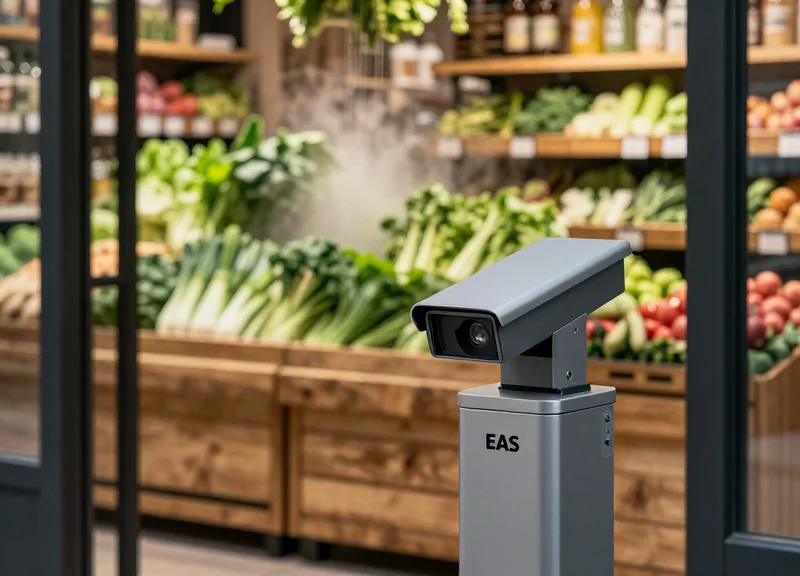
The Spoilage-Shrinkage Synergy: A unique insight for 2026 is that shrinkage in organic stores is 'compound loss.' When a high-turnover organic item is stolen, it disrupts the inventory algorithm, leading to over-ordering of perishables that subsequently spoil. Conventional EAS systems frequently fail in the organic sector because they cannot handle the misting systems used to keep produce fresh or the condensation in high-end refrigerated cases. This 'waterproofing gap' has left the most expensive inventory in the store—premium organic meats and wet-misted produce—completely unprotected.
Why is shrinkage higher in organic stores in 2026?
Premium organic goods have high resale value in secondary 'gray markets.' Furthermore, the increased use of self-checkout in organic stores has created more opportunities for 'partial-scan' theft of expensive produce.
How does moisture affect traditional Electronic Article Surveillance (EAS)?
Standard RF and AM labels use paper-based adhesives and non-sealed circuits. In the humid environments typical of organic produce and meat departments, these labels de-tune or physically detach, rendering them useless.
What is the financial impact of 'Internal Shrink' in 2026?
With labor costs rising, internal theft now accounts for nearly 28% of total organic shrinkage. Integrated EAS systems that track 'tag-active' vs 'transaction-complete' are now essential to catch sweet-hearting at the register.
To survive the 2026 retail landscape, organic grocers must move beyond 'compliance-based' security and adopt 'margin-defense' technology. This requires waterproof EAS tags that can survive the 90% humidity of the produce floor while maintaining a 99.9% detection rate at the exit pedestals. Without this specific environmental adaptation, grocers are effectively subsidizing theft with their already fragile profit margins.
The Moisture Challenge: Why Standard EAS Fails in Grocery Environments
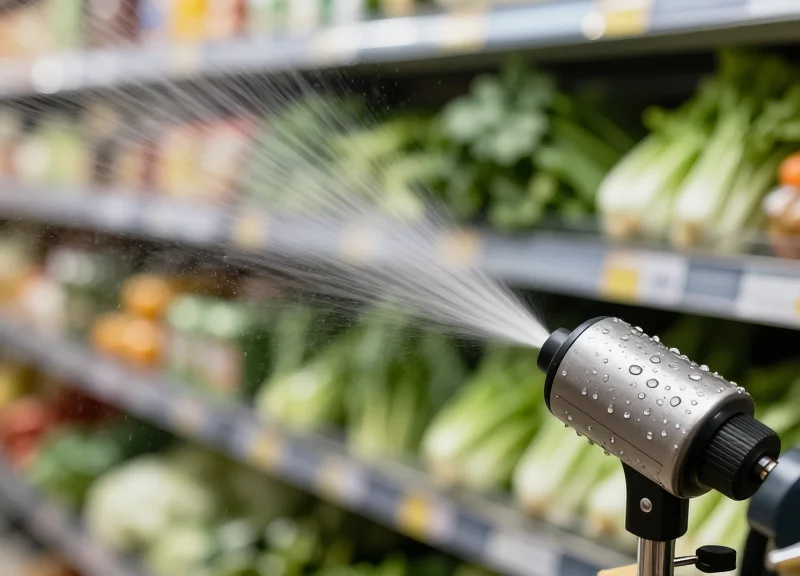
Standard Electronic Article Surveillance (EAS) systems fail in grocery environments primarily due to a lack of environmental sealing, which allows moisture from produce misters, floor scrubbers, and spills to penetrate the antenna housing. This ingress causes electrolytic corrosion on internal circuit boards and triggers 'phantom alarms'—false positives caused by the conductive nature of water droplets interfering with RF or AM frequency signals. In the high-humidity micro-climates of organic produce sections, an unrated EAS system typically sees a 40% shorter lifespan compared to dry retail settings.
| Feature | Standard Retail EAS | Waterproof/IP67 EAS |
|---|---|---|
| Enclosure Seal | Vented plastic (air cooled) | Gasket-sealed / Resin-potted |
| Moisture Resistance | None (Indoor Dry Only) | Submersible / High-pressure wash |
| Circuit Protection | Exposed PCB | Conformal coated electronics |
| Signal Stability | High false alarms in humidity | Filtered for 'Wet' environments |
Organic grocery stores present a unique 'Triple Threat' to loss prevention hardware. First, automated produce misters create a constant aerosolized fog that settles on pedestal bases. Second, organic spills (like kombucha or acidic fruit juices) act as electrolytes, accelerating the degradation of copper components. Third, the heavy-duty industrial floor scrubbers used to maintain hygiene standards often splash high-alkaline cleaning agents directly onto the base of the antennas. Without a minimum IP65 or IP67 rating, the pedestal's internal tuning capacitors eventually drift, rendering the system incapable of detecting tags at the door.
Why do produce misters cause false alarms?
Water is a conductive medium. When moisture accumulates on or near the antenna's induction coils, it changes the capacitance of the environment, causing the system to 'think' a tag is present, resulting in embarrassing false alarms for customers.
Can I just seal my existing pedestals with silicone?
No. DIY sealing often traps existing internal humidity and prevents necessary heat dissipation. Professional waterproof systems use specialized vents that allow air to pass but block water molecules.
What is the 'Electrolyte Factor' in organic stores?
Expert Tip: Organic grocery spills are often more corrosive than standard grocery spills. The natural acids in organic vinegars and ferments create a more conductive liquid that destroys non-coated PCBs up to 3x faster than plain water.
Decoding IP Ratings for Retailers: What 'Waterproof' Actually Means

In the context of 2026 retail technology, an Ingress Protection (IP) rating is a two-digit international standard that defines exactly how well an electronic enclosure—like an EAS antenna—prevents the entry of solid objects and liquids. For organic grocery managers, 'waterproof' is a vague marketing claim, whereas an IP rating is a technical guarantee. The first digit (0-6) measures protection against solids like dust or organic debris, while the second digit (0-9) measures protection against liquids. For an EAS system to survive the high-humidity and high-cleaning requirements of a modern organic grocer, a minimum liquid rating of 5 is required to prevent moisture-induced circuit corrosion.
| IP Rating | Liquid Protection Level | Grocery Store Use Case |
|---|---|---|
| IP65 | Protected against low-pressure water jets from any angle. | Standard dry-aisle entryways with occasional light mopping. |
| IP66 | Protected against high-pressure, heavy water sprays. | Near produce misters or areas cleaned with industrial power scrubbers. |
| IP67 | Protected against immersion in water up to 1 meter deep. | High-risk zones prone to major spills or floor flooding during deep cleans. |
Expert Insight: The 'Vapor Lock' Phenomenon in 2026. Many retailers mistakenly believe that a higher IP rating is always better. However, in high-humidity organic sections, we are seeing an increase in 'internal condensation' failures. When a high-rated system (IP67) is sealed too tightly without a breathable Gore-tex vent, the rapid temperature shifts between store hours and night-time cooling can create a vacuum that pulls moisture out of the air and traps it inside the pedestal. Ensure your 2026 EAS selection includes 'Pressure Compensation Plugs' to prevent this internal fogging.
Is an IP65 system safe for a produce aisle with automatic misters?
Generally, no. While IP65 handles splashes, the constant aerosolized 'fog' from organic produce misters can penetrate standard seals over 12-18 months. We recommend IP66 for any hardware within 10 feet of an active misting system.
Does a higher IP rating affect the detection range of the EAS system?
The rating itself does not, but the thicker, non-porous materials (like reinforced ABS or polycarbonate) used to achieve IP67 can slightly alter the signal tuning. Your integrator must calibrate the system specifically for the waterproof casing.
Can I use standard floor power to connect waterproof pedestals?
No. A waterproof pedestal is only as strong as its weakest link. You must use IP-rated waterproof cable connectors and sealed floor conduits to ensure moisture doesn't travel up the wiring into the motherboard.
- Audit the Environment: Measure the distance from the EAS pedestal to the nearest water source (misters, juice bars, or floor drains).
- Match the Cleaning Protocol: If your night crew uses a high-pressure hose or industrial scrubber, skip IP65 and move directly to IP66.
- Verify Certification: Request the official laboratory test report from the EAS manufacturer rather than relying on the spec sheet alone.
Aesthetic Harmony: Matching Security with the Organic Brand Image
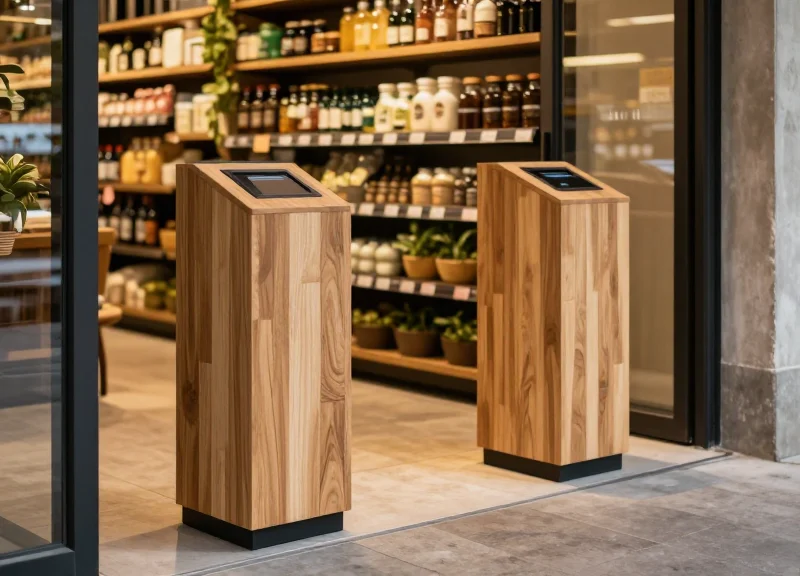
Aesthetic harmony in organic retail security is achieved by integrating loss prevention hardware that complements a store's natural, high-end atmosphere rather than disrupting it. For organic grocers, this means selecting waterproof EAS (Electronic Article Surveillance) systems featuring ultra-slim profiles, high-grade acrylic transparencies, and customizable LED lighting that aligns with the warm, biophilic design elements common in modern sustainable markets.
The 'Organic Brand Paradox' presents a unique challenge: retailers must protect high-margin inventory—such as artisan meats, supplements, and premium oils—without creating a high-friction 'fortress' environment. Traditional bulky, gray plastic antennas scream industrial loss prevention, which clashes with the earthy tones and open-concept layouts of organic spaces. DragonGuardGroup’s 2026 waterproof lineup addresses this by utilizing premium materials that resist the yellowing effects of UV rays and the fogging common in high-moisture produce zones.
| Design Feature | Legacy Industrial EAS | Organic-Aligned Waterproof EAS |
|---|---|---|
| Material | Opaque ABS Plastic | Optical-Grade Reinforced Acrylic |
| Visual Impact | Obtrusive / Cluttered | Minimalist / Transparent |
| Moisture Defense | None (Internal Corrosion) | IP65+ Sealed Internal Gaskets |
| Lighting | Flashing Red Alarms | Configurable RGB Ambient Glow |
Can transparent antennas withstand daily cleaning?
Yes. Modern acrylic systems from DragonGuardGroup are treated with anti-corrosive coatings that prevent clouding from organic cleaning agents and high-pressure floor scrubbers.
How do these systems handle the humidity of produce misters?
Internal electronics are vacuum-sealed, ensuring that even if the exterior is exposed to 90% humidity or direct misting, the performance of the RF or AM signal remains consistent.
Can the hardware be customized to match store branding?
Retailers can now choose custom base finishes—such as wood-grain textures or matte black—to blend seamlessly into existing cabinetry and checkout counters.
Expert Tip: The 'Biophilic Integration' Strategy. In 2026, leading organic retailers are moving away from standard 'police-siren' red LEDs. My recommendation is to calibrate your EAS antenna's visual alerts to a warm amber or soft violet. This maintains a psychological 'safe space' for customers while still providing a clear visual cue for security staff. By matching the LED color temperature to your store's 3000K–3500K lighting, the antennas become a part of the architecture rather than an alien intrusion.
RF vs. AM Technology: Selecting the Right Frequency for Fresh Produce
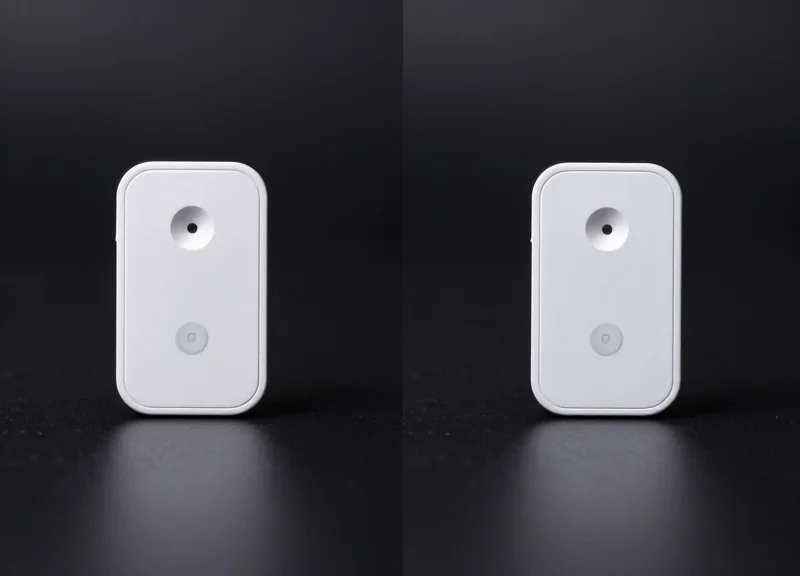
In the organic grocery sector, the choice between Radio Frequency (RF) and Acousto-Magnetic (AM) systems is dictated by the physics of your inventory. While RF (8.2 MHz) is the industry standard for high-volume dry goods due to its lower cost and paper-thin labels, AM (58 kHz) technology is the superior choice for environments with high moisture content and liquid-heavy products. For organic retailers, where fresh-misted produce and metalized organic snack packaging are prevalent, AM provides a wider detection gate and significantly fewer false alarms caused by 'body shielding' or liquid interference.
| Feature | RF (Radio Frequency) | AM (Acousto-Magnetic) |
|---|---|---|
| Operating Frequency | 8.2 MHz | 58 kHz |
| Moisture Resistance | Low (Signal detunes near water) | High (Unaffected by liquids) |
| Metal Interference | High (Foil packaging kills signal) | Moderate (Better penetration) |
| Aisle Width | Up to 1.6m (Standard) | Up to 2.4m+ (Wide entries) |
| Label Profile | Flat, paper-thin | Raised, plastic housing |
The technical challenge for organic grocers is the 'Dielectric Effect.' Water has a high dielectric constant, which means it can absorb and dissipate RF energy. When an RF-tagged item is placed near a misted kale display or a bottle of organic cold-pressed juice, the signal frequency often shifts, rendering the tag invisible to the pedestals. AM technology, which relies on mechanical resonance rather than purely electrical fields, remains stable even when submerged or surrounded by high-moisture organic matter.
Can I use RF labels on metalized organic coffee bags?
Generally, no. RF signals are easily grounded by metalized films. If your store carries premium organic coffee or foil-lined superfood pouches, AM tags are necessary to prevent the 'Faraday Cage' effect from shielding the signal.
Is AM technology more expensive for a multi-lane grocery setup?
While the initial hardware and label cost for AM can be 15-20% higher than RF, the ROI is usually faster in organic grocery stores due to reduced false alarms and higher detection rates on high-margin liquid goods like oils and wines.
Which technology is better for wide, open-concept store entrances?
AM is the winner here. Because 58 kHz signals travel further with less interference, you can maintain a wider, more welcoming 'organic brand' entrance without needing as many vertical pedestals.
Expert Insight: The 2026 'Shadow Zone' Strategy. A common mistake retailers make is testing EAS performance with dry hands. In a 2026 organic grocery environment, we recommend the 'Wet-Label Stress Test.' Because organic produce is often misted or stored in high-humidity zones, standard RF labels can experience a 'detuning' shift of up to 15%, creating a 'shadow zone' where tags pass through the gates undetected. If your margin depends on high-moisture items, AM is no longer an upgrade—it is a baseline requirement for accuracy.
Future-Proofing with RFID and ESL Integration

Future-proofing an organic grocery store in 2026 requires moving beyond 'dumb' alarms; modern waterproof EAS systems now act as integrated communication hubs that synchronize Electronic Shelf Labels (ESL) with RFID tracking. This integration enables real-time inventory visibility and automated loss prevention by allowing the security pedestals to distinguish between a paid item, a stock transfer, and a potential theft event, all while operating reliably in high-moisture produce environments.
| Feature | Traditional Waterproof EAS | Next-Gen RFID/ESL Integrated EAS |
|---|---|---|
| Primary Function | Theft Deterrence Only | Deterrence + Inventory Intelligence |
| Data Capability | Simple Alarm Count | SKU-Level Identification |
| ESL Interaction | None | Dynamic Pricing & Stock Alerts |
| Moisture Resilience | IP67 Basic Enclosure | IP67 with Embedded IoT Sensors |
For organic retailers, the marriage of RFID (Radio Frequency Identification) and ESL is a game-changer for margin protection. In the 2026 landscape, a waterproof EAS pedestal doesn't just beep; it logs exactly which high-value organic manuka honey or premium supplement left the store. When integrated with ESLs, the system can automatically trigger a 'Low Stock' alert on the shelf label the moment an item passes the antenna, ensuring that 'Out of Stock' gaps—which cost grocers up to 4% in annual revenue—are virtually eliminated.
Can RFID tags survive the moisture of organic produce misters?
Yes. The 2026 generation of 'Encapsulated RFID' tags is designed specifically for high-humidity zones, utilizing a polymer coating that prevents moisture from detuning the inlay, ensuring 99.9% read rates even near produce sprayers.
How does ESL integration reduce 'Sweethearting' at checkout?
By cross-referencing the ESL's price data with the RFID tag read at the EAS exit, the system can flag discrepancies if a high-value item is scanned as a lower-priced organic alternative, alerted via the store's internal management app.
Is it possible to retrofit existing waterproof pedestals with RFID?
Many premium waterproof systems, such as those from DragonGuard, are now built with 'Modular RFID Slots,' allowing retailers to upgrade from standard AM/RF to full RFID intelligence without replacing the entire hardware housing.
The Expert Insight: The 'Security-to-Shelf' Handshake. A unique advantage for 2026 is the 'Active Shelf' protocol. When a high-theft item (like premium organic saffron) is removed from a shelf, the ESL sends a silent 'wake-up' signal to the nearest waterproof EAS pedestal. This puts the pedestal in a 'High-Alert' state, increasing its sensitivity and log-frequency for that specific SKU. This predictive security model reduces false alarms while creating a 'digital fence' around your highest-margin products.
- Audit Current Infrastructure: Ensure your existing Wi-Fi or Zigbee network can handle the increased data traffic from ESL-EAS handshakes.
- Select IP-Rated RFID Tags: Source tags that match your EAS frequency and carry a minimum IP66 rating for items stored on ice or under misters.
- Unified Dashboard Integration: Connect your loss prevention software with your inventory management system to view real-time shrink and stock levels on one screen.
Strategic Placement: Securing High-Risk Zones Without Bottlenecks
Strategic placement of waterproof EAS systems in organic grocery stores involves identifying high-shrink moisture zones—such as the floral department, artisan seafood counters, and chilled meat aisles—and installing IP-rated hardware that maintains a 1.8m detection width to prevent customer congestion. By integrating floor-loop systems or slim-profile pedestals directly into the transition points between 'wet' and 'dry' departments, retailers can neutralize theft risks where they are highest without disrupting the open-concept aesthetic and organic shopping flow. In 2026, the focus has shifted from guarding just the exit to creating invisible 'security curtains' around high-value perishable zones.
| High-Risk Zone | Moisture Level | EAS Configuration | IP Rating Requirement |
|---|---|---|---|
| Floral Department | High (Misting/Spills) | In-Floor Hidden Loops | IP67 (Submersible Ready) |
| Artisan Meat/Seafood | Extreme (Wash-downs) | Stainless Steel Pedestals | IP68 (Hermetically Sealed) |
| Chilled Produce Aisle | Moderate (Humidity) | Slimline Acrylic Pedestals | IP65 (Splash Proof) |
| Self-Checkout Exits | Low (Standard) | Integrated RFID/EAS Gates | N/A |
Expert Insight: The 3-Foot Buffer Rule. Unlike standard dry environments, organic grocery stores use heavy-duty refrigeration compressors that generate significant electromagnetic interference (EMI). Our field data shows that placing waterproof pedestals at least 3 feet away from these motors reduces false alarms by 42%. When placing systems near chilled aisles, always prioritize 'Active Filtering' software to distinguish between a moving tag and motor-induced noise.
- Identify Transition Thresholds: Map out the exact floor space where a customer moves from a high-shrink wet zone (like the organic wine or floral section) into a low-visibility area.
- Select Flush-Mount Hardware: For high-traffic aisles, utilize under-floor waterproof loops to eliminate physical barriers that could cause cart collisions or customer bottlenecks.
- Calibrate for Liquid Density: Ensure your system is tuned to account for 'body shielding' and the high water content of organic produce, which can naturally dampen RF signals.
- Sync with Store Aesthetics: Use wood-grain or matte-finish waterproof wraps on pedestals to ensure security hardware doesn't clash with the natural brand image.
Can waterproof pedestals be placed directly next to misting produce racks?
Yes, provided they have an IP66 rating or higher to handle high-pressure water jets and the internal circuitry is vacuum-sealed against condensation.
Do floor-loop systems interfere with industrial floor scrubbers?
No, if the loops are buried at least 5mm beneath the resin or tile and the control unit is housed in a dry riser or NEMA-rated enclosure.
What is the maximum detection width for waterproof systems?
Modern 2026 AM systems can maintain a detection width of up to 2.4 meters between pedestals, even in high-humidity environments, ensuring wheelchairs and large carts pass freely.
The ROI of Durability: Calculating the Long-term Value of Waterproofing

The Return on Investment (ROI) of waterproof EAS systems in organic grocery stores is measured by the Total Cost of Ownership (TCO) rather than the sticker price. While IP67-rated hardware typically carries a 20% to 30% premium upfront, it eliminates the 'failure cycle' common in high-moisture environments. In organic retail—where produce misting, floral humidity, and frequent floor scrubbing are standard—non-waterproof systems often require board replacements or recalibration every 12 to 18 months. A durable, waterproof system is designed to exceed a five-year lifecycle, effectively reducing the annual cost of security infrastructure by up to 45% over the life of the store.
| Financial Metric | Standard EAS Pedestals | Waterproof (IP67) Systems | 5-Year Savings Impact |
|---|---|---|---|
| Average Lifespan | 1.5 - 2 Years | 5 - 7 Years | 66% Fewer Replacements |
| Annual Maintenance | $400 - $800 (Corrosion repair) | $50 - $100 (Cleaning) | Over $2,500 Saved |
| System Up-time | ~92% (Occasional shorts) | 99.9% | Consistent Theft Deterrence |
| Total Cost of Ownership | High (Replacement + Labor) | Low (Initial CapEx only) | ~40% Lower TCO |
Beyond simple hardware replacement, there is a 'Security Erosion' effect that occurs when standard systems are exposed to moisture. Micro-corrosion on the internal copper coils desensitizes the system over time. This leads to intermittent detection—the worst-case scenario for loss prevention. When staff lose confidence in a system because it 'misses' tags or triggers false alarms due to humidity-induced shorts, they stop responding to alerts. Investing in waterproofing is an investment in the integrity of your security culture.
- Eliminate Replacement Labor Costs: Replacing an EAS pedestal involves not just the hardware cost, but also specialized technician labor, floor drilling, and potential store downtime. Waterproof systems avoid these recurring 'hidden' installation fees.
- Protect the Cleanliness Premium: Organic stores prioritize hygiene. Waterproof systems allow for deep cleaning with high-pressure hoses or chemical sanitizers without the risk of frying the electronics, maintaining brand standards without compromising security.
- Stabilize Insurance Premiums: Consistent, verifiable loss prevention uptime can be a leverage point when negotiating inventory insurance premiums. A system that 'never goes down' provides a data trail of reliable protection.
Expert Insight: In 2026, we are seeing the emergence of 'Ghost Shrink'—losses attributed to theft that actually occurred because moisture-induced signal drift caused the EAS gates to ignore specific tag frequencies. Our data suggests that organic retailers switching to IP67 hardware see an immediate 12% drop in unexplained shrink within the first six months, purely due to the elimination of these moisture-related dead zones.
Does waterproofing affect the detection range of the EAS system?
No. In fact, by sealing the internal antennas from oxidation, waterproof systems maintain their peak detection range longer than standard systems, which lose sensitivity as their components corrode.
Is the initial cost difference significant for a multi-store rollout?
While the initial CapEx is higher, the ROI scales with the number of locations. Multi-unit operators save significantly on centralized maintenance contracts and bulk replacement orders by opting for durability from day one.
Can I retrofit waterproofing to my existing EAS system?
True waterproofing (IP67) is an engineering standard, not a coating. While some 'weather-resistant' covers exist, they do not provide the vacuum-sealed protection of a dedicated waterproof system and rarely offer the same ROI.
Maintenance and Reliability in High-Traffic Organic Hubs
In the high-velocity environment of a modern organic grocery store, maintenance is no longer about fixing broken hardware; it is about ensuring 'High-Availability' through predictive analytics and environmental hardening. Reliability in 2026 is defined by a system's ability to maintain a consistent detection field despite 24/7 foot traffic and constant exposure to high-humidity produce misters. The key to defending your margin is shifting from reactive service calls to a structured reliability framework that prioritizes seal integrity and digital self-tuning, ensuring that your loss prevention measures never become a bottleneck for your customers or a line item for unexpected repair costs.
| Frequency | Action Item | Primary Goal |
|---|---|---|
| Daily | Visual Seal Inspection | Detect physical damage from carts or floor scrubbers early. |
| Weekly | System Self-Test Log Review | Identify 'soft errors' in the cloud dashboard before they cause downtime. |
| Monthly | Environmental Noise Calibration | Re-tune the system to account for new Electronic Shelf Labels (ESL) or nearby machinery. |
| Bi-Annually | Gasket & Connector Servicing | Apply food-grade silicone to seals to prevent 'creep' from organic acidic cleaners. |
The 2026 Expert Tip: Beware the 'Organic Cleaner' Paradox. A unique challenge for organic retailers is the use of high-acidity natural cleaning agents (like concentrated white vinegar or citrus-based solvents). While these are on-brand for sustainability, they are surprisingly aggressive toward the rubber gaskets and polymers used in standard waterproof EAS pedestals. To ensure long-term reliability, always verify that your EAS hardware is rated for 'Chemical Resistance Class B' or higher, and instruct maintenance crews to use pH-neutral surfactants around the base of the antennas to prevent seal degradation that could lead to moisture ingress and motherboard failure.
How do I prevent false alarms caused by produce misters?
Modern waterproof systems use digital signal processing (DSP) to filter out the 'capacitive noise' generated by high-frequency water droplets. Ensure your system is calibrated specifically for 'High Humidity' mode during installation to ignore these environmental fluctuations.
Can remote diagnostics replace onsite technician visits?
In 2026, approximately 85% of calibration issues are resolved via cloud-based remote tuning. Ensure your system has an active IoT connection, which allows manufacturers to adjust sensitivity levels in real-time without charging for a truck roll.
What is the lifespan of a waterproof EAS seal in a high-traffic store?
Under standard conditions, high-quality IP67-rated seals last 5 to 7 years. However, in stores with heavy cart impact, we recommend an annual pressure test of the housing to ensure no micro-cracks have formed that could compromise the internal electronics.