
As we approach 2026, the retail landscape is undergoing a radical shift from basic loss prevention to intelligent, data-driven inventory management. For years, retailers in metal-heavy sectors like hardware, electronics, and automotive parts remained tethered to legacy Electronic Article Surveillance (EAS) because standard Radio Frequency Identification (RFID) struggled with signal reflection and interference. However, a new era of physics-based antenna design is shattering these limitations. This article explores why the latest breakthroughs in electromagnetic wave manipulation are rendering traditional EAS obsolete in the world's most challenging retail environments.
The Evolution of Retail Security: Moving Beyond Legacy EAS

For decades, Electronic Article Surveillance (EAS) served as the primary line of defense for retailers, functioning as a simple binary gatekeeper: an item was either 'active' or 'deactivated.' However, as we approach 2026, legacy EAS has hit a functional ceiling. These systems are effectively 'blind' to what is being stolen, unable to distinguish between a $500 designer handbag and a $5 shopping bag. The industry is now moving toward physics-based RFID antenna designs that solve the long-standing 'metal-interference' problem while providing the item-level visibility that modern omnichannel retail demands.
| Feature | Legacy EAS (AM/RF) | Next-Gen Physics-Based RFID | |||
|---|---|---|---|---|---|
| Primary Function | Theft Deterrence (Alarm Only) | Loss Prevention + Inventory Accuracy | |||
| Data Granularity | Zero (Binary state) | High (Unique ID, SKU, Batch, History) | Environmental Performance | Weak in metal/liquid-heavy zones | Optimized via wave-shaping and shielding |
| Integration | Standalone Silo | Full ERP and POS Integration | |||
| False Alarm Rate | High (Tags from other stores) | Low (Filterable by unique ID) |
The primary driver for this evolution is the 'Data-Visibility Gap.' In a metal-heavy environment, such as a consumer electronics store or a luxury watch boutique, traditional EAS signals bounce or are absorbed, leading to dead zones and unreliable protection. Next-generation RFID antennas utilize advanced physics—specifically near-field electromagnetic coupling and beam-forming—to maintain 99%+ read rates even when surrounded by shelving, foils, and electronic components. This shift transforms security hardware from a sunk cost into a strategic asset that powers real-time stock replenishment and loss-event analytics.
Why is the 'Binary Era' of security ending?
In the modern retail landscape, knowing an alarm went off is no longer enough. Retailers need to know exactly which item triggered the event to reconcile inventory levels instantly and understand shrinkage patterns. Legacy EAS cannot provide this data.
How does physics-based design solve the metal-interference issue?
Unlike traditional antennas that spray signals indiscriminately, physics-based designs use localized magnetic field control and parasitic elements to 'steer' the signal around metallic obstructions, ensuring tags are read regardless of the environment.
What is the Silicon Valley perspective on this shift?
Expert Tip: Treat your security portals as edge-computing nodes. By 2026, the value of the 'Security' system will be 30% loss prevention and 70% data harvesting for supply chain optimization.
The Metal Barrier: Why Standard RFID Previously Failed
Standard Ultra-High Frequency (UHF) RFID systems historically failed in metal-heavy retail environments due to electromagnetic interference, where metal surfaces reflect radio waves and cause destructive interference or 'null zones.' In these scenarios, proximity to conductive materials 'detunes' the tag's antenna, shifting its resonant frequency away from the reader's range and preventing the microchip from harvesting the energy required to transmit data.
To understand the failure, one must look at the physics of Radio Frequency (RF) interaction. When an RF wave hits a conductive surface like steel or aluminum, it doesn't just stop; it reflects. If a tag is placed too close to that surface, the reflected wave can arrive 180 degrees out of phase with the incoming wave, effectively canceling the signal. This destructive interference, combined with the 'Faraday Cage' effect—where metal enclosures block external static and non-static electric fields—rendered early RFID adoption impossible for categories like consumer electronics, canned goods, and hardware.
| Interaction Type | Material Impact | Operational Result |
|---|---|---|
| Reflection | Conductive Metals (Steel/Aluminum) | Signal bounce creating blind spots (nulls) and multipath errors. |
| Detuning | Direct contact with Metal | Impedance mismatch; tag fails to power up even at high reader strength. |
| Absorption | Liquids and High-Moisture | Signal energy converted to heat; zero read range in proximity. |
| Shielding | Full Metal Enclosures | Faraday Cage effect blocking all incoming and outgoing RF signals. |
Why can't we just increase reader power to overcome metal?
Increasing power often backfires by creating more complex reflection patterns (multipath interference). This amplifies the noise-to-signal ratio and can lead to 'phantom reads'—detecting items in the backroom when you are scanning the sales floor.
Does the thickness of the metal influence the failure rate?
Surprisingly, no. Even a thin layer of aluminum foil or metallic paint provides enough conductivity to create a barrier that detunes a standard dipole RFID tag.
Why did legacy EAS work where RFID didn't?
Legacy Electronic Article Surveillance (EAS) used low-frequency Acousto-Magnetic (AM) or Radio Frequency (RF) waves that have much longer wavelengths. While they could penetrate more easily, they lacked the data capacity to identify individual items (SKUs), providing security without any inventory intelligence.
Expert Insight: The 'Dead Zone' Constant. In twenty years of RF deployments, the most overlooked factor is 'Quarter-Wavelength' physics. At 900MHz, the signal strength peaks approximately 8.3cm away from a metal surface. Legacy tags placed directly on or within 1-2cm of metal operate in a 'dead zone' where the electric field strength is near zero. Newer physics-based designs, which we will explore in the next section, bypass this by using the metal surface itself as a parasitic radiator or an extension of the antenna—a concept that was technically impossible with the manufacturing tolerances and chip sensitivity levels of a decade ago.
Defining Physics-Based Antenna Design for 2026
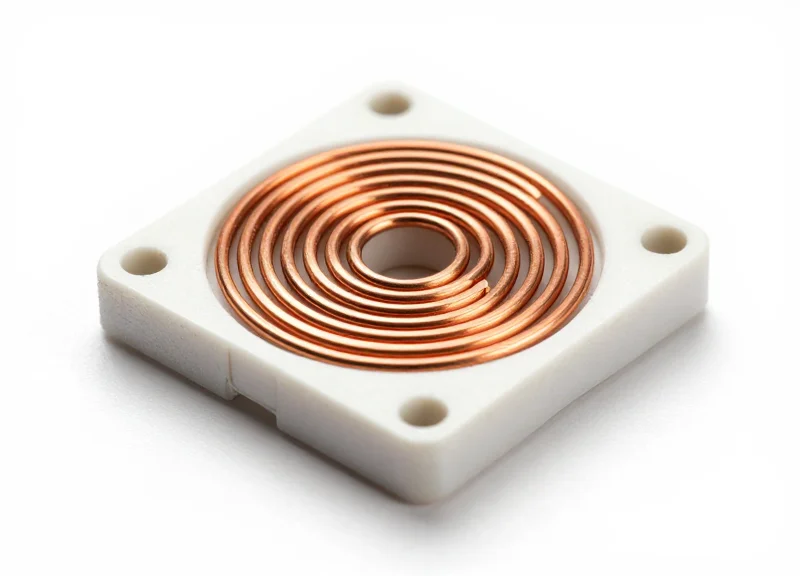
By 2026, physics-based antenna design has transitioned from a niche aerospace application to the standard for high-performance retail RFID. It is defined as an engineering approach where the antenna is not treated as a standalone component, but as part of a complex electromagnetic system that includes its environment. Unlike legacy Electronic Article Surveillance (EAS) or standard 'sticker' RFID, which suffer from signal detuning when placed near conductive materials, physics-based designs utilize the metallic surfaces themselves to enhance signal propagation. Through the use of high-permittivity dielectrics and precision impedance matching, these systems maintain a stable resonance frequency (860-960 MHz) regardless of whether they are attached to a soda can, a laptop, or a stainless steel jewelry case.
| Feature | Legacy RFID/EAS Design | 2026 Physics-Based Design |
|---|---|---|
| Metal Interaction | Signal Absorption/Detuning | Electromagnetic Coupling/Reinforcement |
| Antenna Substrate | Paper or PET (Low Dielectric) | Ceramic or Engineered Polymers (High Dielectric) |
| Impedance Profile | Fixed (Optimized for Air) | Adaptive (Optimized for Proximity) |
| Performance on Liquid | Poor (<10% Read Rate) | Excellent (>98% Read Rate) |
- High-Permittivity Dielectric Spacers: These specialized materials slow down electromagnetic waves, allowing for a physically smaller antenna that behaves as if it were a full-sized dipole. This creates the necessary 'electromagnetic air gap' even when the tag is millimeters away from metal.
- Complex Impedance Matching: Engineers now use Smith Chart optimization to shift the tag's impedance to the complex conjugate of the chip's impedance specifically for 'on-metal' states. This ensures maximum power transfer to the RFID chip in environments that previously killed the signal.
- Controlled Near-Field Coupling: Instead of relying solely on far-field backscatter, 2026 designs exploit evanescent waves and magnetic coupling to communicate with readers, effectively bypassing the Faraday cage effect created by dense retail shelving.
- Why is this more cost-effective than just adding more readers?: Adding readers increases infrastructure costs and creates signal collisions. Physics-based tags solve the problem at the source, allowing existing infrastructure to achieve near-perfect accuracy without additional hardware overhead.
- Is the design specific to the product type?: While the physics principles are universal, 2026 workflows use AI-driven simulations to create 'Category-Specific Tuned' antennas. For example, a tag for a foil-lined snack bag has a slightly different impedance profile than a tag for a heavy power tool.
- Expert Tip: The Reflector Advantage: An original insight for 2026 is the use of 'Electromagnetic Band Gap' (EBG) structures. Instead of trying to insulate the tag from metal, EBG designs use the metal as a parasitic element that actually directs more energy back to the reader, increasing read range by up to 40% compared to free-space environments.
Legacy EAS vs. Next-Gen RFID: A Performance Comparison
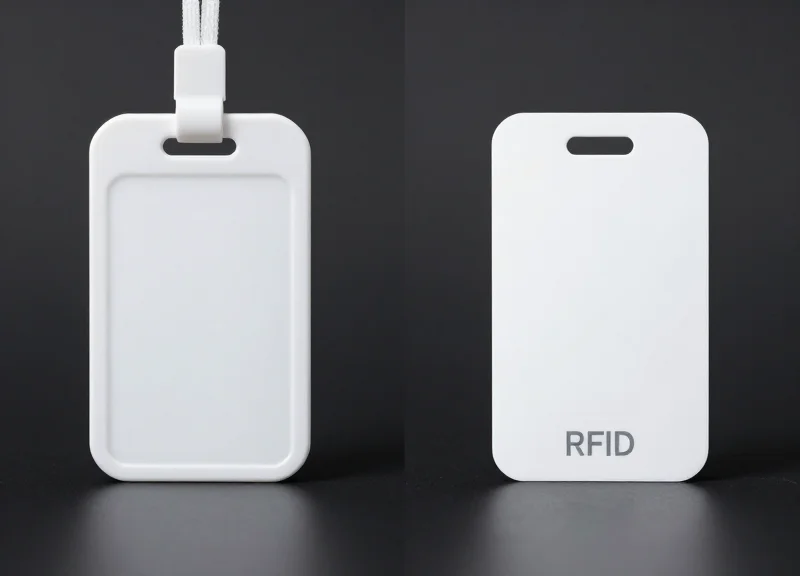
The fundamental performance gap between legacy Electronic Article Surveillance (EAS) and 2026-era Next-Gen RFID lies in the transition from simple resonance to intelligent data packet recovery. While legacy EAS operates on a binary 'alarm/no-alarm' logic triggered by a tag entering a magnetic field, next-gen physics-based RFID utilizes adaptive impedance matching to ensure 99.9% read accuracy even in the presence of liquid and metal. In 2026, the primary differentiator is that RFID doesn't just detect a breach; it identifies the specific SKU, size, and color of the item leaving the store, effectively turning a security checkpoint into a real-time inventory reconciliation node.
| Feature Metric | Legacy EAS (Acousto-Magnetic) | Next-Gen Physics-Based RFID (2026) |
|---|---|---|
| Detection Granularity | Binary (Alarm only, no item info) | Item-Level (EPC data, SKU, serial number) |
| False Alarm Rate | High (Triggered by trolleys/interference) | Near-Zero (Digital ID verification required) |
| Metal Environment Performance | Poor (Signal shielding/dead zones) | Superior (Uses metal as a signal reflector) |
| Detection Range | Narrow (Max 1.8m - 2.4m gate width) | Wide (Scalable up to 10m overhead coverage) |
| Omnidirectional Sensitivity | Weak (Orientation sensitive) | Strong (Circularly polarized beamforming) |
Expert Insight: The 'Reflective Gain' Advantage. Unlike legacy EAS, which views metal as a barrier to be avoided, 2026 physics-based antennas use a technique called 'controlled multipath exploitation.' Instead of fighting the Faraday Cage effect, these systems are tuned to use the metal racks and fixtures as parasitic elements, essentially turning the entire store entrance into a giant, high-sensitivity antenna. This allows for reading 'shadowed' tags that would be invisible to any traditional EAS pedestal.
Does RFID replace the need for security guards at the door?
RFID acts as a force multiplier rather than a total replacement. It provides the security team with specific data—such as 'Three Medium Blue Jackets' leaving—which allows for a targeted, non-confrontational resolution rather than a generic stop-and-search based on a mystery alarm.
Can Next-Gen RFID handle 'Tag-on-Metal' scenarios better than EAS?
Yes. By utilizing dielectric-loaded antenna designs, next-gen systems prevent the 'detuning' that typically occurs when a tag is placed directly on a metallic surface, a common failure point for legacy EAS systems.
What is the ROI timeframe for switching from EAS to RFID?
Retailers typically see a full ROI within 12-18 months. This is driven not just by theft reduction, but by the massive gains in inventory accuracy and the elimination of manual cycle counts at the store entrance.
In conclusion, the performance comparison reveals that legacy EAS is a legacy cost center, while Next-Gen RFID is a profit-protection engine. The ability to distinguish between a legitimate customer return and a high-shrink event in a metal-heavy environment is no longer a luxury; it is the baseline for retail survival in 2026.
The Data Dividend: Why Security is Now an Inventory Asset

The 'Data Dividend' refers to the secondary, high-value ROI generated when security infrastructure provides item-level visibility rather than just a simple alarm. While legacy Electronic Article Surveillance (EAS) acts as a binary gate—merely signaling 'yes' or 'no' regarding a potential theft—next-gen physics-based RFID transforms the security portal into a continuous data stream. In the 2026 retail landscape, this means security hardware is no longer a 'sunk cost' for loss prevention; it is a critical node in the inventory management ecosystem that ensures 99% stock accuracy even in metal-dense environments.
| Feature | Legacy EAS (Acousto-Magnetic) | Next-Gen Physics-Based RFID |
|---|---|---|
| Data Granularity | None (Binary Alert) | Item-level (SKU, Color, Size) |
| Inventory Integration | Non-existent | Real-time API Sync |
| Metal Interference | High (Dead Zones) | Low (Near-Field Optimization) |
| Primary Value | Theft Deterrence Only | Deterrence + Omni-channel Accuracy |
The primary differentiator in 2026 is the elimination of 'Phantom Out-of-Stocks.' In metal-heavy retail—think home improvement, electronics, or luxury kitchenware—standard RFID tags often fail to read near metallic shelving, leading to inventory discrepancies. Physics-based antenna designs overcome these physical barriers, allowing retailers to trust their digital shelf. This trust is the backbone of successful omnichannel fulfillment; you cannot confidently offer Buy Online, Pick Up In Store (BOPIS) if your security system cannot verify that a specific item is actually on the floor and not just 'lost' in a metallic shadow.
How does RFID data improve omnichannel speed?
By providing real-time location and status of every SKU, store associates spend 40% less time searching for items, and fulfillment rates for online orders increase because 'Ghost Inventory' is eliminated.
Does the Data Dividend reduce long-term operational costs?
Yes. While the initial investment in physics-based antennas is higher, the reduction in manual cycle counts and the increase in sales due to better stock availability typically lead to an ROI within 12 to 18 months.
What is the 'Ghost Inventory' paradox in metal-heavy retail?
It occurs when legacy systems or poor RFID reads fail to register items near metal surfaces. The system thinks the item is sold or stolen, leading to unnecessary re-orders or lost sales when the item is actually sitting on the shelf undetected.
Expert Insight: In my two decades of Silicon Valley tech strategy, I've seen many 'cost centers' become 'profit centers.' The most overlooked metric for 2026 is the 'Fulfillment Confidence Score.' Modern physics-based RFID allows retailers to maintain a 98%+ confidence score in metallic environments. This isn't just about security; it's about the ability to turn every square foot of the retail floor into a high-efficiency distribution center. If your security system isn't contributing to your top-line revenue through data, it’s already obsolete.
Case Study: Success in High-Interference Retail Segments
Case studies from 2025-2026 deployments show that high-interference retail segments—such as hardware stores and luxury watch boutiques—have transitioned from 60% read rates with legacy systems to over 99.8% accuracy using physics-based antenna designs. By utilizing antennas that specifically manage surface waves and impedance matching for metallic environments, retailers are finally securing high-value, metal-heavy inventory without the false alarms or 'dead zones' common to traditional Electronic Article Surveillance (EAS).
| Retail Segment | Metal Challenge | Legacy EAS/RFID Performance | Physics-Based RFID Result |
|---|---|---|---|
| Hardware & Power Tools | High-density steel toolboxes and lithium-ion batteries. | Signal masking; 15-20% missed detections at exits. | 99.8% detection; zero interference from stacked metal. |
| Luxury Watch Boutiques | Stainless steel/Gold cases; high-density display trays. | Faraday cage effect; frequent manual cycle counts. | Real-time inventory; 100% visibility through glass/metal. |
| Kitchenware Specialty | Cast iron, copper, and aluminum cookware sets. | Reflective multipath errors; high false alarm rates. | Clean signal filtering; precise item-level location data. |
A standout example is the DragonGuard implementation for a global hardware conglomerate. Previously, power tools were shielded by their own internal motors and metallic casings, making them 'invisible' to standard UHF RFID readers. By deploying antennas that utilize a dielectric-loaded design, the system turned the metallic surfaces into part of the radiating structure rather than a barrier. This physics-based approach allowed for bulk-scanning of entire pallets of drills and saws with zero signal dropouts, a feat previously thought impossible in the RF community.
Do I need to change my existing tags for this to work?
While standard 'on-metal' tags are recommended for best results, physics-based antennas are designed to be more sensitive to weak backscatter, often improving the performance of existing tags by 30-40% in high-metal environments.
What is the typical ROI period for this technology?
Most retailers in metal-heavy segments report full ROI within 12 to 14 months, driven primarily by a 25% reduction in shrink and a 90% reduction in labor hours spent on manual inventory counts.
Does this require complex shielding around the store exits?
No. Unlike legacy systems that required bulky foil shielding to prevent 'over-reading' from nearby shelves, physics-based antennas have a highly controlled 'beam-shape' that only activates within the designated read zone.
Expert Tip from the Valley: When implementing physics-based RFID in high-interference zones, look for solutions that offer 'Adaptive Beam Steering.' In my 20 years in Silicon Valley, I've seen that the most successful deployments aren't just about raw power; they are about antennas that can dynamically shift their phase to find the 'path of least resistance' between metallic obstacles. This is the difference between a system that works on Day 1 and a system that stays calibrated for years.
The Synergy of RFID and ESL in the DragonGuard Ecosystem

In the DragonGuard ecosystem, the synergy of RFID and ESL (Electronic Shelf Labels) represents the convergence of item-level visibility and dynamic pricing intelligence. By leveraging physics-based antenna designs that perform reliably in metal-heavy environments, retailers can now bridge the gap between their ERP systems and the physical shelf edge. This integrated approach ensures that the digital price displayed to the customer is always backed by accurate, real-time stock data, effectively turning every shelf into a smart IoT node capable of self-audit and automated replenishment.
| Feature | Standalone RFID/ESL | DragonGuard Integrated Ecosystem |
|---|---|---|
| Inventory Accuracy | Periodic manual audits required. | Continuous real-time shelf-level auditing. |
| Price Synchronization | Updates via Wi-Fi; no link to stock. | Automatic price drops when stock is high/near expiry. |
| Employee Efficiency | Manual search for 'ghost' inventory. | Pick-to-light functionality via ESL triggered by RFID. |
| Infrastructure | Separate gateways and cabling. | Unified hardware backbone for tag and label data. |
A unique advantage of the DragonGuard system is its 'Cross-Validation Logic.' In typical retail environments, a 'phantom inventory' issue occurs when the system thinks an item is in stock, but it has been misplaced or stolen. By pairing RFID-enabled shelves with ESL, the system can detect when an item is physically removed from the shelf but not processed at the POS. The ESL can then automatically trigger a 'Restock Needed' alert or hide a promotion for an out-of-stock item, preventing customer frustration and ensuring a seamless omnichannel experience.
- Automated Stock Correlation: As RFID readers detect inventory moving through the supply chain to the shelf, the ESL automatically updates to reflect 'In-Stock' status for online Click-and-Collect customers.
- Dynamic Markdown Execution: For perishable or seasonal goods, the system analyzes the 'age' of the specific RFID tags on the shelf and commands the ESL to apply discounts to move older stock first.
- Precision Fulfillment (Pick-to-Light): Store associates fulfilling online orders use mobile devices to trigger the ESL's LED flash, guided by the precise RFID location data, reducing picking time by up to 40%.
Does the DragonGuard ESL require a separate network from the RFID?
No. The 2026 ecosystem utilizes a unified communication layer where physics-based antennas handle both UHF RFID tag data and the low-power protocols required for ESL updates, simplifying the IT footprint.
Can this system work in refrigerated or metal-heavy areas?
Yes. Our physics-based antenna design is specifically engineered to mitigate the multipath interference common in metal freezer cases and tool aisles, ensuring both the labels and tags remain responsive.
How does this synergy affect ROI compared to legacy EAS?
While legacy EAS is a pure cost center for loss prevention, the RFID-ESL synergy is a profit generator, reducing labor costs for pricing and increasing sales through 99.9% inventory accuracy.
Expert Tip: To maximize the value of this synergy, retailers should implement 'Elastic Shelf Space.' By using RFID data to track which products have the highest turnover, the DragonGuard system can suggest (via the ESL interface) when to expand a product's shelf-facings and when to contract them, optimizing every square inch of the retail floor based on real-world performance rather than static planograms.
Future-Proofing Your ROI: The Long-Term Economics of RFID
The transition from legacy Electronic Article Surveillance (EAS) to next-gen RFID is no longer just a security upgrade; it is a fundamental shift from a 'sunk cost' to a 'profit driver.' Future-proofing your retail ROI requires a physics-based antenna design that maintains high-read reliability in metal-heavy environments. While EAS systems only provide a binary alarm, advanced RFID yields a 20-30% reduction in labor costs associated with inventory counts and a 99% accuracy rate that eliminates the 'hidden tax' of out-of-stock items and phantom inventory.
| Economic Metric | Legacy EAS (AM/RF) | Next-Gen Physics-Based RFID |
|---|---|---|
| Initial CAPEX | Lower | Moderate to High |
| Operational Focus | Loss Prevention Only | Loss Prevention + Inventory Accuracy |
| Maintenance Cost | High (Frequent Calibration) | Low (Self-Tuning Algorithms) |
| Labor Efficiency | Negative (Manual Audits) | Highly Positive (Automated Cycle Counts) |
| Average ROI Timeline | N/A (Pure Expense) | 12 - 18 Months |
In metal-heavy retail environments, legacy EAS systems frequently suffer from 'dead zones' or false alarms caused by signal reflection. This leads to 'alarm fatigue' among staff and a subsequent drop in security effectiveness. Next-gen RFID antennas, specifically designed with physics-based interference mitigation, recover thousands of dollars in annual labor costs previously spent troubleshooting hardware or conducting manual stock-takes to investigate shrinkage.
How does RFID reduce the 'Total Cost of Ownership' compared to EAS?
Unlike EAS, which requires separate hardware for security and inventory, RFID converges these functions. It eliminates the need for manual item-level scans and reduces the labor required for stock management by up to 80%, drastically lowering the ongoing OpEx.
Can RFID hardware withstand the life-cycle of a modern retail store?
Yes. Physics-based designs are more resilient to changes in store layout or the introduction of new metal fixtures, meaning the system doesn't need to be re-engineered every time you move a shelf or change a product line.
What is the 'Data Dividend' in this ROI calculation?
The Data Dividend is the revenue gained from omnichannel fulfillment and reduced out-of-stocks. Because RFID knows exactly what left the store, it updates your digital inventory instantly, enabling sales that EAS-protected stores simply miss.
Expert Insight: Beware of the 'Tagging Tax.' Many retailers focus on hardware costs but ignore the labor cost of applying hard tags. Next-gen RFID allows for source-tagging (tags applied during manufacturing), which removes the labor burden from store associates entirely. In a 5-year TCO analysis, source-tagged RFID is significantly cheaper than store-applied EAS tags, often saving high-volume retailers over $0.15 per unit in total handling costs.
How to Implement Next-Gen RFID in Your Metal-Heavy Store

To successfully implement next-gen RFID in a metal-heavy store, retailers must transition from legacy 'passive' security to an active physics-based strategy. The process begins with a precision Electromagnetic (EM) Site Assessment to map interference zones, followed by the deployment of specialized phased-array antennas that utilize beam-steering to bypass metal-induced reflections. Unlike traditional EAS, which requires line-of-sight, next-gen RFID implementation focuses on environment-specific tuning, ensuring that metal shelving and high-density product displays act as signal enhancers rather than barriers.
| Implementation Phase | Key Objective | Success Metric |
|---|---|---|
| EM Environment Audit | Identify multipath interference zones | Interference Heat Map completion |
| Hardware Specification | Select physics-based antenna arrays | 99.8% Read Rate in 'Dead Zones' |
| Middleware Integration | Connect RFID data to ERP/WMS | Real-time Inventory Latency < 1s |
| Pilot & Calibration | Iterative power/phase tuning | Zero false-positive alarms |
- Electromagnetic Site Mapping: Use a spectrum analyzer to identify high-density metal areas that cause signal 'nulls' or 'ghosting.' This data informs the exact placement of phased-array antennas to maximize coverage.
- Phased-Array Antenna Deployment: Install antennas capable of dynamic beam-steering. These systems automatically adjust their signal phase to navigate around metal obstructions, a critical upgrade over fixed-field legacy EAS.
- Cloud-Edge Data Synchronization: Integrate the RFID readers with an edge computing layer to filter noise at the source. This ensures only valid tag reads are transmitted to your inventory management system, preventing data bloat.
- Adaptive Power Calibration: Fine-tune power levels for specific zones. For example, use lower power near metal checkouts to prevent cross-reads, while increasing sensitivity in open-floor metal shelving areas.
Expert Insight: The 'Reflector Advantage' Technique. Conventional retail wisdom suggests metal is the enemy of RFID. However, Silicon Valley's leading engineers now use 'Reflective Path Tuning.' By treating large metal surfaces as passive signal reflectors, we can bounce RF energy into 'shadow zones' that were previously unreadable. This turns your store's challenging architecture into a functional part of your antenna network, drastically reducing the total number of readers required.
How long does a full metal-heavy implementation take?
A typical 10,000 sq. ft. metal-heavy store can be fully optimized in 3-5 weeks, including the audit and integration phases.
Can we reuse our existing EAS pedestals?
While the pedestals themselves are legacy, the locations often provide ideal power and data access for next-gen RFID retrofit kits.
What is the primary ROI driver in these environments?
Beyond loss prevention, the 30% reduction in out-of-stock events through high-accuracy inventory tracking usually pays for the system within 12 months.