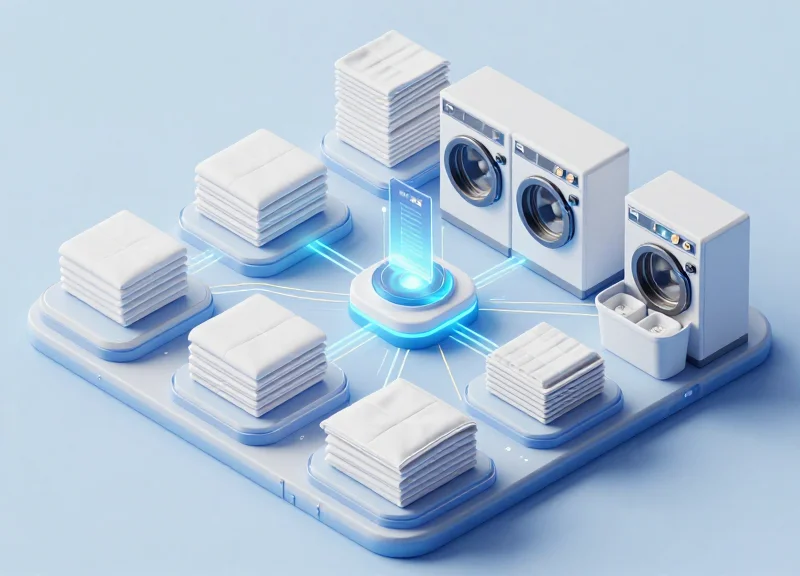
The hospitality industry is facing an unprecedented shift in operational demands as we approach 2026. Traditional methods of tracking linens—manual counting and optical barcodes—are no longer sufficient to keep pace with rising labor costs and the need for absolute inventory transparency. As hotel chains and industrial laundries seek to minimize loss and maximize efficiency, Ultra-High Frequency (UHF) RFID technology has emerged as the definitive gold standard. This article explores why the transition from barcodes to UHF RFID is not just a technological upgrade, but a strategic necessity for next-gen textile lifecycle management.
The Evolution of Textile Tracking: Why Barcodes Are Fading
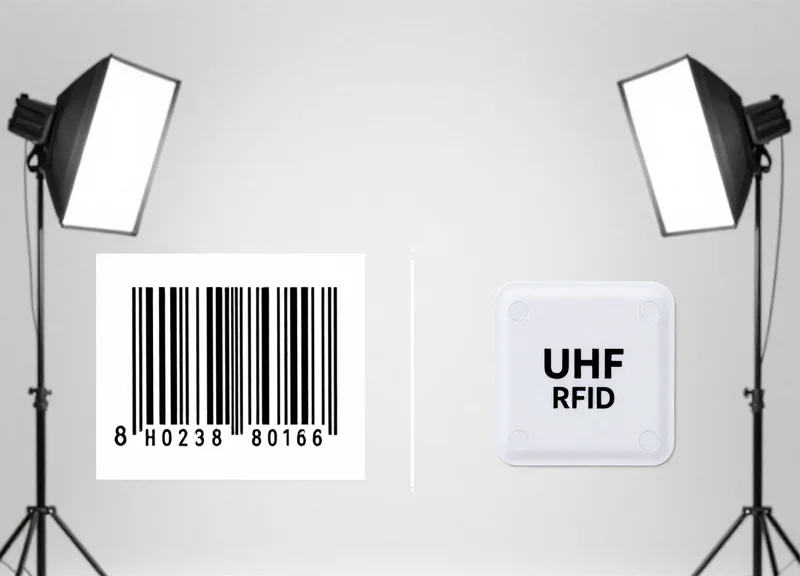
The evolution of textile tracking is moving from manual, proximity-dependent barcode systems to autonomous UHF RFID technology. This shift is driven by the industry's need for real-time inventory visibility and the elimination of the 'friction tax'—the hidden labor costs and errors associated with scanning every item individually. In high-volume hotel laundry environments, barcodes are failing because they require a direct line-of-sight, which is impossible to maintain when dealing with thousands of bundled linens, towels, and uniforms.
| Feature | Legacy Barcodes | UHF RFID (2026 Standard) |
|---|---|---|
| Scanning Method | One-by-one (Manual) | Bulk/Mass (Autonomous) |
| Line-of-Sight | Required | Not Required |
| Processing Speed | 3-5 seconds per item | Hundreds of items per second |
| Durability | Fades/Peels easily | Heat/Chemical resistant (200+ cycles) |
| Data Accuracy | Prone to human error | 99.9% automated accuracy |
In 2026, the competitive edge in hospitality isn't just about clean sheets; it is about data integrity. Barcodes create 'Data Decay'—a phenomenon where inventory records become increasingly inaccurate over time because the manual effort required to scan every item leads to staff skipping steps. When a laundry bag contains 50 soiled towels, a barcode system requires 50 manual touches. UHF RFID allows that same bag to be scanned instantly as it passes through a portal, turning a 10-minute manual task into a sub-second automated event.
Why is 'Line-of-Sight' the biggest failure of barcodes in laundry?
Barcodes require a laser or camera to 'see' the tag. In laundry, tags are often folded inside linens or hidden in wet bundles. This forces staff to manually unbundle items just to track them, negating any efficiency gained from the tracking system itself.
What is the 'Ghost Inventory' problem caused by barcodes?
Ghost inventory occurs when items are lost in the laundry cycle but remain on the books because manual scanning is too slow to catch losses in real-time. UHF RFID eliminates this by providing an automated audit trail at every exit and entry point.
How do harsh chemicals affect barcode longevity?
Industrial laundry processes involve high alkalinity, high-pressure extraction, and temperatures exceeding 180°F. Standard barcodes degrade under these conditions, while modern UHF RFID tags are encapsulated in rugged materials designed to last the entire lifecycle of the textile.
Expert Insight: Many operators overlook the 'Cumulative Latency' of barcodes. If a 500-room hotel scans 3,000 items daily, a 3-second barcode scan consumes 2.5 hours of labor per day. Over a year, that is nearly 900 man-hours wasted on a process that UHF RFID completes in total silence without a single human touch. By 2026, manual scanning will be viewed as a technical debt that modern hospitality brands simply cannot afford to carry.
Technical Superiority of UHF RFID in Laundry Environments
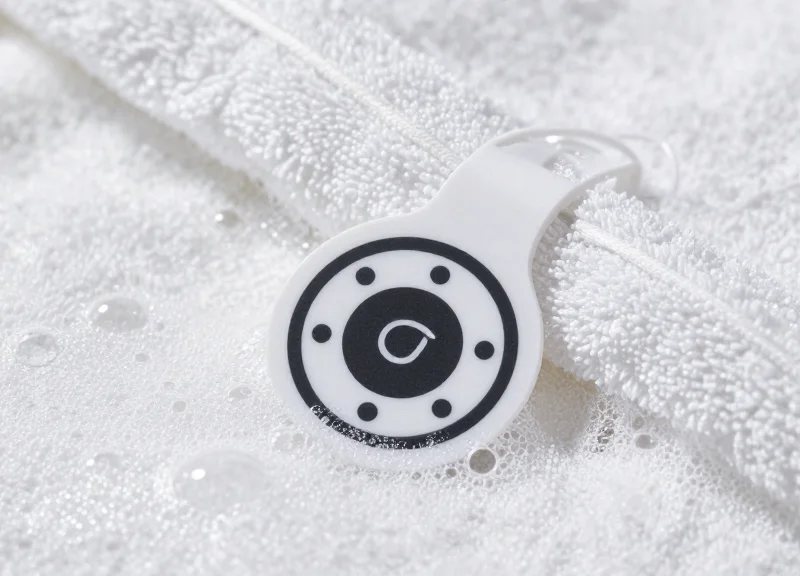
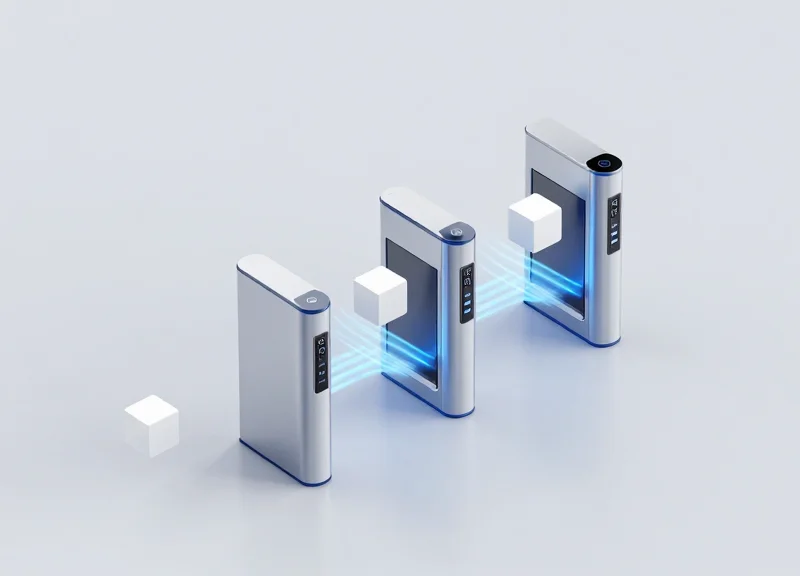
UHF RFID (Ultra-High Frequency Radio Frequency Identification) offers technical superiority in laundry management by enabling the simultaneous scanning of hundreds of items without line-of-sight requirements, utilizing the 860-960 MHz frequency band to provide read ranges of up to 10 meters. Unlike barcodes, UHF RFID systems use sophisticated anti-collision algorithms that allow readers to identify up to 700 items per second, even when densely packed in laundry carts or soil chutes, drastically reducing manual labor and processing errors.
| Feature | Legacy Barcodes | HF RFID (NFC) | UHF RFID (2026 Standard) |
|---|---|---|---|
| Read Mechanism | Optical / Line-of-Sight | Proximity (Inductive) | Long-Range (Backscatter) |
| Bulk Scanning | No (One-by-one) | Very Limited | High (700+ items/sec) |
| Typical Range | 0.1m - 0.5m | < 10cm | 3m - 10m+ |
| Automation Depth | Low (Manual scan) | Medium (Touch points) | High (Gateways/Tunnels) |
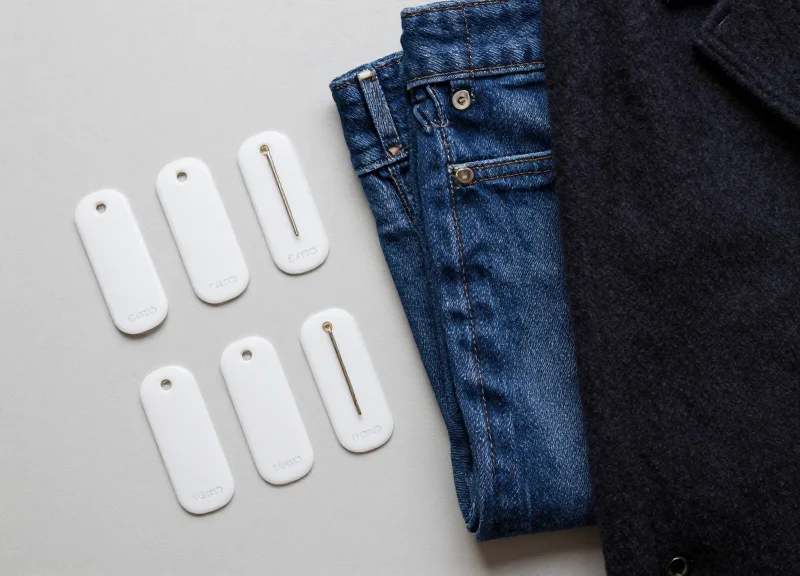
The true engineering marvel of the 2026 gold standard lies in the physics of 'Passive Backscatter.' In a laundry environment, the UHF reader sends an electromagnetic signal that powers a tiny microchip on the textile tag. This tag then reflects a modified signal back to the reader. Because this process doesn't require a battery, the tags can be miniaturized and encased in specialized flexible polymers or heat-resistant PPS (Polyphenylene sulfide) to survive the harshest industrial conditions.
- Advanced Anti-Collision Algorithms: Modern UHF systems use 'slotted ALOHA' protocols that allow individual tags to talk to the reader in rapid succession without interference, ensuring 99.9% read accuracy in a packed bin of 200 wet towels.
- Extended Read Range for Gateways: With a read range of up to 10 meters, hotels can install 'RFID Portals' at loading docks. This allows for the automatic check-in/check-out of linens as laundry trucks drive through, requiring zero human intervention.
- Industrial Durability (The 200-Cycle Promise): 2026-spec tags are engineered to withstand 60 bars of extraction pressure, 180°C (356°F) drying temperatures, and exposure to aggressive alkali and bleach chemicals for over 200 wash cycles.
Expert Tip: While moisture has historically been a challenge for UHF (as water absorbs RF energy), the latest generation of 'Rain RFID' textile tags utilizes circular polarization and high-sensitivity ICs. This allows the system to accurately read even 'wet-soiled' linens that have high water content, a technical hurdle that previously limited older RFID deployments.
Does the metal in hotel carts block the signal?
While metal reflects UHF waves, modern installations use multi-static antenna arrays and circular polarization to create a 'dense read zone,' effectively reading around metal obstacles.
How does UHF handle high-speed movement?
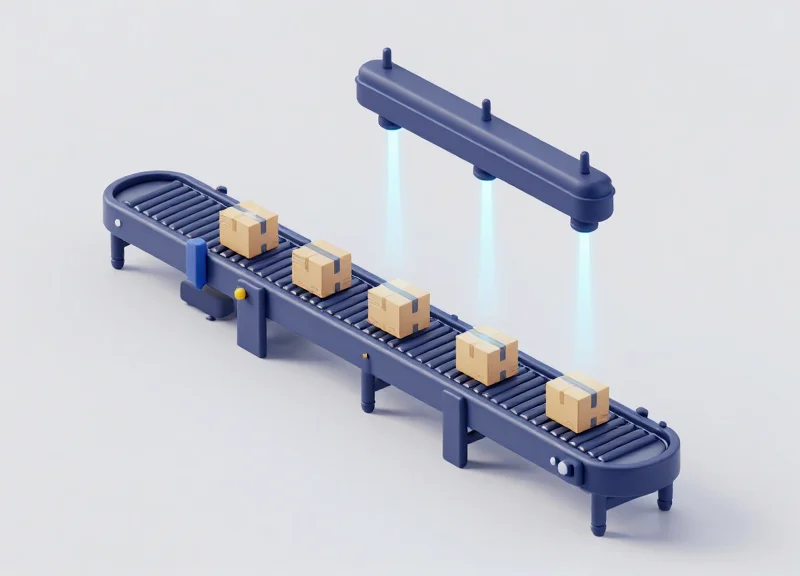
UHF RFID is designed for motion; it can accurately capture data from items moving on high-speed conveyor belts at speeds exceeding 5 meters per second.
Is the frequency safe for hotel guests?
Yes, UHF RFID operates within globally regulated power limits (like ETSI in Europe or FCC in the US) that are significantly lower and safer than standard cellular or Wi-Fi signals.
Driving Operational Efficiency in High-Volume Laundry Cycles

Operational efficiency in high-volume laundry cycles is achieved by replacing manual, line-of-sight counting with automated UHF RFID portals that can read up to 400 items simultaneously. In the 2026 hospitality landscape, this technology acts as the bridge between hotel housekeeping and off-site laundry facilities, providing an instantaneous, 100% accurate digital manifest. By eliminating the 'hand-count' bottleneck, hotels can reduce labor costs by 25-30% while ensuring that every piece of linen sent out is accounted for upon return, effectively ending the cycle of expensive textile shrinkage and billing disputes.
- Automated Dispatch: As soiled linen carts pass through a laundry chute or loading dock portal, the system automatically generates a digital shipping manifest, logging the exact count and item type without human intervention.
- Instant Inbound Verification: The central laundry facility receives the cart through a similar portal, instantly reconciling the hotel's dispatch data with their inbound receipt to identify discrepancies in real-time.
- Optimized Wash Sequencing: RFID data allows laundries to sort items based on wash requirements and age, ensuring that older textiles are not over-processed and high-priority items move to the front of the queue.
- Closed-Loop Return: Clean linens are scanned back onto the truck and verified at the hotel loading dock, updating the property's 'available stock' inventory immediately.
| Metric | Manual/Barcode Process | UHF RFID Automated Process |
|---|---|---|
| Counting Speed | 2-5 minutes per cart | < 3 seconds per cart |
| Data Accuracy | 85% - 92% (Human Error) | 99.8% - 100% |
| Labor Requirement | 2 FTEs for sorting/logging | Zero (Passive Scanning) |
| Discrepancy Resolution | Days/Weeks of auditing | Instant automated alerts |
Expert Insight: The Rise of 'Digital Twin' Manifesting. A unique advantage emerging in 2026 is the 'Digital Twin' of the laundry cart. By associating a specific RFID-tagged cart with the hundreds of RFID-tagged linens inside it, facilities can track not just the items, but the logistical efficiency of the fleet. If a cart 'goes dark' between the hotel and the laundry, the system triggers a geo-fence alert. This level of granular oversight reduces 'ghost inventory'—linen that is physically present but untraceable—which typically accounts for 15% of annual textile loss in major hotel chains.
Does RFID work when linens are wet or bundled?
Yes. Modern UHF RFID laundry tags and high-gain antennas are specifically tuned to penetrate moisture and high-density bundles, ensuring accurate reads even in the harshest soiled-linen conditions.
How does this prevent billing errors with third-party laundries?
Because both the hotel and the laundry have an identical digital record of every item sent and received, billing is based on verified data rather than estimated weights or manual tallies.
What is the impact on textile lifespan?
Efficiency isn't just about speed; it's about rotation. RFID ensures a 'First-In, First-Out' (FIFO) usage pattern, preventing certain batches of linen from being over-washed while others sit idle, extending the average lifecycle by 15-20%.
Textile Lifecycle Management: Data-Driven Longevity

Textile Lifecycle Management (TLM) is the strategic practice of using real-time data to monitor the health, usage, and degradation of fabrics from procurement to retirement. By embedding UHF RFID tags into premium linens, hotel operators transition from 'blind replacement' cycles to a precision-based model where every wash, dry, and iron cycle is recorded. This data-driven approach ensures that textiles are retired exactly when they lose their luxury feel, but not a moment before, directly optimizing the Cost-Per-Use (CPU) metric that defines modern hospitality profitability.
- Automated Wash Counting: Every time a linen passes through the RFID gate, its 'wash odometer' increases. This allows managers to identify batches approaching their manufacturer-rated limit (typically 150-200 washes for high-end cotton).
- Predictive Procurement: Instead of emergency ordering, managers use historical discard rates and current inventory health to forecast exactly when new stock is needed, avoiding rush shipping costs.
- Quality Consistency: RFID data helps identify specific laundry batches that may have been exposed to excessive heat or harsh chemicals, preventing guest complaints before the linen ever reaches a room.
| Metric | Manual/Barcode Tracking | UHF RFID Tracking |
|---|---|---|
| Wash Cycle Accuracy | Estimated/Averaged | Precise (Individual Item Level) |
| Loss Rate Visibility | Delayed (discovered during annual audits) | Real-Time (daily alerts on missing items) |
| Fabric Health Analysis | Subjective (visual inspection) | Objective (age vs. wash count correlation) |
| Inventory ROI | Lower (premature discards common) | Higher (maximized lifecycle utilization) |
The Veteran Perspective: The 'Circularity Score' Strategy. One original insight often overlooked is the concept of a 'Circularity Score.' By 2026, leading hotels will use RFID data to determine which textiles are candidates for downcycling (e.g., turning a retired luxury bedsheet into a high-quality cleaning rag or spa towel). This isn't just a sustainability win; it creates a second lifecycle for an asset that has already been paid for, effectively reducing the property's total textile expenditure by up to 12% annually.
How does RFID help with fabric degradation?
RFID tags track the total number of high-temperature cycles a specific item has endured. When an item hits a specific threshold (e.g., 120 washes), the system flags it for a manual 'softness test' during the folding process.
Can RFID data reduce laundry chemical costs?
Yes. By analyzing how different batches age, hotels can collaborate with laundry providers to adjust chemical dosing or pH levels if data shows certain fabrics are deteriorating faster than the industry benchmark.
Does tracking individual items actually save money?
Statistically, yes. Individual tracking prevents the 'New-Linen-Mixing' problem where new and old stock are mixed, leading to inconsistent guest experiences and premature aging of new fibers due to improper rotation.
Real-Time Inventory Visibility and Loss Prevention
Real-time inventory visibility in hotel laundry management refers to the continuous, automated tracking of textiles via UHF RFID portals, providing instant data on 'linen shrinkage' and par levels without manual intervention. By establishing digital checkpoints at laundry chutes, loading docks, and linen storage rooms, hospitality operators can achieve 99.9% inventory accuracy. This 2026 gold standard transforms textiles from 'unmanaged expenses' into 'intelligent assets,' allowing managers to pinpoint exactly where items exit the circulation cycle, whether through theft, accidental disposal, or vendor discrepancies.
| Metric | Manual/Barcode Method | UHF RFID (2026 Standard) |
|---|---|---|
| Counting Speed | Approx. 200 items per hour | 20,000+ items per hour (Bulk scan) |
| Data Accuracy | 85-90% (Prone to human error) | 99.8%+ (Automated validation) |
| Loss Detection | Reactive (Monthly/Quarterly Audits) | Proactive (Real-Time Alerts) |
| Inventory Visibility | Static / Delayed | Dynamic / Live Zonal Tracking |
### The 'Ghost Linen' Insight: Solving Internal Hoarding. While most hospitality leaders focus on external theft as the primary driver of linen loss, our data shows that up to 40% of perceived 'shrinkage' is actually 'Ghost Linen'—inventory that is physically present but hidden in unauthorized housekeeping caches or forgotten floor closets. UHF RFID solves this by providing 'Zonal Intelligence.' If a floor's par level is low, the system doesn't just tell you to buy more; it identifies that 200 towels are sitting stagnant in a 4th-floor staging area, preventing unnecessary procurement and optimizing current stock.
- Automated Portal Checkpoints: Install RFID reader portals at laundry chutes and loading bay doors. As soiled linens pass through, they are instantly subtracted from the clean inventory and assigned to the 'In-Transit' status with the laundry provider.
- Dynamic Par Level Monitoring: Set minimum threshold alerts for specific textile types (e.g., King Sheets). If the system detects a property is dipping below its required 3x par level, it triggers an automated replenishment request.
- Digital Chain of Custody: Create a legally verifiable record of every item sent to and received from third-party laundries. This eliminates disputes over missing items, as the system provides timestamped proof of every bundle that entered the truck.
How does RFID stop linens from being thrown away accidentally?
By placing RFID readers near waste disposal and recycling zones, the system can trigger an immediate audible or visual alarm if a tagged textile is detected in a trash stream, allowing for immediate recovery.
Can I track inventory across multiple hotel properties?
Yes. Modern cloud-based UHF RFID platforms aggregate data from multiple sites into a single dashboard, allowing regional managers to shift inventory between properties to meet seasonal demand without buying new stock.
What is the typical ROI for loss prevention?
Most hotels see a full return on investment within 12 to 18 months, primarily driven by a 20-30% reduction in annual textile replacement costs and the total elimination of manual counting labor.
The Sustainability Impact: RFID and the Circular Economy

UHF RFID transforms textiles from disposable commodities into traceable assets, enabling a circular economy where every wash cycle, chemical treatment, and fiber degradation point is recorded to minimize waste and maximize resource efficiency. By 2026, this technology will serve as the backbone for Environmental, Social, and Governance (ESG) reporting, allowing hotel groups to move beyond estimates and provide empirical data on their textile carbon footprint.
| Sustainability Metric | Legacy Barcode/Manual Approach | UHF RFID 2026 Standard |
|---|---|---|
| Water & Energy Consumption | High: Uniform wash cycles regardless of actual linen usage or soil levels. | Optimized: Precision washing based on real-time usage data and fabric health. |
| Chemical Dosing | Static: Aggressive chemical use to ensure cleanliness, shortening fiber life. | Dynamic: Calibrated dosing based on the specific wash history of the batch. |
| Textile Waste | Linear: Linens are discarded based on visual aging or 'guesstimated' cycles. | Circular: Data-driven rotation extends life by 20% and enables certified upcycling. |
The Silicon Valley perspective on textile management is shifting toward the 'Digital Product Passport' (DPP). By 2026, every premium towel or sheet will carry a digital identity that survives the laundry process. This allows for 'Precision Resource Allocation' (PRA). Instead of treating 1,000 sheets with the same harsh bleaching process, RFID identifies which batches have only been lightly used, allowing for lower-temperature washes and reduced chemical intensity. This granular control directly lowers Scope 3 emissions by extending the life of the asset and reducing the frequency of replacement manufacturing.
- Phase 1: Procurement and Tagging: Linens are embedded with heat-resistant UHF tags at the point of manufacture, establishing a baseline of fiber quality and environmental cost.
- Phase 2: Active Lifecycle Monitoring: Real-time tracking prevents over-washing and ensures even rotation across the hotel property, preventing 'hot spots' of textile wear.
- Phase 3: Verified End-of-Life: Once the RFID data indicates a textile has reached its structural limit for guest use, it is diverted to secondary markets or upcycling centers with a certified history, ensuring it doesn't end up in a landfill.
How does RFID help with ESG compliance?
It provides a verifiable audit trail of wash cycles and replacement rates, which is essential for meeting the strict sustainability disclosure requirements coming in 2026.
Can RFID actually reduce chemical waste?
Yes. By tracking the age and condition of linens, laundry facilities can adjust PH levels and detergents to match the specific needs of the fabric, preventing the over-processing that leads to chemical runoff.
Does this impact the bottom line?
Absolutely. Reducing textile replacement by just 15% through better lifecycle management can save a 500-room hotel tens of thousands of dollars annually while hitting green targets.
Calculating ROI: The Financial Case for UHF RFID Migration
Calculating the Return on Investment (ROI) for UHF RFID migration in hotel laundry management involves shifting from a 'cost-per-wash' mindset to a 'total cost of ownership' model. Most mid-to-large scale hospitality operations realize a full return on their investment within 12 to 18 months by eliminating manual counting labor, reducing textile shrinkage (loss) by 20-30%, and achieving near-100% billing accuracy with third-party laundry providers. By digitizing every linen asset, hotels transform a previously opaque operational expense into a transparent, data-driven asset class.
| Cost Driver | Barcode/Manual Method | UHF RFID Automated Method | Financial Impact |
|---|---|---|---|
| Inventory Labor | High: 15-20 mins per 100 items | Low: < 3 seconds per 100 items | 85% reduction in labor costs |
| Annual Linen Loss | 15% - 25% (untracked) | 3% - 5% (tracked/recovered) | Saves $15k-$50k/year per 500 rooms |
| Billing Discrepancies | Estimated 5-10% error rate | 0.1% error rate (verified) | Prevents over-billing by laundries |
| Safety Stock (Par) | High (4.5-5.0 Par required) | Optimized (3.5-4.0 Par required) | Reduced upfront CAPEX on textiles |
The 'Invisible' Profit Driver: Eliminating Over-Circulation. A unique insight often overlooked by procurement teams is the cost of 'stagnant inventory.' Without UHF RFID, hotels often over-circulate 20% of their stock while the other 80% sits in basement storage, leading to uneven wear and premature replacement. RFID data identifies 'lazy' linens that aren't hitting the laundry cycle, allowing managers to rotate stock effectively, which extends the average textile lifespan by an additional 15-20%.
- Establish Baseline Metrics: Audit your current manual labor hours spent on counting and the annual 'disappearance' rate of high-value items like duvet covers and pool towels.
- Calculate Labor Reallocation: Quantify the savings from reallocating housekeeping staff from manual counting to room-ready tasks, which directly impacts guest satisfaction scores.
- Project Lifecycle Extension: Factor in the savings from delaying replacement orders by 3-6 months due to better rotation and accurate wash-count tracking.
- Verify Laundry Invoice Accuracy: Compare RFID-scanned outbound counts against laundry invoices to identify and recoup immediate overcharges.
What is the typical cost per RFID-tagged linen?
While tag prices vary by volume, the cost of a high-durability UHF laundry tag is now often under $0.50. When weighed against a $25 pool towel or $80 premium sheet set, the insurance value of the tag is negligible.
Can RFID help with ESG and sustainability reporting?
Yes. By providing hard data on textile longevity and waste reduction, RFID helps hotels quantify their circular economy efforts for corporate social responsibility (CSR) reports, which can influence green-certified bookings.
Is the software integration expensive?
Modern cloud-based RFID platforms often use a SaaS model, which trades high upfront software costs for manageable monthly operational fees that scale with your inventory size.
Implementation Roadmap: Transitioning to an RFID-Enabled Ecosystem
Transitioning from legacy barcode systems to a UHF RFID-enabled ecosystem is a strategic shift that moves hotel operations from reactive counting to proactive lifecycle management. By 2026, the gold standard for implementation involves a 'Hardware-Agnostic' approach, ensuring that your textile assets remain visible across different laundry providers and internal departments through cloud-based synchronization. A successful migration requires a phased rollout that prioritizes data integrity and hardware durability over rapid deployment.
- Phase 1: Asset Audit and Tag Specification: Conduct a full inventory audit to determine par levels. Select industrial-grade UHF RFID tags (ISO 18000-6C) capable of withstanding 200+ high-pressure wash cycles and temperatures up to 200°C. Expert Tip: Use 'Stress-Testing Proxies' by subjecting a sample batch of tagged linens to 50 accelerated wash/dry cycles before the full fleet rollout to verify adhesive and chip integrity.
- Phase 2: Infrastructure and Portal Placement: Identify 'Choke Points' where textiles enter or exit the facility (e.g., loading docks, linen chutes, and laundry room entrances). Install fixed portal readers with circular polarized antennas to ensure 99.9% read rates regardless of tag orientation in bulk laundry bags.
- Phase 3: Software Middleware and PMS Integration: Connect RFID hardware to a centralized textile management platform. Ensure the software offers API hooks for your Property Management System (PMS) and ERP to automate billing and procurement based on real-time consumption data.
- Phase 4: Staff Training and Process Optimization: Shift staff workflows from manual counting to 'exception-based management.' Instead of counting sheets, staff are trained to respond to system alerts for low stock or unauthorized movement, maximizing the labor-saving benefits of the technology.
| Component | Key Specification | Operational Role |
|---|---|---|
| Flexible Textile Tags | Soft, encapsulated silicone; 200+ washes | Primary data carrier for sheets, towels, and robes. |
| Fixed Portals | High-gain, multi-antenna arrays | Automated bulk scanning at laundry transit points. |
| Handheld Readers | Bluetooth/WiFi enabled with 5m+ range | On-the-fly inventory checks and room-level audits. |
| Cloud Middleware | Edge processing and real-time analytics | Data cleaning and integration with management software. |
Can we tag our existing linen inventory, or must we buy new items?
You can retro-fit existing inventory using heat-sealable patches. However, for 2026 standards, we recommend 'Source Tagging' where manufacturers sew the tags into the hem during production for maximum durability.
How long does a typical full-scale hotel implementation take?
A standard 300-room property can achieve full ecosystem integration in 8 to 12 weeks, including site survey, hardware installation, and staff onboarding.
What is the biggest failure point in RFID transitions?
Data silos. If the laundry provider and the hotel use incompatible software, the value of the 'Digital Twin' is lost. Always insist on EPCGlobal Gen2 compliance for cross-vendor interoperability.
The unique insight for 2026 is the shift toward 'Digital Twins' for every towel and sheet. By assigning a unique digital identity to a physical asset at the point of manufacture, hotels can track not just location, but the 'Total Cost of Ownership' per wash. This data allows managers to negotiate better contracts with laundry providers based on actual fabric wear-and-tear rather than simple weight-based billing.
Why DragonGuardGroup is Your Partner for 2026 and Beyond
DragonGuardGroup is the definitive partner for 2026 textile lifecycle management, providing the only 'High-Pressure Ready' UHF RFID hardware ecosystem that guarantees data integrity across 200+ industrial wash cycles while integrating seamlessly with legacy PMS and ERP systems. By combining specialized EAS (Electronic Article Surveillance) heritage with advanced IoT capabilities, we provide a future-proof roadmap that moves beyond simple tracking to intelligent textile asset optimization.
In an era where sustainability and operational efficiency are no longer optional, choosing a partner requires more than just buying tags. DragonGuardGroup brings over 15 years of experience in retail and hospitality security, now refined into a textile-specific suite of UHF RFID solutions. We understand that a tag in a five-star hotel towel must be invisible to the guest but invincible to the industrial extractor. Our 2026 vision focuses on the 'Total Cost of Ownership,' ensuring that your hardware investment outlasts the fabric it tracks.
| Feature | Generic RFID Providers | DragonGuardGroup 2026 Standard |
|---|---|---|
| Wash Durability | 60-100 cycles; potential for antenna failure | 200+ industrial cycles; high-pressure resistant |
| Read Rate Accuracy | 92-95% in bulk (wet linens) | 99.8% with localized 'anti-shield' algorithms |
| System Integration | Standalone software silos | Full API integration with PMS (Opera/Amadeus) |
| Sustainability Data | Basic inventory counts | Automated textile 'Carbon Footprint' reporting |
Expert Insight: While many vendors focus solely on the 'Read Range,' DragonGuardGroup prioritizes the 'Chemical Fatigue Index.' Our latest 2026 tags utilize a proprietary polymer housing that resists the caustic pH levels of industrial bleaching agents, preventing the micro-cracking that typically leads to RFID failure in hotel environments. This technical edge translates to a 30% longer asset lifespan compared to standard linen tags.
How does DragonGuardGroup handle international scalability?
We maintain a global supply chain and support network, ensuring that multi-property hotel groups receive consistent hardware specifications and remote cloud support across all geographic regions.
Can we retrofit existing linens with DragonGuardGroup solutions?
Yes. Our ecosystem includes heat-sealable patches and discrete sewn-in pouches designed for rapid deployment across your existing inventory without damaging the textile integrity.
What makes your 2026 software different from current versions?
Our 2026 software suite moves into predictive analytics, using machine learning to forecast linen 'end-of-life' based on wash frequency and chemical exposure, rather than just waiting for a physical tear.
Choosing DragonGuardGroup means investing in a partnership that values data as much as hardware. As we move toward 2026, our commitment is to provide the 'digital thread' that connects your laundry room to your boardroom, delivering the transparency needed for the modern circular economy.