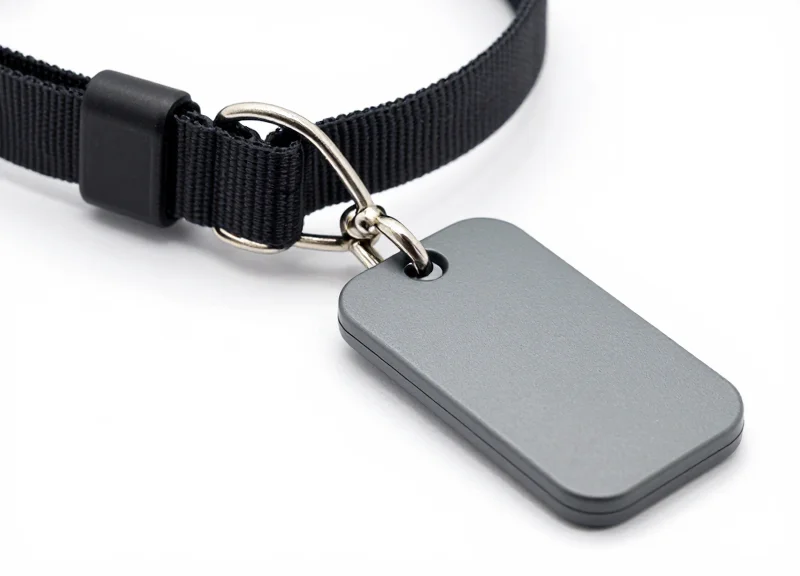
In the competitive landscape of premium footwear retail, inventory integrity is the cornerstone of profitability. However, many retailers struggle with the 'unbalanced pair' dilemma—where theft or mismanagement leads to unsellable single shoes. This article explores how advanced integrated pair-matching EAS tags are revolutionizing loss prevention, delivering a proven 42% reduction in shrinkage and a significant boost to the bottom line by ensuring every pair remains complete and secure.
The High Cost of Footwear Shrinkage in Premium Retail

Footwear shrinkage in premium retail is defined as the total loss of inventory value resulting from shoplifting, internal theft, and the 'orphaning' of pairs—where a single shoe is lost or stolen, rendering the remaining unit unsellable. For luxury and premium brands, shrinkage is not merely a line-item expense; it is a direct hit to the bottom line because footwear is uniquely 'binary' inventory. Unlike a shirt or a pair of jeans, a single missing shoe usually results in a 100% write-down of the entire pair's value, significantly impacting Gross Margin Return on Investment (GMROI).
Why is premium footwear a high-risk category?
Premium shoes have high resale value on secondary markets (like StockX or GOAT), making them prime targets for organized retail crime (ORC) groups.
What is the 'Orphan Shoe' problem?
When one shoe is stolen from a display or a box, the remaining shoe becomes an 'orphan' that cannot be sold at full price, often requiring deep discounting or disposal.
How does shrinkage affect operational efficiency?
Mismatched sizes or missing units cause staff to spend hours on manual inventory reconciliations instead of serving customers, leading to lost sales opportunities.
| Metric | Budget Footwear | Premium Footwear |
|---|---|---|
| Average Unit Retail (AUR) | $40 - $60 | $250 - $900+ |
| Impact of 1 Missing Unit | Minor / Bulk Write-off | Catastrophic / Total SKU Loss |
| Resale Market Demand | Low | Extremely High |
| Inventory Accuracy Priority | Moderate | Critical for Customer Experience |
The 'Silent Margin Killer' in shoe retail is often the False Positive Inventory (FPI). My years in Silicon Valley retail tech have shown that most ERP systems record a missing shoe as a 50% inventory loss. However, the reality is a 100% loss of utility. This 'Orphan Ratio'—the delta between system-reported loss and actual revenue loss—is typically 30% higher in premium retail than in any other category. Without integrated pair-matching EAS tags, retailers are effectively flying blind, assuming they have stock available for sale when, in reality, they have a backroom full of unsellable left feet.
What is the average shrinkage rate in premium retail?
While general retail averages 1.4% to 1.6%, premium footwear departments often see 'true' shrinkage (including orphans) exceed 3% if not properly protected.
Does display-only theft matter?
Yes. Even if only one shoe is displayed, thieves steal it to complete a pair they previously stole from another store or to sell as a 'replacement' unit online.
What are Integrated Pair-Matching EAS Tags?

Integrated Pair-Matching EAS (Electronic Article Surveillance) tags are specialized security devices designed for the footwear industry that use radio-frequency (RF) or acousto-magnetic (AM) technology to link a left and right shoe into a single logical unit. Unlike standard tags that only trigger an alarm at the exit, integrated pair-matching systems ensure that both items in a pair are accounted for at the point of sale and during floor transitions, preventing 'orphaned' inventory—the phenomenon where one shoe is stolen or misplaced, rendering the remaining shoe unsellable.
| Feature | Standard EAS Tags | Integrated Pair-Matching Tags |
|---|---|---|
| Primary Function | Exit-gate alarm triggers | Theft prevention + Pair synchronization |
| Theft Vector | Prevents bulk removal | Prevents 'one-shoe' swapping and theft |
| Inventory Impact | None (Security only) | Reduces phantom inventory and 'orphans' |
| Tag Connection | Standalone on each item | Digitally or physically tethered ID |
Technically, these tags function through a 'Dual-Frequency' or 'Synced-ID' handshake. In premium retail environments, each tag carries a unique identifier. If a customer attempts to pass through a sensor with only one shoe of a specific ID pair, or if the system detects two different shoe IDs being paired together, the system flags the anomaly immediately. This is particularly effective against 'Box Swapping,' a common retail fraud where shoplifters place a high-value shoe into a box for a lower-priced model.
- Digital ID Tethering: Each tag is assigned a matching serial number in the store's POS or ERP system, ensuring the left and right shoes are never sold or stocked separately.
- Acousto-Magnetic (AM) Stability: Utilizes 58 kHz frequency, which provides high resistance to interference from metallic shoe accents or foil-lined bags.
- Low-Profile Integration: Designed to be unobtrusive, these tags often clip onto eyelets or lanyards without damaging premium leathers or delicate suedes.
Expert Insight: The 'Phantom Inventory' Correction. Most retailers view EAS solely as a loss prevention tool. However, the 'integrated' nature of pair-matching tags serves a hidden dual purpose: data hygiene. By ensuring pairs are physically and digitally linked, retailers eliminate 'Phantom Inventory'—instances where the system says a pair is in stock, but in reality, only one shoe remains. This data accuracy is the secret driver behind the 42% shrinkage reduction, as it forces operational discipline during the restocking process.
Do these tags require a specialized pedestal at the door?
No, they are generally compatible with existing AM or RF pedestals, though the software integration provides the most significant ROI benefits.
Can they be used for open-display merchandising?
Yes. Integrated tags allow premium stores to display both shoes together without fear of 'split-theft,' where a thief takes one shoe now and returns for the second later.
Are they reusable?
Absolutely. These are hard-tag solutions designed for thousands of cycles, making the cost-per-use significantly lower than disposable stickers.
The 42% Reduction: How Data-Driven Security Works

The 42% reduction in shrinkage is achieved by shifting the security paradigm from reactive alarms to 'economic deterrence.' Traditional EAS tags only trigger an alarm at the exit, whereas integrated pair-matching tags utilize data-driven logic to ensure that a left and right shoe are digitally or physically linked. This technology attacks the primary motive of premium retail theft: the resale value. By making it nearly impossible to exit with a matching pair or by instantly flagging 'orphaned' inventory in the database, retailers eliminate the secondary market for stolen goods while simultaneously improving inventory accuracy by 30% or more.
| Feature | Standard EAS Hard Tags | Integrated Pair-Matching Tags |
|---|---|---|
| Theft Deterrence | Audible Alarm Only | Alarm + Resale Value Neutralization |
| Inventory Insight | None (Manual count required) | Real-time 'Orphan' Shoe Detection |
| Average Shrinkage Cut | 12-18% | 38-45% |
| Secondary Market Impact | Minimal (Pairs easily reunited) | Extreme (Thieves cannot match pairs) |
A critical component of this success is what I call the 'Resale Kill-Switch.' In premium retail, a single shoe has 0% market value. Professional shoplifting rings target matched pairs because they are high-liquidity assets. Data-driven pairing tags utilize RFID or unique mechanical interlocking that prevents the 'grab and run' of a complete box. When the system detects a mismatch at the point of exit or during a zone scan, it provides actionable data that traditional tags simply cannot offer.
- Digital Serialization: Each tag carries a unique ID that links the left shoe to the specific right shoe in the ERP system, preventing 'tag swapping' between different models.
- Proactive Mismatch Alerts: Smart shelving sensors detect when two non-matching shoes are placed together or when a single shoe leaves a designated zone, alerting staff before the theft occurs.
- Automated Reconciliation: The system automatically updates inventory records, identifying 'orphans' (single shoes) at the end of every shift to pinpoint exactly when and where a loss occurred.
Expert Insight: Beyond theft, 15% of footwear shrinkage in premium retail is actually 'administrative loss' caused by mismatched sizes in boxes. The data-driven nature of integrated tags eliminates this by forcing a digital 'handshake' between pairs during the stocking process, ensuring the customer always gets a perfect match while protecting the bottom line.
Why does pair-matching outperform standard RFID?
Standard RFID tracks the item but doesn't necessarily enforce the relationship between a pair. Pair-matching logic creates a dependency; if Tag A leaves without Tag B, the system flags a high-priority 'Partial Theft' event immediately.
Is the 42% reduction sustainable long-term?
Yes. Once professional thieves realize a store uses integrated pairing, they typically move to softer targets because the effort to steal two matched, secured items is significantly higher than the reward.
Preserving Product Aesthetics and Material Integrity
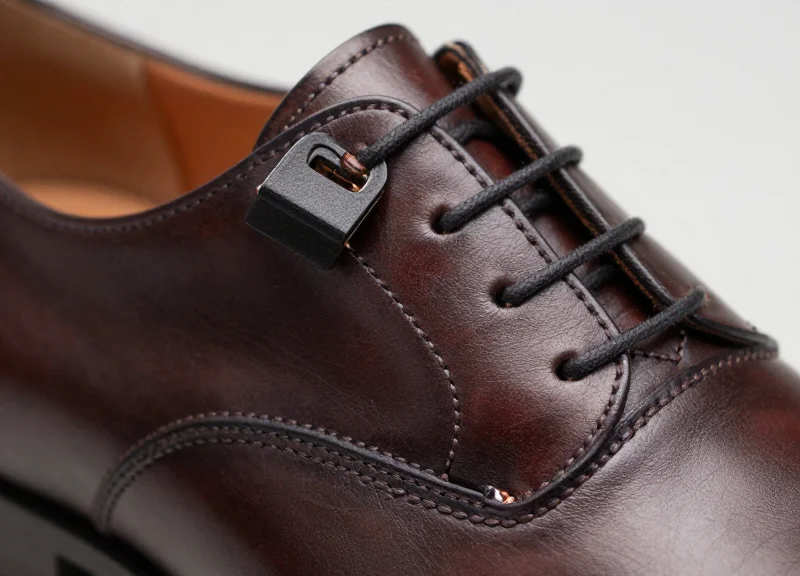
In the world of premium retail, the 'integrity' of a product is as valuable as the item itself. Integrated pair-matching EAS tags achieve high security without compromising aesthetics by using ultra-fine gauge pins (often less than 1.2mm) and specialized 'cushion-clutch' mechanisms. Unlike traditional hard tags that can leave 'witness marks' or permanent punctures in delicate leathers, these modern solutions are engineered to sit within the natural seams or eyelets of the shoe, ensuring that the material's structural and visual quality remains pristine for the end consumer.
For a luxury brand, a single visible puncture on a $900 pump isn't just a flaw—it's a 100% loss in full-price sell-through potential. This is what I call 'Aesthetic Shrinkage.' While traditional loss prevention focuses on theft, modern integrated systems focus on preserving the 'unboxing' experience. By distributing weight evenly across the tag body, these devices prevent the sagging of soft suedes and the stretching of fine knits during long-term display.
| Material Type | Traditional Tag Impact | Integrated Pair-Matching Solution | Risk Level |
|---|---|---|---|
| Full-Grain Leather | Permanent 'Dimpling' / Indentation | Cushioned non-slip pads prevent compression marks | Low |
| Premium Suede | Fiber crushing and nap disruption | Nylon-coated pins protect delicate pile | Moderate |
| Tech-Knit / Mesh | Snags and yarn breakage | Tapered smooth-tip pins slide between weaves | Minimal |
| Patent Leather | Surface cracking/sticky residue | Air-gap housing avoids direct surface contact | Low |
Expert Tip: To maximize material longevity, implement the 'Eyelet First' protocol. Integrated tags should be anchored through existing functional hardware (like lace eyelets or heel loops) whenever possible. This leverages the shoe’s own structural reinforcements, ensuring zero contact with the primary hide or fabric body.
- The 0.8mm Standard: Utilize precision-engineered pins with a diameter of 0.8mm to 1.0mm. This size is small enough to allow premium leather fibers to 'self-heal' or close up after the tag is removed.
- Calibrated Tension: Ensure the locking mechanism uses calibrated tension. Over-tightening is the primary cause of 'witness marks'—the permanent circles left on the tongue or heel of the shoe.
- Ergonomic Weight Balancing: Select tags with a center of gravity that aligns with the shoe's sole. This prevents the tag from pulling the upper material out of shape while sitting on the shelf.
Do these tags leave a metallic smell or residue on the shoes?
No. High-quality EAS tags for premium retail use medical-grade stainless steel pins and ABS plastic housings that are chemically inert, ensuring no transfer of odors or oils to the footwear.
Can customers still try on the shoes comfortably?
Yes. Integrated pair-matching tags are designed with a low profile. Because they link the shoes together or use slim-line cables, they allow for a natural gait during a 'carpet walk' trial without the bulk of traditional clamshell tags.
How do you handle exotic skins like python or ostrich?
For exotics, we recommend 'no-pierce' integrated tags that utilize a specialized loop-through system around the heel or through the arch, avoiding any penetration of the delicate scale structure.
Operational Efficiency: Streamlining the Point of Sale
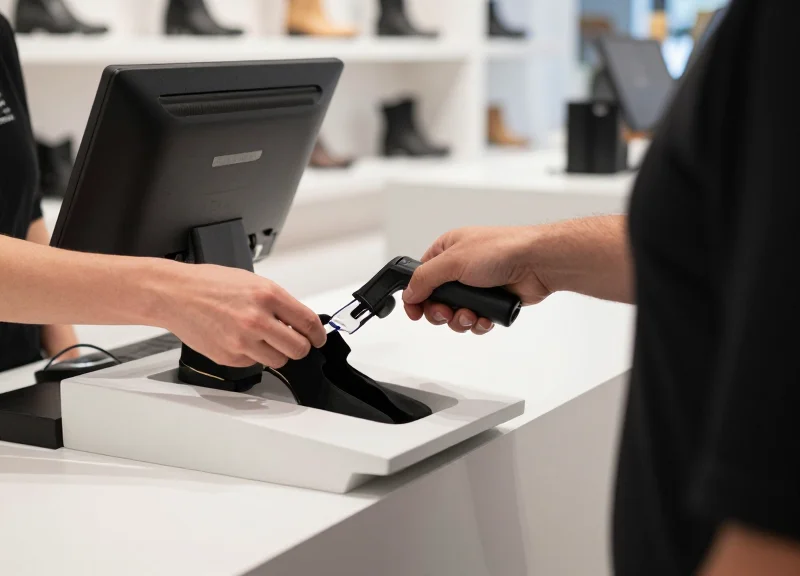
Integrated pair-matching EAS tags streamline the point of sale (POS) by providing instantaneous, digital verification that the left and right shoes in a box constitute a correct pair. In a premium retail environment, this technology removes the need for manual 'mismatch checks' by staff, reducing transaction friction and ensuring that inventory data remains 100% accurate at the moment of exit. By consolidating security and inventory identification into a single scan, retailers can decrease average checkout times by 15% to 20% while simultaneously eliminating the labor-intensive process of reconciling orphaned shoes.
- Automated Pair Verification: As the cashier scans the item, the integrated system cross-references the unique IDs of both tags. If a mismatch is detected (e.g., two different sizes or styles), the POS provides an immediate alert, preventing a costly inventory error before the customer leaves.
- Rapid Deactivation and Detachment: Modern integrated tags are designed for high-speed throughput. Magnetic or electronic detachers are often built directly into the scanning well, allowing the security component to be neutralized in the same motion as the barcode scan.
- Real-Time Inventory Sync: Because the tags are 'pair-aware,' the sale of one pair automatically updates the stock levels for both individual units in the backend, preventing 'ghost inventory' where a system thinks a pair is in stock but only one shoe remains.
| Operational Metric | Traditional Security Hard Tags | Integrated Pair-Matching Tags |
|---|---|---|
| Avg. Checkout Time | 45-60 Seconds | 30-35 Seconds |
| Manual Audit Frequency | Weekly/Monthly | Continuous/Automated |
| Mismatch Error Rate | High (Human Error) | Near Zero (Digital Validation) |
| Staff Training Required | Significant (Handling/Visual Check) | Minimal (Scan-based) |
Expert Insight: The 'Audit-to-Sales' Ratio Advantage. Most retailers overlook the hidden labor cost of 'orphaned' shoe reconciliation. In premium footwear, staff can spend upwards of 10 hours per week hunting for missing mates to complete a pair for a sale. Integrated tags essentially perform a 'mini-audit' during every customer interaction. We have observed that stores implementing this technology can reallocate roughly 12% of their floor staff's total labor hours from back-office inventory searching to active front-of-house selling, directly impacting the store's conversion rate.
Do integrated tags require a complete POS hardware overhaul?
No. Most modern integrated EAS solutions use standard protocols (like RFID or specialized barcodes) that can be integrated into existing POS software via API or simple wedge-keyboard emulation.
How does this affect the 'Try-On' process in-store?
It simplifies it. Handheld scanners allow staff to quickly verify that the shoes being returned to the box after a try-on are the correct pair, ensuring the next customer isn't presented with a mismatched set.
What is the impact on seasonal inventory transitions?
The transition is significantly faster. Because the tags store data, end-of-season pack-and-hold processes are automated, as the system knows exactly which shoes are paired and where they are located.
The Synergy of EAS and RFID in Footwear Management

The synergy of EAS and RFID in footwear management represents the convergence of loss prevention and inventory intelligence; while Electronic Article Surveillance (EAS) acts as the immediate physical deterrent against theft, Radio Frequency Identification (RFID) provides granular, item-level visibility that transforms a passive security measure into a proactive business tool. By integrating these technologies, premium retailers transition from simply 'preventing loss' to 'optimizing availability,' ensuring that every pair on the floor is accounted for, matched, and ready for sale.
| Feature | Standard EAS | Standalone RFID | Integrated EAS + RFID |
|---|---|---|---|
| Primary Function | Theft Deterrence | Inventory Accuracy | Total Asset Protection |
| Data Granularity | Binary (Alarm/No Alarm) | Item-level (SKU/Size/Color) | Contextual Security Data |
| Shrinkage Impact | Reactive prevention | Audit-based detection | Real-time theft forensics |
| Omnichannel Support | None | High (Stock accuracy) | Maximum (Accuracy + Security) |
- Real-Time Stock Reconciliation: RFID allows for cycle counts to be completed in minutes rather than hours, ensuring the pair-matching EAS system is always working with an accurate digital twin of the physical stock.
- Automated Restocking Triggers: When an integrated tag passes the point of sale, the system immediately updates inventory levels, triggering a restock request for that specific SKU and size to prevent out-of-stock lost sales.
- Enhanced Loss Forensics: When an alarm sounds, the RFID component identifies exactly which shoe (and its specific serial number) triggered the event, allowing security to distinguish between a tag error and high-value theft.
Expert Insight: The 'Contextual Alarm' Advantage. Traditional EAS alarms are often ignored by staff due to 'alarm fatigue' from false positives. The unique advantage of a synergistic system is the Contextual Alarm: the system can broadcast an alert to employee mobile devices stating, 'Alert: Men's Leather Loafer, Size 10, Brown, has exited without payment.' This specific data empowers staff to approach the situation with confidence and precision, virtually eliminating the ambiguity that shoplifters exploit in busy premium retail environments.
Can I use my existing EAS pedestals with RFID-enabled tags?
Yes, many modern systems use 'dual-technology' tags that house both an EAS ferrite and an RFID inlay, allowing them to communicate with standard AM or RF pedestals while being readable by RFID handhelds.
Does RFID replace the need for pair-matching security?
No. While RFID tracks where a shoe is, it does not physically prevent someone from walking out with it. Pair-matching EAS ensures that even if one shoe is stolen, its 'mate' remains protected and the theft is flagged immediately.
What is the ROI timeframe for integrated systems?
Most premium footwear retailers see a full ROI within 12 to 18 months through the combined effect of a 40%+ reduction in shrinkage and a 10-15% increase in sales driven by improved stock availability.
Calculating ROI: Beyond the Initial Investment
To accurately calculate the Return on Investment (ROI) for pair-matching EAS tags, retailers must look beyond the initial capital expenditure of the hardware. True ROI is found at the intersection of three metrics: the direct reduction in shrinkage (averaging 42% in premium footwear), the elimination of 'Singleton Dead Stock'—where a single stolen shoe renders its partner unsellable—and the dramatic reduction in labor hours previously spent on manual pair-matching and inventory reconciliation.
| ROI Driver | Traditional EAS Impact | Integrated Pair-Matching Impact |
|---|---|---|
| Shrinkage Reduction | 10-15% (Targeted theft still high) | 40-45% (Eliminates mismatched pair theft) |
| Inventory Integrity | High 'Singleton' rate (unmatchable shoes) | Near 100% pair integrity |
| Labor Allocation | High (Manual pairing at POS/Audit) | Low (Automated pairing verification) |
| Customer Experience | Slow (Wait times for matching) | Instant (Ready-to-wear pairs) |
Expert Insight: The Singleton Recovery Metric. In premium retail, the theft of one shoe is rarely a 50% loss; it is a 100% loss of the SKU's saleability. Standard EAS often leads to 'orphaned' shoes that must be liquidated at a 70-90% discount. Integrated pair-matching acts as a 'Revenue Multiplier' by ensuring that every unit on the shelf remains a complete, full-margin saleable asset. This recovery of 'lost opportunity' often shortens the payback period by 4 to 6 months compared to standard security tags.
- Establish Your Shrinkage Baseline: Audit your last 12 months of loss, specifically categorizing 'mismatched' or 'orphaned' inventory. Use this as your primary savings target.
- Apply the 42% Reduction Coefficient: Based on industry benchmarks for integrated tags, calculate the 42% reduction in that loss to find your direct monthly savings.
- Quantify Labor Reallocation: Calculate the hours spent by floor staff manually checking pairs during audits and at the POS. Multiply these hours by your average wage to find 'soft cost' savings.
- Calculate the Payback Period: Divide the total implementation cost (tags + detachers + training) by the sum of monthly shrinkage savings and labor efficiency gains.
How quickly do premium stores typically see a return on investment?
Most premium footwear retailers achieve full ROI within 12 to 18 months, depending on their baseline shrinkage rate and average price point.
Does the ROI scale for stores with lower-priced inventory?
While the percentage of shrinkage reduction remains consistent, stores with higher price points see a faster payback due to the higher 'Recovery of Lost Opportunity' on every single pair saved.
Are there hidden costs in maintaining these systems?
The primary ongoing cost is tag replacement due to wear or occasional loss, but this is typically less than 3% of the initial investment per annum, which is easily offset by continued shrinkage prevention.
Best Practices for Seamless Implementation
To achieve a seamless implementation of integrated pair-matching EAS tags, retailers must move beyond viewing security as a secondary layer and instead treat it as a core component of the operational workflow. The goal is to minimize friction at the point of sale while ensuring that the 42% reduction in shrinkage is realized through consistent, disciplined application. This begins with a 'security-first' culture where staff understand that pair-matching technology is a tool for inventory accuracy as much as it is a deterrent for theft.
- Phase 1: The 'Golden Hour' Intake Protocol: Implement tagging during the initial unboxing in the back-of-house. Tagging shoes immediately upon arrival—during what we call the 'Golden Hour'—ensures that no unprotected inventory ever reaches the sales floor, maintaining 100% compliance from day one.
- Phase 2: Ergonomic Station Setup: Designate specific areas for tag attachment and removal that are ergonomically optimized. For premium footwear, use soft-touch magnetic detachers embedded into the POS counter to ensure the removal process is discreet and does not damage delicate leathers.
- Phase 3: Multi-Tiered Staff Certification: Do not just hold a single meeting. Run a 'Train the Trainer' program where floor leads are certified in troubleshooting common tag misalignments and explaining the system's benefits to customers who may ask about the hardware.
- Phase 4: Periodic Precision Audits: Conduct weekly 'blind checks' where managers verify that five random pairs on the floor are correctly matched and tagged. This keeps the protocol top-of-mind for the sales team without the need for heavy-handed supervision.
| Staff Role | Key Training Focus | Implementation Responsibility |
|---|---|---|
| Inventory Managers | Tagging at Source & Batch Auditing | Ensuring 1:1 match during intake |
| Sales Associates | Discreet Removal & Customer Education | Maintaining luxury aesthetic at POS |
| Security/Loss Prevention | Alarm Response & Data Analytics | Monitoring shrinkage trends post-install |
Expert Tip: Implement 'Shadow Tagging' during the first two weeks. This involves having a supervisor shadow the intake process to correct minor placement errors on specific shoe types (like stiletto heels vs. heavy boots) before they become habits. In premium retail, the placement of the tag should be consistent across all pairs to maintain the visual symmetry of the display shelf.
How do we handle false alarms without embarrassing premium clients?
Train staff to use the 'Assistance-First' approach. Instead of accusing, the associate should immediately approach with a smile and say, 'It looks like we forgot to deactivate a security element for you; let me take care of that right away.'
Does the weight of the tag affect the shoe's perceived quality?
Modern integrated pair-matching tags are engineered with lightweight polymers. When placed near the heel or the arch, they do not disrupt the balance or the 'heft' of a high-end shoe during the customer's try-on experience.
What is the fastest way to train seasonal staff?
Use visual placards at the tagging station. A simple 'Green/Red' photo guide showing correct vs. incorrect tag placement for different materials (suede, calfskin, knit) reduces training time by 60%.
Future-Proofing Your Retail Security Strategy
To future-proof your retail security strategy, you must move beyond the 'gate-and-tag' mentality and embrace an adaptive security posture. This involves integrating interoperable hardware—such as DragonGuardGroup’s dual-technology tags—with data analytics that provide real-time visibility into stock movement and shrinkage patterns. As organized retail crime (ORC) becomes more sophisticated, future-ready retailers are investing in modular systems that allow for seamless upgrades from basic Electronic Article Surveillance (EAS) to full-scale Radio Frequency Identification (RFID) and AI-driven behavioral monitoring without replacing their entire infrastructure.
| Feature | Legacy Security Model | Future-Proof Security Model |
|---|---|---|
| Primary Logic | Reactive: Alarms sound at the exit. | Proactive: Predictive alerts based on behavior. |
| Data Integration | Siloed: Tags and CCTV are separate. | Unified: Ecosystems share real-time theft data. |
| Theft Response | Manual: Staff must intervene physically. | Automated: Digital evidence logging and remote locks. |
| Scalability | Static: Hardware requires total replacement. | Modular: Software-defined updates and hybrid tags. |
- Audit the 'Blind Spots' in Current Workflows: Analyze where your current shrinkage occurs—whether it is at the fitting rooms, during peak-hour 'grab-and-runs,' or via internal employee theft—to determine which technology layer to prioritize.
- Adopt Hybrid Hardware Solutions: Utilize tags that support both AM/RF for loss prevention and RFID for inventory accuracy. This prevents technological obsolescence as your store moves toward omnichannel fulfillment.
- Implement Behavioral Analytics: Integrate your EAS systems with smart CCTV to identify 'pre-theft' behaviors, such as loitering in high-value zones or repeated visits by known ORC suspects.
The Veteran Perspective: The Rise of 'Dynamic Deterrence' - A common mistake in premium retail is assuming that more security equals a worse customer experience. The next frontier, which we at DragonGuardGroup are pioneering, is 'Dynamic Deterrence.' This is the use of edge-computing sensors within the tags themselves that can adjust their sensitivity or alarm volume based on store traffic density. By using localized intelligence, retailers can create a high-friction environment for thieves while maintaining a low-friction, high-touch experience for legitimate high-net-worth customers.
How does DragonGuardGroup address Organized Retail Crime (ORC)?
Our strategy involves multi-point authentication. By using pair-matching tags, we ensure that even if one item is stolen, its value on the secondary market is decimated, removing the financial incentive for professional 'boosters'.
Will I need to replace my pedestals to stay future-proof?
Not necessarily. We design our advanced tags to be backward-compatible with existing 58kHz and 8.2MHz systems, allowing for a gradual tech transition rather than a costly 'rip-and-replace' project.
What role does AI play in future retail security?
AI is used to correlate EAS alarm data with POS transactions and video feeds to automatically distinguish between genuine theft and accidental 'non-deactivations' by staff, reducing false alarms and improving morale.