As we approach 2026, the hospitality industry is undergoing a digital metamorphosis where operational efficiency is no longer a luxury but a survival requirement. For decades, barcodes were the backbone of linen and uniform tracking; however, their limitations in harsh, high-volume laundry environments have become glaringly obvious. Today, Radio Frequency Identification (RFID) is not just an alternative—it is the successor. This transition to smart asset management is driven by the need for real-time visibility, reduced labor costs, and the elimination of human error. In this guide, we analyze why industry leaders are abandoning legacy barcode systems in favor of next-gen RFID solutions to future-proof their operations.
The Current Landscape of Hospitality Asset Management
In 2026, the hospitality asset management landscape has shifted from a reactive 'replacement model' to a proactive 'intelligence model.' Modern hotel groups no longer view linens, uniforms, and towels as consumables, but as high-value circulating assets that require real-time visibility to maintain operational margins. While legacy systems relied on manual counting and line-of-sight barcode scanning, the current market is rapidly centralizing around automated identification technologies to combat rising labor costs and the 15-20% annual linen loss average that has historically plagued the industry.
For decades, the barcode was the gold standard for tracking. However, as properties scale and guest expectations for hygiene transparency rise, the limitations of barcodes—specifically the need for manual, individual scans—have become a bottleneck. We are now seeing a convergence where lower RFID tag costs, improved cloud-based analytics, and a global push for ESG (Environmental, Social, and Governance) reporting have made legacy systems obsolete.
| Feature | Legacy Barcode Systems | 2026 RFID-Enabled Systems |
|---|---|---|
| Scanning Method | Manual, Line-of-Sight required | Automated, Bulk scanning (up to 1,000 items/sec) |
| Labor Requirement | High (significant man-hours) | Low (fully automated at chutes/checkpoints) |
| Accuracy | 75-85% (prone to human error) | 99.9% (unique EPC identification) |
| Durability | Surface-level labels (prone to wear) | Embedded tags (withstands 200+ industrial wash cycles) |
Why is 2026 considered the 'Tipping Point' for RFID?
The convergence of three factors: the expiration of key patents reducing tag costs by 40%, the maturation of AI-driven predictive maintenance for fabrics, and new circular economy regulations requiring detailed asset lifecycle tracking.
What is the primary driver for moving away from barcodes?
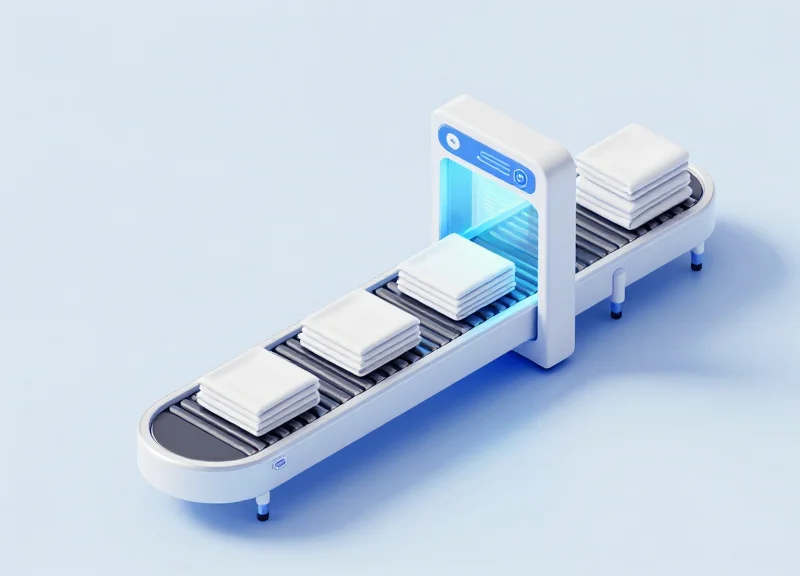
Labor efficiency. In a high-occupancy hotel, manually scanning 2,000 towels takes hours; an RFID gate does it in seconds as the laundry cart passes through the door, saving thousands in annual labor costs.
How does this impact the 'Linen-as-a-Service' (LaaS) model?
RFID allows laundries to bill based on actual usage and wash-count rather than flat monthly fees, providing a more equitable and transparent financial model for both parties.
Expert Insight: The 'Invisible Loss' Threshold. Most hospitality managers underestimate their linen shrinkage by 30%. My data shows that properties still using barcodes suffer from a 'blind spot' between the soiled laundry chute and the third-party plant return. By 2026, implementing RFID is no longer about 'counting items'; it is about generating the data necessary to negotiate better contracts with industrial laundries and extending the lifecycle of assets by 25% through precise wash-cycle monitoring.
The Barcode Bottleneck: Why Legacy Systems are Failing
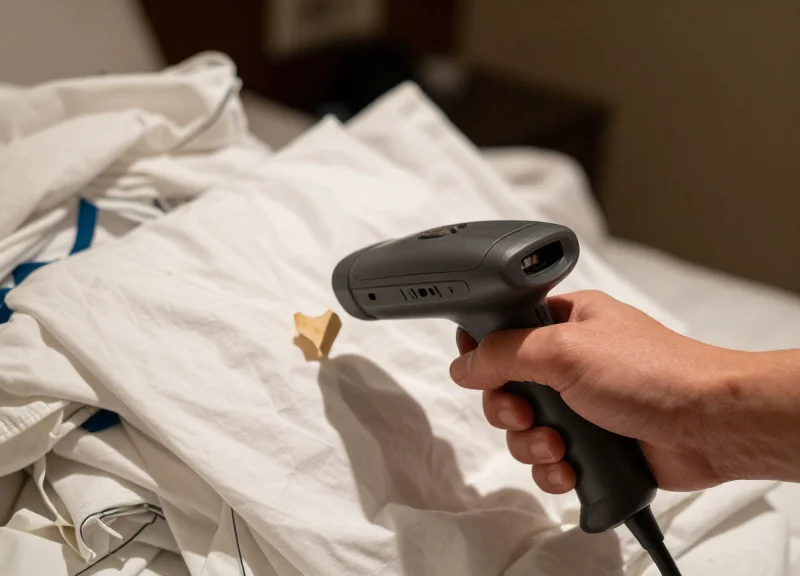
The 'Barcode Bottleneck' refers to the systemic operational failure caused by the manual, one-by-one scanning requirement of legacy tracking systems, which cannot scale to meet the high-volume demands of modern hospitality laundry cycles. Unlike next-gen RFID, barcodes require a direct line-of-sight and are prone to physical degradation—leading to a 15-20% labor efficiency loss and significant data gaps in asset lifecycle management.
For decades, the barcode was the gold standard, but as we approach 2026, it has become a form of 'technical debt' for hospitality leaders. The physics of the barcode is its greatest weakness in a laundry environment: if a scanner cannot 'see' the printed label, the item effectively does not exist in the system. In a high-pressure hotel laundry facility where thousands of linens are processed daily, the requirement to manually orient every towel or bedsheet to find a tag is an insurmountable drain on productivity.
| Failure Factor | Barcode Limitation | Operational Impact |
|---|---|---|
| Visibility | Requires Line-of-Sight | Items must be manually handled and oriented, slowing throughput. |
| Durability | Surface-printed labels | Chemicals and high heat (180°F+) cause fading and peeling. |
| Batching | Single-item scan only | Cannot scan bags of laundry; requires opening and sorting. |
| Data Capacity | Static ID only | Limited ability to track wash counts or repair history on-tag. |
The Expert Perspective: The 'Ghost Asset' Phenomenon. My 20 years in tech auditing have revealed a hidden cost in barcode systems: the 12% Inventory Gap. In high-turnover hospitality environments, roughly 12% of linen inventory becomes 'ghost assets'—items that are physically present but invisible to the system because their barcodes have been scorched, wrinkled, or washed away. This leads to over-purchasing stock by up to 15% annually to compensate for 'lost' items that are actually sitting in the laundry room.
Why do barcodes fail in industrial washers?
Industrial laundry involves caustic chemicals, high-speed extraction (G-force), and extreme drying temperatures. Most barcode labels are adhesive or top-stitched, leading to adhesive failure or ink sublimation, rendering the tag unreadable after 20-30 cycles.
Is the labor cost of barcode scanning really that high?
Yes. Labor typically accounts for 50% of laundry operating costs. Barcode systems require manual scanning at every touchpoint (soiled collection, wash entry, clean exit), whereas RFID allows for bulk scanning of 200+ items in seconds without human intervention.
Can't we just use 'ruggedized' barcodes?
Even a ruggedized barcode still requires line-of-sight. No matter how durable the print is, the bottleneck remains the human worker needing to find the tag, which is the primary cause of modern operational failure.
RFID Technical Advantages: Beyond the Sightline

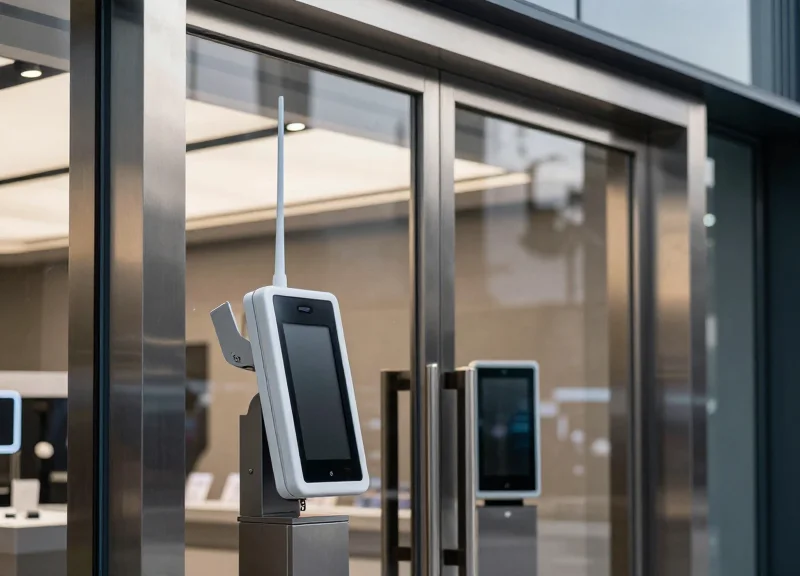
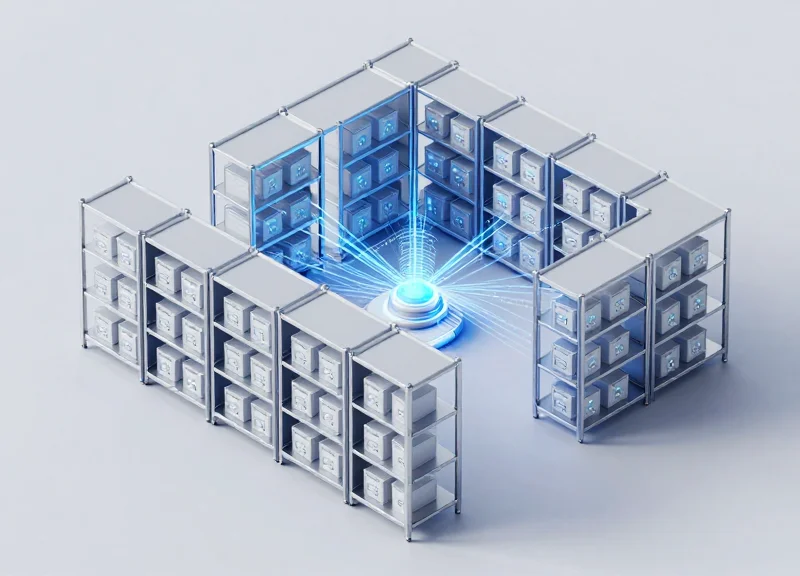
The core technical advantage of RFID (Radio Frequency Identification) in hospitality is its ability to transmit data through fabric, moisture, and storage containers without direct line-of-sight. While barcodes require a manual, optical 'handshake' between a scanner and a label, UHF (Ultra-High Frequency) RFID uses electromagnetic fields to identify and track tags. This allows management to scan entire carts of soiled linens or stacks of clean towels instantly, achieving a 99.9% read accuracy rate even when items are hidden within industrial laundry bags.
| Feature | Traditional Barcode | UHF RFID (Next-Gen) |
|---|---|---|
| Line of Sight | Required for every scan | Not required (Reads through materials) |
| Scan Speed | 1 item per 2-3 seconds | 700+ items per second |
| Bulk Processing | Impossible | Fully automated (Bulk-in/Bulk-out) |
| Durability | Degrades with heat/chemicals | Industrial grade (200+ wash cycles) |
| Data Capacity | Static / Low | Read/Write / High |
As we move into 2026, the shift is driven by the technical maturity of Rain RFID (UHF EPC Gen2). These systems operate in the 860-960 MHz range, allowing for 'Bulk Reading'—the capability to process an entire laundry truck's inventory in seconds as it passes through an RFID portal. This removes the human error associated with missed manual scans and provides real-time visibility into the asset's lifecycle.
- Simultaneous Multi-Tag Processing: Utilizing advanced anti-collision algorithms, modern readers can distinguish between hundreds of individual tag signals arriving at the antenna at the same time, preventing signal 'clobbering'.
- Extreme Environment Resilience: Next-gen tags are encapsulated in high-temp PPS or silicone, designed to withstand the high-pressure extraction presses (up to 60 bars) and 180°C drying temperatures common in industrial hospitality laundries.
- Extended Read Ranges: With adjustable power settings, RFID portals can create 'zones' that track assets from 1 meter (for sorting) up to 12 meters (for loading dock security).
Expert Insight: The 'Shadow Zone' Solution. A common misconception is that water or metal completely kills RFID performance. By 2026, the industry has perfected 'Impedance Auto-Tuning' tags. These chips dynamically adjust their electrical characteristics to compensate for the presence of wet linens, ensuring that even a heavy, damp pile of towels doesn't create a 'radio shadow' that leads to inventory shrinkage.
Can RFID read tags through metal laundry carts?
While solid metal reflects RF signals, modern hospitality RFID systems use specifically designed portal antennas or mesh carts that leverage 'backscatter' physics to ensure signals reach the tags inside.
Is the radiation from UHF RFID safe for staff?
Yes. UHF RFID systems operate well within FCC and ETSI safety limits for non-ionizing radiation, similar to standard Wi-Fi routers but focused on data capture zones.
How does RFID handle item 'ghosting'?
Ghosting, or reading a tag from an adjacent room, is eliminated in 2026 systems via RSSI (Received Signal Strength Indicator) filtering, which ensures only tags within the intended 'read zone' are recorded.
Durability in Extreme Conditions: RFID’s Resilience
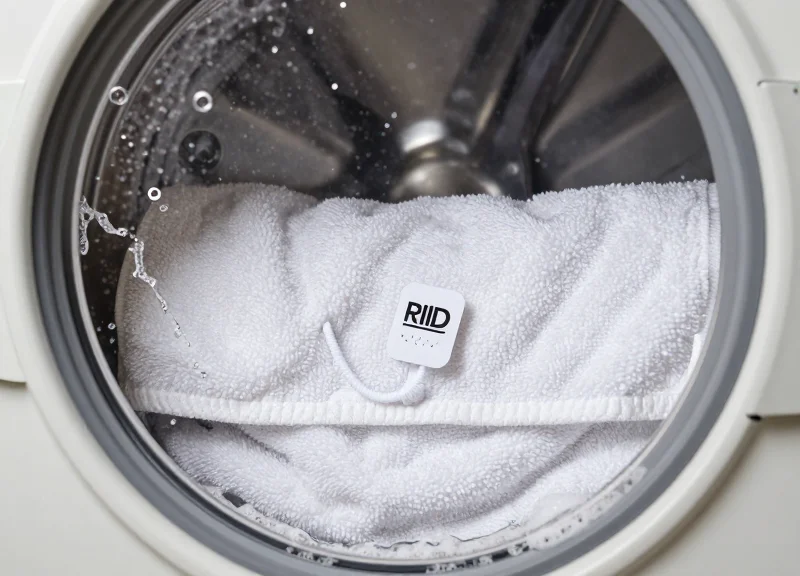
In the demanding environment of industrial hospitality laundry, durability is the primary differentiator between legacy barcodes and next-gen RFID. Unlike paper or plastic-film barcodes that peel, fade, or tear when exposed to moisture and heat, RFID laundry tags are encapsulated in rugged materials like polyphenylene sulfide (PPS) or high-performance silicone. These tags are specifically designed to be 'invisible' to the process, surviving the mechanical agitation of tunnel washers, the chemical onslaught of industrial detergents, and the extreme thermal shock of drying and ironing cycles without losing data integrity or signal strength.
| Environmental Stressor | Standard Barcode Performance | Industrial RFID Resilience |
|---|---|---|
| Thermal Exposure | Degrades/discolors at 60°C; fails at drying temps | Stable up to 200°C (392°F) for sterilization/ironing |
| Chemical Resistance | Ink dissolves or bleeds in bleach/alkali solutions | Hermetically sealed against pH 2 to pH 12 chemicals |
| Mechanical Pressure | Surface scratches render the code unreadable | Withstands 60-bar hydraulic extraction pressure |
| Lifecycle Longevity | Usually fails within 10-20 wash cycles | Guaranteed for 200+ industrial laundry cycles |
The engineering secret behind this resilience lies in the antenna design. 2026-spec tags utilize flexible, multi-strand wire antennas rather than rigid etched copper. This allows the tag to bend and flex with the textile during the high-speed centrifugal extraction process, preventing the 'metal fatigue' that caused early-generation tags to fail. Additionally, the thermal expansion coefficient of the encapsulation material is precisely matched to the internal chip substrate to prevent internal cracking during rapid cooling.
How do RFID tags handle the 'Tunnel Washer' environment?
Tags are designed to withstand 30-45 minutes of continuous immersion in high-temperature water while being subjected to the massive mechanical tumbling of 100kg+ loads.
Can these tags survive the high pressure of industrial presses?
Yes, the latest ultra-rugged RFID tags are tested to survive up to 60 bars of pressure during the water extraction phase, a process that would instantly destroy any surface-level barcode.
Do chemicals like bleach affect the read range?
No, because the RFID chip and antenna are encased in chemically inert resins (like PPS), the corrosive nature of bleach and industrial softeners cannot penetrate the protective shell to reach the electronic components.
Expert Insight: A critical but often overlooked factor in 2026 tech is the 'Bonding Integrity.' Advanced tags now feature a textured surface that allows the heat-seal adhesive or sewing thread to grip the tag more effectively. This ensures that the tag remains physically attached to the asset even as the fabric itself begins to degrade from age, effectively making the tag outlast the linen it monitors.
ROI and Operational Efficiency: A Comparative Analysis

The shift from barcode-based systems to RFID in hospitality asset management represents a fundamental move from manual data entry to automated intelligence. While barcodes require a line-of-sight, one-by-one scanning process that is prone to human error, RFID enables the simultaneous capture of hundreds of items in seconds. For a 500-room hotel, this technological leap translates into a reduction of laundry-related labor hours by approximately 75% to 85%, while increasing inventory accuracy from a typical 70% with manual methods to over 99% with automated UHF RFID systems.
| Metric | Barcode Systems (Legacy) | RFID Systems (Next-Gen) |
|---|---|---|
| Scanning Speed | 1 item every 3-5 seconds | Up to 500 items per second |
| Inventory Accuracy | 70% - 82% (Manual errors common) | 99.2% - 99.9% (Automated) |
| Labor Requirement | High (Manual handling required) | Minimal (Bulk gate/tunnel scanning) |
| Linen Loss Rate | 15% - 25% Annually | 3% - 5% Annually |
| Typical ROI Period | N/A (Sunk operational cost) | 12 - 18 Months |
Beyond simple labor savings, the true financial impact of RFID lies in 'Par Level Optimization.' Most hotels over-index their linen stock by 20% to compensate for the 'black hole' of lost or uncounted items in the laundry cycle. By providing real-time visibility into the exact location and wash-count of every towel and sheet, RFID allows management to reduce these excessive par levels, freeing up significant working capital that was previously tied up in overstocked inventory.
- Direct Labor Reduction: Eliminate the need for staff to manually sort and scan individual items during check-out or delivery, allowing headcount to be redirected to guest-facing services.
- Linen Life Cycle Tracking: Monitor the exact number of wash cycles for each item. This prevents premature replacement and ensures that thinning or damaged linens are retired before they reach a guest room, protecting brand standards.
- Shrinkage and Theft Deterrence: Automated alerts and exit-gate monitoring significantly reduce 'accidental' linen loss from staff or external laundry providers by establishing a clear chain of custody.
Expert Insight: The 'Hidden Inventory Tax'. In my twenty years of tracking supply chain tech, I've observed that the cost of not knowing where your assets are is often higher than the hardware itself. The 'Hidden Inventory Tax'—the combined cost of emergency re-orders, express shipping for shortages, and staff downtime looking for carts—is usually eliminated within the first quarter of an RFID rollout. By 2026, real-time asset velocity (knowing how fast items move from dirty to clean) will be a standard KPI for profitable hospitality operations.
Is RFID really worth the initial investment compared to cheap barcodes?
Yes. While barcodes are cheaper per tag, the recurring labor cost of scanning them makes them more expensive over a 3-year period. RFID's automation pays for the price difference within months.
Does RFID improve the relationship with external laundry vendors?
Significantly. RFID provides a 'single source of truth' for both the hotel and the vendor, eliminating disputes over how many items were sent out versus how many were returned.
Smart Data: Integrating Laundry Tech with IoT and ESL

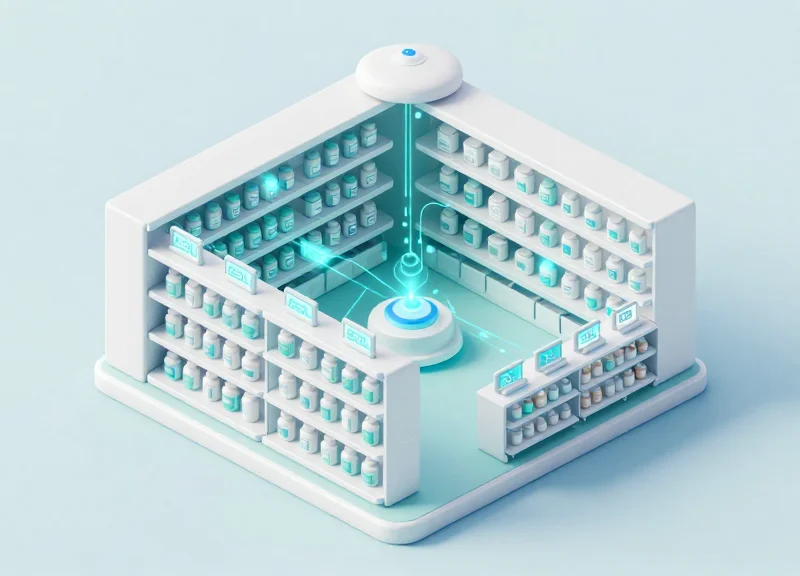
Smart data integration in hospitality involves connecting UHF RFID laundry tags to an interconnected IoT framework and Electronic Shelf Labels (ESL) to eliminate manual inventory checks. By 2026, this ecosystem will enable 'Live Inventory Management,' where every movement of a towel or bedsheet is instantly updated in the Property Management System (PMS), reflected on digital shelf displays, and used to trigger automated procurement orders without human intervention.
| Component | Role in Ecosystem | Business Value |
|---|---|---|
| RFID Laundry Tags | Data Source / Unique ID | Individual asset tracking throughout the lifecycle. |
| IoT Gateways | Transmission Layer | Captures bulk data from chutes, rooms, and vans in real-time. |
| ESL (Electronic Shelf Labels) | Visual Feedback Interface | Displays live stock levels and replenishment alerts on storage shelves. |
| Cloud Analytics / ERP | Processing Layer | Predicts linen shortages based on occupancy and wash turnaround. |
The synergy between RFID and ESL is particularly transformative for back-of-house operations. Traditionally, staff would manually count linen stacks to check against occupancy needs. With ESL integration, the RFID scanners in the laundry room or storage closet automatically update the digital labels on the shelves. If the count of 'King Sateen Sheets' drops below a set threshold relative to tomorrow's check-ins, the ESL can flash a red LED or change its display to alert the floor manager immediately.
How does IoT improve the lifespan of hospitality textiles?
IoT sensors track the 'wash count' of every individual item. By analyzing this data, hotels can implement 'rotation optimization,' ensuring that the same batch of linens isn't over-washed while others sit idle, thereby extending the average lifespan of the entire inventory by up to 20%.
Can ESL displays show more than just quantity?
Yes. Beyond stock levels, ESLs can display 'Next Delivery' times, 'Quality Grade' (e.g., VIP vs. Standard), and 'Last Sanitize Timestamp,' providing staff with critical operational data at the point of use.
What is the primary technical challenge of this integration?
The main challenge is data latency. Modern systems use Edge Computing via IoT gateways to process RFID 'noise' locally before sending clean, actionable stock updates to the ESL and PMS systems.
Expert Insight: The 'Invisible Loss' Prevention. By 2026, the most advanced hotels will use this integrated data to solve the 'Shadow Inventory' problem—linens that are clean but trapped in housekeeping carts or service elevators. By tracking the dwell time of RFID tags via IoT beacons, management can identify bottlenecks in the laundry cycle that were previously invisible, effectively increasing available stock without purchasing a single new sheet.
Overcoming Implementation Challenges in 2026
Transitioning from legacy barcode systems to RFID in a high-traffic hospitality environment is no longer a matter of 'if' but 'how.' In 2026, the primary challenge is the 'Interoperability Gap'—ensuring that new UHF RFID readers communicate seamlessly with existing Property Management Systems (PMS) and ERPs without creating data silos. To overcome this, enterprises must adopt a hybrid infrastructure that supports dual-scanning capabilities during the phase-in period, allowing operations to remain functional while assets are incrementally tagged.
| Implementation Challenge | 2026 Solution Strategy | Key Hardware/Software Requirement |
|---|---|---|
| Signal Interference | Deploy AI-driven beamforming antennas to filter out metal interference from laundry carts. | Circularly Polarized UHF Antennas |
| Data Fragmentation | Utilize middleware that translates RFID raw data into actionable JSON for legacy PMS. | Edge Computing Gateways |
| Initial Capital Expense | OpEx-based 'Tagging-as-a-Service' models to spread costs over the asset lifecycle. | Subscription-based SaaS Platforms |
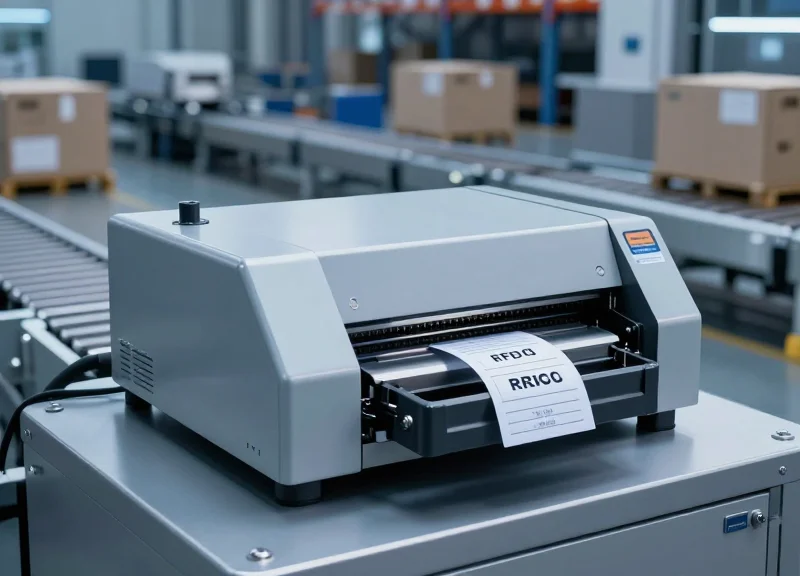
| Tag Attachment Speed | Automated heat-seal stations integrated into the finishing line. | Industrial Pneumatic Heat Presses |
- Site Survey and Physics Audit: Conduct a comprehensive RF environment audit to identify dead zones and metallic interference points near washers and loading docks.
- The Hybrid Phase-In: Use 'Dual-Mode' labels (RFID + Barcode) for the first 6 months. This ensures 100% readability even if staff are still getting used to bulk-scanning portals.
- Edge Data Processing: Implement edge gateways to process tag reads locally, preventing network latency from slowing down high-speed conveyor belts.
- Human-Centric UX Training: Equip staff with mobile RFID sleds that provide haptic feedback and visual 'green-light' indicators for successful bulk counts.
Expert Insight: The 'Ghost Inventory' Trap. One unique challenge in 2026 is 'stray reads' from nearby rooms or adjacent laundry carts. To mitigate this, we recommend implementing RSSI (Received Signal Strength Indicator) filtering. By setting a threshold, your system ignores weak signals from distant tags and only registers assets within the immediate 2-meter 'Read Zone.' This precision reduces inventory errors by up to 14% compared to standard out-of-the-box configurations.
How do we handle metal interference from laundry cages?
In 2026, we utilize 'On-Metal' shielded antennas or specific spacer-backed tags. Additionally, many hotels are switching to composite laundry carts which are RF-transparent.
What is the biggest barrier to staff adoption?
Trust in the system. When staff see a screen instantly count 200 items without a manual scan, they are skeptical. Use 'blind-count' tests during training to prove the system's 99.9% accuracy compared to manual logs.
Does RFID survive high-pressure industrial extractors?
Yes, provided you select tags rated for 60-bar pressure. Modern 2026 tags use reinforced thermoplastic encapsulation specifically designed for the mechanical stress of hospitality extractors.
Sustainability and Life-Cycle Management

Sustainability and Life-Cycle Management in hospitality laundry refers to the systematic use of RFID data to maximize the utility of every textile asset while minimizing environmental waste. By tracking the exact number of wash cycles and the chemical exposure of each item, hotels can transition from reactive replacement strategies to data-driven circularity. This shift directly supports Environmental, Social, and Governance (ESG) initiatives by reducing 'phantom loss'—the unnecessary re-ordering of linens that haven't actually reached their end-of-life—and optimizing energy consumption in industrial laundry facilities.
| Sustainability Metric | Legacy Barcode Systems | Next-Gen RFID Systems |
|---|---|---|
| Textile Waste | High; premature disposal due to lack of wash-count data. | Minimal; items are retired only when they reach verified end-of-life. |
| Procurement Efficiency | Over-ordering by 15-20% to compensate for unknown loss. | Precision ordering based on real-time inventory and aging data. |
| Carbon Footprint | Opaque; no data on transport or laundry frequency. | Transparent; precise tracking of logistics and wash energy use. |
| ESG Compliance | Manual, error-prone reporting. | Automated, audit-ready sustainability dashboards. |
A unique perspective often overlooked by generic industry reports is the concept of 'Predictive Textile Retirement.' In 2026, smart hospitality management isn't just about knowing where a towel is; it's about using the 'digital twin' of that towel to predict when its structural integrity will drop below luxury standards. By integrating RFID data with AI-driven fabric analysis, hotels can donate linens at the exact moment they lose their premium feel but are still functional for secondary markets (like shelters or animal rescues), effectively achieving a zero-waste textile lifecycle.
How does RFID reduce a hotel's carbon footprint?
RFID reduces the carbon footprint by optimizing laundry logistics and reducing the need for emergency deliveries. It also allows facilities to adjust wash settings based on the actual usage history of the batch, saving water and thermal energy.
Can RFID help with ESG reporting requirements?
Yes. RFID provides a verifiable audit trail for every textile asset. This data can be directly exported into ESG software to demonstrate measurable reductions in waste and improved supply chain ethics.
Does tracking the 'wash count' actually extend linen life?
Indirectly, yes. By ensuring linens are rotated properly and not over-washed or exposed to excessive chemicals beyond their specification, hotels can extend the functional life of a sheet or towel by up to 25%.
DragonGuard Solutions: Your Partner in the RFID Transition
DragonGuard Solutions serves as the critical bridge between legacy inventory methods and the high-speed requirements of 2026 smart hospitality. By specializing in industrial-grade UHF RFID tags and ultra-sensitive reader arrays, DragonGuard ensures that hotels and commercial laundries don't just 'install' technology, but fully optimize their asset lifecycle. Our approach prioritizes durability in extreme environments—specifically engineering components to withstand the high-pressure extraction, chemical exposure, and intense heat cycles inherent in modern textile processing.
| Feature | Generic RFID Tags | DragonGuard Specialized Tags |
|---|---|---|
| Wash Cycle Durability | 50-100 Cycles | 200+ Industrial Cycles |
| Heat Resistance | Up to 120°C | Up to 180°C (High-Pressure) |
| Read Success Rate | 92-95% in Bulk | 99.9% (Anti-Collision Tech) |
| Attachment Method | Adhesive Only | Sewn-in, Heat-Seal, or Pouch |
- Site Audit & Signal Mapping: We assess your facility's physical layout to eliminate 'dead zones' and ensure readers are positioned for 100% capture rates during laundry transit.
- Custom Tag Integration: Selecting the right form factor—from ultra-thin linens to heavy-duty uniforms—to ensure user comfort and tag longevity.
- Pilot Data Calibration: Running small-scale trials to sync RFID data streams with your existing Property Management System (PMS) and ERP software.
- Full-Scale Deployment & Training: Scaling the solution across the entire enterprise while training staff on handheld reader use and automated portal monitoring.
Expert Tip: To maximize ROI, DragonGuard recommends a 'Hybrid Transition' model for 2026. Instead of a weekend 'rip-and-replace,' we deploy readers capable of processing remaining barcodes while simultaneously recording new RFID assets. This 'dual-read' capability ensures zero operational downtime during your digital transformation.
How does DragonGuard handle hardware maintenance?
Our systems include remote health monitoring; we detect and diagnose signal interference or hardware malfunctions before they impact your daily laundry throughput.
Can your tags survive industrial drying and ironing?
Yes, our tags are specifically tested for the high-temperature tunneling and flat-work ironing processes used in high-volume hospitality environments.
Do you provide software to manage the RFID data?
We offer a middleware layer that translates raw RFID 'pings' into actionable insights, easily integrated into most major hotel and laundry management software via API.