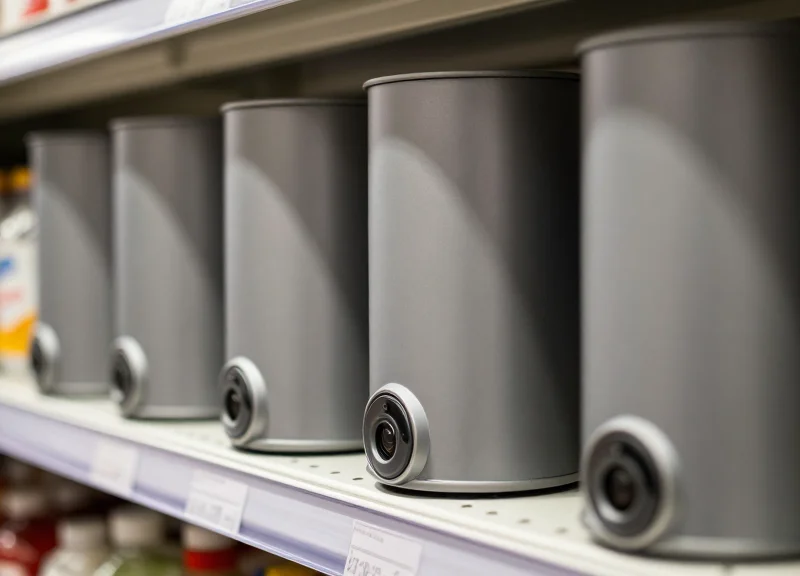
In the high-stakes world of grocery retail, infant formula remains one of the most targeted items for Organized Retail Crime (ORC). As we approach 2026, the challenge for high-volume grocery chains has evolved: it is no longer just about stopping theft, but about doing so without crippling operational throughput or alienating honest customers. Selecting the right anti-theft bases requires a sophisticated understanding of technology, ergonomics, and data integration. This guide breaks down the five critical trade-offs that procurement officers and loss prevention directors must navigate to protect their margins while ensuring a seamless shopping experience.
The State of High-Shrink Retail in 2026
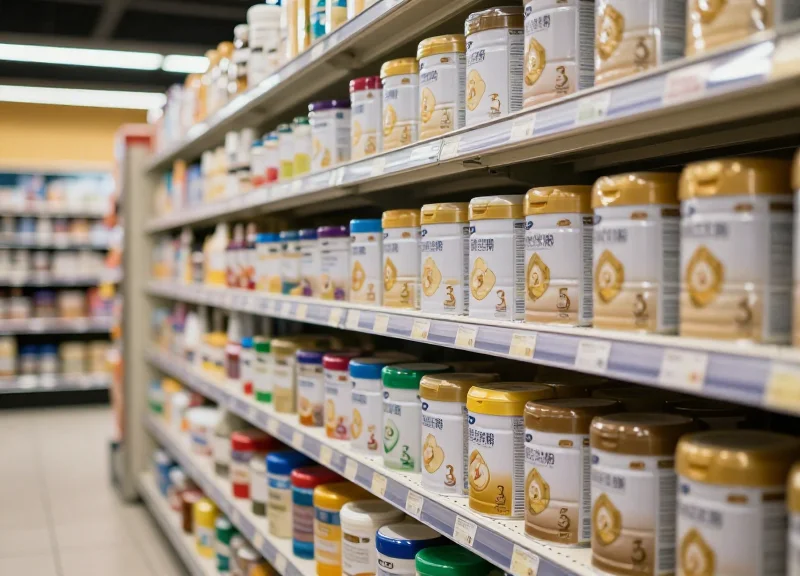
In 2026, high-shrink retail for high-volume grocery chains has reached a critical inflection point where traditional 'lock-and-key' security is obsolete. Milk powder, or 'white gold,' remains a primary target for Organized Retail Crime (ORC) syndicates due to its high resale value and essential nature. The modern retail environment is now characterized by a 'Triple Threat' dynamic: increasingly sophisticated theft techniques, persistent labor shortages that reduce floor supervision, and a hyper-competitive market where even minor friction in the buying process drives customers to e-commerce alternatives. To survive, grocery chains are moving away from isolated security tags toward integrated anti-theft bases that provide real-time data while maintaining product accessibility.
| Metric/Feature | Traditional Retail (Pre-2023) | Modern High-Shrink Retail (2026) |
|---|---|---|
| Primary Threat | Individual Shoplifting | Coordinated ORC Syndicates |
| Security Methodology | Reactive (Alarm on Exit) | Proactive (Intelligence at Shelf) |
| Customer Experience | High Friction (Locked Cabinets) | Low Friction (Open Merchandising) |
| Data Utilization | Siloed / Manual Audits | Real-time IoT Integration |
| Economic Impact | Direct Product Loss | Loss + Supply Chain Corruption |
Expert Insight: The Phantom Inventory Trap. One of the most overlooked costs of milk powder theft in 2026 is not the COGS (Cost of Goods Sold), but the corruption of automated replenishment systems. When a shelf is cleared by theft but the system records it as 'in-stock,' the supply chain fails to trigger a reorder. This leads to 'Phantom Inventory,' resulting in lost sales from legitimate customers long after the theft occurred. Effective anti-theft bases in 2026 must do more than scream; they must validate inventory movement in real-time.
Why are mechanical locks failing in 2026?
Mechanical locks create high friction for time-starved shoppers and require staff intervention, which is often unavailable due to labor shortages. Modern thieves have also mastered portable bypass tools, making physical-only barriers a deterrent to customers but a minor inconvenience to professionals.
What role does AI play in milk powder security?
AI is now integrated into shelf-level sensors and anti-theft bases to distinguish between 'normal browsing behavior' and 'sweep events' (clearing the shelf), allowing for silent alerts to security before the perpetrator even leaves the aisle.
How does inflation affect shrink trends?
Persistent inflation has expanded the 'thief profile' to include otherwise law-abiding citizens driven by economic necessity, requiring retailers to find security solutions that are effective yet non-confrontational to maintain brand reputation.
Trade-off 1: Security Strength vs. Checkout Friction
The Security-Velocity Paradox in modern grocery retail dictates that as the physical complexity of a milk powder anti-theft base increases, the 'transaction drag'—the time taken to detach the device at checkout—rises proportionally. For high-volume chains in 2026, a 15-second delay per unit in a basket of six items can lead to a 90-second checkout surge, directly impacting customer satisfaction scores and labor efficiency. The goal is to find a 'High-Fidelity' solution: a base that is virtually impossible for shoplifters to remove manually but offers seamless, sub-two-second release for authorized staff.
| Base Type | Security Tier | Avg. Detachment Time | Friction Impact |
|---|---|---|---|
| Standard Magnetic Base | Low-Medium | 1.5 Seconds | Negligible |
| RFID-Enabled Smart Base | High | 2.0 Seconds | Low (Automated) |
| Mechanical Clamp Base | Ultra-High | 8.0+ Seconds | High (Manual) |
| Biometric-Release Base | Maximum | 3.0 Seconds | Moderate |
By 2026, the industry is shifting toward 'Predictive Detachment' technologies. An original expert insight for this year is the integration of base-release mechanisms with the POS weight-sensor logic. Instead of a cashier manually struggling with a heavy-duty lock, the anti-theft base utilizes a low-energy Bluetooth (BLE) handshake with the register; once the item is scanned and the weight is verified, the base unlocks automatically. This eliminates the friction of physical tools while maintaining a high-security posture that deters organized retail crime (ORC) groups who lack the encrypted digital 'key' to bypass the system.
Does high security always lead to longer lines at self-checkout?
Not necessarily. In 2026, many high-volume chains are implementing 'Smart Pedestals' at self-checkout zones that allow customers to detach bases themselves only after a verified digital payment, reducing the need for staff intervention.
How does 'Secondary Friction' affect milk powder sales?
Secondary friction refers to the psychological deterrent where legitimate customers avoid purchasing items that look too difficult to access or unlock. Using sleek, transparent high-security bases helps maintain a premium shelf appeal without the 'prison-cell' look of cages.
What is the 'Threshold of Abandonment' for checkout delays?
Internal retail data suggests that if security measures add more than 45 seconds to the total checkout process for a single high-shrink category, there is a 12% increase in cart abandonment for that specific product.
Trade-off 2: EAS Traditionalism vs. RFID Intelligence

The choice between EAS (Electronic Article Surveillance) and RFID (Radio Frequency Identification) for milk powder security represents a fundamental shift in retail philosophy: treating anti-theft bases either as a simple 'gatekeeper' or as a strategic 'data node.' While EAS remains the gold standard for pure theft deterrence due to its low cost and high reliability, RFID-enabled bases provide the 'intelligence' needed for real-time inventory accuracy and automated supply chain management, which are increasingly vital for high-volume grocery chains in 2026.
| Feature | EAS Traditionalism (AM/RF) | RFID Intelligence (UHF) |
|---|---|---|
| Primary Function | Loss Prevention (Deterrence) | Asset Management (Visibility) |
| Implementation Cost | Low to Moderate | High (Infrastructure required) |
| Data Granularity | Binary (Alarm / No Alarm) | Unique (Item-level identification) |
| Labor Impact | Manual checking required | Enables automated cycle counts |
| Interference Risk | Minimal with tin-plate cans | High (requires specialized shielding) |
In the context of 2026's retail landscape, the most critical differentiator is the mitigation of 'Phantom Inventory.' Traditional EAS bases tell you that something was stolen, but they don't update your stock records. RFID-integrated bases automatically register which specific SKU left the building, allowing for immediate replenishment triggers. For high-volume milk powder aisles, where an out-of-stock event can cost more in lost sales than the price of a stolen tin, this automated visibility provides a 'Shadow ROI' that EAS cannot match. However, chains must account for the 'Faraday Cage' effect of metal milk powder packaging, which often necessitates dual-technology or specialized 'on-metal' RFID tags embedded within the base.
Can I use both EAS and RFID simultaneously?
Yes, many modern 'Hybrid' bases include both an AM/RF coil for gate security and an RFID inlay for inventory tracking, providing a safety net for chains transitioning their infrastructure.
Is RFID really worth the 3x higher cost for milk powder?
It depends on your 'Shrink-to-Sales' ratio. If your labor costs for manual inventory counts are exceeding 2% of category revenue, the automated auditing of RFID usually pays for itself within 18 months.
How does 2026 tech solve RFID metal interference?
Newer milk powder bases use 'air-gap' spacers or ferrite shielding to create a buffer between the metal canister and the RFID antenna, ensuring read rates above 99.5% even in dense displays.
Expert Insight: In 2026, the most successful grocery chains are adopting a 'Selective RFID' strategy. They use standard EAS for low-margin staples but deploy RFID-enabled bases specifically for 'high-velocity, high-theft' categories like premium infant formula. This allows them to harvest granular data where it matters most without over-investing in the entire store's infrastructure.
Trade-off 3: Universal Fit vs. Can-Specific Customization
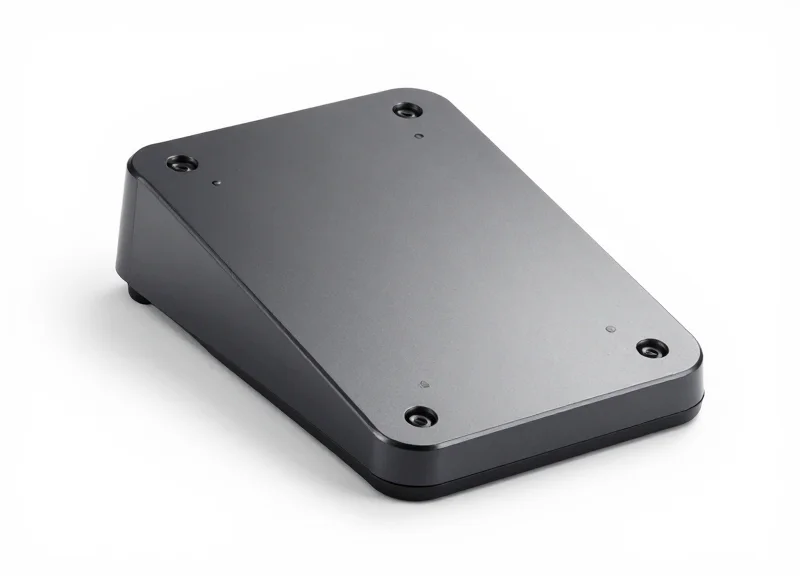
The fundamental tension between universal fit and can-specific customization lies in balancing SKU agility against physical security integrity. Universal anti-theft bases utilize adjustable mechanical grips or a 'one-size-fits-most' diameter to secure various brands, reducing the number of security assets a store must manage. Conversely, can-specific customization involves bases molded to the exact specifications of a brand's lid and base-ring, offering a seamless aesthetic and eliminating the 'wiggle room' that professional shoplifters exploit to prying off security devices.
| Feature | Universal Bases | Can-Specific Customization |
|---|---|---|
| Inventory Management | Low complexity; one SKU for all formula brands. | High complexity; requires matching base to specific brand. |
| Security Level | Moderate; gaps may exist in non-standard shapes. | Maximum; flush fit prevents levering tools. |
| Shelf Presentation | Functional but can look bulky or mismatched. | Premium; integrates with brand packaging. |
| Lifecycle Value | High; works with new brands or packaging updates. | Low; obsolete if the manufacturer changes can shape. |
For high-volume chains in 2026, the 'Labor-Hour per Restock' (LHPR) metric is becoming the deciding factor. Universal bases significantly reduce the time employees spend searching for the 'correct' base in the backroom. However, a veteran insight for 2026: as infant formula brands shift toward eco-friendly, non-cylindrical fiberboard packaging to meet ESG goals, traditional universal bases may lose their grip entirely. Investing in a 'semi-universal' modular system—where the core electronics are reused but the mechanical ring is swappable—is the emerging middle ground for future-proofing your loss prevention strategy.
Why is the 2026 sustainability trend a risk for universal bases?
Many universal bases rely on the 'rim' of traditional metal cans. As brands move to square or soft-touch sustainable materials, these universal grips often fail to maintain a secure seal, leading to increased shrink.
Which option is better for premium or organic formula tiers?
Can-specific customization is preferred for high-margin, organic tiers. It maintains the premium brand image and provides the highest level of protection for products that are primary targets for organized retail crime (ORC).
Does customization increase checkout times?
Generally, no. Can-specific bases often feature more ergonomic detachment points because the engineers know exactly where the base sits relative to the can, often resulting in a faster 'snap-off' at the POS.
Ultimately, the decision should be driven by your store's 'Brand-Mix' volatility. If your chain frequently rotates regional or international formula brands, the universal approach saves thousands in capital expenditure. If you stock the 'Big Three' global brands with 90% shelf consistency, the security and aesthetic gains of customization offer a better ROI through reduced shrink and enhanced consumer trust.
Trade-off 4: Initial Capital Expenditure vs. Long-term TCO
For high-volume grocery chains in 2026, the trade-off between Initial Capital Expenditure (CapEx) and Long-term Total Cost of Ownership (TCO) is a choice between immediate budget compliance and multi-year profitability. While low-cost anti-theft bases may appear attractive on a procurement spreadsheet, they often hide 'silent' costs such as high failure rates, non-replaceable batteries, and excessive labor requirements for maintenance. A truly cost-effective solution evaluates the 'Cost Per Protection Cycle,' ensuring that the durability of the base and its ease of refurbishment outlast the initial savings of a budget-tier alternative.
| Financial Metric | Low-CapEx Model (Budget) | TCO-Optimized Model (Premium) |
|---|---|---|
| Unit Purchase Price | $2.50 - $4.00 | $7.00 - $12.00 |
| Expected Lifespan | 12 - 18 Months | 48 - 60 Months |
| Battery Strategy | Disposable (Single-use) | Field-Replaceable or Wireless Charge |
| Labor Requirement | High (Frequent replacements) | Low (Standardized maintenance) |
| Annualized Cost | High (Frequent repurchase) | Low (Amortized over 5 years) |
The 'Hidden Labor Tax' is the most significant differentiator in 2026. As retail wages continue to climb, a base that requires manual intervention due to a dead battery or a jammed locking mechanism costs more in staff time than its original purchase price. My veteran tip: apply the '2% Failure Threshold.' If a pilot program reveals a failure rate higher than 2% per annum, the logistical cost of removing, shipping, and replacing those units will likely consume 100% of your projected ROI within the first 24 months. Seek bases with modular components where the security element (EAS/RFID) is decoupled from the physical locking mechanism to allow for partial hardware upgrades.
Why is battery replacement more critical than battery life?
A base with a 3-year sealed battery is a disposable asset. Once the battery dies, the entire plastic housing becomes e-waste. Bases with field-replaceable batteries allow you to refresh your entire fleet for 15% of the cost of new units, significantly lowering long-term TCO.
Does the material composition impact the long-term ROI?
Yes. In high-volume environments, bases are dropped, stepped on, and thrown into bins. Polycarbonate-reinforced plastics prevent 'stress whitening' and mechanical fatigue, ensuring the locking mechanism remains secure after thousands of cycles, unlike cheaper ABS plastics.
How does the 'reusability' factor affect the procurement decision?
Look for universal internal dimensions. If a milk powder manufacturer changes their can diameter, a highly customized, low-cost base becomes obsolete instantly. A slightly more expensive adjustable base provides an 'insurance policy' against packaging changes.
Trade-off 5: Visual Deterrence vs. Merchandising Aesthetics
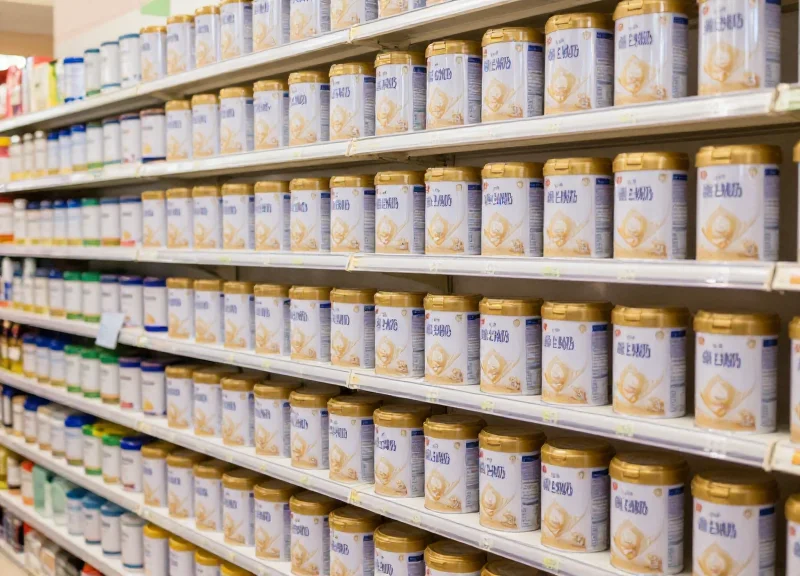
The trade-off between visual deterrence and merchandising aesthetics involves balancing the psychological impact of visible security devices—intended to scare off shoplifters—against the need to maintain an inviting, high-end atmosphere that encourages brand engagement and consumer trust. In 2026, grocery chains must decide whether to 'broadcast' their security measures to intimidate potential thieves or 'integrate' them to preserve the premium shelf-appeal of high-margin infant formula products.
| Feature | High-Visibility (Hard) Deterrence | Integrated (Aesthetic) Design |
|---|---|---|
| Psychological Impact | Overtly hostile; signals a high-theft area. | Subtle; reinforces a safe, premium environment. |
| Shoplifting Deterrence | High; creates immediate 'stop and think' moment. | Moderate; relies on the 'unknown' or hidden sensors. |
| Merchandising Ease | Difficult; obscures branding and nutritional info. | Excellent; allows for clean shelf-facings. |
| Customer Perception | Can feel intrusive or suggest an unsafe neighborhood. | Maintains brand integrity and shopping comfort. |
A critical, often overlooked perspective in 2026 retail strategy is the 'Negative UX Premium.' High-volume grocery chains that opt for bulky, opaque anti-theft bases frequently see a measurable drop in 'basket size' from affluent customers. This demographic is psychologically sensitive to 'fortress-style' merchandising; when an aisle feels like a high-security prison, dwell time decreases. To combat this, the leading trend for 2026 is the adoption of 'Crystal-Clear Polycarbonate Bases.' These provide the same physical lockout security as traditional bases but use light-refracting materials that make the security device nearly invisible under standard LED retail lighting, preserving the vibrant colors and typography of the formula packaging.
Does aggressive visual security actually decrease sales?
Yes, internal retail audits suggest that 'aggressive' security (like spider wraps or heavy black bases) can reduce impulse purchases by up to 12% because they make the product harder to handle and inspect.
How can we achieve deterrence without ruining the aisle's look?
Utilize 'Hybrid Deterrence.' This involves using sleek, transparent bases paired with high-visibility signage at the aisle entry points rather than on the products themselves, shifting the psychological 'warning' away from the point of interaction.
What is the 2026 standard for 'Aesthetic Security'?
The industry is moving toward 'form-fitted' bases that snap onto the chime of the can, mimicking the shape of the product so closely that they appear to be part of the original packaging design.
Expert Tip: When selecting your 2026 fleet, prioritize bases with 'Matte-Finish' interior grips. Glossy interior surfaces often cause 'light bounce' that obscures the expiration dates or batch codes printed on the bottom of milk cans, leading to stock rotation errors and customer frustration during the inspection process.
Integrating Anti-Theft Bases with ESL and Smart Shelving
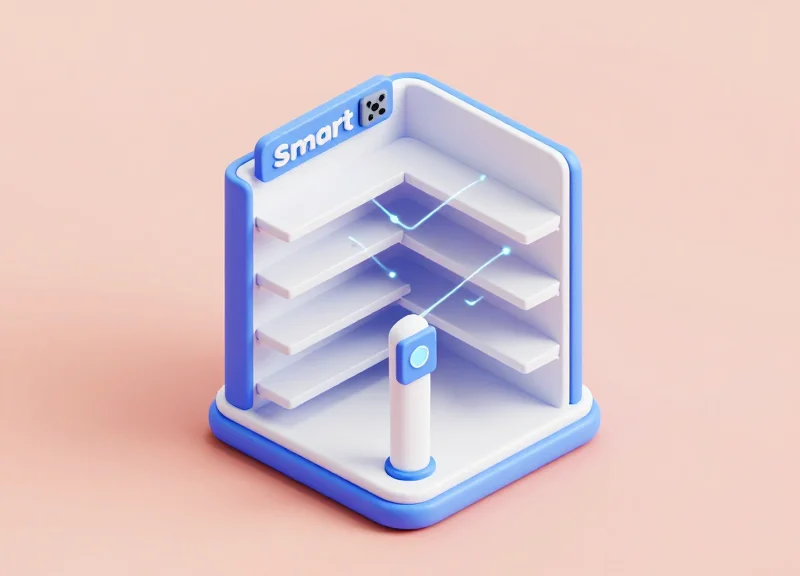
In the 2026 retail landscape, the integration of anti-theft bases with Electronic Shelf Labels (ESL) and smart shelving represents the transition from 'physical barriers' to 'intelligent ecosystems.' This integration allows security bases protecting high-value milk powder cans to communicate directly with the store's digital infrastructure via Bluetooth Low Energy (BLE), Sub-1GHz, or NFC protocols. When a base is tampered with or an abnormal quantity of product is removed, the smart shelf triggers an immediate alert to the ESL, which can flash or display a warning, while simultaneously notifying staff through handheld devices and updating the store's real-time shrink analytics dashboard.
The synergy between these technologies addresses a primary pain point for high-volume grocery chains: the 'blind spot' between product removal and the point of sale. By linking the unique ID of an anti-theft base to its corresponding ESL, retailers gain granular visibility into the milk powder aisle. This connection doesn't just prevent theft; it optimizes the supply chain by providing automated 'low-stock' alerts that are cross-referenced with security data to distinguish between high sales velocity and potential 'shelf sweeping' incidents.
| Communication Protocol | Security Latency | Battery Impact | Primary Use Case |
|---|---|---|---|
| BLE (Bluetooth 5.x) | Low (<100ms) | Moderate | Real-time tracking and proximity alerts |
| Sub-1GHz (Proprietary) | Medium | Low (Long Life) | Long-range facility-wide security networks |
| NFC (Passive) | Instant (at scan) | None | Staff authentication and base unlocking |
| Zigbee / Thread | Low | Low | Mesh-networked smart shelves with high density |
Can I use existing ESL rails for anti-theft base power?
Modern 2026 smart rails are increasingly designed with 'Power-over-Rail' capabilities. While most anti-theft bases remain battery-powered for mobility, hybrid systems now exist where the shelf rail provides trickle-charging to the bases, virtually eliminating battery maintenance cycles.
How does integration reduce false alarms?
Integration allows for 'context-aware security.' If a customer removes a protected milk powder can but stays within the aisle for a reasonable selection time, the system remains in a 'pre-alert' state. If the ESL sensors detect three cans removed in five seconds, it triggers an 'incidental surge' alert to security personnel.
Does this require a dedicated server in-store?
Most leading solutions now utilize 'Edge-to-Cloud' architecture. The ESL gateway acts as the local hub, processing immediate security triggers at the edge to ensure zero latency, while syncing long-term data to the cloud for chain-wide loss prevention analysis.
Expert Insight: The 'Active Deterrence' Loop. A unique 2026 strategy involves 'Visual Handshaking.' When a customer picks up a milk powder can secured by an intelligent base, the corresponding ESL can automatically display a 'Product Authenticity Verified' message or a helpful nutritional guide. This subtle interaction serves a dual purpose: it delights the legitimate shopper with helpful data while signaling to potential shoplifters that the shelf is 'digitally aware' of the product's status, effectively deterring theft without the need for aggressive signage.
Operational Implementation: Staff Training and Maintenance
Operational implementation of anti-theft bases in 2026 focuses on 'Time-to-Shelf'—the critical metric of minimizing the seconds spent securing each unit to ensure that loss prevention measures do not create bottlenecks in high-volume restocking cycles. Effective implementation bridges the gap between hardware capability and human execution, ensuring that floor staff view security as a seamless part of the merchandising process rather than a cumbersome barrier to productivity.
| Component | Maintenance Task | Frequency | Estimated Labor Time |
|---|---|---|---|
| Locking Mechanism | Lubrication & Debris Clearing | Monthly | 15 mins per 100 units |
| Battery/Capacitor | Voltage Check via IoT Hub | Real-time / Weekly | Automated |
| RF/AM Coil | Signal Resonance Test | Quarterly | 30 mins per aisle |
| Magnetic Decouplers | Calibration & Mounting Check | Weekly | 5 mins per terminal |
- Pre-Stocking Quality Control: Before any base is applied, staff must inspect for 'base fatigue'—hairline fractures in the polymer that could be exploited by professional shoplifters.
- The 'Snap-and-Spin' Validation: Standardized training should include a tactile check: once the base is applied, a quick 360-degree spin ensures the gasket is seated correctly against the can rim.
- Red-Flag Reporting: Implement a 'no-questions-asked' swap policy where staff can immediately bin a malfunctioning base for IT review rather than attempting on-floor repairs.
Expert Tip: I recommend the '7-Second Rule.' In my two decades of retail optimization, I have found that if a trained associate cannot apply or remove a security base in under seven seconds, they will inevitably begin to 'bypass' the security protocol during peak hours to meet their stocking KPIs. If your testing shows an 8-10 second average, the issue is usually ergonomic, not skill-based, requiring a rethink of your decoupler placement or base design.
How do we handle 'sticky' bases at the checkout?
Most 'sticky' issues are caused by milk powder dust buildup in the locking teeth. We recommend a monthly compressed-air cleaning cycle for all active bases to ensure 100% first-time release at the POS.
Should we train all staff or a specialized team?
High-volume chains benefit from a 'Security Lead' on each shift, but basic application must be part of general onboarding to ensure flexibility during staff call-outs.
How do we maintain the bases without damaging the internal electronics?
Avoid all chemical solvents. Use 70% isopropyl alcohol wipes for the exterior and dry brushes for the interior. Immersion cleaning will void the warranty of 2026-gen IoT sensors.
Sustainability in Loss Prevention Hardware
Sustainability in loss prevention hardware represents a strategic transition from disposable, single-use security components to durable, modular, and recyclable anti-theft bases designed to minimize environmental impact while maintaining high security. For high-volume grocery chains in 2026, this shift is no longer optional; it is a core requirement of ESG (Environmental, Social, and Governance) mandates that demand a reduction in plastic waste and a commitment to circular economy principles throughout the retail supply chain.
| Feature | Legacy LP Hardware | Sustainable 2026 Standard |
|---|---|---|
| Material Composition | Virgin ABS/PC plastics | Post-consumer recycled (PCR) resins |
| Product Lifespan | 12-18 months (High failure rate) | 36-60 months (Durable construction) |
| End-of-Life Path | Landfill / Incineration | Closed-loop buy-back & recycling |
| Maintenance | Unit replacement on failure | Component-level modular repair |
The move toward sustainable hardware is driven by the realization that 'cheap' security often carries a high environmental tax. In a high-volume milk powder aisle, where thousands of bases are deployed, the cumulative plastic footprint is massive. Modern grocery chains are now prioritizing vendors who offer 'Hardware-as-a-Service' models or guaranteed recycling programs, ensuring that depleted batteries and cracked plastic housings are reclaimed rather than discarded. By selecting bases made from high-grade PCR (Post-Consumer Recycled) plastics, retailers can reduce their Scope 3 emissions significantly without sacrificing the structural integrity required to deter professional shoplifters.
Do sustainable anti-theft bases cost more upfront?
While the initial capital expenditure for PCR-plastic bases or modular designs can be 10-15% higher, the total cost of ownership is lower due to extended lifespans and reduced disposal fees.
Does recycled plastic compromise security strength?
No. Modern 2026 resin blends offer the same tensile strength and impact resistance as virgin plastics, ensuring the bases remain tamper-proof.
How do sustainable bases help with ESG reporting?
Leading vendors now provide 'Green Certificates' that quantify the reduction in carbon footprint and plastic waste achieved by choosing their hardware, which can be directly included in annual corporate sustainability reports.
Expert Insight: The Rise of Hardware Digital Passports. A unique trend emerging for 2026 is the integration of 'Digital Passports' for LP hardware via encrypted QR codes or NFC chips embedded in the base. This allows grocery chains to track the exact material composition, manufacture date, and number of deployments for every single anti-theft base. This level of granularity enables precision recycling and provides audited data for carbon tax credits—transforming your loss prevention hardware from a cost center into a measurable ESG asset.