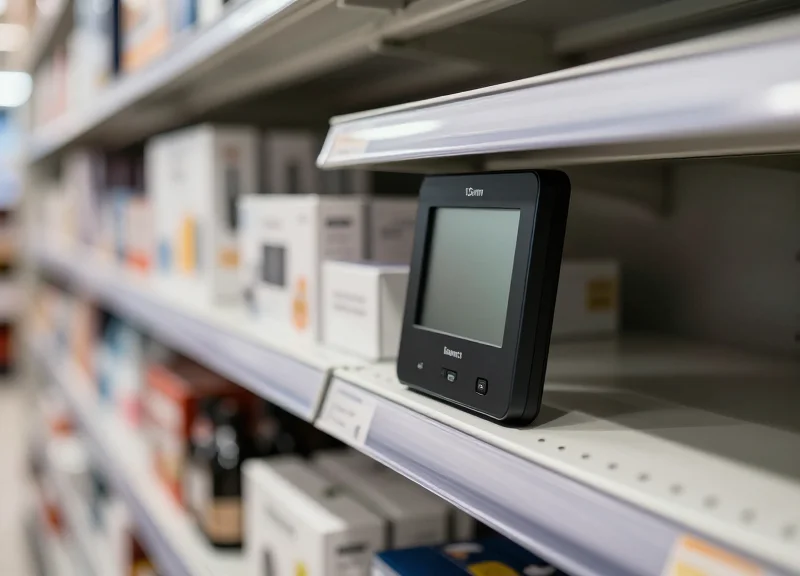
In the modern hospitality landscape, 24/7 unattended retail kiosks have shifted from a luxury to a necessity, providing guests with round-the-clock access to essentials. However, the shift toward self-service introduces a critical vulnerability: shrinkage. Without physical staff to monitor transactions, losses can quickly erode profit margins. This article examines how the strategic integration of embedded sensors—specifically EAS and RFID technologies—enables hotel operators to reduce shrinkage by up to 40%, effectively bolstering ROI while maintaining a seamless guest experience.
The Strategic Importance of Unattended Retail in Hospitality
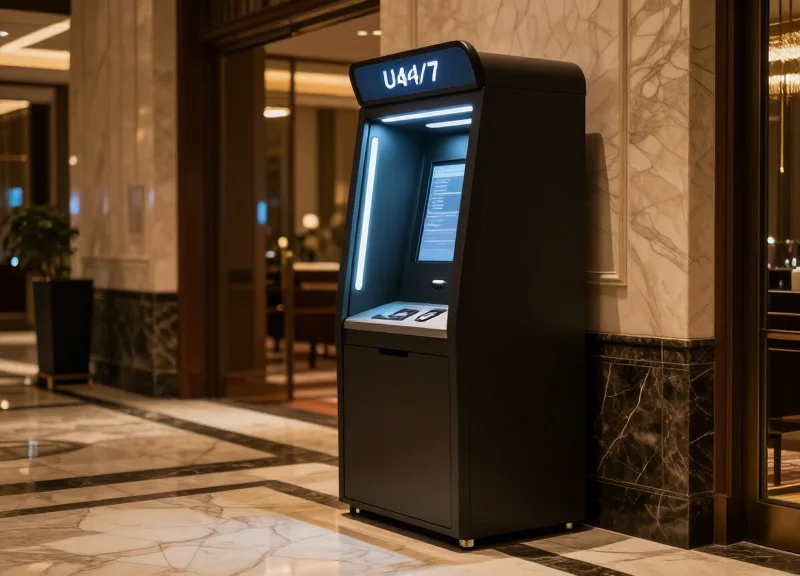
Unattended retail in hospitality represents a strategic shift from passive guest amenities to active, data-driven revenue engines. By leveraging 24/7 automated kiosks, hotels can meet the rising demand for 'instant gratification' commerce without the overhead of additional staffing. This evolution is critical because it solves the industry's triple-threat challenge: persistent labor shortages, the need for contactless experiences, and the drive to recover lost margins in ancillary services. Modern kiosks equipped with embedded sensors don't just sell snacks; they serve as a high-margin pivot point that captures midnight cravings and essential needs during off-hours when traditional gift shops are closed.
| Feature | Traditional Hotel Pantry | Sensor-Enabled Unattended Retail |
|---|---|---|
| Availability | Limited (Front desk dependent) | 24/7/365 Autonomous |
| Shrinkage Rate | High (Average 15-25%) | Low (Under 5% via Sensors) |
| Labor Cost | High (Front desk distraction) | Zero (Automated transactions) |
| Data Insights | Anecdotal/Manual | Real-time Inventory & Analytics |
| Guest Experience | Frictional/Queue-based | Seamless/Instant |
A unique strategic advantage often overlooked by hotel operators is the 'Dynamic Inventory Optimization' capability. Unlike a static vending machine, modern unattended retail units use IoT sensors to track 'dwell time' and 'pick-up/put-back' ratios. This data allows management to curate localized, premium offerings—such as regional craft beers or high-end tech accessories—that command much higher price points than standard convenience items. In essence, the kiosk becomes a laboratory for understanding guest behavior, allowing hotels to tailor their retail mix to the specific demographic of each property, significantly boosting the average transaction value (ATV).
Why is unattended retail essential for the modern hotel?
It bridges the gap between limited staffing and the 24/7 nature of guest arrivals. Guests expect immediate access to food, beverages, and travel essentials regardless of the hour, and kiosks fulfill this without increasing operational headcount.
How does this technology impact the hotel's Bottom Line?
Beyond reducing labor costs, it captures 'lost revenue' from late-night arrivals. Furthermore, by utilizing embedded sensors to reduce shrinkage by up to 40%, the profit margin on every item sold increases significantly compared to open-shelf honor systems.
Can kiosks improve guest satisfaction scores (GSS)?
Yes. Data shows that guests value the speed and autonomy of self-service. Eliminating the need to wait in a front-desk queue for a bottle of water directly improves the overall guest experience and perceived value of the stay.
The Invisible Cost: Understanding Shrinkage in Self-Service Models
In the context of unattended hotel retail, shrinkage is the discrepancy between the inventory on the balance sheet and the actual physical stock available for sale, functioning as a silent profit killer that directly undermines ROI. While traditional retail often budgets for a 1.5% to 2% loss, unmonitored self-service kiosks in high-traffic hospitality environments can experience shrinkage rates exceeding 5-10% without the right technological safeguards. This 'invisible cost' is comprised of external theft, administrative errors, and vendor discrepancies, all of which aggregate into a significant financial leak that disrupts the automated convenience model.
| Shrinkage Category | Common Causes | Impact on Hotel Operations |
|---|---|---|
| External Theft | Intentional shoplifting or 'forgotten' scans | Direct revenue loss and frequent out-of-stock scenarios. |
| Administrative Error | Inaccurate manual inventory counts or data entry | Skewed analytics leading to over-ordering or dead stock. |
| Internal Mismanagement | Staff 'grazing' or improper waste logging | Erosion of operational trust and margin transparency. |
| Vendor Discrepancies | Short-shipping or mislabeled delivery units | Paying for inventory that never entered the kiosk. |
An often overlooked but critical component of shrinkage is 'Phantom Inventory.' This occurs when a system believes an item is in stock because it wasn't scanned out, preventing the automated system from triggering a reorder. For a hotel guest arriving at 2 AM, finding an empty shelf despite the digital menu showing availability results in more than just a lost sale; it leads to a catastrophic drop in guest satisfaction scores (CSAT). From a veteran Silicon Valley perspective, we view shrinkage not just as a loss of capital, but as a corruption of the data integrity required to run a lean, automated business.
How does shrinkage specifically impact the ROI of a hotel kiosk?
Beyond the direct cost of the stolen or lost item, shrinkage forces higher labor costs for manual audits and reduces the efficiency of the supply chain, often turning a projected 20% margin into a net loss.
Is theft the biggest contributor to loss in unattended retail?
While theft is the most visible, administrative errors and 'phantom inventory' often account for nearly 40% of total shrinkage, proving that human error is as costly as malicious intent.
Can traditional CCTV solve the shrinkage problem in hotels?
No. Standard CCTV provides forensic evidence but does not prevent the loss or correct the inventory data in real-time, which is where embedded sensors and AI-driven kiosks provide a superior ROI.
The Role of Embedded Sensors: EAS and RFID Explained
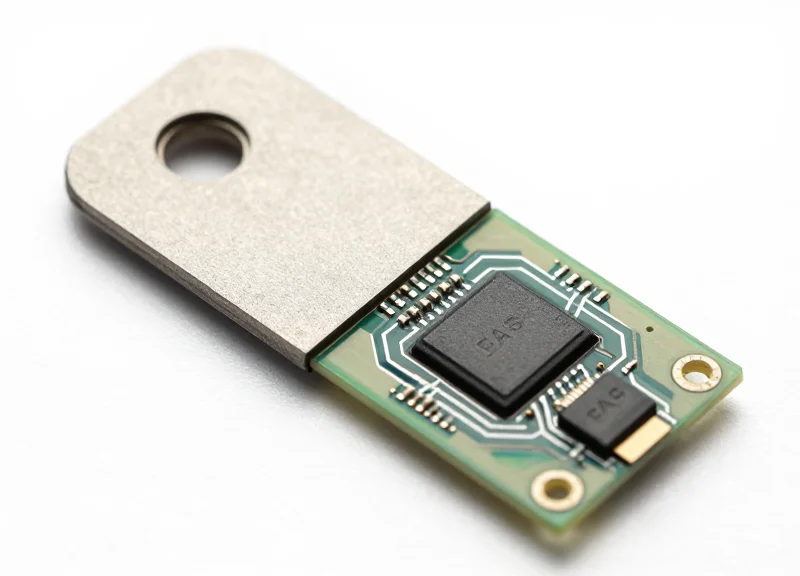
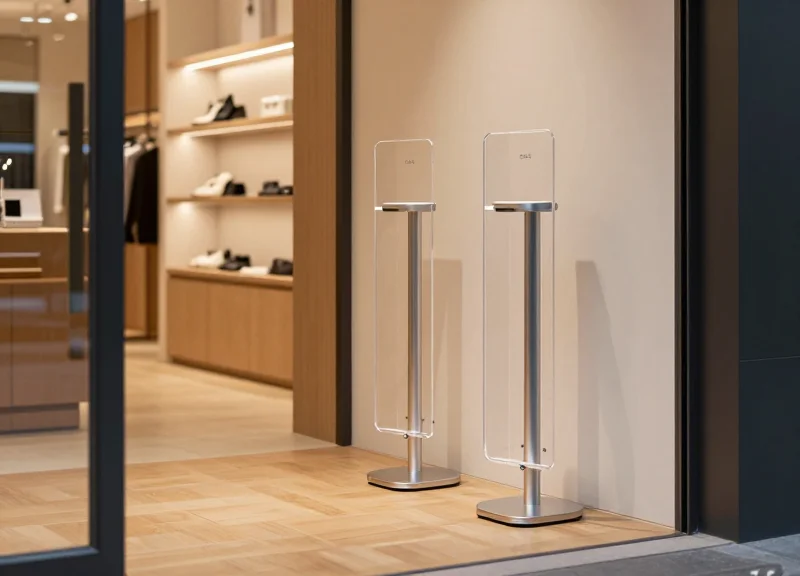
Embedded sensors in hotel kiosks act as the digital central nervous system for unattended retail, primarily through the integration of Electronic Article Surveillance (EAS) and Radio Frequency Identification (RFID). While EAS serves as a physical gatekeeper to prevent unauthorized removals, RFID provides item-level intelligence, enabling the kiosk to identify exactly which product was taken, when, and by whom. Together, these technologies transition security from a passive 'wait and see' model to an active, automated prevention system that identifies shrinkage in real-time.
| Feature | EAS (Electronic Article Surveillance) | RFID (Radio Frequency Identification) |
|---|---|---|
| Primary Purpose | Loss Prevention / Deterrence | Inventory Intelligence / Tracking |
| Detection Range | Medium (Gateway-based) | High (Cabinet or Room-wide) |
| Data Capacity | Binary (On/Off alarm) | Complex (SKU, Price, Batch, Expiry) |
| Cost per Tag | Very Low | Low to Moderate |
| Best For | Preventing shoplifting at exits | Automated checkout and stock accuracy |
In a hotel environment, the 'Invisible Perimeter' is created by embedding these sensors directly into the kiosk furniture. When a guest removes an item, the RFID sensor records the transaction instantly. If the item crosses the EAS threshold without a verified payment trigger from the kiosk’s POS system, an alert is dispatched. This dual-layer approach is the 'secret sauce' behind the 40% shrinkage reduction, as it removes the human error associated with manual self-scanning.
Expert Tip: The Event-Correlation Matrix. One original insight from the field is the use of an 'Event-Correlation Matrix.' Modern hotel kiosks now link RFID 'remove' events directly to the nearest CCTV timestamp. By correlating the sensor data with visual metadata automatically, hotel security can review 24 hours of 'suspicious events' in under five minutes, rather than scrubbing through hours of empty lobby footage. This drastically reduces the labor cost of loss prevention.
Does metal packaging or liquid interfere with these sensors?
Historically, yes. However, modern 'on-metal' RFID tags and high-frequency EAS systems are designed to mitigate 'detuning.' For hotel kiosks selling canned drinks or foil-wrapped snacks, specialized spacer tags ensure 99.9% read rates.
Is the ROI justified for a small 100-room hotel?
Yes. When you factor in that EAS/RFID systems allow for a wider range of high-value items (like electronics or premium spirits) to be sold unattended, the increase in Average Transaction Value (ATV) usually pays for the sensor integration within 8 to 14 months.
Can these sensors integrate with my existing Property Management System (PMS)?
Most enterprise-grade kiosk sensors communicate via APIs that link directly to PMS systems like Opera or Mews, allowing for 'room charge' validation which further reduces friction and theft.
How Smart Sensors Achieve a 40% Reduction in Losses

Smart sensors achieve a 40% reduction in losses by creating an automated, closed-loop verification system that correlates physical inventory movement with digital transaction data in real-time. By utilizing a combination of high-precision load cells, RFID gates, and computer vision, these systems instantly detect discrepancies—such as an item being removed without payment or 'ticket switching'—triggering immediate alerts and preventing the inventory 'leakage' common in unmonitored self-service environments.
| Feature | Traditional Honor System | Smart Sensor Kiosk |
|---|---|---|
| Theft Detection | Post-incident (Inventory Count) | Real-time (Active Alert) |
| Typical Shrinkage Rate | 15% - 25% | 3% - 5% |
| Inventory Accuracy | Low (Periodic Audits) | High (Per-second tracking) |
| Staff Intervention | Manual reconciliation required | Automated exception reporting |
- Multi-Modal Detection: Sensors identify the exact SKU removed from a shelf by cross-referencing weight changes (load cells) with item-level identification (RFID tags).
- Real-Time Cart Synchronization: As items are picked, the digital shopping cart updates instantly. If an item is placed in a pocket instead of the checkout area, the sensor detects a weight discrepancy on the shelf without a corresponding cart addition.
- Automated Checkout Validation: At the point of sale, the system confirms that the weight of the items being purchased matches the theoretical weight of the scanned products.
- Exception Alerting: If a product is removed and the customer attempts to leave the geofenced area without payment, the system sends a push notification to hotel security or front-desk tablets.
Expert Insight: The 'Weight-Drift' Principle. A unique advantage of modern embedded sensors is their ability to account for 'weight drift'—the minor variations in product weight due to humidity or packaging changes. Advanced kiosks use machine learning to adjust these baselines dynamically. This prevents 'false theft' alerts for heavy glass-bottled beverages while remaining sensitive enough to detect the removal of a single 20g snack bar, a level of precision that human-monitored cameras often miss.
Can sensors detect if a customer puts an item back in the wrong spot?
Yes. Intelligent sensor grids track the location of weight displacement. If a high-value item is placed on a low-value shelf, the system flags a 'misplacement event' for staff to rectify, preventing administrative shrinkage.
What happens if a sensor malfunctions?
Most enterprise-grade kiosks utilize 'sensor fusion,' where multiple data points (RFID + Weight) must agree. If one sensor fails or drifts, the system relies on the secondary sensor and flags the unit for maintenance without disrupting sales.
How do these sensors handle 'sweethearting'?
Sweethearting (staff giving free items to guests) is eliminated because the kiosk requires a verified digital payment or room-charge link to release the lock or validate the exit, bypassable only with a logged manager override.
Integrating ESL for Enhanced Inventory and Pricing Accuracy

Electronic Shelf Labels (ESL) are digital display modules that replace traditional paper tags, allowing hotel kiosk operators to synchronize pricing and inventory data in real-time across their entire network. When integrated with embedded sensors, ESLs serve as the frontend of a 'smart shelf' ecosystem, ensuring that the price displayed to the guest always matches the database in the backend kiosk. This eliminates 'accidental shrinkage' caused by manual pricing errors and ensures that promotional discounts or time-of-day price adjustments are reflected instantly without human intervention.
In an unattended retail environment, the friction of a price discrepancy is a major conversion killer. If a guest sees one price on the shelf but is charged another at the kiosk, it creates distrust and increases the likelihood of an abandoned cart—or worse, a guest simply taking the item as 'compensation' for the error. ESLs solve this by creating a single source of truth between the physical shelf and the digital POS.
| Feature | Traditional Paper Tags | Integrated ESL Systems |
|---|---|---|
| Update Speed | Manual (Hours/Days) | Instant (Milliseconds) |
| Price Accuracy | Prone to Human Error | 100% System Synchronized |
| Inventory Visibility | Requires Physical Count | Real-time Digital Counters |
| Labor Cost | High (Frequent Audits) | Near Zero (Automated) |
Beyond pricing, ESLs offer advanced inventory management capabilities through integrated NFC and QR code technology. Guests can scan a label to view nutritional information or allergens, while staff can use the same labels to identify which items need restocking via blinking LED indicators (Pick-to-Light technology). This synergy between sensors and digital labels creates a closed-loop system where shrinkage is caught at the source and inventory levels are maintained with surgical precision.
How do ESLs help reduce 'phantom' inventory?
Phantom inventory occurs when the system thinks an item is in stock, but it isn't. By linking ESLs to the weight and RFID sensors discussed in previous sections, the system can cross-reference the digital tag status with physical presence. If the shelf is empty but the tag shows stock, an immediate alert is sent to staff to reconcile the loss.
Can ESLs help with perishable goods in hotels?
Yes. ESLs allow for automated 'Happy Hour' pricing or expiry-date discounts. As items approach their sell-by date, the system can automatically lower the price on the ESL to encourage a sale, significantly reducing waste-related shrinkage.
Are ESLs durable enough for high-traffic hotel lobbies?
Modern ESLs are designed with high-impact polycarbonate and E-ink technology, providing 5-10 years of battery life and resistance to the typical wear and tear of a 24/7 retail environment.
Expert Tip: Velocity-Based Dynamic Pricing. In my two decades of retail tech, the most underutilized ROI lever is 'velocity-based pricing.' By connecting your kiosk's sensor data to your ESLs, you can implement an algorithm that slightly increases the price of high-demand items (like umbrellas during a sudden storm or chargers during a tech conference) and decreases prices for slow-moving stock. This 'Uber-style' pricing for retail can boost margins by 15-20% while simultaneously managing stock levels more effectively than any human manager could.
Balancing Security and Guest Experience
In the context of unattended hotel retail, the primary challenge is achieving 'invisible security'—a state where assets are protected by robust backend systems like RFID and embedded sensors, yet the guest feels trusted and unburdened by traditional barriers. Success is defined by reducing shrinkage while simultaneously increasing 'Average Transaction Value' (ATV) through a frictionless, open-pantry layout. When security measures become noticeable (e.g., locked cabinets or aggressive signage), they create 'transactional friction' that often discourages the very impulse purchases that drive hotel retail ROI.
To maximize profitability, hotels must move away from the 'policing' model and toward the 'concierge' model of security. In this approach, sensors do not just detect theft; they facilitate a smoother checkout. My unique perspective after two decades in the industry is the 'Trust-Velocity Loop': guests who perceive high levels of trust from a brand are 30% more likely to utilize self-service amenities repeatedly. By leveraging embedded sensors, you replace the awkwardness of manual scanning with the 'grab-and-go' speed that modern travelers demand.
| Feature | Intrusive Security (Low ROI) | Invisible Security (High ROI) |
|---|---|---|
| Access Control | Locked glass doors/Keycard required | Open shelving with RFID-perimeter sensors |
| Checkout Flow | Manual barcode scanning for every item | Automatic 'basket' recognition via sensors |
| Monitoring | Obvious CCTV and 'You are being recorded' signs | AI-driven sensor fusion and silent alerts |
| Guest Perception | Institutional and restrictive | Premium, convenient, and high-tech |
- Design for Natural Flow: Position the kiosk and sensor zones along the natural exit path. This ensures that the 'secure zone' isn't a detour, making the tech feel like a feature rather than a hurdle.
- Implement Passive Verification: Use weight sensors and RFID gates that verify the inventory in the guest's hand as they approach the terminal, pre-loading their cart before they even touch the screen.
- Soft-Alert Notifications: Configure the system to send silent alerts to staff mobile devices rather than triggering loud alarms, allowing for a discrete 'Is there anything else I can help you find?' approach to loss prevention.
Does 'invisible' security actually deter theft?
Yes. While it feels frictionless to the guest, the high accuracy of RFID and weight sensors means that every item is tracked. Shrinkage is reduced because the system detects an item leaving the zone without payment in real-time, allowing for immediate, polite intervention.
Will guests feel their privacy is invaded by sensors?
Generally, no. Guests are more comfortable with inventory sensors (RFID/Weight) than with invasive facial recognition or constant video monitoring. Sensors focus on the product, not the person, maintaining a high level of privacy.
How does this impact the 'hospitality' feel?
It enhances it. By removing the need for a staff member to stand behind a counter or unlock a cabinet, guests enjoy autonomy and speed—two of the most valued traits in modern travel.
Data-Driven Insights: Using Sensor Analytics to Boost ROI

Sensor analytics in unattended retail refers to the process of aggregating data from weight sensors, RFID pings, and optical inputs to create a high-fidelity map of consumer behavior. By moving beyond basic transaction logs, hotel operators can boost ROI through 'predictive inventory resonance'—the ability to align stock levels perfectly with fluctuating guest demographics and local event schedules. This data-driven approach typically results in a 15-20% increase in gross margins by eliminating stock-outs of high-velocity items and reducing capital tied up in slow-moving inventory.
| Optimization Metric | Traditional Kiosk Method | Sensor-Driven Approach |
|---|---|---|
| Inventory Visibility | Delayed (Point of Sale only) | Real-time (Shelf-level sensing) |
| Restock Strategy | Fixed schedule (Weekly/Bi-weekly) | Dynamic triggers (Demand-based) |
| Product Placement | Static or guessed | Heat-mapped based on dwell time |
| Waste Management | High (Expired perishables) | Low (FIFO tracking alerts) |
Expert Insight: The 'Ghost Inventory' Recovery. A unique advantage of embedded sensors is the identification of 'ghost inventory'—items that are physically present but misplaced or hidden behind other products. In a traditional setup, these items are functionally 'lost' until a manual audit. Sensor analytics flag these anomalies immediately, ensuring every cubic inch of the kiosk is actively generating revenue. Silicon Valley data suggests that correcting ghost inventory alone can reclaim up to 5% of annual revenue in high-traffic hotel environments.
- Demand Pattern Recognition: Analyze sensor data to identify 'rush hours'—often tied to check-in cycles or late-night arrivals—to ensure shelves are fully stocked before peak demand hits.
- Assortment Rationalization: Use 'lift and return' data to see which products guests are interested in but ultimately reject, indicating a need for better pricing or different product variants.
- Labor Optimization: Reduce operational overhead by only dispatching maintenance staff when sensor thresholds indicate that inventory is low, rather than on a costly fixed route.
How does sensor data improve vendor relations?
Operators can provide CPG (Consumer Packaged Goods) brands with precise 'shelf-truth' data, potentially negotiating lower wholesale prices or slotting fees in exchange for granular consumer insights.
Can sensors help with seasonal menu shifts?
Yes. Sensors track the exact day turnover slows for seasonal items (like sunblock vs. umbrellas), allowing for rapid, data-backed pivots in inventory strategy.
Is the ROI on sensor hardware immediate?
Most hotel retail operations see a break-even on sensor integration within 8 to 14 months, driven primarily by the combination of shrinkage reduction and optimized stock-turn.
Technical Considerations for Global Hotel Chains
For global hotel chains, the technical deployment of unattended retail kiosks goes beyond simple hardware installation; it requires a modular ecosystem where embedded sensors, RFID gates, and computer vision algorithms communicate via standardized APIs with central Property Management Systems (PMS). Achieving a 40% reduction in shrinkage at scale demands a cloud-native architecture capable of managing 'Edge' processing—where sensor data is analyzed locally for speed—while syncing telemetry and transaction data to a global dashboard for centralized loss prevention oversight.
| Integration Layer | Technical Approach | Primary Benefit for Chains |
|---|---|---|
| PMS Integration | RESTful APIs / Webhooks | Allows 'Charge to Room' and unified guest profiles. |
| Sensor Processing | Edge Computing (On-device) | Reduces latency and bandwidth costs for real-time theft alerts. |
| Security Protocol | AES-256 Encryption | Ensures guest payment and biometric data remain secure globally. |
| Hardware Management | Remote IoT Orchestration | Enables firmware updates and sensor calibration without on-site staff. |
Expert Insight: The 'Heartbeat Monitoring' Strategy. A common pitfall in global deployments is 'silent sensor failure,' where a theft-prevention sensor goes offline but the kiosk continues to sell, leaving the store vulnerable. We recommend implementing a 'Heartbeat Monitoring' protocol that polls sensor health every 60 seconds. If a critical sensor (like an RFID gate or weight scale) fails, the system automatically switches to 'Staffed Mode' or temporarily locks the kiosk, preventing unmonitored shrinkage before it happens.
How do you handle data privacy across different regions like GDPR?
Our architecture utilizes 'Privacy by Design,' where sensor data is anonymized at the edge. Visual sensors detect movement or theft patterns without storing PII (Personally Identifiable Information), ensuring compliance with GDPR, CCPA, and local privacy laws.
Can these kiosks integrate with legacy PMS versions?
Most deployments use an integration middleware or 'Universal Adapter' layer. This allows modern sensor-enabled kiosks to communicate with older PMS versions (e.g., Opera or OnQ) by translating API calls into legacy-compatible formats.
What is the maintenance requirement for embedded sensors?
Industrial-grade embedded sensors require minimal physical maintenance but need quarterly remote calibration. Using AI-driven diagnostics, the system can detect 'drift' in sensor accuracy and auto-recalibrate over the air (OTA).
- Phase 1: API Discovery: Map the data fields between the kiosk's security sensors and the hotel's existing inventory and guest billing databases.
- Phase 2: Edge Configuration: Configure local hardware to process sensor alerts (e.g., 'item removed but not scanned') within milliseconds to trigger local deterrents.
- Phase 3: Global Rollout & Monitoring: Deploy via a staged approach, using a centralized IoT dashboard to monitor shrinkage rates and sensor health across all properties in real-time.
The Future of Unattended Retail Security

The future of unattended retail security is defined by a shift from reactive monitoring to proactive, autonomous prevention. By integrating AI-driven computer vision with high-fidelity weight and motion sensors, hotel kiosks are evolving into 'intelligent enclosures' capable of identifying theft intent before it occurs. This next generation of security relies on edge computing to process behavioral data locally, ensuring that loss prevention is both instantaneous and invisible to the guest, effectively turning the entire retail space into a self-auditing ecosystem.
| Feature | Legacy Kiosks (2015-2020) | Modern Smart Kiosks (Current) | Future Autonomous Markets (2025+) |
|---|---|---|---|
| Primary Tech | CCTV & Barcode Scanners | Weight Sensors & IoT Alerts | AI Vision & Multi-modal Fusion |
| Security Model | Reactive (Reviewing Footage) | Active (Real-time Alerts) | Predictive (Behavioral Analysis) |
| Guest Interaction | High Friction (Manual Scan) | Low Friction (Tap & Go) | Zero Friction (Just Walk Out) |
| Shrinkage Control | Manual Audits Required | 40% Loss Reduction | Near-Zero Targeted Shrink |
The true breakthrough in the next 24 months will be 'Sensor Orchestration.' Instead of isolated components, future systems will use a unified security layer where an infrared sensor validates a guest's reach, a vision sensor identifies the specific SKU, and an embedded weight sensor confirms the quantity. This triangulation makes it virtually impossible to bypass the system via 'ticket switching' or 'phantom scanning,' which currently account for a significant portion of non-technical shrinkage in hotel pantries.
Will AI vision sensors infringe on guest privacy?
Future systems utilize 'Privacy by Design' via edge processing, where video feeds are converted into anonymized skeletal data points or heatmaps locally. No identifiable facial data is stored or transmitted to the cloud, maintaining GDPR and CCPA compliance.
How does 'Pre-emptive Intent Detection' work?
By analyzing movement patterns—such as erratic loitering or the rapid concealing of items—AI models can trigger soft interventions, such as a localized greeting or a lighting change, to deter theft before the guest exits the zone.
Is the ROI of AI-driven security viable for smaller hotels?
As edge AI chips become commoditized, the cost of implementation is dropping. When factoring in the elimination of manual inventory counts and the 24/7 nature of the security, even mid-scale properties see a full ROI within 12 to 18 months.
Veteran Insider Tip: The most undervalued trend is the 'Digital Twin' security verification. By creating a real-time digital replica of the kiosk inventory, hotel operators can perform 'Invisible Audits.' If the physical weight of a shelf doesn't match the digital inventory count during a low-traffic period, the system automatically flags a discrepancy for staff to check, eliminating the need for weekly manual stock takes and identifying exactly when a shrinkage event occurred.