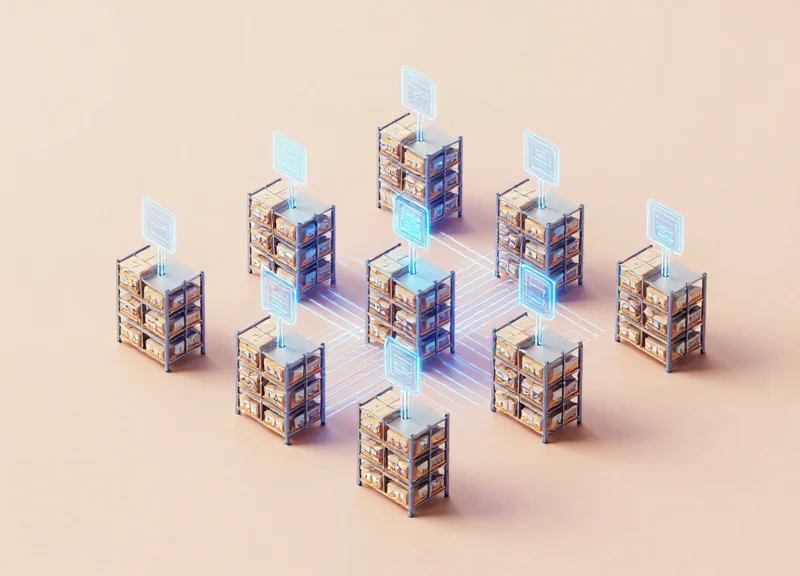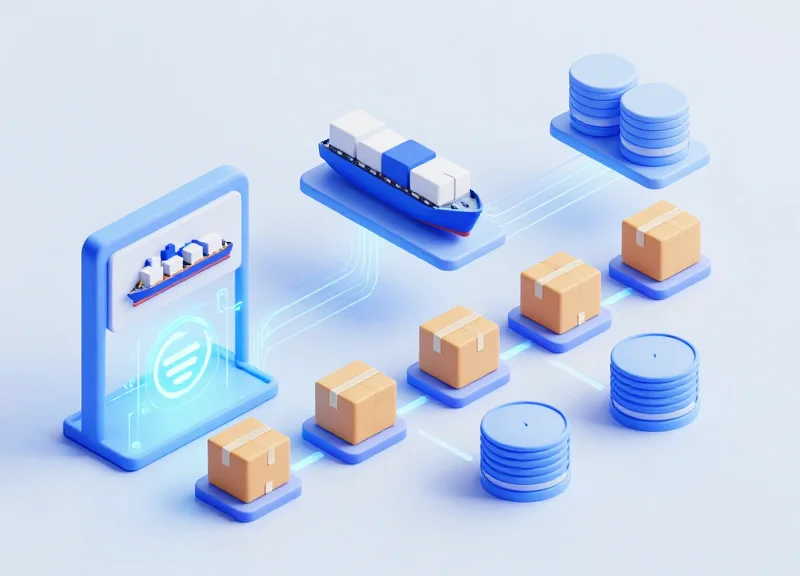
Managing thousands of retail locations requires more than just digital price tags; it demands a robust, centralized nerve center. As global retailers scale past 1,000 stores, the complexity of price synchronization, battery management, and system latency grows exponentially. This guide dives into the architectural requirements and top-tier cloud ESL management platforms designed to handle massive deployments without compromising on speed or security.
The Evolution of ESL Management: From Local Servers to Global Cloud
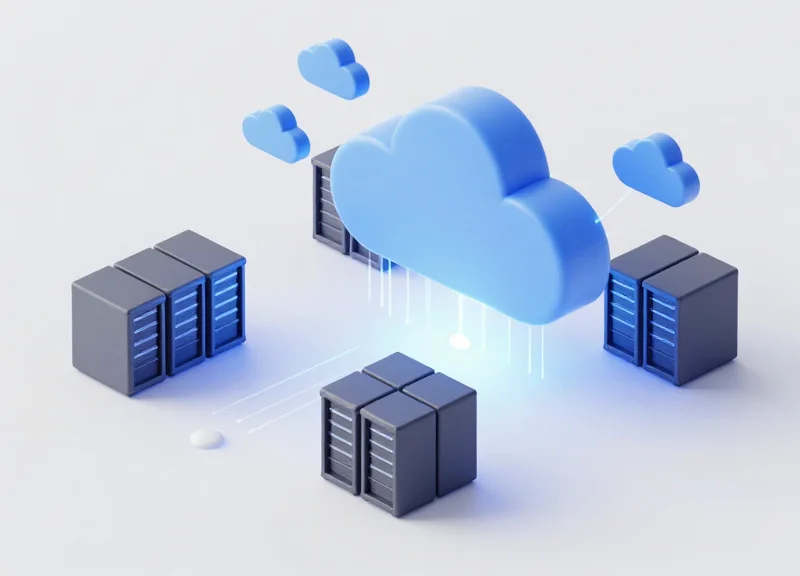
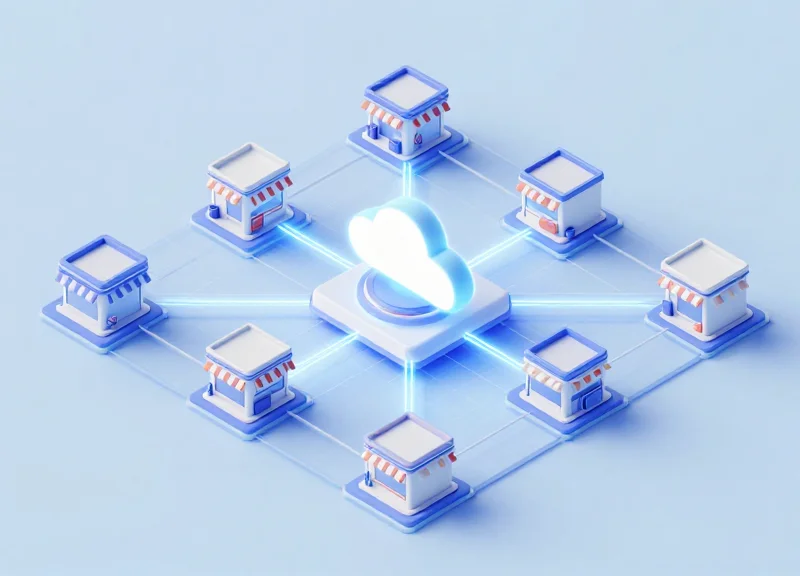
The evolution of Electronic Shelf Label (ESL) management represents a paradigm shift from decentralized, hardware-heavy local server installations to agile, multi-tenant cloud architectures. For global retailers operating 1,000+ stores, this transition is no longer a luxury but a prerequisite for operational survival. While legacy systems relied on 'siloed' servers within each store—creating a fragmented data landscape—modern cloud-native platforms offer a centralized 'global brain' that synchronizes pricing, inventory, and promotional data across continents in milliseconds.
| Feature | Legacy Local Servers | Modern Global Cloud |
|---|---|---|
| Scalability | Linear cost; hardware needed for every store. | Elastic; scale to 10,000 stores instantly. |
| Maintenance | On-site IT visits or remote manual patches. | Automated, zero-downtime updates (CI/CD). |
| Data Integrity | High risk of price discrepancies between stores. | Single source of truth; 100% synchronization. |
| Security | 1,000+ potential points of local entry. | Hardened, centralized enterprise-grade security. |
| Total Cost of Ownership | High CapEx (Servers, UPS, Cooling). | Low OpEx (Subscription-based, no local hardware). |
The fundamental flaw of the local server model in a high-scale environment is 'Operational Friction.' When a retailer manages 1,000 stores with local servers, they aren't managing one system; they are managing 1,000 different systems. This leads to what we call the 'N+1 Problem,' where every new store added to the network increases the management complexity and failure rate of the entire organization exponentially rather than linearly.
Why is multi-tenancy important for global retailers?
Multi-tenancy allows a single instance of software to serve multiple 'tenants' (regions or sub-brands) while keeping data isolated. For a global retailer, this means the head office can push a global policy while allowing local managers to adjust for regional taxes or currencies within the same ecosystem.
Does the cloud increase latency for price updates?
Contrary to popular belief, modern edge-computing and cloud-optimized protocols (like MQTT) often result in faster updates than local servers. Cloud systems can process complex price-rule logic in parallel across a global cluster, whereas a local store server may struggle with limited CPU resources during peak hours.
What happens to the labels if the store's internet goes down?
Enterprise-grade cloud ESL platforms use 'Edge-Persistence.' The labels continue to display the last cached price, and local access points can often store a queue of updates until the cloud connection is restored, ensuring zero customer-facing downtime.
Expert Insight: The 'Technical Debt' Threshold. In my two decades of infrastructure analysis, I have observed a consistent 'Breaking Point' at approximately 50 to 100 stores. Below this, local servers are manageable. Above this, the cost of 'Configuration Drift'—where local server settings slowly diverge from the corporate standard—becomes the leading cause of failed price audits. For a 1,000-store rollout, cloud is not just about the technology; it is about eliminating the human error inherent in decentralized management.
Critical Factors for 1,000+ Store Scale: Capacity and Latency

For a global retailer, scaling to 1,000+ stores means managing upwards of 10 to 50 million individual ESL devices. In this environment, capacity refers to the infrastructure's ability to handle massive concurrent price updates without service degradation, while latency is the speed at which a data packet travels from the central cloud HQ to an individual shelf label in a remote location. To maintain 'Price Integrity'—where the shelf price matches the POS exactly—architectures must move beyond simple cloud hosting to distributed edge-computing models that eliminate the 'backhaul' delays inherent in centralized data centers.
| Feature | Legacy Cloud (Standard) | Enterprise Global Edge (Required) |
|---|---|---|
| Max Concurrent Updates | 5,000 - 10,000 tags/min | 500,000+ tags/min |
| Typical Latency (Global) | 2.0 - 5.0 seconds | Less than 200 milliseconds |
| Architecture Type | Monolithic Centralized | Microservices + Edge PoPs |
| Failure Mode | Global System Downtime | Isolated Regional Impact Only |
The 'Thundering Herd' Insight: A unique challenge for 1,000+ store retailers is the 'Thundering Herd' effect. During a global promotion (like Black Friday), if your ERP pushes 5 million price changes simultaneously, a standard cloud platform will often queue these updates, leading to a 'latency tax' where stores are out of sync for hours. Expert-grade platforms utilize 'Backpressure Management' and 'Predictive Caching' at the store level to ensure that even if the connection to the main cloud fluctuates, the local edge server continues to execute the update queue without interruption.
- Horizontal Scaling Verification: Ensure the platform uses Kubernetes or similar container orchestration to automatically spin up new compute resources as the volume of stores increases.
- Edge Point of Presence (PoP) Deployment: The provider should have data nodes within the same geographic region as your stores to keep the 'last mile' of data transmission under 100ms.
- Asynchronous Data Processing: The system must process updates in the background so that the UI/UX remains responsive for store managers even during massive data ingestions.
How does edge computing specifically reduce ESL latency?
Edge computing places the 'intelligence' closer to the store. Instead of every tag update traveling back to a central US or EU server, the edge node handles local logic and image rendering, reducing the round-trip time by up to 90%.
What happens if the internet goes down at one of my 1,000 stores?
An enterprise-grade platform uses 'Offline-First' architecture. The local gateway or edge server stores the pending updates and syncs them the moment connectivity is restored, ensuring no data loss.
Is WebSocket technology better than HTTP Polling for large-scale ESL?
Yes. WebSocket provides a persistent, two-way communication channel which is significantly faster and more efficient for real-time tag status monitoring than traditional polling.
Security and Compliance: Protecting Global Retail Data
Security and compliance in Cloud ESL management refers to the comprehensive framework of technical protocols and legal certifications—most notably SOC2 Type II, ISO 27001, and GDPR—designed to protect retail pricing data, store infrastructure, and consumer privacy across a distributed global network. For retailers operating 1,000+ stores, a secure cloud architecture is the only way to prevent large-scale pricing manipulation or unauthorized access to the corporate backbone through local IoT sensors.
| Compliance Standard | Primary Focus | Retail Impact (1,000+ Stores) |
|---|---|---|
| SOC2 Type II | Operational Trust & Security | Ensures the vendor manages data securely over long periods to protect corporate interests. |
| GDPR / CCPA | Data Privacy & Residency | Mandatory for global brands to avoid billion-dollar fines when handling data across EU/US borders. |
| ISO 27001 | Information Security Management | Provides a globally recognized blueprint for managing sensitive company information. |
- End-to-End Encryption (AES-256): Data must remain encrypted at rest in the cloud and in transit to the physical ESL hardware to prevent 'Man-in-the-Middle' attacks.
- Role-Based Access Control (RBAC): Granular permissions ensure a store manager in Tokyo cannot accidentally update prices for a branch in London.
- Secure OTA Updates: Over-the-Air firmware updates must be digitally signed to ensure malicious code isn't injected into the retail IoT network.
Expert Insight: The 'Zero-Trust Retail Edge' Requirement. Most generic articles focus on cloud server security, but the real vulnerability for global retailers is the 'physical-to-cloud' gap. In a 1,000-store rollout, each store becomes a potential entry point for hackers. Professional-grade ESL platforms now employ a Zero-Trust architecture, where the Cloud Management System treats every individual Access Point (AP) and label as an untrusted device, requiring continuous mutual authentication before any data exchange occurs. This prevents a single compromised store from being used as a pivot point into the retailer's primary ERP or POS systems.
Does Cloud ESL storage host PII (Personally Identifiable Information)?
Standard ESL management should not store customer PII. However, if the platform integrates with loyalty programs or mobile apps, GDPR compliance becomes strictly mandatory to manage consumer data trails.
Why is SOC2 Type II preferred over Type I?
Type I only looks at a point in time, whereas Type II audits the platform's security effectiveness over a 6-12 month period, proving long-term operational reliability for enterprise scale.
How do platforms handle data residency for global operations?
Leading providers offer multi-region cloud hosting (e.g., AWS or Azure regions), allowing retailers to keep European data within the EU and North American data in the US to satisfy local laws.
Integration Ecosystem: API-First Strategy and ERP Connectivity

For global retailers with 1,000+ stores, an integration ecosystem built on an API-first strategy is the functional backbone of the enterprise, enabling seamless, bi-directional data flow between the Electronic Shelf Label (ESL) platform and Core Systems like SAP, Oracle, or Microsoft Dynamics 365. This architecture ensures that price changes, inventory levels, and promotional data are synchronized across the entire retail estate in milliseconds, eliminating the risk of pricing discrepancies between the shelf and the Point of Sale (POS) while maintaining a single source of truth.
| Integration Method | Target System | Primary Benefit | Scalability Profile |
|---|---|---|---|
| RESTful/GraphQL API | Modern ERPs (D365, NetSuite) | Low-latency, real-time sync | High: Handles millions of requests |
| Native Connectors | SAP S/4HANA, Oracle Retail | Out-of-the-box compatibility | Medium-High: Vendor optimized |
| Message Queues (Kafka) | Legacy Distributed Systems | Asynchronous resilience | Very High: Event-driven architecture |
| Secure Middleware | Custom/Proprietary Systems | Custom transformation logic | Moderate: Depends on bridge capacity |
Expert Tip: To achieve true global scale, retailers must prioritize 'Idempotent API Design.' In a network of 1,000+ stores, internet blips are inevitable. An idempotent API ensures that if a price update command is sent twice due to a retry, the system recognizes the duplication and only processes it once. This prevents 'ghost updates' and ensures your shelf data remains perfectly consistent even in unstable network environments.
- Establish the API-First Foundation: Select a platform where every feature is accessible via API before the UI. This allows your IT team to build custom dashboards or integrate ESL data directly into consumer-facing mobile apps.
- Map Data Orchestration: Define the hierarchy of truth. Typically, the ERP is the master for pricing, while the ESL platform provides real-time feedback on label battery health and signal strength back to the ERP.
- Implement Webhook Listeners: Move away from 'polling' (where the ESL system constantly asks the ERP for updates) to an 'event-driven' model where the ERP pushes changes instantly via webhooks.
- Validate with End-to-End Encryption: Ensure all API calls between your cloud environment and on-premise ERP gateways are secured via TLS 1.3 and mutual TLS (mTLS) authentication.
How does the system handle ERP downtime?
Enterprise cloud ESL platforms use a 'Store and Forward' mechanism. If the connection to the ERP is lost, price changes are queued and automatically reconciled once the system is back online.
Can we integrate ESL with our loyalty program data?
Yes. Via API-first architecture, the labels can display dynamic 'Member-Only' pricing triggered by the customer's proximity or scanning behavior in the store app.
Is middleware necessary for SAP integration?
While not always mandatory, using middleware like SAP BTP or MuleSoft can simplify data mapping and provide better monitoring for global deployments.
User Interface and Role-Based Access Control (RBAC)
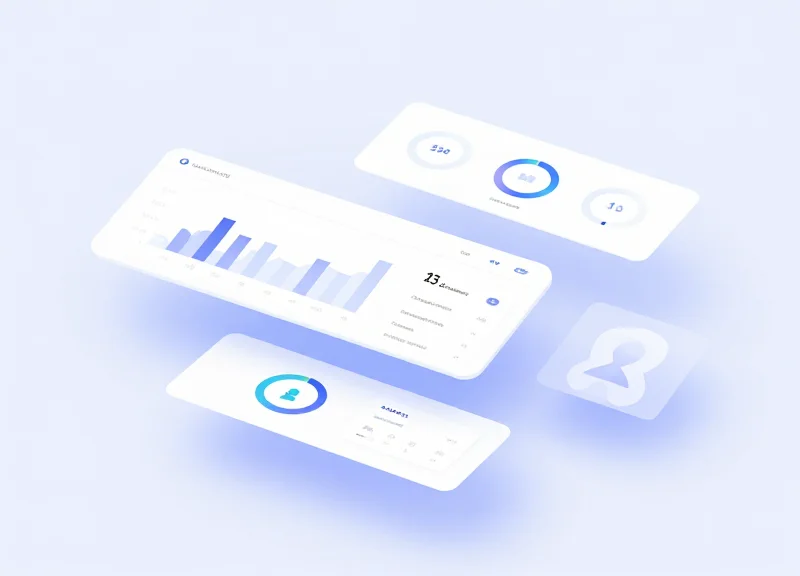
In a 1,000-store retail environment, the management software is the primary touchpoint between your corporate strategy and the physical shelf. The User Interface (UI) must serve two masters: the corporate power-user who requires high-density data and bulk-action capabilities, and the store-level associate who needs a simplified, mobile-first experience. Role-Based Access Control (RBAC) is the silent engine that manages this complexity, ensuring that a store manager in Berlin cannot inadvertently modify the pricing logic for a flagship location in New York. Sophisticated RBAC systems transform the cloud platform from a simple tool into a secure governance framework that enforces 'Least Privilege' principles across the global enterprise.
| User Role | Permission Level | Primary Functionality |
|---|---|---|
| Global Administrator | Full System Access | API management, system-wide configuration, and top-level auditing. |
| Regional Merchandiser | Scoped (Region/Country) | Managing regional promotions, currency adjustments, and localized content. |
| Store Manager | Store-Specific | Monitoring device health, approving local markdowns, and staff assignments. |
| Field Technician | Functional Access | Hardware troubleshooting, label pairing, and battery status reporting. |
- Visual Hierarchy & Dashboards: The UI should provide a 'Nerve Center' view that aggregates global data into actionable insights, such as high-failure-rate stores or pending price updates.
- Mobile-First Store Operations: Store associates should interact with the system via handheld PDA or mobile apps, focusing on high-speed label pairing and inventory scanning.
- Audit Logging: Every click and command must be logged. For 1,000+ stores, this traceability is essential for compliance and troubleshooting price discrepancies.
Expert Insight: The 'UI-Hiding' Strategy for Cognitive Load. A unique differentiator in top-tier ESL platforms is 'Context-Aware UI.' Instead of simply graying out unauthorized buttons, the interface dynamically reconfigures itself to hide irrelevant features. For a store associate, this means the interface only shows three buttons: Link, Unlink, and Status. This 'ghosting' of complex administrative features reduces training time by up to 70% and virtually eliminates human error caused by interface clutter.
How does RBAC handle third-party service providers?
Modern cloud platforms allow for 'Temporary Scoped Access,' giving external technicians limited-time permissions to specific store locations without exposing the global network.
Can the UI support multiple languages and time zones?
Yes, enterprise-grade platforms feature 'Localization Objects' that automatically adjust the UI language and timestamp data based on the user's geographic profile.
What happens if a regional manager's account is compromised?
Multi-Factor Authentication (MFA) combined with RBAC ensures that the damage is 'containerized.' The intruder is restricted to that manager's specific scope rather than the entire global fleet.
Total Cost of Ownership (TCO) Analysis at Enterprise Scale
For global retailers with 1,000+ stores, Total Cost of Ownership (TCO) is the sum of all direct and indirect costs associated with an Electronic Shelf Label (ESL) system over a 5-to-7-year lifecycle. While hardware accounts for the bulk of initial CAPEX, the long-term financial health of the project is determined by the software delivery model. Transitioning from legacy on-premises servers to a multi-tenant Cloud ESL platform typically reduces TCO by 25-40% through the elimination of local server maintenance, manual security patching, and decentralized IT support costs.
| Cost Component | Multi-Tenant SaaS (Cloud) | Private Cloud / Self-Hosted |
|---|---|---|
| Initial Software Capex | Low (Setup fee + Subscription) | High (Perpetual licenses) |
| Infrastructure Management | Zero (Vendor managed) | High (Requires dedicated DevOps) |
| Security & Compliance | Included (SOC2/GDPR updates) | Internal (Manual auditing) |
| Hardware Maintenance | Automated health monitoring | Manual store-by-store checks |
| Scalability Cost | Linear and predictable | Step-function (New server tiers) |
Expert Insight: The Battery-Cloud Correlation. One often overlooked TCO factor is the 'Ping-Rate Battery Depreciation.' In a 1,000-store environment, a cloud platform that lacks sophisticated asynchronous communication can force labels to 'wake up' more frequently to check for updates. An enterprise-grade platform uses edge intelligence to minimize these check-ins. A platform that extends battery life from 5 years to 7 years across 10 million labels effectively saves the retailer tens of millions in replacement CAPEX and labor, a swing that far outweighs the cost of the software subscription itself.
Which licensing model is best for a 1,000+ store rollout?
A Multi-tenant SaaS model is generally superior for global scale because it provides a single point of truth and eliminates the 'version sprawl' common in private cloud or on-premise installations.
How does cloud connectivity affect operational ROI?
Cloud platforms allow for 'Zero-Touch Provisioning,' meaning store staff can install tags without IT expertise, reducing the labor cost of deployment by up to 60% compared to traditional systems.
What are the hidden costs of a Private Cloud ESL setup?
Hidden costs include the internal labor for database optimization, the cost of standby redundant servers for disaster recovery, and the opportunity cost of slower feature deployment cycles.
Future-Proofing Your Retail Strategy with RFID and ESL Synergy
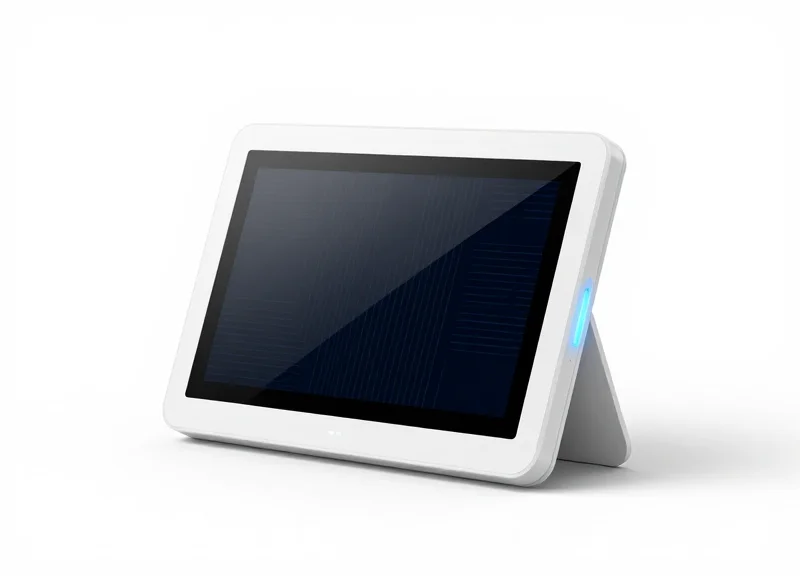
The synergy between Radio Frequency Identification (RFID) and Electronic Shelf Labels (ESL) represents the pinnacle of modern retail IoT, merging real-time inventory visibility with dynamic pricing execution. By synchronizing item-level tracking data with the shelf edge, global retailers can achieve near 100% inventory accuracy and eliminate the 'phantom stock' issues that plague omnichannel fulfillment. This integration allows the cloud management platform to serve as a single source of truth, where a change in physical stock levels can instantly trigger visual updates or promotional shifts on the digital label without human intervention.
Expert Insight: The 'Shelf-Inventory Loopback' Effect. While most retailers view RFID for the backroom and ESL for the front-of-house, the true strategic advantage lies in the loopback. Leading-edge platforms now use ESLs as localized 'anchors.' When an RFID-tagged item is moved to a different zone, the ESL can detect the proximity of the tag, providing granular heatmapping of product placement versus sales velocity—data previously invisible to even the most advanced ERP systems.
| Feature | Siloed ESL/RFID Operations | Synergistic Cloud Integration |
|---|---|---|
| Inventory Accuracy | Manual audits required to verify shelf stock. | Real-time sync between RFID count and ESL display. |
| Omnichannel Fulfillment | High risk of 'out-of-stock' cancellations. | Labels show 'Available for Pick-up' based on live RFID. |
| Labor Efficiency | Staff checks prices and stock separately. | Unified 'Locate & Update' workflows for store teams. |
| Customer Experience | Static info; disconnected stock levels. | Dynamic labels showing 'Last 3 Items' to drive urgency. |
- Unified Gateway Infrastructure: Deploy multi-protocol IoT gateways that support both Sub-1GHz (for ESL) and UHF RFID frequencies to reduce hardware footprint and cabling costs.
- Real-Time Data Normalization: Ensure your cloud platform can ingest high-velocity RFID 'reads' and filter them into actionable shelf-edge events for the ESL system.
- Automated Replenishment Triggers: Configure the system to automatically flip an ESL to a 'Restock Needed' template for staff when RFID sensors detect stock falling below a specific threshold.
Will RFID and ESL signals interfere with each other in a high-density store?
No. Modern ESLs typically operate on 2.4GHz (proprietary protocols) or Sub-1GHz, while UHF RFID operates in the 860-960 MHz range. Enterprise cloud platforms manage frequency hopping to ensure zero crosstalk.
Does integrating RFID drain the ESL battery faster?
The ESL battery is unaffected by the RFID tags themselves. The cloud platform handles the logic remotely; the label only updates when a status change is required, maintaining its 5-10 year lifespan.
What is the typical ROI timeline for a combined deployment?
Retailers with 1,000+ stores usually see a full ROI within 14 to 18 months, primarily driven by a 20% reduction in OOS (Out-of-Stock) events and a 30% increase in BOPIS (Buy Online, Pick Up In Store) efficiency.
Implementation Roadmap for Global Deployments
A global ESL implementation roadmap is a structured, multi-phase framework designed to mitigate the risks of large-scale hardware and software integration. For retailers with over 1,000 locations, this involves moving from an initial 'Golden Store' pilot to a regional wave-based rollout, ensuring that the cloud infrastructure, local network connectivity, and ERP data synchronization are fully optimized before a single label is installed on a shelf. The objective is to achieve a frictionless deployment that minimizes labor costs and avoids any disruption to the consumer shopping experience.
| Phase | Primary Objective | Timeline (Estimated) | Critical Success Factor |
|---|---|---|---|
| Phase 1: Discovery | ERP/API Integration & Site Audits | Months 1-2 | Data accuracy between cloud and POS |
| Phase 2: Golden Store | Live Pilot in 3-5 Diverse Stores | Month 3 | Validation of local RF interference |
| Phase 3: Regional Waves | Scale rollout by geography (100+/mo) | Months 4-18 | Supply chain & installer coordination |
| Phase 4: Optimization | Global Analytics & Maintenance | Ongoing | Battery life and update latency monitoring |
- Network and Connectivity Audit: Ensure every store meets the minimum latency and bandwidth requirements for the ESL gateway. For cloud-based platforms, local Wi-Fi or proprietary sub-GHz networks must be clear of interference from existing IoT devices.
- The 'Store-in-a-Box' Logistics Strategy: Pre-configure all gateways and pre-link labels to specific product categories at a centralized staging facility. This reduces onsite technician time by up to 40% per store.
- Automated Data Mapping: Establish the API bridge between the Cloud ESL platform and the central ERP. Test price update triggers under peak load to ensure 1,000+ stores can update simultaneously without database locks.
- The 'Champion' Training Model: Train regional 'super-users' who can troubleshoot hardware issues locally, reducing the reliance on centralized IT support and minimizing downtime.
Expert Insight: The 'Software-First' Deployment Buffer. One critical mistake global retailers make is shipping hardware before the software is ready. In my 20 years of Silicon Valley deployments, I recommend a 'Software-First' approach: Activate the store's cloud instance and sync live price data to 'Virtual Labels' within the management dashboard 72 hours before physical installation. If the virtual data doesn't match the POS, you stop the trucks. This prevents the nightmare scenario of 20,000 blank or incorrectly priced labels sitting on shelves while your IT team scrambles to fix an API bug.
How long does it take to install a single store?
For a standard 30,000 sq. ft. store with 15,000 labels, an experienced team can complete installation in 6-8 hours, typically during an overnight shift to avoid impacting customers.
Can we use existing Wi-Fi access points for the ESLs?
While some platforms allow this, we recommend dedicated gateways to avoid congestion. If using shared infra, ensure the platform supports VLAN tagging and priority QoS for price updates.
How is regional pricing handled in a global rollout?
Tier-1 cloud platforms use 'Store Groups' and regional server instances to manage different currencies, tax laws, and language requirements from a single global dashboard.
Case Study: Managing 1,500+ Stores with DragonGuard Solutions

DragonGuard Solutions provides a highly scalable, cloud-native ESL management platform that enables global retailers to synchronize pricing across 1,500+ stores in under 60 seconds, ensuring 99.9% price integrity while drastically reducing operational overhead. By centralizing command of millions of digital labels through a single dashboard, DragonGuard eliminates the latency issues typical of legacy on-premise solutions.
The featured retailer in this study—a multi-national grocery giant—initially struggled with manual paper label updates that led to a 12% price discrepancy rate and ballooning labor costs. With 1,500 stores, the sheer volume of data packets required to update prices daily threatened to overwhelm their internal network. DragonGuard's deployment focused on three pillars: API-first integration, low-latency transmission, and centralized audit trails.
| Key Performance Indicator | Pre-Implementation Status | Post-DragonGuard Outcome |
|---|---|---|
| Price Accuracy Rate | 88.5% (Frequent consumer complaints) | 99.92% (Exceeds regulatory standards) |
| Global Update Latency | 48 - 72 Hours | < 60 Seconds |
| Weekly Labor per Store | 15+ Man-Hours | Less than 1.5 Man-Hours |
| Network Uptime (Cloud) | Variable (Regional Silos) | 99.99% (SLA Guaranteed) |
How does DragonGuard handle massive data spikes during sales?
The platform utilizes an elastic cloud architecture that auto-scales compute resources during peak promotional windows, ensuring that 1.5 million labels can be updated simultaneously without lag.
Is the system compatible with existing hardware?
Yes, DragonGuard uses a hardware-agnostic gateway protocol that can interface with multiple label generations, allowing retailers to phase out old hardware over time rather than requiring a total rip-and-replace.
How is 99.9% accuracy verified?
Through a 'Closed-Loop' feedback system. Each label sends an acknowledgement signal back to the cloud once the screen has successfully refreshed, providing a real-time audit log for HQ.
Expert Insight: From my 20 years in Silicon Valley, the most impressive technical differentiator in DragonGuard’s architecture is its 'Differential Pixel Refresh' (DPR) technology. Instead of broadcasting the entire image file to 1,500 stores—which creates a massive bandwidth bottleneck—the system only transmits the specific pixels that have changed (e.g., the price numerals). For an enterprise-scale retailer, this optimization reduces data traffic by 85% and extends the physical battery life of the labels by an average of 2.5 years compared to standard industry protocols.