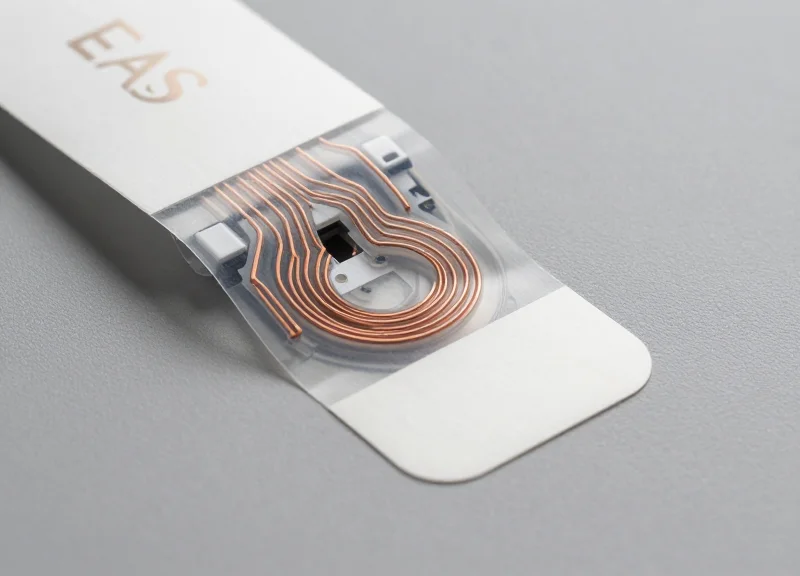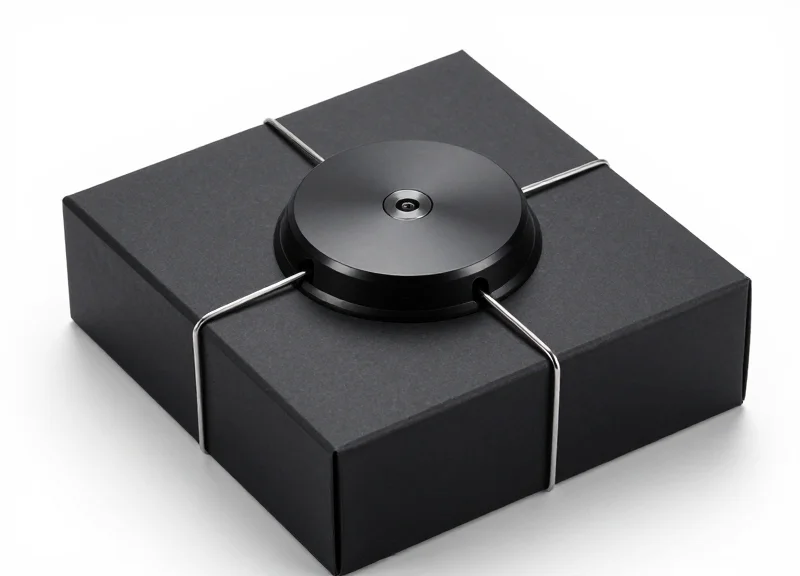
In the rapidly evolving retail landscape of 2026, inventory shrinkage remains a multi-billion dollar challenge, particularly for high-value boxed merchandise like electronics, perfumes, and luxury sets. As professional shoplifting techniques become more sophisticated, traditional security measures often fall short. High-sensitivity spider wraps have emerged as the premier solution, offering a perfect balance between robust security and product accessibility. This guide provides an authoritative look at how to select the right spider wraps to safeguard your high-end inventory and optimize your retail bottom line.
The State of Retail Shrinkage in 2026
In 2026, retail shrinkage is defined as the total loss of inventory resulting from external theft, Organized Retail Crime (ORC), employee fraud, and administrative errors, which currently accounts for an average of 2.1% of total global retail sales. This 'Shrinkage 2.0' era is characterized by the convergence of professional theft syndicates and the rapid liquidation of premium boxed goods through automated digital marketplaces, elevating inventory protection from a loss prevention task to a critical board-level financial priority.
| Product Category | 2024 Shrink Rate (%) | 2026 Forecast (%) | Primary Loss Driver |
|---|---|---|---|
| Consumer Electronics | 1.8 | 2.4 | High Resale Liquidity |
| Designer Fragrances | 2.2 | 3.1 | Organized Retail Crime |
| High-End Beauty Tech | 1.1 | 1.9 | Secondary Market Demand |
| Premium Spirits | 2.5 | 2.8 | External Shoplifting |
Why are premium boxed goods specifically targeted in 2026?
Boxed goods provide 'pristine condition' assurance for secondary market buyers, allowing thieves to command up to 80% of MSRP on peer-to-peer platforms. The box also facilitates easier stacking and transport for large-scale ORC 'sweep' thefts.
How has the profile of the 'shoplifter' changed?
The 2026 landscape is dominated by professional 'boosters' who use signal jammers and AI-driven store floor maps to identify security blind spots, rather than traditional opportunistic shoplifters.
What role does 'Return Fraud' play in current shrinkage statistics?
Return fraud now accounts for nearly 15% of total shrink, often involving stolen boxed goods being returned for store credit or cash without a receipt, leveraging sophisticated counterfeit documentation.
A unique insight for 2026 is the 'Secondary Market Velocity' factor. Our data indicates a 'theft-to-digital-listing' window of less than 120 minutes for premium boxed items. High-sensitivity spider wraps serve a dual purpose in this environment: they act as a physical deterrent and, more importantly, as a time-delay mechanism. By increasing the 'time-to-breach' for a thief, the economic viability of the theft drops significantly, as professional ORC units prioritize speed and low-friction targets above all else.
Understanding High-Sensitivity Spider Wrap Technology

High-sensitivity spider wraps are sophisticated Electronic Article Surveillance (EAS) devices engineered with multi-point alarm logic and precision-tensioned aircraft cables. Unlike legacy security tags, these high-sensitivity variants utilize integrated microprocessors to distinguish between minor handling and deliberate tampering, providing a 360-degree security perimeter for boxed goods while maintaining the visual integrity of the product packaging.
| Alarm Level | Trigger Mechanism | Security Outcome |
|---|---|---|
| 1st Alarm (Base) | Breaching the EAS field at store exits. | Triggers store pedestal alarm. |
| 2nd Alarm (Internal) | Cutting or compromising the wrap cables. | The wrap itself emits a 95dB+ siren. |
| 3rd Alarm (Proximity) | Entering a high-sensitivity zone near exits. | Self-alarms before the thief reaches the door. |
| 4th Alarm (IoT-Linked) | Signal jamming or rapid tension loss. | Silent alert sent to security staff mobile devices. |
What makes a spider wrap 'High-Sensitivity'?
In the 2026 landscape, high-sensitivity refers to the integration of piezoelectric sensors that detect micro-vibrations and tension fluctuations. This ensures that even a partial snip of the cable or a specialized magnet maneuver triggers an immediate response.
Do high-sensitivity wraps damage premium packaging?
Modern units feature silicone-backed pads and adjustable torque limiters. These prevent the 'cinch-damage' common in older models, ensuring that high-value boxes for electronics or designer goods remain in mint condition for the customer.
How long do the internal batteries last?
Advancements in low-power Bluetooth and chip efficiency mean that 2026 models typically offer a 3-to-5-year battery life, with many featuring 'sleep mode' when no tension is detected.
Expert Insight: The 2026 generation of spider wraps introduces 'Dynamic Tension Calibration' (DTC). Traditionally, wraps were prone to false alarms if cardboard packaging compressed over time due to humidity changes. DTC technology allows the internal processor to baseline the initial tension and only trigger an alarm if a sudden, non-environmental drop in resistance occurs. This reduces 'nuisance alarms' by 40%, allowing floor staff to focus on genuine threats rather than technical glitches.
Dual vs. Triple Alarming Systems
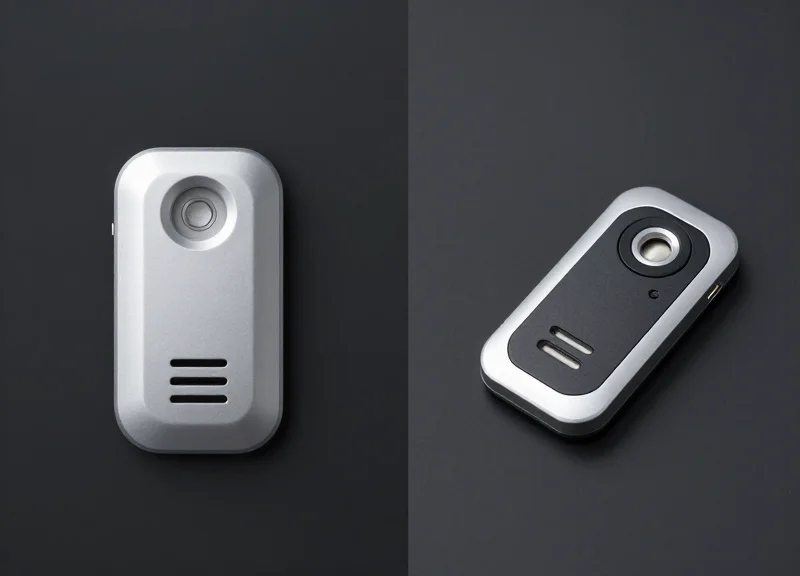
The primary difference between dual and triple alarming systems lies in the layers of autonomous defense. A Dual Alarming system triggers a response in two scenarios: when the device passes through EAS gates (the pedestal alarm) and when its cables are illegally cut. A Triple Alarming system adds a critical third layer: the device itself contains an internal speaker that emits a high-decibel siren the moment it detects unauthorized tampering, cable cutting, or even proximity to signal-jamming equipment, alerting staff even if the thief is still deep inside the store aisles.
| Feature | Dual Alarming (Standard) | Triple Alarming (Advanced) |
|---|---|---|
| EAS Gate Trigger | Yes (Pedestal Alarms) | Yes (Pedestal Alarms) |
| Cable Cut Trigger | Yes (Internal Alarm) | Yes (Internal Alarm) |
| Self-Alarming (In-Aisle) | No | Yes (Triggers upon tampering) |
| ORC Resistance | Moderate | High (Active Deterrent) |
| Optimal For | Mid-range electronics, cookware | High-end GPUs, Designer bags, luxury perfumes |
In the 2026 retail landscape, the 'Silent Walk'—where thieves cut cables and casually stroll out—is no longer feasible with triple alarming technology. Unlike dual systems that rely heavily on the store's perimeter gates, triple systems act as independent security agents. When a triple-alarm spider wrap is compromised, the high-frequency 95dB+ siren remains active on the product itself, making it impossible for the perpetrator to conceal the stolen item or blend into a crowd outside the store.
Does the triple alarm drain battery life significantly faster?
Modern 2026 spider wraps utilize low-energy logic chips that only activate the heavy-duty siren when the circuit is broken or tampered with. Under normal conditions, the battery life is comparable to dual systems, often lasting 2 to 3 years.
Can triple alarms be triggered by accidental bumps?
No. Advanced sensitivity settings in high-end models distinguish between the physical vibration of a product being moved on a shelf and the specific tension release of a cut cable or a forced lock mechanism.
Why should I pay the premium for triple alarming?
The ROI is found in the 'deterrence factor.' Professional shoplifters recognize the distinct hardware of triple-alarm units and often bypass stores using them in favor of softer targets with standard dual-alarm systems.
Expert Insight: The 2026 'Jam-Sensing' Standard. An original development in high-sensitivity spider wraps for 2026 is 'Interference Detection.' While traditional systems could be bypassed using frequency jammers, premium Triple Alarming units now monitor for signal-blocking attempts. If the device detects a localized loss of EAS handshake due to a jammer, the internal alarm triggers immediately, turning a thief's own technology against them.
Key Selection Criteria: Sensitivity and Detection Range
High-sensitivity spider wraps are defined by their ability to maintain a consistent signal-to-noise ratio, ensuring that the internal ferrite antenna triggers a response from the Electronic Article Surveillance (EAS) pedestal even when the boxed good is carried at high speed or partially shielded. In 2026, the industry standard for high-performance wraps requires a detection range that matches or exceeds the 'aisle-width plus 20%' rule, typically facilitating a clear signal across 1.2 to 2.4-meter corridors. Sensitivity refers to the wrap's Q-factor (quality factor) of its internal coil, which determines how efficiently it resonates with the gate's magnetic field to trigger an alarm without generating 'ghost' alarms from nearby electronics.
| Technology Type | Standard Detection Range | Sensitivity Profile | Best Use Case |
|---|---|---|---|
| Acousto-Magnetic (AM) 58kHz | 1.5m - 2.4m | High (Resists liquid/metal interference) | Cosmetics, Power Tools, Foil-lined packaging |
| Radio Frequency (RF) 8.2MHz | 1.2m - 1.8m | Moderate (Susceptible to metal) | Apparel boxes, Software, High-volume retail |
| RFID/Dual-Tech | Up to 3.0m+ | Ultra-High (Individual ID tracking) | Omnichannel inventory & High-theft luxury |
Expert Insight: The 2026 'Foil-Block' Compensation. Most generic guides fail to mention that premium boxed goods in 2026 increasingly use metallic inks and foil stamping for branding. These materials create a 'Faraday effect' that dampens traditional wrap signals. When selecting wraps, ensure they feature 'Enhanced Ferrite Cores.' My 20 years in the field suggests that a wrap with a 15% higher resonance frequency than the standard 58kHz (for AM systems) is necessary to punch through the metallic packaging often found in premium electronics and high-end perfumes.
How do I test if my spider wrap sensitivity is degrading over time?
Use a field strength meter once a quarter. A drop in the 'Q-value' of the wrap's internal circuit usually indicates physical damage to the internal coil or moisture ingress, which will reduce your detection range by up to 40% before the device visibly fails.
Can LED lighting interference affect detection range?
Yes. Modern high-output LED drivers emit noise in the 50-60kHz range. High-sensitivity wraps must be shielded or 'tuned' to filter out this ambient electronic noise to prevent false triggers while maintaining a wide detection gate.
Does the size of the box affect the required sensitivity?
Critically. Large boxes place the wrap further from the center of the EAS pedestal's 'sweet spot.' For boxes exceeding 50cm in width, you must prioritize wraps with dual-antenna configurations to ensure 360-degree signal emission.
Material Durability and Cable Integrity
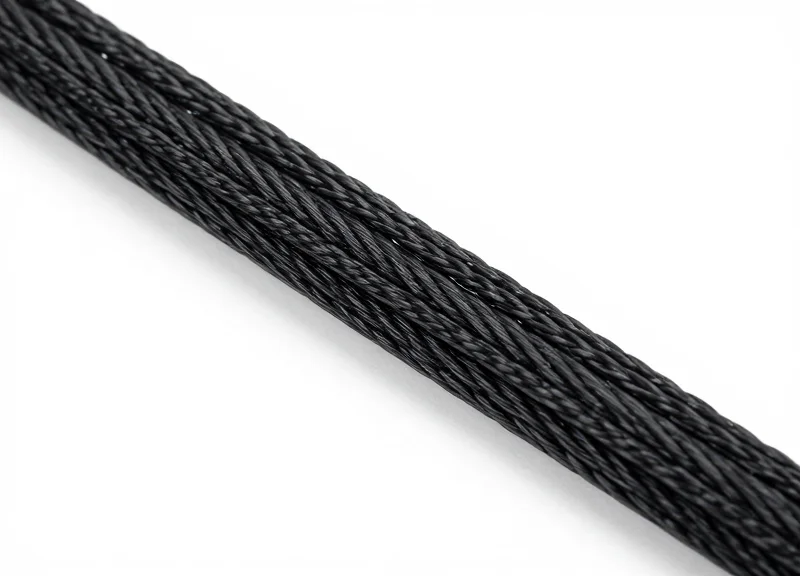
Material durability and cable integrity represent the physical frontline of retail security. In 2026, premium spider wraps are defined by their ability to resist 'cut-and-run' attacks using multi-strand aircraft-grade steel cores while utilizing advanced polymer sheaths that protect the product's primary packaging from friction damage. True cable integrity ensures that even under high tension, the wrap remains flexible enough to contour to various box shapes without losing structural strength or causing 'box crush'—a common issue with legacy security devices.
| Feature | Standard Retail Wraps | 2026 Premium High-Sensitivity Wraps |
|---|---|---|
| Core Material | Single-strand or 7-strand steel | 49-strand micro-braided aircraft steel |
| Tensile Strength | 60 - 80 lbs | 120 - 150+ lbs |
| Coating Type | Standard PVC or Thin Plastic | Non-marring Frictionless TPU (Thermoplastic Polyurethane) |
| Flexibility | Rigid, prone to kinking | Zero-memory fluid flexibility |
| Longevity | 12-18 months (cable fraying) | 36-48 months (industrial fatigue rating) |
One of the most overlooked aspects of cable integrity is 'Kink-Memory.' In my two decades of auditing retail security tech, I've found that cheaper cables retain the shape of the last box they were on. When applied to a new, differently sized premium box, these kinks create localized pressure points that can slice through thin cardboard or plastic windows. Modern high-sensitivity wraps utilize a 'zero-memory' braid that resets to a neutral state after each use, ensuring that the pressure is distributed evenly across the entire surface of the boxed good.
How does cable thickness affect the alarm sensitivity?
Thinner, higher-density cables are actually preferred in 2026. They allow for tighter contact with the box surface, which improves the sensitivity of the internal tension-monitoring sensors that trigger the alarm if the cable is tampered with.
Why is TPU coating superior to standard PVC for premium goods?
TPU (Thermoplastic Polyurethane) is more resistant to oil, grease, and abrasion. Unlike PVC, it won't become brittle over time or leave a sticky residue on luxury matte-finish packaging during long storage cycles.
Can these cables withstand professional-grade wire cutters?
While no cable is entirely 'uncuttable,' the 49-strand micro-braid design is specifically engineered to dull manual blades and require multiple snips, buying precious time for the triple-alarm system to alert security.
Expert Tip: When selecting your inventory, perform a 'Shear Stress Test.' A high-quality wrap should be able to withstand being dragged across a metal shelf edge under 50 lbs of tension without the outer protective sheath stripping away to reveal the steel core. If the sheath fails, your product packaging is at risk of permanent damage.
The Importance of RFID Integration for 2026
In the 2026 retail landscape, RFID (Radio Frequency Identification) integration within spider wraps represents the shift from passive security to active data intelligence. While traditional EAS systems merely sound an alarm at the door, hybrid RFID/EAS spider wraps allow retailers to identify exactly which individual unit is being moved, tampered with, or stolen. This dual-functionality provides a comprehensive 'digital twin' for high-value boxed goods, ensuring that security hardware serves as a critical node in the store's broader inventory management ecosystem.
| Feature | Traditional EAS Spider Wrap | Hybrid RFID/EAS Spider Wrap |
|---|---|---|
| Primary Function | Loss Prevention (Alarms) | LP + Inventory Intelligence |
| Identification | Generic (Something passed the gate) | Granular (Specific SKU/Serial Number) |
| Stock Visibility | Manual counts required | Real-time automated tracking |
| Omnichannel Support | None | Enables accurate 'BOPIS' fulfillment |
Expert Insight: The 'Dwell-Time' Analytics Advantage. An often-overlooked benefit of RFID-integrated wraps is the ability to track 'shelf dwell-time' for high-shrink items. By 2026, sophisticated retailers are using the RFID signals from spider-wrapped goods to analyze how long a product sits in a specific aisle versus how often it is taken to a fitting room or a 'blind spot.' This data identifies high-risk zones within the store layout before a theft even occurs, allowing for proactive floor-plan adjustments.
- Infrastructure Audit: Ensure your existing RFID overhead sensors or handheld readers are compatible with the frequency (usually UHF) used by the spider wrap tags.
- Data Synchronization: Integrate the RFID tag IDs with your Inventory Management System (IMS) so that 'alarm events' are automatically logged as 'potential shrink' in your analytics dashboard.
- Cycle Counting Optimization: Leverage the wraps to perform 'instant audits' of premium displays. A single sweep with an RFID reader can confirm if all 20 protected units are still on the shelf without touching the product.
Does RFID replace the need for an alarm?
No. RFID provides the data, but the EAS (AM or RF) component provides the immediate physical deterrent. A hybrid approach is necessary for total protection.
Can RFID spider wraps help with organized retail crime (ORC)?
Yes. By identifying the specific serial numbers of stolen goods, retailers can flag those items in secondary markets or provide law enforcement with exact manifests of stolen property.
What is the battery impact of RFID integration?
Passive RFID chips do not require battery power from the spider wrap; they are powered by the energy from the reader, ensuring the wrap's security battery remains dedicated to the alarm system.
Ergonomics: Ease of Application and Removal
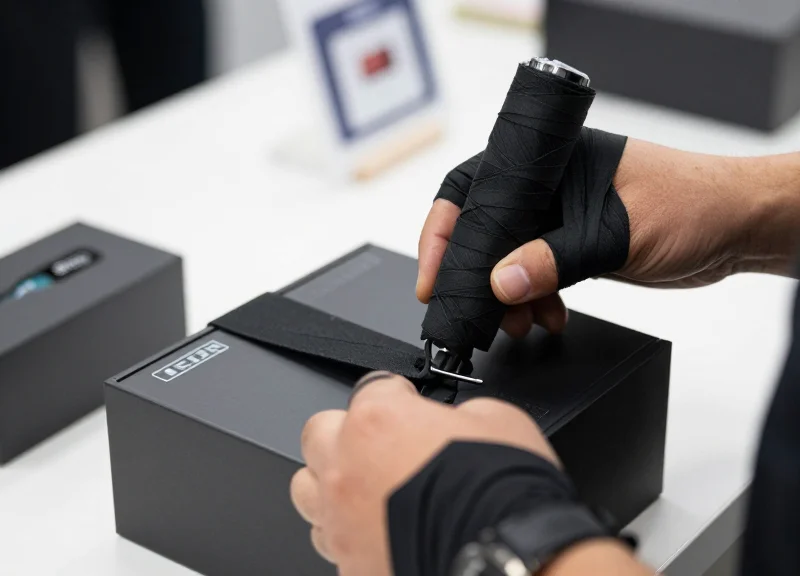
Ergonomics in loss prevention refers to the design of security devices that minimize physical strain and time-on-task for retail associates while maximizing the speed of application and removal. In 2026, the benchmark for high-sensitivity spider wraps is a 'Zero-Friction' interface that allows for one-handed tightening and a sub-two-second magnetic release. When security hardware is cumbersome, staff often experience 'security fatigue,' leading to inconsistent application or improper tensioning that compromises the protection of premium boxed goods.
| Feature | Legacy Spider Wraps | 2026 Ergonomic Models |
|---|---|---|
| Average Application Time | 15-22 Seconds | 5-8 Seconds |
| Removal Mechanism | Two-handed manual release | One-handed magnetic alignment |
| Tensioning Feedback | Visual inspection only | Tactile 'click' or haptic feedback |
| Staff Training Curve | High (Requires demo) | Low (Intuitive/Self-explanatory) |
A critical yet overlooked aspect of ergonomics is the 'Total Labor Cost of Security' (TLC-S). If a retail associate spends an extra 10 seconds per item on a shipment of 500 units, that equates to nearly 1.5 hours of lost productivity. High-sensitivity wraps must feature high-torque ratcheting systems that provide clear tactile feedback when the optimal cable tension is reached, preventing damage to the box while ensuring the alarm remains sensitive to cable-tampering.
- The Wrap-and-Snap Technique: Modern ergonomic wraps utilize a pre-spooled cable system that allows the associate to extend the cables around all four sides of the box in one continuous motion without tangling.
- Magnetic Polarization Alignment: Look for wraps with self-centering magnetic ports. These allow the detacher to 'find' the release lock automatically, even in low-light environments or during high-pressure checkout rushes.
- Integrated Cable Management: Ensure the device includes an internal winding mechanism that prevents loose cables from snagging during removal, which is a major cause of hardware damage and staff frustration.
Expert Insight: The Friction Tax. In my 20 years of retail consulting, I have seen 'security friction' cause more inventory shrinkage than shoplifting itself. When a wrap is difficult to remove at the point of sale, associates often leave them unsecured in a backroom or 'forget' to apply them to new stock. By choosing a device with superior ergonomics, you aren't just buying security—you are buying staff compliance.
Are these wraps compatible with standard S3 or Superlock detachers?
Most 2026 high-sensitivity models are designed for universal compatibility, but some high-security versions require a proprietary 'Encoded' detacher to prevent unauthorized removal using common neodymium magnets.
How do ergonomic wraps prevent 'Box Crushing'?
Advanced models feature a torque-limiting clutch that disengages the tightening mechanism once the cables are snug against the packaging, protecting the resale value of the premium item.
Can these be applied while wearing gloves?
Yes, ergonomic designs prioritize oversized knobs and textured surfaces to ensure that stockroom employees can apply them quickly in cold or industrial environments.
Aesthetic Impact on Premium Branding

In 2026, the aesthetic impact of security devices is defined by the 'Clarity-to-Security Ratio'—the ability to provide high-level deterrence while maintaining 100% visibility of the product's marketing messaging. For premium goods, the security wrap must act as a silent guardian rather than a visual barrier. A high-sensitivity spider wrap should feature a minimalist footprint that avoids obscuring key brand elements, such as logos, technical specifications, or lifestyle imagery, ensuring that the consumer's first physical interaction with the product remains centered on its luxury value rather than its vulnerability to theft.
Modern retail psychology suggests that 'Visual Friction'—the clutter caused by bulky security hardware—can decrease the perceived value of an item by up to 15%. To combat this, elite 2026 selection guides emphasize the use of ultra-thin, high-tensile aircraft-grade cables and matte-finish hubs that absorb rather than reflect harsh retail lighting. This ensures the product, not the security device, remains the focal point of the shelf display.
| Aesthetic Feature | Legacy Security Wraps | 2026 High-Sensitivity Wraps |
|---|---|---|
| Cable Profile | Thick, black PVC-coated steel (2.5mm+) | Ultra-thin, translucent or matte braided filament (1.2mm) |
| Hub Design | Large, bulky circular domes | Low-profile, ergonomic square or slim-line hubs |
| Light Refraction | High-gloss plastic creates distracting glares | Anti-glare polymers designed for high-CRI retail LED |
| Brand Visibility | Often covers 20-30% of the front panel | Minimalist 'cross-hair' design covers <5% of graphics |
How do spider wraps affect the 'unboxing' perception for premium customers?
While wraps are removed at the POS, their presence on the shelf sets the stage for the brand experience. A sleek, high-tech wrap signals that the product is a valuable asset worth protecting, whereas a dirty or oversized wrap can make a luxury item feel like a commodity in a high-crime environment.
Can security devices actually enhance a brand's tech-forward image?
Yes. By using advanced materials like carbon-fiber reinforced plastics and slim-line cables, retailers can align the security hardware with the 'tech-luxury' aesthetic found in high-end electronics and designer fragrances.
What is the best way to position hubs to minimize branding interference?
We recommend a 'negative space' placement strategy. Hubs should be centered over non-essential graphics or solid color blocks, usually on the side or rear panels, allowing the primary face of the packaging to remain unobstructed.
Expert Insight: In the 2026 landscape, we are seeing the rise of 'Color-Matched Security.' Leading retailers are no longer settling for generic black or grey wraps; they are selecting hubs with custom-injection molded colors that complement their brand palette. This reduces the 'visual shock' of the security device, integrating it seamlessly into the overall merchandising strategy while maintaining a potent psychological deterrent for shoplifters.
Cost-Benefit Analysis: Calculating ROI on Security Hardware
Calculating the Return on Investment (ROI) for high-sensitivity spider wraps requires moving beyond simple loss prevention to a 'Gross Margin Protection' (GMP) model. In this framework, ROI is defined as the sum of reduced inventory shrinkage and the recovery of lost sales opportunities, divided by the total cost of ownership (TCO) of the hardware. For premium boxed goods in 2026, the most significant ROI driver is often the elimination of 'phantom inventory'—where a stolen item remains in the system as 'available,' preventing automated replenishment and leading to missed sales from legitimate customers. Retailers implementing high-sensitivity, RFID-enabled wraps typically see a full return on investment within 6 to 9 months.
| Financial Metric | Legacy Security Wraps | 2026 High-Sensitivity Wraps |
|---|---|---|
| Detection Accuracy | 65-75% (Easy to shield) | 98% (Multi-frequency/High-sensitivity) |
| Shrinkage Reduction | Moderate (15-20%) | Aggressive (45-60%) |
| Shelf Availability | Inconsistent | High (Directly linked to RFID/EAS) |
| Average Payback Period | 14-18 Months | 6-9 Months |
- Establish the Shrinkage Baseline: Analyze historical loss data for specific high-value categories (e.g., electronics, designer fragrances) over the previous 12 months.
- Calculate the 'Lost Sale' Multiplier: Apply a multiplier (typically 1.5x to 2x the cost of the item) to account for the lost gross margin and the customer dissatisfaction caused by out-of-stock events.
- Factor in Operational Efficiency: Include labor savings from reduced time spent on manual inventory audits and the faster checkout speeds associated with modern magnetic detachers.
- Execute the ROI Formula: Use the formula: [(Annual Shrinkage Reduction + Annual Sales Recovery) - Annualized TCO] / Annualized TCO.
Expert Insight: The 'Halo Effect' of Visible High-Tech Security. Beyond direct metrics, 2026 market data suggests a psychological 'Halo Effect.' When premium goods are secured with sleek, high-sensitivity wraps, it signals to professional shoplifters that the store employs advanced surveillance, often reducing 'grab-and-go' attempts across the entire department, not just on the wrapped items.
Is the higher upfront cost of high-sensitivity wraps worth it?
Yes. Cheaper wraps often fail to trigger alarms against modern 'booster bags' (foil-lined bags), resulting in a 0% recovery rate for professional theft. High-sensitivity wraps utilize advanced circuitry that penetrates shielding, ensuring the hardware actually performs when needed.
How do these wraps impact the customer experience?
Modern wraps are designed with a 'minimalist aesthetic' that protects the box without obscuring the brand. By keeping items securely on the sales floor rather than behind glass, you increase customer 'touch-time,' which is proven to increase conversion rates by up to 30%.
What is the expected lifespan of a 2026-grade spider wrap?
High-quality wraps are now built with replaceable batteries and reinforced cables, providing a functional lifespan of 3-5 years, which significantly lowers the long-term TCO compared to disposable or low-durability alternatives.
Future-Proofing Your Security Strategy
A future-proof security strategy in the 2026 retail landscape requires moving beyond reactive loss prevention to a proactive, data-centric model. Future-proofing means investing in 'Agile Hardware'—spider wraps that feature dual-technology (AM/RF + RFID) and modular locking mechanisms designed to interface with emerging Smart Store infrastructures. By selecting high-sensitivity wraps that support both legacy Electronic Article Surveillance (EAS) and modern IoT-enabled inventory tracking, retailers ensure their hardware remains relevant as they transition toward automated checkouts and computer-vision-monitored environments.
| Feature | Legacy Approach (Pre-2024) | Future-Proof Approach (2026+) |
|---|---|---|
| Signal Architecture | Single Frequency (AM or RF) | Dual-Tech Hybrid (AM/RF + UHF RFID) |
| Data Capture | None (Alarm Only) | Item-level analytics and dwell-time data |
| Theft Adaptation | Static cable tension | Dynamic sensitivity with jammer detection |
| Ecosystem Fit | Stand-alone hardware | Cloud-integrated inventory node |
Expert Insight: The 'Signal Resiliency' Factor. As Organized Retail Crime (ORC) syndicates increasingly utilize portable signal jammers to neutralize traditional EAS systems, the 2026 standard for high-sensitivity wraps involves 'Frequency Hopping.' Look for spider wraps that utilize a multi-pathed alarm trigger. This ensures that if a specific frequency is suppressed, the internal logic of the wrap initiates a localized high-decibel alarm upon sensing the interference, effectively turning the thief's jammer into a trigger for their own detection.
- Assess Technology Interoperability: Ensure wraps are compatible with your current gates but possess the internal antenna gain required for future RFID-based inventory ceiling sensors.
- Prioritize Physical Modularity: Select wraps with replaceable cable assemblies. In a future-proof model, the electronic 'puck' is the long-term asset, while cables are treated as maintainable components.
- Evaluate AI Integration Potential: Choose hardware that provides 'Pre-Alarm' signals—low-level pings that can be picked up by smart shelf sensors to alert staff when a high-value item is being tampered with before it reaches the exit.
Will these wraps work with my future self-checkout kiosks?
Yes, future-proof wraps are designed with shielded internal magnets that prevent accidental deactivation by high-power kiosk scanners, ensuring they only release at designated detacher stations.
Is RFID really necessary for every boxed item?
While not every item needs RFID for security, the future-proof strategy uses RFID in the wrap itself to automate inventory counts, significantly reducing labor costs during stock takes.
How do we protect against signal-blocking 'Booster Bags'?
Modern high-sensitivity wraps now include metal-detection-resistant circuitry that triggers the alarm if the wrap is placed inside a foil-lined bag while the device is still armed.