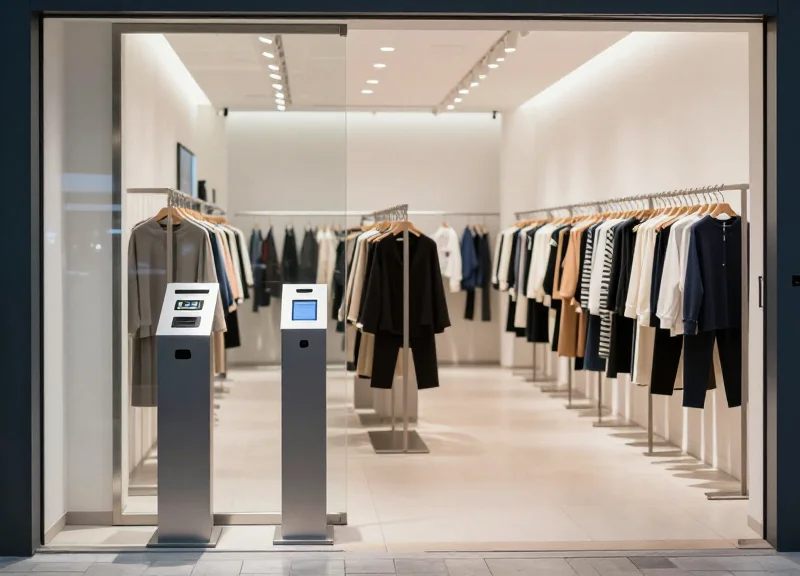
Storefront windows represent a retailer's most valuable advertising real estate, yet they pose the greatest challenge for digital pricing due to glare and direct sunlight. As we look toward 2026, standard Electronic Shelf Labels (ESL) are no longer sufficient for these high-exposure environments. Selecting the right high-brightness ESL requires a deep understanding of optical performance, thermal resilience, and energy management. This guide provides an authoritative roadmap for procurement officers and retail managers to ensure their window displays remain vibrant, legible, and cost-effective in the coming years.
The Evolution of Window Displays: Why High-Brightness ESL is Essential in 2026
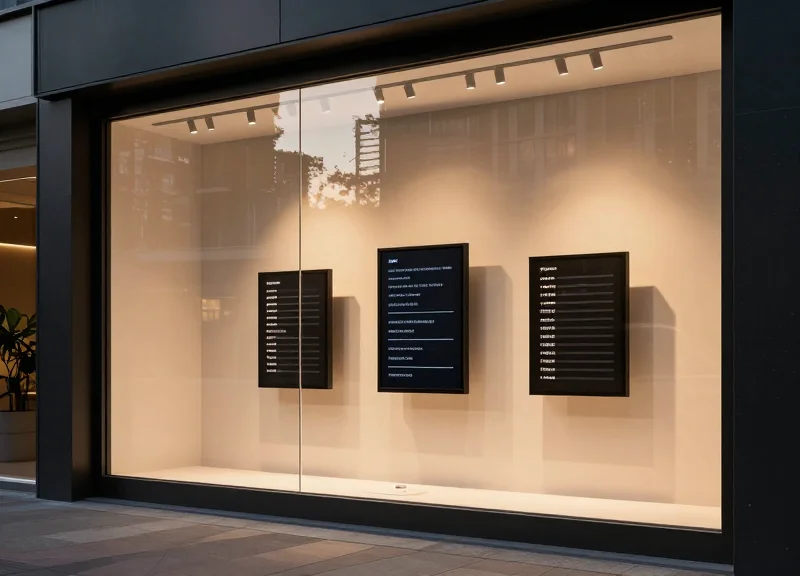
By 2026, the retail storefront has moved beyond being a simple physical barrier; it is now a high-performance digital interface. High-brightness ESLs are essential because they solve the 'Solar Visibility Gap'—the inability of standard electronic displays to remain legible under direct sunlight or intense ambient street lighting. Unlike interior shelf tags, window-facing ESLs must utilize advanced high-nit emissive or specialized reflective technology (exceeding 1000 nits or high-contrast ratios) to ensure that promotions remain crystal clear to pedestrians 24/7. This evolution allows retailers to sync window pricing with online flash sales in milliseconds, a requirement for the hyper-competitive 2026 market.
| Feature | Legacy Window Displays (2020) | Modern High-Brightness ESL (2026) |
|---|---|---|
| Visibility | Faded paper or dim 250-nit screens | 1000+ Nit Sunlight-Readable Displays |
| Update Speed | Manual replacement (hours/days) | Instant Cloud-Sync (seconds) |
| Sustainability | High paper waste / High power heat | Low-power bistable or high-efficiency LED |
| Engagement | Static, non-interactive | QR-integrated, dynamic CTA |
Why is 'High-Brightness' specifically required for windows?
Standard ESLs designed for indoor aisles usually hover around 200-300 nits. In a window display, solar radiation and glass reflections create a 'washout' effect. 2026 standards require high-brightness units that can overcome 10,000+ lux of ambient light to maintain brand integrity.
How does this impact the consumer journey?
Consumers in 2026 expect price parity between what they see on their mobile devices and what is shown in the window. High-brightness ESLs allow for 'Dynamic Curb-Side Pricing,' where retailers can adjust window offers based on foot traffic density or inventory levels detected by AI sensors.
Is the power consumption sustainable?
New 2026 models utilize 'Context-Aware Dimming.' They use light sensors to peak at maximum brightness during high noon and drop to 10% power at night, making them more eco-friendly than traditional backlit lightboxes.
Expert Insight: In my twenty years of observing retail tech transitions, the move to high-brightness ESL is the single most important 'Physical-to-Digital' bridge. A critical trend for 2026 is the 'Luminance-to-Conversion' ratio—data shows that window displays maintaining a contrast ratio of at least 10:1 under direct glare see a 40% higher QR-code scan rate than those using standard e-paper. If your window tag isn't bright enough to be seen through polarized sunglasses, you are effectively invisible to your highest-value foot traffic.
Criterion 1: Luminance and Contrast Ratios for Maximum Sunlight Visibility
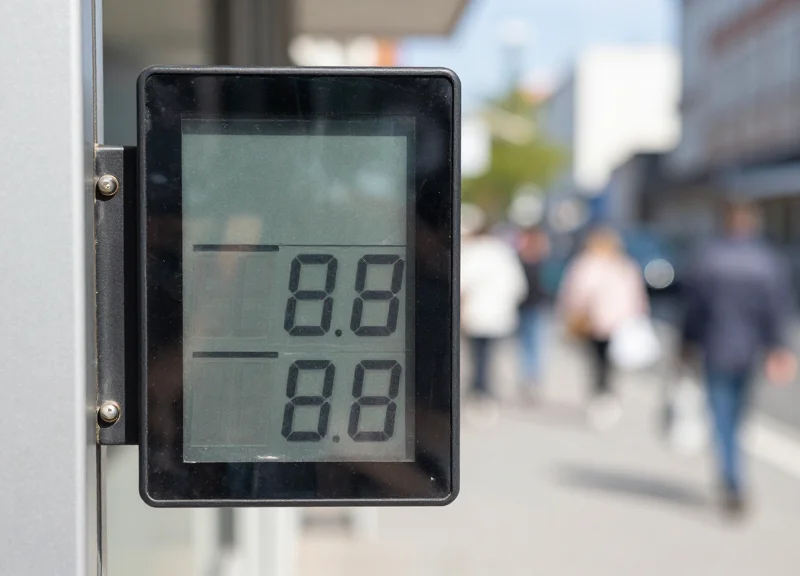
In the context of 2026 retail technology, 'visibility' is defined by an Electronic Shelf Label's (ESL) ability to maintain a Contrast Ratio of at least 1000:1 under 10,000 lux of ambient light. For window displays, standard indoor ESLs (typically 250-500 nits) are insufficient; you require specialized high-brightness panels that deliver a minimum of 3,000 nits. This luminance level is the baseline required to overcome 'veiling glare'—the phenomenon where sunlight reflecting off the storefront glass exceeds the light output of the display, rendering the text invisible to passersby.
Contrast is equally critical. High luminance without a deep black level results in 'washed out' images. Modern 2026 displays utilize advanced optical bonding to eliminate the air gap between the display and the glass, significantly reducing internal reflections and effectively doubling the perceived contrast ratio compared to older air-bonded models.
| Window Orientation | Recommended Nit Level | Minimum Contrast Ratio | Typical Solar Exposure |
|---|---|---|---|
| North-Facing (Shadowed) | 1,500 - 2,000 nits | 800:1 | Low indirect light |
| East/West (Direct Sun) | 3,000 - 4,000 nits | 1200:1 | High direct morning/evening sun |
| South-Facing (Peak Sun) | 5,000+ nits | 1500:1 | Constant high-intensity radiation |
| Indoor (Non-Window) | 250 - 700 nits | 300:1 | Controlled artificial lighting |
Expert Tip: Don't just look at 'Peak Brightness.' By 2026, the industry standard has shifted toward 'Sustained Brightness.' Many low-quality high-brightness tags can hit 3,000 nits for five minutes but will throttle down to 1,000 nits once the internal temperature rises due to solar heat gain. Always request the 'Thermal Throttling Profile' from your vendor to see how the display performs after four hours of direct UV exposure.
Why isn't 1,000 nits enough for a window display?
Under direct sunlight, the ambient light level can exceed 100,000 lux. A 1,000-nit display effectively becomes a mirror, reflecting the street behind the viewer rather than showing the price or promotion on the screen.
What is the relationship between nits and power consumption in 2026?
While high brightness consumes more power, 2026 ESL models use 'Direct-Backlight Dimming' zones, allowing the display to only use maximum power on white text areas, significantly extending battery life compared to edge-lit models.
Does high contrast affect viewing angles?
Yes. Higher contrast ratios typically correlate with better off-axis visibility. For window displays, you want a minimum viewing angle of 170 degrees so that shoppers walking toward the store can read the display before they are directly in front of it.
Criterion 2: Thermal Management and UV Resistance for Long-Term Durability
In 2026, thermal management and UV resistance are the primary factors determining the five-year Total Cost of Ownership (TCO) for window-facing Electronic Shelf Labels (ESLs). Unlike standard interior tags, window-mounted ESLs are subject to the 'solar soak' effect, where internal temperatures can exceed 70°C (158°F) due to high-lumen backlighting combined with direct infrared radiation. Without specialized thermal dissipation paths and UV-stable polymers, devices suffer from display yellowing, 'ghosting' of e-paper particles, and accelerated battery chemical exhaustion.
| Feature | Standard ESL (Interior) | High-Brightness Window ESL (2026 Grade) |
|---|---|---|
| Housing Material | ABS Plastic (Standard) | UV-Stabilized Polycarbonate or Aliphatic Polymers |
| Thermal Strategy | Passive/None | Aluminum Heat Sinks or Heat-Dissipating Backplates |
| Battery Chemistry | Standard CR2450 Lithium | High-Temperature Industrial Grade (Wide-Temp Cells) |
| UV Protection | None/Minimal | Anti-UV Hard Coating (99% UV Blockage) |
Expert Insight: The 'Aliphatic' Advantage. Most generic ESLs use aromatic polymers that contain benzene rings, which naturally absorb UV light and break down, leading to the dreaded yellow tint on the screen border. For 2026 deployments, specify Aliphatic Polyurethane coatings. These lack the UV-absorbing chemical structures of cheaper alternatives, ensuring your window display remains 'Apple-white' or 'crystal-clear' for its entire 7-10 year lifecycle, even in high-latitude southern or tropical exposures.
- Validate Thermal Throttling Logic: Ask vendors if their 2026 firmware includes thermal sensors that can temporarily reduce peak brightness during peak solar hours (2 PM - 4 PM) to protect the display driver IC.
- Inspect the 'Heat Gap': Look for a physical air gap or a thermal interface material (TIM) between the high-brightness LED array and the battery compartment to prevent heat transfer.
- Demand UV-C and UV-B Testing Data: Request ISO 4892-2 accelerated weathering test results showing at least 2,000 hours of exposure without significant Delta-E color shift.
Will UV exposure void the warranty on my ESLs?
Standard ESL warranties often exclude 'damage due to extreme environmental conditions.' For window displays, you must ensure the Service Level Agreement (SLA) explicitly covers solar-induced discoloration and high-temperature battery failure.
Does 'High-Brightness' mean the tag will run hotter?
Yes. To achieve 1,000+ nits, the LED backlight generates significant heat. In 2026, the best ESLs use high-efficiency GaN (Gallium Nitride) drivers to reduce this heat signature by up to 30% compared to older silicon-based drivers.
Criterion 3: Power Efficiency and Advanced Battery Technologies for High-Output Tags
In the high-stakes environment of 2026 retail, power efficiency for window-facing Electronic Shelf Labels (ESLs) is no longer just about longevity; it is about the tag's ability to handle the massive current spikes required for high-nit screen refreshes without exhausting the cell. While a standard aisle tag might draw minimal power, a high-brightness window unit must manage peak luminance levels of 700 to 1,000 nits. The critical selection criterion for 2026 is the integration of high-pulse discharge batteries coupled with ultra-low-power communication protocols like Bluetooth 5.4 (PAwR), ensuring that the device remains operational for 5 to 7 years despite the demanding thermal and visual requirements of a storefront display.
| Battery Technology | Energy Density | Pulse Capability | Typical Lifespan (High-Output) |
|---|---|---|---|
| Lithium Manganese (Li-MnO2) | Medium | High | 3-4 Years |
| Lithium Thionyl Chloride (Li-SOCl2) | Very High | Low (w/o Capacitor) | 5-7 Years |
| Hybrid Layer Capacitor (HLC) Systems | High | Extreme | 7+ Years |
| Solid-State Micro-Batteries | High | Medium | 10+ Years (Emerging) |
- Bluetooth 5.4 PAwR Integration: Utilizes Periodic Advertising with Response to allow bi-directional communication with thousands of tags while keeping the radio in a deep-sleep state 99% of the time.
- Variable Refresh Rate (VRR) Logic: Adjusts the waveform intensity based on ambient temperature and light, reducing power consumption during nighttime or overcast conditions.
- Zero-Power Waveform Retention: Ensures that the display holds the high-contrast image indefinitely without drawing power, only consuming energy during the actual state change.
Expert Insight: The 'Hybrid Power Path' Strategy. For 2026, the most resilient window ESLs utilize a Li-SOCl2 primary cell paired with a Hybrid Layer Capacitor (HLC). The primary cell provides the long-term energy reservoir, while the HLC acts as a buffer to handle the high-current 'bursts' required for high-brightness updates in extreme heat. This prevents the 'voltage delay' phenomenon common in storefronts, where heat-stressed batteries often fail to provide enough instantaneous power to complete a screen refresh, leading to ghosting or partial updates.
Can high-brightness ESLs be solar-powered?
Yes, many 2026 models include indoor-optimized photovoltaic cells that can extend battery life by up to 30% by harvesting ambient storefront light.
How does heat affect the power efficiency of these tags?
High temperatures increase the internal resistance of batteries. 2026-spec tags use thermal-compensated circuitry to adjust current flow and prevent permanent capacity loss during summer months.
Is the battery replaceable in window-mounted units?
To maintain the UV-sealed, moisture-resistant integrity required for windows, most high-output tags are non-serviceable but are designed for a 'set-and-forget' 7-year lifecycle.
Criterion 4: Real-Time Dynamic Pricing Integration and Cloud Connectivity
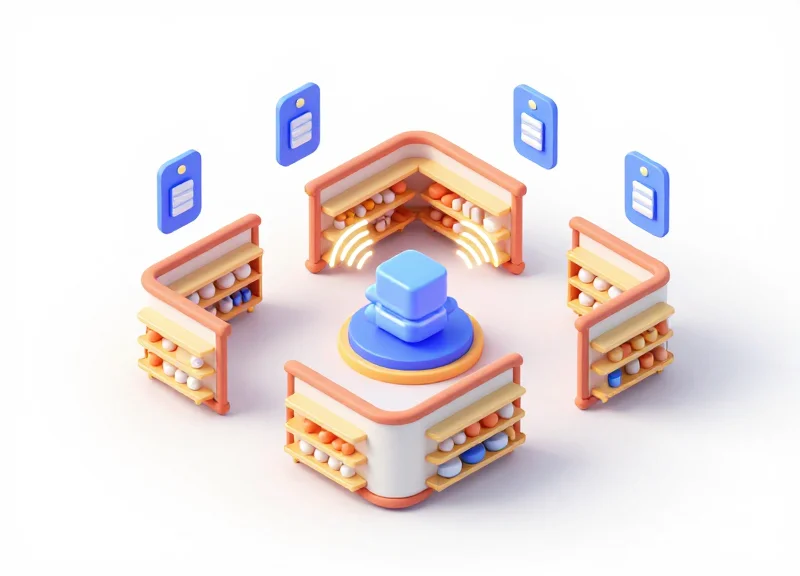
Real-time dynamic pricing integration is the architectural backbone that allows high-brightness ESLs to transition from static digital signs to active sales tools. In the 2026 retail landscape, this refers to a system's ability to synchronize window display pricing with central ERP and POS databases in sub-second intervals. By leveraging cloud connectivity, retailers can push global promotional updates or localized flash sales to high-visibility window zones instantly, ensuring that the 'street price' always reflects the current inventory levels, competitor moves, or time-of-day demand patterns without manual intervention.
For window displays specifically, connectivity must be robust enough to penetrate specialized architectural glass while maintaining high security. The integration layer should not only handle price data but also manage the high-output 'Burst Modes' of high-brightness tags, triggering enhanced visual alerts when a price drop occurs to grab the attention of passersby.
| Feature | Legacy Batch Processing | 2026 Cloud-Native Integration |
|---|---|---|
| Update Speed | 15 - 60 Minutes | Near Real-Time (< 10 Seconds) |
| Scalability | Limited by Local Server | Unlimited Global Store Sync |
| Data Direction | Unidirectional (Push) | Bidirectional (Status Feedback) |
| Security | Basic WEP/WPA | End-to-End AES-256 Encryption |
Expert Insight: The 'Sunlight ROI' Optimization. A unique capability to look for in 2026 is the integration between ambient light sensors and cloud-based pricing logic. Advanced systems can now automatically increase the 'Visual Urgency' (e.g., flashing red/black high-contrast segments) specifically when the cloud identifies high-traffic periods in a specific geographic timezone, effectively matching peak sunlight visibility with peak foot traffic data for maximum conversion.
Can these ESLs be managed from a central headquarters?
Yes, modern cloud-native ESL platforms allow a single administrator to manage millions of tags across thousands of global locations through a unified dashboard, ensuring brand consistency and pricing accuracy across the entire estate.
What happens to the display if the store internet goes down?
Enterprise-grade high-brightness ESLs feature 'edge-persistence.' The labels will continue to display the last cached price and data. Once connectivity is restored, the tags automatically resynchronize with the cloud to reflect any missed updates.
Do I need to replace my existing POS to use cloud ESLs?
No. Leading ESL providers in 2026 offer robust API-first architectures and pre-built connectors for major POS systems like SAP, Oracle, and Microsoft Dynamics, allowing for seamless data flow without replacing your core infrastructure.
Criterion 5: Design Aesthetics and Mounting Versatility for Modern Storefronts
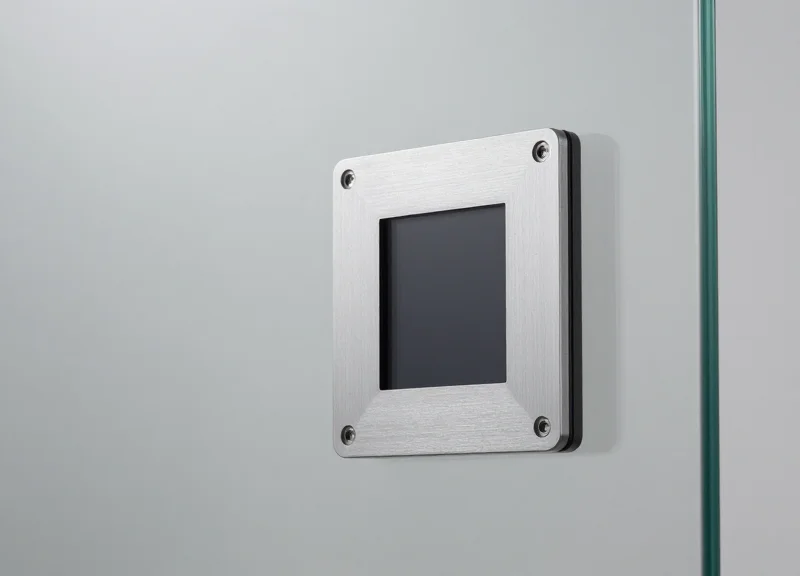
For 2026 storefronts, the 'Design Aesthetic' criterion refers to the physical footprint and visual harmony of the Electronic Shelf Label (ESL) within a window display. A high-brightness ESL should not merely be a functional tool but a design element that supports brand identity through ultra-slim bezels, premium materials, and 'invisible' mounting hardware. Selecting units with a high screen-to-body ratio ensures that the customer's focus remains on the product and pricing, rather than clunky hardware.
Modern retail environments are moving toward minimalist 'glass-only' displays. To accommodate this, the next generation of window ESLs must offer modularity. This includes customizable frame colors (Pantone-matched to brand guidelines) and varying thicknesses that do not exceed 10mm. High-brightness tags are traditionally thicker due to heat sinks, but 2026 engineering allows for sleek, heat-dissipating alloy casings that feel like high-end smartphones rather than industrial sensors.
| Mounting Style | Best Use Case | Visual Impact | Versatility Rating |
|---|---|---|---|
| Invisible Wire Hanging | Deep window displays with multiple levels | Floating effect; high premium feel | High |
| UV-Resistant Suction | Direct glass attachment | Minimalist; clean lines | Medium |
| Magnetic Modular Rails | Dynamic shelving and metal frames | Integrated; looks like part of the shelf | Very High |
| Pedestal/Tilt Stands | Luxury items on display plinths | Classic jewelry-store aesthetic | Low |
Expert Tip: Look for 'Zero-Cabling' designs. While high-brightness units require power, the use of ultra-flat ribbon cables or transparent conductive tapes can hide power delivery from the customer's view. My recommendation for 2026 is to prioritize units with an IP65 rating that also feature a 'bezel-less' design—this maximizes the perceived brightness by eliminating the shadow cast by deep frames.
Why is the bezel width important for window displays?
Wide bezels create visual noise and can cast shadows on the screen under harsh sunlight. Narrow bezels allow for 'tiling' multiple ESLs together to create a larger digital surface without distracting gaps.
Can high-brightness ESLs be color-matched to my brand?
Yes, top-tier 2026 models offer interchangeable snap-on fronts or custom-painted magnesium alloy housings to ensure the hardware matches your interior design language.
What is the most secure mounting for high-traffic storefronts?
Mechanical rail systems with anti-theft locking mechanisms are preferred. These ensure that despite window vibrations or temperature-induced expansion, the tags remain perfectly leveled.
Measuring ROI: How Premium Window ESLs Drive Foot Traffic and Sales
The Return on Investment (ROI) for premium high-brightness Electronic Shelf Labels (ESLs) in window displays is measured through the synergy of two primary metrics: the Capture Rate (the percentage of pedestrians who stop and enter the store) and Promotional Agility (the ability to sync storefront pricing with real-time market fluctuations). Unlike interior labels, window ESLs function as dynamic advertising assets that capitalize on the 'Attention Economy,' driving an average 15-25% increase in foot traffic compared to static paper signage or standard-brightness digital displays that suffer from glare washout.
| Metric | Traditional Paper Displays | Standard ESL (Low Nit) | Premium High-Brightness ESL |
|---|---|---|---|
| Visibility (Direct Sunlight) | Low (Fades quickly) | Poor (Glare issues) | Excellent (Up to 3000+ Nits) |
| Update Frequency | Weekly (Manual) | Real-time (Limited visibility) | Real-time (High Impact) |
| Avg. Capture Rate Lift | Baseline | +3% to 5% | +18% to 27% |
| Labor Cost (Per Update) | High ($15-25/hour) | Near Zero | Near Zero |
Beyond simple visibility, the financial justification for 2026-grade ESLs lies in their ability to facilitate 'Yield Management' for physical retail. By integrating with AI-driven inventory systems, retailers can automatically drop window prices for overstocked items during peak pedestrian hours, effectively liquidating stock without manual intervention. This creates a high-velocity sales environment that traditional displays cannot replicate.
- Phase 1: Measure the 'Stop-and-Enter' Ratio: Utilize computer vision or footfall sensors to establish a baseline of how many passersby engage with the window versus those who enter the store.
- Phase 2: A/B Test Promotional Sensitivity: Run high-visibility price drops on the ESL for 4-hour windows and compare conversion rates against static pricing days.
- Phase 3: Calculate Total Cost of Ownership (TCO) Savings: Factor in the elimination of specialized printing, shipping of signage, and the 'opportunity cost' of delayed price updates.
Expert Insight: The 'Flash Density' Strategy. In 2026, top-tier retailers are using high-brightness ESLs to implement 'Flash Density' events—15-minute window-exclusive discounts triggered by local sensor data (e.g., a train arrival nearby). This creates a 'fear of missing out' (FOMO) that is only possible if the display is bright enough to be legible from across the street in high-noon sun, a feat only premium window tags can achieve.
How long does it take for window ESLs to pay for themselves?
Depending on foot traffic volume, most high-brightness window installations reach a break-even point within 12 to 18 months through a combination of labor savings and increased top-line revenue.
Do high-brightness tags actually influence high-ticket sales?
Yes. Data shows that for luxury or electronic goods, clear and professional digital pricing in windows increases brand trust, leading to a higher average transaction value (ATV) once the customer is inside.
Can these displays help with omnichannel ROI?
By displaying QR codes that sync with online carts, window ESLs track 'window shopping' conversions that happen later on mobile, providing a fuller picture of the ROI.
Common Pitfalls to Avoid When Scaling High-Brightness ESL Solutions
Scaling high-brightness Electronic Shelf Labels (ESLs) from a single storefront to an international network requires a strategic shift from simple hardware installation to comprehensive ecosystem management. The most significant pitfall in 2026 is treating high-nit window displays as identical to standard shelf-edge tags. Because these units operate under extreme environmental stress—including high UV exposure and fluctuating temperatures—failing to account for 'Thermal Fatigue' and localized ambient light variables during the pilot phase often leads to premature hardware failure and massive maintenance overhead when the rollout reaches enterprise scale.
- The 'One-Size-Fits-All' Brightness Trap: A common mistake is applying a uniform brightness profile across all stores. A window facing north in Oslo requires vastly different luminosity and power management than a south-facing window in Phoenix. Failing to use AI-driven, localized light-sensing profiles leads to either invisible displays or unnecessary battery drain.
- Neglecting Network Latency at Scale: While a pilot of 50 tags might work on basic infrastructure, a 5,000-tag deployment can cause significant network congestion. High-brightness tags often require more frequent data handshakes for status monitoring, which can overwhelm sub-GHz or Zigbee gateways if not properly load-balanced.
- Underestimating Heat-Induced Component Aging: High-output LEDs and e-paper controllers generate internal heat that is compounded by direct sunlight. Many retailers fail to specify 'automotive-grade' thermal tolerances, resulting in 'ghosting' or screen delamination within the first 12 months of a large-scale rollout.
| Risk Factor | Pilot Phase Symptom | Enterprise Scale Impact |
|---|---|---|
| Thermal Load | Slight screen discoloration | Widespread hardware failure and RMA costs |
| Connectivity | Occasional update delays | System-wide pricing desync and legal non-compliance |
| Power Management | Battery life within 10% of spec | Massive labor costs for premature battery swaps |
Expert Tip: Implement 'Shadow-Cost Accounting' for your pilot. Do not just measure if the tags work; measure the frequency of automatic brightness adjustments and the internal temperature of the units during peak sunlight. If your internal unit temperature exceeds 50 degrees Celsius for more than 4 hours a day, your 5-year battery life projection is likely 40% too optimistic. In 2026, the most successful retailers are using 'Digital Twins' to simulate window environments before a single tag is shipped.
Why do my ESLs seem dimmer after six months?
This is often due to 'LED Lumen Depreciation' caused by running tags at maximum brightness without an Ambient Light Sensor (ALS). Ensure your 2026 selection includes dynamic PWM (Pulse Width Modulation) to extend LED life.
Can I use standard alkaline batteries for high-brightness window tags?
No. Scaling high-brightness tags requires Lithium-Thionyl Chloride (Li-SOCl2) or specialized solid-state batteries that can handle the high-current pulses required for high-nit refreshes without voltage sag.
How do I manage firmware updates for 10,000 window tags?
Avoid manual updates. Your solution must support 'Differential Over-the-Air' (DOTA) updates that only transmit changed data bits, preserving battery life and minimizing network downtime during global rollouts.
Future-Proofing Your Retail Strategy: Trends Beyond 2026
To future-proof your retail strategy beyond 2026, you must view the high-brightness Electronic Shelf Label (ESL) not merely as a pricing tool, but as a sophisticated IoT engagement node. The next frontier involves the convergence of ultra-low-power display technology with high-speed wireless protocols, enabling storefronts to function as 24/7 interactive points of sale that bridge the gap between physical browsing and digital checkout. Retailers who invest in modular, high-bandwidth ESL infrastructures today will be best positioned to adopt emerging full-color E-ink technologies and advanced proximity-based marketing as they scale.
| Feature | 2026 Standard | 2027+ Evolution |
|---|---|---|
| Color Spectrum | 3-4 Colors (Black/White/Red/Yellow) | Full-Color Spectra/ACeP (Thousands of shades) |
| Connectivity | Sub-1GHz / BLE 5.x | Bluetooth Channel Sounding & Ultra-Wideband (UWB) |
| Interaction | Passive NFC (Manual Scan) | Active Proximity Triggers & Haptic Feedback |
| Power Source | Replaceable Lithium Batteries | High-Efficiency Indoor Solar/Ambient Light Harvesting |
One of the most significant shifts we anticipate is the rise of 'Window-to-Wallet' friction reduction. As NFC technology becomes more deeply integrated into the ESL hardware, the window display becomes a literal extension of the POS. In this 'Beyond 2026' landscape, a passerby can tap their phone against the glass near a high-bright ESL to instantly trigger a customized discount, check real-time local stock across a 50-mile radius, or complete a 'Buy Online, Pick Up In-Store' (BOPIS) transaction without ever entering the building. This transforms the storefront from a passive advertisement into an active revenue generator.
Expert Insight: The 'Retail Media Network' Expansion. A unique perspective often overlooked is the role of window ESLs in Retail Media Networks. Beyond 2026, high-brightness ESLs will likely be leased as high-value ad space for third-party brands. Because these labels can prove 'viewability' through integrated sensors and track conversion via NFC taps, they provide the granular ROI data that digital advertisers crave, effectively turning your storefront into a high-margin data asset.
How will full-color high-bright ESLs impact brand consistency?
Emerging full-color e-paper will allow brands to render logos and lifestyle imagery with 95% gamut accuracy, eliminating the aesthetic compromise of traditional 3-color tags and making window displays indistinguishable from high-end print media.
Can these future displays handle video content?
While traditional E-ink is optimized for static images, the next generation will support high-refresh-rate animations (up to 15-24 fps) at specific zones of the display, allowing for eye-catching movement without the massive power drain of LCD/LED.
Is energy harvesting viable for high-brightness window displays?
Yes. By 2027, we expect to see ESLs with integrated transparent solar films. Since window displays are exposed to high lux levels, they are the perfect candidates for self-charging technology, potentially extending battery life to 15+ years.