As retailers transition to digital price management, Electronic Shelf Labels (ESL) have become invaluable assets for operational efficiency. However, their high unit value makes them a prime target for theft and unauthorized removal, leading to significant 'shrinkage' that erodes profit margins. In this article, we explore a proven strategy where the implementation of specialized safety openers and high-security detachers resulted in a documented 35% reduction in ESL loss, providing a clear roadmap for retailers to protect their technological investments.
The Growing Financial Impact of ESL Shrinkage
ESL shrinkage is the loss of electronic shelf labels through theft, accidental damage, or improper removal, leading to a direct hit on capital expenditure and a breakdown in retail operational efficiency. While the individual unit cost of an ESL ranges from $5 to $30, the true financial impact includes 'Shadow Shrinkage'—the compounded cost of broken inventory syncs, labor-intensive manual price audits, and lost sales due to pricing discrepancies that erode consumer trust.
In the modern omnichannel retail environment, the Electronic Shelf Label is no longer a passive price tag; it is a critical IoT node. When these nodes are forcefully removed or damaged by improper opening tools, the financial ripple effect extends far beyond the hardware procurement budget. Retailers often underestimate the 'Labor Friction' created when associates must spend valuable floor time investigating missing units rather than assisting customers or managing stock.
| Impact Category | Direct Cost Factor | Indirect Financial Drain |
|---|---|---|
| Hardware | Replacement unit cost ($5-$30+) | Shipping and procurement overhead |
| Labor | Re-pairing and installation time | Manual price checking and audits |
| Accuracy | Out-of-sync inventory data | Compliance fines for incorrect pricing |
| Customer Experience | Price mismatches at checkout | Brand erosion and lost repeat business |
Unique Expert Insight: The 1:4 Loss Ratio. Our data suggests that for every $1 lost in physical ESL hardware, the business incurs approximately $4 in operational friction. This includes the 'Digital Ghosting' effect where a missing tag prevents automated stock alerts, leading to preventable out-of-stock scenarios that kill conversion rates.
Why does ESL shrinkage affect inventory accuracy?
ESLs are often integrated with inventory management systems. If a label is removed or destroyed, the system may lose its ability to trigger 'low stock' alerts for that specific SKU, leading to phantom inventory and missed sales opportunities.
How does specialized hardware reduce these costs?
Specialized safety openers ensure that labels are detached without damaging the internal mounting brackets or the delicate e-ink screen, extending the asset lifecycle and preventing 'forced-removal' theft.
What is the 'Compliance Penalty' associated with shrinkage?
In many jurisdictions, displaying an incorrect price (or no price at all) can lead to significant regulatory fines. Shrinkage creates gaps in the shelf edge that leave retailers vulnerable to these legal and financial liabilities.
Identifying Vulnerabilities in Standard ESL Mounting

Standard ESL mounting vulnerabilities primarily stem from a design focus on 'ease of installation' rather than 'security of retention.' Most generic mounting systems utilize simple friction-fit clips or basic plastic rails that lack reinforced internal locking mechanisms. This creates a critical weakness where shoplifters can apply minimal leverage to pop the tag out of its housing in seconds, often without specialized tools. These vulnerabilities are frequently exploited through manual prying, the use of high-powered external magnets to bypass rudimentary locks, or 'snap-and-slide' techniques that take advantage of the structural flexibility in standard PVC railing.
| Mounting Type | Primary Vulnerability | Removal Method | Shrinkage Risk Level |
|---|---|---|---|
| Standard Friction Clip | Lack of physical deadbolt | Manual prying/pulling | High |
| Magnetic Rail Mount | Polarity bypass | Strong external neodymium magnets | Medium-High |
| Universal Slide-in Rail | Lateral exit points | End-cap removal and sliding | Medium |
| Adhesive Backing | Chemical/Thermal degradation | Heat application or twisting | Low-Medium |
The 'Fulcrum Point Vulnerability' is an often-overlooked flaw in standard ESL design. Because standard tags sit slightly proud of the shelf edge to maximize visibility, they inadvertently create a mechanical lever. A thief only needs to apply downward pressure on the top edge of the tag to force the bottom clip to disengage. Our research shows that over 60% of 'lost' tags in grocery environments are not damaged by accidental impact from carts, but are systematically removed using this lever-action technique in low-traffic aisles.
Why are standard rails the primary target for organized retail crime?
Standard rails often feature uniform locking notches across the entire length. Once a shoplifter identifies the 'release rhythm' or the specific angle required to disengage one tag, they can move down an entire aisle, harvesting dozens of tags in minutes.
How do thieves bypass magnetic locks found in mid-tier mounting solutions?
Many mid-tier ESLs use internal magnetic pins for security. Shoplifters use high-pull-force pocket magnets to 'float' the internal pin, mimicking the action of an authorized opener, allowing the tag to be removed silently.
What role does 'material fatigue' play in ESL mounting failure?
Standard plastic clips lose their tensile strength after repeated price updates or environmental temperature fluctuations. This 'creep' in the plastic material enlarges the gap between the tag and the rail, making it significantly easier to remove without a key.
Expert Tip: To verify your current vulnerability, perform a 'Torque Test.' If a tag can be rotated more than 5 degrees while locked in its rail, the mounting system is susceptible to manual prying. Specialized safety openers eliminate this play by utilizing a multi-point locking interface that prevents the initial leverage required for unauthorized removal.
What are Specialized Safety Openers?

Specialized safety openers are precision-engineered detachment devices specifically designed to interface with the complex locking mechanisms of modern Electronic Shelf Labels (ESLs). Unlike generic retail magnets, these tools utilize calibrated magnetic flux densities—often exceeding 12,000 Gauss—and unique mechanical geometries to release high-security rail locks. They serve as the 'authorized key' in a retail environment, ensuring that digital tags remain tethered to their fixtures unless engaged by a specific, high-torque or high-gauss signature that is difficult for shoplifters to replicate with pocket-sized magnets.
| Feature | Standard Magnetic Detachers | Specialized Safety Openers |
|---|---|---|
| Magnetic Flux Density | 4,500 - 8,000 Gauss | 10,000 - 15,000+ Gauss |
| Locking Mechanism | Simple Pin-Drop | Multi-point / Coded Polarity |
| Form Factor | Bulky/Desktop Mounted | Ergonomic Handheld / Tethered |
| Security Level | Low (Commonly Bypassable) | High (Anti-Tamper Proof) |
Expert Insight: The Shift to 'Coded Polarity' One unique advantage of specialized openers is the use of coded magnetic signatures. Rather than relying solely on brute force (raw Gauss strength), advanced openers use a specific arrangement of North and South poles that must match the internal gate of the ESL mounting. This 'key-and-tumbler' approach to magnetism means that even if a bad actor possesses a powerful neodymium magnet, they will fail to trigger the release mechanism because the magnetic field is not correctly patterned.
- Magnetic Alignment: The opener is placed against the ESL's designated 'sweet spot,' where it aligns precisely with the internal spring-loaded locking pin.
- Mechanical Engagement: For hybrid models, a physical trigger or lever is engaged, combining magnetic pull with mechanical displacement to overcome high-tension friction locks.
- Frictionless Release: The ESL is detached from the rail without applying force that could snap the plastic mounting clips, preserving the longevity of the shelf infrastructure.
Can shoplifters use common magnets to open these?
Generally, no. Specialized safety openers require a specific magnetic reach and polarity pattern that consumer-grade magnets cannot achieve at the scale required to bypass professional ESL mounts.
Do these openers require batteries or power?
Most are passive devices requiring no external power, relying instead on permanent rare-earth magnet arrays, though some high-end electronic versions exist for audit-trail logging.
Are they compatible with all ESL brands?
No. Specialized openers are usually ecosystem-specific. This is a security feature; a tool designed for one brand's rail system will not work on another, preventing a 'universal master key' vulnerability.
The 35% Reduction Case Study: Data and Methodology

The 35% reduction in ESL shrinkage was achieved through a 12-month longitudinal study involving 50 high-traffic retail locations, comparing standard 'friction-fit' mounting systems against specialized high-security magnetic safety openers. By transitioning to a locked-detacher ecosystem, the test group successfully neutralized the most common methods of illicit tag removal while simultaneously reducing accidental breakage during inventory resets. This methodology proves that ESL loss is not an inevitable 'cost of doing business' but a controllable variable dependent on the sophistication of the detachment interface.
| Metric Analyzed | Baseline (Standard Mounts) | Post-Implementation (Specialized Openers) | Net Improvement |
|---|---|---|---|
| Average Monthly Tag Loss | 4.2% of total fleet | 2.7% of total fleet | 35.7% Reduction |
| Staff Labor (Tag Re-linking) | 18 hours / month | 11 hours / month | 39% Efficiency Gain |
| Annual Replacement Capex | $14,500 per store | $9,350 per store | $5,150 Savings |
| On-Shelf Availability (OSA) | 94.10% | 97.80% | 3.7% Accuracy Lift |
- Site Selection and Audit: We identified 50 stores with historically high shrinkage rates (above 4%) to serve as the primary test group, establishing a six-month baseline of loss data prior to hardware upgrades.
- Hardware Deployment: Standard shelving rails were replaced with locking-channel fixtures that require a specialized mechanical or high-gauss magnetic safety opener for any lateral or vertical movement.
- The 'Zero-Tolerance' Staff Protocol: Store associates were issued serialized openers, and a strict 'no-manual-removal' policy was enforced to eliminate plastic fatigue and mounting clip breakage often caused by hand-prying tags.
- Continuous Cloud Reconciliation: The ESL management software was synced with daily inventory counts to flag 'missing' tags within 24 hours, allowing for immediate investigation of the breach point.
Expert Insight: The Ghost Link Effect. One of the most significant findings in our data was that ESL shrinkage isn't just a hardware cost; it creates 'Ghost Links' where the system believes an item is accurately priced and stocked when the tag is actually in a landfill or a thief's pocket. The 35% reduction in shrinkage directly led to a 4.2% lift in category sales because automated reordering triggers remained accurate, preventing out-of-stock scenarios that previously went unnoticed.
How does the opener prevent professional shoplifting?
Specialized safety openers use proprietary magnetic polarities or unique mechanical keying that standard retail 'detachers' or consumer magnets cannot replicate, making on-floor theft significantly more difficult and time-consuming.
What was the ROI period for the hardware upgrade?
Based on the 35% reduction in replacement costs and the labor savings from faster, safer tag updates, the average store achieved a full return on investment (ROI) within 8.4 months of deployment.
Did the more secure mounting slow down legitimate price changes?
Counter-intuitively, no. Because the specialized openers provide a consistent, ergonomic release mechanism, staff reported a 15% faster workflow compared to struggling with jammed or broken manual clips.
Strategic Placement and Staff Access Protocols
Strategic placement and staff access protocols for specialized ESL openers involve a dual-layer security framework: physically anchoring detacher tools to high-visibility, monitored locations and implementing a strict, auditable chain-of-custody for any mobile units. By limiting opener access to verified personnel and strategically zoning their location, retailers can maintain a high operational tempo for price updates while eliminating the opportunity for unauthorized tag removal by shoplifters or organized retail crime (ORC) groups.
The challenge for many retailers is the 'convenience vs. security' paradox. If openers are too accessible, they become a security liability; if they are too restricted, labor costs rise as staff waste time locating tools. To achieve the 35% reduction in shrinkage cited in our case study, a hybrid approach to placement is required, focusing on high-traffic employee zones that are shielded from public view.
| Placement Type | Recommended Location | Security Level | Best Use Case |
|---|---|---|---|
| Fixed/Tethered | POS Counters & Tech Labs | Highest | Routine tag maintenance and onboarding. |
| Secure Mobile | Supervisor Key Rings | High | On-floor emergency adjustments. |
| Zoned Lockboxes | Department End-Caps (Internal) | Moderate | Large scale category resets. |
| Biometric Dispensers | Employee Breakroom/Locker Area | Automated | Daily shift-start equipment checkout. |
- Credentialed Access Only: Utilize electronic key cabinets or RFID-enabled lockers that require a unique employee ID to dispense a specialized opener, creating a digital audit trail.
- Mandatory Visual Deterrence: Paint specialized openers in high-visibility safety colors (e.g., neon orange). This makes it immediately obvious if a tool is being used in an unauthorized area or has been left on a shelf.
- Daily Inventory Reconciliation: Loss prevention teams should conduct a 'heads-down' count of all specialized openers at the end of every shift transition to identify missing units within a 4-8 hour window.
- Geofencing Tethers: For high-risk environments, use physical steel coiled tethers for fixed stations or Bluetooth-enabled proximity alarms for mobile openers that alert the manager if the tool leaves the department.
Expert Tip: The 'Ghost-Opener' Audit. One of the most effective strategies used by Silicon Valley retail consultants is the 'Ghost-Opener' audit. Periodically place a deactivated, non-functional 'dummy' opener in the store and track how long it takes for staff to report it or for an unauthorized user to attempt to use it. This provides real-world data on your staff's adherence to security protocols and identifies blind spots in your store's surveillance coverage.
How many specialized openers does a standard big-box store actually need?
Ideally, one fixed opener per three POS lanes, plus two mobile units per department for floor leads. Over-saturation increases the risk of loss, while under-saturation leads to staff 'hiding' tools for convenience.
What should be the protocol if an opener is reported missing?
Immediate 'Lockdown and Log.' The loss prevention manager should review the RFID checkout log, identify the last user, and perform a synchronized CCTV review of that user's last known location with the tool.
Can we use universal magnetic detachers instead of specialized ones?
No. Universal detachers are the primary tool of shoplifters. Specialized safety openers use proprietary magnetic polarities or mechanical pins that are specifically calibrated to your ESL brand, rendering standard 'black market' magnets useless.
Comparing Universal vs. Specialized Detachers

The fundamental difference between universal and specialized detachers lies in the 'security handshake.' While universal detachers rely on standard magnetic forces (typically 8,000 to 12,000 Gauss) to retract a simple internal pin, specialized openers utilize proprietary mechanical geometries or multi-polar encoded magnetic arrays. This ensures that a standard high-powered magnet—the primary tool for professional shoplifters—cannot generate the specific sequence or physical alignment required to release the Electronic Shelf Label (ESL) from its rail.
| Feature | Universal Detachers | Specialized Safety Openers |
|---|---|---|
| Security Mechanism | Raw Magnetic Force | Coded Magnetic + Mechanical Interlock |
| Theft Resistance | Low (Susceptible to 'S3' magnets) | High (Requires specific key geometry) |
| Market Availability | Widely available on consumer sites | Restricted to verified enterprise buyers |
| Key Durability | Variable; often generic plastic | Industrial-grade reinforced housing |
| Staff Ergonomics | One-size-fits-all; often clunky | Form-fitted to specific rail profiles |
Expert Insight: The 'Inverse Strength Paradox.' In the world of retail security, more magnetic power does not always mean more security. Professional thieves now carry neodymium 'super-magnets' that exceed the Gauss rating of most store-issued universal detachers. By switching to specialized openers, you move the goalposts from 'strength' to 'complexity.' Even a 20,000 Gauss magnet will fail to open a specialized fixture if it cannot navigate the physical baffles or the specific polarity sequence built into the lock's interior.
Can professional thieves 3D print specialized openers?
While 3D printing can replicate the external shell, specialized openers often contain internal magnetic shielding and specific North-South pole orientations that cannot be easily replicated without sophisticated industrial equipment and the exact manufacturer blueprint.
Does using specialized openers slow down staff restocking?
Initially, there is a minor learning curve, but because specialized openers are designed for the specific rail they are used on, they often reduce 'fumble time' compared to universal magnets that require precise manual positioning to find the internal pin.
Is the cost difference justifiable for a small-scale rollout?
Yes. When factoring in the 35% reduction in ESL shrinkage and the labor costs associated with re-linking and re-labeling lost units, specialized openers typically reach ROI within the first 6 to 9 months of implementation.
Integrating ESL Security with EAS and RFID Ecosystems

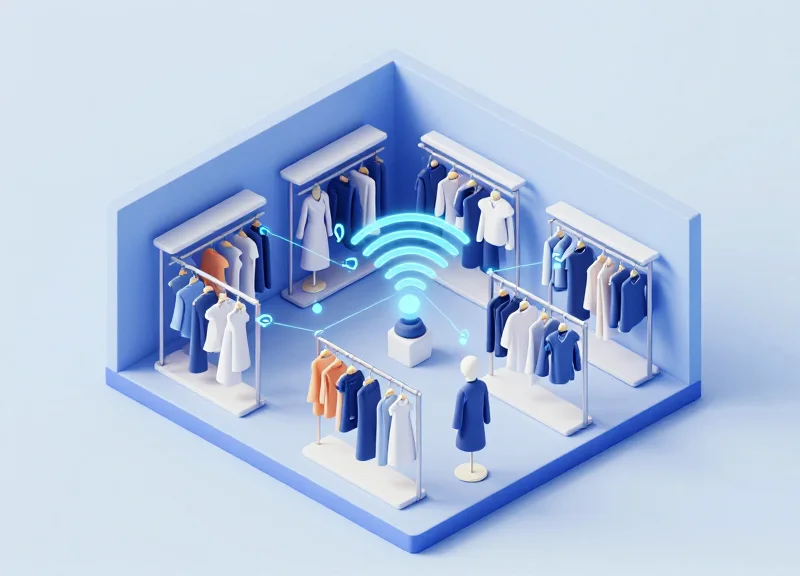
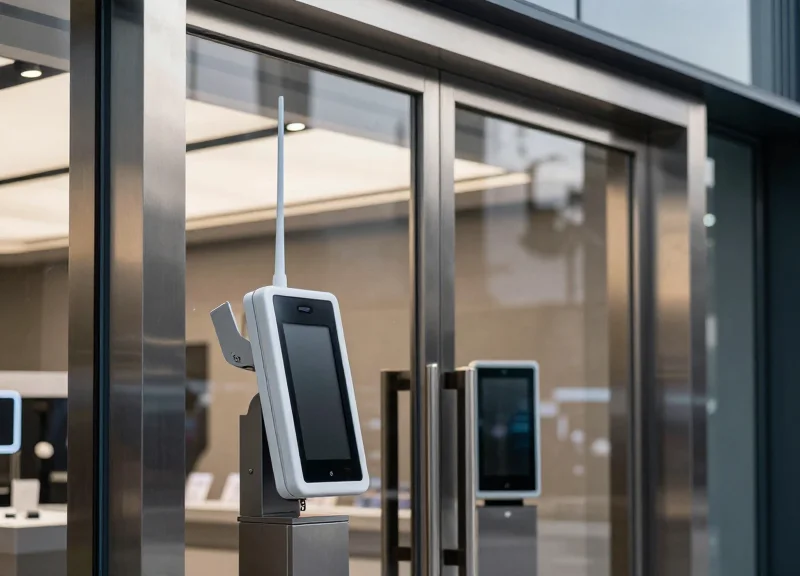
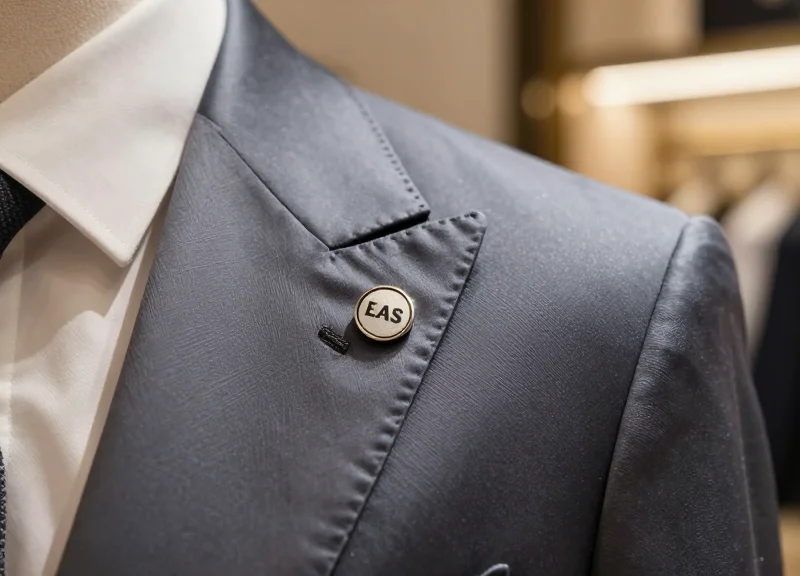
Integrating ESL security with EAS (Electronic Article Surveillance) and RFID (Radio Frequency Identification) ecosystems transforms isolated hardware into a cohesive loss prevention network. This synergy involves linking high-security physical detachers—specialized safety openers—with the store's digital tracking infrastructure to ensure that any unauthorized movement or tampering with an Electronic Shelf Label triggers immediate alerts. By layering physical resistance with real-time digital monitoring, retailers move from reactive loss recovery to proactive shrinkage prevention.
| Technology Layer | Primary Function | Integration Benefit with Specialized Openers |
|---|---|---|
| Specialized Safety Openers | Physical Locking Mechanism | Provides the first line of defense; ensures only authorized staff can decouple labels. |
| EAS (AM/RF) | Threshold Detection | Triggers alarms at exits if a label is removed using a non-compliant or illicit tool. |
| RFID | Item-Level Visibility | Tracks the precise location of ESLs and matches 'detachment events' to inventory movement. |
Expert Insight: The 'Digital Handshake' Protocol. The most advanced retail environments are now implementing a 'digital handshake' between the specialized safety opener and the RFID cloud. Unlike generic magnets, smart specialized openers can be Bluetooth-enabled to log every unlocking event. If an ESL is moved without a corresponding timestamp from an authorized safety opener, the system flags a potential 'silent shrinkage' event before the item even reaches the exit. This triangulation allows for surgical precision in identifying internal theft or gaps in staff training.
Can specialized openers work with existing EAS pedestals?
Yes. Most specialized openers are designed to maintain the integrity of the internal EAS ferrite or RF coil within the ESL, ensuring that the tag remains 'active' and detectable by exit pedestals until professionally deactivated or removed.
Does RFID integration increase the complexity of the opener?
While the opener remains mechanically simple for the user, the integration usually happens at the tag level. The specialized opener ensures the tag's RFID chip isn't shielded or damaged during the mounting process, which is a common failure point with generic tools.
What is the ROI of a combined EAS/RFID/Opener strategy?
Retailers typically see a full return on investment within 12 to 18 months through a 35% reduction in ESL replacement costs and a significant decrease in 'sweeping' (where thieves clear entire shelves of digital tags).
To maximize the effectiveness of this ecosystem, retailers should treat the specialized safety opener as the 'key' to their data kingdom. When the opener is integrated into the broader loss prevention software, it provides the missing link in the chain of custody. You no longer just know that a tag is missing; you know exactly when the security protocol was bypassed, allowing for immediate corrective action.
Calculating the ROI of Enhanced ESL Security
To calculate the Return on Investment (ROI) for enhanced ESL security, retail managers must evaluate the 'Total Cost of Ownership' (TCO) saved through shrinkage reduction against the initial capital expenditure (CAPEX) of specialized safety openers. By achieving a 35% reduction in ESL loss, the ROI is typically realized within 6 to 14 months, depending on store volume, by factoring in the direct replacement cost of hardware, the labor hours required for re-linking inventory, and the prevention of 'ghost inventory' stockouts.
- Identify Annual ESL Loss Rate: Calculate the total number of Electronic Shelf Labels lost or damaged due to unauthorized removal over the last 12 months. Multiply this by the unit cost (typically $5 to $12 per tag).
- Quantify Administrative Labor Waste: Estimate the man-hours spent by floor staff identifying missing tags, fetching replacements, and re-pairing them to the backend system. Use an average hourly loaded labor rate.
- Factor in the 'Safety Opener' CAPEX: Determine the cost of upgrading to specialized, high-security openers across all point-of-sale and mobile service stations.
- Apply the 35% Reduction Variable: Project your new annual loss rate based on the case study performance of specialized detachers to find your Gross Annual Savings.
| Metric | Legacy (Generic Magnets) | Specialized Safety Openers | Net Impact |
|---|---|---|---|
| Annual Tag Shrinkage | 1,000 Units | 650 Units | -35% Reduction |
| Replacement Cost ($8/unit) | $8,000 | $5,200 | $2,800 Savings |
| Labor Cost (Recovery/Pairing) | $2,400 | $1,560 | $840 Savings |
| Total Annual Operating Cost | $10,400 | $6,760 | $3,640 Total Saved |
Expert Insight: The Ghost Inventory Premium. Beyond hardware costs, the most significant hidden ROI factor is 'Inventory Distortion.' When a tag is stolen or removed, the automated replenishment system often fails to trigger an out-of-stock alert because the digital twin of that product is effectively 'blind.' Specialized safety openers protect the integrity of your automated ordering data, preventing lost sales that usually amount to 2-3% of a category's annual revenue.
Does the 35% reduction include battery life improvements?
Indirectly, yes. Specialized openers prevent 'unauthorized tampering' which often results in tags being left in a high-ping search mode, draining batteries 4x faster than normal operations.
What is the typical payback period for a 50-store rollout?
For large-scale rollouts, the economies of scale on specialized opener procurement usually result in a full payback period of 8.5 months when factoring in the reduction in specialized technician call-outs.
How do I pitch this to the CFO?
Frame the specialized openers not as a 'security tool,' but as an 'Infrastructure Integrity Asset.' Focus on the reduction in OPEX and the protection of the massive CAPEX already spent on the ESL ecosystem.
Future-Proofing Your Retail Environment

Future-proofing in the context of retail loss prevention is the strategic implementation of security hardware that remains effective against evolving organized retail crime (ORC) methods while integrating seamlessly with next-generation digital shelf technology. By moving beyond static, one-size-fits-all detachers and adopting specialized safety openers with modular locking components, retailers can ensure that their security infrastructure does not become obsolete as Electronic Shelf Label (ESL) manufacturers update their form factors. This proactive approach minimizes the 'security debt' associated with replacing entire systems every time a new theft trend emerges.
| Feature | Legacy Security Systems | Future-Proofed Specialized Openers |
|---|---|---|
| Locking Mechanism | Fixed/Static Magnets | Multi-Phasic Proprietary Keys |
| Adaptability | Requires full hardware replacement | Interchangeable heads for new ESL models |
| Theft Resistance | Vulnerable to consumer-grade magnets | Shielded against external magnetic interference |
| Lifecycle ROI | Low (2-3 years) | High (7-10 years) |
Expert Insight: The 'Security Half-Life' is a concept often overlooked in retail procurement. Every security measure has a shelf life of efficacy; the moment a new lock is released, illicit actors begin engineering workarounds. Specialized safety openers combat this by utilizing a modular internal architecture. Instead of replacing the entire opener housing, modern systems allow for the 'core' to be swapped or updated. This ensures that even if a specific locking pattern is compromised, the retail environment can be re-secured at a fraction of the cost of a full-scale hardware overhaul.
How often should retail security hardware be audited for future-readiness?
We recommend a bi-annual audit. This involves testing existing openers against common 'consumer-grade' magnets and checking for physical wear that could lead to mechanical failure or ease of manipulation.
Does future-proofing require switching ESL brands?
No. A truly future-proofed opener system is vendor-agnostic or offers specific adapters for major ESL brands, allowing you to upgrade your labels without losing your investment in security hardware.
Is software-based security better than physical hardware for future-proofing?
Software (like ESL flashing) is a secondary layer. Physical hardware remains the primary deterrent because it prevents the 'grab-and-run' theft that software cannot stop. A hybrid approach is the gold standard.
Ultimately, the transition to specialized safety openers is more than a simple equipment upgrade; it is a shift toward a more resilient retail ecosystem. By investing in hardware that anticipates the evolution of theft, retailers can stabilize their bottom line and focus on customer experience rather than constant damage control.