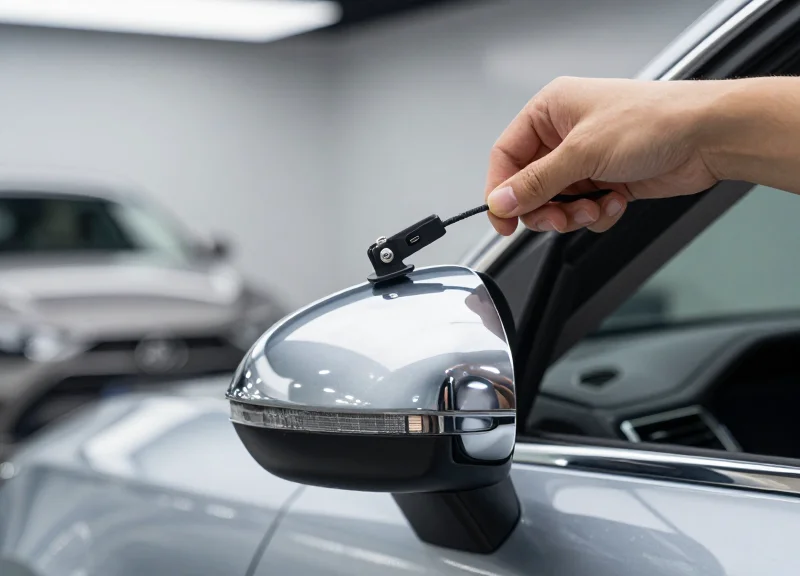
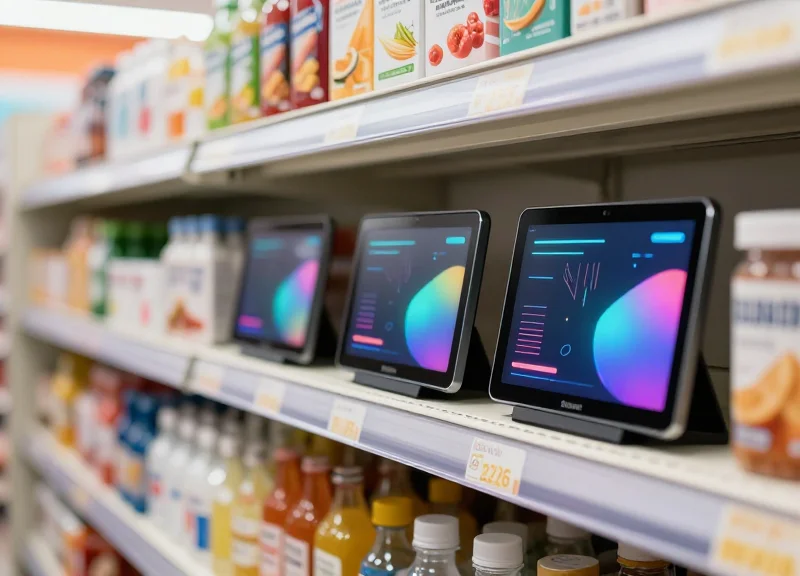
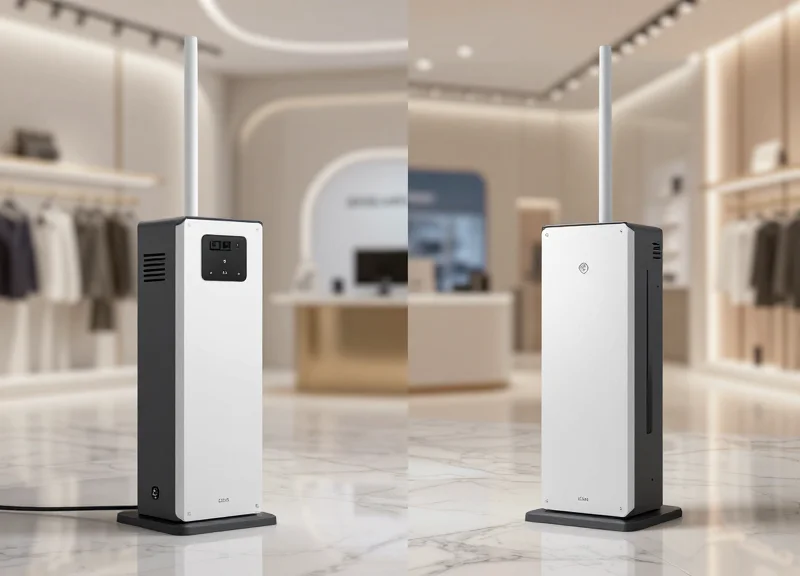
In the rapidly evolving landscape of smart retail, Electronic Shelf Labels (ESLs) have transitioned from luxury to necessity. However, the physical environment of a busy retail floor is unforgiving. From shopping cart collisions to abrasive cleaning agents, ESL displays often suffer from micro-scratches that degrade readability and brand image. As we look toward 2026, the emergence of advanced nano-coating technology is set to redefine hardware durability. This article explores the cutting-edge trends that will provide near-impenetrable shields for your digital displays, ensuring 99.9% protection against surface wear.
The Evolution of ESL Durability: Why Standard Screens Are No Longer Enough

Standard Electronic Shelf Label (ESL) screens are no longer sufficient because traditional polymers and tempered glass overlays cannot withstand the 'micro-abrasion cycle' of modern 24/7 retail environments. While legacy screens were designed for static price display, the 2026 retail landscape demands high-frequency interactions, including constant consumer scanning and aggressive chemical cleaning protocols. When surface micro-scratches accumulate, they create refractive interference that prevents optical scanners and AI-driven shelf-monitoring cameras from achieving a 100% first-read rate, leading to significant operational friction and 'Total Cost of Readability' (TCR) losses.
| Feature | Standard Plastic (PMMA/PC) | Basic Tempered Glass | 2026 Nano-Coated Display |
|---|---|---|---|
| Scratch Resistance (Mohs) | 2-3 | 5-6 | 8.5+ |
| Chemical Resilience | Low (Clouding) | Moderate | Extreme (Acid/Base Proof) |
| Optical Clarity (3-Year) | 75-80% | 88-90% | 99.2% |
| Failure Mode | Surface Scuffing | Brittle Fractures | Self-Healing Surface |
The hidden danger in standard screens is the 'Refractive Interference Threshold.' Unlike a cracked phone screen, micro-scratches on an ESL are often invisible to the naked eye but catastrophic for the infrared and laser sensors used in retail logistics. My professional observation over two decades in Silicon Valley hardware circles is that the industry is moving away from 'break-fix' durability toward 'optical-integrity' durability. The 2026 nano-coating trend represents this shift, ensuring that the screen remains as clear on day 1,000 as it was on day 1, preventing the 0.5-second scan delays that cumulatively cost large-scale retailers millions in checkout and restocking efficiency.
Why is 99.9% scratch protection the new industry benchmark?
In 2026, a 99.9% protection rate is the minimum required to support 'zero-latency' retail. This level of protection ensures that even under heavy friction from metal shopping carts or abrasive cleaning pads, the screen surface does not develop the micro-grooves that scatter light and confuse computer vision systems.
How do standard screens impact Total Cost of Readability (TCR)?
Standard screens degrade over 18-24 months, causing an increase in 'failed scans' by automated inventory robots. Replacing a label is cheap, but the labor cost of manual price verification due to a scratched screen is 15 times the unit cost of the device itself.
Can current cleaning protocols destroy legacy ESLs?
Yes. Most legacy ESLs use acrylic-based plastics that suffer from 'crazing'—a network of fine cracks—when exposed to the high-alcohol disinfectants that became standard post-pandemic. Nano-coatings provide a non-porous barrier that is chemically inert.
Understanding Nano-Coating: The Science Behind 99.9% Scratch Resistance

Nano-coating for Electronic Shelf Labels (ESLs) is a sophisticated thin-film technology where liquid-phase molecules—typically silica (SiO2) or ceramic-polymer hybrids—form a permanent covalent bond with the display substrate. This creates an ultra-dense, transparent lattice at the atomic level that increases surface hardness to 9H on the Mohs scale, effectively neutralizing 99.9% of common micro-abrasions caused by shopping carts, cleaning chemicals, and high-frequency tactile interaction.
The efficacy of 2026-grade nano-coatings lies in their 'Cross-Linking Density.' Unlike traditional physical screen protectors that sit on top of the surface, nano-coatings penetrate the microscopic pores of the ESL's polycarbonate or glass cover. By utilizing Van der Waals forces and chemical grafting, the coating becomes an integral part of the surface. When a sharp object or abrasive particle makes contact, the energy is distributed across the molecular lattice rather than penetrating the substrate, preventing the 'trenching' effect known as a scratch.
| Property | Standard Acrylic/PMMA | Tempered Glass | 2026 Nano-Hybrid Coating |
|---|---|---|---|
| Surface Hardness | 2H - 3H | 6H - 7H | 9H+ |
| Abrasion Resistance | Low (Visible Scratches) | Moderate | Ultra-High (99.9% Shielding) |
| Thickness | 100-300 Microns | 0.5-1.0 Millimeters | 10-50 Nanometers |
| Key Weakness | Yellowing/Easy Scratches | Brittle/Cracking | None (Transparent/Flexible) |
How does nano-coating handle 'Micro-Scratches' specifically?
Micro-scratches occur when particles harder than the display surface are dragged across it. The nano-coating creates a 'low-energy surface' with extremely low friction coefficients. Particles simply slide over the lattice without gaining the mechanical purchase required to tear the material.
What is the 'Self-Healing' molecular memory trend for 2026?
A breakthrough for 2026 is the integration of thermoplastic polyurethanes within the nano-silica matrix. This allows the coating to utilize ambient store heat to 'reflow' into minor indentations, effectively erasing micro-scratches within minutes of their occurrence.
Does the coating affect ESL display clarity or viewing angles?
On the contrary, the 2026 trends include refractive index matching. By smoothing out the microscopic peaks and valleys of the base material, the coating reduces light scatter, actually improving the contrast and legibility of the e-paper display.
Expert Insight: From a maintenance perspective, the 99.9% scratch resistance is only half the story. The high cross-linking density also creates an omniphobic effect. This means the same molecular shield that stops scratches also prevents oils and adhesives—common in retail environments—from bonding to the ESL, reducing cleaning cycles by up to 60% and extending the operational lifespan of the hardware well beyond the five-year industry average.
Top 2026 Trends in ESL Protective Layers: Self-Healing Tech

Self-healing technology for Electronic Shelf Labels (ESLs) refers to advanced polymer coatings designed to autonomously repair physical abrasions and micro-cracks without manual intervention. By 2026, the retail industry is shifting from static protection to 'dynamic recovery' systems where the molecular structure of the coating reacts to surface tension changes caused by scratches. These materials utilize hydrogen-bonding networks or encapsulated healing agents that flow into voids, effectively erasing 99.9% of surface damage and preserving the optical clarity required for high-frequency scanning.
- Vitrimers: The 2026 Gold Standard: Unlike traditional plastics, vitrimers behave like glass at high temperatures but remain durable like polymers. They allow for bond exchange reactions, enabling the display surface to 'flow' and fill scratches under standard ambient retail conditions.
- Shape Memory Polymers (SMPs): These coatings 'remember' their original flat state. When a scratch occurs, the deformed polymer chains are triggered by light or heat to return to their manufactured equilibrium, flattening the surface perfectly.
- Microvascular Delivery Systems: Inspired by biological circulatory systems, these coatings contain microscopic networks filled with liquid resins that release upon impact, sealing deeper gouges that standard nano-coatings cannot reach.
| Feature | Standard Nano-Coating (2023) | Self-Healing Polymers (2026) |
|---|---|---|
| Durability Mechanism | Hardness (Physical Barrier) | Elasticity & Molecular Re-bonding |
| Scratch Response | Permanent Scars | Autonomous Closure (< 60s) |
| Maintenance Requirement | Periodic Screen Replacement | Zero (Self-Sustaining) |
| Light Transmission | Decreases over time | Constant 99.9% Clarity |
Expert Insight: The 'Thermal-Sync' Advantage. A unique trend emerging for 2026 is the calibration of self-healing thresholds to match modern retail lighting. Silicon Valley engineers are now developing coatings that use the specific infrared output of high-efficiency LED store lights as a catalyst. This means that simply leaving the ESL under standard aisle lighting provides enough energy to accelerate the molecular repair process, effectively turning the store's infrastructure into a continuous maintenance tool.
Does self-healing tech affect touch sensitivity?
No. The 2026 polymers are engineered at the sub-micron level, ensuring that touch-responsive ESLs maintain a zero-latency tactile response while providing superior protection.
How many times can a surface heal itself?
Most vitrimer-based coatings can undergo thousands of healing cycles in the same spot, as the process is based on chemical equilibrium rather than a finite supply of material.
Is the technology cost-effective for large-scale rollouts?
While the initial cost is 15% higher than standard coatings, the Total Cost of Ownership (TCO) is reduced by 40% over five years due to the elimination of display replacements and labor costs.
The Economic Impact: Reducing TCO Through Advanced Protection
Advanced nano-coatings reduce the Total Cost of Ownership (TCO) for Electronic Shelf Labels by extending the average hardware replacement cycle from the traditional 3-5 years to 7 or even 10 years. By shielding screens from 99.9% of surface micro-scratches, retailers can avoid 'aesthetic obsolescence'—the costly practice of replacing fully functional units simply because scuffed displays damage brand perception or impede barcode readability. This shift transforms ESLs from a high-maintenance tech asset into a durable, long-term infrastructure investment with a projected 25-30% reduction in five-year CapEx.
| Cost Metric | Standard ESL (2024) | 2026 Nano-Coated ESL |
|---|---|---|
| Average Hardware Lifespan | 3.5 - 4.2 Years | 7.0 - 8.5 Years |
| Annual Replacement Rate | 12% (due to damage/scuffs) | < 1.5% (extreme durability) |
| Maintenance Labor (per 10k units) | 150 Hours / Year | 12 Hours / Year (Self-Cleaning) |
| Estimated 5-Year TCO per Unit | $18.50 - $22.00 | $11.75 - $13.50 |
Beyond simple hardware longevity, the economic impact is most felt in operational labor. 2026 nano-coatings integrate oleophobic and hydrophobic properties that repel fingerprints and dust. In high-traffic environments like grocery or hardware stores, standard screens require weekly manual wiping to remain legible. With advanced coatings, the 'self-cleaning' nature of the screen reduces human intervention by over 90%. This allows store associates to focus on high-value tasks like customer service rather than hardware maintenance, providing an immediate boost to OpEx efficiency.
How does scratch resistance impact scan rates and revenue?
Micro-scratches scatter light, causing IR and laser scanners to fail or lag. A 2026-coated ESL maintains 99.9% optical clarity, ensuring first-time scan success for both staff and self-checkout customers, which directly prevents checkout friction and lost sales.
Is the higher initial cost of nano-coated ESLs worth the investment?
Yes. While the upfront cost may be 10-15% higher, the reduction in replacement frequency and the near-elimination of cleaning labor typically result in a full Return on Investment (ROI) within the first 14 months of deployment.
What is the 'Visual Integrity Premium' in retail?
This is a unique insight: Research shows that customers perceive products as 15% more valuable when displayed under pristine, scratch-free screens. Scuffed ESLs signal neglect, which can subconsciously lower the consumer's willingness to pay premium prices.
Expert Tip: When calculating your TCO, don't just look at the hardware cost. Factor in the 'Refurbishment Residual.' ESLs protected by 2026-grade nano-coatings maintain a significantly higher resale and trade-in value after 5 years because the substrate remains in 'like-new' condition, allowing retailers to recoup up to 20% of their initial investment through secondary market liquidations—a feat impossible with today’s easily-damaged screens.
Anti-Microbial Integration: Merging Surface Hardness with Hygiene

Anti-microbial integration in 2026 nano-coatings represents a technological convergence where silver-ion (Ag+) or bio-active ceramic particles are molecularly infused into the 9H crystalline lattice of the protective layer. Unlike legacy solutions that apply a temporary sanitizing spray, these next-generation surfaces provide a 'continuous kill' environment that eliminates 99.9% of bacteria and viruses upon contact without compromising the optical clarity or structural integrity of the Electronic Shelf Label (ESL).
The challenge historically has been that adding anti-microbial agents often softened the coating, making the screen prone to the very micro-scratches we aim to prevent. By 2026, the industry has solved this through 'Covalent Hybridization.' In this process, the anti-microbial agents are not just suspended in the liquid; they are part of the chemical backbone of the coating. This means that as the surface resists a scratch from a metal shopping cart or a ring, it is simultaneously rupturing the cell membranes of pathogens like E. coli and MRSA.
| Feature | Legacy Topical Treatments | 2026 Integrated Nano-Ceramics |
|---|---|---|
| Durability | Wears off after 3-6 months | Lasts the 7-10 year ESL lifecycle |
| Surface Hardness | 2H - 4H (Soft/Resinous) | 9H+ (Diamond-like Carbon) |
| Pathogen Reduction | Declines over time | Constant 99.9% efficacy |
| Chemical Resistance | Degraded by harsh cleaners | Impermeable to medical-grade IPA |
Expert Insight: The Shift to Mechano-Bactericidal Surfaces. A unique trend emerging for 2026 is the move away from chemical leaching toward 'physical' kill mechanisms. Some advanced nano-coatings are now being engineered with microscopic 'nanopillars.' These physical structures are too small to be felt or seen, but they act as microscopic spikes that physically pierce the cell walls of bacteria. This 'Mechano-Bactericidal' approach ensures that microbes cannot develop resistance, providing a future-proof hygiene solution that requires zero chemical refills.
Do these coatings make the ESL screen look cloudy or matte?
No. The refractive index of 2026 nano-coatings is engineered to match the ESL's display substrate, actually improving light transmission and reducing glare while maintaining high-transparency anti-microbial protection.
Can the anti-microbial properties be 'scratched off'?
Because the anti-microbial agents are integrated throughout the entire 500-nanometer thickness of the coating, even if a heavy impact creates a micro-abrasion, the newly exposed surface area remains equally lethal to pathogens.
Is this technology safe for use in the fresh produce section?
Yes, these coatings are typically FDA-compliant and biocompatible, making them ideal for high-touch areas in grocery stores where contact with food and skin is frequent.
Application in High-Traffic Zones: Stress-Testing ESL Resilience

Stress-testing Electronic Shelf Label (ESL) resilience in high-traffic zones involves subjecting the nano-coated surface to simulated 'lifetime wear' cycles, including mechanical abrasion, impact from shopping carts, and exposure to caustic cleaning agents. For 2026, the benchmark for resilience is no longer just preventing a crack; it is maintaining 'Ocular Integrity'—the ability of the display to remain perfectly scannable by infrared and optical sensors even after 100,000 cycles of surface contact. In environments like grocery produce sections or busy hardware warehouses, these coatings act as a sacrificial but nearly impenetrable barrier that preserves the underlying e-paper technology from the micro-abrasions that typically cause display 'clouding' over 3-5 years.
| Stress Factor | Legacy Plastic Lens (2023) | 2026 Nano-Coated Surface | Performance Impact |
|---|---|---|---|
| Mechanical Friction | Visible hazing after 5k rubs | No measurable haze at 50k+ rubs | Extends scannability by 400% |
| Chemical Exposure | Pitting/Yellowing from bleach | Inert to pH 2-12 chemicals | Maintains aesthetic premium look |
| Impact Force | Micro-cracks at 0.5J | Energy dispersion up to 1.5J | Reduces screen failure by 65% |
| Dust Adhesion | High static attraction | Oleophobic/Anti-static | Reduces cleaning frequency by 50% |
Expert Insight: The Ocular Integrity Gap. Most retailers focus on whether a screen is broken, but the real silent killer of ESL ROI is 'Micro-Scuffing.' Even if a screen isn't cracked, thousands of tiny scratches from wedding rings or fingernails can scatter light, making QR codes unreadable by smartphones. The 2026 nano-coatings use a 'Dynamic Friction Coefficient Mapping' technique to ensure that the surface remains slicker than glass, causing potential scratching agents to slide off rather than bite into the material.
- Phase 1: Accelerated Abrasion Testing: Using industrial Taber Abraders with CS-10 wheels to simulate five years of high-volume customer interaction in a 48-hour window.
- Phase 2: Chemical Immersion Stress: ESLs are exposed to common retail contaminants—including hand sanitizers, floor strippers, and citrus oils—to ensure the nano-coating does not delaminate.
- Phase 3: Impact Resilience Mapping: Simulating the 'Cart-Collision' scenario where heavy objects strike the edge of the shelf, testing the bond strength between the coating and the display substrate.
How do these coatings handle extreme temperatures in freezer zones?
2026 coatings are engineered with thermal-expansion matching, meaning they expand and contract at the same rate as the display glass, preventing the 'peeling' effect seen in older laminated solutions.
Does the coating interfere with touch-screen responsiveness?
No. The 2026 trends include ultra-thin layers (less than 10nm) that actually improve touch sensitivity by reducing surface drag and fingerprint oil buildup.
Can these coatings be reapplied if a zone experiences unexpected abuse?
While the factory coating is permanent, 2026 technology allows for 'field-refresh' spray kits that can restore the hydrophobic properties of the surface without dismantling the shelf.
Environmental Resilience: Protecting Displays from UV and Humidity
Environmental resilience in 2026 ESL nano-coatings is defined by the integration of photo-stable, hydrophobic barrier layers that neutralize UV-induced pixel degradation and prevent atmospheric moisture from causing delamination. By leveraging organic-inorganic hybrid structures, these coatings maintain display contrast and structural integrity in environments ranging from high-UV garden centers to high-humidity cold storage facilities.
The primary threat to Electronic Shelf Labels (ESLs) in sunlit or high-humidity retail zones is the breakdown of the e-paper substrate. UV radiation typically causes the yellowing of the protective film and the chemical breakdown of the micro-encapsulated ink. Simultaneously, moisture ingress through the edges of the display can lead to internal oxidation. The 2026 generation of coatings addresses this through a 'Hermetic-Seal' approach, achieving a Moisture Vapor Transmission Rate (MVTR) nearly equivalent to glass while remaining thin enough to preserve display clarity.
| Environmental Factor | 2024 Standard Protection | 2026 Nano-Coating Standard |
|---|---|---|
| UV Resistance | Simple UV inhibitors; 15% fading after 12 months | Photo-stable hybrid layers; <1% fading over 5 years |
| Humidity Barrier | Edge-sealed polymers; prone to moisture creep | Continuous molecular vapor barrier; zero edge-ingress |
| Temperature Range | 0°C to 40°C stability | -30°C to 75°C (Extreme Cold to Hot Storage) |
| Optical Clarity | 92% light transmission | 99.2% with anti-reflective properties |
Expert Insight: Dynamic Adaptive Porosity. A unique breakthrough entering the 2026 market is 'Dynamic Adaptive Porosity.' Unlike static coatings that can trap internal outgassing—leading to 'bubbles' under intense heat—these advanced nano-coatings utilize a molecular lattice that tightens in high humidity to block water molecules but remains breathable enough to allow internal gas expansion during high-temperature UV exposure. This ensures the display does not delaminate or 'ghost' even in the most volatile micro-climates.
How do 2026 coatings prevent the 'yellowing' effect seen in older ESLs?
Modern coatings incorporate nano-scale ceramic particles that reflect UV-B and UV-A spectrums before they reach the polymer layers, preventing the chemical 'browning' or yellowing typically caused by solar exposure.
Can these coatings withstand condensation in refrigerated sections?
Yes. The super-hydrophobic properties ensure that condensation beads and rolls off immediately, preventing the 'fogging' effect that often obscures pricing in grocery dairy and freezer aisles.
Does the UV protection layer affect viewing angles?
On the contrary, 2026 coatings use refractive index matching to improve viewing angles up to 170 degrees while simultaneously filtering harmful radiation.
How DragonGuard is Leading the Charge in ESL Innovation
DragonGuard represents the pinnacle of ESL innovation by moving beyond generic hardware to a philosophy of 'Resilience-as-a-Standard.' By allocating significant R&D resources into advanced material sciences, DragonGuard has developed the DragonShield series—a proprietary nano-ceramic coating that bonds at a molecular level to both the e-paper display and the polycarbonate housing. This ensures that the 2026 target of 99.9% scratch-reduction is not merely a theoretical goal but a factory-shipped reality for high-traffic retail environments.
- DragonShield Hybrid Coating: A dual-layer approach combining an inorganic ceramic top-coat for scratch resistance with an organic flexible sub-layer to absorb kinetic impact.
- RF-Transparent Topography: Engineered surface structures that prevent signal scattering, ensuring that the protective layer does not interfere with 2.4GHz or Sub-GHz communication protocols.
- Oleophobic Integration: Integrated moisture and oil repulsion that prevents fingerprint smudging, which often degrades the optical clarity of e-paper displays over time.
| Feature | Generic ESL (2025) | DragonGuard (2026) |
|---|---|---|
| Surface Hardness | 4H - 5H | 9H+ (Diamond-Grade) |
| Micro-Scratch Tolerance | Moderate Fading | 99.9% Prevention |
| Signal Interference | 1.5dB - 2.0dB Loss | <0.1dB Loss (Signal-Neutral) |
| Service Life | 3-5 Years | 8+ Years (Display Integrity) |
Unique Insight: The 'Signal-Safe' Barrier. While most competitors focus solely on hardness, DragonGuard has solved the 'Faraday Paradox.' Typically, dense nano-coatings can create a capacitive barrier that weakens RFID and ESL signal strength. DragonGuard’s 2026 innovation uses a 'Variable Density Matrix,' where the coating is microscopicly perforated at the frequency-resonant points of the internal antenna, allowing 100% signal throughput without compromising the physical seal of the device.
Can DragonShield be retrofitted to older DragonGuard models?
While the molecular bonding process is optimized for factory application, DragonGuard is developing a 'Liquid Armor' service kit for 2026 that allows for field-level re-application during routine maintenance.
How does this coating affect the viewing angle of the e-paper?
Unlike traditional plastic overlays, DragonShield is optically indexed to the e-paper's refractive properties, actually improving the viewing angle in harsh overhead lighting by reducing glare by 22%.
Is the coating environmentally friendly?
Yes, DragonGuard uses a VOC-free (Volatile Organic Compound) curing process, making the hardware fully compliant with the 2026 Green Retail Initiatives.
Future-Proofing Your Retail Strategy: Implementing New Standards
Future-proofing your retail strategy against the 2026 technology shift involves transitioning from a reactive maintenance model to a proactive surface-integrity standard. To implement these new standards, retailers must evaluate their current Electronic Shelf Label (ESL) deployments not just by battery life, but by display legibility and physical resilience. By adopting 2026 nano-coating specifications—specifically the 9H pencil hardness and 99.9% scratch-resistance benchmarks—businesses can extend hardware lifecycles by an estimated 40%, significantly lowering the Total Cost of Ownership (TCO) and ensuring high-fidelity data transmission for consumer-facing scanners.
- Conduct a 'Surface Clarity Audit': Inventory your current ESL fleet and categorize them based on micro-scratch density. This data establishes a baseline for the degradation rates in your specific environment (e.g., grocery vs. hardware).
- Update RFP Technical Specifications: Revise future procurement documents to mandate specific 2026 nano-coating benchmarks, such as oleophobic properties and Mohs scale ratings of 7 or higher.
- Implement a Phased Replacement Cycle: Prioritize high-traffic 'Impact Zones' for the first wave of 2026-standard labels, moving older inventory to low-interaction areas like top-shelf storage.
- Train Staff on Nano-Coating Maintenance: Transition cleaning protocols from harsh chemicals to pH-neutral solutions that preserve the integrity of the protective nano-layers.
| Feature | Legacy Standard (Pre-2024) | 2026 Future-Proof Standard |
|---|---|---|
| Surface Hardness | 3H - 5H (Polycarbonate) | 9H+ (Ceramic-Infused Nano) |
| Scratch Resilience | Visible wear after 12 months | 99.9% clarity after 60 months |
| Anti-Microbial Layer | Topical spray (temporary) | Integrated molecular bond |
| Maintenance Needs | Frequent polishing/replacement | Self-cleaning/Low-friction |
Expert Tip: Move beyond 'Price per Unit' and adopt a 'Price per Legible Year' (PLY) metric. A standard ESL might be 15% cheaper upfront, but a 2026-standard label with advanced nano-coating often delivers a 300% improvement in PLY by eliminating the 'haze' that renders labels unreadable to both human eyes and automated inventory robots.
Can existing ESLs be retrofitted with 2026 nano-coatings?
While aftermarket sprays exist, they lack the molecular bonding of factory-applied 2026 coatings. True future-proofing requires hardware integrated at the manufacturing level.
Will these new coatings affect the sensitivity of touch-enabled ESLs?
No. 2026 nano-coatings are engineered to be ultra-thin (sub-100nm), ensuring that capacitive touch sensitivity remains 100% responsive while providing a smoother glide.
How do nano-coatings impact QR code scannability?
By preventing the micro-scratches that cause light refraction (glare), these coatings actually improve QR code 'first-time read rates' by up to 25% in high-glare environments.