
As we approach 2026, the retail industry is undergoing a radical transformation. Standard Electronic Article Surveillance (EAS) is no longer enough to combat sophisticated shrink while maintaining operational efficiency in an omnichannel world. Enter the Hybrid RFID-EAS Spider Wrap—a dual-layered security solution that doesn't just sound an alarm but provides actionable, real-time data. This article explores why the industry is moving away from traditional, siloed passive tags toward these intelligent, multi-functional devices to secure high-value merchandise and optimize store operations.
The Shift from Loss Prevention to Loss Intelligence

The transition from Loss Prevention (LP) to Loss Intelligence (LI) represents a fundamental evolution in retail strategy where security measures stop being a 'sunk cost' and start functioning as a data-driven asset. While traditional loss prevention focuses on physical barriers and alarms to stop theft after it occurs, Loss Intelligence utilizes hybrid RFID-EAS systems to provide real-time visibility into what is being stolen, when, and from where. This shift allows retailers to move beyond a defensive stance, using granular data to optimize inventory accuracy, streamline supply chains, and identify specific systemic vulnerabilities before they impact the bottom line.
| Feature | Legacy Loss Prevention (LP) | Next-Gen Loss Intelligence (LI) |
|---|---|---|
| Primary Goal | Theft Deterrence | Operational Visibility & Profit Protection |
| Core Technology | Passive EAS (Acousto-Magnetic/RF) | Hybrid RFID-EAS Spider Wraps |
| Data Granularity | Binary (Alarm On/Off) | Item-Level (SKU, Color, Size, Time) |
| Response Type | Reactive (Stop the suspect) | Proactive (Predictive analytics/Root cause) |
| Business Impact | Reduced Shrinkage | Enhanced ROI, Inventory Accuracy, & Sales |
In the 2026 retail landscape, 'Loss Intelligence' is the bridge between the physical store and the digital ledger. By integrating RFID into the traditional Spider Wrap form factor, retailers no longer just hear a buzzer at the door; they receive an instantaneous update to their ERP system. This intelligence allows for 'Smart Replenishment,' ensuring that high-theft items—often the most popular products—are immediately flagged for restocking, preventing the double-loss of both the stolen item and the missed sale to a legitimate customer.
Why is 'intelligence' more important than 'prevention' in 2026?
Because prevention only stops the loss; intelligence identifies the pattern. With organized retail crime (ORC) on the rise, understanding theft trends via data allows for better staff allocation and targeted security measures.
Can hybrid systems work with existing EAS pedestals?
Yes. One of the primary drivers of this shift is the backward compatibility of hybrid tags, which work with legacy 58kHz or 8.2MHz gates while simultaneously providing RFID data for cloud-based analytics.
How does Loss Intelligence affect the customer experience?
It reduces the need for 'locked case' retailing. By using intelligent wraps, retailers can keep high-value items on the floor for customers to touch and feel, which is proven to increase conversion rates.
Expert Insight: The 'Shrinkage Velocity' Metric. Most retailers look at shrink as a quarterly post-mortem. However, Loss Intelligence introduces the concept of Shrinkage Velocity—the rate at which specific SKUs disappear in real-time. By monitoring this metric through hybrid RFID wraps, stores can deploy 'Dynamic Security,' increasing floor presence in high-velocity zones during specific hours, effectively neutralizing professional shoplifters who rely on predictable, low-tech environments.
Defining the Hybrid RFID-EAS Architecture

A hybrid RFID-EAS architecture represents a dual-frequency hardware integration that combines the perimeter security of Electronic Article Surveillance (EAS) with the item-level data capabilities of Radio Frequency Identification (RFID). By embedding both an Acousto-Magnetic (AM) or 8.2MHz RF coil and a Gen2 UHF RFID inlay into a single high-tensile spider wrap, retailers can move beyond simple 'beep-at-the-door' security. This unified framework allows a single device to act as both a deterrent and a data point, enabling the system to identify exactly which SKU is exiting the store, rather than just signaling that a generic theft event is occurring.
| Feature | Traditional EAS Tags | Passive RFID Tags | Hybrid RFID-EAS Spider Wraps |
|---|---|---|---|
| Primary Function | Theft Deterrence | Inventory Counting | Loss Intelligence & Security |
| Data Capacity | None (Bit-level) | High (EPC Data) | High (Security + EPC Data) |
| Detection Range | Up to 2 Meters | Up to 10+ Meters | Dual-Range (Gate + Long Range) |
| Actionable Insight | Alarm only | Location only | Specific Item & Quantity Identity |
The Technical Synergy: Frequency Coexistence. The engineering challenge of 2026 is managing electromagnetic interference (EMI) between the low-frequency EAS components and the high-frequency RFID chips. Modern hybrid architecture solves this using 'shielded separation,' where the RFID antenna is positioned to utilize the spider wrap’s internal cable as an auxiliary resonator, effectively turning the physical security wire into a signal booster without disrupting the 58kHz AM signal required for legacy pedestals.
- Detection Phase: The EAS component interacts with the magnetic field of the exit pedestals to trigger an immediate audible alarm upon unauthorized removal.
- Identification Phase: Simultaneously, the UHF RFID chip is energized by the overhead reader, transmitting the specific item’s Electronic Product Code (EPC) to the store's ERP system.
- Data Logging Phase: The system logs the exact time, location, and product ID, updating the inventory count to 'Shrinkage' automatically and alerting security via mobile app.
Expert Tip: The 'Silicon Valley' advantage in this architecture lies in the 'Battery-Assist' logic. While the RFID chip remains passive for inventory counts, the active circuitry within the spider wrap can be used to amplify the 'backscatter' during a theft event, ensuring that even if a shoplifter attempts to shield the tag with a foil-lined bag (a Faraday cage), the high-gain signal has a significantly higher probability of penetration compared to standard passive stickers.
Do hybrid spider wraps require new gate hardware?
No. One of the primary benefits of the hybrid architecture is backward compatibility; the EAS coil works with existing AM or RF pedestals, while the RFID component integrates with overhead or handheld readers.
How does the architecture prevent 'Phantom Alarms'?
Next-gen hybrid wraps use digital signal processing (DSP) to distinguish between a legitimate security tag and environmental noise, reducing false positives by up to 40% compared to legacy passive tags.
Can the RFID data be overwritten while the wrap is locked?
The architecture includes a physical 'Interlock Kill-Switch.' Once the spider wrap is tensioned and locked, the RFID memory bank can be set to 'Read-Only' until the mechanical lock is released by an authorized detacher.
The Limitations of Legacy Passive Tags
Legacy passive tags, primarily based on standard Electronic Article Surveillance (EAS) technology like AM (Acousto-Magnetic) or RF (Radio Frequency), are binary security measures designed for a 'yes/no' environment. While effective at triggering an alarm when a tagged item passes through a pedestal, they lack the intelligence to communicate specific data, such as the SKU, price, or exact quantity of items exiting the store. In the era of high-velocity retail, these tags serve as a blunt instrument that detects the presence of a threat but fails to provide the actionable intelligence required to prevent recurring losses or manage inventory in real-time.
| Feature | Legacy Passive Tags (EAS Only) | Hybrid RFID-EAS Spider Wraps |
|---|---|---|
| Item Identification | None (Generic Alarm) | Unique Serialized ID (Item-Level) |
| Inventory Integration | Manual / Separate Process | Automated Real-Time Sync |
| Theft Analytics | Binary Trigger Only | Detailed 'What, When, Where' data |
| Tamper Resistance | Basic (Easily Cut) | Active 3-Way Alarming Systems |
- The 'Blind Spot' Problem: Legacy tags do not distinguish between a $10 accessory and a $1,000 high-end electronic device. When the alarm sounds, staff often lack immediate context, leading to slow response times or 'alarm fatigue' where employees ignore the alert entirely.
- Vulnerability to Organized Retail Crime (ORC): Modern shoplifting syndicates use foil-lined 'booster bags' and illegal detachers to neutralize passive tags. Because these tags are passive, they cannot detect when they are being tampered with or shielded until it is too late.
- Data Silos and Inventory Mismatch: Since passive tags don't talk to the inventory system, a stolen item remains 'in stock' on the website. This leads to 'Phantom Inventory,' where customers drive to a store for a product that isn't actually there, damaging brand loyalty.
One critical insight often overlooked by retailers is the 'Silent Shrink Decay'. In my 20 years in the industry, I have seen that stores relying solely on passive tags suffer from a 15% higher rate of 'internal shrink'—theft by employees or vendors—because the lack of serialized tracking makes it impossible to pinpoint exactly when an item vanished from the shelf versus the stockroom. Passive tags secure the exit, but they leave the entire store floor a 'dark zone' for data.
Real-Time Inventory Accuracy: The RFID Advantage

Real-time inventory accuracy refers to the ability of a retail system to maintain a live, 100% precise record of on-hand stock through automated identification. In the context of next-gen retail, hybrid RFID-EAS spider wraps transform traditional security hardware into intelligent data nodes. Unlike legacy passive tags that only trigger an alarm at the door, RFID-enabled wraps assign a unique Electronic Product Code (EPC) to every item, allowing the system to know exactly what is on the shelf, not just that something is there.
| Feature | Legacy Passive EAS Tags | Hybrid RFID-EAS Spider Wraps |
|---|---|---|
| Identity Visibility | Generic (Alarm only) | Item-Level (Unique Serial Number) |
| Inventory Accuracy | Average 65-75% | 99%+ |
| Stock Discrepancy Detection | Manual/Cycle Counts | Automated/Real-time Delta Reports |
| Omnichannel Fulfillment | High Error Rate (Ship-from-store) | High Precision (Guaranteed Stock) |
The most significant operational hurdle solved by hybrid wraps is 'Phantom Stock'—the phenomenon where inventory systems show an item as available when it has actually been stolen or misplaced. Because legacy tags don't communicate with the inventory database, these 'ghost SKUs' remain on the books, preventing reordering and leading to lost sales. Hybrid RFID wraps reconcile the digital and physical inventory every time a shelf is scanned, or an item passes a transition point, effectively making manual cycle counts a thing of the past.
How does RFID integration specifically reduce out-of-stocks?
By providing real-time visibility, hybrid wraps alert the system the moment a high-value item leaves the sales floor. If the item wasn't sold (detected via the RFID-POS handshake), the system can immediately flag the item for replenishment or investigation, rather than waiting for a month-end audit.
Can hybrid wraps assist in 'Geiger-counter' style stock finding?
Yes. Using handheld RFID readers, staff can locate specific high-value items protected by hybrid wraps hidden behind other products or misplaced in the stockroom, reducing search time by up to 80%.
What is the impact on omnichannel and BOPIS (Buy Online, Pick Up In-Store)?
Hybrid wraps ensure that when an online customer sees '1 in stock' for a high-value electronic item, that item is actually there. This precision is critical for maintaining customer trust in modern hybrid shopping models.
Expert Insight: The 'Security-Inventory Loop'. In my twenty years advising Silicon Valley retail-tech firms, the biggest breakthrough isn't just the tracking—it's the automated reconciliation. A unique advantage of hybrid wraps is the 'Negative Inventory Trigger.' When a wrap is tampered with or exits the store illegally, the RFID system doesn't just sound an alarm; it automatically deducts that specific EPC from the inventory and generates a 'Restock Request' instantly. This creates a self-healing supply chain where security events actively maintain inventory health.
Enhanced Physical Deterrence for High-Value Goods
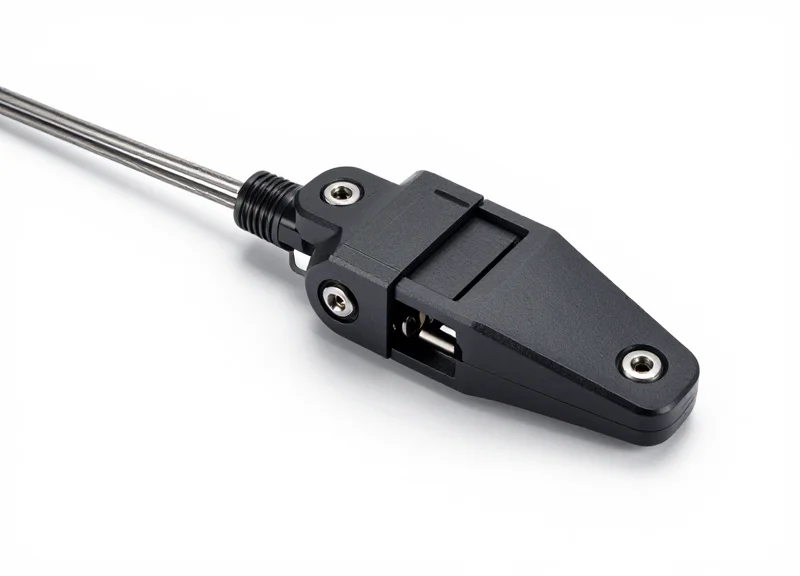
Enhanced physical deterrence in retail security refers to a multi-layered defense strategy that combines visual intimidation, mechanical resistance, and active audible alarms to prevent the unauthorized removal of high-value items. Unlike flat passive tags, hybrid RFID-EAS spider wraps create a 'hardened' target by physically constricting the product packaging with aircraft-grade cables, making it nearly impossible to access the contents or disable the device without specialized tools or triggering a high-decibel alert.
| Feature | Passive Labels/Stickers | Hybrid Spider Wraps |
|---|---|---|
| Visual Profile | Low/Hidden (Easily ignored) | High (Immediate psychological barrier) |
| Tamper Resistance | None (Can be peeled off) | High (Cables resist cutting/manipulation) |
| Alarm Capability | Gate-trigger only | Self-alarming + Gate-trigger |
| Box Integrity | No protection | Prevents 'box-ripping' theft |
The effectiveness of the spider wrap lies in its psychological impact on 'grab-and-go' theft. Professional shoplifters look for the path of least resistance; a spider wrap signals that the item will require significant time and effort to breach. This increases the 'Time-to-Theft' metric—a critical factor in retail security where even a 30-second delay can be the difference between a successful theft and an intervention. The conspicuous nature of the wrap serves as a visual 'keep out' sign that passive tags simply cannot replicate.
- Multi-Alarm Logic: Modern hybrid wraps often feature 3-alarm technology: an alarm if the cable is cut, an alarm if the tag passes through the EAS gates, and a 'pre-alarm' that chirps if a thief lingers too long near the exit.
- Universal Fit: The expandable cable design allows one device to secure various box sizes, from small smartphone boxes to large gaming consoles, ensuring a tight, tamper-proof fit regardless of the product dimensions.
- Aesthetic Security: Despite their strength, 2026-era wraps are designed to be sleek and transparent where possible, ensuring that branding and key product features remain visible to legitimate customers.
Expert Insight: The Box-Breach Prevention Factor. A common tactic among modern shoplifters is 'box-ripping'—tearing the side of a cardboard box to slide the product out while leaving the tagged packaging on the shelf. Hybrid spider wraps prevent this by applying 360-degree tension across all six faces of the box. This makes the packaging itself a structural part of the security system, forcing the thief to attempt to break the high-tensile cables rather than just the cardboard, which is virtually impossible without heavy-duty bolt cutters that are easily spotted on security cameras.
Streamlining the Checkout and Return Process
Hybrid RFID-EAS spider wraps streamline retail operations by allowing point-of-sale (POS) systems to simultaneously deactivate physical alarms and update inventory records without requiring individual line-of-sight barcode scans. This dual-action process reduces checkout times by up to 40% while providing a cryptographically secure method to authenticate returns, effectively neutralizing 'bracketed' returns and fraudulent exchanges through item-level serialization.
- Bulk Batch Processing: Unlike passive tags that require manual scanning of each barcode, hybrid wraps allow the POS reader to capture multiple high-value items instantly via UHF RFID, even when stacked or inside shopping carts.
- Automated EAS Deactivation: As the RFID tag is read and marked as 'sold' in the database, the system triggers the deactivation of the EAS component (AM or RF), ensuring the customer doesn't trigger a false alarm at the exit pedestal.
- Digital Receipt Linking: The specific Electronic Product Code (EPC) of the item is linked to the transaction ID, creating an immutable 'digital birth certificate' for the purchase.
- Rapid Hardware Detachment: Modern magnetic or electronic detachers are now being integrated with POS software to only release the spider wrap once a successful payment signal is received, preventing unauthorized removal by staff.
| Feature | Legacy Passive Tags | Hybrid RFID-EAS Wraps |
|---|---|---|
| Checkout Speed | Slow (Manual 1D scanning) | Instant (Bulk RFID capture) |
| Return Authentication | None (Receipt only) | Full (Item-level verification) |
| Fraud Prevention | Vulnerable to tag switching | Impossible to switch EPC codes |
| Inventory Sync | Batch/Manual updates | Real-time at Point of Sale |
Expert Insight: The Non-Repudiation of Sale. A critical advantage of hybrid wraps in 2026 is the concept of 'Non-Repudiation.' Because the wrap is physically locked to the item and its RFID tag is unique to that specific box, a retailer can prove with 100% certainty whether a returned item was the exact one sold at their store. This eliminates 'wardrobing' and 'merchandise switching,' where shoplifters buy a premium item and attempt to return a stolen or counterfeit version of the same product for a cash refund.
How do hybrid wraps handle 'Buy Online, Pick Up In-Store' (BOPIS)?
They are ideal for BOPIS because the RFID allows staff to locate the specific protected item in the backroom instantly using Geiger-counter functionality on handhelds, speeding up order fulfillment.
Does the RFID tag remain active after the wrap is removed?
Typically, the high-security RFID chip is embedded in the wrap itself, which is reused. However, next-gen systems can link the wrap's ID to a low-cost RFID sticker on the box for lifetime traceability.
Can these wraps detect if a customer is 'dwelling' too long?
Yes, intelligent retail environments use the RFID in the wrap to track 'dwell time' at the shelf, alerting staff to offer assistance (or surveillance) if a high-value item is handled for an unusual duration.
Labor Efficiency and Operational ROI
The integration of RFID into spider wraps shifts the return on investment from simple loss prevention to total operational efficiency. By enabling item-level visibility without physical contact, hybrid devices allow store associates to perform comprehensive inventory audits in minutes rather than hours, effectively eliminating the labor-intensive 'blind' shelf replenishment cycle that plagues traditional retail environments. This shift from reactive stock-counting to proactive sales support is the primary driver of ROI in next-gen intelligent retail.
| Operational Task | Legacy Passive Tags (Manual) | Hybrid RFID-EAS (Automated) | Efficiency Improvement |
|---|---|---|---|
| Full-Store Inventory Audit | 8-12 Man-Hours (Weekly) | 15-30 Minutes (Weekly) | 96% Reduction |
| Locating 'Misplaced' Stock | 15 Minutes per instance | 30 Seconds (Geiger Search) | 97% Reduction |
| Shelf Replenishment Verification | Visual/Manual Check | Real-time Automated Alerts | Instantaneous |
| Cycle Counting (High-Value) | Daily (Interrupts Sales) | Continuous / Hands-Free | Labor Friction Removed |
Expert Insight: The 'Shadow Labor' Cost Reduction. A unique benefit often overlooked by retail analysts is the elimination of 'Shadow Labor'—the time associates spend investigating phantom inventory errors caused by inaccurate passive tag counts. Hybrid RFID-EAS wraps provide a single source of truth that prevents associates from wasting 10-15% of their shift chasing items that are actually out of stock or stolen but still appear in the legacy POS system. By solving the data-integrity problem at the source, retailers unlock a level of labor velocity that passive tagging systems simply cannot match.
How does the ROI of Hybrid Wraps compare to standard EAS tags?
While the initial unit cost is higher, the ROI is typically realized within 12-18 months through a combination of 25% lower shrink, 15% increase in sales due to better stock availability, and a massive reduction in overtime labor for inventory counting.
Does implementing hybrid technology require extensive staff retraining?
No. In fact, it simplifies the associate workflow. Instead of manual scanning or counting, staff use handheld RFID sleds or overhead readers that automate the data capture, making the inventory process more intuitive and less error-prone.
Can these wraps help with Buy-Online-Pick-Up-In-Store (BOPIS) efficiency?
Significantly. The high-accuracy location data provided by RFID-enabled wraps ensures that when a customer orders a high-value item for pickup, the staff can locate it instantly, preventing order cancellations and improving the customer experience.
Sustainability and the Circular Economy

In the push for 'Green Retail' in 2026, the transition from disposable security stickers to hybrid RFID-EAS spider wraps represents a fundamental shift from a linear 'take-make-waste' model to a circular economy framework. While passive tags are often discarded alongside packaging, hybrid wraps are engineered as long-term assets with a 5-to-7-year operational lifespan, drastically reducing the carbon footprint of a retail loss prevention program by minimizing landfill contributions and the energy-intensive manufacturing of billions of single-use components.
| Sustainability Metric | Disposable Passive Tags (Stickers/Soft Tags) | Hybrid RFID-EAS Spider Wraps |
|---|---|---|
| Lifecycle Model | Linear (Single-use) | Circular (Multi-year Reusability) |
| Waste Generation | High (Millions of units per year) | Near-Zero (Reusable hardware) |
| Material Composition | Adhesives, Paper, Aluminum foil | Durable ABS Plastic, Recyclable Copper |
| Supply Chain Impact | Constant re-ordering and shipping | One-time deployment with occasional maintenance |
| End-of-Life Process | Landfill (Non-recyclable) | Electronic component harvesting/recycling |
Beyond simple waste reduction, the 'Circular Security' model introduces the concept of Embedded Carbon ROI. When a retailer invests in a hybrid wrap, the carbon cost of manufacturing that device is amortized over thousands of sales cycles. In contrast, the cumulative carbon footprint of manufacturing and shipping 5,000 disposable stickers—the equivalent usage of one spider wrap over its life—is significantly higher. Furthermore, the high-quality plastics and metals used in premium wraps are far easier to process in specialized industrial recycling streams than the mixed-material adhesives and thin-film foils found in passive tags.
- Expert Tip: The 'Decoupled Packaging' Advantage: Retailers can leverage hybrid wraps to move toward 'naked packaging' or minimalist designs. Because the security is provided by the wrap rather than embedded in the box, brands can eliminate secondary plastic sleeves and reinforced cardboard traditionally needed to hide internal security tags, leading to a 15-20% reduction in total packaging weight.
- Is the battery in a hybrid wrap environmentally harmful?: Modern 2026-gen wraps use low-impact, replaceable lithium-ion or coin-cell batteries that are easily removed for recycling. Unlike passive tags where the micro-components are glued to cardboard, the modularity of spider wraps allows for responsible e-waste management.
- How do hybrid wraps reduce the carbon footprint of logistics?: By eliminating the need for weekly or monthly shipments of thousands of disposable tags, retailers reduce the 'last-mile' delivery emissions. A single shipment of reusable wraps can serve a store for several years, whereas passive tags require a constant, carbon-heavy supply chain.
Future-Proofing for 2026: Implementation Strategies
Future-proofing retail security for 2026 requires a 'Smart Transition' framework that moves beyond traditional loss prevention into a unified data ecosystem. The most effective implementation strategy involves upgrading legacy Electronic Article Surveillance (EAS) gates to dual-frequency systems that support both 58kHz/8.2MHz and UHF RFID, followed by a phased deployment of hybrid spider wraps on high-shrink, high-margin categories. This approach ensures immediate protection against theft while building the data infrastructure necessary for real-time inventory visibility and automated stock replenishment.
- Infrastructure Audit and Gap Analysis: Evaluate current EAS gate capabilities and backend software. Ensure your local area network (LAN) can handle the increased data traffic from thousands of unique RFID pings generated by intelligent wraps.
- The 'Pilot-to-Platform' Migration: Begin with a single category, such as high-end consumer electronics or power tools. Use this pilot to calibrate signal thresholds and refine how hybrid wrap data flows into your Enterprise Resource Planning (ERP) system.
- Middleware Integration: Deploy an IoT middleware layer that can aggregate individual RFID tag reads and filter 'noise,' ensuring only actionable security or inventory events are pushed to the cloud.
- Staff Capability Building: Transition loss prevention teams from 'reactionary security' to 'data-driven asset protection' by training them on how to interpret dwell-time alerts and location-based data provided by the wraps.
| Implementation Component | Legacy Passive Tag Requirement | 2026 Hybrid Strategy Requirement |
|---|---|---|
| Hardware | Standard EAS Pedestals | Dual-Frequency RFID/EAS Readers |
| Data Connection | None (Isolated) | Cloud-linked IoT Gateway |
| Software | Local Alarm Log | Predictive Analytics & Real-time Inventory |
| Asset Value | Disposable Cost | Amortized ROI over 3-5 Years |
A unique insight for 2026 implementation is the utilization of 'Security Heatmapping.' By analyzing where hybrid spider wraps are most frequently tampered with or where 'dead zones' exist in the RFID read field, retailers can identify 'blind spots' in their store layout. This transforms security devices into architectural diagnostic tools, allowing managers to redesign floor plans to reduce theft risk while simultaneously optimizing high-traffic sales zones.
Do I need to replace all my existing security gates at once?
No. Most modern hybrid wraps are backwards compatible with legacy AM or RF gates. You can upgrade your gates in a phased approach while benefiting from the immediate inventory tracking capabilities of the RFID component.
What is the biggest technical hurdle in deployment?
The most common challenge is 'tag collision' or signal interference in dense environments. Implementing high-quality middleware and proper antenna placement is crucial to ensuring 99.9% read accuracy.
How does the ROI compare to passive tags?
While the initial capital expenditure is higher, the ROI is achieved through a 30-40% reduction in labor for inventory counts and a significant decrease in 'phantom stock' losses, which passive tags cannot address.