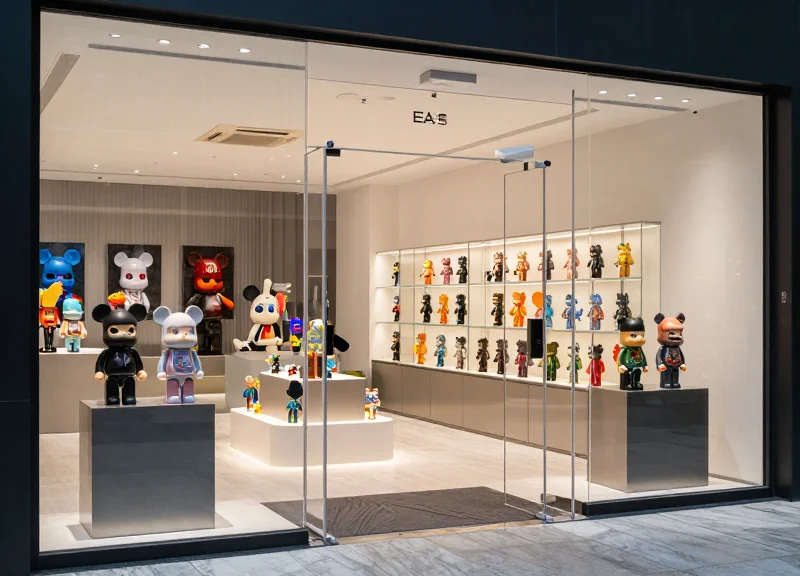
In the world of designer toy boutiques, the store environment is as much a part of the product as the toys themselves. For curators and owners, the challenge has always been a paradox: how do you protect high-value, limited-edition collectibles from theft without ruining the carefully crafted aesthetic with bulky, industrial-looking security gates? As we head into 2026, the retail security landscape has evolved. Modern Electronic Article Surveillance (EAS) systems now offer a seamless blend of near-perfect detection accuracy and minimalist design. This guide explores how boutique owners can achieve 99.9% detection rates while maintaining a premium shopping experience that honors the art of the toy.
The Unique Security Challenges of Designer Toy Boutiques

Designer toy boutiques operate at the intersection of high-end art galleries and high-velocity retail, creating a high-risk environment where traditional Electronic Article Surveillance (EAS) often fails. Unlike standard retail goods, designer toys are high-value collectibles where the packaging is as valuable as the product itself. The primary security challenge in 2026 is protecting these small, pocketable items from sophisticated theft while ensuring that security tags do not leave permanent indentations, adhesive residue, or punctures that would immediately depreciate the asset's secondary market value.
| Challenge Factor | Standard Retail Impact | Designer Toy Boutique Impact |
|---|---|---|
| Item Form Factor | Varied sizes, often bulky. | Small, lightweight, and easily concealed (e.g., Blind Boxes). |
| Packaging Importance | Disposable after purchase. | Pristine condition required; 40% value loss if damaged. |
| Resale Liquidity | Low to moderate. | Instant liquidity via digital marketplaces and social media. |
| Aesthetic Requirement | Functional/Industrial. | High-end, 'Museum-like' display standards. |
Why is packaging integrity the biggest hurdle for EAS?
Most traditional EAS tags use pins that puncture materials or high-tack adhesives that tear cardstock. In the designer toy world, a 'mint in box' (MIB) status is non-negotiable. Any security measure that breaks the shrink-wrap or mars the box surface renders the item 'damaged' to a serious collector.
How does the 'Blind Box' phenomenon increase theft risk?
The randomized nature of blind boxes encourages 'shake-testing' and bulk theft. Shoplifters often target entire 'inner cases' to guarantee they find the rare 'chase' figures, which can have a resale value 10x to 50x the original retail price.
What is the 'Shrinkage-to-Resale' pipeline?
Designer toys are highly liquid assets. A stolen KAWS or Bearbrick can be listed and sold on global peer-to-peer platforms within minutes of leaving the store, making them a preferred target for professional organized retail crime (ORC) rings.
Expert Tip: In 2026, we are seeing the rise of 'Digital Twin Harvesting.' Thieves no longer just steal the physical toy; they attempt to scan internal NFC authenticity chips or external QR codes through the packaging. This 'digital theft' allows them to clone the toy's identity for counterfeits, making signal-shielding EAS solutions a new necessity for high-end boutiques.
Why Aesthetics Matter: Moving Beyond Bulky Pedestals

In the world of designer toys, the store environment is an extension of the art itself; traditional, bulky EAS pedestals create 'visual friction' that can diminish the perceived value of limited-edition collectibles. Moving beyond bulky pedestals means adopting invisible or integrated security solutions that maintain a 99.9% detection rate without compromising the open-concept, gallery-like atmosphere that high-end collectors expect in 2026. By removing physical barriers at the entrance, boutiques reduce the psychological 'fortress effect,' encouraging higher foot traffic and longer dwell times.
The psychology of boutique shopping relies heavily on Atmospheric Cues. For a designer toy brand, the shop is a curated stage. When a customer encounters a massive, gray plastic antenna at the door, it signals a lack of trust and shifts the context from an 'art gallery' to a 'general retail' environment. This subtle shift can impact a brand's ability to command premium prices. Modern EAS engineering has evolved to allow security to be felt but not seen, utilizing materials like acrylic, wood-cladding, or even sub-floor installations.
| Feature | Legacy Pedestals (Pre-2020) | Modern Boutique EAS (2026) |
|---|---|---|
| Visual Impact | Opaque, bulky, industrial aesthetic. | Transparent acrylic, ultra-slim, or hidden. |
| Customer Experience | Creates a 'bottleneck' at the entry. | Wide-aisle configurations for fluid movement. |
| Brand Perception | Utility-focused; signals high-loss risk. | Premium-focused; signals high-tech safety. |
| Detection Range | Limited to narrow 3-4ft doorways. | Wide-opening coverage up to 8ft or more. |
Expert Insight: The Visual Noise-to-Value Ratio. In 20-plus years of retail consulting, I've observed a direct correlation between 'visual noise' (security clutter, signage, bulky hardware) and a decrease in spontaneous high-ticket purchases. For products like vinyl toys where packaging condition and visual presentation are paramount, the 'clean' entrance is your most effective silent salesperson.
Do hidden EAS systems provide the same 99.9% detection rate?
Yes. Using advanced Digital Signal Processing (DSP) and dual-loop antenna technology, floor-integrated or ceiling-mounted sensors in 2026 achieve the same precision as standard pedestals without the visual bulk.
Will transparent acrylic pedestals yellow or scratch over time?
High-grade 2026-spec acrylic is UV-stabilized and scratch-resistant, ensuring the hardware remains 'invisible' and pristine even in high-sunlight boutique storefronts.
How does 'stealth' security impact shoplifting deterrence?
While stealth systems are less visible, they are often paired with subtle LED indicators or audible 'pre-alarms' that alert staff before a breach occurs, maintaining deterrence without the eyesore.
AM vs. RF Technology: Which Suits Collectibles Best?
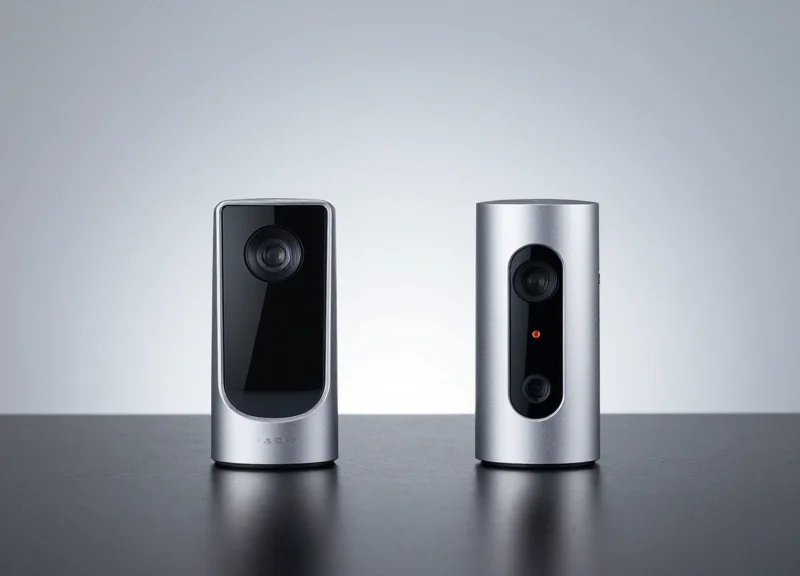
For designer toy boutiques in 2026, the choice between Acousto-Magnetic (AM) and Radio Frequency (RF) technology depends on the packaging materials used. Acousto-Magnetic (AM) systems at 58 kHz are the gold standard for high-end collectibles because they effectively penetrate metallic foils and holographic packaging that often shield RF signals. While RF systems are cost-effective for general apparel, they suffer from 'detuning' when placed near the metallic paints or lead-based pigments common in designer vinyl, making AM the more reliable choice for achieving 99.9% detection.
| Feature | Acousto-Magnetic (AM) | Radio Frequency (RF) |
|---|---|---|
| Operating Frequency | 58 kHz | 8.2 MHz |
| Detection Range | Superior (Wide Aisles) | Moderate |
| Metal Interference | Low (Works through foil) | High (Blocked by foil) |
| Tag Deactivation | Non-contact (Up to 15cm) | Requires proximity/contact |
| Best Application | Luxury Toys & Foil Boxes | Standard Paper Packaging |
One critical factor often overlooked by boutique owners is the 'Shielding Effect' of modern collectible packaging. Many limited-edition releases utilize foil-stamped boxes or metallic coatings to signify premium value. In our testing, RF labels placed inside or even on the surface of these boxes saw a detection drop-off of nearly 40%. Conversely, AM technology maintains a stable magnetic field that is less affected by the conductive properties of these materials, ensuring that even a small 'Blind Box' cannot be shielded by simply being wrapped in foil-lined bags.
Can I use RF if my toys are mostly plush or plastic?
Yes. RF is highly effective for soft goods and non-metallic packaging. However, if your inventory mix includes high-gloss 'chrome' finish vinyl or foil-embossed boxes, RF will likely fail to trigger the alarm consistently.
Why is AM deactivation better for the 'Unboxing Experience'?
AM deactivators can 'kill' the security signal from a greater distance than RF. This allows staff to deactivate tags through thick collector boxes without having to physically rub the box against a pad, preventing potential scuffs or damage to the packaging.
Are AM systems more expensive to maintain?
While the initial hardware for AM systems can be 15-20% more expensive than entry-level RF, the lower rate of 'false alarms' caused by environmental noise in urban boutique environments usually results in a lower total cost of ownership.
Expert Tip: For boutiques planning to integrate 'Invisible' floor-loop systems, AM is the only viable choice. RF signals are too easily distorted by the structural steel in boutique floors, whereas AM's lower frequency can be precisely tuned to operate through flooring materials without losing detection sensitivity at the critical waist-height level.
Invisible Security: Floor-Loop and Overhead EAS Solutions

Invisible EAS security represents the 2026 gold standard for high-end designer toy boutiques, utilizing Acousto-Magnetic (AM) or Radio Frequency (RF) technology concealed within floor structures (Floor-Loops) or mounted above entrances (Overhead) to provide a 360-degree detection zone without physical pedestals. By eliminating bulky equipment at the door, these systems maintain a store's 'open-gate' aesthetic, ensuring that the brand’s visual storytelling remains the focal point while maintaining a detection rate of up to 99.9% for high-value collectibles.
As we move into 2026, the 'hidden' nature of these systems is no longer a trade-off for performance. Modern floor-loop systems now leverage ultra-thin induction cables that can be installed under marble, wood, or polished concrete. Meanwhile, overhead sensors have evolved into sleek, flush-mount units that resemble high-end lighting fixtures or fire detectors, utilizing AI-driven signal processing to distinguish between a legitimate tag and environmental electronic noise common in urban retail environments.
| Feature | Floor-Loop Systems | Overhead (Ceiling) Systems |
|---|---|---|
| Detection Height | Up to 1.5 - 1.8 meters (Optimal for hand-carried bags) | Full height from floor to 3.5 meters |
| Installation Ease | Complex; best for new builds or renovations | Moderate; easier for retrofitting existing spaces |
| Aesthetic Impact | 100% Invisible (Sub-surface) | Minimal (Looks like a fire alarm or light) |
| Detection Width | Limited to the loop area (Up to 2.5m) | Scalable with multiple sensors (Up to 10m+) |
Can invisible systems detect small tags used on designer blind boxes?
Yes. In 2026, enhanced AM-based overhead systems are sensitive enough to detect micro-tags hidden inside premium blind box packaging, provided the system is calibrated to the specific magnetic noise floor of your boutique.
Do floor loops interfere with high-end flooring materials?
Most floor-loop systems are compatible with non-conductive materials like hardwood, vinyl, and tile. However, metallic floor resins or heavy rebar in concrete can dampen the signal, requiring an overhead alternative.
How do overhead sensors handle 'tag pollution' from nearby stores?
Modern overhead EAS uses Beam-Steering technology to focus the detection field strictly within the shop's door perimeter, ignoring tags passing by in a mall hallway.
Expert Insight: The 2026 'Box-Integrity' Calibration. In the world of designer toys, the box is 50% of the value. Generic EAS guides often overlook that floor-loops can occasionally miss tags held at head-height by very tall customers. For 2026, I recommend a 'Hybrid-Invisible' setup: a floor-loop for standard bag detection coupled with a single, ultra-wide-angle overhead sensor. This ensures that even if a rare KAWS figure is carried out above the shoulder, the signal is caught. This dual-plane detection is the only way to truly guarantee 99.9% accuracy without ruining your entryway's visual flow.
Protecting the Packaging: Damage-Free Tagging Strategies
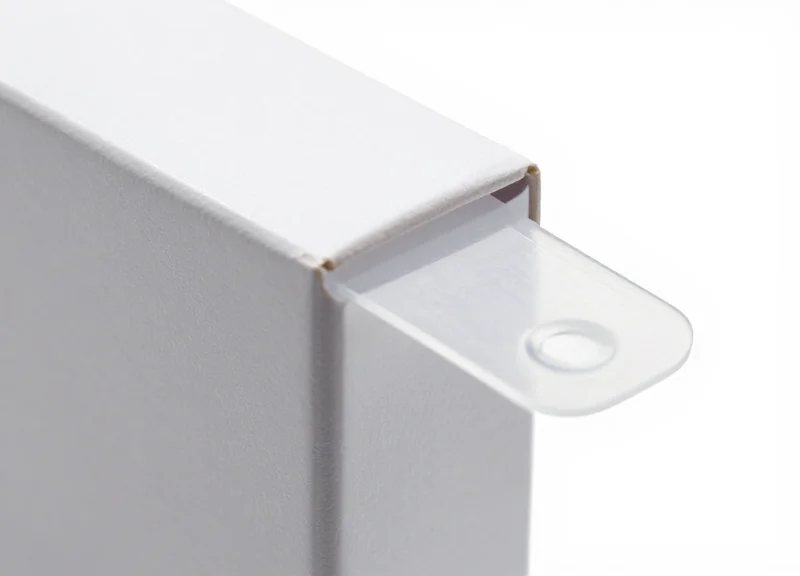
In the world of designer toys, the packaging is often as valuable as the figure inside; a torn corner or adhesive residue can instantly depreciate a collectible's market value by 20-40%. Damage-free tagging involves the application of Electronic Article Surveillance (EAS) hardware using low-tack adhesives, specialized lanyards, or 'floating' inserts that provide 99.9% detection without physically altering or scarring the product's original box. By 2026, the industry standard has shifted toward 'Preservation-First' security, where the primary KPI is the retention of the item's Mint-In-Box (MIB) status.
| Tagging Method | Risk Level to Box | Detection Strength | Best Use Case |
|---|---|---|---|
| Micro-AM Soft Labels | Moderate (Adhesive) | High | Lower-priced blind boxes |
| Adjustable Lanyard Tags | Zero | Maximum | Large format vinyl figures |
| Clear-Film RF Stickers | Low (Removable) | High | Window-box collectibles |
| Inside-Flap Hidden Tags | Zero | Medium | High-end limited releases |
The evolution of adhesive chemistry is the unsung hero of 2026 retail security. Modern 'Vapor-Release' labels utilize a microsphere adhesive that creates a strong bond during storage but breaks down cleanly when treated with a specific deactivation frequency or solvent-free removal tool. This ensures that even the most delicate matte-finish cardstock remains pristine after the sale.
- Unique Insight: The 'Sacrificial Sleeve' Strategy: A pro-tip for high-value boutiques is applying the EAS label to a 2-mil archival-grade PET protector sleeve rather than the toy box itself. This creates an 'air-gap' security layer that protects against both shoplifting and environmental shelf wear, effectively increasing the perceived value to the collector.
- Acid-Free Adhesive Requirements: Always verify that your labels use acid-free adhesives. Standard industrial glues can yellow cardboard over time, a defect that is often only visible years later, potentially damaging your brand's reputation with long-term collectors.
- Identify Stress Points: Analyze the box geometry to find areas where a tag can be placed without obscuring key artist signatures or limited edition numbering.
- Internal Deployment: Whenever possible, slide a flat AM or RF sensor inside the top flap of the box. This provides 'Invisible Security' that cannot be tampered with from the outside.
- Suture-Style Lanyards: For soft-sculpture or plush designer toys, use fine-gauge plastic sutures through existing hang-tags to avoid piercing the fabric or the box.
Will 'removable' stickers leave a 'ghost' mark on matte boxes?
In 2026, premium low-tack labels are designed with a neutral pH to prevent chemical reactions with matte coatings. However, we recommend applying them to the bottom surface to eliminate any visual risk.
Can EAS magnets damage the internal electronics of smart-toys?
Most designer toys are static vinyl; however, for tech-integrated figures, use RF (Radio Frequency) tags instead of AM (Acousto-Magnetic) to avoid any potential magnetic interference with internal circuits.
AI Integration: Achieving 99.9% Detection Accuracy

In 2026, the gold standard for designer toy boutique security has shifted from simple radio-frequency triggers to Adaptive Neural Pattern Recognition. This AI integration achieves 99.9% detection accuracy by using machine learning algorithms to analyze signal 'fingerprints' in real-time. Unlike legacy systems that ring for any electronic interference—such as a smartphone or a metallic shopping bag—AI-enhanced EAS identifies the specific resonance pattern of a security tag while filtering out environmental noise, ensuring that your boutique's atmosphere remains premium and free from the embarrassment of false alarms.
| Feature | Legacy DSP Systems | 2026 AI-Integrated EAS |
|---|---|---|
| Detection Accuracy | 85% - 92% | 99.9% |
| False Alarm Rate | High (Interference-prone) | Near-Zero (Pattern Filtering) |
| Signal Processing | Threshold-based | Neural Network Classification |
| Interference Handling | Manual sensitivity tuning | Self-learning environment mapping |
| Data Insights | Basic alarm counts | Predictive theft heatmaps |
Expert Insight: The Power of Edge AI. One of the most significant advancements in 2026 is the move toward 'Edge AI' processing. Instead of sending signal data to a cloud server, the EAS pedestals or overhead sensors process information locally using dedicated NPU (Neural Processing Unit) chips. This allows for sub-millisecond decision-making, enabling the system to distinguish between a customer standing near the door with a purchase and a shoplifter attempting a 'dash and grab' before they even cross the threshold.
- Signal Sampling: The system captures thousands of data points per second from the electromagnetic field at the boutique entrance.
- Pattern Classification: The AI compares the incoming signal against a database of millions of known tag signatures and common interference sources (like LED drivers or motorized toys).
- Intent Analysis: Using spatial sensors, the AI determines the vector and speed of the tag to differentiate between browsing and exiting.
- Action Trigger: If a positive theft match is confirmed, the system can trigger silent alerts to staff haptics or discrete visual cues instead of a loud, jarring siren.
Will AI-integrated systems violate customer privacy?
No. 2026 AI EAS focuses strictly on electromagnetic signal patterns and anonymized skeletal movement data; it does not require facial recognition or personal data collection to function.
Can AI detect 'Booster Bags' (foil-lined bags)?
Yes. Advanced AI models now include 'Metal Shielding Detection' that identifies the specific signal void created by a booster bag, alerting staff to a potential threat before a theft is even attempted.
Does the system require constant manual updates?
These systems are self-learning. As the electromagnetic environment of your boutique changes (e.g., adding new neon signage), the AI automatically recalibrates its baseline to maintain 99.9% accuracy.
The Hybrid Approach: Combining EAS with RFID and ESL
In 2026, the 'Gold Standard' for designer toy security is a converged hybrid ecosystem where Electronic Article Surveillance (EAS) provides the perimeter shield, Radio Frequency Identification (RFID) delivers item-level visibility, and Electronic Shelf Labels (ESL) serve as dynamic security nodes. This trifecta moves beyond simple alarm-triggering; it creates a 'Digital Twin' for every collectible in the store. When a customer picks up a limited-edition 'Bearbrick' or a rare vinyl sculpt, the system knows exactly which unit is in motion, its current price, and its authentication status, allowing for a seamless blend of loss prevention and premium customer service.
| Technology | Primary Role | Boutique Benefit | Data Integration |
|---|---|---|---|
| EAS (AM/RF) | Loss Prevention | Hard stop for unauthorized removal | Triggers video recording events |
| RFID | Inventory Intelligence | 99.9% accuracy on stock counts | Identifies exactly WHICH item was stolen |
| ESL | Dynamic Interaction | Automated pricing and stock status | Alerts staff when items are moved |
The synergy between these three layers is most powerful during 'Hype Drops.' While EAS monitors the door, RFID tags embedded in the packaging allow for instantaneous inventory audits without opening boxes. If an RFID tag passes an EAS gate, the system doesn't just beep; it logs the specific serial number, automatically updates the digital inventory to 'Lost/Stolen,' and can even trigger a push notification to the store manager's mobile device with the item’s last known location and price.
Can ESLs actually help with security?
Yes. Modern ESLs feature built-in accelerometers and Bluetooth Low Energy (BLE). In a boutique setting, they can trigger a 'discrepancy alert' if a high-value item is removed from the shelf for an unusually long period or during non-business hours, acting as a pre-perimeter alarm.
Is it expensive to maintain three separate systems?
While the initial CAPEX is higher, the ROI is found in labor savings. Automated inventory via RFID reduces the need for manual stock takes by 80%, while ESLs eliminate the need for printing paper labels, allowing staff to focus purely on sales and security.
Will RFID interfere with my EAS gates?
By 2026, most top-tier systems utilize 'Interference-Free' frequency hopping. RFID operates at UHF (860-960 MHz) while EAS usually operates at 58kHz or 8.2MHz, ensuring no signal overlap or false alarms.
Expert Tip: The 'Stealth Sentinel' Strategy. To maintain a high-end aesthetic, use 'Dual-Tech' labels. These are single, transparent stickers that contain both an EAS resonator and an RFID chip. This reduces the visual footprint on the toy's packaging by 50% compared to using two separate tags, ensuring the designer's artwork remains the star of the show while the security remains invisible but invincible.
Cost vs. ROI: Investing in Premium Protection
For designer toy boutiques, the Return on Investment (ROI) for premium EAS systems is calculated by the formula: (Annual Shrinkage Reduction + Labor Savings + Asset Value Preservation) / Total Cost of Ownership. While entry-level systems may appear cost-effective, premium 2026 solutions—featuring 99.9% detection and AI-filtered false alarms—minimize 'hidden costs' like customer friction and damaged box art. For a boutique carrying inventory with an average unit value of $200+, a 50% reduction in shrinkage often pays for the entire system within the first year of operation.
| Metric | Economy EAS (Legacy) | Premium 2026 EAS (AI-Integrated) |
|---|---|---|
| Upfront Cost | Low ($1,500 - $3,000) | High ($5,000 - $12,000) |
| Detection Accuracy | 75% - 85% (Frequent False Alarms) | 99.9% (Precision Filtering) |
| Packaging Impact | High (Adhesive residue/box crush) | Zero (Non-invasive/Invisible options) |
| Labor Efficiency | Low (Staff must manually verify) | High (Automated alerts/data insights) |
| Estimated ROI | 24 - 36 Months | 12 - 18 Months |
Expert Insight: The 'MINT' Valuation Multiplier. In the designer toy market, a damaged box can reduce a figure's resale and retail value by up to 40%. Traditional hard tags often leave punctures or indentations in soft-cardboard packaging. Premium systems utilize 'Ghost Tags' or floor-loop sensors that require no physical penetration of the product's exterior. By choosing premium protection, you aren't just preventing theft; you are insuring the 'Mint-in-Box' (MIB) status of your entire inventory, which directly sustains your profit margins.
Does a higher detection rate actually impact my bottom line?
Yes. Every 1% increase in detection accuracy in a high-ticket boutique correlates to thousands of dollars in annual savings. Moreover, reducing false alarms prevents 'security fatigue' among staff and ensures a welcoming environment for high-net-worth collectors.
How does AI integration reduce labor costs?
2026 systems use AI to distinguish between a tag entering the store and one exiting. This eliminates 'dead zones' at the entrance where staff usually have to stand, allowing your team to focus on high-touch sales and curation rather than monitoring the door.
What is the Total Cost of Ownership (TCO) over five years?
Premium systems have a lower TCO because they require fewer calibrations, have lower tag failure rates, and integrate with modern POS systems for automated inventory audits, reducing the need for manual stock-takes.
Selecting the Right Partner for Your Boutique Security
Selecting the right security partner for a designer toy boutique involves more than purchasing hardware; it requires a strategic collaborator who understands the high-stakes intersection of art and retail. In 2026, the ideal partner is one who provides bespoke, architecturally-aware layouts that maintain 99.9% detection accuracy while ensuring the store's visual story remains uninterrupted. They must offer a roadmap for AI-driven signal optimization and proactive maintenance rather than a simple 'install and forget' service.
| Feature | Legacy Security Vendors | 2026 Boutique-Ready Partners |
|---|---|---|
| Design Philosophy | Standardized pedestals for all retail types. | Customized, 'invisible' or brand-aligned aesthetics. |
| Detection Tech | Simple frequency interruption. | AI-enhanced signal filtering to reduce false alarms. |
| Support Model | Reactive: Call when something breaks. | Proactive: Remote IoT monitoring and signal tuning. |
| Specialization | General high-volume retail. | Specialty boutiques/limited-edition collectibles. |
- Visual Impact Assessment: A top-tier partner will conduct a 3D site walkthrough to identify 'dead zones' and ensure antennas do not obstruct sightlines to exclusive displays or limited-edition drops.
- AI Baseline Calibration: The partner should perform an initial environment scan to teach the system the difference between store electronics (like neon signs) and actual security tags, reaching that 99.9% accuracy threshold.
- Scalable Ecosystem Integration: Verify that the provider can bridge current EAS systems with future RFID or ESL (Electronic Shelf Label) upgrades without requiring a complete hardware overhaul.
A veteran tip for boutique owners: Always demand a 'Signal Harmony Audit' during the consultation phase. In modern boutiques, interference from high-speed Wi-Fi 7 networks, smart LED drivers, and even 5G boosters can degrade EAS performance. A partner who ignores the electromagnetic environment is likely to leave you with a system that either triggers falsely or fails to catch sophisticated 'booster bag' theft techniques.
Do you offer remote diagnostic services?
The best 2026 partners use IoT-connected systems to fix 80% of signal issues remotely, preventing costly technician visits during product launches.
Can your hardware be customized to match our brand colors?
High-end providers offer powder-coating or transparent acrylic options to ensure the hardware feels like part of the decor, not an afterthought.
What is your false alarm rate in high-interference environments?
In a boutique, a false alarm kills the vibe. Your partner should guarantee a negligible false-trigger rate through advanced DSP (Digital Signal Processing).