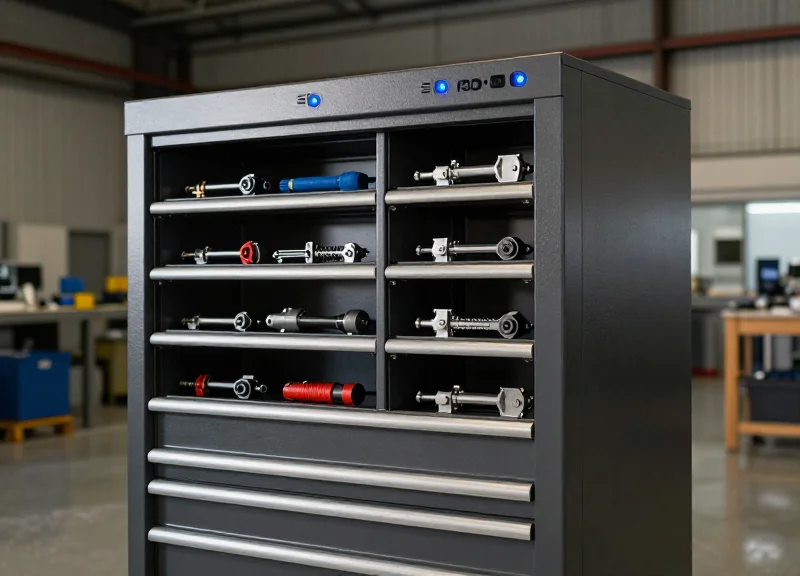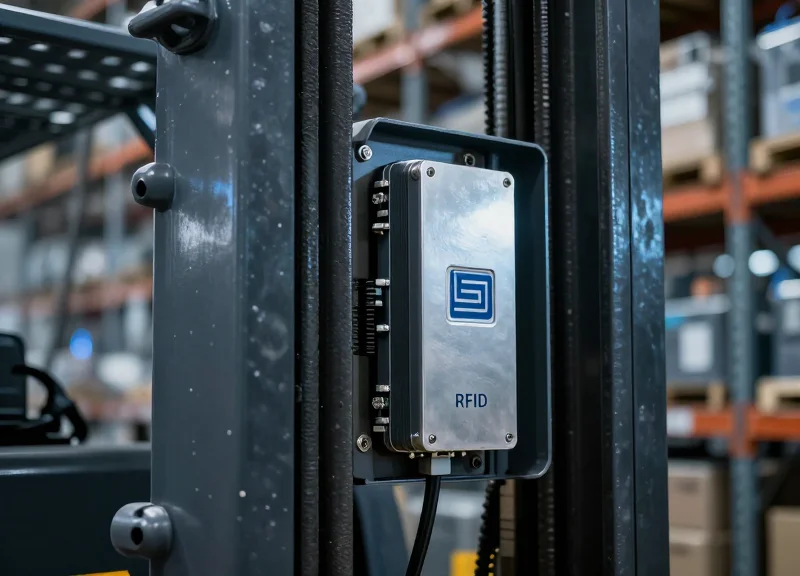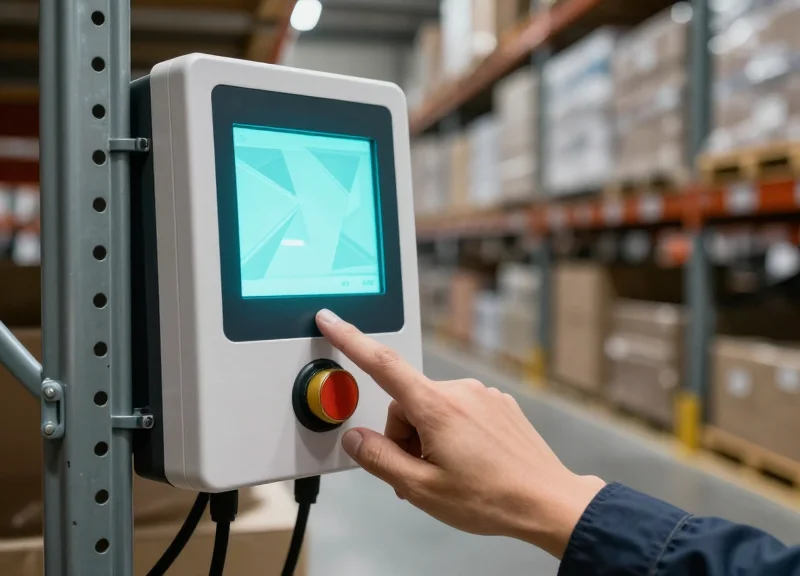
As global travel surges toward 2026, duty-free retailers are at a technological crossroads. The high-traffic, high-value environment of airport retail demands a security infrastructure that is both invisible to the customer and impenetrable to theft. For decades, Electronic Article Surveillance (EAS) has been the industry standard. However, the next era of retail belongs to Radio Frequency Identification (RFID). This article explores the strategic transition from traditional, alarm-based EAS to frictionless, data-rich RFID solutions, setting the stage for a new standard in loss prevention and operational efficiency.
The Evolution of Duty-Free Security: Why 2026 is a Turning Point

The year 2026 represents a definitive 'Event Horizon' for duty-free security, marking the transition from reactive Electronic Article Surveillance (EAS) to proactive, data-driven RFID loss prevention. As global airports adopt biometric 'walk-through' identities, traditional security gates are becoming obsolete bottlenecks. The 2026 turning point is defined by the convergence of the IATA 'One ID' initiative and the mass adoption of item-level intelligence, where security is no longer a physical barrier but an invisible, digital layer integrated into the traveler's seamless journey.
| Feature | Legacy EAS (Pre-2026) | RFID-Led Security (2026+) |
|---|---|---|
| Detection Method | Physical Pedestals/Gates | Overhead/Zone-Based Sensors |
| Data Insight | Binary (Alarm/No Alarm) | Granular (SKU, Color, Price) |
| Customer Experience | High Friction/Interruption | Invisible/Frictionless |
| Inventory Accuracy | 65-70% Average | 99%+ Real-Time |
| Recovery Potential | Reactive Intervention | Predictive AI Analytics |
Why is 2026 the specific deadline? It is the year by which major international travel hubs are projected to complete their post-pandemic infrastructure upgrades, moving toward fully autonomous retail environments. In these high-velocity settings, the 'beeping gate' is a relic of the past. Retailers who fail to transition by 2026 face a double-edged sword: increasing shrinkage from sophisticated theft rings and a significant drop in conversion as high-net-worth travelers bypass stores that feel 'cumbersome' or 'slow'.
Why is EAS failing in modern duty-free environments?
Traditional EAS relies on hardware pedestals that occupy valuable floor space and frequently trigger false alarms due to metallic interference from airport infrastructure, damaging brand prestige and customer trust.
What makes 2026 the 'turning point' for this technology?
The synergy between 5G-enabled IoT and the global push for contactless commerce has reached a price-performance parity, making the ROI of RFID-led loss prevention undeniable for high-volume travel retail.
How does frictionless security impact the bottom line?
Beyond reducing theft, frictionless systems allow for 'Open Merchandising' of high-value items like luxury watches and perfumes, which traditionally see a 20-30% sales lift when removed from locked display cases.
Unique Silicon Valley Insight: In my two decades of tech analysis, I have observed that 'The Shadow Cost of False Positives' is the hidden killer of duty-free retail. In a 30-minute pre-boarding window, a single false alarm doesn't just stop one customer; it creates a 'threat perception' that causes every other passenger in the vicinity to accelerate toward their gate, effectively ending the shopping window for that entire flight block. RFID-led systems eliminate this psychological churn by identifying the specific item and intent without the public theater of an alarm gate.
Limitations of Traditional EAS in Modern Airport Retail
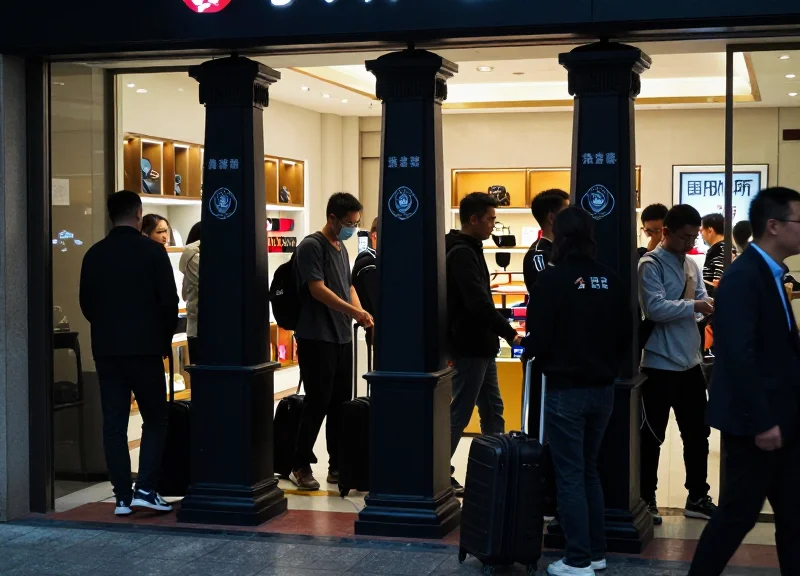
Traditional Electronic Article Surveillance (EAS), utilizing Radio Frequency (RF) or Acousto-Magnetic (AM) technology, is reaching a breaking point in modern airport environments. These legacy systems function as binary 'gatekeepers'—they can only detect if an active tag passes through a pedestal, but they cannot identify what the item is, its value, or whether it was actually paid for. In the high-velocity world of duty-free retail, this lack of granular data creates significant operational bottlenecks, leading to lost revenue and compromised security protocols.
| Feature | Legacy EAS (RF/AM) | 2026 Retail Requirements |
|---|---|---|
| Item Identification | None (Binary alarm only) | Unique Item-Level Serialization |
| Data Integration | Siloed / No POS link | Real-time Inventory & POS Sync |
| Alarm Accuracy | High False Alarms (Interference) | Context-Aware (Frictionless) |
| Passenger Experience | Intrusive / High-friction | Invisible / Seamless Flow |
- The 'Black Hole' of Shrinkage: Legacy systems offer no insight into whether an item was stolen, misplaced, or simply never scanned. This creates a data vacuum where retailers cannot distinguish between organized retail crime (ORC) and internal administrative errors.
- Interference and Shielding: Modern airport infrastructure is a nightmare for RF/AM signals. Metal-heavy environments, electronics, and even 'booster bags' lined with foil easily circumvent traditional EAS pedestals, rendering them ineffective against professional shoplifters.
- Operational Fatigue: High rates of 'false positives' lead to staff desensitization. When an alarm triggers every few minutes due to signal interference or 'tag pollution' from other stores, security personnel stop reacting, allowing actual theft to occur unnoticed.
The Duty-Free Anxiety Loop: A unique insight often overlooked is the psychological impact of false alarms in an airport setting. Unlike standard high-street retail, duty-free shoppers are already in a state of 'heightened travel anxiety' related to flight times and border security. A false EAS alarm doesn't just annoy a passenger; it triggers a stress response that negatively correlates with their likelihood to spend in the next terminal. By 2026, the success of a duty-free brand will be measured by its ability to provide security without the 'guilty until proven innocent' gate-check model.
Why is EAS considered a bottleneck for 2026 duty-free targets?
As airports move toward frictionless, 'grab-and-go' shopping experiences, the physical pedestals of EAS act as a literal and psychological barrier that slows down passenger throughput.
Can traditional EAS detect the difference between a high-value watch and a bottle of water?
No. Traditional EAS treats all tags the same. This forces staff to manually intervene for every alarm, wasting resources on low-value incidents while potentially missing high-value theft.
How does tag shielding affect legacy systems?
Professional shoplifters use foil-lined bags to mask the signal of RF and AM tags. Because legacy systems lack the sophisticated signal processing of RFID, these bags create a total blind spot at the exit.
The Power of RFID: Beyond Simple Loss Prevention

Radio Frequency Identification (RFID) represents a paradigm shift in duty-free security by moving from passive detection to active intelligence. Unlike traditional Electronic Article Surveillance (EAS), which only triggers a generic alarm at the door, RFID provides 99% inventory accuracy and item-level visibility. By assigning a unique digital identity to every product, retailers can distinguish exactly what is leaving the store in real-time, enabling a frictionless environment where security enhances, rather than hinders, the high-velocity traveler's shopping journey.
| Feature | Traditional EAS | Next-Gen RFID-Led LP |
|---|---|---|
| Detection Granularity | Generic 'Beep' (Unknown Item) | Specific Item Identification (SKU/Serial) |
| Inventory Accuracy | 65% - 75% on average | 98% - 99.9% in real-time |
| Loss Analysis | Manual, post-event audit | Automated, immediate 'Who/What/When' |
| Store Layout | Restrictive gate bottlenecks | Open, frictionless 'Invisible' barriers |
- Real-Time Stock Replenishment: Automated alerts trigger when high-value items, such as luxury cosmetics or premium spirits, are moved from the shelf, ensuring zero out-of-stock scenarios during peak flight waves.
- Predictive Shrinkage Analytics: By tracking the movement patterns of tagged items before they reach the exit, AI-driven RFID systems can flag suspicious behavior, such as 'shelf sweeping,' before the theft occurs.
- Seamless Self-Checkout Integration: RFID tags allow for bulk-scanning of items in a basket instantly, facilitating the rapid checkout speeds required in airport terminals without compromising security.
Expert Insight: The 'Bonded Visibility' Advantage. In the unique landscape of duty-free, the greatest ROI of RFID isn't just stopping external theft—it is the automation of the bonded warehouse trail. By creating a 'Digital Twin' of every SKU, operators can automate the reporting of tax-exempt status to customs authorities. This eliminates the massive administrative overhead and audit fines associated with manual inventory discrepancies, effectively making the security system a profit-center through operational efficiency.
Does RFID replace the need for security personnel?
No, it empowers them. Instead of chasing false alarms, staff receive precise mobile alerts indicating exactly which high-value SKU has bypassed the point of sale, allowing for data-driven intervention.
Can RFID handle the high-metal environment of airports?
Yes. Modern UHF RFID tags and 'On-Metal' solutions are specifically engineered to perform reliably amidst the high-interference environment of airport terminals and luxury metallic packaging.
Frictionless Security: The Customer Experience Imperative

Frictionless security in duty-free retail is the strategic removal of physical barriers—specifically the bulky, alarm-prone Electronic Article Surveillance (EAS) pedestals—to create a seamless, open-concept shopping environment. By replacing intrusive hardware with invisible RFID overhead sensors and floor-integrated readers, retailers can eliminate the 'security-first' atmosphere that often deters luxury shoppers. In 2026, the imperative is to shift from a defensive posture to a service-oriented one, where loss prevention occurs in the background, allowing the traveler’s journey from the terminal to the storefront to remain uninterrupted and prestige-focused.
| Feature | Traditional EAS (Pedestals) | Frictionless RFID (Overheads) |
|---|---|---|
| Store Entrance | Narrow, gated, and intimidating. | Wide, open, and inviting. |
| Customer Path | Restricted flow for sensor alignment. | Natural movement; no 'bottle-necks'. |
| Visual Impact | Bulky antennas disrupt luxury branding. | Discrete hardware maintains aesthetics. |
| Error Rate | Frequent false alarms (the 'beeping' stigma). | High-precision tracking with near-zero false triggers. |
| Security Signal | Public confrontation at the gate. | Silent alerts to staff mobile devices. |
The 'Golden Hour' in airport retail—the time between security clearance and boarding—is the most valuable window for high-margin sales. Traditional security gates create a psychological barrier that can reduce footfall by as much as 15% in luxury boutiques. When travelers see a physical gate, it triggers a 'defensive' shopping state. Conversely, an invisible security perimeter allows for 'Experience-First' retailing. Expert Tip: By removing the gates, retailers can implement 'Concierge Security' where staff are notified of a potential loss event via wearable haptics, allowing them to intervene with a service-led approach ('May I help you find a bag for those items?') rather than a confrontational one.
Does frictionless security increase the risk of shoplifting?
No. In fact, it often decreases it. Because RFID overheads track item-level movement in real-time, security teams receive precise data on exactly what is moving toward an exit, allowing for faster, more accurate interventions compared to the generic beep of a traditional EAS gate.
How does this impact the conversion rate of high-net-worth travelers?
Removing physical gates reduces 'shopper anxiety' and creates an environment of trust. Data shows that open-concept duty-free layouts lead to higher dwell times and a measurable increase in Average Transaction Value (ATV), as customers feel more like guests and less like suspects.
Is the technology hidden from the customer?
Ideally, yes. RFID readers can be integrated into ceiling tiles, decorative archways, or even the flooring. This keeps the focus entirely on the brand's visual merchandising and the luxury atmosphere of the airport terminal.
Hybrid Strategies: Bridging the Gap Between EAS and RFID
A hybrid security strategy is the tactical deployment of dual-technology tags and multi-protocol sensors that simultaneously support legacy Electronic Article Surveillance (EAS) and Ultra-High Frequency (UHF) RFID. For duty-free retailers in 2026, this 'bridge' phase is essential; it allows for the retention of existing pedestal investments while incrementally introducing item-level visibility and frictionless 'overhead' monitoring. By utilizing dual-tech tags, retailers can prevent theft using traditional 58kHz or 8.2MHz systems while simultaneously gathering real-time inventory data via RFID, ensuring no 'blind spots' exist during the digital transformation.
| Feature | Traditional EAS | Hybrid Model | RFID-Led Future |
|---|---|---|---|
| Detection Method | Physical Gates | Gates + Overhead | Invisible Zones |
| Data Granularity | Alarm Only | Item Identification | Real-time Analytics |
| Customer Friction | High (Bottle-necks) | Medium (Transitionary) | Zero (Frictionless) |
| Inventory Accuracy | N/A | Up to 95% | 99%+ |
The Veteran Perspective: One critical mistake many retailers make is viewing the transition as a binary choice. In high-stakes duty-free environments, the most successful 2026 deployments utilize what I call 'Shadow Tagging.' This involves applying RFID-enabled labels behind traditional hard tags. It allows you to test your cloud-based loss prevention algorithms in the background while the loud, physical EAS alarm remains the primary deterrent for the general public.
- Audit Legacy Infrastructure: Identify which existing EAS pedestals can be retrofitted with RFID inserts to minimize hardware replacement costs.
- Deploy Dual-Technology Tags: Implement tags that house both an acoustic-magnetic (AM) or radio-frequency (RF) element and an RFID chip.
- Install Overhead 'Transition' Readers: Mount RFID sensors above ceilings near exits to begin mapping movement patterns without removing physical gates yet.
- Calibrate Logic Filters: Fine-tune the software to distinguish between a 'stock replenishment' movement and a potential 'theft' event based on item-level data.
Can hybrid systems work with existing POS software?
Yes, most modern hybrid controllers act as a middleware layer that translates RFID data into formats compatible with legacy Point of Sale (POS) and Warehouse Management Systems (WMS).
What is the primary ROI of a hybrid approach?
The ROI stems from a 60-80% reduction in labor hours for inventory counting and a significant decrease in 'sweethearting' at checkout, all while avoiding the massive upfront CAPEX of a total system rip-and-replace.
Does overhead RFID cause more false alarms?
On the contrary, RFID-led systems reduce false alarms by verifying if an item has been 'sold' in the database before triggering an alert, a feature traditional EAS cannot provide.
Data-Driven Intelligence: Turning Shrinkage into Insights

In the 2026 landscape, data-driven intelligence represents the evolution of loss prevention from reactive alarm-triggering to proactive business optimization. By integrating RFID item-level tracking with AI-powered analytics, duty-free operators can now transform 'shrinkage' from a vague financial loss into a granular data point. This shift allows retailers to visualize the exact path an item takes from the shelf to the exit, identifying not just that a theft occurred, but the specific operational vulnerabilities—such as blind spots or staffing gaps—that enabled it.
| Feature | Legacy EAS Reporting | 2026 RFID-AI Intelligence |
|---|---|---|
| Visibility | Bulk loss totals detected at end-of-quarter | Real-time item-level visibility |
| Actionability | Reactive: Investigate after the event | Predictive: AI flags suspicious movement patterns |
| Context | Anonymized alarm counts | Full digital audit trail per SKU |
| Impact | Sunk cost of lost inventory | Optimized stock and improved labor allocation |
The true breakthrough lies in 'The Velocity-Threshold Pivot.' Unlike traditional systems that only care if a tag crosses a gate, 2026 AI systems analyze the speed and trajectory of items within the store. For example, if three high-value fragrances move toward the exit at a pace inconsistent with a standard browsing journey, the system flags an 'anomaly' to floor staff's mobile devices before the suspect even reaches the door. This isn't just security; it is a real-time operational feedback loop.
- Pattern Recognition: AI algorithms identify 'signature' theft behaviors, such as shelf sweeping or frequenting specific blind spots, allowing for targeted physical security adjustments.
- Automated Replenishment Triggers: When an item is identified as stolen, the system instantly updates inventory and triggers a restock order, ensuring that 'Out-of-Stock' situations don't double the loss.
- Dynamic Staffing Deployment: Heat maps generated by RFID movement data reveal high-risk times and zones, enabling managers to deploy staff more effectively during peak travel windows.
How does this data help with 'internal' shrinkage?
RFID provides a complete chain of custody. Since every movement is logged, unauthorized transfers or 'sweethearting' at the POS are immediately flagged, reducing internal theft by up to 60%.
Is the data compatible with existing ERP systems?
Yes. Modern frictionless systems are designed with open APIs to feed loss data directly into SAP, Oracle, or custom retail management platforms for a unified view of store health.
Does this require a dedicated data scientist on-site?
No. The 2026 generation of tools uses 'Edge Intelligence' to provide automated, plain-English insights and 'Next-Step' recommendations directly to store managers via tablets.
Implementing the Transition: A Strategic Roadmap
The implementation of a frictionless RFID loss prevention system is a strategic pivot from reactive security to proactive, data-driven asset protection. By 2026, duty-free operators must transition through a phased roadmap that starts with infrastructure readiness and culminates in a fully integrated digital ecosystem where legacy gates are replaced by invisible overhead RFID arrays and item-level intelligence. Success hinges on a 'Security-First, Friction-Last' philosophy that ensures high-value assets are protected without hindering the traveler's limited shopping window.
- Phase 1: Infrastructure Readiness & Site Mapping: Conduct a comprehensive RF environment audit to identify dead zones and interference sources. This phase involves mapping the 'Read Zones' for checkout, stockroom, and exit points to ensure 99.9% read accuracy before hardware installation.
- Phase 2: Source Tagging Integration: Collaborate with high-end luxury and spirits suppliers to implement RFID source tagging at the point of manufacture. This eliminates the labor costs of manual tagging in-store and ensures consistent tag performance across all product categories.
- Phase 3: Hardware & Middleware Deployment: Install overhead RFID sensors and smart-shelf technology. Simultaneously, deploy middleware that filters 'raw' tag reads into actionable business intelligence, preventing data floods and ensuring only critical security events are flagged.
- Phase 4: Staff Training & KPI Calibration: Train security and floor staff to use real-time alerts rather than reacting to traditional alarms. Recalibrate KPIs from 'Shrink Percentage' alone to 'Stock Availability' and 'Intervention Success Rate' to reflect the new technology's value.
| Milestone | Primary Activity | Success Metric |
|---|---|---|
| Month 1-2 | RF Site Survey & Gap Analysis | Zero-Interference Zone Map |
| Month 3-5 | Pilot Launch (High-Shrink Categories) | 25% Reduction in Departmental Shrink |
| Month 6-9 | Full Store Integration | 99%+ Inventory Accuracy |
| Month 10+ | AI Security Optimization | Average Transaction Value Increase |
A unique strategic advantage for 2026 is 'Dynamic Zone Sensitivity.' Unlike static EAS systems, modern RFID software allows retailers to adjust the sensitivity of exit sensors based on real-time flight data. For example, during peak departures of flights to high-risk destinations for organized retail crime, the system can increase alert thresholds. This expert-level optimization ensures that security is tightest when the threat level is statistically highest, without inconveniencing everyday travelers.
How does RFID integration affect existing POS systems?
Modern RFID middleware acts as a bridge, translating tag IDs into SKU data that standard POS systems can process, often requiring only a software patch rather than a hardware overhaul.
What is the expected ROI timeline for this transition?
Most duty-free operators see a full return on investment within 18 to 24 months, driven by a 50% reduction in labor costs for stocktaking and a significant decrease in unknown shrink.
Can RFID work with metal or liquid products common in duty-free?
Yes. By 2026, flag-tags and on-metal RFID labels have matured to provide 98% plus read rates even on fragrances, spirits bottles, and metallic cosmetic packaging.
Future-Proofing ROI: The Economic Case for RFID

The economic case for RFID in duty-free retail represents a shift from reactive loss prevention to proactive profit protection. By 2026, the ROI for frictionless RFID-led security will be defined not just by stolen goods recovered, but by the 'Recapture Rate'—the ability to identify missing high-margin inventory in real-time and restock it before the next flight boarding window, ensuring a sale that would otherwise be lost forever. Most duty-free operators can expect a full return on investment within 12 to 24 months through a combination of 50% lower shrinkage and a 2-5% lift in top-line revenue.
| Financial Driver | Traditional EAS Impact | RFID-Led Security Impact |
|---|---|---|
| Inventory Shrinkage | High: Only alerts at exit; no data on what or how it was taken. | Low: Item-level tracking identifies theft patterns and 'hidden' loss. |
| Labor Allocation | Expensive: Manual stock counts and physical tag detachment. | Efficient: Automated inventory cycles; frictionless 'invisible' tagging. |
| On-Shelf Availability | Variable: Stock-outs often go unnoticed until next manual count. | Optimized: 99% accuracy ensures high-demand items are always present. |
| Capital Expenditure | Fixed: Sunk cost into gates and basic hardware. | Scalable: Data generated provides business intelligence for marketing. |
Beyond simple loss prevention, RFID addresses the 'hidden' drain on duty-free margins: labor-intensive compliance and inventory management. In a traditional EAS environment, staff spend up to 20% of their time performing manual cycle counts or investigating discrepancies. RFID automates this process, allowing high-value personnel to focus on clienteling and conversion. This labor reallocation is a critical component of the 2026 economic model, where the cost of human capital continues to rise while the cost of RFID tags and sensors continues to decline.
How does RFID improve the 'Recapture Rate' in travel retail?
In duty-free, a customer's time is finite. If a luxury perfume is stolen or misplaced, the sale is lost to the next terminal or city. RFID alerts staff to the specific SKU missing instantly, allowing for immediate replenishment and capturing the next passenger's purchase.
Is the cost of tagging high-volume items prohibitive?
While tag costs were once a barrier, source-tagging (tags applied during manufacturing) has significantly lowered the per-unit cost. For luxury goods and electronics common in duty-free, the tag cost is negligible compared to the value of the protection and data provided.
Can RFID help reduce insurance premiums?
Yes. Many insurers are beginning to offer 'smart-security' discounts for retailers who can provide granular data on loss patterns and demonstrate a 95%+ inventory accuracy rate, further improving the annual ROI.
Expert Insight: To maximize ROI by 2026, duty-free operators should treat RFID data as a marketing asset, not just a security one. By analyzing which items are frequently moved to fitting rooms or picked up but not purchased (data EAS cannot provide), retailers can optimize store layouts to increase conversion rates by up to 15%, effectively paying for the security infrastructure through increased sales volume alone.