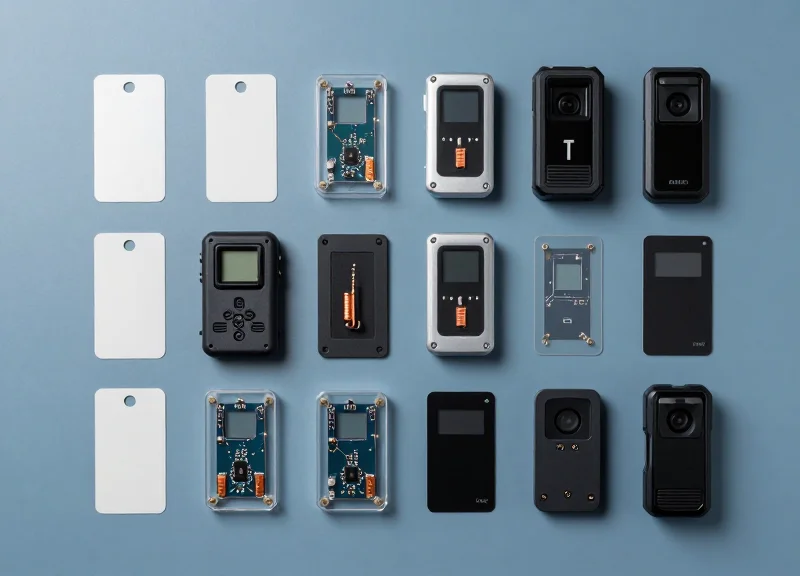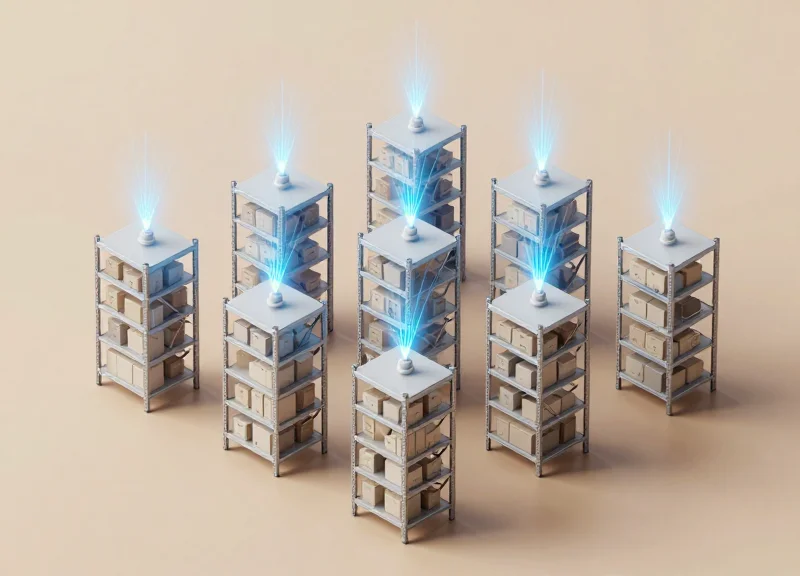
As we approach 2026, the industrial landscape is undergoing a seismic shift in how data is captured and managed. Traditional handheld barcode scanners, once the workhorse of the warehouse, are rapidly losing ground to a more versatile successor: the Multi-Frequency Rugged PDA. This evolution isn't just about scanning faster; it's about the convergence of RFID, NFC, and advanced computing into a single, durable device capable of navigating the complex demands of modern supply chains. In this outlook, we examine the driving forces behind this transition and why legacy hardware is becoming a liability.
The 2026 Industrial Landscape: A New Standard for Connectivity
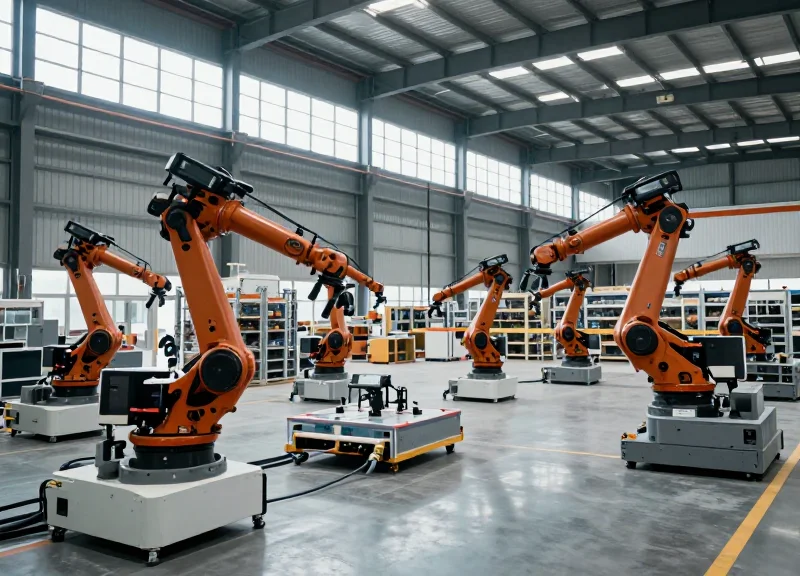
In the 2026 industrial environment, connectivity is the backbone of operational intelligence. The traditional barcode scanner is being phased out in favor of multi-frequency rugged PDAs that support simultaneous high-speed data protocols including 5G, Private LTE, and Wi-Fi 6E/7. This shift is driven by the need for zero-latency synchronization between the physical warehouse floor and the digital twin in the cloud, rendering legacy, disconnected scanning devices obsolete.
| Feature | 2021 Standard (Legacy) | 2026 Standard (Modern) |
|---|---|---|
| Primary Network | Wi-Fi 5 / 4G LTE | Wi-Fi 6E / 7 / Private 5G |
| Data Capture | 1D/2D Barcode Only | Multi-Freq RFID + AI-OCR + Barcode |
| Architecture | Device-to-Local Server | Edge-to-Cloud Real-time Sync |
| Latency | 100ms - 500ms | <10ms (Ultra-Reliable Low Latency) |
As an industry veteran, I have observed the emergence of the 'Data Latency Tax.' In high-velocity logistics, the 1.5-second delay inherent in legacy scanning hardware acts as a micro-bottleneck that degrades the accuracy of AI-driven sorting systems. Multi-frequency PDAs eliminate this tax by maintaining an 'Always-On' state, allowing for predictive maintenance and real-time inventory adjustments that traditional scanners simply cannot support. The transition isn't just about faster scanning; it is about the transition from reactive data entry to proactive data streaming.
Why is 5G essential for 2026 industrial PDAs?
Beyond raw speed, 5G provides the network slicing capabilities needed to prioritize critical industrial traffic over administrative data, ensuring zero-drop connections in high-interference environments.
How does Wi-Fi 6E improve warehouse mobility?
The expansion into the 6GHz band provides a 'clean lane' for rugged PDAs to transmit high-resolution sensor data and video without the congestion common in the over-saturated 2.4GHz and 5GHz bands.
What is the role of Multi-Frequency RFID in these devices?
Multi-frequency support allows a single device to handle short-range NFC tasks and long-range UHF asset tracking simultaneously, consolidating three different tools into one rugged handheld.
The Limitations of Legacy: Why Barcode Scanners are Fading
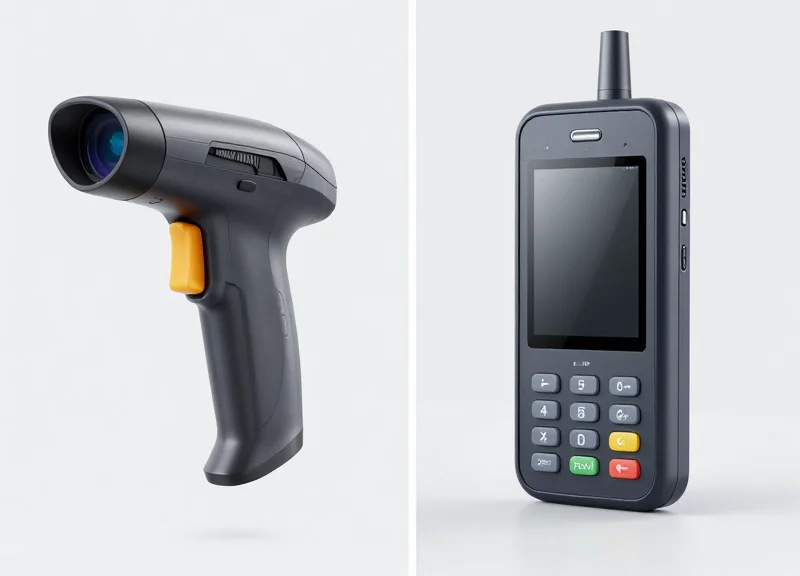
Traditional barcode scanners are fading from the industrial landscape because they represent a 'single-function' dead end in an increasingly multi-functional digital environment. In the context of 2026 supply chains, legacy scanners create friction due to their strict reliance on optical line-of-sight, limited onboard processing for real-time data validation, and an inability to interface with the diverse array of IoT protocols—such as RFID, NFC, and 5G—that now define modern warehouse and field operations. As industries shift toward 'Scan-Less' or 'Ambient' tracking, the manual, point-and-click nature of legacy hardware is transitioning from an asset to a liability.
| Feature | Legacy Barcode Scanner | Multi-Frequency Rugged PDA |
|---|---|---|
| Data Capture | One-by-one (Optical Only) | Bulk/Simultaneous (RFID + Optical) |
| Connectivity | Bluetooth / Proprietary RF | 5G / Wi-Fi 6E / CBRS / Satellite |
| Logic Layer | Passive (Relays data to PC) | Active (Edge Computing / AI Validation) |
| Versatility | Dedicated Scanning Only | Voice, Video, ERP Access, Biometrics |
One of the most significant technical bottlenecks of legacy hardware is the 'Processing Vacuum.' Traditional scanners are essentially 'dumb' peripherals; they capture a string of characters and pass it to a central server. If the server is down or the network is latent, the worker stops. Modern Rugged PDAs, conversely, function as high-performance edge devices that can run local databases and AI-driven validation algorithms, allowing for 100% uptime even in dead zones.
- The Line-of-Sight Barrier: Traditional scanners require a direct, unobstructed visual path to a label. This forces workers to manually orient boxes, climb ladders, or unpack pallets just to find a barcode, adding thousands of non-value-added seconds to a shift.
- Lack of Contextual Data: A legacy scanner cannot take a high-resolution photo of a damaged pallet, record a voice memo about a shipping discrepancy, or use GPS to geo-tag a delivery—functions that are now mandatory for modern chain-of-custody requirements.
- The UI/UX Debt: Legacy scanners often rely on 'Green Screen' or Telnet interfaces. For the 2026 workforce, these interfaces are counter-intuitive, leading to longer training times and higher error rates compared to the Android-based touch interfaces of PDAs.
Expert Insight: The 'Hidden Ergonomic Tax' of legacy scanners is often overlooked. In a high-throughput 2026 facility, the repetitive 'aim-and-click' motion leads to higher rates of Repetitive Strain Injury (RSI) compared to the 'ambient capture' capabilities of multi-frequency PDAs. Moving to PDAs isn't just a tech upgrade; it is a workforce sustainability strategy that reduces long-term labor insurance costs and improves worker retention by providing tools that mirror the smartphones employees use in their personal lives.
Is the TCO of legacy scanners lower than Rugged PDAs?
While the initial purchase price of a basic scanner is lower, the Total Cost of Ownership (TCO) is higher. PDAs eliminate the need for separate devices for voice, GPS, and data entry, while significantly reducing labor hours through faster bulk-scanning capabilities.
Can't we just upgrade our scanners to 2D imagers?
2D imagers are an improvement, but they still suffer from the same 'single-stream' data capture problem. They cannot read RFID tags hidden inside crates or communicate via 5G, which are the benchmarks for the 2026 industrial outlook.
The Power of Multi-Frequency: Integrating HF, UHF, and NFC
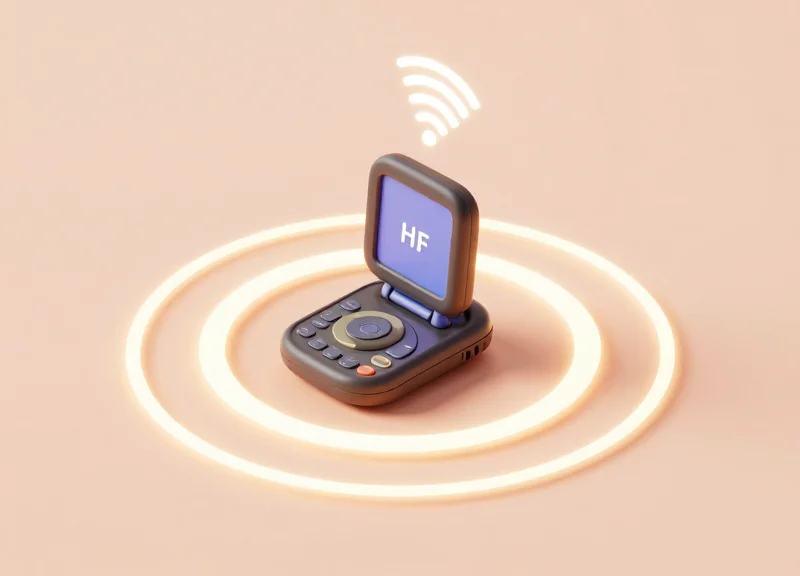
Multi-frequency integration in rugged PDAs refers to the architectural ability of a single mobile device to transmit and receive data across multiple radio frequency bands—specifically High Frequency (HF), Ultra-High Frequency (UHF), and Near Field Communication (NFC). Unlike traditional scanners that are locked into a single protocol, these next-generation devices utilize 'Frequency Orchestration' to bridge the gap between long-range logistics tracking and short-range secure authentication, effectively consolidating three distinct hardware tools into one streamlined industrial asset.
| Frequency Type | Typical Range | Primary Industrial Application | Data Advantage |
|---|---|---|---|
| NFC (13.56 MHz) | 1 - 10 cm | Personnel authentication & encrypted payments | Zero-config peer-to-peer secure exchange |
| HF (13.56 MHz) | 10 cm - 1 m | Library, pharmacy, and item-level retail | High interference resistance in liquid/metal |
| UHF (860 - 960 MHz) | Up to 15 m+ | Warehouse bulk inventory & asset tracking | Mass reading of hundreds of tags per second |
The convergence of these frequencies is not merely a convenience; it is a structural necessity for the 2026 supply chain. Modern workflows often require a worker to scan a UHF-tagged pallet coming off a truck, authenticate their identity via an NFC-enabled employee badge, and then verify a high-security HF-tagged pharmaceutical or electronics component. In the legacy model, this would require three separate devices or a series of cumbersome hardware 'sleds.' Modern rugged PDAs eliminate this friction by housing internal antennas tuned to mitigate electromagnetic interference between these disparate bands.
What is the 'Interference Barrier' in Multi-Frequency devices?
Historically, placing a high-gain UHF antenna near an NFC module caused signal 'noise' that degraded performance. 2026-grade PDAs use advanced dielectric shielding and AI-driven signal processing to isolate these frequencies, allowing them to coexist in a slim, rugged chassis.
Can these devices read legacy EAS tags?
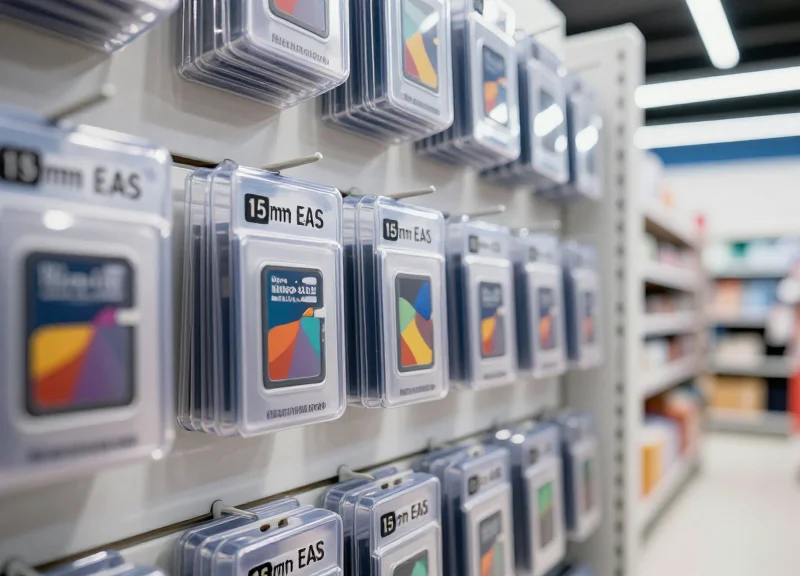
Yes. Many multi-frequency PDAs are now being designed with software-defined radio (SDR) capabilities that can detect Electronic Article Surveillance (EAS) signals, facilitating a smoother transition for retailers moving from basic anti-theft to full RFID inventory management.
How does this impact Total Cost of Ownership (TCO)?
By consolidating HF, UHF, and NFC into one unit, enterprises reduce their device fleet size by up to 40%, significantly lowering maintenance, licensing, and training costs over a 5-year lifecycle.
Expert Insight: As we move toward 2026, look for the rise of 'Context-Aware Frequency Switching.' My analysis of the current hardware roadmap suggests that the next generation of rugged PDAs will use proximity sensors to automatically toggle the active radio—powering down the high-drain UHF module when an NFC-range interaction is detected. This 'smart-tuning' not only extends battery life by 25% but also prevents the accidental scanning of distant pallets when a worker is trying to perform a close-range item check.
Ruggedization Beyond the Shell: Durability Meets Performance
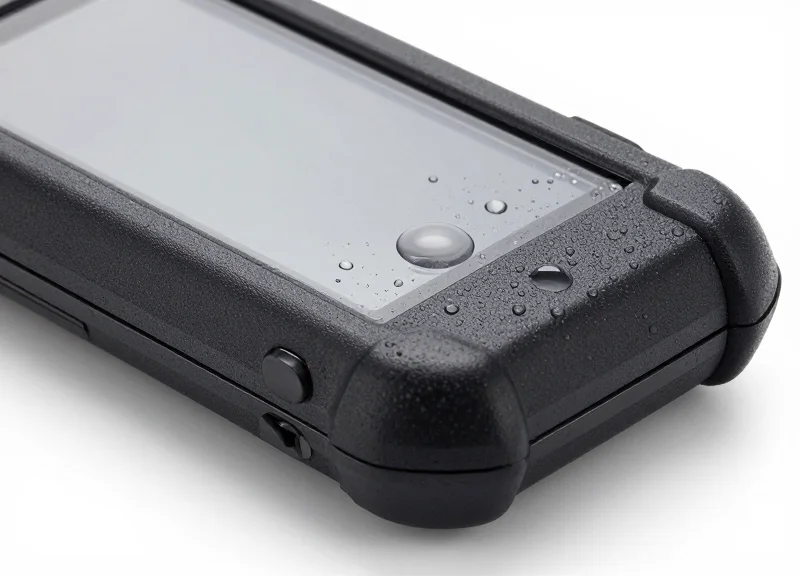
Ruggedization in 2026 has evolved from a simple protective casing to a holistic engineering philosophy where external armor and internal compute density are inseparable. For a device to qualify as a 'Multi-Frequency PDA' in an industrial setting, it must pair MIL-STD-810H and IP68 ratings with advanced system-on-chip (SoC) architectures. This synergy ensures that while the device survives a six-foot drop onto concrete, its internal processors continue to handle the massive data throughput of 5G, UHF RFID, and AI-driven edge analytics without latency or mechanical failure.
| Feature | Consumer Tablet + Case | Industrial Rugged PDA (2026) |
|---|---|---|
| Ingress Protection | IP65 (Variable) | IP68 (Submersible & Dust-tight) |
| Thermal Management | Passive/Software Throttling | Active Heat Dissipation/Phase-change cooling |
| Internal Connectivity | Standard Flex Cables | Hardened, Vibration-resistant Connectors |
| Display Tech | Standard Gorilla Glass | Chemically Strengthened + Glove/Wet-Touch |
| Lifecycle Support | 12-24 Months | 5-7 Years with Security Patching |
The hidden differentiator in the 2026 outlook is 'Internal Ruggedness.' While competitors focus on the thickness of the rubber bumper, industry leaders are prioritizing thermal management. Modern multi-frequency PDAs generate significant heat when polling thousands of RFID tags or streaming 4K video for remote assistance. Without specialized internal cooling paths and phase-change materials, a device will suffer from thermal throttling—effectively becoming a 'dumb' scanner because the CPU is too hot to process complex data. True durability means maintaining peak performance at 50°C (122°F) just as easily as at -20°C.
Does a rugged shell impact wireless signal strength?
In high-end 2026 models, the chassis is engineered with 'RF-transparent' windows. This allows the internal multi-frequency antennas (HF/UHF/NFC) to maintain maximum range even when the device is fully armored.
Why is MIL-STD-810H preferred over older 810G standards?
The 'H' revision introduces more rigorous testing for 'Relentless Shock' and 'Atmospheric Pressure,' reflecting the more volatile environments of modern global logistics.
Can these devices survive chemical exposure?
Yes, 2026 industrial PDAs use specialized polymers resistant to common industrial solvents, fuels, and sanitizing agents, preventing the 'crazing' or cracking often seen in consumer-grade plastics.
Expert Insight: When evaluating a device's ROI, look for 'Vibration Fatigue Resistance.' In autonomous warehouse environments, PDAs are often mounted on forklifts or AGVs. Standard electronics will fail due to solder-joint fatigue within months of constant micro-vibrations. Rugged PDAs use underfill resins on BGA components to ensure the internal motherboard is as shock-resistant as the outer screen.
Operational Efficiency: Real-Time Data and Edge Computing

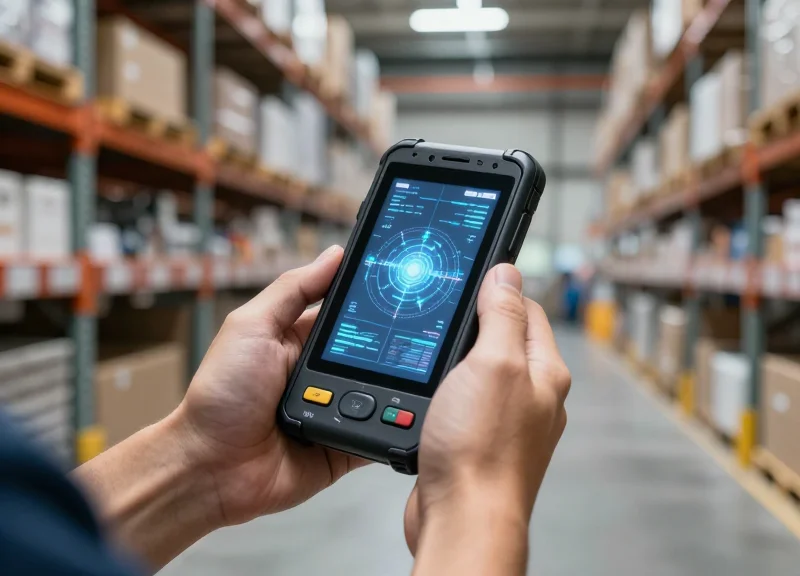
In the 2026 industrial landscape, operational efficiency is defined by the transition from simple data capture to autonomous edge processing. While traditional barcode scanners act as 'dumb' peripherals that merely relay strings to a central server, modern Rugged PDAs function as sophisticated edge computing nodes. By processing multi-frequency signals (HF, UHF, and NFC) locally on the device, these PDAs eliminate the 'latency tax' associated with constant cloud pings, allowing workers to make split-second decisions at the point of activity without waiting for a Warehouse Management System (WMS) handshake.
| Feature | Legacy Barcode Scanners | Edge-Enabled Rugged PDAs |
|---|---|---|
| Data Processing | Centralized (Server-dependent) | Localized (On-device Edge Computing) |
| Network Dependency | Constant Active Connection Required | Store-and-Forward / Offline Validation |
| Average Latency | 500ms - 2.0s (Round-trip) | <50ms (Local Processing) |
| Decision Logic | Controlled by WMS | On-device AI and Validation Rules |
A critical differentiator for 2026 is the 'Decision-at-the-Tag' capability. Rugged PDAs can now run complex cross-referencing algorithms against local databases. For instance, a PDA can simultaneously read a UHF RFID pallet tag and an NFC component tag, verify the assembly compatibility locally, and alert the operator of a mismatch before the data even reaches the main server. This preemptive error correction is the cornerstone of the modern zero-defect supply chain.
How does edge computing reduce warehouse bottlenecks?
By validating data locally on the Rugged PDA, the device only transmits the final 'actionable' result to the WMS. This reduces network congestion and prevents the system-wide slowdowns often seen when hundreds of legacy scanners attempt to sync simultaneously during peak shifts.
Does multi-frequency support improve data accuracy?
Yes. Edge-enabled PDAs use multi-frequency inputs to perform 'triangulated validation,' comparing data from different tag types in real-time to ensure 99.9% data integrity, something impossible with single-source barcode scanners.
Can these devices function during a Wi-Fi outage?
Unlike legacy scanners that become paperweights without a signal, Rugged PDAs leverage local processing and internal storage to continue operations, syncing with the cloud once connectivity is restored.
Expert Insight: By 2026, we anticipate that 'Round-Trip Time' (RTT) will no longer be a valid metric for operational speed. The new KPI is 'Time-to-Action.' Companies switching to multi-frequency PDAs with onboard edge processing typically see a 35% increase in throughput because the device—not the server—is the intelligence hub.
ROI and TCO: The Financial Case for PDA Adoption
The transition from traditional barcode scanners to multi-frequency rugged PDAs represents a shift from capital expense (CapEx) to operational excellence. While the initial purchase price of a rugged PDA is typically 20-30% higher than a basic scanner, the Total Cost of Ownership (TCO) over a five-year lifecycle is approximately 40% lower. This is driven by a reduction in device failure rates—rugged PDAs average a 2-4% annual failure rate compared to 15-20% for consumer-grade or legacy hardware—and the elimination of 'hardware sprawl' by consolidating RFID, NFC, and barcode scanning into one unit.
| Cost Factor | Legacy Barcode Scanners | Multi-Frequency Rugged PDAs |
|---|---|---|
| Initial Purchase Price | Low to Moderate | High |
| Expected Lifecycle | 2-3 Years | 5-7 Years |
| Annual Repair Rate | 15% - 22% | Less than 4% |
| Device Consolidation | Requires separate NFC/RFID readers | All-in-one integrated module |
| Software Update Path | Limited/Proprietary | Android Enterprise Recommended |
| Estimated 5-Year TCO | $3,500 - $4,200 | $2,100 - $2,600 |
Beyond the hardware specs, the true financial driver is the elimination of 'Technical Debt.' Legacy scanners often require specialized middleware to communicate with modern ERP systems, creating an invisible maintenance tax. In contrast, modern rugged PDAs utilize standard Android APIs and edge computing capabilities, allowing for direct integration. This reduces the burden on IT departments and eliminates the need for expensive third-party bridge software, effectively paying for the hardware upgrade through IT labor savings alone within the first 18 months.
How does multi-frequency capability impact the ROI?
By supporting HF, UHF, and NFC in one device, companies avoid buying three separate tools. This reduces the inventory of spare parts, simplifies training, and lowers the cost of managing multiple service contracts.
What is the 'Downtime Dividend'?
This refers to the productivity gained when a worker doesn't have to return to a central station because a device failed or couldn't read a specific tag. Every minute of uptime in a high-volume warehouse is worth roughly $0.85 in labor efficiency.
Are rugged PDAs future-proofed against 2030 standards?
Yes. Unlike fixed-function scanners, PDAs are software-defined. As new data protocols emerge, they can be updated via firmware, whereas legacy scanners usually require a full hardware replacement.
Expert Tip: To maximize ROI, look for devices with 'Hot-Swap' battery capabilities. The ability to switch batteries without rebooting the OS saves an average of 4 minutes per shift per worker. In a facility with 500 workers, this 'micro-efficiency' recovers over 8,000 man-hours annually, translating to hundreds of thousands of dollars in reclaimed productivity that legacy scanners simply cannot offer.
Seamless Integration with ESL and Smart Retail Ecosystems
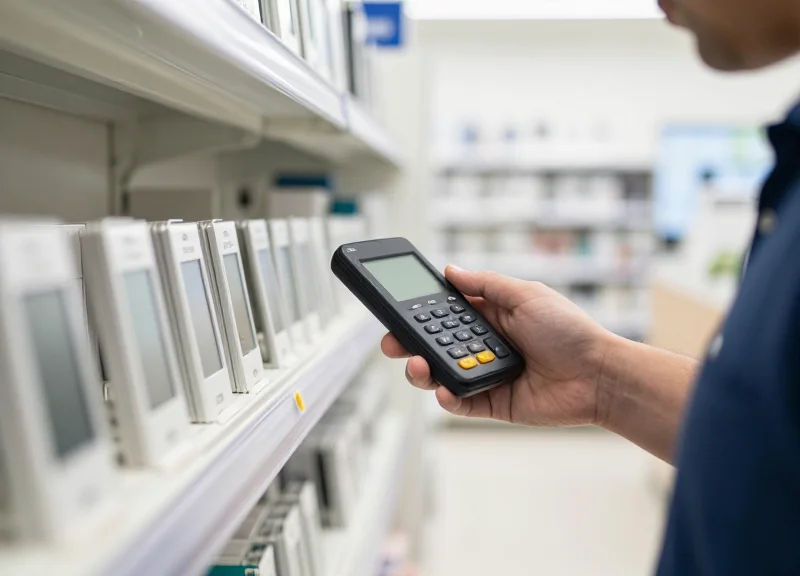
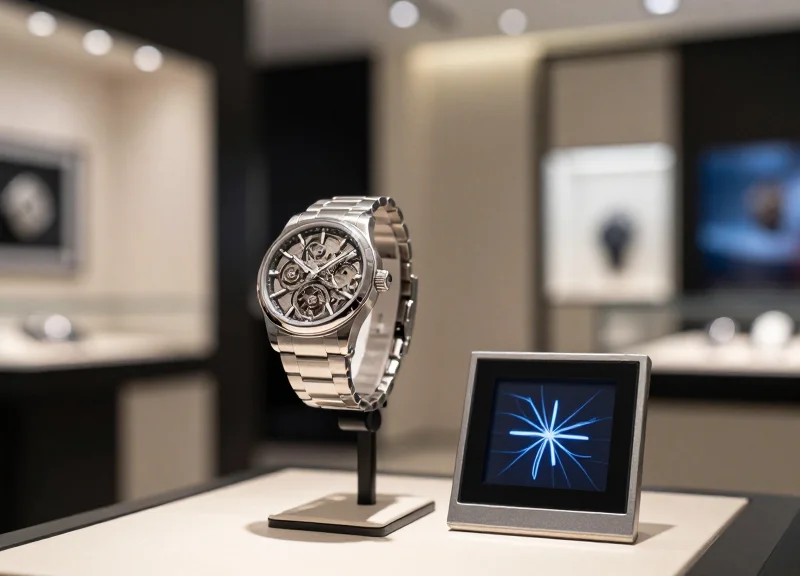
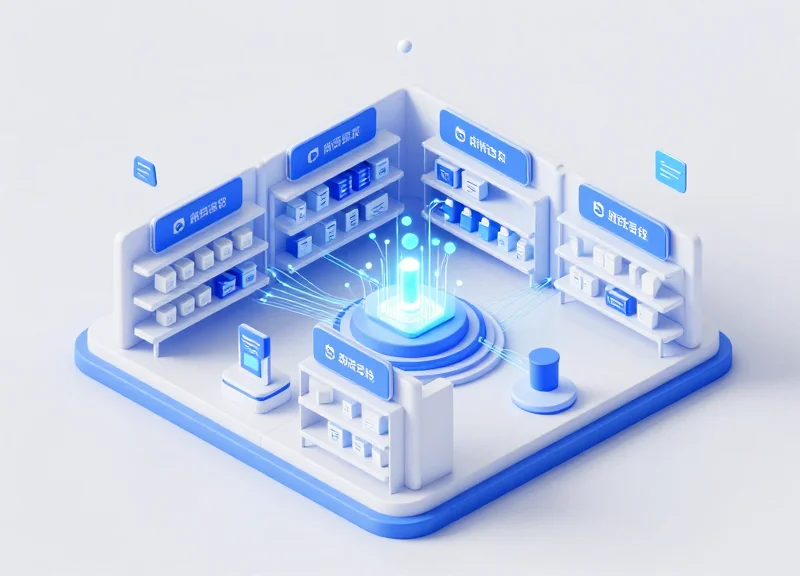
In the 2026 retail landscape, the multi-frequency rugged PDA has evolved from a simple data collector into the central orchestrator of the 'Smart Floor.' By bridging the gap between back-end Inventory Management Systems (IMS) and Electronic Shelf Labels (ESL), these devices eliminate the latency inherent in traditional paper-based or single-mode scanning systems. Modern rugged PDAs utilize a combination of NFC for instant device-to-label pairing and high-speed Wi-Fi 6 or 5G to ensure that price changes, promotional updates, and stock levels are reflected on the shelf edge in milliseconds, rather than hours.
| Feature | Traditional Barcode Scanners | Multi-Frequency Rugged PDAs |
|---|---|---|
| ESL Management | Manual entry or separate infrared tool | Direct NFC/BLE pairing and updating |
| Update Speed | Batch processing (High Latency) | Real-time Edge Synchronization |
| Inventory Visibility | Visual confirmation required | Live 'Ping' for out-of-stock detection |
| Accuracy | Susceptible to human labeling error | 99.9% Digital Data Integrity |
Expert Insight: The true 'force multiplier' in 2026 is the use of 'Dynamic Edge Tethering.' Unlike legacy systems where a central server pushes updates to the entire store, a multi-frequency PDA can act as a localized gateway. An associate can walk a frustrated customer to a shelf, scan a product, and if a price match is approved, the PDA updates that specific ESL instantly via its Sub-GHz or Bluetooth Low Energy (BLE) radio. This localized control transforms the PDA into a point-of-sale and a management console simultaneously.
How does a rugged PDA pair with an Electronic Shelf Label?
Most modern ESLs use NFC (Near Field Communication) for secure, short-range pairing. A worker simply taps the multi-frequency PDA to the label; the device identifies the specific display ID and links it to the product SKU in the database instantly.
Can these PDAs manage ESLs from different manufacturers?
Yes, provided the PDA supports multi-protocol standards. Leading 2026 models are designed with agnostic radio modules that can communicate across various proprietary ESL frequencies, including 2.4GHz BLE and custom Sub-GHz bands.
What happens to the ESL if the store's main Wi-Fi goes down?
Rugged PDAs with local processing capabilities can maintain a cached version of the inventory database. They can continue to update labels via direct radio link (P2P), ensuring the store remains operational even during network outages.
This integration creates a 'Closed Loop' ecosystem. When a customer picks up the last item from a shelf, weight sensors or computer vision systems alert the PDA. The associate receives a haptic notification, confirms the restock from the backroom, and the PDA automatically updates the ESL to reflect 'Limited Stock' or 'Restock in Progress,' maintaining consumer trust through transparency.
Future-Proofing Your Supply Chain for 2026 and Beyond
Future-proofing your supply chain for 2026 requires a shift from 'hardware replacement' to 'hardware evolution,' specifically by adopting multi-frequency rugged PDAs that bridge the gap between legacy 1D/2D barcodes and emerging ambient IoT technologies. To avoid operational downtime, organizations must implement a phased migration strategy that prioritizes cross-functional device interoperability, ensuring that a single piece of hardware can navigate current barcode environments while being ready for the inevitable industry-wide shift toward high-speed RFID and EAS integration.
- The Comprehensive Hardware Audit: Analyze your current device failure rates and identify 'bottleneck zones' where workers are currently forced to switch between multiple devices to complete a single workflow.
- The Hybrid Pilot Phase: Introduce multi-frequency PDAs into a high-traffic micro-hub. Test the device's ability to read legacy inventory tags and new RFID-enabled assets simultaneously to ensure zero data loss during the transition.
- API-First Software Integration: Ensure your Warehouse Management System (WMS) or ERP is ready to ingest multi-modal data streams. Focus on 'Edge-ready' software that processes scan data locally on the PDA to reduce server latency.
- Staff Re-skilling and UX Training: Modern PDAs offer smartphone-like interfaces. Shift training focus from 'how to scan' to 'how to interpret real-time data' provided by the device's internal analytics engines.
| Feature | Legacy Barcode Scanners | 2026 Multi-Frequency PDAs |
|---|---|---|
| Data Capture | Single-point (Barcode only) | Multi-modal (Barcode, RFID, NFC, EAS) |
| Connectivity | Basic Wi-Fi/Bluetooth | 5G, Wi-Fi 6E, and V2X Support |
| Lifecycle Strategy | Reactive (Replace when broken) | Proactive (Modular updates/Edge-ready) |
| Operational Role | Data Entry Tool | Strategic Decision-Support Hub |
- What is the 'Protocol Gap' insurance?: This is a unique strategic approach where you invest in hardware that supports protocols not yet fully utilized in your facility (like UHF RFID). It prevents 'Technical Debt'—the costly need to replace your entire fleet again in 24 months when your suppliers mandate new tagging standards.
- Can we mix old and new hardware during the rollout?: Yes. The most successful 2026 strategies involve a 'rolling sunset' of legacy scanners, where PDAs are introduced to high-value workflows first while legacy devices are relegated to low-impact zones until they reach end-of-life.
- Expert Tip: The Edge Gateway Factor: In 2026, the most valuable PDAs won't just scan; they will act as mobile Edge Gateways. This means they can pick up signals from 'ambient IoT' sensors nearby—tracking temperature or humidity—without the worker even pulling a trigger.