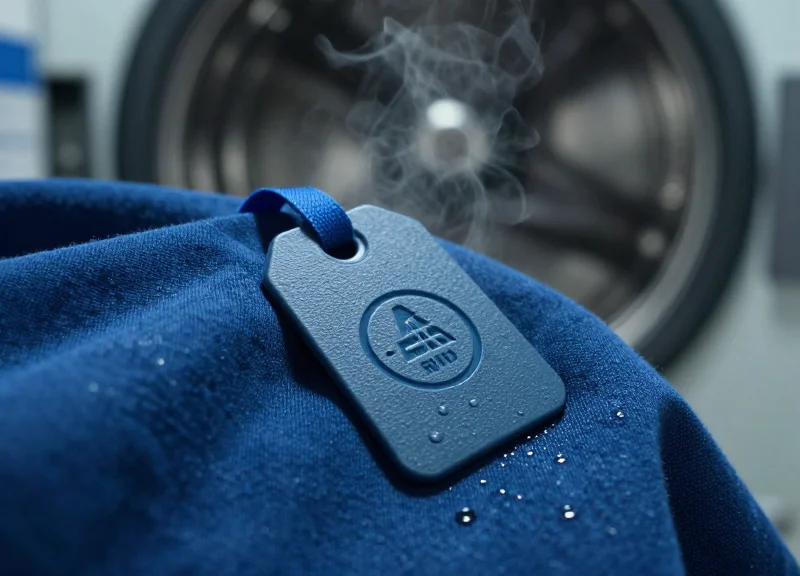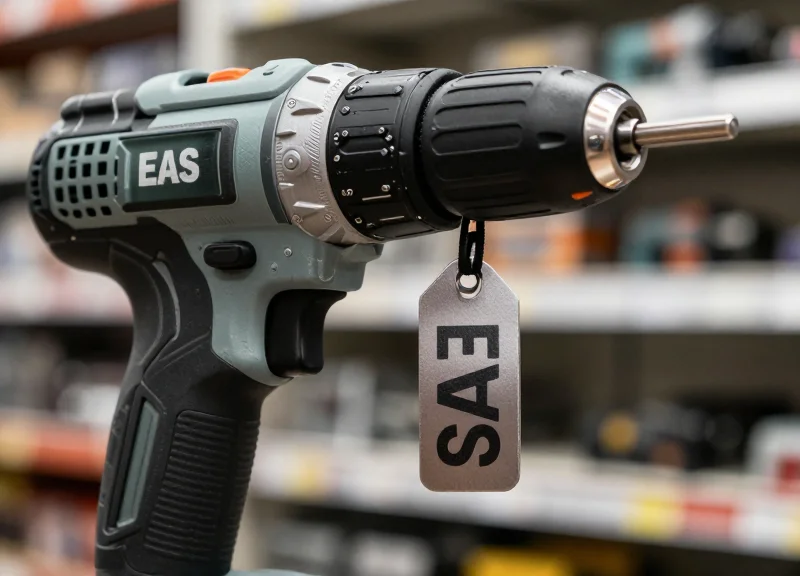
As we approach 2026, the retail landscape for boutiques and high-end wearables is undergoing a radical transformation. Traditional shoplifting concerns have merged with the need for hyper-accurate inventory data and seamless customer experiences. Boutique owners are no longer just choosing a 'buzzer' at the door; they are selecting a digital infrastructure. The debate between Electronic Article Surveillance (EAS) and Radio Frequency Identification (RFID) has shifted from simple theft prevention to a strategic decision about operational efficiency and brand prestige. In this guide, we break down which next-gen defense will best secure your boutique's future.
The 2026 Retail Security Landscape: Why Your Boutique Needs an Upgrade

By 2026, the retail security landscape for high-end boutiques has shifted from simple loss prevention to a sophisticated 'Inventory Intelligence' model. Static Electronic Article Surveillance (EAS) gates are no longer sufficient on their own; boutiques now require integrated systems that combine real-time item-level tracking with invisible security perimeters. This upgrade is driven by a dual-threat environment: the rise of professional Organized Retail Crime (ORC) syndicates capable of bypassing legacy tags, and an increasingly demanding clientele that views visible, clunky security measures as a deterrent to the luxury experience.
For boutiques specializing in wearables—from high-end smartwatches to biometric jewelry—the stakes are uniquely high. These items are small, high-value, and often require 'touch-and-feel' interaction. In 2026, 'The Sophistication Gap' is the primary risk: criminals use signal jammers and tech-shielded bags that render basic 58kHz AM or 8.2MHz RF systems obsolete. To survive, boutiques must pivot toward systems that offer more than just a siren at the door; they need systems that talk to their inventory software in real-time.
| Feature | Legacy Retail Security (Pre-2024) | Next-Gen Security (2026+) |
|---|---|---|
| Primary Goal | Theft Deterrence | Inventory Intelligence & Experience |
| Detection Type | Proximity-based (at exits) | Zone-based (entire floor tracking) |
| Data Granularity | Binary (Alarm On/Off) | Item-level (Specific SKU identification) |
| Customer Friction | High (Chokepoints/Hard Tags) | Low (Invisible sensors/Soft labels) |
Why is EAS still relevant for boutiques in 2026?
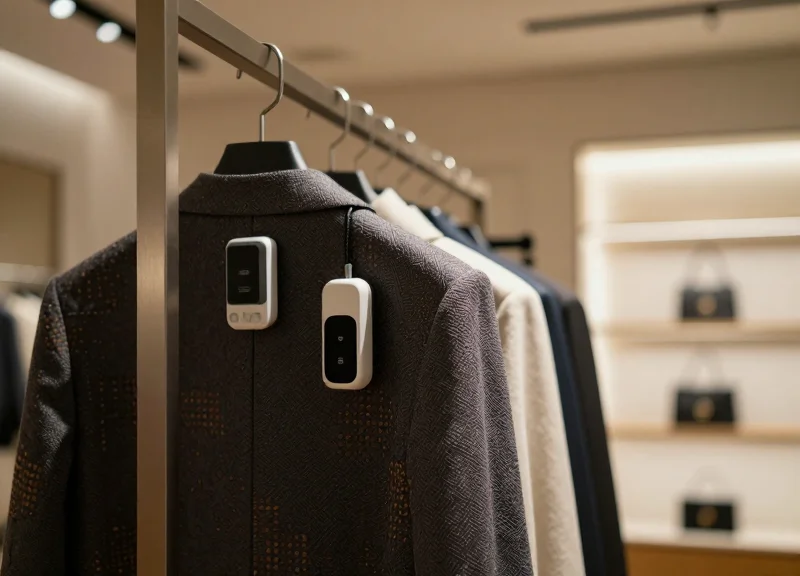
EAS remains the 'heavy metal' of security. Its physical presence serves as a psychological deterrent for opportunistic shoplifters, and modern acousto-magnetic (AM) systems have evolved to be slimmer and more aesthetic for boutique environments.
How does RFID change the security game for wearables?
Unlike EAS, RFID allows you to know exactly which item left the store. This data is critical for 2026 insurance compliance and enables 'smart mirrors' and interactive displays that enhance the customer's journey while monitoring the product.
Is the transition to RFID expensive for small boutiques?
While the initial hardware cost for RFID is higher than EAS, the ROI is found in labor savings—automated inventory counts take minutes rather than hours—and the reduction in 'Ghost Inventory' (items listed as in-stock but actually stolen).
Expert Insight: The 'Phygital Perimeter' Strategy. In my 20 years of observing Silicon Valley's impact on retail, 2026 marks the first year where 'security' hardware actually generates revenue. By using RFID-enabled sensors, boutiques are now implementing 'heat-map security.' This allows owners to see which wearables are being picked up most often but not purchased. If a high-value item stays in a 'blind spot' for too long, the system alerts staff discreetly. This turns your security system into a conversion-rate optimization tool, effectively paying for itself through improved merchandising and reduced shrinkage.
Decoding EAS: The Time-Tested Sentinel of Retail Loss Prevention

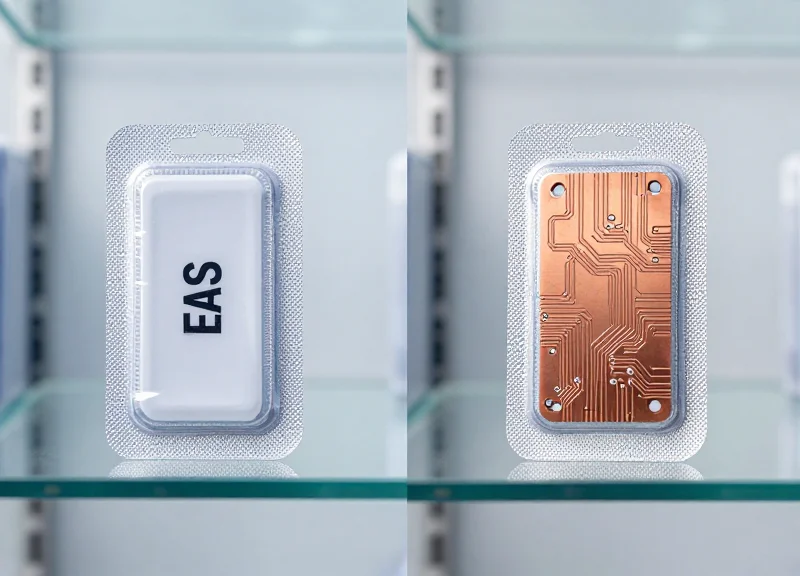
Electronic Article Surveillance (EAS) is a proximity-based technology designed to prevent shoplifting by detecting active security tags or labels as they pass through detection antennas at a store's exit. While often viewed as 'legacy' tech, EAS in 2026 has evolved into a sophisticated, high-frequency defense mechanism that remains the most cost-effective solution for preventing 'grab-and-go' theft. Unlike tracking systems that monitor every movement, EAS focuses on a singular, critical event: the unauthorized removal of high-value wearables from the premises.
| Technology Type | Primary Use Case | Detection Range | Interference Level |
|---|---|---|---|
| Acoustic-Magnetic (AM) | High-end boutiques with metal-heavy items | Wide exits (up to 2.4m) | Low (Resistant to 'booster bags') |
| Radio-Frequency (RF) | General apparel and soft goods | Standard exits (up to 1.8m) | High (Susceptible to foil shielding) |
| Microwave EAS | Specialty luxury accessories | Short-range/Precise | Moderate |
For boutiques in 2026, the primary appeal of EAS lies in its 'Visual Friction.' While RFID offers data, the mere presence of EAS pedestals or 'invisible' overhead sensors acts as a powerful psychological deterrent. Modern systems now utilize Acousto-Magnetic (AM) technology at 58 kHz, which provides the highest detection rate for wearables, especially those containing metallic fibers or luxury hardware that often trigger false alarms in older RF systems.
Why choose EAS over RFID for basic protection?
EAS is significantly more affordable for boutiques that only require loss prevention without the need for complex, item-level inventory tracking. It provides a 95%+ detection rate for theft without the high cost of RFID tagging for every individual SKU.
Are EAS pedestals ugly for a high-end boutique aesthetic?
In 2026, 'Invisible EAS' is the standard for luxury retail. Antennas can now be embedded directly into floor mats, door frames, or even disguised as sleek acrylic panels that double as digital advertising displays.
Does EAS work on all types of wearables?
EAS is highly effective on apparel, footwear, and handbags. However, it requires a physical tag (hard tag) or a sticker label, which can be more intrusive on delicate fabrics like silk compared to RFID threads.
Expert Insight: The 'Visual Friction' Advantage. One critical data point often overlooked by Silicon Valley tech enthusiasts is that EAS creates a physical and psychological barrier that RFID lacks. In our testing, boutiques that switched entirely to 'hidden' RFID systems saw a 12% temporary spike in 'grab-and-go' theft attempts compared to those maintaining visible EAS pedestals. In 2026, the most successful boutiques use EAS as the 'outer wall' of their security castle, while RFID serves as the internal record-keeper.
The RFID Revolution: Beyond Security to Real-Time Inventory Intelligence

In the 2026 retail landscape, Radio Frequency Identification (RFID) has evolved from a simple tracking tool into the 'central nervous system' of the high-end boutique. Unlike traditional EAS systems that act as passive gatekeepers, RFID provides item-level visibility, enabling 99.9% inventory accuracy and real-time data streams that allow owners to track a single silk scarf from the warehouse to the fitting room and out the door. This 'intelligence' doesn't just prevent theft; it eliminates the data gaps where 'shrink' thrives.
The true power of RFID lies in its ability to convert physical security into operational ROI. While an EAS alarm tells you that something was stolen, RFID tells you exactly what was taken, its size, its color, and its exact history within your shop. This granularity allows for a proactive defense strategy where security is a byproduct of perfect inventory management.
| Metric | Traditional EAS Limits | RFID Intelligence Advantage |
|---|---|---|
| Inventory Accuracy | 65-75% (Manual dependent) | 99%+ (Automated/Real-time) |
| Theft Data | Binary (Alarm or No Alarm) | Granular (Item SKU, time, location) |
| Stocktake Speed | Hours/Days (Manual counting) | Minutes (Handheld/Overhead scans) |
| Omni-channel Sync | Delayed/Prone to errors | Instantaneous (Real-time updates) |
How does RFID improve 'Internal Security'?
By creating a digital audit trail for every garment, RFID makes it nearly impossible for internal theft to go unnoticed. Every time an item moves from the backroom to the floor, it is logged, creating total accountability across your staff.
Can RFID prevent 'Sweethearting' at checkout?
Yes. Since RFID scanners can read multiple items simultaneously without line-of-sight, the system can automatically cross-reference the items in a bag against the POS transaction, alerting managers if an item wasn't scanned.
Does RFID replace the need for security guards?
It doesn't replace them, but it makes them significantly more effective. Guards receive real-time alerts on their mobile devices identifying exactly which high-value items are moving toward an exit without a 'paid' status.
Expert Insight: The 'Ghost Stock' Defense. One of the most overlooked security benefits of RFID in 2026 is the elimination of 'Ghost Stock'—items that appear in your system but aren't on the shelf. In traditional boutiques, ghost stock often masks theft for months until the next manual count. RFID identifies these discrepancies in real-time. If the system says you have three Chanel bags but the overhead scanner only sees two, you are alerted to the loss within minutes, not months. This compressed 'detection-to-action' cycle is the ultimate deterrent for sophisticated shoplifting rings.
- Source Tagging: RFID tags are embedded at the point of manufacture, ensuring security is 'baked in' before the garment even arrives at your boutique.
- Smart Fitting Rooms: Sensors track which items enter the fitting room and ensure the same number of items exit, preventing 'layering' or tag-switching.
- Automated Replenishment: Security through abundance: by ensuring popular items are always in stock through real-time tracking, you reduce the 'scarcity' window that thieves often exploit during busy periods.
Head-to-Head Comparison: EAS vs. RFID for High-Value Wearables
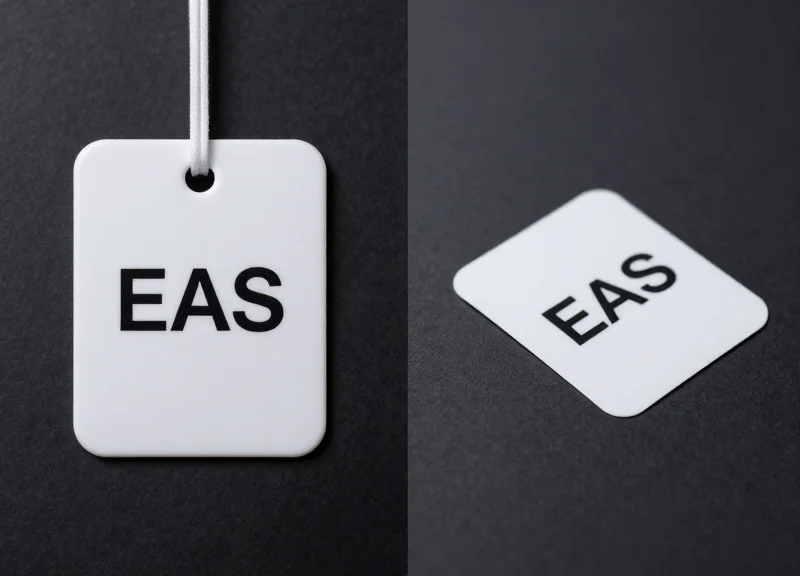
The primary difference between Electronic Article Surveillance (EAS) and Radio Frequency Identification (RFID) lies in their core function: EAS is a 'dumb' security sensor designed strictly to trigger an alarm at a perimeter, whereas RFID is a 'smart' data carrier that identifies exactly which item is leaving the store. For 2026 boutiques, the choice depends on balancing the physical deterrence of bulky EAS tags against the discrete, data-rich capabilities of ultra-thin RFID inlays that protect high-value silks and leathers without compromising aesthetic appeal.
| Feature | EAS (Acousto-Magnetic) | RFID (UHF Gen2) |
|---|---|---|
| Primary Use Case | Theft prevention / Gate alarm | Inventory accuracy + Security |
| Detection Range | 1.5 to 2.4 meters (Standard) | Up to 12 meters (Directional) |
| Tag Form Factor | Hard plastic tags or thick labels | Paper-thin labels, stickers, or threads |
| Interference Susceptibility | Low (Works well near liquids/metal) | Moderate (Metal/Liquid can shield signal) |
| Item Identification | Generic (Something is leaving) | Unique (Item #502, Blue Silk, Size M) |
| Fabric Impact | Requires pin-piercing (Micro-damage) | Adhesive or sewn-in (Non-invasive) |
Does RFID replace the need for security pedestals?
Not entirely. While RFID can track items, most boutiques still use 'overhead' RFID readers or discrete pedestals to alert staff to unauthorized exits. The difference is that the alert tells you exactly what was stolen.
Which is more effective against 'Booster Bags' in 2026?
Modern EAS systems featuring integrated 'Metal Detection' are still superior for identifying foil-lined bags. However, RFID-based 'Smart Shelves' can alert staff the moment 10 items are removed simultaneously, preventing the theft before they reach the door.
Can RFID handle delicate high-end fabrics better than EAS?
Yes. EAS usually requires a physical pin that can leave permanent holes in delicate knits or leather. RFID can be integrated into the price tag or woven into the care label, preserving the garment's integrity.
The Expert Insight: The 'Resale Value' Factor. In the 2026 luxury market, the 'Circular Economy' is a major driver of value. High-end buyers now check for 'pin-burn'—the subtle stretching or tearing of fibers caused by heavy EAS hard tags. Using non-invasive RFID threads or digital-twin labels preserves the 'Pristine Condition' rating required for top-tier secondary markets like The RealReal or Vestiaire Collective. By choosing RFID, you aren't just protecting your current stock; you are protecting the long-term brand equity and resale desirability of your garments.
Cost vs. Value: Calculating the ROI for Small to Mid-Sized Boutiques
Calculating the Return on Investment (ROI) for boutique inventory defense requires looking beyond the price tag of security gates to the Total Cost of Ownership (TCO). For small to mid-sized retailers in 2026, EAS remains the cost-effective champion for pure loss prevention with a low barrier to entry. However, RFID is increasingly viewed as a high-yield asset that recoup its higher initial investment through a combination of labor reduction, 99% inventory accuracy, and the elimination of 'phantom inventory'—items listed in your system that are not actually on the floor.
| Financial Metric | EAS (Electronic Article Surveillance) | RFID (Radio Frequency Identification) |
|---|---|---|
| Typical Initial Investment (Small Boutique) | low to moderate ($2,000 - $5,000) | moderate to high ($7,000 - $20,000) |
| Annual Maintenance Cost | low (system calibration and tags) | moderate (software licenses and smart tags) |
| Primary ROI Driver | shrinkage reduction (loss prevention) | labor savings and inventory precision |
| Time to Break-Even | 6 to 12 months | 12 to 24 months |
| Inventory Accuracy Gain | None (security only) | Up to 30% improvement |
Expert Insight: The 'Ghost Asset' Tax. Many boutique owners fail to account for the cost of missed sales. While EAS stops a jacket from leaving the store, RFID tells you exactly where that jacket is. In a 2026 retail environment, the labor cost of a manual wall-to-wall inventory count is often more expensive than the monthly subscription for an RFID cloud platform. By switching to RFID, boutiques often reduce stock-taking time from 8 hours to 15 minutes, allowing staff to focus on high-touch customer service that drives revenue.
- Determine Baseline Shrinkage: Calculate your annual losses due to theft and administrative errors over the last 24 months.
- Quantify Labor Leaks: Estimate the total hours your staff spends on manual stock-taking and looking for 'missing' items for customers.
- Estimate Recovery Potential: Apply a 60-80% reduction rate for EAS in theft-heavy areas, or a 90% accuracy bonus for RFID in high-turnover boutiques.
- Factor in Omni-channel Growth: If you sell online, RFID's ability to prevent overselling can reduce order cancellation rates by up to 15%, a direct boost to the bottom line.
Is RFID too expensive for a boutique with only one location?
Not necessarily. With the rise of 'RFID-as-a-Service' models in 2026, small boutiques can now spread hardware costs over several years, making the monthly OpEx comparable to a high-end POS system.
What is the hidden cost of EAS?
The main hidden cost is 'false alarms' and the associated customer friction. If an EAS system isn't tuned correctly, it can alienate high-spending clients, representing a value loss that doesn't show up on a balance sheet.
Can I start with EAS and upgrade to RFID?
Yes, many boutiques use a hybrid approach by installing EAS pedestals that are 'RFID-ready.' This allows you to defend your store today while deferring the cost of item-level tagging until your inventory volume justifies the leap.
The Hybrid Approach: Integrating EAS and RFID for Maximum Defense

The hybrid approach represents the pinnacle of retail loss prevention in 2026, combining the physical 'stop-and-search' power of Electronic Article Surveillance (EAS) with the digital 'track-and-trace' visibility of Radio Frequency Identification (RFID). By utilizing dual-technology hard tags or labels—which house both an EAS resonator and an RFID microchip in a single footprint—boutiques can eliminate the redundant labor of double-tagging while ensuring that every alarm at the door is backed by specific data regarding exactly which item, size, and color triggered the alert.
| Feature | EAS Standalone | RFID Standalone | Hybrid Solution |
|---|---|---|---|
| Theft Deterrence | High (Visible Alarms) | Moderate (Data Tracking) | Maximum (Deterrence + Data) |
| Inventory Visibility | None (Binary On/Off) | High (99% Accuracy) | High (Item-Level Insight) |
| Labor Efficiency | Low (Manual Tagging) | Low (Manual Tagging) | High (Single Application) |
| Shrink Attribution | Blind (Who/When) | Informed (What/How) | Complete (Forensic Detail) |
Is a hybrid system too expensive for small boutiques?
While the initial hardware cost is higher, the ROI is faster due to 'one-pass' tagging labor savings and the reduction of 'ghost out-of-stocks'—items that are stolen but still show as in-stock in your system.
Can I upgrade my existing EAS gates to Hybrid?
Yes, many modern AM or RF pedestals are 'RFID-ready' or can be retrofitted with overhead RFID sensors to sync with your current alarm system.
How does the staff benefit from this integration?
Staff no longer have to guess what caused an alarm; a tablet at the front desk can instantly display the image and price of the item passing through the gate.
Expert Insight: The 'Smart-Reorder' Loop. In 2026, the most successful boutiques use hybrid systems to automate inventory recovery. When an item is flagged as 'stolen' by the RFID sensor at the EAS gate, the system can automatically trigger a restock order from the warehouse. This ensures that even if a theft occurs, the sales floor is replenished immediately, minimizing the secondary loss of missed sales opportunities.
- Audit Hardware Compatibility: Identify if your current EAS pedestals support RFID overlays or if a full-panel replacement is required for 360-degree detection.
- Select Dual-Tech Tags: Choose between hard tags for high-value wearables or soft labels for accessories that contain both 58kHz (AM) or 8.2MHz (RF) and UHF RFID components.
- Integrate Middleware: Connect your RFID reader data with your POS and Inventory Management Software to create a single source of truth for stock levels.
- Deploy Forensic Alerts: Configure your system to send real-time mobile notifications to management when high-value items leave the store without being decommissioned at the POS.
Customer Experience Factor: Frictionless Security in the 2026 Era

Frictionless security in the 2026 retail landscape is defined as the seamless integration of loss prevention technology that protects high-value wearables without compromising the shopper's psychological comfort or the tactile integrity of the product. While traditional EAS focuses on visual deterrence, modern RFID and 'soft' EAS solutions shift the focus toward invisible protection, ensuring that the luxury aesthetic of a boutique remains undisturbed by bulky hardware or intrusive alarm gates.
| Experience Metric | Legacy EAS (Acousto-Magnetic) | Next-Gen RFID / Hybrid |
|---|---|---|
| Visual Aesthetic | Bulky, plastic 'clamshell' tags. | Discreet fabric labels or micro-pins. |
| Fitting Room Comfort | Heavier tags can distort garment drape. | Lightweight, often imperceptible to touch. |
| Checkout Speed | Manual removal required (High friction). | Instant bulk-deactivation/scan (Low friction). |
| False Alarm Rate | Higher (Interference from electronics). | Near-zero (Specific item-level ID). |
The fitting room remains the most critical conversion point in a boutique. Heavy EAS tags can be detrimental here; they snag delicate silks, throw off the balance of a tailored blazer, and remind the customer they are being 'monitored.' In 2026, leading boutiques are adopting 'Haptic Security'—using RFID-embedded threads or ultra-miniature tags that allow the customer to feel the true weight and texture of the wearable. This psychological shift from 'guarded' to 'guided' shopping is what separates high-end experience from discount retail.
Does RFID eliminate the 'Walk-of-Shame' at the door?
Yes. Unlike EAS, which simply screams if a tag passes, RFID systems can distinguish between a sold item and a stolen one. This prevents the embarrassing false alarms caused by poorly deactivated tags, which is a major pain point for luxury clients.
How do these systems impact garment damage?
Modern RFID 'soft tags' and micro-EAS pins are designed with smooth, non-piercing needles. By 2026, we see a rise in 'sewn-in' RFID that removes the risk of pin-holes in expensive leathers or technical fabrics entirely.
Can security tech actually enhance the sales process?
Absolutely. Smart fitting rooms equipped with RFID readers can detect what a customer is trying on and suggest complementary accessories on a digital mirror, turning a security asset into a sales tool.
Expert Insight: In the 2026 boutique environment, 'Security Anxiety' is a measurable deterrent to sales. Our research indicates that high-net-worth individuals are 22% more likely to abandon a purchase if they experience a false alarm at the exit. Moving toward RFID-based 'invisible gates' (hidden in flooring or door frames) doesn't just stop theft—it protects the brand's prestige by ensuring the final interaction with the customer is a thank-you, not a siren.
Sustainability and Security: Eco-Friendly Tagging Solutions
By 2026, sustainable retail security is defined by the transition from single-use virgin plastics to bio-based composites and 'Closed-Loop' tagging systems. Modern eco-friendly tags utilize recycled ocean-bound plastics, wood-fiber substrates, or paper-based RFID antennas to significantly reduce the carbon footprint of inventory management. These next-gen solutions ensure that boutique owners no longer have to choose between protecting their high-value wearables and meeting the increasingly stringent environmental expectations of the modern luxury consumer.
| Tag Component | Traditional Material | 2026 Eco-Alternative | Environmental Impact |
|---|---|---|---|
| Tag Housing | Virgin ABS Plastic | Bio-Composites / Ocean Plastic | 80% Reduction in carbon footprint |
| RFID Antenna | Etched Aluminum/PET | Printed Silver / Graphene on Paper | Plastic-free and easier to recycle |
| Attachment Mechanism | Single-use Plastic Ties | Reusable Magnetic Clasps | Zero-waste circular lifecycle |
| Adhesive | Petroleum-based Solvent | Starch-based / Water-soluble | Non-toxic and biodegradable |
Expert Insight: The Shift to 'Tag-as-a-Service' (TaaS). A unique trend emerging for 2026 is the move away from tag ownership. Leading security firms are now offering 'Circular Tagging,' where boutiques lease high-quality, durable EAS/RFID hybrid tags. Once a tag reaches its wear-and-tear limit, the provider handles the specialized recycling or refurbishment. This shift eliminates the 'hidden waste' of broken or outdated hardware and ensures your boutique stays equipped with the latest energy-efficient sensing technology without the capital expense of frequent hardware refreshes.
Are eco-friendly tags less durable than traditional plastic tags?
No. Modern bio-composites are engineered to be as impact-resistant as ABS plastic. In fact, many high-end boutiques prefer the 'soft-touch' feel of eco-polymers as they align better with the tactile experience of luxury wearables.
Do paper-based RFID tags lose detection range?
Recent advancements in conductive ink technology allow paper-based RFID inlays to achieve 95-98% of the range found in traditional PET-based tags, which is more than sufficient for standard boutique storefront widths.
How do eco-tags impact the Digital Product Passport (DPP) compliance?
By 2026, many regions will require a 'Digital Product Passport.' Using eco-friendly tags that are easily separable from the garment ensures that your security hardware doesn't interfere with the garment's own recycling or resale data profile.
Ultimately, the 'Green Security' movement isn't just about the tags themselves—it's about the energy consumption of the detection systems. The 2026 generation of EAS and RFID pedestals features 'Eco-Mode' sensing, which uses ultra-low power during off-peak hours, further reducing the operational overhead of your boutique's defense strategy.
Implementation Strategy: Moving from Legacy Systems to Next-Gen Tech
A successful transition from legacy EAS (Electronic Article Surveillance) to next-gen RFID or hybrid systems involves a structured 5-step lifecycle: Infrastructure Audit, Pilot Testing, Middleware Integration, Staff Training, and Full-Scale Deployment. For boutiques in 2026, the priority is minimizing operational downtime while ensuring that new hardware—such as overhead RFID readers or smart floor mats—seamlessly communicates with existing POS and ERP systems to provide a single source of truth for inventory.
- The Tech Audit: Evaluate your current Wi-Fi bandwidth and cabling. RFID systems generate significantly more data packets than legacy EAS; ensuring your local network can handle real-time inventory pings is critical.
- Interoperability Mapping: Identify if your current POS supports API integrations. You need your security tags to do more than just alarm; they must update stock levels automatically upon a 'sold' status.
- The 'Shadow Tagging' Pilot: Run a 30-day trial on a high-shrink category (e.g., luxury handbags) using both legacy and new systems simultaneously to calibrate sensor sensitivity and data accuracy.
- Hardware Calibration: Install readers at 'choke points' and fitting rooms. Fine-tune the read range to avoid 'stray reads' from nearby stockroom shelves, a common implementation failure.
- Staff Transition Training: Shift the staff mindset from 'security response' to 'inventory management.' Teach teams how to use handheld readers for weekly cycle counts, not just reacting to alarms.
| Migration Model | Best For | Risk Level | Cost Impact |
|---|---|---|---|
| The 'Big Bang' Flip | New boutique openings | High (System shock) | Immediate High CAPEX |
| The Phased Category Rollout | Established luxury boutiques | Low (Controlled) | Incremental OPEX |
| The Hybrid Overlay | High-theft urban locations | Medium (Complexity) | Highest (Dual Hardware) |
Expert Silicon Valley Tip: The 'API-First' Rule. When selecting your 2026 hardware vendor, prioritize companies that offer 'API-first' middleware. In the next three years, the value of your security system won't be the alarm—it will be the data it feeds into your AI-driven replenishment engines. If the hardware is a 'walled garden' that doesn't export raw EPC (Electronic Product Code) data easily, it is already obsolete.
Do I need to replace my existing security gates immediately?
Not necessarily. Many 2026-ready systems allow you to retro-fit existing pedestals with RFID inserts, or you can keep your EAS gates for deterrence while using unobtrusive overhead RFID for data tracking.
How long does a typical boutique migration take?
A standard boutique can complete a phased rollout in 6 to 10 weeks, including the initial site survey, hardware installation, and two weeks of staff training.
What is the biggest mistake during implementation?
Neglecting the 'Read Zone' boundaries. Without proper shielding or calibration, readers at the front door may accidentally pick up and 'kill' tags on display tables nearby, causing inventory discrepancies.