In the high-stakes world of specialty intimate apparel, the fitting room is the ultimate 'moment of truth.' Yet, for most retailers, this space remains a data black hole. While e-commerce tracks every click, physical stores often lose sight of the customer the moment the curtain closes. Emerging data shows that leveraging RFID-driven fitting room analytics can bolster conversion rates by as much as 28%. By bridging the gap between product selection and the final purchase decision, retailers can finally quantify the ROI of their technology investments and deliver the personalized experience modern consumers demand.
The Critical Role of the Fitting Room in Intimate Apparel

In specialty intimate apparel, the fitting room is not merely a utility; it is the highest-leverage conversion engine in the physical store. Statistics show that while only 10% of store browsers enter a fitting room, those who do are 70% more likely to purchase. For lingerie and bras, where fit complexity and sizing nuances are extreme, the fitting room represents the 'moment of truth' where brand loyalty is either cemented through a perfect fit or lost forever due to friction. Without data-driven insights into this space, retailers are operating with a massive blind spot at the most critical stage of the customer journey.
| Metric | General Apparel | Intimate Apparel |
|---|---|---|
| Purchase Intent | High | Critical/Medical (Fit-driven) |
| Return Rate Risk | Moderate | High (Due to sizing complexity) |
| Assistance Required | Low | High (Professional fitting) |
| Conversion Impact | Significant | Decisive |
The 'cost of missing data' in this environment is profound. Traditional retail metrics focus on 'top-of-funnel' foot traffic or 'bottom-of-funnel' POS data, but they fail to capture the 'middle-funnel' activity inside the fitting room. When a customer takes three bras into a room and leaves with none, the retailer loses more than a sale; they lose the opportunity to understand why the product failed. Was it a fit issue? A style preference? Or simply the lack of a different size nearby? Without RFID-driven analytics, this 'Silent Walkout' remains an unsolvable mystery.
Unique Insight: In the intimate apparel sector, the 'Fitting Room Abandonment Rate' is often more indicative of inventory health than the conversion rate itself. If a specific SKU consistently enters the room but never makes it to the register, it signals a pattern-making or technical design flaw that basic sales data would never reveal. RFID allows you to quantify this 'Abandoned-to-Try-on' ratio, turning the fitting room into a real-time R&D lab.
Why is the fitting room more important for bras than for jeans?
Unlike outer layers, intimate apparel requires a 3D structural fit that must interact perfectly with the wearer's anatomy. Small deviations in cup shape or band tension can render a garment useless, making physical trial-and-error mandatory for 80% of successful purchases.
What is the primary risk of not tracking fitting room data?
The primary risk is 'invisible attrition.' Retailers see that a product isn't selling and might mark it down, when the real issue was that the size 34C was missing from the floor, causing customers to leave empty-handed after trying on a 34B.
How does fitting room analytics improve the staff's role?
It moves staff from 'reactive' to 'proactive.' Instead of waiting for a customer to peek their head out, staff can receive alerts when a customer has been in a room for a specific duration or if they've tried on multiple sizes, indicating a need for expert intervention.
How RFID Technology Illuminates the 'Black Hole' of Retail
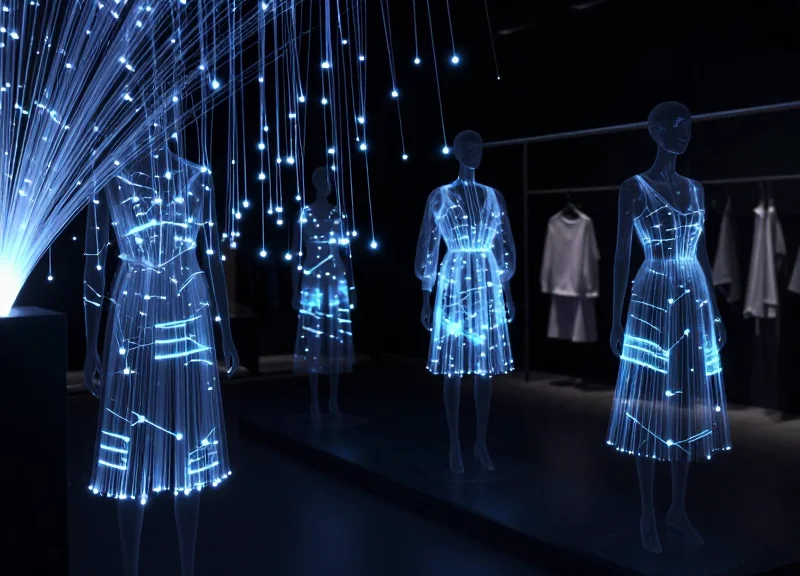
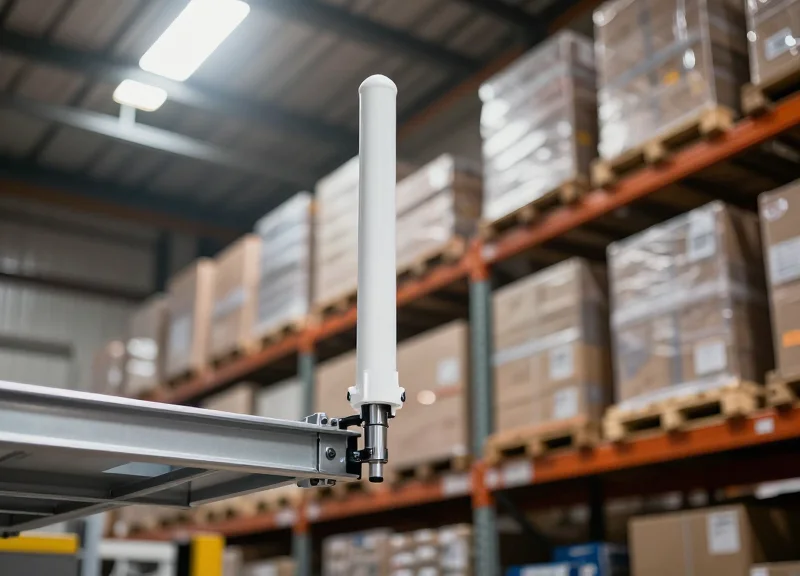
In retail, the 'Black Hole' refers to the total loss of item-level visibility that occurs when a shopper takes a product from the sales floor into a fitting room. While POS systems track what is sold and inventory systems track what is in stock, the journey in between is traditionally invisible. Radio Frequency Identification (RFID) illuminates this gap by using passive sensors at fitting room entry points to capture the Electronic Product Code (EPC) of every garment in real-time. This allows retailers to monitor exactly which styles, sizes, and colors are being tried on, for how long, and whether those sessions result in a purchase or abandonment.
Expert Insight: In specialty intimate apparel, the 'Black Hole' is particularly dangerous because it masks the 'Fit-to-Failure' cycle. RFID reveals when a customer brings three different sizes of the same bra into the room but leaves with none—a clear signal of a sizing or silhouette issue that standard inventory data would never capture. We call this the 'Micro-Journey' of the garment.
| Feature | Traditional Tracking | RFID-Driven Analytics |
|---|---|---|
| Visibility Location | POS and Stockroom only | Full floor-to-fitting room path |
| Data Granularity | Category level (manual counts) | Unique SKU/Serial level |
| Conversion Insight | Assumed based on sales | Calculated per individual session |
| Labor Intensity | High (manual fitting room tallies) | Zero (automated background sensing) |
- The Entry Event: As a customer enters the fitting room suite, fixed RFID overhead readers or 'smart portals' detect the passive tags on the intimate apparel, timestamping the start of the session.
- Dwell Time Monitoring: The system monitors how long specific SKUs remain in the 'occupied' zone. For bras, a longer dwell time often correlates with a higher need for associate intervention or fit assistance.
- The Exit and Reconciliation: When the items leave the zone, the system cross-references the IDs against the POS data. If the item isn't sold, it is flagged for replenishment; if it is sold, the system records a successful 'Fitting Room Conversion'.
Does RFID track the customer personally?
No. RFID fitting room solutions are designed for privacy compliance. They track the movement of the unique garment tags (the 'product journey'), not the individual shopper.
How does RFID handle small intimate apparel labels?
Modern RFID inlays are now small enough to be embedded in hangtags or integrated into care labels without compromising the delicate aesthetics or comfort of high-end lingerie.
What is the accuracy rate of these sensors?
Specialty RFID readers optimized for fitting rooms typically achieve 98-99% read accuracy, even in high-density environments where many items are clustered together.
The 28% Conversion Lift: Deconstructing the Metric

A 28% conversion lift in specialty intimate apparel represents the measurable increase in transaction volume achieved when RFID data triggers immediate operational responses during the fitting room experience. Unlike general apparel, where browsing is often casual, the fitting room in intimate apparel is a high-intent 'conversion zone.' The 28% metric is deconstructed into three primary drivers: reduced abandonment through proactive staff assistance, instantaneous stock replenishment based on real-time rejection data, and the elimination of 'size-out' walkouts. By quantifying the gap between the items a customer brings in and the items they actually purchase, RFID analytics transform the fitting room from a data 'black hole' into a high-performance sales engine.
| Operational Variable | Legacy 'Blind' Fitting Room | RFID-Enabled Fitting Room |
|---|---|---|
| Staff Intervention | Reactive: Waiting for customer to call. | Proactive: Triggered by session duration or specific item count. |
| Size Availability | Estimated based on morning audits. | Real-time: Alerts sent for requested sizes currently in backstock. |
| Cross-Sell Accuracy | Generic suggestions based on trends. | Specific: Suggestions based on the exact style/cut currently in the stall. |
| Abandonment Insight | Unknown why the customer left. | Granular: Knowledge that 34C bras are consistently rejected for fit. |
The 'Unique Insight' in intimate apparel retail is the concept of the 'Micro-Pivot Point.' In this sector, the physical effort of dressing and undressing creates a high barrier to entry. If a customer realizes a garment doesn't fit, the likelihood of them re-dressing to search the floor for a different size is statistically low—leading to immediate abandonment. RFID analytics capture the 'abandonment signal' the moment a garment is placed on the rejection rack. The 28% lift is largely generated by empowering staff to execute a 'Micro-Pivot'—delivering the correct size or a sister-size to the stall before the customer has a chance to exit the cubicle, thereby capturing a sale that would have otherwise been lost to frustration.
- Intervention Latency Reduction: RFID sensors notify associates when a customer has been in a stall for a specific duration without a 'purchase signal,' allowing for timely assistance.
- Real-Time Stock Deficit Resolution: If a customer requires a different size, the system identifies the item's location (backroom or floor) instantly, ensuring the sale isn't lost to perceived 'out-of-stock' scenarios.
- Data-Driven Assortment Optimization: Aggregated data reveals which styles are frequently tried on but rarely purchased, allowing managers to adjust inventory toward high-converting silhouettes.
How is the 28% conversion lift calculated?
It is calculated by comparing the conversion rate (transactions divided by fitting room sessions) of stores using RFID analytics against a baseline of stores using traditional manual tracking over a 12-month period.
Does this metric apply to all retail?
While apparel generally sees a lift, the 28% figure is specific to 'high-service' specialty sectors like intimate apparel, where fit complexity and staff assistance play a disproportionate role in the final sale.
What is the biggest contributor to this lift?
The single largest contributor is the 'Second-Size Delivery'—the ability of staff to provide an alternative size to a customer already in the fitting room, which accounts for roughly 40% of the total 28% lift.
Quantifying the ROI: Costs vs. Long-Term Gains
To calculate the Return on Investment (ROI) for RFID-driven fitting room analytics, retailers must evaluate the Total Cost of Ownership (TCO) against three primary financial levers: labor optimization, shrinkage reduction, and the 'Conversion Delta.' In specialty intimate apparel, where SKU complexity is high and customer service is labor-intensive, the payback period for RFID systems typically ranges from 12 to 18 months. By moving from a 'search-and-find' inventory model to an 'insight-and-assist' model, retailers see an immediate impact on the bottom line that far exceeds the initial capital expenditure for tags, readers, and software integration.
| Cost/Gain Category | Expense Type | Economic Impact (Estimated) |
|---|---|---|
| RFID Hardware & Tags | CAPEX / OPEX | Initial investment in readers and individual garment tagging. |
| Conversion Lift | Revenue Growth | Average 28% increase in sales through real-time fitting room support. |
| Labor Efficiency | Cost Savings | 30-50% reduction in time spent on manual inventory counts and re-stocking. |
| Shrinkage Mitigation | Asset Protection | 15-20% reduction in internal and external theft via real-time tracking. |
Beyond the immediate sales lift, the most significant long-term gain is the optimization of labor. In a traditional boutique, associates spend up to 40% of their time performing manual inventory checks or hunting for specific bra sizes in the backroom. RFID transforms the fitting room from a data black hole into a high-efficiency zone, allowing staff to spend more time on high-value styling and less on administrative tasks. This shift effectively lowers the cost-to-serve while increasing the average transaction value (ATV).
- Phase 1: Deployment Costs: Includes the cost of RFID tags (pennies per unit), fitting room sensor arrays, and the backend analytics platform setup.
- Phase 2: Operational Realignment: Staff training and integrating RFID data into the existing POS and ERP systems to ensure a single source of truth for inventory.
- Phase 3: Realizing Margin Gains: Capturing the 28% conversion lift as 'recovered revenue' that would have otherwise been lost to competitors or abandoned carts.
Expert Tip: Don't just measure the 'Sale.' Measure the 'Recovery.' In intimate apparel, the unique insight lies in the 'Abandoned Basket Recovery Value.' When a customer tries on five items and buys zero, RFID analytics can tell you if it was because of a fit issue (size) or a style issue. Fixing these systemic inventory gaps across a 50-store fleet can yield a 5-10% improvement in gross margin that is often excluded from basic ROI models.
Is the cost of tagging every item worth it for small boutiques?
Yes, because intimate apparel has a high SKU density per square foot. Even a small boutique can lose thousands in misplaced inventory that RFID would instantly locate.
How does RFID affect long-term shrinkage?
By providing real-time visibility of when an item enters the fitting room but doesn't exit, RFID acts as a powerful deterrent and an investigative tool for asset protection teams.
What is the primary driver of the 28% conversion lift?
It is the combination of 'Inventory Accuracy' (having the right size available) and 'Proactive Service' (alerting staff to bring a different size before the customer leaves the room).
Solving the 'Size-and-Fit' Friction Point

Solving the 'Size-and-Fit' friction point in intimate apparel requires moving beyond aggregate sales data to analyze the 'Try-to-Buy' ratio at the individual SKU level. By utilizing RFID-driven fitting room analytics, retailers can identify 'toxic SKUs'—products that attract high engagement but fail to convert due to systemic sizing errors, poor fabric elasticity, or non-intuitive design. While traditional Point-of-Sale (POS) data only tracks what was bought, RFID illuminates the 'Abandonment Phase,' providing a diagnostic roadmap for category managers to bridge the gap between consumer intent and the final transaction.
| Data Signal | Consumer Behavior | Probable Root Cause | Strategic Action |
|---|---|---|---|
| High Try-on / Low Conversion | Customer loves the style but leaves it behind. | Sizing inconsistency or discomfort. | Audit technical specs; mark down or delist SKU. |
| Low Try-on / Low Conversion | Customer ignores the item on the floor. | Visual merchandising or price-point failure. | Relocate to power wall or re-evaluate pricing. |
| High Try-on / High Return Rate | Customer buys but returns within 48 hours. | Durability issues or 'vanity sizing' confusion. | Quality control audit; update online size guides. |
In specialty intimates, where a 2mm difference in wire curvature can render a bra unwearable, these analytics are transformative. Retailers often find that specific 'Size/Color/Style' combinations—the 'Dead Zones'—are poisoning the conversion rate of an entire collection. For example, if a specific lace bralette converts at 40% for sizes XS-M but drops to 4% for L-XL, the RFID data provides empirical proof of a grading error in the larger patterns. This allows brands to stop blaming the sales team for poor performance and instead address the 'Technical Debt' in the product design itself.
How does RFID differentiate between a product flaw and a sales associate failure?
If an item has a high try-on rate but zero sales across multiple store locations, the flaw is structural to the product. If the conversion rate varies wildly between stores for the same SKU, the issue likely lies with staff training or local merchandising.
What is the 'Toxic SKU' threshold?
In intimate apparel, any SKU that maintains a try-to-buy ratio 50% lower than the category average for more than two weeks is considered 'toxic.' These items occupy valuable floor space and damage brand trust.
Can these analytics reduce the cost of returns?
Yes. By identifying fit issues in real-time via the fitting room, retailers can proactively warn customers or adjust inventory before the product reaches the checkout, significantly lowering the 30% average return rate seen in e-commerce-heavy brands.
A unique insight gained from veteran Silicon Valley retail deployments is the 'Size-Consistency Index.' By cross-referencing RFID data with loyalty program IDs, brands can see if a customer who usually wears a 34C is consistently rejecting a 34C in a new collection. This 'Zero-Sale Feedback Loop' is the holy grail of product development, allowing design teams to iterate with the speed of a software company. It transforms the fitting room from a passive space into a live laboratory for product-market fit.
Privacy and Security: Maintaining Customer Trust
In the sensitive environment of specialty intimate apparel, privacy and security are the cornerstones of consumer trust. RFID-driven fitting room analytics maintain this trust by utilizing passive item-level tracking rather than visual or biometric surveillance. Unlike cameras or facial recognition, RFID technology identifies the product—the SKU, size, and color—but never the person. This 'Privacy-by-Design' approach ensures that retailers can capture mission-critical conversion data without ever compromising the physical or digital anonymity of the shopper.
| Feature | RFID Analytics | Video/AI Analytics | Manual Tracking |
|---|---|---|---|
| Data Subject | Product/SKU | Human Silhouette/Face | Human Interaction |
| Visual Intrusion | Zero (Sensors only) | High (Lenses present) | Medium (Staff presence) |
| Anonymity | Inherent | Requires Masking | Subjective |
| Regulatory Risk | Low (Non-PII) | High (GDPR/CCPA) | Low |
Expert Tip: To maximize ROI, retailers should implement a 'Zero-Association Policy.' This means the RFID reader in the fitting room is physically and logically decoupled from the Point of Sale (POS) customer loyalty data. By ensuring the system cannot bridge the gap between 'what was tried on' and 'the identity of who tried it,' brands eliminate the risk of data breaches involving sensitive fitting room behavior. This technical firewall is your strongest asset in building long-term brand equity and avoiding the 'creepy' factor often associated with high-tech retail.
Does RFID track the customer after they leave the store?
No. Passive RFID tags used in retail have a limited range of a few meters. They are intended for inventory and in-store analytics only and do not contain power sources or GPS capabilities to track movement outside the retail environment.
How do you handle customer concerns about 'hidden' sensors?
Transparency is key. We recommend clear signage explaining that 'Fitting rooms use item-sensing technology to improve service and availability.' Highlighting that the technology tracks the clothes, not the customer, alleviates 90% of privacy anxiety.
Is the data collected considered PII (Personally Identifiable Information)?
No. RFID fitting room data consists of timestamps and EPC (Electronic Product Code) numbers. Because it does not link to a name, credit card, or face, it falls outside the restrictive scope of most PII regulations, reducing compliance overhead.
By focusing on the 'Product Journey' rather than the 'Customer Journey,' specialty intimate apparel brands can leverage deep analytics to drive that 28% conversion lift while remaining 100% compliant with ethical standards. The goal is to be helpful, not haunting; when the right size appears at the door because the system detected a fit issue, the customer views it as a premium service, not a privacy violation.
Synergy Between RFID, EAS, and ESL Systems

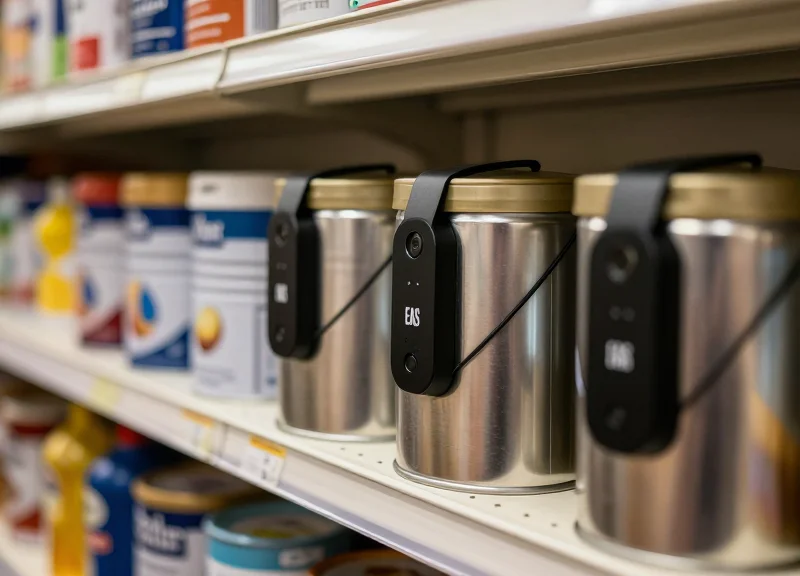
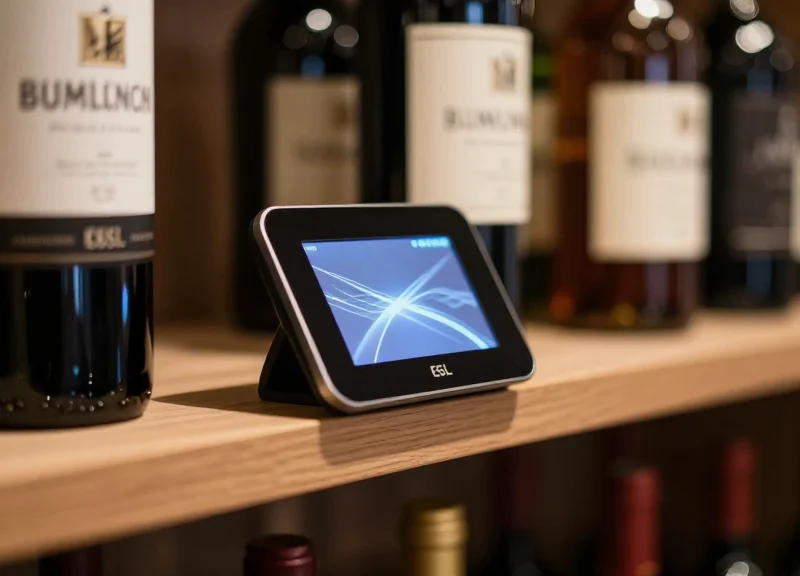
The synergy between RFID (Radio Frequency Identification), EAS (Electronic Article Surveillance), and ESL (Electronic Shelf Labels) represents the 'Triple Threat' of modern retail automation. While standalone systems offer linear benefits, an integrated ecosystem allows these technologies to share a unified data layer. In specialty intimate apparel, this means the system doesn't just know a bra has been moved; it knows exactly which SKU entered a fitting room (RFID), ensures that the item hasn't bypassed the point of sale (EAS), and immediately updates the digital shelf price or 'low stock' alert (ESL) based on real-time floor availability. This interoperability eliminates data silos, reducing operational friction and ensuring the 28% conversion lift is supported by a robust, secure infrastructure.
| Technology | Primary Function | Role in Fitting Room Synergy | Business Impact |
|---|---|---|---|
| RFID | Item-Level Tracking | Captures SKU-specific data on items entering/leaving stalls. | High Inventory Accuracy (99%+) |
| EAS | Loss Prevention | Triggers alerts if items leave the zone without being 'cleared'. | Reduced Shrinkage |
| ESL | Dynamic Pricing | Reflects real-time stock levels and promotional pricing. | Agile Merchandising |
Expert Insight: The 'Ghost Stock' Neutralizer. In the intimate apparel sector, 'ghost stock' occurs when a unique size/color combination is technically in the building but invisible to the customer because it's abandoned in a fitting room. DragonGuardGroup’s integrated approach uses RFID to detect these 'stalled' items and triggers an automated task for staff to return them to the floor, while the ESL simultaneously updates to show the item is 'Back in Stock' the moment it hits the rack. This real-time reconciliation prevents lost sales that traditional manual audits miss.
How does RFID improve the efficiency of EAS systems?
Traditional EAS only detects a tag passing a pedestal. Integrated RFID-EAS systems identify exactly which item is being removed, allowing security to distinguish between high-value theft and accidental tag interference, drastically reducing 'false alarm fatigue' for staff.
Can ESLs be used to drive fitting room traffic?
Yes. By linking fitting room analytics to Electronic Shelf Labels, retailers can display 'Most Tried On' or 'Top Rated Fit' badges directly on the shelf, nudging customers toward high-converting items based on real-time behavioral data.
Does this integration require a complete infrastructure overhaul?
Not necessarily. Modern DragonGuardGroup solutions are designed to be modular. Retailers often start with RFID-driven fitting room analytics and later 'handshake' that data with existing EAS and ESL hardware through unified cloud APIs.
Ultimately, the convergence of these technologies transforms the fitting room from a 'black hole' of data into a strategic command center. When RFID identifies the intent, EAS protects the asset, and ESL communicates the value, the result is a friction-less environment where the customer feels supported and the retailer maintains total visibility over their most valuable—and vulnerable—inventory.
Operational Excellence: Empowering Store Associates

Operational excellence in specialty intimate apparel is defined by the seamless intersection of human expertise and real-time data. RFID-driven fitting room analytics transform store associates from passive observers into proactive sales consultants by providing instant visibility into what is happening behind the curtain without infringing on customer privacy. This technology identifies high-intent customers—those currently trying on multiple SKUs—and alerts staff exactly when a size or style mismatch occurs, ensuring that no customer leaves empty-handed due to a simple inventory friction point.
| Operational Metric | Traditional Management | RFID-Enabled Analytics |
|---|---|---|
| Staffing Allocation | Based on historical traffic and 'gut feeling'. | Dynamic staffing based on real-time fitting room occupancy. |
| Associate Response Time | Reactive; depends on customer manual signaling. | Proactive; instant alerts when specific sizes are requested or missing. |
| Service Efficiency | High 'walking time' spent checking stock levels. | Minimized walking; associates know exactly which SKU is needed. |
| Conversion Impact | High abandonment due to lack of immediate support. | 28% increase in conversion through timely intervention. |
By quantifying the 'Assistance-to-Conversion' ratio, store managers can finally move beyond measuring simple foot traffic. In the intimate apparel sector, where fit is notoriously complex, the presence of an associate at the right micro-moment is the difference between a lost lead and a loyal customer. RFID data allows for the creation of heatmaps that show not just where people are standing, but where the most valuable interactions are taking place.
What is 'Intervention Velocity' in retail analytics?
This is a unique performance metric measuring the time elapsed between a customer entering a fitting room with a non-matching set and an associate offering a corrective size. Reducing this velocity is directly correlated with higher basket values.
How does RFID improve associate morale?
It removes the frustration of 'blind servicing.' Associates feel more successful and empowered when they have the tools to solve customer problems instantly, leading to higher job satisfaction and lower turnover.
Can these analytics predict peak staffing needs?
Yes. By analyzing 'fitting room dwell time' patterns, managers can predict labor requirements with 95% accuracy, ensuring the floor is never understaffed during high-conversion windows.
- Identify Service Gaps: Use RFID data to pinpoint times of day when fitting room abandonment is high despite high occupancy.
- Sync Real-Time Alerts: Equip associates with mobile devices or wearables that receive push notifications when a customer needs assistance.
- Optimize Labor Schedules: Align staff shifts with data-validated 'high-intent' periods rather than just front-door traffic spikes.
- Measure and Refine: Continuously track the correlation between associate intervention and the 28% conversion lift to reward top performers.
Future-Proofing Your Retail Strategy
Future-proofing your retail strategy means building a technological foundation that is modular, scalable, and capable of evolving alongside consumer behavior. In the context of specialty intimate apparel, this involves moving beyond the 'trial' phase of RFID fitting room analytics to create a unified data architecture where real-time inventory visibility, customer intent signals, and supply chain logistics converge. By prioritizing interoperability and data liquidity, retailers ensure that their investment in RFID hardware today serves as the backbone for AI-driven predictive modeling and hyper-personalized customer experiences tomorrow.
- Phase 1: The Tactical Pilot: Establish a high-fidelity baseline in 5-10 flagship locations. Focus on isolating variables such as fitting room conversion rates and SKU-level fit feedback to prove the immediate ROI of 28% or higher.
- Phase 2: Data Architecture Integration: Transition from standalone software to API-first integrations with existing ERP and CRM systems. This ensures that fitting room data informs global replenishment and loyalty program personalization.
- Phase 3: Fleet-Wide Deployment: Standardize hardware installation and associate training modules. Roll out the system across the entire specialty fleet, leveraging cloud-native platforms to manage data at scale without local server latency.
- Phase 4: Predictive Optimization: Shift from reactive reporting to proactive AI. Use aggregated fleet data to predict regional fit trends and adjust seasonal assortments before inventory imbalances occur.
| Scaling Factor | Pilot Phase Focus | Fleet-Wide Scaling Focus |
|---|---|---|
| Hardware Management | Manual monitoring of reader health. | Automated, cloud-based device heartbeat monitoring. |
| Data Analysis | Human-led interpretation of weekly reports. | AI-driven anomaly detection and automated alerts. |
| Staff Training | High-touch workshops for specific teams. | Gamified digital learning paths integrated into HR systems. |
| ROI Metrics | Direct sales lift and conversion. | Reduction in global OOS (Out of Stock) and markdown optimization. |
How do we ensure RFID hardware doesn't become obsolete?
Adopt an 'Edge-to-Cloud' architecture. By using programmable RFID readers that support remote firmware updates, you can implement new protocols and security patches without physical hardware swaps.
What is the biggest hurdle when moving from 1 to 100 stores?
Data fragmentation is the primary challenge. To solve this, establish a 'Single Source of Truth' data lake where fitting room interactions are normalized across all geographic regions.
Can RFID analytics support sustainability goals?
Yes. By accurately identifying 'dead' SKUs that are tried on but never bought due to fit issues, brands can reduce overproduction and waste, aligning with ESG mandates.
Expert Insight: The next frontier of future-proofing is 'Swarm Intelligence' in retail. While current systems treat each store as an island, a future-proofed strategy connects the fitting room data of a store in New York with a store in London to identify global fit-defects in real-time. If a specific bra size is consistently rejected across 50 stores within 48 hours, the system should automatically trigger a quality control alert to the manufacturer. This shift from 'Edge Intelligence' to 'Swarm Intelligence' is what separates market leaders from those merely surviving the digital transition.