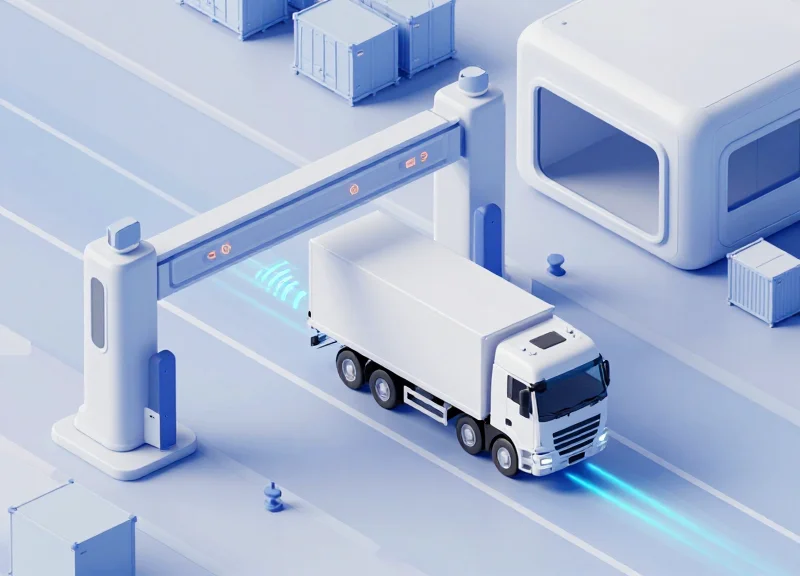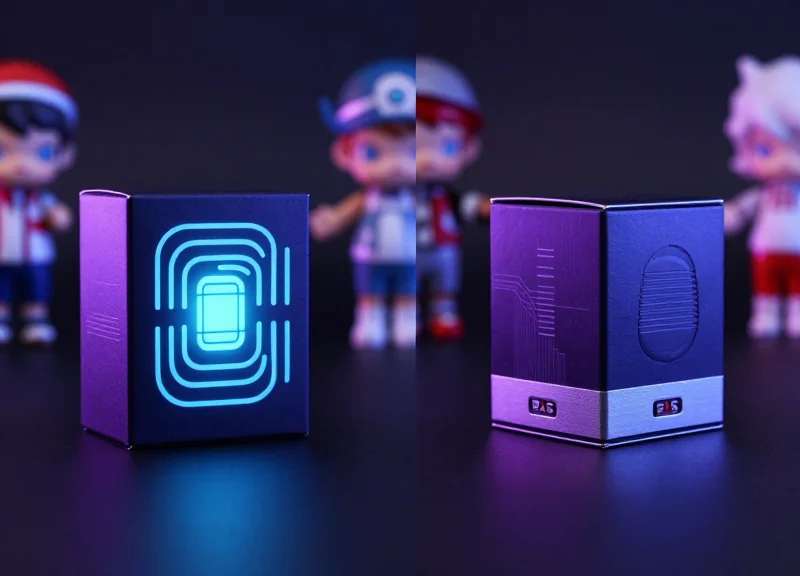
The designer toy and blind box industry is projected to reach unprecedented market valuations by 2026, driven by a global culture of 'kidults' and collectors. However, the unique nature of these products—small, high-value, and often uniform in packaging—presents a nightmare for loss prevention and inventory accuracy. As we look toward 2026, retailers and manufacturers face a critical technological crossroad. While traditional EAS has been the frontline defense, the rise of smart retail demands more data. This article explores the showdown between Next-Gen EAS and RFID, analyzing which technology will ultimately capture the designer toy market by providing the perfect balance of security, cost-efficiency, and consumer experience.
The Rise of the Collectible: Why the Designer Toy Market Needs Advanced Security

The designer toy market has evolved from a niche subculture into a multi-billion-dollar global asset class, characterized by high 'Value Density'—where a small, easily portable item holds significant resale value. Because blind boxes are intentionally opaque and compact, they present a unique security challenge: they are high-reward targets for retail theft that are difficult to track using legacy EAS systems. As we head toward 2026, the industry is shifting toward advanced RFID and next-gen EAS labels to protect margins, ensure inventory accuracy, and combat a sophisticated secondary market where stolen 'chase' figures can be flipped for 10x their retail price within hours.
The growth of the designer toy sector is staggering, with market analysts projecting a CAGR of over 12% through 2030. This growth is driven by a 'drop culture' mentality similar to high-end streetwear. However, this hype-driven model creates a perfect storm for shrinkage. Unlike traditional toys, designer collectibles are frequently targeted by Organized Retail Crime (ORC) syndicates who recognize that these items lack the serial-level tracking found in electronics but carry similar price-per-ounce valuations.
| Feature | Traditional Toy Retail | Designer Toy / Blind Box Market |
|---|---|---|
| Average Price Point | $15 - $30 | $15 - $200+ |
| Resale Velocity | Low | Extremely High (Real-time) |
| Packaging Size | Varied/Large | Uniform/Small (Pocketable) |
| Primary Theft Risk | Individual Shoplifting | ORC & Internal Tampering |
| Security Requirement | Deterrence | Authentication & Tracking |
Why are blind boxes specifically at risk?
Their standardized size makes them easy to conceal in bulk, and the 'blind' nature of the product allows thieves to swap high-value 'chase' figures with common ones if the packaging is not properly secured or if internal security tags are missing.
What is 'Value Density' in this context?
This refers to the ratio of an item's monetary value to its physical volume. Designer toys have a high value density, meaning a small shelf footprint carries a high financial risk for the retailer.
How does theft impact the secondary market?
Stolen goods flood platforms like eBay and specialized collectible apps, devaluing the brand's perceived exclusivity and hurting authorized resellers who cannot compete with 'street' prices.
The Expert Perspective: The Tamper-Swap Loophole. A unique insight often overlooked by generalist retailers is the 'weight-spoofing' and 'tamper-swapping' phenomenon. Savvy thieves use precision scales to identify heavy 'chase' figures inside blind boxes or carefully open and reseal boxes to extract rarities. Traditional EAS stickers only prevent the box from leaving the store; they do nothing to verify the integrity of the contents. By 2026, advanced RFID labels will be required not just for loss prevention, but as a digital seal of authenticity that confirms the specific item inside hasn't been substituted before the final point of sale.
Next-Gen EAS Labels: The Proven Guardian of High-Volume Retail
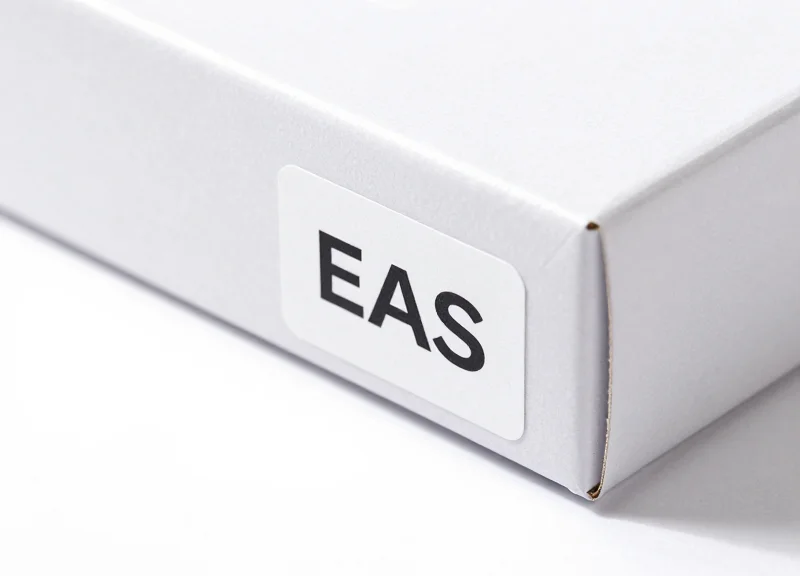
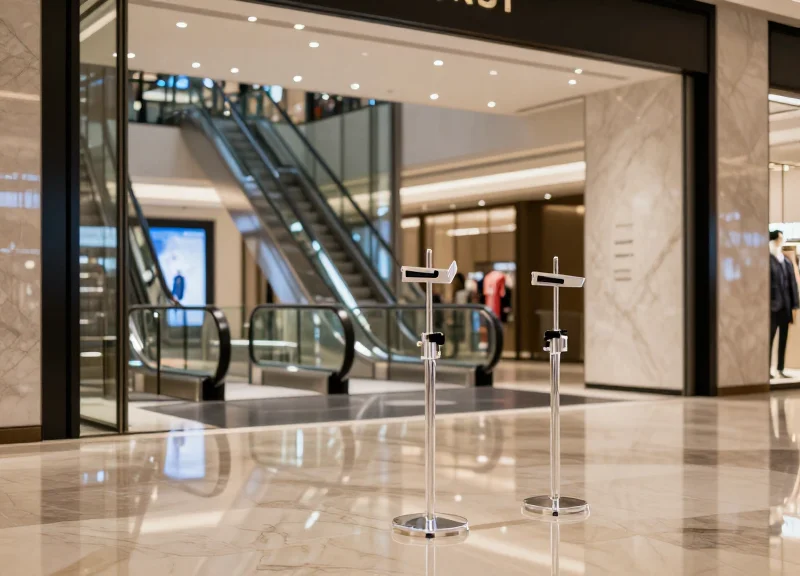
In 2026, Next-Generation Electronic Article Surveillance (EAS) labels remain the industry's most robust solution for high-velocity, high-volume retail environments where unit margins are tight and inventory turnover is rapid. Unlike their predecessors, modern EAS labels—particularly Acousto-Magnetic (AM) and advanced Radio Frequency (RF) variants—have evolved into ultra-thin, hyper-sensitive security assets. For the designer toy and blind box sector, these labels provide a reliable, low-latency 'gate-alarm' defense that prevents bulk shoplifting without the high infrastructure costs associated with full-scale RFID implementation.
| Feature | Legacy EAS (Pre-2022) | Next-Gen EAS (2026 Target) |
|---|---|---|
| Label Thickness | 0.5mm - 2.0mm | <0.15mm (Ultra-Thin) |
| Detection Accuracy | 85-90% | 98.5%+ with Zero False Alarms |
| Unit Cost | $0.03 - $0.05 | $0.012 - $0.025 |
| Interference | High near metal/liquids | Shielded for metallic toy finishes |
Expert Insight: The 'Stealth-In-Box' movement is the defining trend for 2026. Top-tier blind box manufacturers are now moving away from surface-applied stickers in favor of 'Source Tagging.' This involves laminating the EAS resonator directly into the cardstock of the blind box during the printing process. This makes the security element invisible to the consumer and impossible for a shoplifter to remove without destroying the box’s integrity—a critical deterrent in a market where 'mint condition' packaging is essential for resale value.
Why choose EAS over RFID for blind boxes in 2026?
The primary driver is the 'Cost-to-Risk' ratio. Blind boxes typically retail between $10-$25; a $0.015 EAS label protects the margin far better than a $0.08-$0.15 RFID inlay, especially when the retailer only requires exit-gate security rather than individual item tracking.
Can Next-Gen EAS handle metallic or foil-stamped designer toys?
Yes. 2026-spec Acousto-Magnetic (AM) labels operate at 58 kHz, which is largely unaffected by the metallic paints and foil-stamped boxes frequently used in premium designer toy collections, unlike standard RF labels which may experience 'detuning'.
Is deactivation speed an issue for high-traffic toy stores?
No. Next-gen deactivators now use 'Pulse-Width Modulation' to instantly neutralize labels at the point of sale, even when buried inside multiple layers of packaging, ensuring no 'zombie alarms' occur at the exit.
RFID Technology: Moving Beyond Security to Total Inventory Visibility

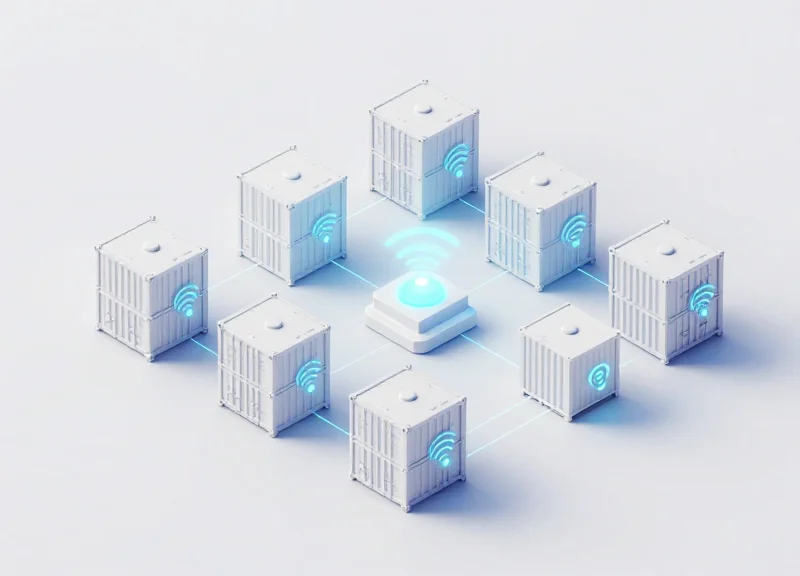
By 2026, Radio Frequency Identification (RFID) will no longer be viewed as a luxury for designer toy retailers, but as a critical infrastructure for total inventory visibility. Unlike traditional Electronic Article Surveillance (EAS) which only alerts staff when an item leaves the store, RFID utilizes unique item-level serialization to track the specific identity, location, and history of every blind box and collectible in the supply chain. This shift moves the focus from simple 'theft prevention' to 'data-driven asset management,' allowing retailers to maintain 99.9% inventory accuracy while simultaneously deterring high-end organized retail crime (ORC).
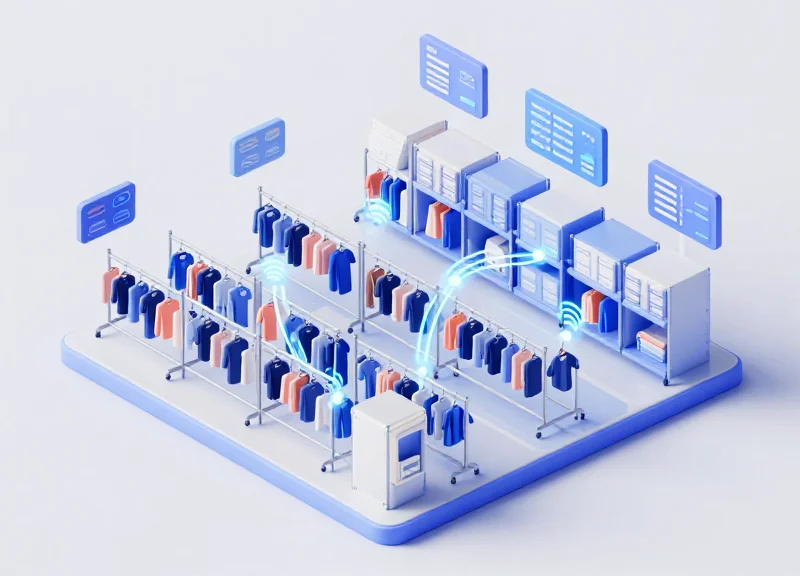
For the designer toy market, the value of RFID lies in its ability to read hundreds of items simultaneously without line-of-sight. In a crowded retail environment where small blind boxes are often stacked deep on shelves, RFID handhelds or overhead sensors can perform a full store count in minutes—a process that would take hours using barcodes or manual counting. This granular data is essential for managing limited edition releases and high-demand 'chase' figures where stock discrepancies can lead to significant revenue loss and customer dissatisfaction.
| Feature | Traditional EAS Labels | Next-Gen RFID Tags |
|---|---|---|
| Primary Function | Theft Deterrence Only | Security + Inventory Intelligence |
| Data Capacity | 1-Bit (On/Off) | Serialized (Unique ID per item) |
| Scan Method | Proximity to Pedestal | Mass Scanning / No Line-of-Sight |
| Inventory Speed | Manual / Barcode-based | Instantaneous Bulk Reading |
| Omnichannel Support | Low (High Error Rates) | High (Enable Buy-Online-Pick-Up-In-Store) |
Does RFID replace the need for security gates?
Not necessarily. While RFID can trigger alarms, it is often used in a 'dual-technology' approach where the RFID chip handles inventory data and a traditional EAS component handles the high-performance security trigger at the exit.
Can RFID track the specific 'chase' figure inside a blind box?
Yes. Manufacturers can encode the specific character ID onto the RFID tag before the box is sealed. This allows for perfect inventory auditing of rarity distributions without ever opening the packaging.
Is RFID cost-prohibitive for small toy boutiques?
The cost of RFID labels has plummeted by over 70% in the last decade. For high-margin designer toys (often retailing for $15–$100+), the ROI from reduced shrink and increased labor efficiency typically pays for the system within 12–18 months.
Expert Insight: The Anti-Counterfeit Moat. A unique advantage of RFID in the 2026 market is its role in secondary market validation. By integrating an encrypted 'Digital Birth Certificate' into the RFID tag, brands like Pop Mart or Medicom can allow collectors to verify the authenticity of a toy using a smartphone. This creates a secure ecosystem where the tag protects the retailer from theft, the brand from counterfeits, and the consumer from fraud—a triple-threat utility that EAS labels simply cannot match.
The Blind Box Challenge: Tamper-Proofing and Concealment
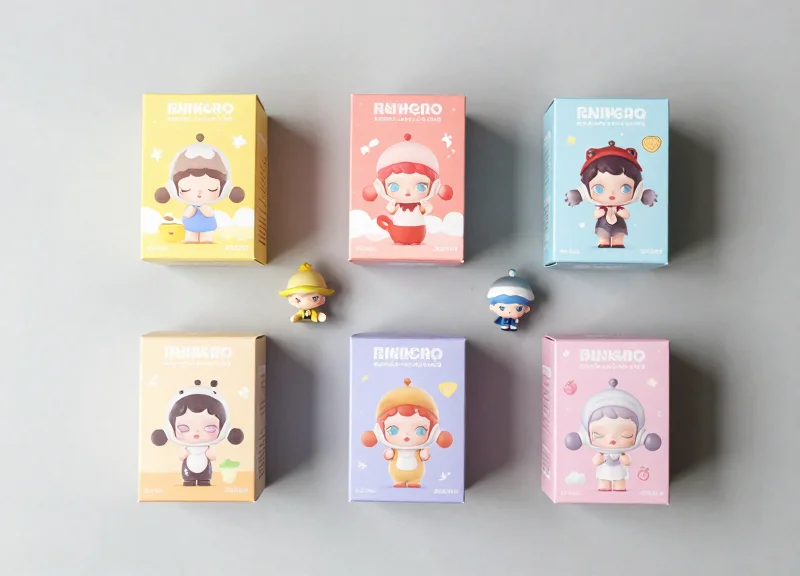
In the designer toy market, the 'blind box' mechanic is the primary driver of engagement, making concealment the single most important factor for any security implementation. The challenge for 2026 is embedding security tags—whether EAS or RFID—so they are physically undetectable by sight, touch, or weight. If a collector can identify a 'chase' figure by feeling a label's bump or sensing a weight discrepancy, the entire business model collapses. Effective security must be integrated into the packaging architecture, often hidden beneath plastic inserts or within the cardboard fluting itself, to maintain the integrity of the mystery.
| Feature | Next-Gen EAS Labels | RFID Inlays (UHF) |
|---|---|---|
| Physical Profile | Ultra-thin, flexible strips (0.1mm-0.2mm) | Slightly thicker chip 'bump' (0.3mm+) |
| Concealment Ease | Very High; fits inside box folds | High; requires recessed inserts |
| Signal Shielding | Resistant to most foil packaging | Can be detuned by metallic paints |
| Tamper Resistance | Fragile if bent; easy to disable if found | Embedded logic; harder to duplicate |
| Weight Impact | Negligible (<0.1g) | Varies by antenna size (0.15g-0.3g) |
Beyond simple theft, 'box searching'—where individuals use high-precision scales to identify rare figures—is a significant threat. My 20-year observation of retail tech suggests that 2026 will see the rise of Density-Matched Security Labels. These tags are engineered to have a uniform mass that mimics the standard weight variations of the toys, effectively neutralizing the advantage of digital scales used by 'professional' box weighers.
- Integrated In-Mold Labeling (IML): Embedding the EAS or RFID tag directly into the plastic blister pack during manufacturing so it cannot be removed without destroying the packaging.
- Sub-Surface Placement: Positioning labels behind the high-density foam or plastic inserts that cradle the toy, preventing 'the pinch test' used by customers to feel for tags.
- Adhesive Neutralization: Using aggressive, 'dead-on-contact' adhesives that tear the packaging fiber if a label is tampered with, providing immediate visual evidence of foul play.
Can RFID signals pass through 'blind' foil bags?
Standard RFID can struggle with metallic foil bags. However, 2026 trends show a move toward 'on-metal' tag designs or placing the tag on the outer box but inside a false-bottom to bypass the internal shielding.
How do you prevent 'label swapping' in retail?
Retailers are moving toward source-tagging, where the label is part of the box's original print run, making it impossible to swap a security tag from a common item to a rare one.
Does the security tag affect the toy's resale value?
If integrated correctly into the box, no. The goal is to ensure the toy remains untouched while the packaging provides the security layer.
Comparative Analysis: Cost, Implementation, and ROI by 2026
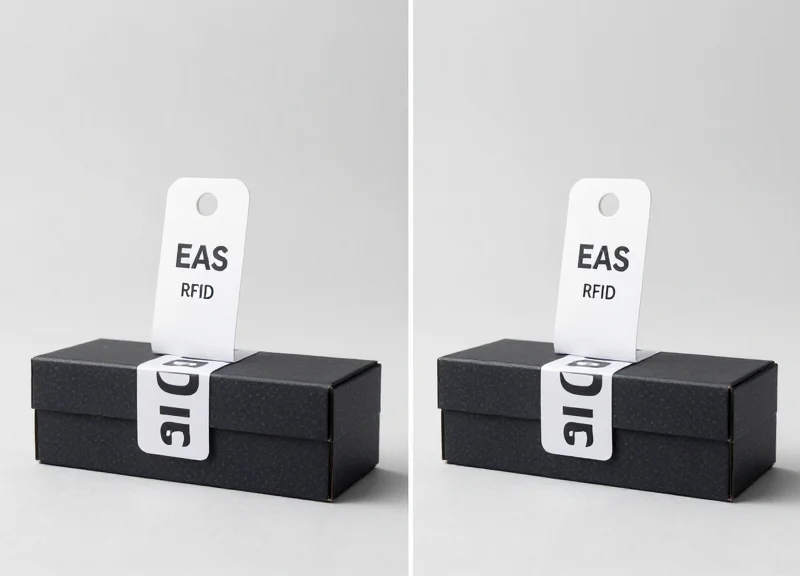
As we approach 2026, the financial decision between RFID and Next-Gen EAS labels in the designer toy sector is no longer just about the price per tag; it is about the Total Cost of Ownership (TCO) versus the value of data. While EAS remains the most cost-efficient solution for pure loss prevention, RFID serves as a digital foundation that bridges the gap between physical retail and e-commerce fulfillment. For blind box retailers, the 'winning' technology is determined by whether the primary objective is reducing shrinkage (EAS) or optimizing the entire omnichannel lifecycle of a high-velocity product (RFID).
| Metric | Next-Gen EAS Labels | RFID (UHF/Rain) Systems |
|---|---|---|
| Average Label Cost (2026) | $0.015 - $0.03 per unit | $0.04 - $0.08 per unit |
| Initial CAPEX (Hardware) | Low: Basic pedestals/deactivators | High: Readers, antennas, and middleware |
| Primary Value Proposition | Theft deterrence and detection | Inventory accuracy and item-level tracking |
| Implementation Speed | Fast: Plug-and-play setup | Moderate: Requires software integration |
| Projected 3-Year ROI | Direct: Reduction in shrinkage | Indirect: Labor savings and stock optimization |
Expert Insight: The 'Blind Box Volatility' Buffer. In 2026, the real ROI differentiator for designer toys is the ability to handle 'hype' cycles. RFID allows retailers to pivot stock between physical stores and e-commerce fulfillment centers in real-time. Because blind box popularity can spike and crash within weeks due to social media trends, the 99% inventory accuracy provided by RFID acts as a volatility buffer, preventing overstocking and out-of-stock scenarios that EAS—focused solely on security—cannot address.
Is RFID too expensive for low-cost blind boxes?
While the tag cost is higher, the ROI is realized through reduced labor costs. In a 2026 retail environment, RFID-enabled 'Smart Shelves' can automate inventory counts in seconds, a task that takes hours with manual barcode or EAS-only systems.
Can I use both technologies simultaneously?
Yes. Many high-end designer toy brands use 'Dual Technology' tags that house both an EAS element for security and an RFID chip for tracking. This provides the security of the guardian gate with the intelligence of item-level visibility.
What is the break-even point for an RFID transition?
For mid-to-large toy retailers, the break-even point is typically reached within 14 to 18 months, driven primarily by a 15-20% reduction in out-of-stock events and a significant decrease in annual labor hours dedicated to stocktaking.
- Phase 1: Pilot Next-Gen EAS: Start with enhanced EAS to stabilize shrinkage rates if you are scaling quickly with limited IT infrastructure.
- Phase 2: Source Tagging Integration: Work with manufacturers to embed labels during the packaging process to reduce in-store labor costs.
- Phase 3: RFID Data Layering: Once security is stable, layer RFID into high-value limited editions to test the impact on inventory turnover and customer experience.
The Hybrid Approach: Why EAS and RFID Can Coexist in Premium Retail
The hybrid approach in premium retail refers to the deployment of 'Dual-Tech' labels that integrate both Acousto-Magnetic (AM) or Radio Frequency (RF) EAS circuits and Ultra-High Frequency (UHF) RFID inlays into a single tag. This convergence allows retailers to leverage the specialized strengths of both technologies: the high-performance, wide-aisle detection of EAS for loss prevention and the granular, item-level visibility of RFID for inventory management. In the designer toy market, where high-value 'secret' figures can be easily pocketed, this hybridity ensures that a store can prevent theft without sacrificing the data accuracy required for omnichannel fulfillment and real-time stock replenishment.
| Feature | EAS (Next-Gen) | RFID (UHF) | Hybrid (Dual-Tech) |
|---|---|---|---|
| Primary Function | Loss Prevention | Inventory Visibility | Full Lifecycle Management |
| Detection Range | Superior (Up to 2.5m) | Moderate (Optimized for shelves) | Optimized for Door & Shelf |
| Data Granularity | Binary (Alarm/No Alarm) | Unique Item Identification | Security + Unique Identity |
| Retail Use Case | Theft Deterrence | Cycle Counting & BOPIS | End-to-End Retail Intelligence |
Why can't RFID replace EAS entirely for security?
While RFID can detect items, it is more susceptible to 'shielding' by metal or human bodies compared to AM EAS. EAS remains the gold standard for reliable exit-gate alarming in high-traffic environments.
How do Dual-Tech labels affect designer toy packaging?
In 2026, these labels are being engineered as 'Integrated Inlays' that sit behind the box liner. This keeps the aesthetic clean while providing two layers of electronic protection.
What is the impact on customer experience?
The hybrid approach enables 'Frictionless Checkout' where RFID handles the transaction and EAS handles the exit security, reducing wait times during high-demand limited edition drops.
Expert Insight: By 2026, the real value of the hybrid approach will manifest in 'Cross-Antenna Calibration.' This is a process where the EAS system triggers a localized, high-power RFID burst only when a security breach is detected. This allows the system to identify the specific unique serial number of the stolen toy—even if it is inside a lead-lined bag—by correlating the EAS signal with the missing RFID 'heartbeat.' This 'Digital Theft Fingerprint' can then automatically update the inventory system to reflect the loss, providing a level of forensic accuracy previously impossible in retail.
Is the cost of hybrid labels prohibitive?
Initially, the CAPEX is higher, but the ROI is achieved through the elimination of 'Shadow Inventory'—items that are in the store but misplaced and therefore unsellable.
Can hybrid systems work with existing infrastructure?
Most 2026 pedestals are designed to be modular, allowing retailers to add RFID sensors to existing EAS frames, protecting their initial hardware investment.
Combating Counterfeits: The Role of RFID in Brand Protection
RFID serves as the definitive 'Digital Birth Certificate' for designer toys, embedding a unique, encrypted Electronic Product Code (EPC) that cannot be replicated like traditional holographic stickers or QR codes. In the high-stakes designer toy market, where secondary market premiums for rare 'chase' figures can exceed 1000% of MSRP, RFID provides an immutable ledger of authenticity. By 2026, brand protection will shift from reactive enforcement to proactive consumer verification, where a simple smartphone tap can prove a figure's provenance, effectively devaluing the multi-billion dollar counterfeit market that currently plagues the industry.
| Feature | Traditional EAS/Holograms | Advanced RFID Authentication |
|---|---|---|
| Uniqueness | Batch-level (Same for thousands) | Item-level (Unique ID for every toy) |
| Clonability | High (Easy to visually replicate) | Extremely Low (Cryptographic locks) |
| Consumer Access | Visual inspection only | Smartphone/App integration |
| Secondary Market Trust | Subjective/Expert required | Instant digital verification |
- Factory-Level Encoding: A unique, encrypted ID is written to the RFID chip during the injection molding or final assembly phase, linking the physical toy to its digital record in the brand's secure database.
- Encrypted Handshake: When scanned, the tag uses a 'rolling code' or public-key infrastructure (PKI) to ensure that the response comes from a genuine chip rather than a static clone.
- Collector Verification: Upon purchase or resale, the owner uses the brand's app to 'claim' the toy, updating the blockchain or cloud ledger to show current ownership status.
Expert Insight: The 'Resale Royalty' Potential. By 2026, look for top-tier brands to use RFID-enabled authentication to participate in the secondary market. By verifying 'Certified Pre-Owned' toys through RFID, brands can facilitate safe P2P (Peer-to-Peer) trading on their own platforms, potentially capturing a service fee or 'royalty' on high-value trades while ensuring the buyer never receives a fake.
Can counterfeiters simply swap the RFID tags?
No. Advanced designer toys now integrate the RFID tag into the toy's limb or torso during manufacturing. Removing the tag would require destroying the figure, rendering the counterfeit worthless to collectors.
Is a special reader required for collectors?
Most brands are moving toward NFC-compatible RFID tags (High Frequency). This allows any modern smartphone with an NFC reader to perform authentication without requiring specialized industrial hardware.
Does this track my personal location?
RFID tags in toys are passive, meaning they have no power source. They can only be read from a distance of a few centimeters (for NFC) or meters (for UHF), and do not have GPS capabilities.
Customer Experience: Self-Checkout and the Frictionless Future
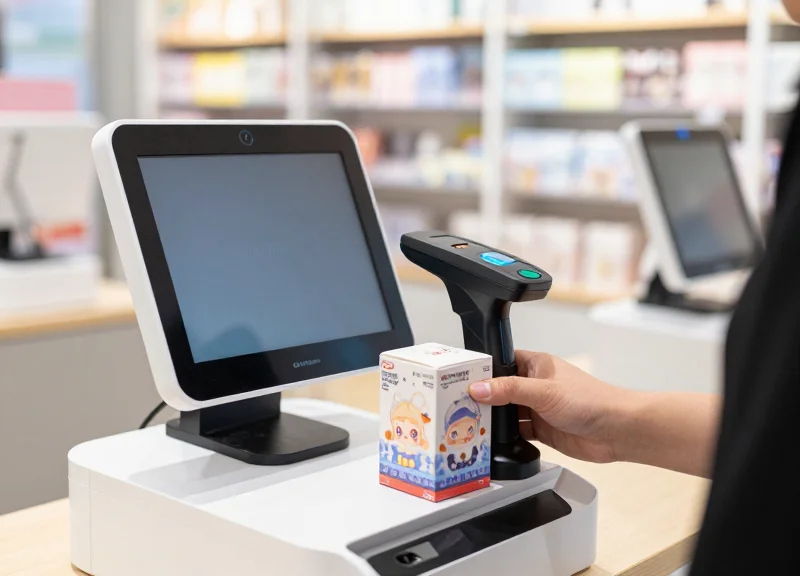
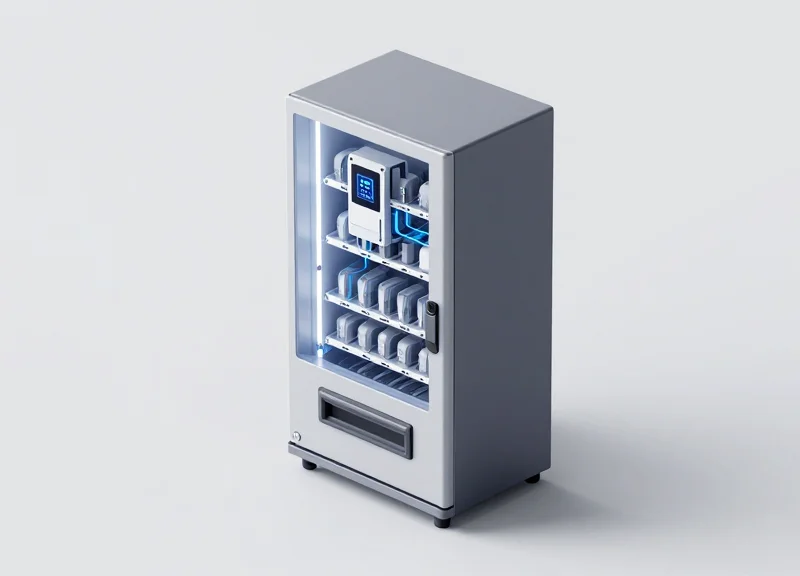
By 2026, the retail experience for designer toys will be judged by its 'frictionless' index—the speed and ease with which a collector can move from selection to ownership. RFID technology facilitates this by enabling 'bulk scanning,' where a customer places their entire shopping basket on a reader that identifies all items instantly. In contrast, traditional EAS (Electronic Article Surveillance) labels require manual deactivation on a per-item basis, creating a significant bottleneck during peak release cycles. For the blind box market, where enthusiasts often purchase 10 or more units to complete a set, RFID reduces checkout time from minutes to seconds, turning the transaction into a seamless digital handoff rather than a labor-intensive chore.
| Feature | Standard EAS Label Experience | Next-Gen RFID Kiosk Experience |
|---|---|---|
| Checkout Speed | Manual: 5-8 seconds per box for deactivation. | Instant: <2 seconds for an entire basket. |
| Collector Handling | High: Staff must touch every box to deactivate. | Low: Customer places bag on a sensor pad. |
| False Alarms | Common: Poor deactivation triggers gate alarms. | Rare: Digital 'kill' or 'sold' status updates. |
| Self-Checkout | Difficult: Deactivation pads are error-prone. | Seamless: Native support for 'scanless' carts. |
A unique pain point in the designer toy community is 'Box Anxiety.' Collectors value the pristine condition of the packaging almost as much as the toy itself. EAS deactivation often involves sliding the box across a magnetic pad or physically handling it with force, increasing the risk of corner dings or surface scratches. RFID readers operate at a distance of several centimeters to meters, allowing for a completely hands-off verification process. This preservation of the 'mint-in-box' (MIB) state is a subtle but powerful driver for brand loyalty among high-end collectors.
Does RFID mean I can skip the checkout line entirely?
While not always 'skip-the-line,' RFID allows for 'Walk-Through' lanes where sensors detect your items and charge your pre-linked account, similar to Amazon Go technology.
How does RFID improve the 'Blind' aspect of the box?
Unlike EAS, which sometimes requires specific placement that can reveal internal weight or balance, RFID tags are thin and can be integrated into the box liner, maintaining the mystery.
Will self-checkout increase theft for expensive toys?
Actually, RFID kiosks are more secure; they can trigger cameras if a specific serial number moves past a gate without a 'sold' status in the cloud database.
Expert Insight: The 'Digital Unboxing' Hook. My 20-year observation in Silicon Valley retail tech suggests that the true winner in 2026 won't just scan the item; they will use the scan to trigger an immediate digital interaction. Imagine the moment the RFID kiosk identifies a blind box, the customer’s mobile app instantly pings with a 'Digital Certificate of Ownership' or a preview of a limited-edition AR filter related to that series. This bridges the gap between the physical purchase and the digital community, a 'frictionless' perk that EAS simply cannot provide because it lacks unique item-level identification.
Sustainability Trends: Eco-friendly Labeling for 2026
By 2026, the 'Green Labeling' movement will transition from a corporate social responsibility (CSR) niche to a core operational requirement for the designer toy and blind box market. As global plastic bans extend to micro-electronics and packaging components, the retail security industry is pivoting toward biodegradable substrates, FSC-certified paper inlays, and plastic-free antenna production. For high-end collectibles, where the packaging is often kept by the consumer, the integration of eco-friendly RFID and EAS labels ensures that theft prevention does not come at the cost of a brand's environmental integrity or a collector's 'unboxing' experience.
| Feature | Legacy Plastic Tags | 2026 Eco-Next Gen Labels |
|---|---|---|
| Substrate Material | PET/PVC Plastic Films | Recyclable Paper / Compostable Fibers |
| Antenna Tech | Etched Copper/Aluminum | Laser-cut Aluminum / Conductive Soy Inks |
| Adhesive Type | Solvent-based Acrylic | Water-based / Bio-derived Adhesives |
| End-of-Life | Landfill (Non-recyclable) | Repulpable / Compatible with Paper Streams |
One of the most significant breakthroughs for 2026 is the adoption of additive manufacturing for antennas. Unlike traditional etching, which involves chemical baths and significant water waste, new eco-friendly RFID and EAS labels use laser-cutting or direct printing. This reduces chemical runoff by 80% and allows the labels to be fully repulpable, meaning they can be recycled alongside the cardboard of a blind box without contaminating the paper stream. For designer toy brands, this removes the friction of 'guilt-tripping' the consumer during the disposal of protective elements.
Do eco-friendly labels offer the same detection range as plastic ones?
Yes. Current 2026-spec paper-based RFID and EAS labels maintain 98-99% of the read-range of their plastic predecessors, making them perfectly viable for high-density retail environments.
Are biodegradable labels more expensive to implement?
While there is a 5-10% premium on materials today, the 'Plastic Tax' in regions like the EU and California, combined with lower waste-disposal costs, makes eco-labels cost-neutral by 2026.
Can these labels be embedded directly into the toy's collectible card?
Absolutely. This is a growing trend. By embedding the security tech within the 'Certificate of Authenticity' card using conductive inks, brands eliminate the need for a separate sticker entirely.
Expert Insight: By 2026, look for the rise of 'Vanishing Security.' We are seeing the development of EAS circuits printed with organic, vegetable-based conductive inks that naturally degrade over 24 months. This is perfect for the blind box market, where the security is only needed during the initial retail cycle, and the 'technical waste' essentially disappears by the time the item reaches the secondary collector market.
Final Verdict: Choosing the Right Solution for Your Toy Business
In 2026, the decision to implement RFID or Next-Gen EAS labels is no longer a binary choice of security; it is a strategic alignment with your business model. For retailers prioritizing inventory precision and high-value brand protection, RFID is the definitive winner. However, for high-volume, low-margin blind box environments where loss prevention is the sole concern, Next-Gen EAS remains the most cost-effective solution. The 'sweet spot' for most designer toy brands lies in a hybrid approach: using RFID for product authentication and lifecycle tracking, while relying on EAS for perimeter security in multi-brand retail spaces.
| Business Model | Primary Need | Recommended Tech | Implementation Focus |
|---|---|---|---|
| Boutique/Art Toy Studio | Brand Protection | RFID | NFC/RFID Dual-tags for buyer authentication. |
| Large-Scale Retail Chain | Loss Prevention | Next-Gen EAS | Budget-friendly high-speed deactivation. |
| Direct-to-Consumer (DTC) | Inventory Accuracy | RFID | Automated shipping and 'Blind Box' content verification. |
| Mass-Market Blind Boxes | Cost Efficiency | Next-Gen EAS | Minimized per-unit cost for low-price items. |
The Expert Insight: The 'Ghost Inventory' Variable. In my two decades in Silicon Valley retail tech, the biggest overlooked cost isn't theft—it is 'Ghost Inventory.' Designer toy retailers often lose more revenue from stock-outs and misplaced blind boxes than from shoplifting. RFID solves this by providing 99% inventory accuracy, effectively paying for itself within 14 months through recovered sales. If your 2026 roadmap includes a loyalty app or a digital metaverse for your toys, RFID is the only infrastructure that supports those 'phygital' ambitions.
Should a small blind box shop invest in RFID?
Only if the average unit price exceeds $25. Below this threshold, the overhead of RFID readers and tags may outweigh the margin benefits compared to standard EAS.
Can RFID and EAS be used on the same package?
Yes. Many premium brands now use 'Integrated Hybrid Labels' that contain both an EAS circuit for alarm gates and an RFID chip for digital data.
Which technology is better for secondary market collectors?
RFID. Collectors in 2026 will demand digital proof of authenticity. An RFID tag that can be scanned by a smartphone provides a 'digital twin' that EAS cannot replicate.
What is the expected ROI period for RFID?
Most designer toy retailers report a full ROI within 12 to 18 months, driven by a 25% reduction in labor for stock-takes and a 15% lift in stock availability.
- Step 1: Audit Your Shrinkage vs. Labor Costs: Identify if your main loss is from theft (choose EAS) or operational inefficiency/miscounts (choose RFID).
- Step 2: Evaluate Your Price Ceiling: Determine if your product margin can absorb the $0.05 - $0.15 cost of an RFID tag versus the $0.02 cost of EAS.
- Step 3: Define Your Digital Roadmap: If you plan to offer 'scan-to-play' or blockchain-linked assets by 2027, start your RFID pilot now.