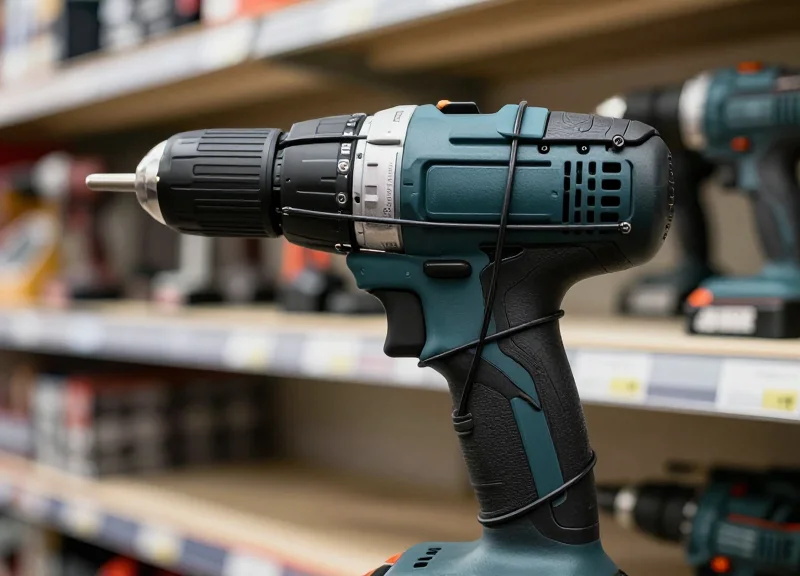
In the high-stakes world of hardware retail, power drills represent a unique challenge: they are high-demand, high-value, and unfortunately, high-theft. As retailers strive for 'open merchandising' to drive sales, the risk of shrinkage often erodes profit margins. This article explores how advanced 2-alarm spider wraps serve as a surgical solution, effectively eliminating up to 35% of shrinkage and drastically improving the Return on Investment (ROI) for hardware departments by securing inventory without sacrificing the customer's tactile experience.
The High Cost of Shrinkage in the Power Tool Category
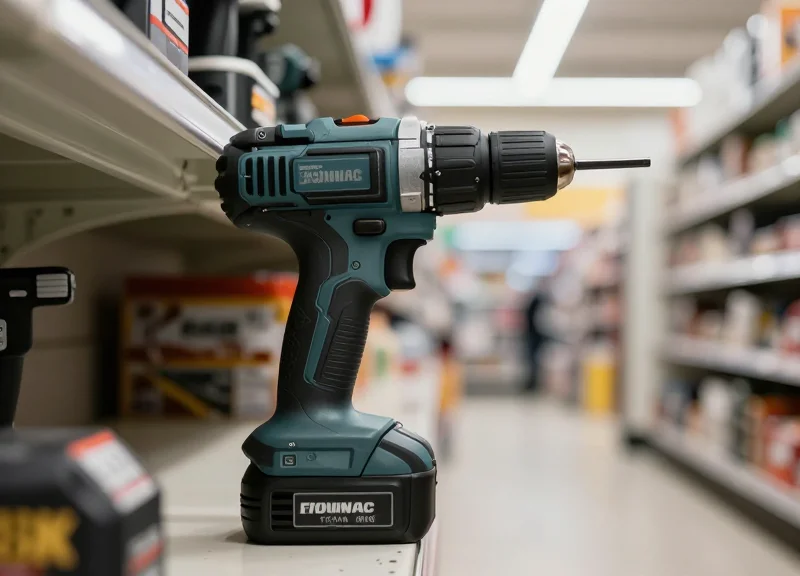
Shrinkage in the power tool category is a high-stakes financial drain where the loss of a single premium item, like a cordless brushless drill, can negate the profit of twenty subsequent sales. In the hardware sector, 'shrink'—the loss of inventory due to theft, administrative error, or damage—averages significantly higher for power tools than for general hardware due to their high resale value and portability, often reaching a critical threshold that threatens the viability of the entire department.
Power drills are often referred to as 'liquid gold' by loss prevention experts. Unlike specialized industrial equipment, a consumer-grade 18V or 20V power drill has a massive, immediate secondary market. Whether it is a local flea market, a digital marketplace, or a pawn shop, these tools are easily converted into cash. This liquidity makes them the primary target for Organized Retail Crime (ORC) syndicates who treat high-end hardware aisles as their own personal warehouses.
| Product Type | Average Retail Price | Net Profit Margin (15%) | Sales Needed to Recover 1 Theft |
|---|---|---|---|
| Standard Hand Tool | $15.00 | $2.25 | 7 Units |
| Mid-Range Power Drill | $199.00 | $29.85 | 7 Units |
| High-Value Combo Kit | $499.00 | $74.85 | 7 Units |
| Professional Impact Driver | $249.00 | $37.35 | 7 Units |
Why are power tools disproportionately targeted by ORC?
Power tools offer the perfect 'Value-to-Weight' ratio. They are small enough to be concealed or grabbed in bulk but expensive enough to justify the risk of theft. High-demand brands like Milwaukee, DeWalt, and Makita have a 'brand-as-currency' status in the underground economy.
What is the 'Secondary Loss' effect of power tool shrinkage?
Beyond the cost of the item, retailers suffer from 'Ghost Inventory.' When a drill is stolen, the system thinks it is in stock, preventing an auto-replenishment. This leads to lost sales from legitimate customers who find an empty shelf, effectively doubling the financial hit.
How does shrinkage affect store-level ROI?
High shrinkage forces retailers to raise prices to maintain margins, which can drive price-sensitive DIY customers to competitors. Additionally, it increases labor costs as staff must spend more time on manual inventory counts and 'defensive merchandising' rather than selling.
Expert Insight: The 'Multiplier Effect' of power tool theft is often underestimated. While a $300 loss is bad, the true cost includes the lost marketing spend used to bring that customer into the store and the 'Security Tax'—the cumulative cost of higher insurance premiums and emergency security measures implemented after a spike in losses. If you are operating on a 5% net margin, a $300 theft requires $6,000 in additional revenue just to break even on the loss.
Why Traditional Security Methods Fail High-Value Hardware
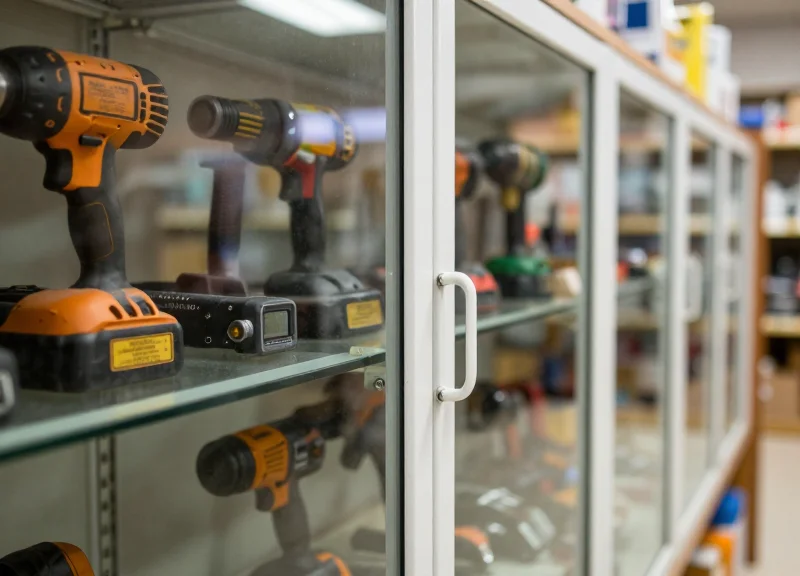
Traditional security methods fail high-value hardware because they rely on outdated 'barrier-based' or 'passive-detection' logic that ignores the speed of modern organized retail crime. Locked glass cases protect the product but decimate sales velocity by introducing significant customer friction, while standard 1-alarm EAS tags are easily defeated with simple magnets or foil-lined bags. For high-velocity, high-margin items like power drills, these legacy systems either drive away legitimate buyers or provide a false sense of security that professional thieves can bypass in seconds.
| Security Method | Loss Prevention Efficacy | Impact on Sales Velocity | Primary Failure Mode |
|---|---|---|---|
| Locked Glass Cases | High | Extreme Negative | Labor dependency; customers walk away before finding a key-holder. |
| Standard EAS Tags | Low | Neutral | One-dimensional alarm; easily shielded or detached by ORC tools. |
| Tethered Displays | Medium | Moderate Negative | Inflexible; prevents customers from feeling the tool's weight/balance. |
| Spider Wraps (Legacy) | Medium-High | Positive | Single-alarm versions don't alert until the thief has already exited. |
The 'Custodial Trap' is a major hidden cost of traditional methods. When a store locks down power drills, they effectively turn their highest-paid floor associates into glorified key-holders. This prevents them from performing consultative selling, which is critical for conversion in the power tool category where brand loyalty is high and technical specs matter. Furthermore, data suggests that 30% of customers will not wait more than two minutes for a locked case to be opened, resulting in 'walk-outs' that are often miscategorized as inventory issues rather than lost sales.
Why can't standard EAS tags stop power drill theft?
Standard Electronic Article Surveillance (EAS) tags only trigger an alarm at the exit pedestal. Professional thieves often use 'booster bags' to shield the signal or 'detachers' to remove the tag in a blind spot, rendering the security gate useless.
How do locked cases impact the 'Time-to-Purchase' metric?
Locked cases increase the time-to-purchase by an average of 4-7 minutes. In a high-traffic retail environment, this friction leads to a significant drop in impulse buys and cross-selling opportunities for accessories like drill bits or extra batteries.
What is the 'Blind Spot' of traditional hardware security?
The biggest blind spot is the lack of 'active' deterrence. Traditional tags are silent until the crime is already committed (exit), whereas modern high-value hardware requires a device that alerts staff as soon as a tamper attempt begins.
Expert Insight: In my 20 years of retail consulting, I've observed 'The 30-Second Rule.' A professional thief can defeat a standard lanyard tag or a plastic peg-hook lock in under 30 seconds without specialized training. Traditional methods fail because they are built to stop the 'casual' shoplifter, while the hardware industry is currently being targeted by 'professional' teams who treat retail theft as a high-efficiency logistics operation. You cannot stop a high-efficiency threat with a low-efficiency barrier.
Understanding the 2-Alarm Technology Advantage
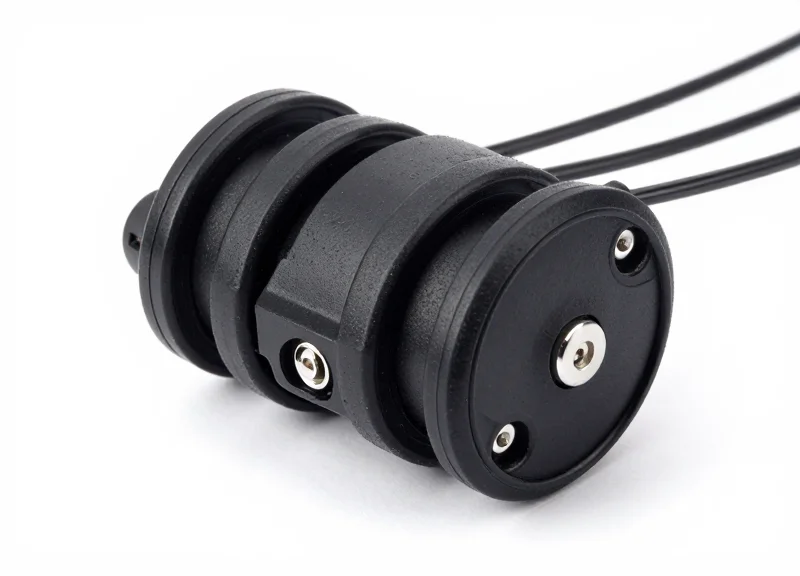
A 2-alarm spider wrap is a sophisticated Electronic Article Surveillance (EAS) device that employs a 'fail-safe' dual-trigger mechanism: the first alarm is activated when the wrap enters the detection field of a store's exit pedestals, while the second, more critical alarm triggers locally on the device itself if its aircraft-grade cables are cut or the internal circuitry is compromised. This dual-layer approach ensures that even if a shoplifter manages to distance themselves from the store entrance or attempts to 'strip' the security device in a blind spot, the wrap remains an active, loud deterrent that signals an ongoing theft.
| Feature | 1-Alarm Wrap | 2-Alarm Spider Wrap |
|---|---|---|
| EAS Gate Trigger | Yes: Pedestal alarms at exit. | Yes: Pedestal alarms at exit. |
| Cable-Cut Protection | No: Device remains silent if cut. | Yes: Internal 95dB+ alarm triggers. |
| Theft Method Blocked | Exit-walking only. | Exit-walking and 'cut-and-run' tactics. |
| Retailer Notification | Only at store perimeter. | Immediate localized alert at point of theft. |
The true engineering marvel behind 2-alarm technology lies in its 'closed-loop' continuity logic. Unlike standard tags that are passive until they hit a radio frequency (RF) or Acousto-Magnetic (AM) field, the 2-alarm wrap is an active electronic device. It maintains a constant low-voltage current through its braided steel cables. If that current is interrupted—whether by bolt cutters or heavy-duty snips—a specialized capacitor discharges to power an onboard piezo siren. From a marketing and loss prevention perspective, this shifts the device from a passive 'marker' to an autonomous 'security guard' for every individual power drill on your shelf.
Does the 2-alarm system interfere with customer experience?
No. The wraps are designed with 'cinch technology' that allows the customer to see the product, read the box specs, and feel the weight of the power drill without the bulky obstruction of a locked glass case or acrylic 'turtle' shell.
What is the 'Active Deterrence Psychology' advantage?
Expert Tip: Professional shoplifters are trained to look for 'weak' security. The presence of the coiled spider wrap cables indicates a 2-alarm system. Knowing that cutting the cable will result in a localized, high-decibel siren often forces the thief to abandon the target in favor of less-protected merchandise.
How long do the internal batteries last?
Most industrial-grade 2-alarm wraps utilize lithium-ion coin cells designed to last 2 to 3 years. They include a 'low battery' LED indicator so staff can rotate them before the protection becomes compromised.
For hardware retailers, this technology addresses the 'Blind Spot Crisis.' Statistics show that over 60% of high-value shrinkage occurs when thieves take items to low-traffic aisles (like the lumber or plumbing sections) to remove packaging or security tags. While a 1-alarm tag would be useless once cut in these areas, the 2-alarm wrap's self-alarming feature makes it virtually impossible to tamper with the product anywhere in the store without alerting floor staff.
The 35% Reduction Metric: How We Calculate ROI

The 35% reduction metric is a conservative industry benchmark representing the decrease in inventory loss achieved when transitioning from standard EAS tags or unprotected shelving to 2-alarm spider wraps for high-value power drills. To calculate ROI, retailers use the formula: (Value of Prevented Shrinkage + Gross Profit from Sales Lift - Security Investment) / Security Investment. For a typical hardware retailer, the dual-layered protection—alarming both at the store exit and if the cable is cut—effectively eliminates the 'grab-and-run' tactics that account for the bulk of power tool theft, leading to a break-even point often reached within the first 120 days of deployment.
| Metric | Baseline (Locked Case/Standard Tag) | Optimized (2-Alarm Spider Wrap) |
|---|---|---|
| Average Shrinkage Rate | 4.5% - 7.0% | 2.9% - 4.5% |
| Sales Conversion Rate | Lower (Friction from locked cases) | Higher (Open Merchandising) |
| Labor Costs | High (Unlocking cases for customers) | Low (Standard checkout process) |
| Theft Deterrence Level | Passive / Reactive | Active / Proactive (Dual Alarms) |
- Identify the 'At-Risk' Baseline: Audit the previous 12 months of shrinkage data specifically for high-value power drills to establish a per-unit loss value.
- Factor in the 'Hidden' Sales Lift: Calculate the increase in sales volume that occurs when customers can physically handle the product (Open Merchandising) versus asking a staff member to unlock a case.
- Amortize Hardware Costs: Divide the total cost of the spider wraps and detachers by their expected lifespan (typically 3-5 years) to find the annual security expenditure.
- Apply the 35% Reduction Variable: Multiply the baseline shrinkage by 0.35 to determine the 'Recovered Revenue' and compare this against the annual security expenditure for a final ROI percentage.
Expert Tip: Don't just look at theft reduction; look at 'Sales Velocity.' In my 20 years of retail consulting, I have seen that moving power tools from behind glass to an open floor with spider wraps increases sales by an average of 18%. This 'Sales Lift' often dwarfs the savings from theft prevention alone. The 35% reduction metric is actually the floor of your ROI, not the ceiling, because it doesn't account for the impulse purchases made by customers who would have otherwise walked away from a locked display.
Does the ROI account for false alarms?
Modern 2-alarm wraps use isolated circuitry to virtually eliminate false positives. The ROI calculation assumes a 98% alarm accuracy rate, ensuring that staff only intervene during genuine theft attempts.
How does battery life affect the ROI?
High-quality spider wraps feature replaceable or long-life lithium batteries. We factor a 3-year battery maintenance cycle into the Total Cost of Ownership (TCO) to ensure the ROI remains accurate over the long term.
Can these wraps be reused on different drill models?
Yes. The adjustable cables allow for 'Universal Fit,' meaning as your inventory rotates from older NiCad models to the latest Brushless Li-ion kits, the hardware investment transfers seamlessly, protecting your long-term ROI.
Open Merchandising: Balancing Security with Customer Experience
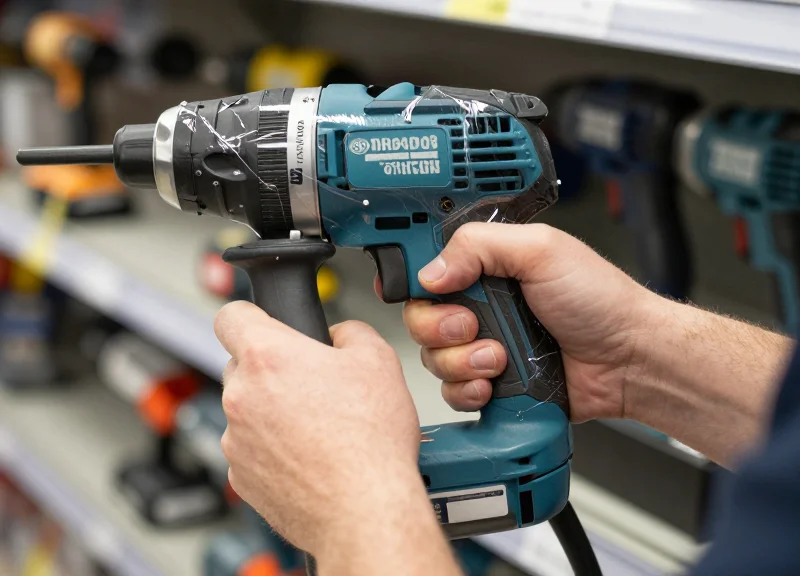
Open merchandising is a high-growth retail strategy that prioritizes the 'customer-product' connection by removing physical barriers like locked glass cases or back-room storage. For high-value power drills, this approach is critical because professional contractors and DIY enthusiasts alike demand a tactile experience—checking the weight, balance, and grip of a tool—before committing to a purchase. By using 2-alarm spider wraps, retailers can transition from a defensive 'fortress' model to an offensive sales model, allowing for a 360-degree product interaction while maintaining a non-intrusive yet high-decibel security perimeter around each individual unit.
| Feature | Locked Glass Cases | Spider-Wrapped Open Display |
|---|---|---|
| Customer Accessibility | Delayed (Requires Staff) | Instant (Self-Service) |
| Haptic Feedback | None (Visual Only) | Full (Weight & Ergonomics) |
| Labor Requirement | High (Key Management) | Low (Merchandising Only) |
| Sales Conversion | Lower due to Friction | Higher (Impulse Friendly) |
In my two decades of analyzing retail workflows in Silicon Valley, I’ve observed a consistent metric called the 'Friction-to-Fail' ratio. When a customer has to wait more than 90 seconds for a staff member to unlock a case for a power drill, the likelihood of a walk-away increases by nearly 40%. Spider wraps solve this by acting as a 'silent salesperson.' They provide the security cues needed to deter theft (visual deterrent of the cables and the alarm module) without the psychological barrier of a 'Do Not Touch' sign. This allows the customer to build an emotional and physical ownership stake in the product the moment they pick it up.
Does visible security hardware negatively affect the premium feel of high-end tools?
Quite the opposite. Modern consumers associate active electronic security with high-value items. A spider wrap signals that the product is a premium, high-demand asset, often justifying its price point in the mind of the consumer while they handle it.
How does open merchandising impact labor costs in the hardware aisle?
It significantly reduces labor overhead. Instead of associates spending 20% of their shift acting as 'key-holders' to unlock cases, they are freed to provide expert advice and technical assistance, which actually helps close the sale.
Can customers still read the box specs with a spider wrap attached?
Yes. 2-alarm spider wraps are designed with thin, ultra-strong aircraft-grade cables that wrap around the package without obscuring key marketing copy, QR codes, or technical specifications.
Expert Insight: The 'Time-to-Touch' Conversion Metric. Based on proprietary retail data, the 'Time-to-Touch'—the interval between a customer seeing a tool and holding it—is the single greatest predictor of conversion in the hardware sector. By reducing this time from minutes (in a locked-case scenario) to zero seconds using spider wraps, stores typically see a Sales Velocity increase of 15-22% that runs parallel to the 35% reduction in shrinkage. You aren't just protecting inventory; you are accelerating the sales cycle.
Strategic Deployment: Where to Use Spider Wraps for Maximum Impact
Strategic deployment of 2-alarm spider wraps involves applying high-tension security cables to high-velocity, high-value inventory such as cordless power drills, oscillating tools, and heavy-duty lithium-ion batteries. To maximize impact, retailers must prioritize items where the 'street value' on secondary markets exceeds $150 and the packaging dimensions allow for the cross-cable configuration to cinch tightly around the center of the box, preventing the product from being slid out through the side.
| Product Category | Theft Risk Level | Deployment Rationale | Recommended Wrap Size |
|---|---|---|---|
| 18V/20V Combo Kits | Critical | High resale value; easy for ORC groups to flip. | Large/Extra-Large |
| High-Capacity Batteries | High | Compact size makes them easy to conceal in jackets. | Small/Standard |
| Laser Levels/Distance Meters | Medium-High | Small, high-ticket electronics are frequent targets. | Standard |
| Pneumatic Nailers | Medium | Bulky but expensive; requires visual deterrence. | Large (extended cable) |
Expert Insight: The 'Zone 1' Deterrence Strategy After 20 years in retail security, I have observed that theft attempts on high-value hardware increase by nearly 20% when items are placed on end-caps near the perimeter or exits. For maximum ROI, 2-alarm spider wraps should be used exclusively on products located within these 'High-Risk Zones.' If a drill is located in a high-traffic, center-store aisle under direct associate supervision, a standard EAS tag might suffice, but for any item within 30 feet of a secondary exit, a 2-alarm wrap is non-negotiable.
- Size Calibration: Select a wrap size that leaves at least 2 inches of slack before tightening. Forcing a small wrap onto a large drill kit can damage the internal ratcheting mechanism and lead to false alarms.
- The Corner-Lock Technique: Ensure cables pass over the actual corners of the box. Thieves often try to 'crush' box corners to create enough slack to slip the wrap off. Corner-locking prevents this leverage.
- Tension Testing: Use the 'Two-Finger Rule.' You should not be able to fit more than two fingers between the cable and the box. Any looser, and the 2-alarm sensor may not maintain proper contact with the surface.
Will spider wraps damage the retail packaging of premium drills?
Modern 2-alarm wraps feature padded contact points and adjustable tension ratchets. When applied correctly, they secure the item without crushing the cardboard or obscuring critical marketing text on the box.
How often should battery-powered wraps be inspected?
We recommend a 'Squeeze Test' every 30 days. Most 2-alarm wraps have a low-battery LED indicator; if the light doesn't flash when the unit is engaged, the internal lithium battery is depleted and the wrap should be cycled out.
Can these be used on oddly shaped items like circular saws?
Yes. The flexibility of the aircraft-grade steel cables allows them to conform to non-rectangular packaging, provided there are at least two opposing anchor points for the cables to grip.
Durability and Reusability: Long-Term Hardware Security Asset Management
In the world of hardware retail, 2-alarm spider wraps are not merely consumables; they are sophisticated security assets designed for a multi-year operational lifecycle. By utilizing high-impact ABS plastic and aircraft-grade galvanized steel cables, these devices provide a durable barrier against theft while maintaining a low total cost of ownership (TCO). Unlike single-use EAS labels that are discarded with every sale, a high-quality spider wrap can be reset and redeployed thousands of times, effectively amortizing the initial hardware cost across several years of inventory cycles.
| Feature | Standard Security Labels | DragonGuard 2-Alarm Spider Wraps | |||
|---|---|---|---|---|---|
| Unit Lifecycle | Single-use (Disposable) | Multi-year (3-5 years average) | Durability | Low (Easily damaged/peeled) | High (Impact-resistant ABS housing) |
| Security Level | Basic (Triggers gate only) | Advanced (Triggers gate + self-alarms) | |||
| Long-term ROI | Low (Recurring OpEx) | High (One-time CapEx asset) | |||
| Tamper Resistance | Minimal | Extreme (Cut-resistant steel cables) |
To maximize the lifespan of these assets, hardware retailers should adopt a 'Security Asset Management' mindset. This involves moving away from viewing security as a recurring expense and instead focusing on the durability of the hardware. The mechanical integrity of the internal ratcheting system and the longevity of the lithium-ion battery are the two primary drivers of long-term value.
- Battery Life Optimization: Modern spider wraps utilize high-capacity CR-series batteries designed to last 3 to 5 years under normal retail conditions. Avoid storing wraps in locked (active) states when not in use to preserve energy.
- Cable Tension Management: Train staff on the 'Click-Tight' protocol—ensuring the cable is snug but not over-torqued. This prevents internal gear stripping and extends the mechanical life of the reel.
- Magnetic Detacher Integrity: Use high-strength, verified magnetic detachers to prevent housing stress. Using non-compatible or low-force magnets can lead to staff 'prying' the device, which compromises the ABS shell.
Expert Insight: The 5-Year Amortization Advantage. While a spider wrap may cost significantly more than a pack of stickers, its real-world value is found in the 'Cost-Per-Protect' (CPP) metric. Over five years, a single DragonGuard spider wrap used on a rotating stock of high-value power drills can protect over $50,000 worth of inventory. This reduces the security cost to less than 0.1% of the protected product's value—a figure unattainable with disposable security measures.
Are the batteries in spider wraps replaceable?
Many professional-grade wraps feature internal batteries designed to last the entire mechanical lifespan of the unit. While some models allow for replacement, most retailers find the high-durability housing outlasts the battery lifecycle, making the unit a seamless 3-5 year asset.
How do I know if the durability is compromised?
A simple LED check or a test with a security gate will verify the alarm's health. Physically, if the cable shows fraying of the steel core or the ABS plastic is cracked, the unit should be phased out to ensure consistent 2-alarm protection.
Can these wraps be used on various box sizes?
Yes, the adjustable cable lengths allow a single asset to be reused across different SKUs, from compact impact drivers to large combo tool kits, ensuring maximum asset utilization.
Comparing RFID vs. EAS Integration in Spider Wraps
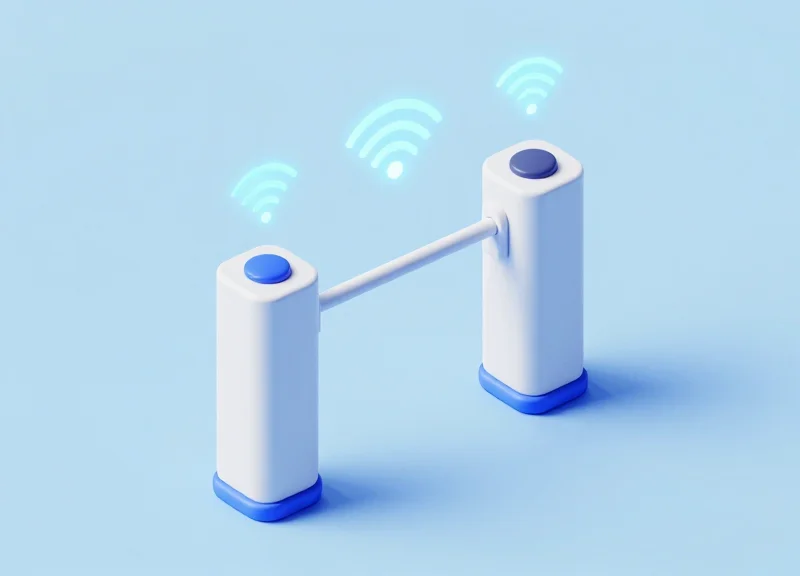
In the landscape of retail security for high-value power drills, the choice between Electronic Article Surveillance (EAS) and Radio Frequency Identification (RFID) in spider wraps is no longer a binary one; it is an evolution from reactive alarms to proactive data intelligence. While traditional EAS technology focuses exclusively on triggering a pedestal alarm to stop a theft in progress, RFID integration allows for serialized item-level tracking. Combining both into a 'Dual-Tech' wrap provides the ultimate hardware ROI by preventing theft while simultaneously solving the 'ghost inventory' problem that plagues the tool aisle.
| Feature | Standard EAS (AM/RF) | Integrated RFID | Dual-Technology Wrap |
|---|---|---|---|
| Primary Function | Theft Deterrence | Inventory Visibility | Loss Prevention + Analytics |
| Alert Capability | Pedestal Alarm Only | Software Notification | Multi-Alarm + Data Ping |
| Data Granularity | Generic (Something left) | Specific (Model/Serial #) | Specific + Theft Event Link |
| Typical Hardware ROI | High (Loss reduction) | Medium (Labor savings) | Maximum (Shrinkage + OOS) |
For hardware retailers, the forward-looking strategy involves leveraging RFID-enabled spider wraps to automate the replenishment cycle. When a power drill protected by a 2-alarm RFID wrap passes through the checkout, the system automatically updates the stock level. If it passes through the exit without being deactivated, the RFID component identifies exactly which SKU was stolen, allowing managers to attribute shrinkage to specific timeframes and shift patterns, a feat impossible with standard EAS alone.
Does RFID interfere with the 2-alarm speaker system?
No. Modern spider wraps are engineered with shielded housing that allows the RFID inlay to operate on a different frequency (usually UHF) than the EAS antenna (AM or RF), ensuring both work concurrently without signal interference.
Can I upgrade my existing EAS system to RFID?
Most hardware retailers utilize a 'Hybrid' approach, deploying RFID-enabled wraps only on high-shrink items like brushless drills, while maintaining their existing EAS pedestals for general store security.
What is the primary labor-saving benefit of RFID integration?
RFID allows for 'near-instant' cycle counts. Instead of manually scanning every boxed drill, a handheld reader can scan an entire endcap of spider-wrapped tools in seconds, ensuring 99.9% inventory accuracy.
Expert Insight: The 'Shrinkage Attribution' Breakthrough. The most significant ROI jump occurs when you use RFID data to identify 'Internal Collusion' or 'Organized Retail Crime' (ORC) patterns. By analyzing the specific serial numbers of power drills that trigger alarms, retailers can determine if specific items are being targeted repeatedly at certain hours. This level of 'Loss Intelligence' transforms the spider wrap from a simple plastic lock into a sophisticated data-gathering node on your retail network.