In the high-stakes world of industrial manufacturing, the ability to track assets through extreme heat is the difference between operational excellence and costly downtime. Managing a 'fleet' of metal molds—whether in automotive casting, glass production, or aerospace forging—requires specialized tracking solutions that can withstand temperatures exceeding 200°C without compromising data integrity. As we look toward 2026, the integration of Industry 4.0 and 5.0 principles makes high-temp RFID tags a cornerstone of the smart factory. This guide provides an authoritative roadmap to selecting the right RFID technology to streamline your mold management and safeguard your critical assets.
The Critical Role of RFID in Modern Metal Mold Management
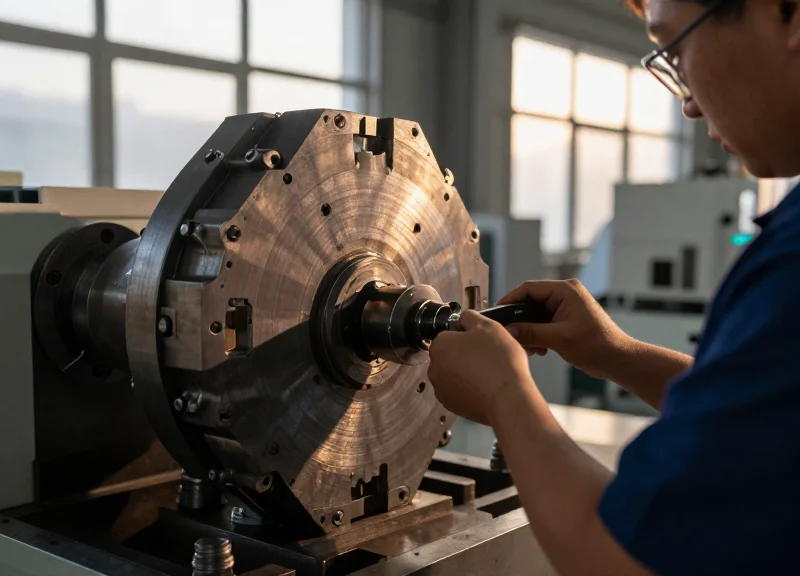
In modern high-output manufacturing, RFID (Radio Frequency Identification) serves as the digital nervous system for metal mold management, providing real-time visibility into the location, usage cycles, and maintenance health of critical assets. By embedding heat-resistant sensors directly into molds, facilities transition from reactive 'search-and-repair' workflows to proactive, data-driven 'fleet intelligence.' This digital bridge ensures that every mold in the fleet—from injection to die-casting—is accounted for, optimized for rotation, and maintained based on actual performance data rather than arbitrary schedules.
- Automated Cycle Counting: Eliminates manual entry errors by automatically recording every 'shot' or cycle as the mold passes through the machine, ensuring 100% accuracy in lifecycle data.
- Preventative Maintenance Compliance: Triggers automated alerts for cleaning or refurbishment based on pre-set usage thresholds, preventing catastrophic tool failure and unplanned downtime.
- Real-time Fleet Localization: Reduces 'search time'—which can account for up to 15% of a technician's shift—by pinpointing exactly which rack, warehouse, or production cell a specific mold is located in.
- Audit and Compliance Readiness: Provides a tamper-proof digital history of every repair, modification, and quality check, essential for aerospace, medical, and automotive certifications.
| Feature | Manual/Barcode Tracking | RFID-Enabled Fleet Management |
|---|---|---|
| Data Capture | Line-of-sight required; labor-intensive | Hands-free; bulk reading capability |
| Heat Resilience | Labels melt or degrade at 100°C+ | Operational up to 250°C+ during cycles |
| Maintenance Logic | Reactive (Fix when broken) | Predictive (Based on real-time cycle data) |
| Asset Security | High risk of lost or misplaced tools | Geofencing and movement history alerts |
Expert Insight: The 'Thermal Fatigue Correlation' Strategy. Most manufacturers use RFID simply to find their molds. However, the top 1% of Silicon Valley-led smart factories are now using high-temp RFID data to correlate cumulative thermal exposure with metallurgical fatigue. By tracking not just how many cycles a mold has performed, but the duration of high-heat exposure recorded at the tag level, engineers can predict structural micro-cracking before it ruins a production run. This 'Thermal Age' metric is the new gold standard for mold ROI in 2026.
Why is high-temp RFID necessary for metal molds?
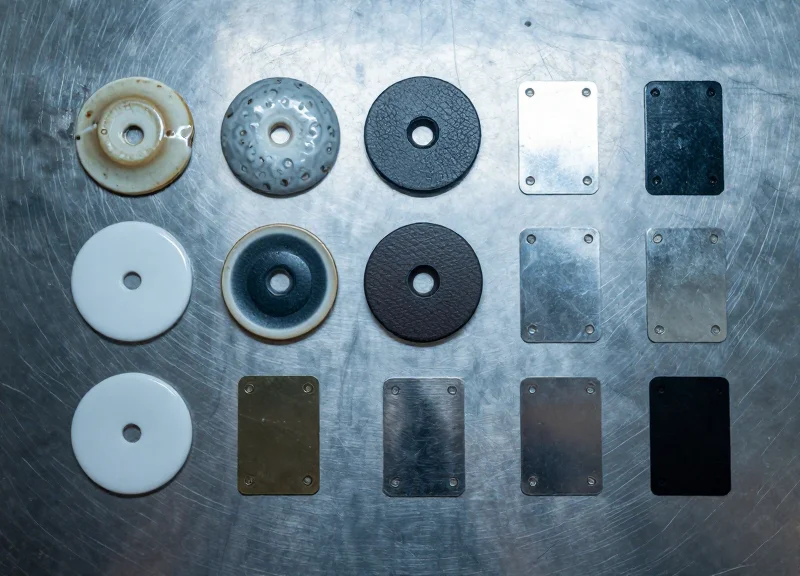
Metal molds often undergo pre-heating or operate in environments exceeding 200°C. Standard RFID tags fail, melt, or lose data at these temperatures. High-temp tags use specialized ceramic or thermoset polymer housings to protect the silicon chip and antenna from thermal expansion and data corruption.
Can RFID tags be read through metal?
Standard RFID signals are shielded or reflected by metal. Modern 'on-metal' high-temp tags utilize a specific standoff design or a ceramic spacer that uses the metal surface itself as an antenna extension, allowing for reliable long-range reading even when flush-mounted on steel molds.
Thermal Thresholds: Defining 'High-Temperature' for 2026

In the 2026 landscape of metal mold management, 'High-Temperature' RFID is no longer a monolithic category. It specifically refers to specialized transponders engineered to withstand environments where ambient heat exceeds 150°C (302°F) for extended durations or reaches peaks of up to 300°C (572°F). Defining your thermal threshold requires a distinction between 'Survival Temperature'—the maximum heat a tag can endure while dormant—and 'Operational Temperature'—the heat level at which the tag can successfully transmit data to a reader.
| Thermal Tier | Temperature Range | Common Mold Applications |
|---|---|---|
| Standard Industrial | Up to 85°C | Cleanroom storage, basic plastic injection. |
| High-Temp Baseline | 86°C to 180°C | Rubber vulcanization, standard automotive paint lines. |
| Ultra High-Temp | 181°C to 250°C | Teflon coating, heavy-duty alloy casting cycles. |
| Extreme Peak | 251°C to 300°C+ | Specialized aerospace composite curing and smelting. |
Expert Insight: The 'Thermal Recovery Gap'. A critical mistake many fleet managers make is selecting tags based solely on peak heat. In 2026, the real differentiator is the Coefficient of Thermal Expansion (CTE) matching. When a metal mold moves from a 230°C autoclave to a 20°C cooling bay, the rapid contraction of the metal can shear a poorly matched RFID tag right off its mount or fracture the internal chip-to-antenna bond. Always prioritize tags with 'Cycle-Resilient' ratings that specify the number of thermal shocks they can survive, not just the maximum temperature.
Does the tag need to be read inside the oven?
Usually, no. Most systems read tags at the entry and exit points. If you require real-time data inside a 200°C+ environment, you must specify 'Active' heat-shielded tags or specialized ceramic passive tags with high-sensitivity ICs.
How does metal density affect the thermal rating?
Metal acts as a heat sink. A tag mounted on a high-density steel mold will retain heat longer than the surrounding air, meaning the tag remains at peak temperature even after the mold has left the heating chamber.
What is the role of the 2026 'Data-Retention' standard?
Modern tags are now rated for 'Data Persistence,' ensuring that the high-energy heat states do not cause 'bit-flip' errors in the chip's memory over hundreds of cycles.
- Identify Peak Exposure: Use a thermal data logger on your mold to find the absolute maximum temperature reached at the mounting point.
- Calculate Dwell Time: Determine how many minutes or hours the tag remains above 150°C during a single cycle.
- Assess Cooling Velocity: Note if the mold is flash-cooled with water or air, as this determines the need for high-shock thermal resistance.
The Metal Interference Challenge: Understanding On-Metal Physics

In its native state, Radio Frequency Identification (RFID) and metal are natural enemies. Standard RFID tags rely on electromagnetic waves that, when encountering a conductive metal surface, induce 'eddy currents' that create an opposing magnetic field, effectively canceling the signal. This phenomenon, known as 'detuning,' shifts the tag’s resonant frequency away from the reader's range, rendering the tag invisible. To overcome this, 2026-grade high-temp tags utilize sophisticated dielectric spacers and specialized antenna geometries that transform the metal surface from a disruptor into a parasitic element that actually helps propagate the signal.
| Physics Factor | Standard RFID Tag | 2026 On-Metal High-Temp Tag |
|---|---|---|
| Signal Interaction | Reflected/Short-circuited | Controlled Reflection via Dielectric |
| Frequency Stability | Heavy Detuning (Unreadable) | Impedance Matched for Metal |
| Read Range on Mold | 0 - 5 Centimeters | 3 - 12 Meters (Application Dependent) |
| Material Composition | PET/Paper Inlay | Ceramic or High-Temp Thermoplastic |
The breakthrough in 2026 lies in 'Adaptive Impedance Matching.' Modern antenna designs, such as the Planar Inverted-F Antenna (PIFA), are engineered to anticipate the presence of metal. Instead of fighting the interference, these tags use the metal mold as a ground plane, effectively extending the antenna's aperture. This results in a more robust signal than a standard tag would achieve in free space. Expert Tip: Not all metals are equal; the conductivity of a high-grade tool steel mold vs. an aluminum casting mold affects the 'Q-factor' of the tag. For maximum fleet reliability, specify tags tuned specifically for the alloy in your tool shop.
- The Spacer Effect: A dielectric material (often ceramic or specialized FR4) creates a physical buffer, preventing the antenna from shorting against the metal surface.
- Phase Shifting: The internal circuitry delays the reflected wave so that it arrives 'in-phase' with the incoming signal, boosting total energy.
- Thermal-Mechanical Decoupling: Advanced tags use floating internal assemblies to ensure that as the metal mold expands at 200°C+, the RFID chip's delicate connection points don't snap.
Does the thickness of the mold affect the tag's performance?
Generally, no. As long as the tag is mounted on the exterior surface, the 'skin effect' means the signal only interacts with the first few microns of the metal surface.
Can I use a flush-mount (recessed) installation?
Yes, but it requires a 'load-balanced' tag. Placing a tag inside a metal cavity acts like a Faraday cage unless the tag is specifically designed for sub-surface mounting.
Why does heat make the physics more difficult?
High temperatures change the dielectric constant of the tag's spacer material. The best 2026 tags use 'Temperature-Stable Dielectrics' that maintain their electrical properties from -40°C to +250°C.
Material Science: Ceramic vs. High-Performance Polymer Encapsulation
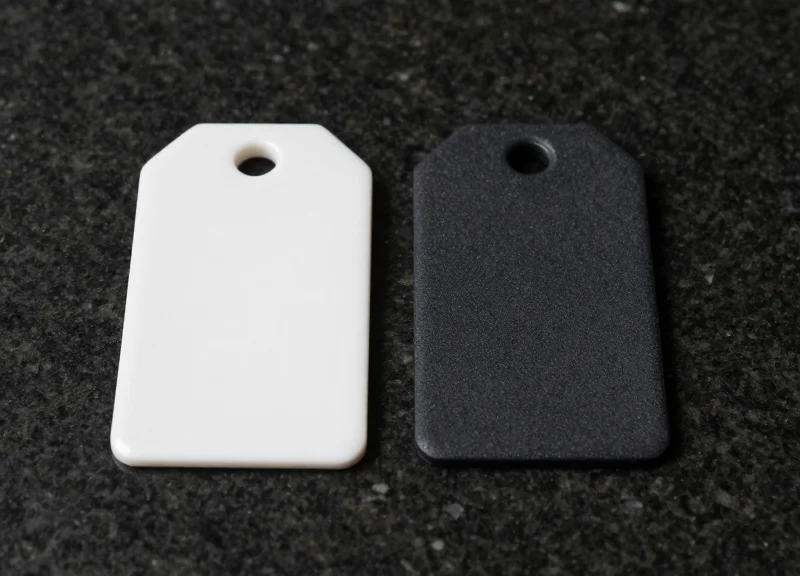
In 2026, the selection of RFID encapsulation material has evolved beyond simple heat resistance to a focus on 'Cyclical Integrity.' For metal mold management, the choice between ceramic and high-performance polymer encapsulation is a trade-off between absolute thermal limits and mechanical resilience. Ceramic tags remain the gold standard for extreme heat environments exceeding 250°C, offering unparalleled RF transparency. Conversely, high-performance polymers like PEEK (Polyetheretherketone) and PEKK have become the preferred choice for high-impact applications where molds undergo mechanical stress or aggressive chemical washdowns.
| Attribute | Ceramic Encapsulation | High-Performance Polymer (PEEK/PPS) |
|---|---|---|
| Max Operating Temp | Up to 300°C+ | Up to 240°C |
| Impact Resistance | Low (Brittle) | Very High (Ductile) |
| Chemical Resistance | Excellent (Acid/Base) | High (Varies by polymer type) |
| RF Signal Performance | Superior (Dielectric stability) | Good (Slight attenuation) |
| Typical Application | Foundries, Smelting | Injection Molding, Food Processing |
Ceramic housings utilize specialized dielectric materials that actually enhance the antenna performance when placed on metal, making them exceptionally compact. However, their Achilles' heel is brittleness. If a mold is handled roughly or subject to rapid 'thermal shock' (sudden cooling), ceramic housings can micro-fracture. Polymer-encapsulated tags, specifically those using advanced 2026-spec thermoplastics, act as a shock absorber. They are engineered to handle the 'Thermal Expansion Mismatch'—where the metal mold and the RFID tag expand at different rates—preventing the tag from shearing off the surface during intense heating cycles.
- The 2026 Expert Insight: The CTE Mismatch Factor: The most common cause of RFID failure in 2026 is not material melting, but Coefficient of Thermal Expansion (CTE) mismatch. When a steel mold reaches 200°C, it expands. If your tag housing is too rigid (like standard ceramic) and the adhesive or mechanical bond isn't flexible, the tag will delaminate. Always look for tags with 'floating internal antennas' or flexible polymer buffers that can absorb this dimensional shift.
Can ceramic tags be used in high-vibration environments?
Generally no. While they handle heat, high vibration can lead to internal antenna detachment or housing cracks. For vibration-heavy mold movement, a polymer-encapsulated tag is safer.
Does polymer encapsulation affect the read range on metal?
Slightly. Polymers have a different dielectric constant than ceramics. While modern designs compensate for this, ceramic tags typically offer a more consistent read range in a smaller form factor when mounted directly on metal.
Which material is better for chemical sterilization?
Both are excellent, but PEEK (Polymer) is specifically favored in medical and food-grade mold management due to its resistance to high-pressure steam and caustic cleaning agents.
Data Integrity in Extreme Conditions
Data integrity in extreme conditions is the measure of an RFID tag’s ability to retain and accurately transmit its stored digital information despite repeated exposure to thermal stress, electromagnetic interference, and chemical corrosion. For metal mold management, this means the silicon chip must prevent 'thermal memory drift'—a phenomenon where heat energy causes electrons to leak from the memory cells, potentially flipping bits and corrupting critical mold history or maintenance logs. In 2026, industry-leading tags utilize advanced ECC (Error Correction Code) and high-retention EEPROM or FRAM to ensure that the data written in the cold-start phase remains 100% accurate after a 250°C curing cycle.
Beyond simple heat, the chemical environment of a mold shop—including release agents, degreasers, and high-pressure steam—can degrade the physical integrity of the tag, leading to micro-fissures in the encapsulation. If moisture or ions reach the silicon die, they can cause parasitic capacitance or short circuits that result in 'ghost reads' or total data loss. Ensuring integrity is therefore a dual challenge: protecting the physical circuitry while hardening the logical data structure against thermal noise.
| Memory Type | Thermal Retention | Write Speed | Data Integrity Risk Level |
|---|---|---|---|
| Standard EEPROM | Moderate (Up to 125°C) | Slow (5-10ms) | High (above 150°C) |
| High-Temp EEPROM | Excellent (Up to 225°C) | Moderate (3-5ms) | Low (with ECC) |
| FRAM (Ferroelectric) | Superior (Up to 250°C) | Ultra-Fast (<1ms) | Minimal (Near-Immune to Bit-Flipping) |
Expert Insight: In the 2026 landscape, we are seeing the emergence of 'Redundant Memory Mapping.' This technique stores the most critical data—such as the mold's unique ID and cycle count—in multiple physical locations on the chip. If a thermal event corrupts one sector, the tag's internal controller can reconstruct the data from the secondary sectors, a feature previously reserved for aerospace-grade components but now essential for high-value automotive mold fleets.
Does heat cause permanent memory loss in RFID tags?
Yes, if the tag is not rated for the specific temperature. Excessive heat increases electron mobility, allowing the charge stored in the memory gate to dissipate. This results in the loss of the programmed data, though the chip may sometimes be reprogrammable once cooled.
How does chemical exposure impact data readability?
Chemicals do not directly flip bits, but they can corrode the antenna-to-chip bond (the 'bump'). If this connection is weakened, the tag may lack sufficient power to drive the internal logic required for data validation, leading to failed reads.
What is the 'Refresh and Rewrite' protocol?
It is a 2026 best practice where the RFID reader automatically refreshes the tag's data during scheduled maintenance. This 're-tightens' the electronic charge in the memory cells, effectively resetting the clock on thermal degradation.
Attachment Strategies for Longevity
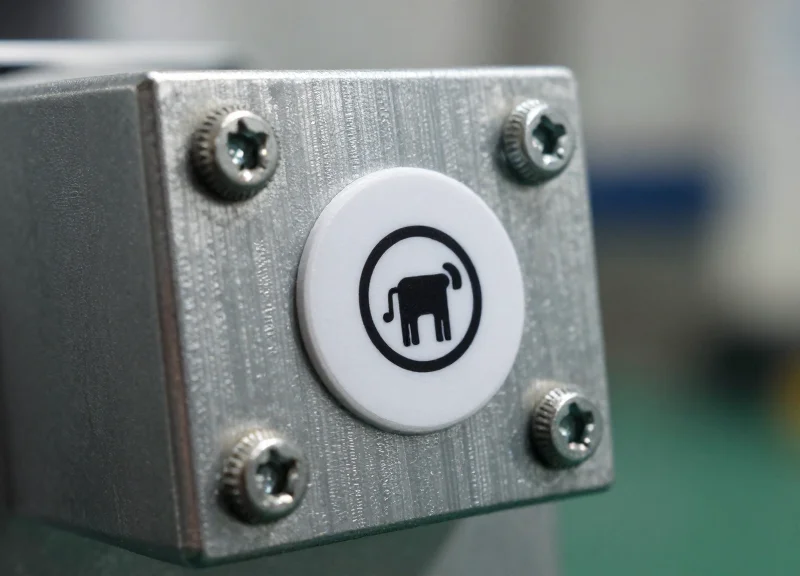
In the world of metal mold management, the attachment method is often the 'single point of failure' for an entire digital tracking system. Even the most resilient ceramic RFID tag becomes a liability if the bond fails during a 250°C bake cycle. Success in 2026 depends on mitigating Differential Thermal Expansion (DTE)—the phenomenon where the metal mold and the RFID tag housing expand at different rates, creating shear stress that can snap mechanical fasteners or delaminate industrial adhesives.
| Mounting Method | Max Temp (°C) | Pros | Cons | Best For |
|---|---|---|---|---|
| Mechanical (Screws/Rivets) | 350°+ | Extreme physical security; high vibration resistance. | Requires drilling; risk of shearing due to DTE. | Large casting molds and heavy-duty stamping dies. |
| High-Grade Epoxies | 280° | Uniform stress distribution; no mold modification. | Long curing times; surface prep is critical. | Precision injection molds with limited surface area. |
| Metal Sleeving / Welding | 450°+ | Permanent; immune to chemical washdowns. | Non-removable; potential RF interference. | Foundry environments and extreme-heat cycling. |
| High-Bond VHB Tapes | 230° (Intermittent) | Fastest installation; some vibration damping. | Degrades under constant peak heat. | Quick-turn prototyping and lower-temp tooling. |
Expert Tip: The 'Floating Mount' Strategy. To prevent tag cracking in ultra-high-heat environments, utilize a floating mount approach. By using a slightly oversized bracket or a recessed pocket with a high-temp silicone buffer, you allow the tag to 'breathe' within its housing. This prevents the mechanical stress of the metal mold's expansion from being transferred directly to the tag's rigid ceramic or polymer core.
- Surface Decontamination: Use industrial-grade degreasers (like IPA or specialized solvents) to remove all machining oils. Any residual lubricant will gasify at high temperatures, causing adhesive failure.
- Mechanical Countersinking: When using screws, always countersink the tag into a shallow pocket in the mold. This protects the tag from lateral impacts during mold transport and storage.
- Controlled Cure Cycles: If using heat-activated epoxies, follow the manufacturer's ramp-up schedule precisely. Rapid heating of uncured adhesive can create micro-bubbles that compromise the bond's structural integrity.
Why do tags fall off during the cooling phase?
Most failures occur during 'thermal shock' when cooling. The mold shrinks faster than the tag or adhesive, creating massive tension. Choosing adhesives with high elasticity (elongation at break) is essential.
Can I weld a tag directly to the mold?
Standard RFID tags cannot be welded. However, specialized tags housed in stainless steel 'washers' or carriers can be tack-welded. Ensure the weld points are distant enough to prevent heat-soaking the internal chip during the welding process.
Is screw-mounting safe for high-pressure molds?
Yes, provided the mounting holes are located away from critical stress points and the parting line. Always consult with a mold engineer before drilling into pressurized cavities.
Integration with Smart Factory Ecosystems

By 2026, integration is no longer about simple data collection; it is about creating a 'Digital Twin of the Tool.' Integration with Smart Factory ecosystems involves using industrial middleware to translate raw RFID signals into standardized data formats like JSON or XML, which are then pushed via MQTT or OPC UA protocols into Manufacturing Execution Systems (MES) and Enterprise Resource Planning (ERP) platforms. This ensures that every time a metal mold enters a high-heat station, its location, thermal history, and cycle count are updated globally in real-time, enabling predictive maintenance and autonomous scheduling.
| Protocol | Best Use Case | Key Advantage in 2026 |
|---|---|---|
| MQTT | Cloud-based analytics and remote monitoring | Low bandwidth and high reliability for massive tag fleets |
| OPC UA | Direct PLC and machine-to-machine (M2M) communication | Standardized semantic interoperability across different vendors |
| REST API | Legacy ERP and web-based dashboarding | Ease of development and universal compatibility with IT systems |
| LRPP | High-speed automated production lines | Optimized for low-latency tag reading in dense metal environments |
Expert Insight: The 'Thermal Strain' Data Point. A unique strategy for 2026 is the implementation of 'Thermal Strain' algorithms within the middleware. Instead of just counting cycles, the system correlates RFID timestamps with furnace temperature sensors. If a mold exceeds its rated thermal window, the MES automatically flags it for inspection before a failure occurs. This turns a passive tracking tag into an active quality assurance sensor.
- Edge Gateway Deployment: Install ruggedized RFID readers at key choke points. These readers act as edge devices, filtering out noise and processing data locally before sending it to the central server.
- Middleware Logic Configuration: Implement a middleware layer to map Tag IDs to specific Asset IDs within your ERP. This layer handles the 'logic' of the movement, such as identifying if a mold is entering 'Storage' or 'Production'.
- API Mapping and Data Sync: Utilize secure Webhooks or RESTful APIs to feed data into your MES (e.g., SAP Digital Manufacturing or Siemens Opcenter) to trigger automated workflows.
- Closed-Loop Feedback Integration: Configure the system so that the MES can write back to the tag if necessary, updating the 'Maintenance Pending' flag directly on the physical asset.
Will RFID integration slow down my factory network?
No. Modern IIoT gateways use edge processing to filter data, ensuring only relevant state changes (like 'Cycle Start' or 'Cycle End') are transmitted, minimizing network congestion.
Can I integrate 2026 RFID technology with a 10-year-old ERP?
Yes, by using a 'Wrapper' or intermediate middleware that converts modern MQTT/JSON streams into the flat files or SQL injections required by legacy systems.
What is the security risk of connecting mold data to the cloud?
The primary risk is data interception. We recommend using TLS 1.3 encryption for all MQTT traffic and ensuring that RFID gateways are on a segmented VLAN separate from the public internet.
ROI Analysis: The True Cost of Tag Failure
In high-temperature mold management, the 'true cost' of an RFID tag failure extends far beyond the $20 to $50 unit replacement price. It represents a cascade of operational inefficiencies, including significant production downtime, increased labor for manual inventory audits, and the heightened risk of catastrophic machine damage caused by loading the wrong tool. When a tag fails at 250°C, it doesn't just lose its data; it creates an information vacuum that forces your smart factory to revert to error-prone manual tracking, often costing thousands of dollars per hour in lost throughput.
| Financial Metric (Per 1,000 Molds) | Budget 'High-Temp' Tags | Premium Engineered Tags |
|---|---|---|
| Annual Failure Rate | 15% - 25% | < 0.5% |
| Manual Search Labor (Annual) | $12,500 (250 hrs @ $50/hr) | $250 (5 hrs @ $50/hr) |
| Downtime Risk Cost | $45,000 (Avg. 3 incidents) | $0 (Statistical parity) |
| 3-Year Total Cost of Ownership | $78,500+ | $38,750 |
Expert Insight: The Ghost Mold Penalty. One of the most overlooked ROI factors is what I call the 'Ghost Mold Penalty.' This is the unnecessary capital expenditure incurred when a facility buys new molds because they cannot locate or verify the status of existing ones due to tag failure. In my experience auditing automotive tier-1 suppliers, companies with unreliable RFID systems often carry 5-8% excess tooling inventory solely to compensate for 'lost' assets that are actually sitting in the warehouse with dead tags.
How do I calculate the specific ROI for my facility?
Multiply your hourly downtime cost by the average time it takes to manually verify a mold when a tag fails. Add the cost of technician labor and the depreciation of the mold itself. Usually, a 2% reduction in tag failure pays for the entire premium tag fleet within 14 months.
What is the biggest 'hidden' cost of cheap tags?
Data corruption. A tag that responds with the wrong ID or corrupted maintenance history can lead to a mold being used past its safety limit, potentially damaging a $250,000 injection molding machine or causing a mass recall of defective parts.
Does tag longevity affect insurance or compliance?
Yes. For industries like aerospace or medical devices, failing to maintain an unbrokerable digital thread (history of thermal cycles) can lead to massive regulatory fines or the loss of certification, which far outweighs hardware costs.
To maximize your 2026 fleet efficiency, shift the conversation from 'cost per tag' to 'data reliability per cycle.' Premium tags utilizing advanced ceramic substrates or high-performance polymers may require a higher upfront investment, but they eliminate the recurring labor costs and operational risks that plague budget-constrained implementations. In the world of metal mold management, reliability is the only true currency.
Future-Proofing for 2026 and Beyond
Future-proofing your RFID strategy for 2026 requires moving beyond simple identification toward 'Ambient Intelligence.' In the context of metal mold management, this means selecting hardware that supports multi-modal data capture—such as integrated temperature and pressure sensing—while ensuring compatibility with the next generation of massive-scale UHF reader arrays. By investing in tags that offer both high-speed readability and environmental telemetry, manufacturers can evolve from tracking assets to predicting their maintenance needs based on real-world thermal stress data.
As manufacturing footprints expand and become more complex, the limitations of passive RFID range are being challenged by 'Long-Range Passive' (LRP) protocols and advanced beamforming reader technologies. The 2026 landscape will prioritize tags that maintain a consistent 'Link Budget' even when recessed within dense metal environments. This ensures that a mold can be identified from 10+ meters away by an overhead gantry crane or an autonomous mobile robot (AMR) without requiring a line-of-sight proximity check.
| Feature Capability | Standard 2024 Tech | 2026+ Future-Proof Standard |
|---|---|---|
| Data Function | ID Only (Static) | Hybrid Sensing (ID + Temp/Stress) |
| Read Range | 3m - 5m (Optimized) | 8m - 12m (Enhanced Link Budget) |
| Communication | Point-to-Point | Ambient IoT / Mesh Integration |
| Edge Intelligence | Zero Processing | On-Chip Event Logging (Memory Toggling) |
One significant shift we are observing in Silicon Valley's industrial IoT sector is the 'Digital Twin of the Thermal Cycle.' Instead of just knowing a mold is in the oven, 2026-grade tags will utilize energy-harvesting sensors to log maximum temperature exposure and duration directly onto the chip's user memory. This allows for 'Predictive Material Intelligence'—where the system automatically flags a mold for structural integrity testing after it has crossed a cumulative heat-saturation threshold, a feat previously only possible with expensive active dataloggers.
What is the 'Ambient IoT' trend in mold management?
Ambient IoT refers to the use of low-cost, battery-free RFID tags that can communicate with existing Wi-Fi and Bluetooth infrastructure. By 2026, high-temp tags will likely support bridge protocols that allow them to be seen by a wider variety of industrial sensors, not just dedicated RFID readers.
Should I wait for 2026 tech or buy now?
The best strategy is 'Backward-Compatible Forward-Purchasing.' Invest in high-memory UHF Gen2 V2 tags today. These tags provide the storage capacity needed for future firmware updates and data logging requirements that will become standard in the next 24 months.
How does 5G/6G affect my RFID fleet?
While RFID operates on different frequencies, the backhaul of your data will benefit from 5G/6G. Future-proof tags are designed to handle the higher data-throughput demands of real-time cloud analytics enabled by these faster cellular networks.